|
Community Forum · Est. 2006
|
#1
●
05-25-2021, 04:25 PM
| ||||||||
 ♚ Legacy Gold Member ♚ Poster Rank:912 Join Date: Jul 2020 Posts: 822
Contributions: 10
Mentioned: 13 Post(s) Quoted: 173 Post(s)
| ||||||||
|
Unusual Case of Squirrels Nesting in a Corpse in a Tree 13 Year After Death
Unusual case of insects and red squirrels nesting in a human corpse that was found in a tree 13 years after death 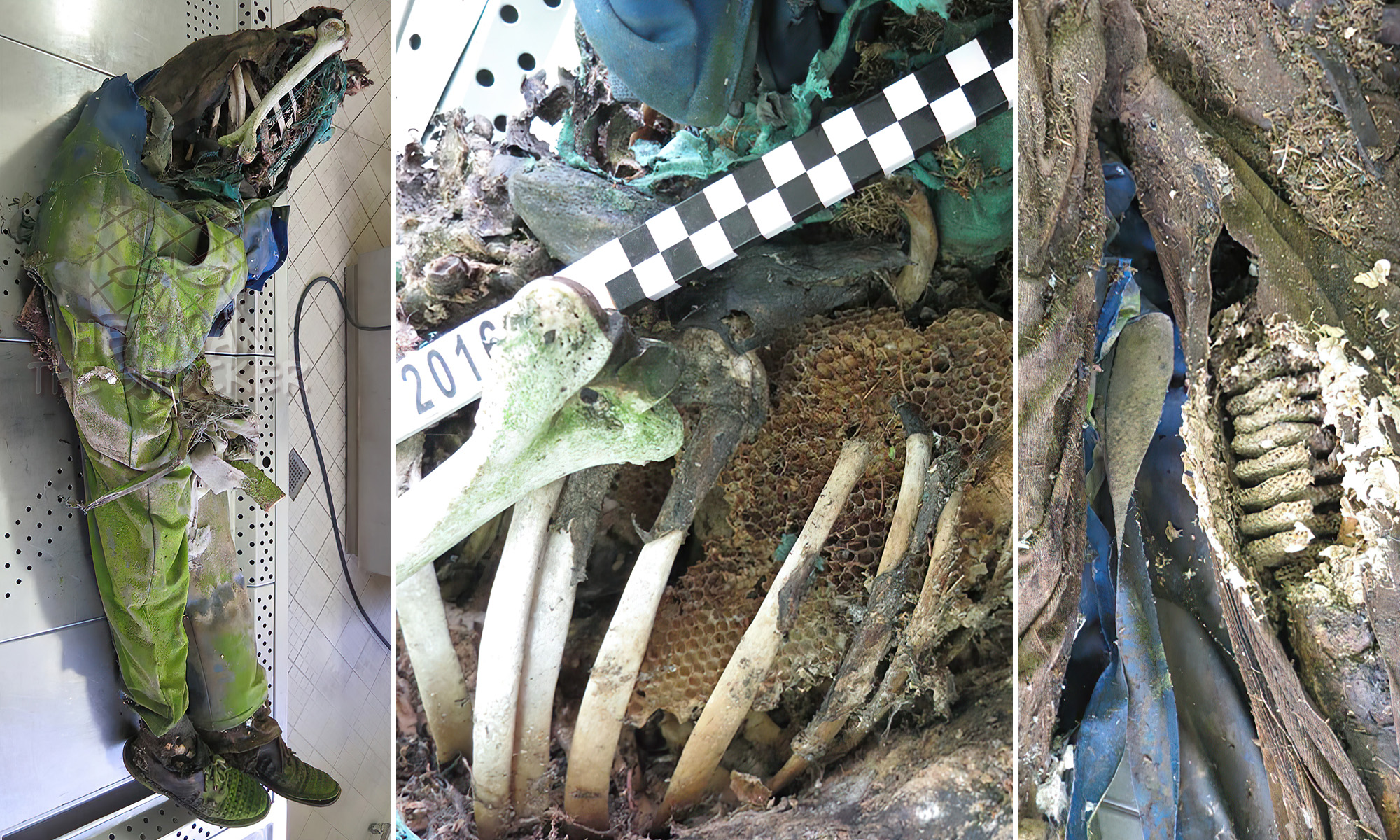 Fig.1 Cover photo In September 2003, in the Trzebnicki district (Lower Silesia, Poland), a 35-year-old man was missing after having left his home with the intention of committing suicide. A search for the missing man in the neighborhood area proved fruitless. In July 2013, in a mixed forest not far from a watercourse, nearly completely skeletonized human remains were accidentally found. On the forest floor were lying: a skull, lower jaw, first cervical vertebra (C1), right radial bone, left ulna, five left carpal bones, and the second left metacarpal bone. Transformed, dried-out soft tissue (fragments of skull integument, soft tissues in eye sockets and piriform aperture, fragments of dura mater, a transformed fragment of the brain, and ligaments connecting the forearm and wrist bones) were residually preserved on the bones. In addition, on the right ulnar bone, traces of foraging animals (small mammals) were visible. No other parts of the skeleton were found near the site of discovery of these bones. Anthropological research indicated that these bones might have originated from the missing man, which was ultimately confirmed by comparative DNA testing. In May 2016, in the forest complex not far from the site where the remains were found in 2013, human remains were discovered very high in the crown of a coniferous tree. Incomplete human remains, in a state of skeletonization and post-mortem transformation (mummification), in preserved clothing, and devoid of, among others the skull, were located in the crown of a spruce Picea at a height of at least 25 m in a partially seated, partially recumbent position. A branch of the tree was positioned between the legs of the corpse below the pelvis. The lower limbs hung freely on both sides and the position of the body was similar to someone sitting astride a branch. The torso was tilted prominently forward and rested partly on the described branch in front of it (Figs.2-3). 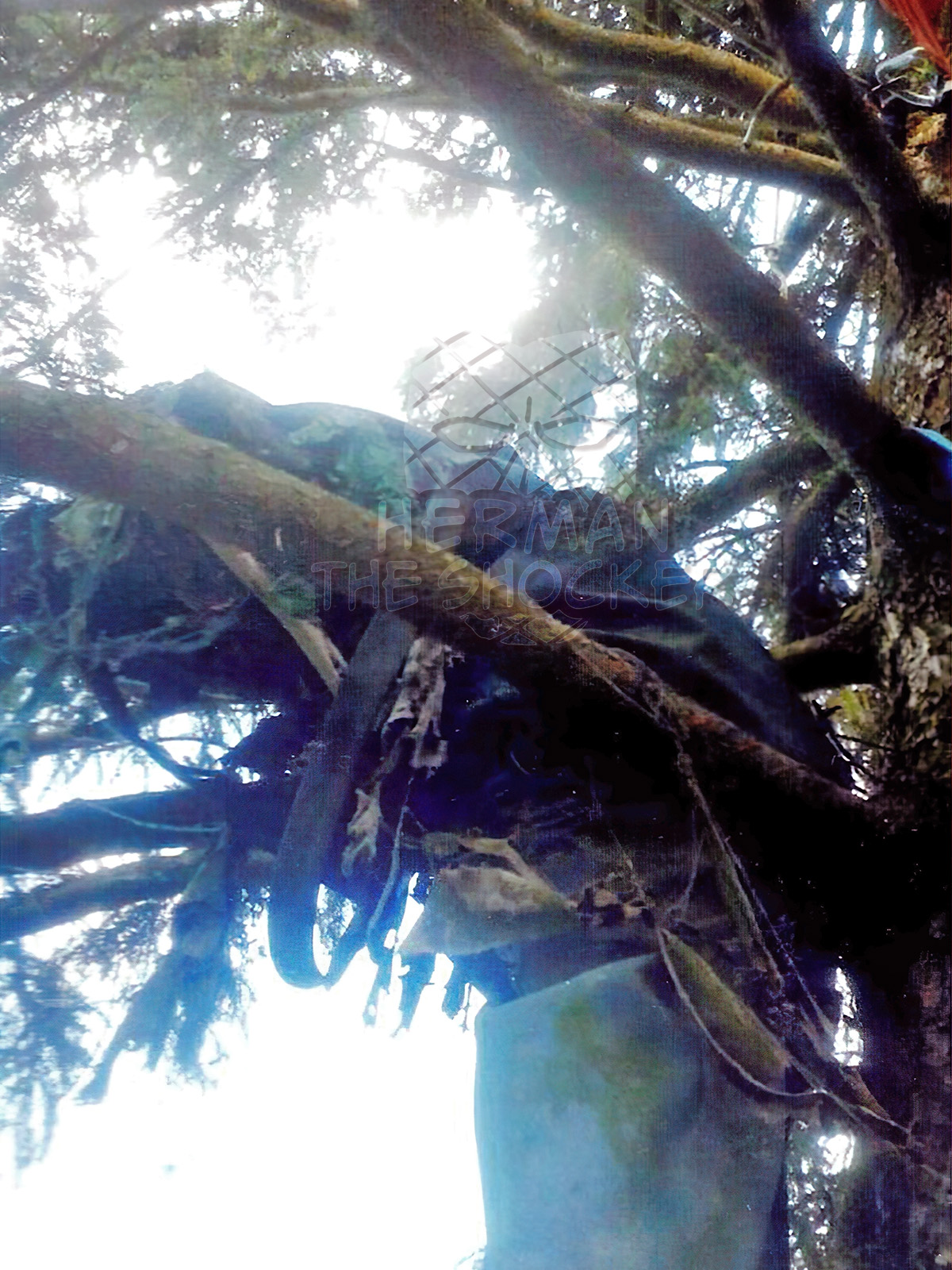 Fig.2 View of the remains at the site of their discovery (left side). 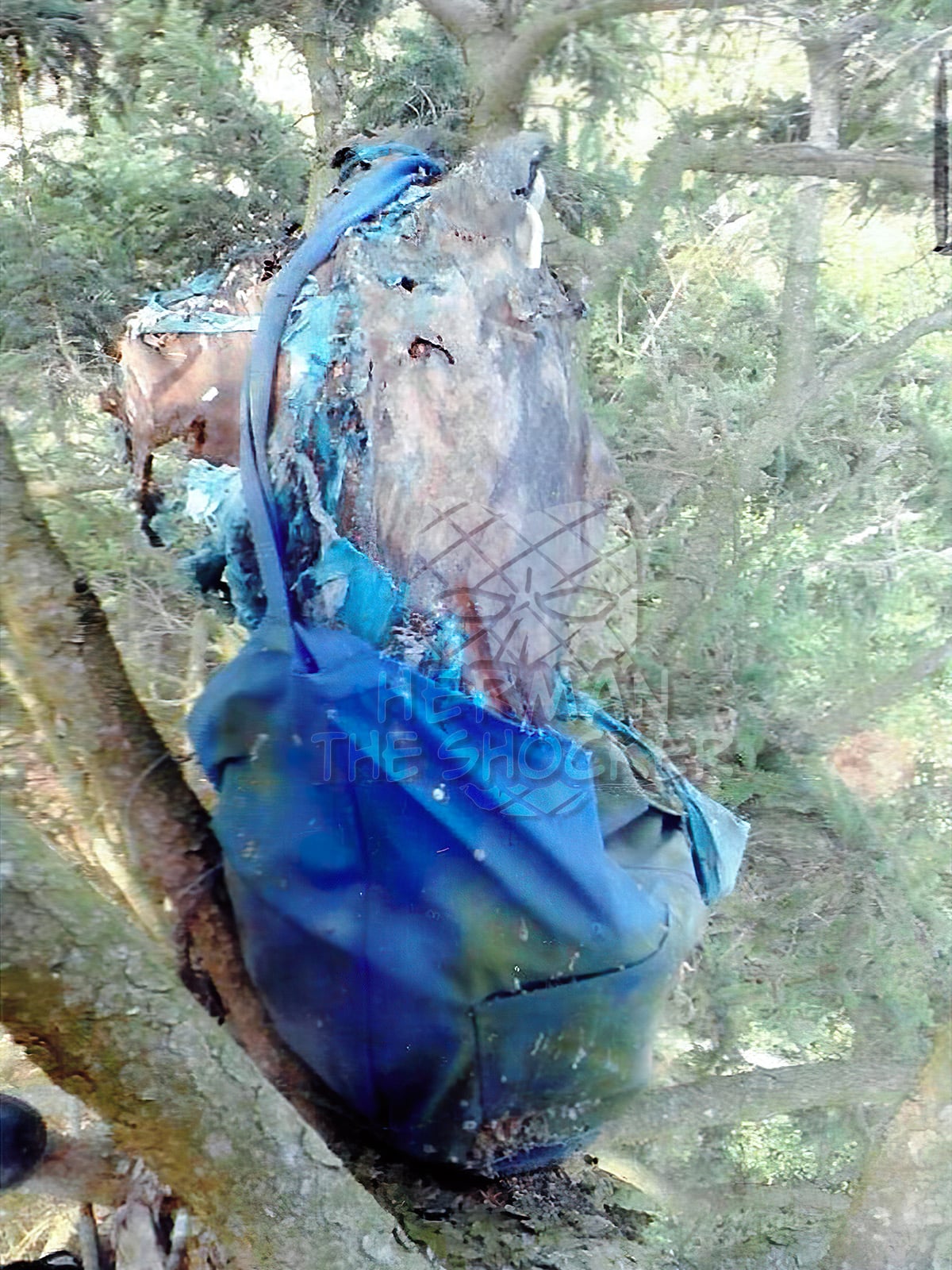 Fig.3 View of the remains at the site of their discovery (from above). Due to the condition (mummification) of the corpse, its position was completely fixed. A knotted noose, made from an electrical cord, was discovered on a branch above the corpse. After removing the corpse from the tree, a preliminary inspection was carried out. No potentially identifying objects were found on the corpse; a cigarette lighter was discovered in a trouser pocket, an empty glass bottle in the leg of the trousers, and some Polish coins with the latest date of issue being 2001. 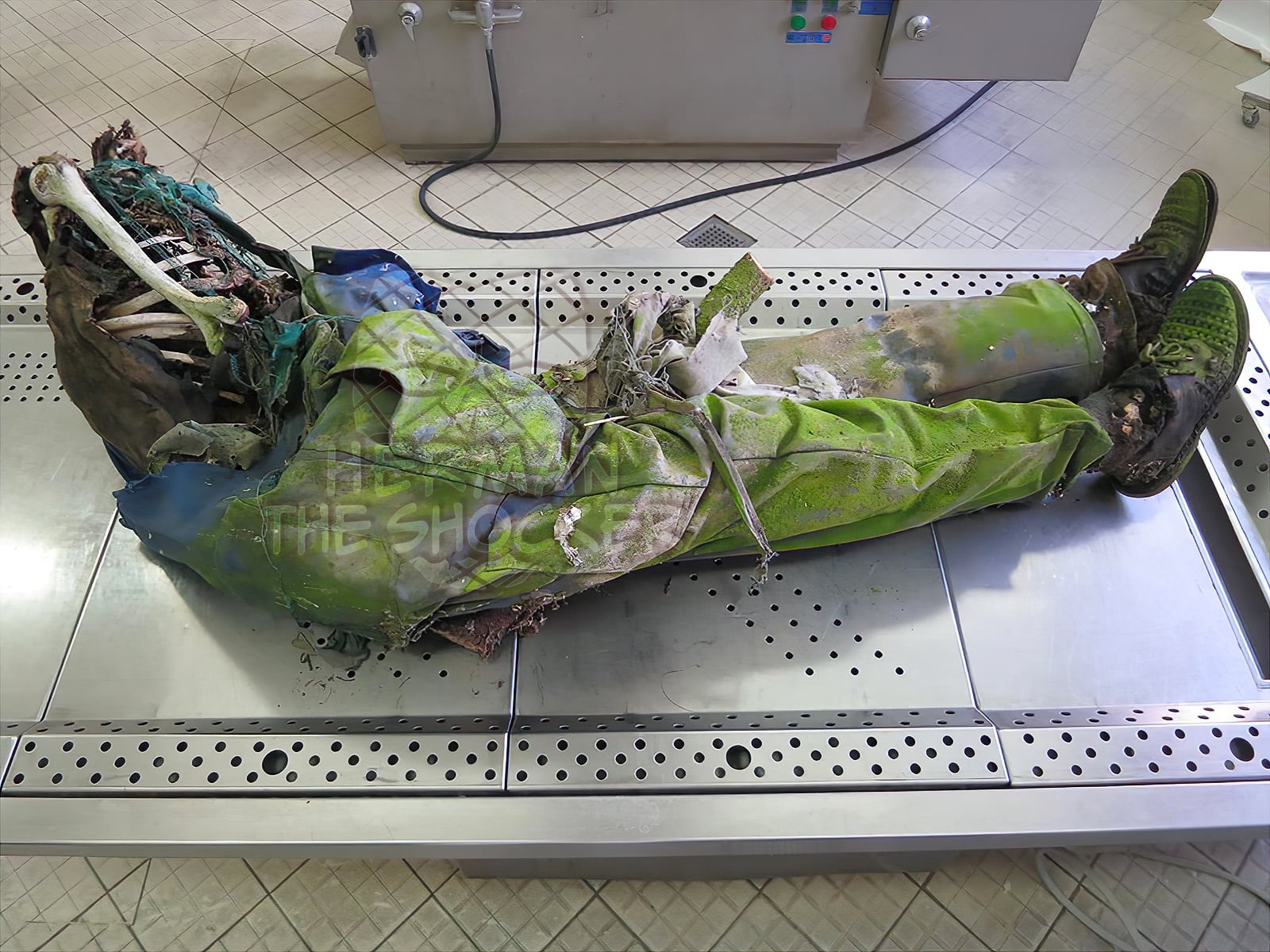 Fig.4 View of the remains on the autopsy table. The trousers and shoes were covered with an abundant coating of green algae. The spot was found on the left leg of the corduroy trousers, over the left thigh. The deposit constituted elements of the damaged outer wall of a nest of Hymenoptera (Fig.5). After the leg of the corduroy trousers had been cut open, a cluster of 9 regular overlapping combs was found. The combs were crescent-shaped, with the concave part molded around the shaft of the left femur. They were joined by means of thin columns created from the mass forming the combs (Figs.6-7 & 10). A clump of moss, small twigs, and needles was discovered in the bottom part of the left leg of the trousers, in the tarsal region. Inside the chest, free-floating, irregularly-shaped fragments of 8 honeycombs were discovered (Figs.8-9). The pelvis minor and lower part of the abdominal cavity were filled with a substantial amount of dry yellowish-brown moss mixed with numerous small scraps of light-colored plastic film with ragged, serrated edges, forming the nest of a mammal (Fig.8). 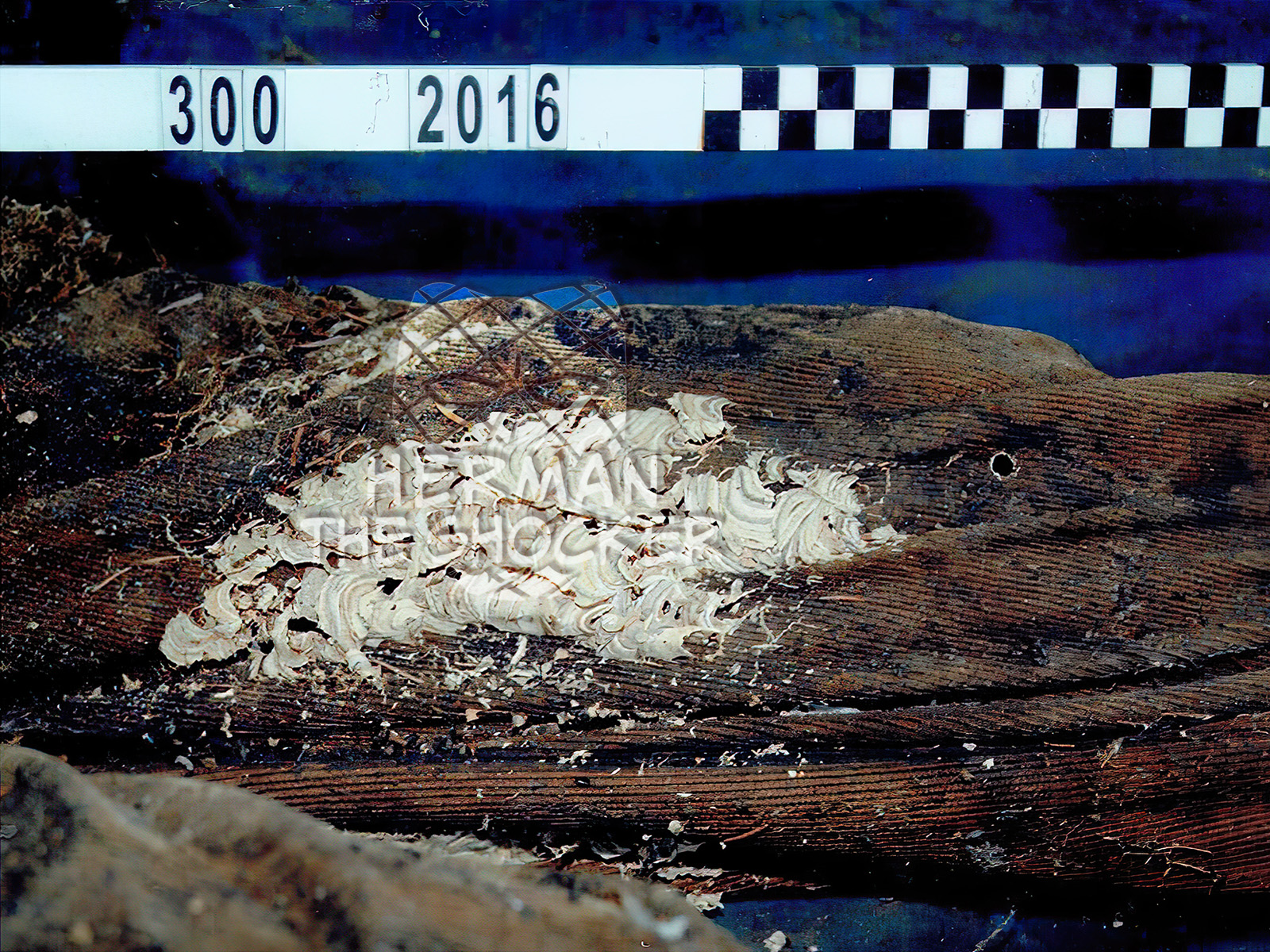 Fig.5 Outer wall of the Vespula vulgaris (L., 1758) nest in the trouser leg. 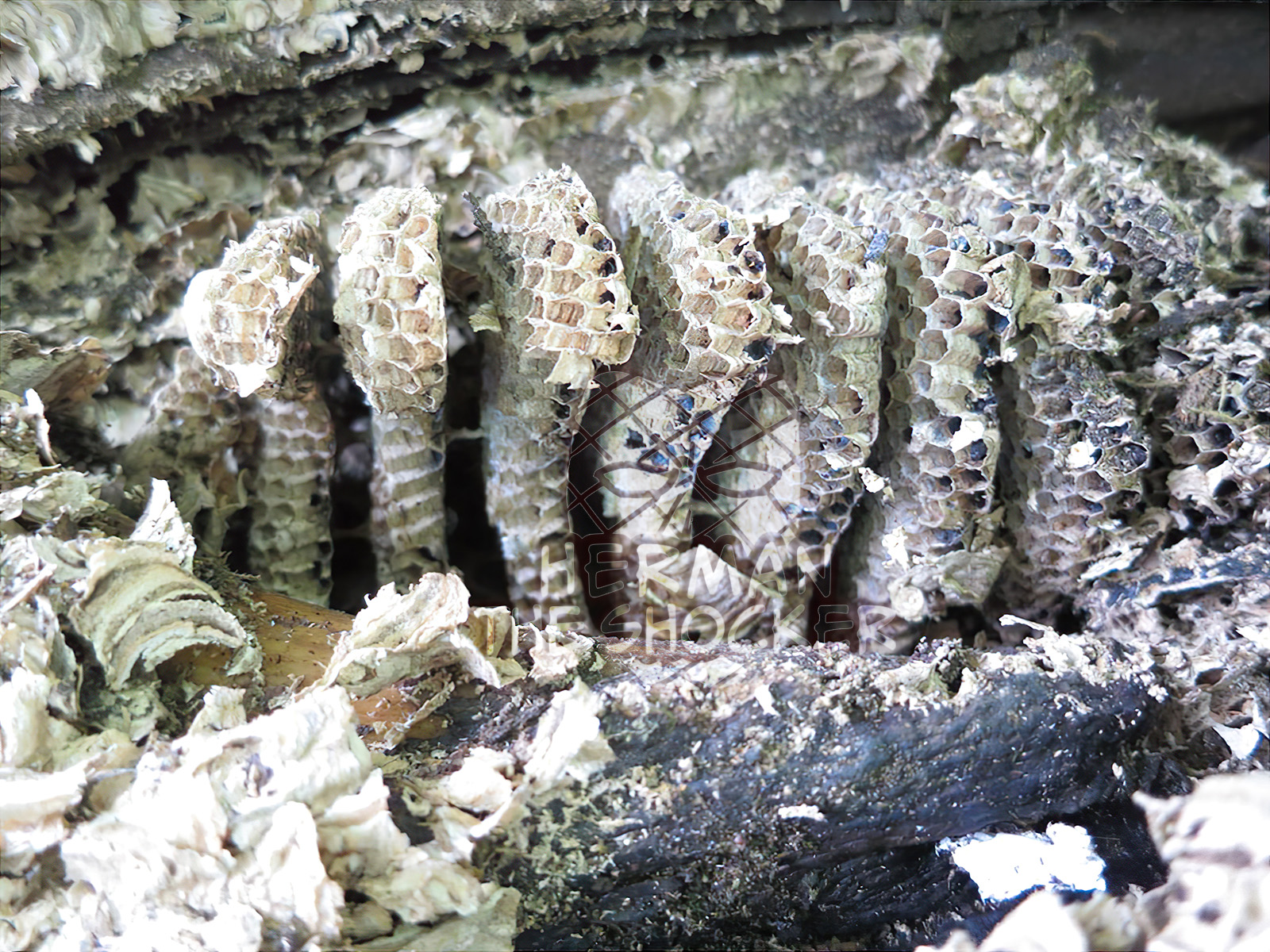 Fig.6 Vespula vulgaris (L., 1758) nest (close-up view). 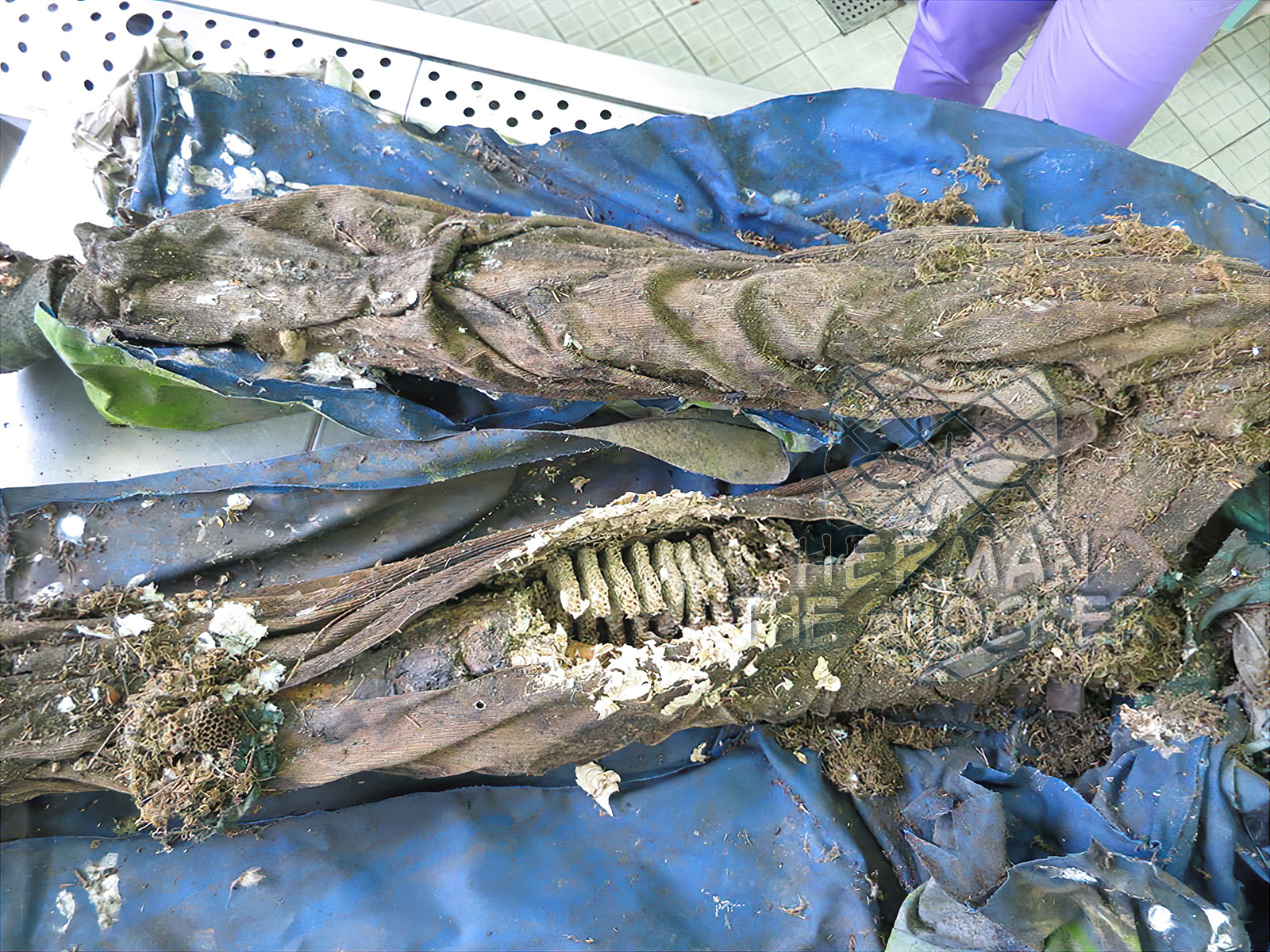 Fig.7 Location of the Vespidae nest in the corpse. 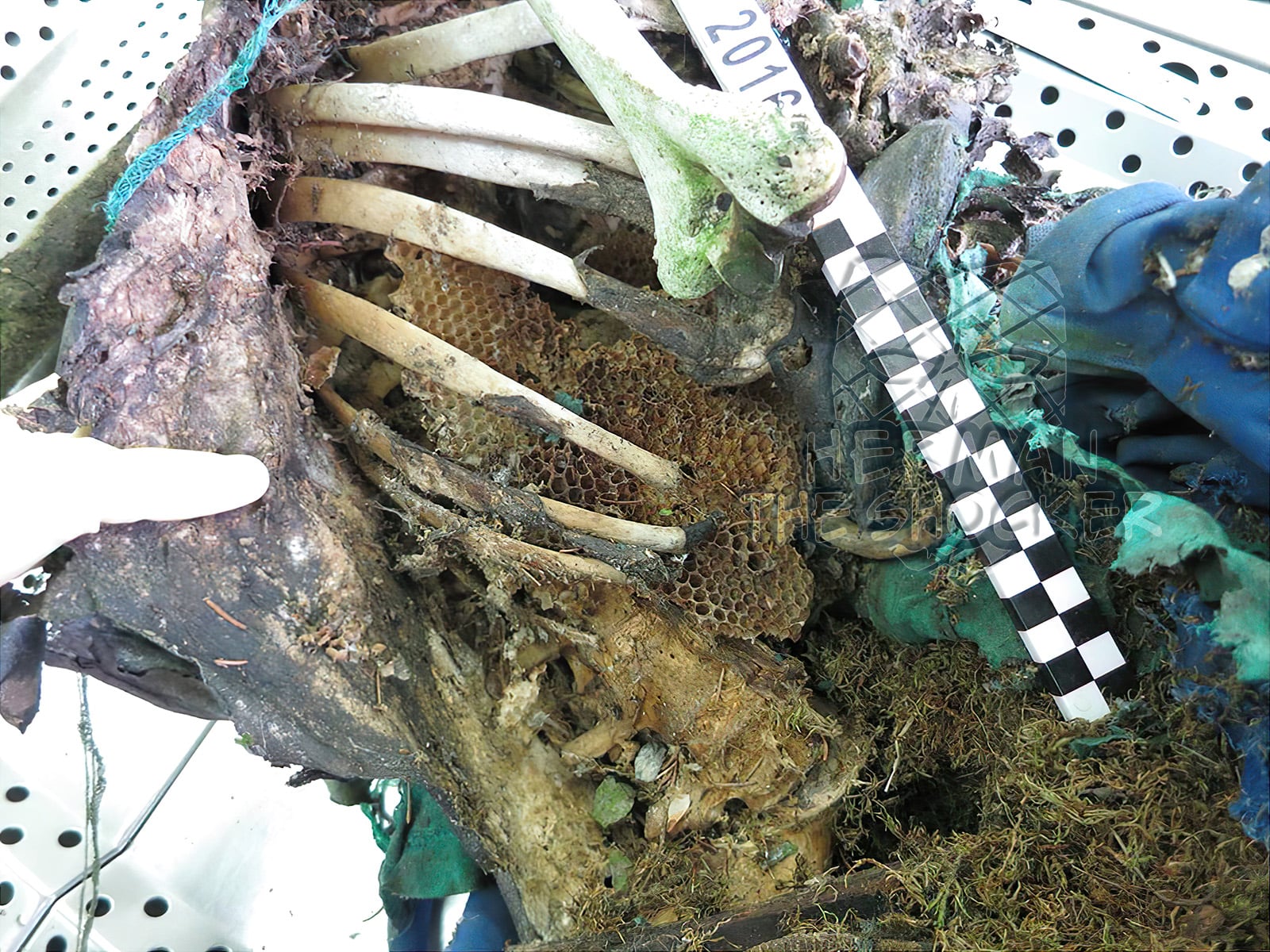 Fig.8 Nests of Apis mellifera mellifera (L., 1758) and Sciurus vulgaris L., 1758 in the corpse. Anthropological studies indicated that the remains were of a man, aged 35 to 40. No injuries indicating perimortem trauma, i.e. of the type which might have been inflicted while the man was alive, were discovered on the remains. Genetic research confirmed that these were the remains of the man who went missing in 2003. The condition of the corpse did not permit to determine the cause of death. The circumstances of the discovery of the remains, in particular the presence of a noose hanging from the branch as well as the circumstances preceding death (suicidal intent) did not rule out the possibility of suicide by hanging. Representatives of four orders of insects, Coleoptera, Diptera, Hymenoptera, and Neuroptera, were collected from the corpse and preserved. Hymenoptera was represented by two species: Apis mellifera mellifera (Apidae) and Vespula vulgaris (Vespidae). Both of these species were represented by nests (Figs.6-10) and remains of adults. Inside the body, under the clothes, the nest of a red squirrel, Sciurus vulgaris, was also revealed. 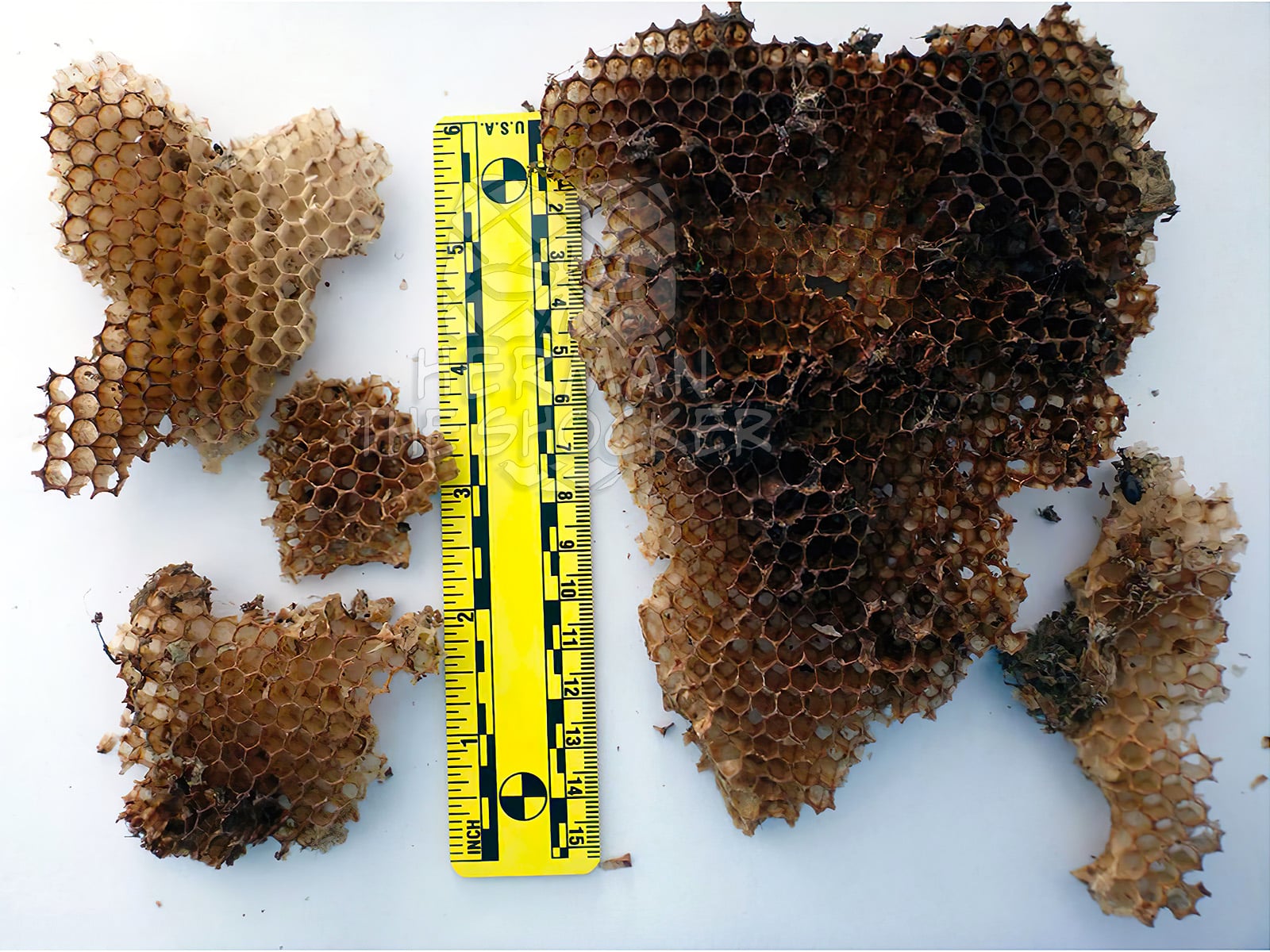 Fig.9 Parts of the nest of Apis mellifera mellifera (L., 1758) (close-up view). 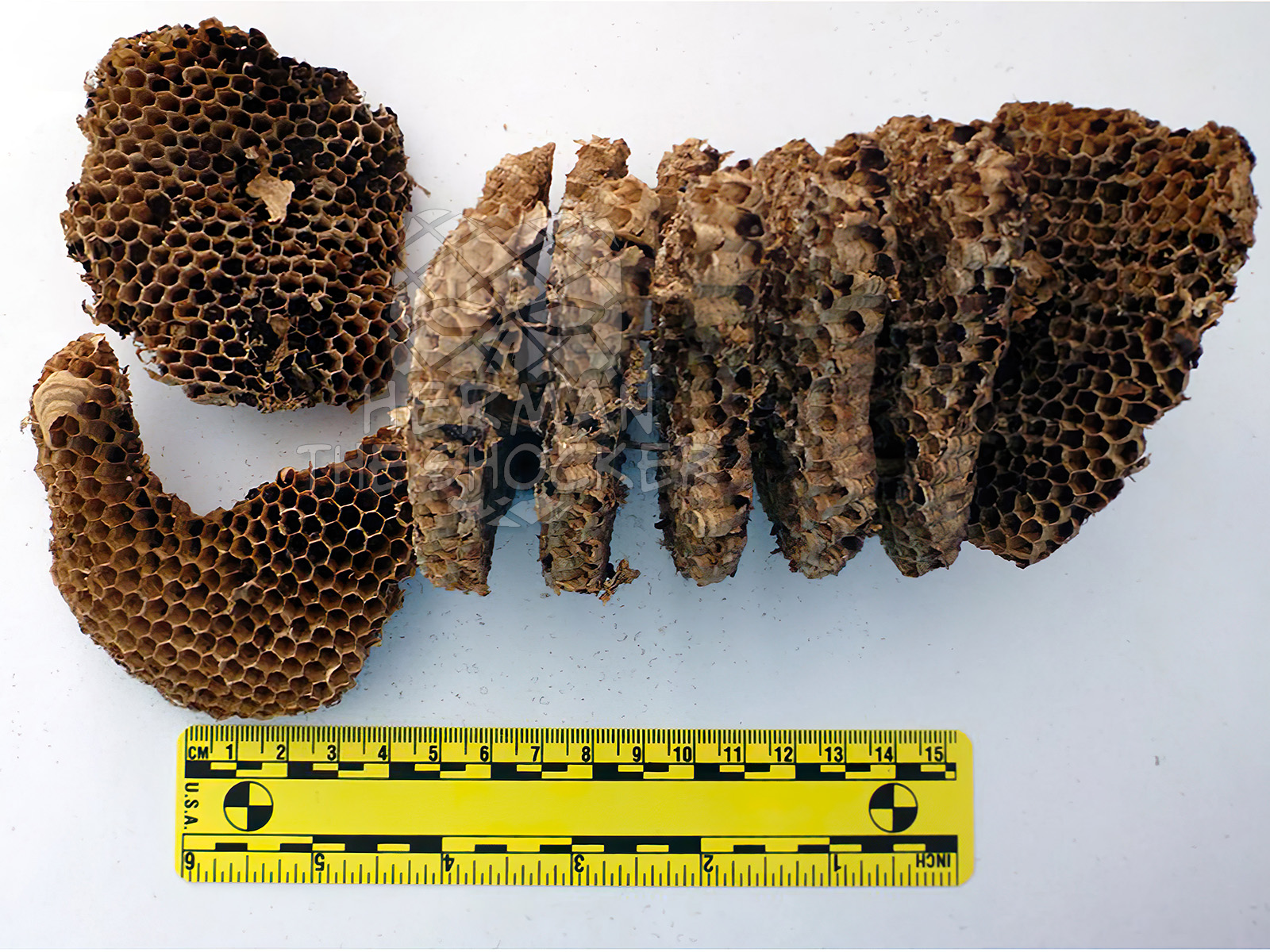 Fig.10 Nest of Vespula vulgaris (L., 1758) (close-up view). Hundreds of arthropod species are attracted by corpses; thus the presence of beetles of the Dermestidae, Cleridae, and Silphidae families, as well as flies, is not surprising, as these insects are frequently observed in corpses. Observations of unidentified species of ants, bees, and even spiders and millipedes associated with the carcasses were also recorded. Contrastingly, observations of the nests of hymenopterans and squirrels are extraordinary and should be attributed to the opportunity given these animals to colonize specific niches, such as hollows. From the point of view of forensic medicine, what is unusual is the presence of the honey bee, the common yellowjacket, and the red squirrel in the remains. This phenomenon can be explained by the following factors. First of all, the body was found at a considerable height above the ground, which is rare and prevented damages caused by forest animals, e.g. foxes, which very often dismember corpses at crime scenes. Another factor is the relatively long period the corpse was hanging in the tree (13 years), which is also rare. Such a long period enabled the corpse to become inhabited by various animals. A third factor is the vertical position of the body due to hanging, which creates very good conditions for mummification as a result of the relatively rapid loss of body fluids. The final factor is associated with the specific type of clothes. The deceased was wearing two pairs of trousers, of which the most important was the outer pair, made of strong material (denim). These four factors created optimal conditions — a kind of specific microhabitat for species typical for a forest environment. The inner parts of the body were slowly transformed into something resembling a hollow in a tree. The strong trousers prevented the breakdown of a part of the remains during the 13-year period of exposure to atmospheric conditions. Following the complete decay and disintegration of the internal organs, skeletonization, and mummification of the skin, the body cavities, and spaces between clothing, bones, and remains of previously soft tissues were transformed into empty cavities. It facilitated inhabitation by wasps, bees, and squirrels by virtue of forming an environment similar to that provided by a natural hollow in a tree, which is known to be a natural habitat for all of these species. - This post is for educational purposes only and is nonprofit. Under Section 107 of the US Copyright Act of 1976; Allowance is made for "Fair Use" for purposes such as comment, news reporting, teaching, scholarship, and research. No copyright infringement intended. Images might have been upscaled. Text might have been shortened/reorganized. Original case report by L. Szleszkowski et al. / Forensic Science International 2018. |
|
#2
●
05-25-2021, 05:34 PM
| ||||||||
| My Rank: GUNNERY SERGEANT Poster Rank:635 Join Date: Nov 2017 Posts: 1,419 Mentioned: 0 Post(s) Quoted: 289 Post(s)
| ||||||||
|
Re: Unusual Case of Squirrels Nesting in a Corpse in a Tree 13 Year After Death
Those vespulas are definitely vulgar...is! Nice post. |
|
#4
●
05-25-2021, 07:17 PM
| ||||||||
| My Rank: CORPORAL Poster Rank:1290 Male Join Date: Nov 2009 Posts: 478 Mentioned: 0 Post(s) Quoted: 188 Post(s)
| ||||||||
|
Re: Unusual Case of Squirrels Nesting in a Corpse in a Tree 13 Year After Death
So cool!
|
|
#5
●
05-25-2021, 10:36 PM
| ||||||||
 My Rank: LANCE CORPORAL Poster Rank:1990 XX Join Date: Jun 2017 Posts: 253 Mentioned: 0 Post(s) Quoted: 30 Post(s)
| ||||||||
|
Re: Unusual Case of Squirrels Nesting in a Corpse in a Tree 13 Year After Death
wow!! loved seeing the nests. as always, an amazing, forensic, and medical view. props to you herman!
|
|
#6
●
05-25-2021, 11:04 PM
| ||||||||
| ♚ Legacy Gold Member ♚ Poster Rank:92 Male Join Date: Nov 2009 Posts: 17,152 Mentioned: 8 Post(s) Quoted: 4693 Post(s)
| ||||||||
|
Re: Unusual Case of Squirrels Nesting in a Corpse in a Tree 13 Year After Death
SQUIRREL ELEMENTS!!! Of Course!! I suspected as much! |
|
#7
●
05-25-2021, 11:23 PM
| ||||||||
 My Rank: LANCE CORPORAL Poster Rank:3471 Manchild Join Date: Jul 2017 Posts: 102 Mentioned: 0 Post(s) Quoted: 26 Post(s)
| ||||||||
|
Re: Unusual Case of Squirrels Nesting in a Corpse in a Tree 13 Year After Death
Were those hives growing around the leg bones?
|
|
#8
●
05-26-2021, 05:13 AM
| ||||||||
 ♚ Legacy Gold Member ♚ Poster Rank:198 Female Join Date: Nov 2009 Posts: 7,766 Mentioned: 5 Post(s) Quoted: 709 Post(s)
| ||||||||
|
Re: Unusual Case of Squirrels Nesting in a Corpse in a Tree 13 Year After Death
Nature recycling. Fascinating post.  |
|
#9
●
05-26-2021, 10:27 AM
| ||||||||
 My Rank: STAFF SERGEANT Poster Rank:809 I Am Dic-N-Bawss Join Date: Aug 2012 Posts: 970 Mentioned: 0 Post(s) Quoted: 179 Post(s)
| ||||||||
|
Re: Unusual Case of Squirrels Nesting in a Corpse in a Tree 13 Year After Death
Eye witnesses apparently saw the 2 squirrel elements arrive at the corpse on a moped.
|
|
#10
●
05-26-2021, 10:34 AM
| ||||||||
| My Rank: MASTER GUNNERY SERGEANT Poster Rank:350 "IT"-Species; Genus-genius Join Date: Jan 2013 Posts: 3,614 Mentioned: 0 Post(s) Quoted: 618 Post(s)
| ||||||||
|
Re: Unusual Case of Squirrels Nesting in a Corpse in a Tree 13 Year After Death
So the upper half of the body rotted and fell out of the tree. Very interesting. Thanks, arborist herman |