|
#1
●
11-04-2014, 05:34 PM
| ||||||||
 Vertically Challenged Poster Rank:177 Female Join Date: Mar 2014 Posts: 8,507
Contributions: 3
Mentioned: 21 Post(s) Quoted: 3707 Post(s)
| ||||||||
|
Preserved Human Bodies From The Sphagnum Bogs
Thought I would do a post on bog bodies. Sorry if any of these are reposts. Bog bodies, also known as bog people, are preserved human bodies found in sphagnum bogs in Northern Europe, Great Britain and Ireland. Unlike most ancient human remains, bog bodies have retained their skin and internal organs due to the unusual conditions of the surrounding area. These conditions include highly acidic water, cold temperature, and a lack of oxygen, combining to preserve but severely tan their skin. Although their skin is preserved, their bones are generally not, as the acid in the peat dissolves the calcium phosphate of bone. Some of the bodies retain intricate details like tattoos and fingerprints. Bog chemistry There are a limited number of bogs which have the correct conditions for preservation of mammalian tissue. Most of these are located in the colder climes of northern Europe near bodies of salt water. For example, in the area of Denmark where the Haraldskær Woman was recovered, salt air from the North Sea blows across the Jutland wetlands and provides an ideal environment for the growth of peat. As new peat replaces the old peat, the older material underneath rots and releases humic acid, also known as bog acid. The bog acids, with pH levels similar to vinegar, conserve the human bodies in the same way as fruit is preserved by pickling. In addition, peat bogs form in areas lacking drainage and hence are characterized by almost completely anaerobic conditions. This environment, highly acidic and devoid of oxygen, denies the prevalent subsurface aerobic organisms any opportunity to initiate decomposition. Researchers discovered that conservation also required the body to be placed in the bog during the winter or early spring when the water temperature is cold—i.e., less than 4 °C (40 °F). This allows the bog acids to saturate the tissues before decay can begin. Bacteria are unable to grow rapidly enough for decomposition at temperatures under 4 °C. The bog chemistry environment involves a completely saturated acidic environment, where considerable concentrations of organic acids and aldehydes are present. Layers of sphagnum and peat assist in preserving the cadavers by enveloping the tissue in a cold immobilizing matrix, impeding water circulation and any oxygenation. An additional feature of anaerobic preservation by acidic bogs is the ability to conserve hair, clothing and leather items. Modern experimenters have been able to mimic bog conditions in the laboratory and successfully demonstrate the preservation process, albeit over shorter time frames than the 2,500 years. Most of the bog bodies discovered had some aspects of decay or else were not properly conserved. When such specimens are exposed to the normal atmosphere, they may rapidly begin to decompose. As a result, many specimens have been effectively destroyed. Bog bodies found Preserved bodies of humans and animals have been discovered in bogs in Britain, Ireland, northern Germany, the Netherlands, Denmark (both Jutland and Zealand), and southern Sweden. Records of such finds go back as far as the 18th century, when the Kibbelgaarn body was discovered in the Netherlands in 1791. A 1965 German study cataloged more than 1850 bog bodies found in Northern Europe[7]; however, discrepancies found in the documentation has reduced the actual number of bog bodies to several hundred. Until the mid-20th century, it was not readily apparent at the time of discovery whether a body has been buried in a bog for years, decades, or centuries. However, modern forensic and medical technologies (such as radiocarbon dating) were developed that allowed researchers to more closely determine the age of the burial, the person's age at death, and other details. Scientists have been able to study their skin, reconstruct their appearance and even determine what their last meal was from their stomach contents. Their teeth also indicate their age at death and what type of food they ate throughout their lifetime. The earliest bog body, that of Koelbjerg Woman from Denmark, has been radiometrically dated to circa 3500 BC. The newest is from the 16th century AD, a woman in Ireland who may have been buried in unhallowed ground following a suicide. The majority of bog bodies have been dated to the Pre-Roman Iron Age. Causes of death Many bog bodies show signs of being stabbed, bludgeoned, hanged or strangled, or a combination of these methods. The corpses were sometimes decapitated before burial and staked down with stakes or twisted willow or hazel withies. Some bodies show signs of torture, such as Old Croghan Man, who had deep cuts beneath his nipples. Interpretations of the forensic examinations vary; it is debated whether they were ritually slain and placed in the bog as an execution for a crime or as a human sacrifice. Some bog bodies, such as Tollund Man from Denmark, have been found with the rope used to strangle them still around their necks. Some, such as the Yde Girl in the Netherlands and bog bodies in Ireland, had the hair on one side of their heads closely cropped, although this could be due to one side of their head being exposed to oxygen for a longer period of time than the other. The bog bodies seem consistently to have been members of the upper class: their fingernails are manicured, and tests on hair protein routinely record good nutrition. Strabo records that the Celts practiced auguries on the entrails of human victims: on some bog bodies, such as one of the Weerdinge Men found in southern Netherlands, the entrails have been partly drawn out through incisions. Modern techniques of forensic analysis now suggest that some injuries, such as broken bones and crushed skulls, were not the result of torture, but rather due to the weight of the bog. For example, the fractured skull of Grauballe Man was at one time thought to have been caused by a blow to the head. However, a CT scan of Grauballe Man by Danish scientists determined his skull was fractured due to pressure from the bog long after his death. Archaeological research In the case of the "mummies" of Cladh Hallan, the burials have been interpreted as a primitive method of embalming important individuals. X-ray is a very important step in uncovering the bog bodies as it can draw a picture of a body in the peat, which can then be removed without harming it by cutting blindly. Radio carbon dating is also very common as it accurately gives the date of the find, most usually from the Stone Age. In terms of determining the cause of death of the bodies, in a surprising number of cases, there are obvious signs of violence and murder. Because the peat marsh preserves soft internal tissue, the stomach contents can be analyzed. These give a good picture of the diet of those people. Facial reconstruction is one particularly impressive technique used in studying the bog bodies. Originally designed for identifying modern faces in crimes, this technique is a way of working out the facial features of a person by the shape of their skull. The face of one bog body, Yde Girl, was reconstructed in 1993 by Richard Neave of Manchester University using CT scans of her head. Yde Girl and her modern reconstruction are displayed at the Drents Museum in Assen. Such reconstructions have also been made of the heads of Lindow Man (British Museum, London, United Kingdom), Grauballe Man and Windeby Girl (Archäologisches Landesmuseum, Schleswig, Germany). Bog bodies, also known as bog people, are preserved human bodies found in sphagnum bogs in Northern Europe, Great Britain and Ireland. Unlike most ancient human remains, bog bodies have retained their skin and internal organs due to the unusual conditions of the surrounding area. These conditions include highly acidic water, cold temperature, and a lack of oxygen, combining to preserve but severely tan their skin. Although their skin is preserved, their bones are generally not, as the acid in the peat dissolves the calcium phosphate of bone. Some of the bodies retain intricate details like tattoos and fingerprints. Bog chemistry There are a limited number of bogs which have the correct conditions for preservation of mammalian tissue. Most of these are located in the colder climes of northern Europe near bodies of salt water. For example, in the area of Denmark where the Haraldskær Woman was recovered, salt air from the North Sea blows across the Jutland wetlands and provides an ideal environment for the growth of peat. As new peat replaces the old peat, the older material underneath rots and releases humic acid, also known as bog acid. The bog acids, with pH levels similar to vinegar, conserve the human bodies in the same way as fruit is preserved by pickling. In addition, peat bogs form in areas lacking drainage and hence are characterized by almost completely anaerobic conditions. This environment, highly acidic and devoid of oxygen, denies the prevalent subsurface aerobic organisms any opportunity to initiate decomposition. Researchers discovered that conservation also required the body to be placed in the bog during the winter or early spring when the water temperature is cold—i.e., less than 4 °C (40 °F). This allows the bog acids to saturate the tissues before decay can begin. Bacteria are unable to grow rapidly enough for decomposition at temperatures under 4 °C. The bog chemistry environment involves a completely saturated acidic environment, where considerable concentrations of organic acids and aldehydes are present. Layers of sphagnum and peat assist in preserving the cadavers by enveloping the tissue in a cold immobilizing matrix, impeding water circulation and any oxygenation. An additional feature of anaerobic preservation by acidic bogs is the ability to conserve hair, clothing and leather items. The Bronze Age Egtved Girl, also discovered in Jutland, Denmark, is a good example. Modern experimenters have been able to mimic bog conditions in the laboratory and successfully demonstrate the preservation process, albeit over shorter time frames than the 2,500 years that Haraldskær Woman's body has survived. Most of the bog bodies discovered had some aspects of decay or else were not properly conserved. When such specimens are exposed to the normal atmosphere, they may rapidly begin to decompose. As a result, many specimens have been effectively destroyed. Causes of death Many bog bodies show signs of being stabbed, bludgeoned, hanged or strangled, or a combination of these methods. The corpses were sometimes decapitated before burial and staked down with stakes or twisted willow or hazel withies. Some bodies show signs of torture, such as Old Croghan Man, who had deep cuts beneath his nipples. Interpretations of the forensic examinations vary; it is debated whether they were ritually slain and placed in the bog as an execution for a crime or as a human sacrifice. Some bog bodies, such as Tollund Man from Denmark, have been found with the rope used to strangle them still around their necks. Some, such as the Yde Girl in the Netherlands and bog bodies in Ireland, had the hair on one side of their heads closely cropped, although this could be due to one side of their head being exposed to oxygen for a longer period of time than the other. The bog bodies seem consistently to have been members of the upper class: their fingernails are manicured, and tests on hair protein routinely record good nutrition. Strabo records that the Celts practiced auguries on the entrails of human victims: on some bog bodies, such as one of the Weerdinge Men found in southern Netherlands, the entrails have been partly drawn out through incisions. Modern techniques of forensic analysis now suggest that some injuries, such as broken bones and crushed skulls, were not the result of torture, but rather due to the weight of the bog. For example, the fractured skull of Grauballe Man was at one time thought to have been caused by a blow to the head. However, a CT scan of Grauballe Man by Danish scientists determined his skull was fractured due to pressure from the bog long after his death. Archaeological research In the case of the "mummies" of Cladh Hallan, the burials have been interpreted as a primitive method of embalming important individuals. Because the peat marsh preserves soft internal tissue, the stomach contents can be analyzed. These give a good picture of the diet of those people. Pic #1 Tollund Man Pic #2 Bocksten Bog Man Pic #3 Grauballe Man Pic #4 Rendswühren Man Pic #5 Brammer Man Pic #6 Haraldskær Woman Pic #7 Windeby Girl (later discovered to actually be a male) 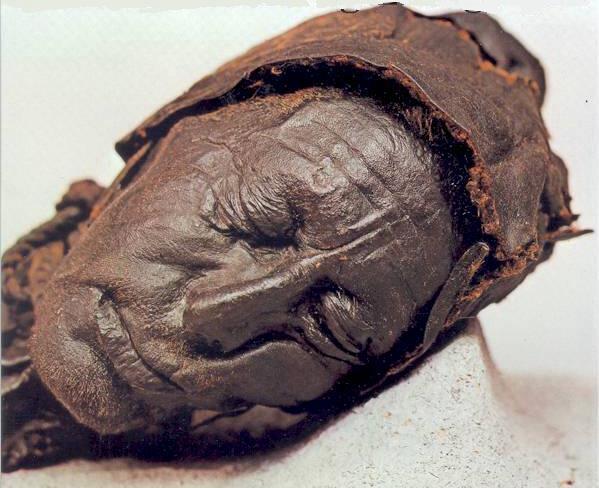 · 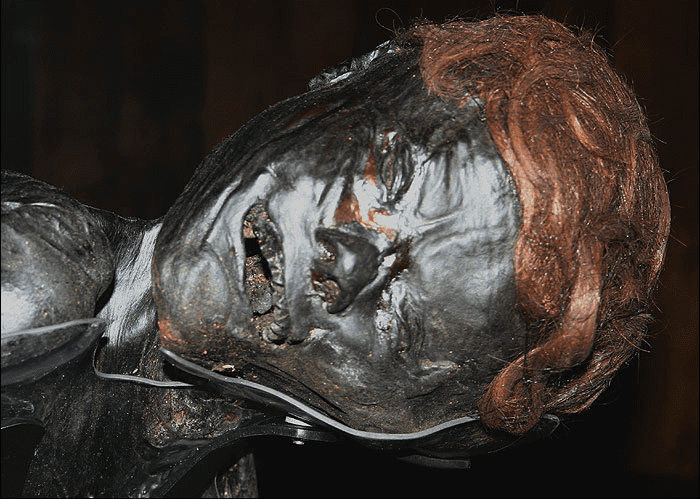 · 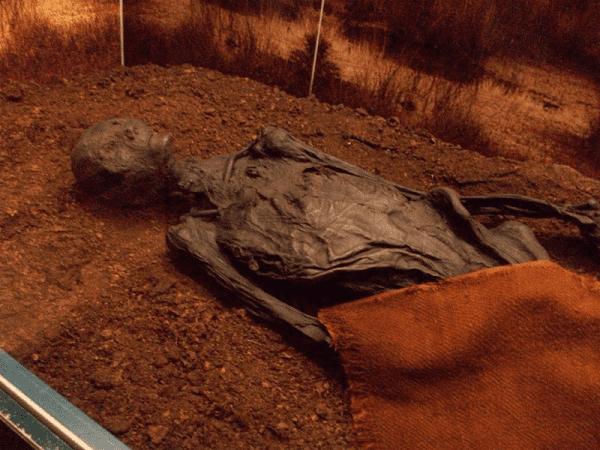 · 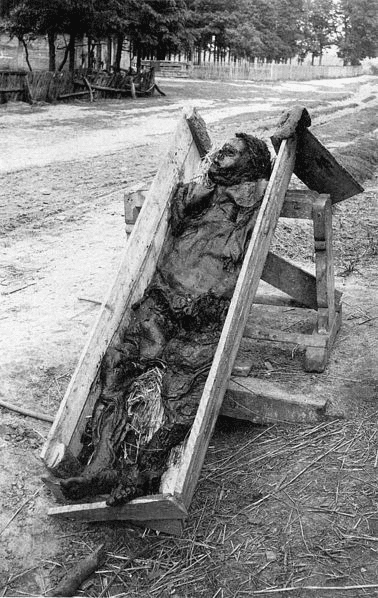 · 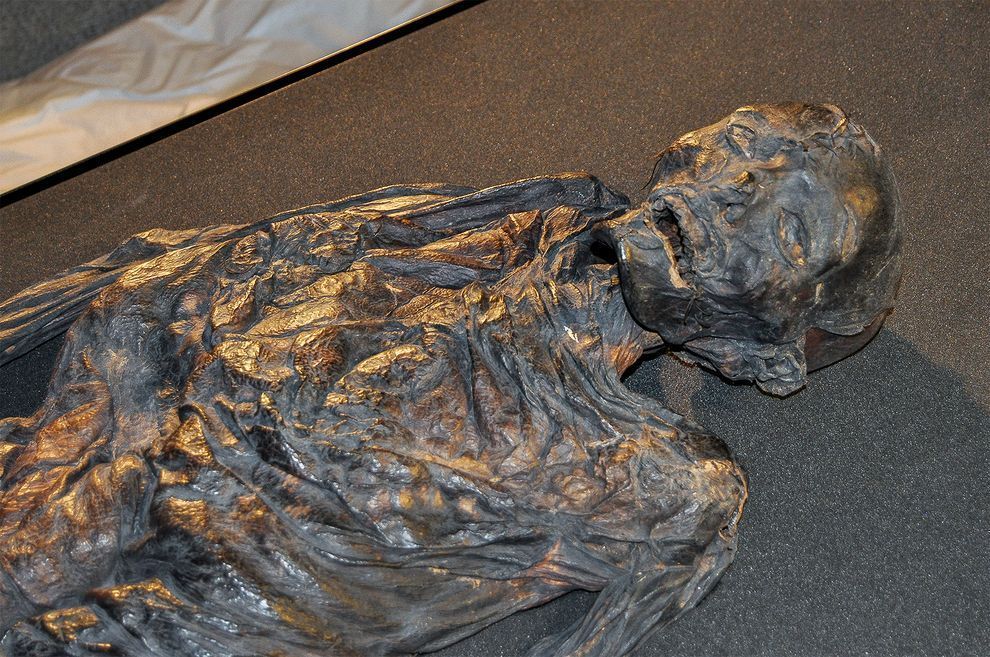 · 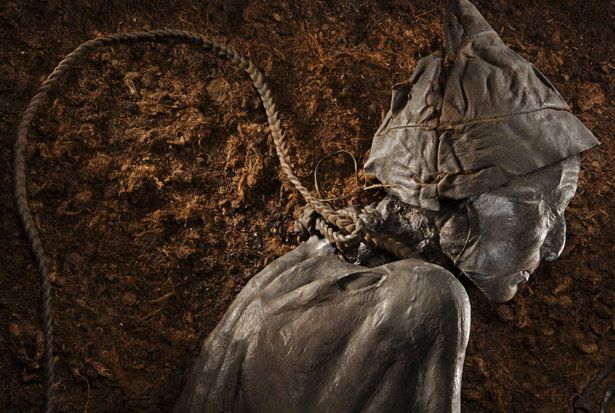 · 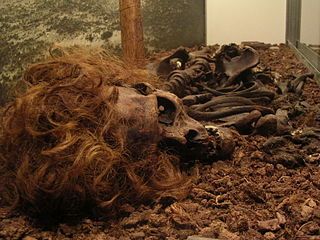 · |
|
#3
●
11-04-2014, 07:24 PM
| ||||||||
| Vertically Challenged Poster Rank:177 Female Join Date: Mar 2014 Posts: 8,507
Contributions: 3
Mentioned: 21 Post(s) Quoted: 3707 Post(s)
| ||||||||
|
Re: Preserved Human Bodies From The Sphagnum Bogs
It's hard posting long threads on my kindle.  |
|
#4
●
11-04-2014, 08:47 PM
| ||||||||
 Hell is full! Poster Rank:658 Human. Join Date: Nov 2009 Posts: 1,312 Mentioned: 1 Post(s) Quoted: 216 Post(s)
| ||||||||
|
Re: Preserved Human Bodies From The Sphagnum Bogs
Ive seen these pics. before but didn't know the info on them, good post.
|
|
#5
●
11-04-2014, 09:07 PM
| ||||||||
| My Rank: LANCE CORPORAL Poster Rank:1872 Male Join Date: Sep 2014 Posts: 273 Mentioned: 2 Post(s) Quoted: 33 Post(s)
| ||||||||
|
Re: Preserved Human Bodies From The Sphagnum Bogs
A remarkably interesting & informative post, thank you for this. I remember first learning about these at primary school, and I think we studied Lindow man. I find these 'pickled people' truly fascinating. Same with the frozen Inca mummies & the like. Remarkable.  |