|
#1
●
06-12-2009, 05:52 PM
|
 ★ Legacy Member ★ Poster Rank:752 Male Join Date: Jan 2009 Posts: 1,085 1,085Posts 1,968Thanked 9Quoted 0Mentioned 0Contrib. |
|
London Hammer: 1930s Find in a Concretion Near London, Texas
The London Hammer is an iron hammerhead with part of its wooden handle enclosed in a limestone concretion. It was found near Red Creek outside London, Texas, in the mid-1930s and was broken out of the surrounding nodule about a decade later. The split concretion exposes the roughly 6-inch hammerhead and wooden haft within rust-colored mineral deposits. Young-earth creationist Carl Baugh bought the object in 1983 and displays it at the Creation Evidence Museum in Glen Rose, Texas. He presents it as a pre-Flood artifact enclosed in ancient rock. However, the object was found as a loose stone and was not documented within a geological formation, so the concretion cannot be assigned the age of nearby bedrock. The hammer's design matches late-19th-century American miner's hammers, while dissolved lime can form hardened deposits around a discarded object within decades or centuries. The wooden handle has not been radiocarbon dated. 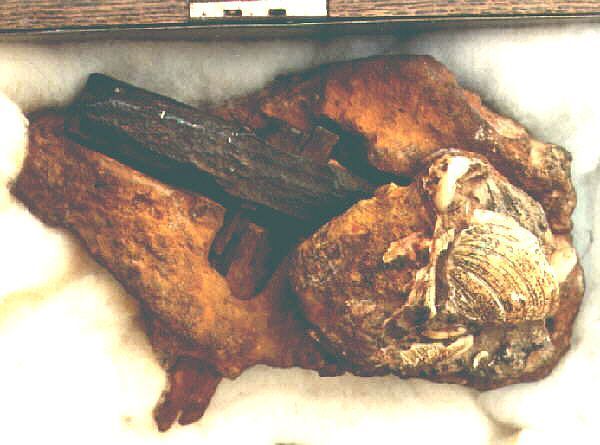 · 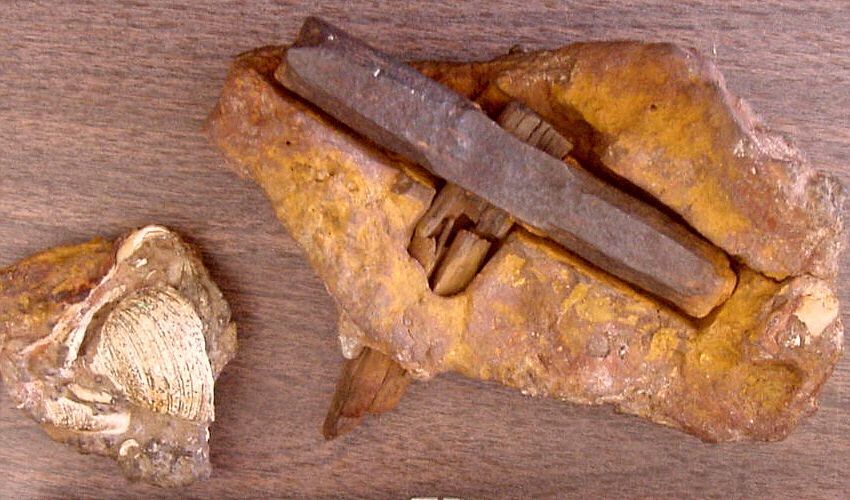 · 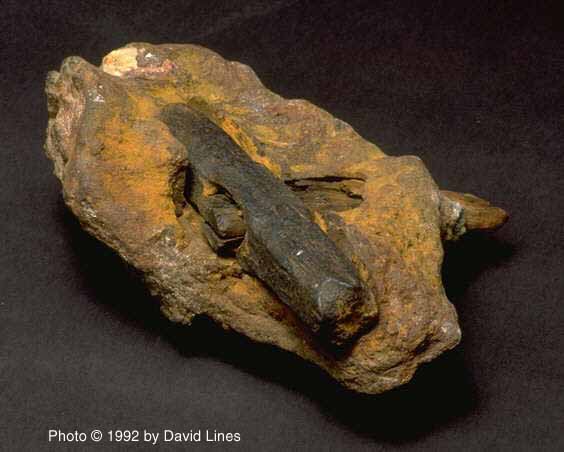 · 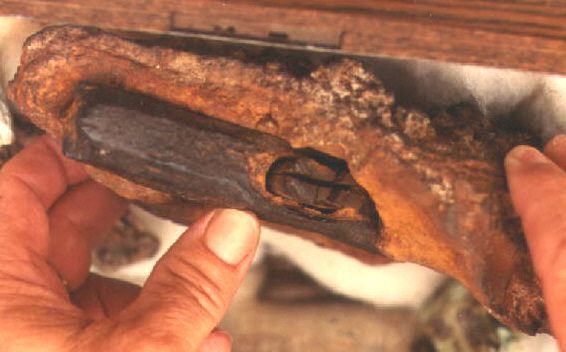 · |
|
#2
●
06-12-2009, 05:55 PM
|
 bite me! Poster Rank:148 female Join Date: Feb 2009 Posts: 11,289 11,289Posts 2,247Thanked 33Quoted 0Mentioned 0Contrib. |
|
Re: London Hammer: 1930s Find in a Concretion Near London, Texas
makes you think huh. What if humans existed before, fucked it up like we're doing now, got wiped out then re-emerged later. cool post  |
|
#4
●
06-15-2009, 09:40 AM
|
 ✝Mudderator from Hell✝ Poster Rank:10 e-mail Join Date: Oct 2006 Posts: 97,183
Contributions: 911
97,183Posts 547,352Thanked 10,431Quoted 481Mentioned 911Contrib. |
|
Re: London Hammer: 1930s Find in a Concretion Near London, Texas
Way cool. In the past i've done some reading about weird archeology findings and that the ruling scientists ignore these finds. There was also a wooden sandal found INSIDE a 400-500 million old rock somewhere in the U.S. (i seem to remember) Humans were not even around 65 million years ago, never mind people who could work metal. So then how does science explain semi-ovoid metallic tubes dug out of 65-million-year-old Cretaceous chalk in France? In 1885, a block of coal was broken open to find a metal cube obviously worked by intelligent hands. In 1912, employees at an electric plant broke apart a large chunk of coal out of which fell an iron pot! A nail was found embedded in a sandstone block from the Mesozoic Era. |
|
#5
●
06-15-2009, 09:54 AM
|
| ✝Mudderator from Hell✝ Poster Rank:10 e-mail Join Date: Oct 2006 Posts: 97,183
Contributions: 911
97,183Posts 547,352Thanked 10,431Quoted 481Mentioned 911Contrib. |
|
Re: London Hammer: 1930s Find in a Concretion Near London, Texas
It's a bit different.(it was a footprint) 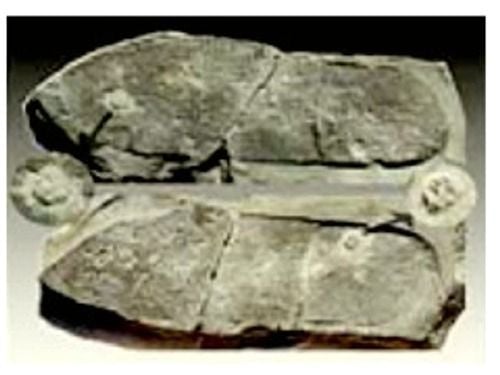 · |
|
#6
●
06-15-2009, 02:07 PM
|
 Super ********* Poster Rank:90 Join Date: Nov 2008 Posts: 17,370 17,370Posts 13,739Thanked 99Quoted 5Mentioned 0Contrib. |
|
Re: London Hammer: 1930s Find in a Concretion Near London, Texas
regarding the footprint... when i have broken stone apart working in a quarry i found that the stone was really unreliable as to how it would break, cant this just be that the rock just randomly split into this shape per chance? |
|
#10
●
07-05-2009, 05:52 PM
|
 ★ CUNT ★ Poster Rank:138 Join Date: Jan 2009 Posts: 12,112 12,112Posts 3,969Thanked 28Quoted 0Mentioned 0Contrib. |
|
Re: London Hammer: 1930s Find in a Concretion Near London, Texas
i agree para could be just that, interesting tho
|