|
#12
●
07-11-2024, 01:39 AM
| ||||||||
 My Rank: MASTER GUNNERY SERGEANT Poster Rank:370 Join Date: Feb 2010 Posts: 3,202 Mentioned: 4 Post(s) Quoted: 553 Post(s)
| ||||||||
|
Re: Whiskey's Briefing Room IV
Yes, I totally agree with the fact that it's a catch 22 situation with protecting the bases, cities & frontline personal & prioritizing things with minimal munitions must be a difficult decision to make as it's definitely a bugger if you do, bugger if you don't situation regardless if they are decoys or not. IMO, Losses are expected yes, BUT you can improve your loss rate by never staying in the one spot for long periods of time, you have to keep moving so that it's hard for them to get a fix on you, these birds need to be underground & not on parade for a start !  |
|
#13
●
07-14-2024, 12:17 PM
| ||||||||
 ✝Mudderator from Hell✝ Poster Rank:11 e-mail Join Date: Oct 2006 Posts: 95,385
Contributions: 817
Mentioned: 473 Post(s) Quoted: 10152 Post(s)
| ||||||||
|
Re: Whiskey's Briefing Room IV
A new method of destroying enemy reconnaissance drones. Previously, similar cases were published from Odesa and Mykolaiv regions, now a video has appeared from Kyiv region: during a training flight, a target simulating an aircraft-type UAV was destroyed.
|
|
#14
●
07-17-2024, 02:50 AM
| ||||||||
| ✝Mudderator from Hell✝ Poster Rank:11 e-mail Join Date: Oct 2006 Posts: 95,385
Contributions: 817
Mentioned: 473 Post(s) Quoted: 10152 Post(s)
| ||||||||
|
Re: Whiskey's Briefing Room IV
On March 6, Russia fired a missile into the Ukrainian port of Odesa that exploded about 400 metres (1,300ft) from where Ukrainian President Volodymyr Zelenskyy was preparing to tour the city with Greek Prime Minister Kyriakos Mitsotakis. “As we were getting into our cars, we heard a large explosion,” Mitsotakis later told reporters. “We were all concerned, especially if you consider that we were in an open space with no cover. It was quite savage.” Many Western leaders have visited Zelenskyy, but this was the only occasion when there was a plausible threat to their life and safety. Analysts in Athens do not believe it was an accident. “It was a message to Greece, a message to the Russophilic portion of Greek society,” said Konstantinos Filis, a professor of international relations who directs the Institute of Global Affairs at the American College of Greece. That Russophilic population is dropping dramatically. According to Dianeosis, an Athens-based think tank, about 70 percent of Greeks had a favourable view of Russia before the full-blown war in Ukraine. That fell to 50 percent after the 2022 invasion and to 30 percent last year. Just three days after the war began, Greece announced it was sending Ukraine two C-130 planeloads of rifles, ammunition and grenades. Germany’s Bild newspaper revealed they included 20,000 Kalashnikov rifles Greece had confiscated in 2013 en route to Libya, which is under a United Nations arms embargo. Greece’s early support for Ukraine caused the Russian embassy in Athens to call on “very senior politicians” to “come to their senses” and “stop anti-Russian propaganda”. Russian Ministry of Foreign Affairs spokesperson Maria Zacharova called Greece’s decision to send weapons to Ukraine “deeply mistaken” and “criminal”, warning that “in the end, the weapons will be turned on civilians, including the Greeks,” a reference to 150,000 ethnic Greek Ukrainians who then lived mainly in the besieged towns of Mariupol and Odesa. Officially, Greece has supplied Ukraine with an additional 20,000 155mm artillery shells, Stinger missiles and 40 Soviet-era BMP-1 armoured personnel carriers. It is currently preparing to send four massive transformers that convert high-voltage DC current produced by power stations to the lower AC voltage used on local distribution grids that supply households. Odesa, in particular, needs these because seven out of the nine transformers that ring the city have been knocked out by Russian strikes – part of the Kremlin’s aggressive strategy to shut down Ukraine’s defence industry and economy. Ukraine is also reportedly interested in the electricity generators now lying unused in coal-fired power stations Greece has decommissioned. Yet Ukraine is asking for more. Greece is about to decommission 32 older F-16 Block-30 fighter jets as it upgrades 82 F-16s to Block-70 and acquires 24 fourth-generation Rafale fighters from France. A US congressional committee has also cleared Greece to buy up to 40 fifth-generation F-35 multirole jets. Ukraine has made no secret of wanting them. One report has said Ukraine could expect 60 decommissioned F-16s from Denmark, Norway and the Netherlands. Ukraine has said it needs about 150. Greece’s 32 jets would go some way towards closing the gap. According to sources, Greece’s preferred formula for transferring those jets is to sell them back to the US, which would upgrade them and pass them on to Kyiv. |
|
#15
●
07-17-2024, 04:33 PM
| ||||||||
| ✝Mudderator from Hell✝ Poster Rank:11 e-mail Join Date: Oct 2006 Posts: 95,385
Contributions: 817
Mentioned: 473 Post(s) Quoted: 10152 Post(s)
| ||||||||
|
Re: Whiskey's Briefing Room IV
Many U.S.-made satellite-guided ammunitions in Ukraine have failed to withstand Russian jamming technology, prompting Kyiv to stop using certain types of Western-provided armaments after effectiveness rates plummeted, according to senior Ukrainian military officials and confidential internal Ukrainian assessments obtained by The Washington Post. Russia’s jamming of the guidance systems of modern Western weapons, including Excalibur GPS-guided artillery shells and the High Mobility Artillery Rocket System, or HIMARS, which can fire some U.S.-made rockets with a range of up to 50 miles, has eroded Ukraine’s ability to defend its territory and has left officials in Kyiv urgently seeking help from the Pentagon to obtain upgrades from arms manufacturers. Russia’s ability to combat the high-tech munitions has far-reaching implications for Ukraine and its Western supporters — potentially providing a blueprint for adversaries such as China and Iran — and it is a key reason Moscow’s forces have regained the initiative and are advancing on the battlefield. The success rate for the U.S.-designed Excalibur shells, for example, fell sharply over a period of months — to less than 10 percent hitting their targets — before Ukraine’s military abandoned them last year, according to the confidential Ukrainian assessments. While other news accounts have described Russia’s superior electronic warfare capabilities, the documents obtained by The Post include previously unreported details on the extent to which Russian jamming has thwarted Western weaponry. “The Excalibur technology in existing versions has lost its potential,” the assessments found, adding that battlefield experience in Ukraine had disproved its reputation as a “one shot, one target” weapon — at least until the Pentagon and U.S. manufacturers address the issue. Six months ago, after Ukrainians reported the issue, Washington simply stopped providing Excalibur shells because of the high failure rate, the Ukrainian officials said, speaking on the condition of anonymity to discuss a sensitive security matter. In other cases, such as aircraft-dropped bombs called JDAMs, the manufacturer provided a patch and Ukraine continues to use them. Ukraine’s military command prepared the reports between fall 2023 and April 2024 and shared them with the U.S. and other supporters, hoping to develop solutions and open up direct contact with weapons manufacturers. In interviews, Ukrainian officials described an overly bureaucratic process that they said had complicated a path toward urgently needed adjustments to improve the failing weaponry. The officials agreed to answer questions about the assessments in hopes of drawing attention to the Ukrainian military’s needs. Several Ukrainian and U.S. officials interviewed for this story spoke on the condition of anonymity due to the sensitivity of the issue. The Pentagon anticipated that some precision-guided munitions would be defeated by Russian electronic warfare and has worked with Ukraine to hone tactics and techniques, a senior U.S. defense official said. Russia “has continued to expand their use of electronic warfare,” the senior U.S. official said. “And we continue to evolve and make sure that Ukraine has the capabilities they need to be effective.” The U.S. defense official rejected claims that bureaucracy has slowed the response. The Pentagon and weapons manufacturers have provided solutions sometimes within hours or days, the official said, but did not provide examples. U.S.-made guided munitions provided to Ukraine typically were successful when introduced, but often became less so as Russian forces adapted. Now, some arms once considered potent tools no longer provide an edge. In a conventional war, the U.S. military might not face the same difficulties as Ukraine because it has a more advanced air force and robust electronic countermeasures, but Russia’s capabilities nonetheless put heavy pressure on Washington and its NATO allies to continue innovating. “I’m not saying no one was worried about it before, but now they’re starting to worry,” one senior Ukrainian military official said. “As we share information with our partners and our partners share with us, the Russians definitely also share with China,” the official added. “And even if they don’t share with China … China monitors events in Ukraine.” Russia’s invasion of Ukraine created a modern testing ground for Western arms that had never been used against a foe with Moscow’s ability to jam GPS navigation. Innovation is a feature of virtually every conflict, including the war in Ukraine, where each side deploys technology and novel changes to outfox the other and exploit vulnerabilities. The Russian military has been adept at electronic warfare for years, analysts and officials said, investing in systems that can overwhelm the signals and frequency of electronic components, such as GPS navigation, which helps guide some precision munitions to their targets. Ukrainians initially found success using Excalibur 155mm rounds, with more than 50 percent accurately hitting their targets early last year, according to the confidential assessment, which was based on direct visual observations. Over the next several months, that dropped below 10 percent, with the assessment pointing to Russian GPS jamming as the culprit. The study cautioned that far fewer shells were fired later in the research period, and many were not observed, leaving the precise success rate unclear. But even before the United States ceased deliveries, Ukrainian artillerymen had largely stopped using Excalibur, the assessments said, because the shells are harder to use compared with standard howitzer rounds, requiring time-consuming special calculations and programming. Now they are shunned altogether, military personnel in the field said. The senior Ukrainian official said Kyiv shared this feedback with Washington but got no response. The Ukrainians have faced a similar challenge with guided 155mm shells provided by other Western countries. Some employ guidance other than GPS, and it is unclear why they also became less effective. U.S. defense officials declined to address the Ukrainian assertion. The Excalibur precision artillery round typifies many U.S. weapons: pricey and sophisticated but accurate. Ukraine has used the rounds, fired by U.S. artillery systems such as the M777, to destroy targets, like enemy artillery and armored vehicles, from about 15 to 24 miles away. Rob Lee, a senior fellow with the Foreign Policy Research Institute, a Philadelphia-based research group, said that Russia’s use of electronic warfare to combat guided munitions was an important battlefield development in the past year. Many weapons are potent when they’re introduced, but they lose effectiveness over time, Lee said, part of a nonstop game of cat-and-mouse between adversaries who constantly adapt and innovate. The involvement of defense companies is crucial to overcoming Russian defenses such as jamming, Lee said. “The problem with a lot of Western defense companies,” Lee said, compared with Russian manufacturers, is that “there is not the same sense of urgency.” A web of Russian electronic warfare systems and air defenses menace Ukrainian pilots, the documents said, adding that some Russian jammers also scramble the navigation system of planes. The Russian defense is so dense, the assessment found, that there are “no open windows for the Ukrainian pilots where they feel that they are not at gunpoint.” Despite some effort to thwart the jamming, potential fixes seem limited until the West delivers F-16 fighter jets, the assessment found. Such modern planes would allow Ukraine’s Air Force to push Russian pilots back, enabling the use of different kinds of weapons with greater range and ability to avoid some electronic warfare systems. The aircraft-dropped JDAMs provide another example of declining effectiveness of weaponry. Their introduction, in February 2023, was a surprise to Russia. But within weeks, success rates dropped after “non resistance” to jamming was revealed, according to the assessment. In that period, bombs missed their targets from as little as 65 feet to about three quarters of a mile. Ukraine provided feedback about the jamming problem, and the U.S. and weapons manufacturers delivered improved systems in May, the documents said. Since then, JDAMs have proved more resistant to jamming than other GPS-guided weapons, the assessment found, and accuracy improved to a hit rate above 60 percent over nine months in 2023. HIMARS were celebrated during the first year of Russia’s invasion for their success in striking ammunition depots and command points behind enemy lines. But by the second year, “everything ended: the Russians deployed electronic warfare, disabled satellite signals, and HIMARS became completely ineffective,” a second senior Ukrainian military official said. “This ineffectiveness led to the point where a very expensive shell was used” increasingly to strike lower-priority targets. The Ukrainian military documents did not assess guided M30 or M31 munitions, which are fired from HIMARS launchers. But in January, Ukraine’s military command wrote a policy paper urging Western supporters to provide an alternative: M26 cluster munitions that also could be launched from multiple-launch rocket systems. These low-tech, unguided rockets are resistant to jamming, and the cluster submunitions can still hit targets in a wide area even if the shot is imprecise. Kyiv still considers its HIMARS rockets effective, but Russian jamming can cause them to miss a target by 50 feet or more. “When it’s, for example, a pontoon bridge … but there’s a 10-meter deviation, it ends up in the water,” the first Ukrainian official said. Russian jamming signals are sent up from the ground and form a cone-shaped area. Any guided munition — or aircraft — passing through is at risk of interference. A battalion commander, speaking on the condition of anonymity because he was not authorized to do so publicly, described flying a reconnaissance drone in foggy conditions last year in Bakhmut to track a HIMARS strike on a Russian position. On his screen, the commander watched in dismay as each rocket missed. One way the Ukrainians counter Russia’s jamming is by targeting known electronic warfare systems with drones before using HIMARS. This has proved effective in some cases. “Initially, there were no problems,” the first senior official added. “It was simple: the machine arrived. The button was pressed and there was a precise hit. Now, it’s more complicated.” The official added: “The Americans are equipping HIMARS with additional equipment to ensure good geolocation.” One U.S. weapon used by aircraft, the GBU-39 small-diameter bomb, has proved resilient to jamming, according to the confidential documents. Nearly 90 percent of dropped bombs struck their target, the assessment found. Its smaller surface area makes it more difficult for Russian systems to detect and intercept, the documents said. Ukraine first received the aerial weapons, which has not been previously disclosed by the Pentagon, in November 2023. The GBU-39 was also adapted for land use in HIMARS systems, a development that Pentagon officials said would increase the range of rocket artillery. But the modified weapons, known as ground-launched small-diameter bombs, or GLSDB, proved ineffective compared to those launched from airplanes, Ukrainian officials said. The ground versions were tested in Ukraine, one official said, and the Americans are working on adjustments before providing them anew. William LaPlante, the Pentagon’s acquisition chief, said last month that an adapted weapon “didn’t work for multiple reasons,” including jamming and other tactical and logistical issues. LaPlante did not disclose which weapon he was referring to, but other experts said that he was describing the GLSDB. “When you send something to people in the fight of their lives,” LaPlante said, “they’ll try it three times and then they just throw it aside.” Senior Ukrainian military officials said Storm Shadow air-launched cruise missiles, provided by Britain, are less susceptible to Russian jamming because they do not rely solely on GPS but two other navigation systems, including an internal map that matches the terrain of its intended flight path. Russian air defenses nonetheless have had some success intercepting them. The Ukrainians have also had success so far with U.S.-provided ATACMS long-range missiles, which have a range of up to 190 miles, but they, too, can be targeted by Russian air defenses. The Ukrainian officials said they expect that weapons effective on the battlefield now will similarly slump within a year. “The Russians will learn how to fight it,” the second Ukrainian official said. “That’s how the arms race works.” 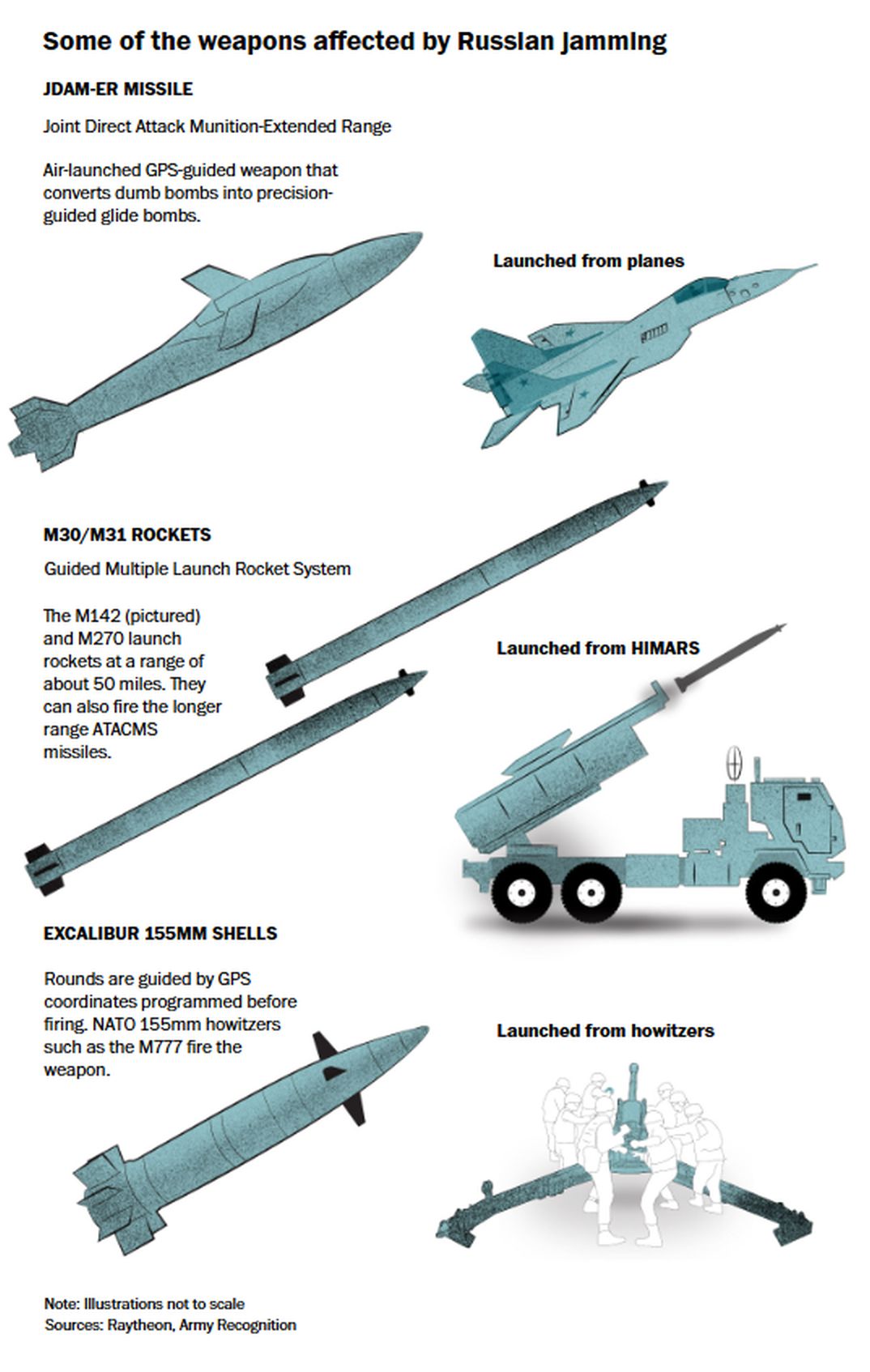 · |
|
#16
●
07-23-2024, 06:09 PM
| ||||||||
| ✝Mudderator from Hell✝ Poster Rank:11 e-mail Join Date: Oct 2006 Posts: 95,385
Contributions: 817
Mentioned: 473 Post(s) Quoted: 10152 Post(s)
| ||||||||
|
Re: Whiskey's Briefing Room IV
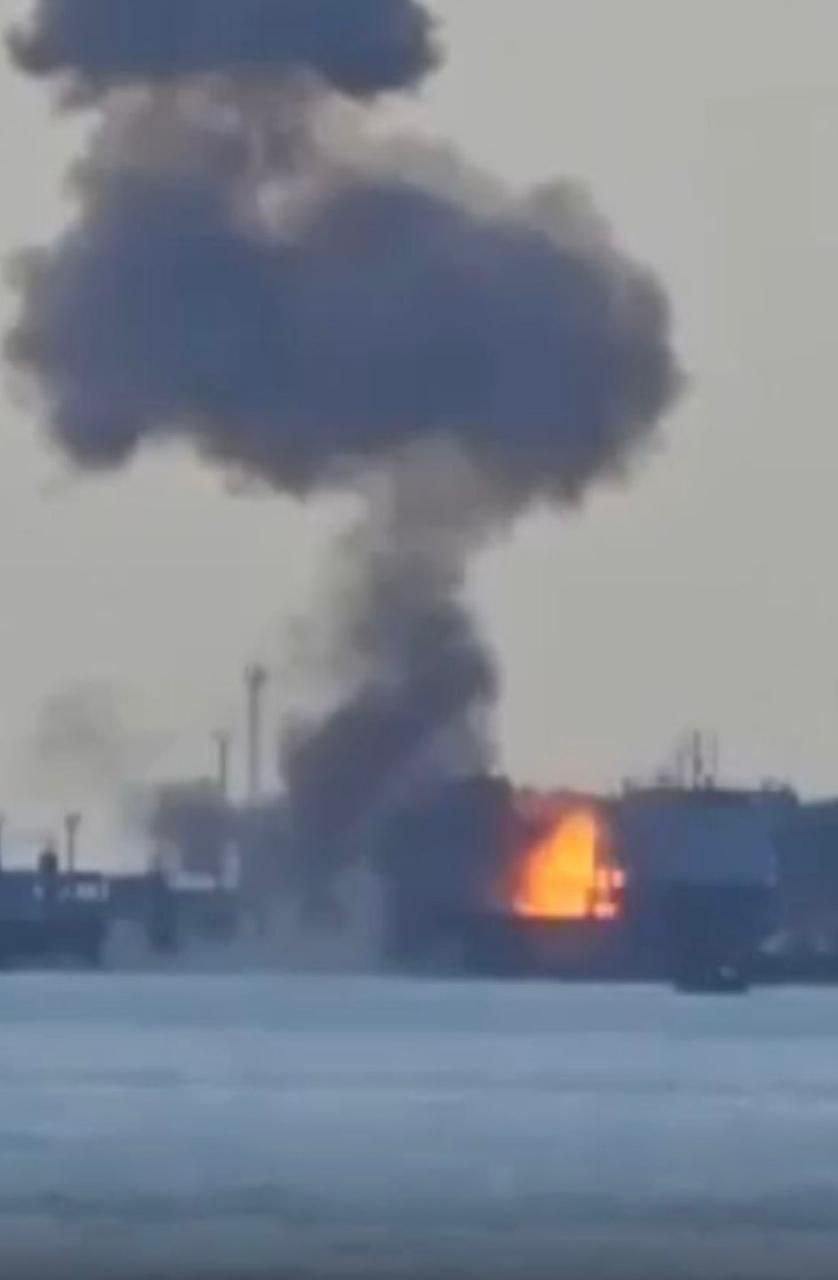
Ukraine severely damaged the last functional Russian cargo ferry for railcars, 150 meter long 'Slavyanin' at Port Kavkaz next to the Kerch bridge which connects occupied Crimea to Russia.
 · |
|
#17
●
07-24-2024, 09:24 AM
| ||||||||
| My Rank: STAFF SERGEANT Poster Rank:781 Join Date: Jun 2020 Posts: 1,012 Mentioned: 1 Post(s) Quoted: 422 Post(s)
| ||||||||
|
Re: Whiskey's Briefing Room IV
https://news.sky.com/story/uk-must-b...warns-13183844 Was reading this this morning. Maybe this is why the uk government has made the new website urging all residents to stock up on tined food and enough water for the family for three days in the event of an unforseen emergency *a nuke on the city maybe* Too much doom and gloom. |
|
#18
●
07-24-2024, 04:37 PM
| ||||||||
| ✝Mudderator from Hell✝ Poster Rank:11 e-mail Join Date: Oct 2006 Posts: 95,385
Contributions: 817
Mentioned: 473 Post(s) Quoted: 10152 Post(s)
| ||||||||
|
Re: Whiskey's Briefing Room IV
Food and water for 3 days after a city gets nuked. And then? The country back to normal and buy food and water at the supermarket and leave it this way? Nothing will ever be the same when any city will be nuked as nukes will fly towards the enemy as payback. The new chief is a real military man with a lot of experience and he just wants to make a stronger army/self defence so shaking up things with doom scenarios is one way to achieve this as the British army isn't the same as years ago. New chief: https://www.thenationalnews.com/worl...-british-army/ Don't think russia will be allowed by China to use nukes and certainly won't be using nukes or even invading Taiwan etc. because of this: https://thediplomat.com/2024/06/fear...ly-weak-china/ |
|
#19
●
07-24-2024, 10:13 PM
| ||||||||
| My Rank: MASTER GUNNERY SERGEANT Poster Rank:370 Join Date: Feb 2010 Posts: 3,202 Mentioned: 4 Post(s) Quoted: 553 Post(s)
| ||||||||
|
Re: Whiskey's Briefing Room IV
Yes, well that's debatable as being "Allowed" to use certain weapons in a fight has well & truly been tested & IMO will be used in this escalating madness that's become the new norm.
|
|
#20
●
07-25-2024, 05:31 PM
| ||||||||
| My Rank: STAFF SERGEANT Poster Rank:781 Join Date: Jun 2020 Posts: 1,012 Mentioned: 1 Post(s) Quoted: 422 Post(s)
| ||||||||
|
Re: Whiskey's Briefing Room IV
it's and underhand way or "preparing the public without actually explaining why because most are thick enough to believe its survivable. fuck the 3 days food and water, this country is too small to be able to survive such an attack, Only the elite would survive in their silly rich bunkers. until they are found and raided by hungry radioactive turds. As for our army. its fucked. 70k troops is all we have, far too much reliance on our "deterrent" with which two of the last test firings failed. Very reassuring. |