|
#21
●
04-19-2023, 04:39 AM
| ||||||||
 ♚ Legacy Gold Member ♚ Poster Rank:207 Former US Soldier Join Date: Aug 2019 Posts: 7,263 Mentioned: 65 Post(s) Quoted: 3245 Post(s)
| ||||||||
|
Re: Whiskey's Briefing Room II
These Russian Telegrams posting "buy us" shopping lists for Russian military units are getting more and more extensive and asking for more basic items. They're literally asking for "systems of uninterrupted supply" of PKM ammunition. A belt fed machine gun. The Russian MoD is unable to provide 7.62x54r ammo to a unit that is either in active combat or back in the rear where they will return to front lines shortly? Ukrainians have their Telegram channels doing this too, but most of their requests are for civilian 4WD vehicles, thermal drones and western medical supplies. Not literal rifle ammunition for infantry units. If Russia is having issues supplying units on a front line that has barely moved in the past months, imagine their difficulties with specialized and heavy equipment. 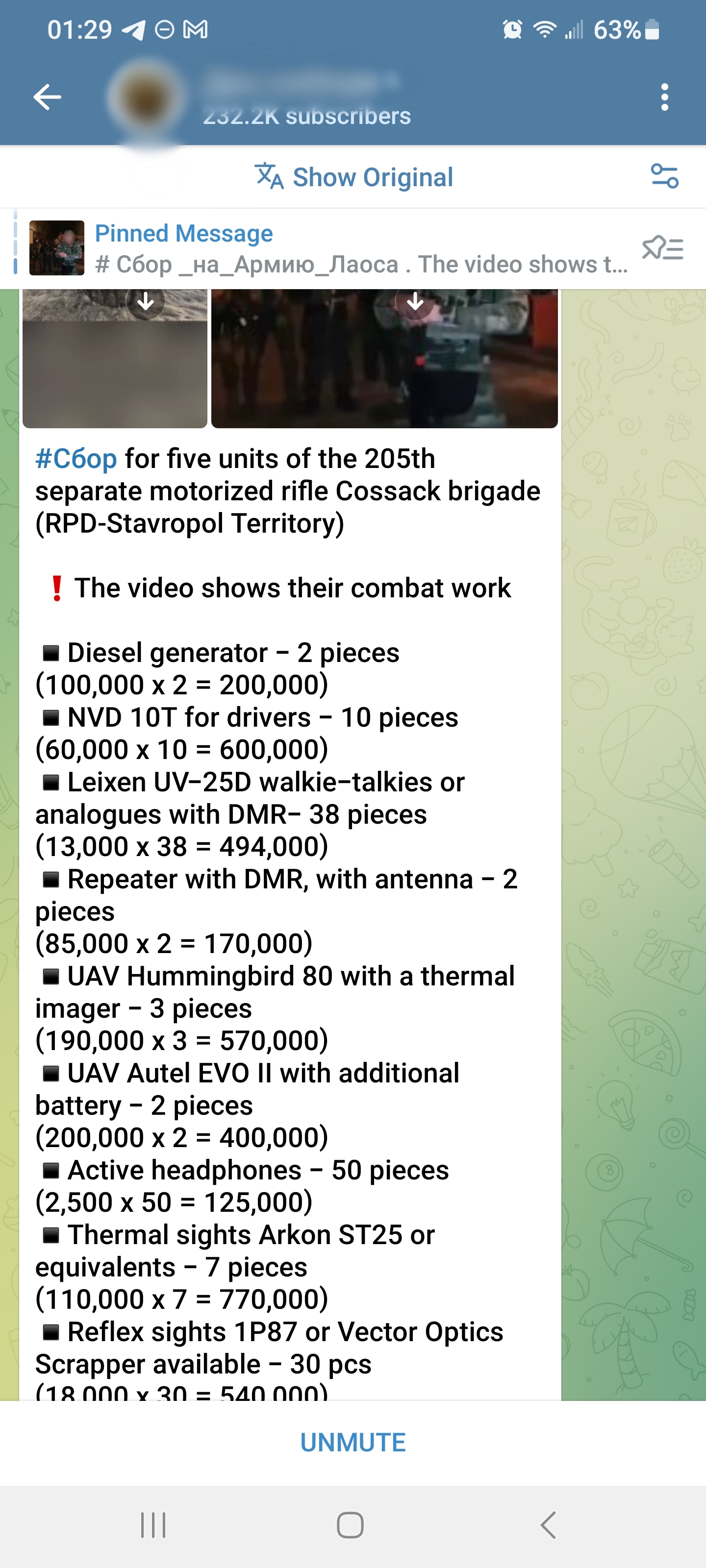 · 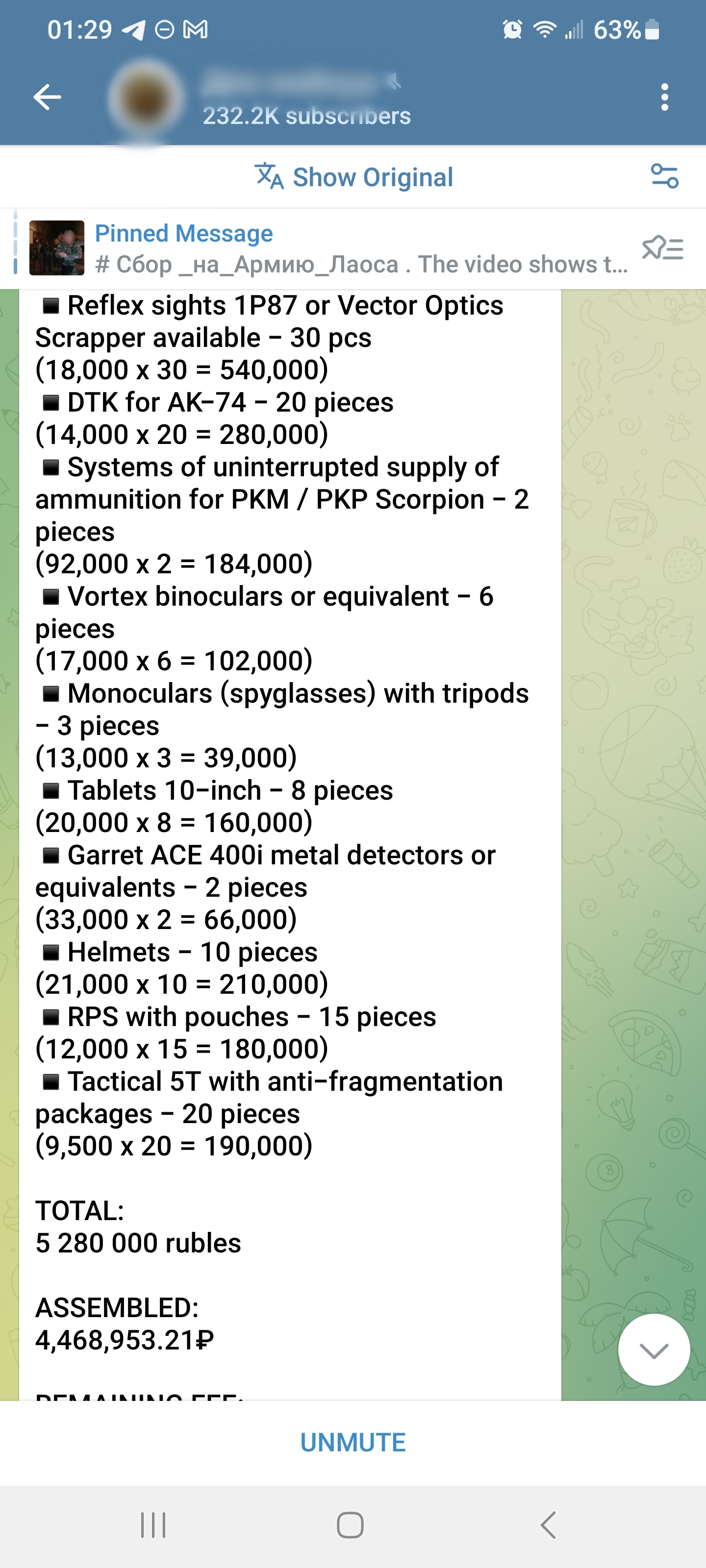 · |
|
#22
●
04-19-2023, 12:48 PM
| ||||||||
 ☾ Administrator ☽ Poster Rank:76 ஜᎻᎬᎩᎾᏦᎪஜ Join Date: Dec 2011 Posts: 19,489
Contributions: 32
Mentioned: 171 Post(s) Quoted: 6835 Post(s)
| ||||||||
|
Re: Whiskey's Briefing Room II
"Have you ever wondered why in the beginning of the war Russian military was committing so many atrocities in a country they supposedly came to liberate? This is the best explanation I’ve heard so far. Zelensky's advisor, Mykhailo Podolyak, is right on the money!"
__________________ 💜🧿See Human | Be Human🧿💜 (War Section Hashtags) |
|
#23
●
04-19-2023, 02:25 PM
| ||||||||
| ☾ Administrator ☽ Poster Rank:76 ஜᎻᎬᎩᎾᏦᎪஜ Join Date: Dec 2011 Posts: 19,489
Contributions: 32
Mentioned: 171 Post(s) Quoted: 6835 Post(s)
| ||||||||
|
Re: Whiskey's Briefing Room II
More from his visit to Avdiivka / Avdeevka yesterday.
__________________ 💜🧿See Human | Be Human🧿💜 (War Section Hashtags) |
|
#24
●
04-19-2023, 02:33 PM
| ||||||||
| ☾ Administrator ☽ Poster Rank:76 ஜᎻᎬᎩᎾᏦᎪஜ Join Date: Dec 2011 Posts: 19,489
Contributions: 32
Mentioned: 171 Post(s) Quoted: 6835 Post(s)
| ||||||||
|
Re: Whiskey's Briefing Room II
"Andrii Pokrasa, 15, bought a drone to film beautiful places in Ukraine. When the full-scale invasion began, he used his drone to stop a convoy of Russian military vehicles on Zhytomyr highway."
__________________ 💜🧿See Human | Be Human🧿💜 (War Section Hashtags) |
|
#25
●
04-19-2023, 02:36 PM
| ||||||||
| ☾ Administrator ☽ Poster Rank:76 ஜᎻᎬᎩᎾᏦᎪஜ Join Date: Dec 2011 Posts: 19,489
Contributions: 32
Mentioned: 171 Post(s) Quoted: 6835 Post(s)
| ||||||||
|
Re: Whiskey's Briefing Room II
"Putin tried to justify himself for only visiting troops 130km from the frontlines (if that was him). I thought terrorist Girkin-Strelkov gave a perfect reply to Putin's excuses in one of his previous videos." lol Girkin... seriously pushing his luck, it would seem. Not sure how he gets away with this for so long.
__________________ 💜🧿See Human | Be Human🧿💜 (War Section Hashtags) |
|
#26
●
04-19-2023, 02:40 PM
| ||||||||
| ☾ Administrator ☽ Poster Rank:76 ஜᎻᎬᎩᎾᏦᎪஜ Join Date: Dec 2011 Posts: 19,489
Contributions: 32
Mentioned: 171 Post(s) Quoted: 6835 Post(s)
| ||||||||
|
Re: Whiskey's Briefing Room II
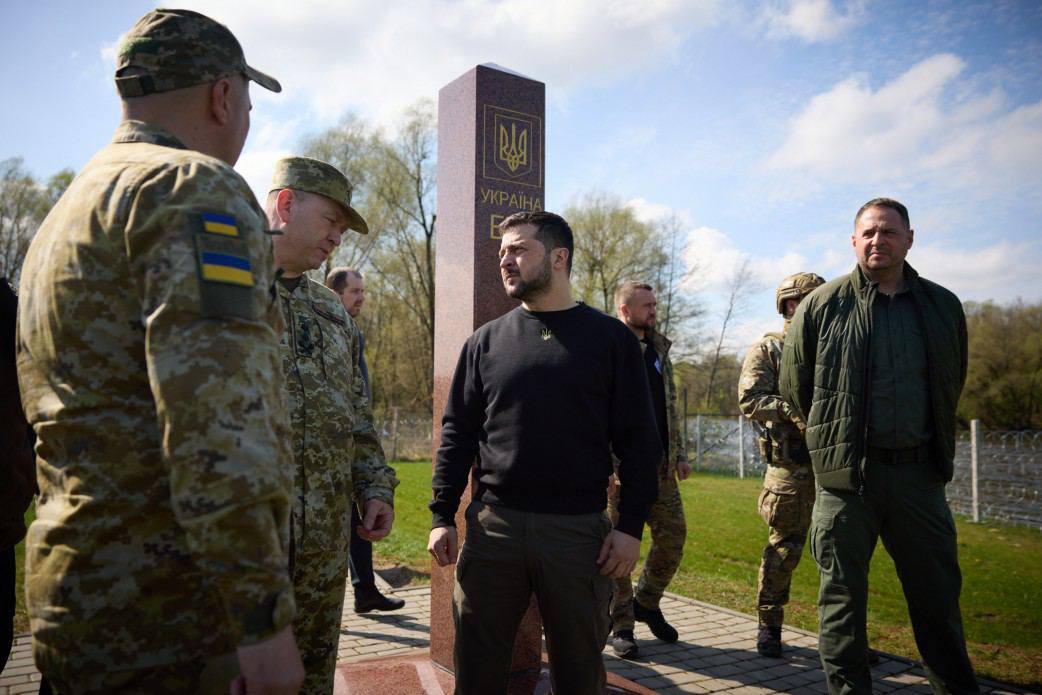
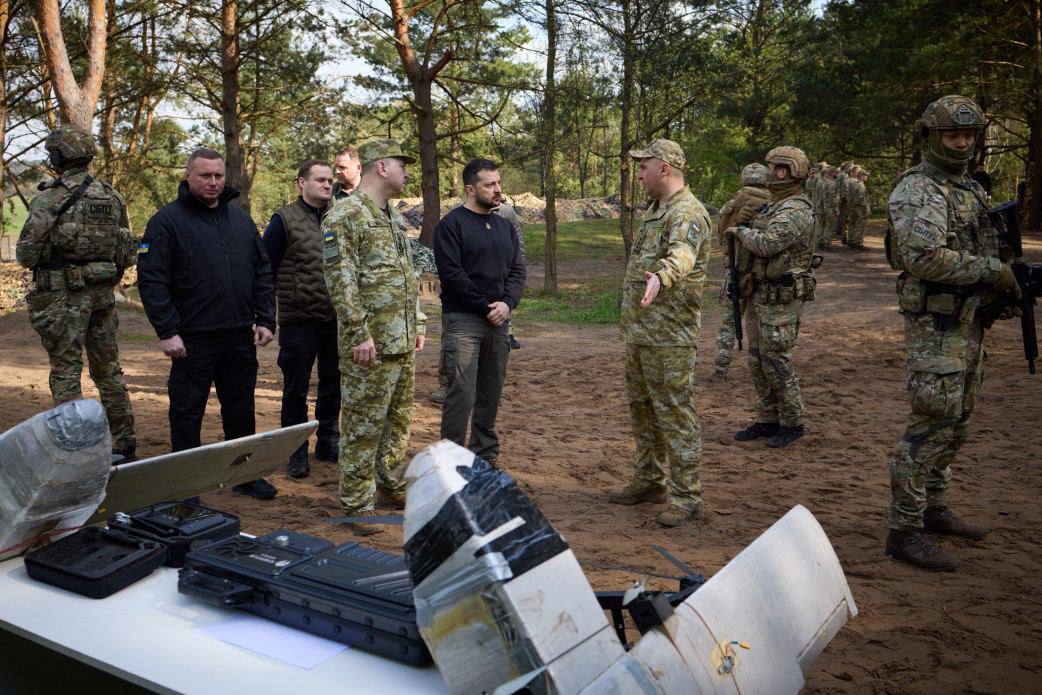
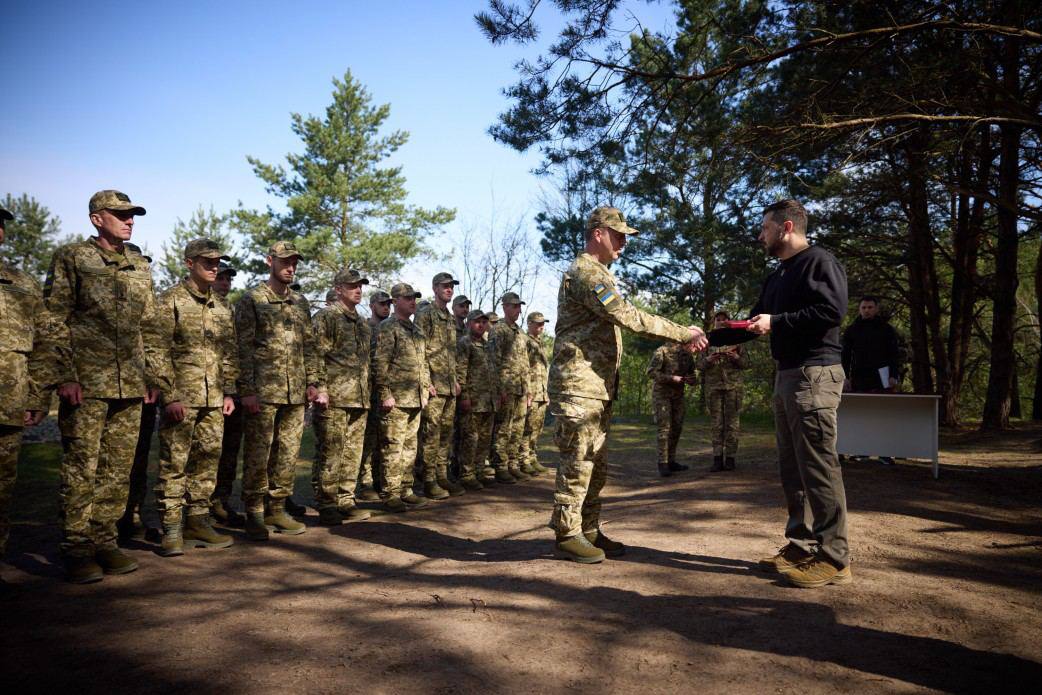
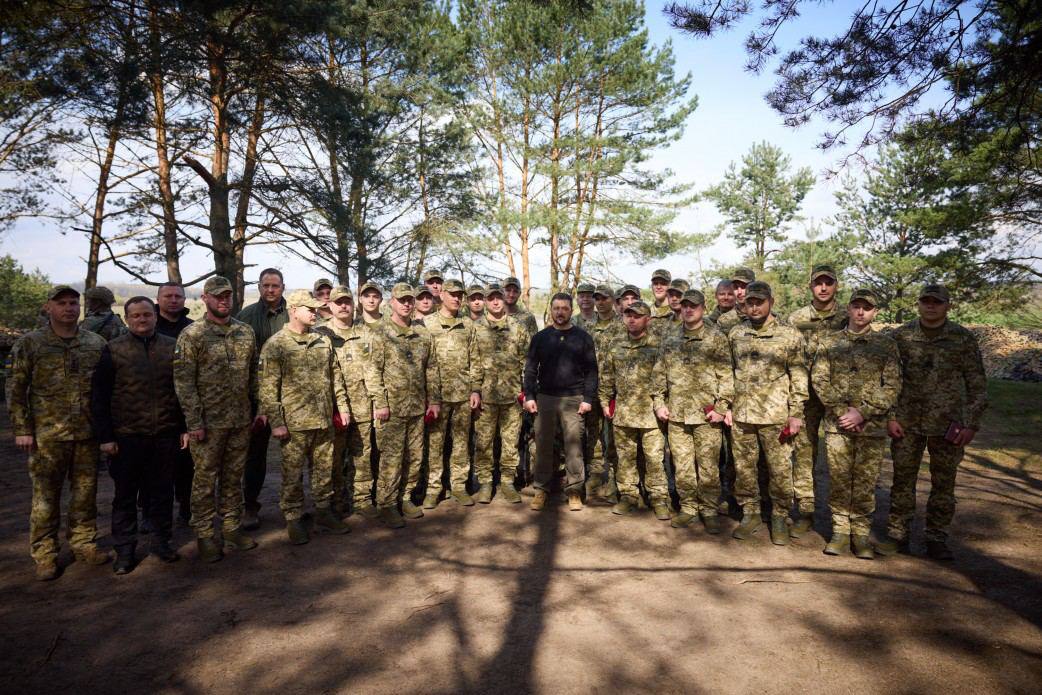
"Zelensky arrived in Volyn, where he met with border guards. The President also held a meeting on the arrangement and protection of the border, the security situation in the region, and presented border guards with awards."
 ·  ·  ·  ·
__________________ 💜🧿See Human | Be Human🧿💜 (War Section Hashtags) |
|
#27
●
04-19-2023, 04:02 PM
| ||||||||
| ☾ Administrator ☽ Poster Rank:76 ஜᎻᎬᎩᎾᏦᎪஜ Join Date: Dec 2011 Posts: 19,489
Contributions: 32
Mentioned: 171 Post(s) Quoted: 6835 Post(s)
| ||||||||
|
Re: Whiskey's Briefing Room II
Source: https://telegra.ph/The-Russian-offen...tuation--04-19 The Russian offensive has failed. They continue to attack Bakhmut, and elsewhere the occupiers are on the defensive. The situation at the front on the 420th day of the big war. Live: Ukraine | April 19, 2023  The Russian army continues to advance in Bakhmut, but over the past 10 days has managed to capture only a few neighborhoods. The occupiers have also stopped trying to surround the city - for two months they have been trying to cut off the roads to Bakhmut. Ukraine remains in control of a military unit and blocks with high-rise buildings in the western part of Bakhmut. The occupiers have already captured the north, south and east of the city. The Russians have failed to advance in the remaining areas and are stopping their attacks. They are moving to defense and preparing for a counteroffensive by the Ukrainian army. Meanwhile, Slovakia has handed over all of its Soviet MiG-29 fighters to Ukraine The Russian winter-spring offensive has completely failed This was stated by the head of the Defense Intelligence of Ukraine Kyrylo Budanov. The situation at the front also confirms this - the occupiers are advancing only in Bakhmut, seizing building after building. They are also still trying to advance around Avdiivka in Donetsk region, but have hardly seized any new positions over the past week. In all other areas, the Russians have not advanced and have stopped major attacks. Budanov says that the occupiers are now moving to strategic defense, and the owner of the Wagner PMC, Yevheniy Prigozhin, calls on the Russian authorities to declare victory, stop the "SMO" and gain a foothold in the already captured territories. Meanwhile, Putin visits Russian military headquarters in the occupied territories of Luhansk and Kherson regions. The front line has almost stabilized. At the beginning of the year, the Russians launched their "big" offensive, but since then they have only managed to capture Soledar and almost completely take Bakhmut. In other areas, the occupiers' attacks were repelled. Western media continue to discuss Ukraine's upcoming counteroffensive, communicate with experts and sources in the military and political leadership of Ukraine's partner countries, and try to guess when and where it will begin. The Washington Post reported that the counteroffensive was delayed due to bad weather, leaked Pentagon documents, and slow supplies of weapons and ammunition. Analysts emphasized that the Ukrainian offensive will be extremely difficult, as the Russians have managed to dig in and build several lines of defense. This could lead to a collapse of the frontline like the one in Kharkiv region in the fall of 2022, and Ukrainian troops will advance only a few tens of kilometers. However, Pentagon chief Lloyd Austin noted that Ukraine has an "excellent plan" for a counteroffensive, and its army has received a significant part of the capabilities to implement it. National Security and Defense Council Secretary Oleksiy Danilov explained that the decision to launch a counteroffensive would be made at the last minute. For the second week in a row, Western media continue to publish various details from the leaked Pentagon documents. The culprit of the leak has already been identified - 21-year-old National Guard officer Jack Teixeira from Massachusetts. He worked in the intelligence wing and maintained an electronic system in which classified documents are distributed, so he had access to classified information, which he then published in a closed Discord channel. One of the documents states that the US sees no possibility of ending the war until the end of 2023. They believe that the fighting will reach a stalemate and will continue next year. Meanwhile, in Russia, on April 11, the State Duma passed a law on electronic subpoenas. From now on, Russians will be able to receive summonses to military commissariats in their electronic accounts on the state website "Gosuslugi". Even if you do not visit the website, after 7 days the authorities will consider that the summons has been received and read. After the summons is sent, the Russian will be banned from traveling abroad. If they fail to report to the military enlistment office, their driver's license will be revoked, they will be banned from selling their home, getting loans, etc. The State Duma also allowed Russians to enlist in the army immediately after high school. Moreover, from now on, Russians can be enlisted in the military reserve even without their knowledge and without a visit to the military enlistment office. This may indicate that the Russian authorities are preparing for a second wave of mobilization. For more than a month now, the Russians have not organized massive missile strikes. Over the past 10 days, they have hardly used Shahed-136 kamikaze drones. They have only launched them at targets near the front line. However, they continue to use guided aerial bombs, which cause extensive damage to frontline and border towns and villages. In Kharkiv region, the front line has not changed. Russians still control a small area in the northeast, near the Russian-Ukrainian border. The occupiers are trying to advance toward Kupiansk and along the Oskil River to push the Ukrainian army back beyond it. Russians are not advancing in Luhansk region either. The biggest battles are taking place near the village of Dibrova and in the forests south of Kreminna. The main goal of the Russians is to push Ukrainian troops away from the towns of Kreminna and Svatove, as well as from the highway between them. But in more than two months, they have advanced only a few kilometers. On the southern bank of the Siverskyi Donets River, the administrative border of Luhansk and Donetsk regions, Russians continue to advance on the town of Bilohorivka and the villages of Verkhnokamianske and Spirne. Near Bilohorivka, they managed to capture several Ukrainian positions and move closer to the town. These settlements cover the flank of the Ukrainian military, who are holding back the Russians behind Soledar, and prevent them from reaching Siversk quickly and simultaneously from several sides. The occupiers will pay less attention to this direction until they capture Bakhmut. The Russians are advancing slowly in Bakhmut, they have been completely stopped around the city. Ukrainian troops are trying to hold the front line along the railroad line, but in the north and south, the Russians have crossed it. Currently, Ukraine controls the territory of a military unit and several high-rise neighborhoods in the west of Bakhmut, which is about 20% of the city. Ukrainian troops are also actively mining buildings as they retreat, and remotely detonating them when Russians enter and take up positions. In all other areas of Donetsk region, the situation has hardly changed. The occupants are slowly advancing east and north of Avdiivka, destroying the city with air strikes. However, it is still far from being surrounded. To the south of the city, Russians have not been successful for several weeks. Currently, the main fighting is taking place west of the village of Novobakhmutivka along the Konstantinovka-Donetsk road. Fighting is also taking place in the town of Marinka, but Russians are not making any headway there. Instead, the situation has stabilized near the town of Vuhledar, and the occupiers are not trying to actively advance. In Zaporizhzhia region, the front line is not changing. Neither Russia nor Ukraine is attempting a large-scale attack in this area, but they continue to exchange fire. In Kherson region, the front line is not changing either - it has stabilized along the Dnipro River. Mutual fire across the river continues there. Most likely, the front line along the Dnipro River will remain unchanged until the occupied territory of Zaporizhzhia region is liberated. On April 17, Slovakia announced that it had handed over all 13 of its Soviet MiG-29 fighter jets to Ukraine. Four of them were shipped on their own at the end of March, and now the remaining 9 have been delivered by land. This could mean that a significant number of these aircraft are in poor condition and need to be repaired or become a donor of spare parts for other Ukrainian fighters. The leaked Pentagon documents contain information that Egypt planned to secretly export missiles for multiple launch rocket systems to Russia. But the plan stopped in March 2023. This was preceded by negotiations with senior US officials. After that, Egypt approved the sale of 152- and 155-mm artillery shells to the United States, which would then be transferred to Ukraine. The documents indicate that Cairo allegedly planned to use its weapons production facilities for Ukraine as a lever to obtain modern US military equipment, including F-35 fighters and Patriot air defense systems. On April 13, the Council of the European Union approved the allocation of one billion euros under the European Peace Facility for ammunition for the Ukrainian Defense Forces. This amount will allow the EU to reimburse member states for the cost of ammunition they transfer to Ukraine from their stockpiles or purchase from manufacturers.
__________________ 💜🧿See Human | Be Human🧿💜 (War Section Hashtags) |
|
#28
●
04-19-2023, 09:30 PM
| ||||||||
| ☾ Administrator ☽ Poster Rank:76 ஜᎻᎬᎩᎾᏦᎪஜ Join Date: Dec 2011 Posts: 19,489
Contributions: 32
Mentioned: 171 Post(s) Quoted: 6835 Post(s)
| ||||||||
|
Re: Whiskey's Briefing Room II
"The USA announced a new package of military aid to Ukraine worth 325 million dollars. The list of assistance will include, in particular: ℹ️ Additional ammunition for HIMARS; ℹ️ 155-mm and 105-mm artillery shells; ℹ️ Heavy TOW anti-tank missile systems; ℹ️ AT-4 anti-tank complexes; ℹ️ Anti-tank mines; ℹ️ Explosive munitions for destroying obstacles; ℹ️ Over 9 million small arms ammunition; ℹ️ Four vehicles of material and technical support; ℹ️ High-precision aviation ammunition; ℹ️ Testing and diagnostic equipment to support maintenance and repair of cars; ℹ️ Equipment for the protection of ports and harbors; ℹ️ spare parts and other field equipment."
__________________ 💜🧿See Human | Be Human🧿💜 (War Section Hashtags) |
|
#29
●
04-19-2023, 10:28 PM
| ||||||||
| ☾ Administrator ☽ Poster Rank:76 ஜᎻᎬᎩᎾᏦᎪஜ Join Date: Dec 2011 Posts: 19,489
Contributions: 32
Mentioned: 171 Post(s) Quoted: 6835 Post(s)
| ||||||||
|
Re: Whiskey's Briefing Room II
If anyone missed it, there is another piece involving Patraeus regarding the war, posted in a thread on 19 February 2023. Source: https://www.rferl.org/a/petraeus-int.../32369104.html Ukraine War A Clear-Cut Case Of 'Right Versus Wrong,' Says Petraeus April 18, 2023 14:30 GMT | By Vazha Tavberidze 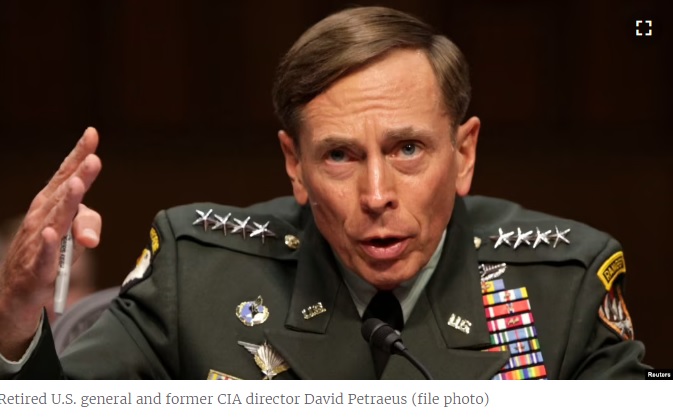 Retired four-star General David Petraeus is a veteran of nearly four decades in the U.S. Army, commanding U.S. forces in Iraq and Afghanistan before serving as director of the CIA in 2011-12. In an interview with RFE/RL's Georgian Service, Petraeus argues that Russia's invasion of Ukraine is "about as clear a right-versus-wrong as we've seen in our lifetime." He also talks about the "staggering failure" of Russia's military leadership and its refusal to learn from its mistakes, the aims and strengths of Kyiv's impending "combined arms" offensive, and why the West can't seek "an early exit." RFE/RL: Where do we stand now in the Ukraine war? David Petraeus: I think we stand near the end of the Russian winter offensive, which has not achieved its objectives so far, and which probably will culminate short of achieving those objectives. And even if [Russian forces] ultimately take Bakhmut, it will have come at such a cost that it will have been an unwise offensive. And then we are awaiting the expected Ukrainian late spring-early summer offensive, which will feature Western tanks, Western infantry fighting vehicles, artillery, and a variety of other systems, and the kind of training and unit development that will allow Ukraine for the first time to achieve combined arms operations in this particular war -- something that Russia has not done in the past and something that the Ukrainians did, to a modest degree, in the Kharkiv offensive last fall. By combined arms operations, I'm referring to the use of tanks together with infantry to keep the enemy infantry and their anti-tank guided missiles off the tanks, with artillery and mortars suppressing the enemy, and with engineers and explosive ordnance disposal to reduce obstacles and defuse mines, with air defense right up with the tanks to keep the enemy's air off of them. [With] their close air support, supported now by the MiG [fighter jets] provided by Poland and other NATO nations, logistics right up behind them with additional ammunition, food, fuel, water, medical support, and supplies, [and] good command-and-control on the Ukrainian side, electronic warfare to degrade the communications of the Russians. And then, most importantly of all perhaps, right behind the lead elements, additional units that can exploit the gains of the lead forces -- something that didn't really exist sufficiently in Kharkiv last fall, so that when the physical capacity of the forces was reached, after a week or so, there was nothing to push through and to exploit in the way that I think we will see this summer. So that's where we are. We completed a year in which Russia lost the battle of Kyiv, lost the battle of Kharkiv, lost the battles of Sumy, Chernihiv, and Kherson, and they have not achieved their winter objectives. And now, [they] will be faced with a spring and summer offensive by new Ukrainian forces that are being trained and equipped in Germany, Poland, the U.K., and Ukraine that, I think, again, will achieve what Ukraine sets out to do. RFE/RL: What do you think would be the aim of such a Ukrainian counteroffensive? Petraeus: I think it will be twofold. One will be to ensure that the Russians are not able to reinforce or to resupply Crimea through the southeastern part of Ukraine -- so to sever that ground line of communications that they achieved by their offensive last spring and summer. And then, second, to bring about the crumbling, perhaps even collapse, of Russian forces in a fairly broad area of southern Ukraine as they liberate more of the Ukrainian territory that the Russians captured last year. RFE/RL: Up to Crimea? Including Crimea? Where do we draw the line? Petraeus: Well, this will take time. You'll do it a piece at a time. And, of course, I think it's very important to reach a point where, with the additional longer-range precision munitions that the U.S. is providing for the multiple-launch rocket system that we have provided -- so now we're providing the small-diameter bomb for that system, which is about 150 kilometers [in range] and precise -- that they can hold…and target many more of the sites in Crimea that have been important to supporting Russians in southern and southeastern Ukraine. So, the air bases, headquarters, logistical locations, reserve-force locations, and so forth. RFE/RL: Let me ask you specifically about Bakhmut. Chairman of the U.S. Joint Chiefs of General Staff General Mark Milley said recently that Ukrainians have turned it into a slaughterhouse of Russians, that they are getting hammered there. Could this have been the Ukrainian plan all along, to use so-called bottleneck tactics and waste Russian manpower? Petraeus: I don't know whether it was all along, but it clearly has become that over time. Early on, I believe even Ukrainians would have observed that Bakhmut has no real, true geographic significance; it's not a great rail or road hub the way some other locations are. But I think they came to see the value of defending an urban area against a force that was very unprofessionally just throwing soldiers into this particular cauldron and allowing those soldiers -- as General Milley said -- to be hammered. The losses have been staggering, while the gains have been incremental and incredibly costly. And I think over time, as well, [Ukrainian] President [Volodymyr] Zelenskiy clearly came to recognize the need to not give Russia anything that it could portray as a victory or as Russian forces achieving the objectives they set out for themselves. RFE/RL: Was that also the reason Russians persisted with it? We can talk about leadership deficiencies in the Russian military, but surely they could have seen that this is being used as a kind of trap for them. Petraeus: Well, after you throw wave after wave of soldiers [at them], the problem is that they don't have any alternatives. They don't have well-trained forces, they no longer have well-equipped forces, [and] they don't have collective training of these units. I think it's very important for observers to recognize that the Ukrainian forces that will lead the offensive this spring and summer are not engaged in Ukraine on the front lines right now. They are in training -- in Germany, Poland, U.K., Ukraine, and elsewhere. And they will be committed over time…with the presence of all these different elements and capabilities, and combat and combat-support forces that I've described before they launch that offensive. The Russians haven't done that. They've basically just thrown soldiers into units. There's no coherence…there's no real organization to it. Of course, some of them are actual former convicts -- prisoners who were given a chance to get out of jail free, if you will, if they could survive for six months, I guess it was, then they could go free. But, of course, the odds of surviving the way the Russians have employed them…it's World War I-ish, in a lot of ways, but up against capabilities, on the defensive side from the Ukrainians, that are vastly more capable than the formidable opposition that individuals encountered even in the trench warfare of World War I. But what the Ukrainians will do in the upcoming offensive, this is going to be vastly different. This is going to be combined arms operations, which the Russians have never achieved even at the outset, despite having had months deployed in Belarus and in Russia on Ukraine's borders, when they could have been training on these kinds of tasks. That's a staggering failure, in my view. If you'd given me, as a commander, months to train for an invasion, I think I could have done a good bit better job. RFE/RL: You know more than most about [commanding] an invasion. From that perspective, what are the major mistakes Russia made in this war? Petraeus: Well, at the very highest level, they completely underestimated Ukrainian capabilities, they completely overestimated Russian capabilities, and they failed to design a campaign properly and to prepare the force to carry out that campaign. Beyond that, they didn't have modern communication systems -- that's why [their] generals kept getting killed. And again, they didn't train their forces. We've always known that they lack a professional noncommissioned officers corps such as that which we have which are the backbone of our forces. But [there were] many, many, many deficiencies that they demonstrated, some of which were anticipated, others of which were somewhat surprising. [There was, for instance,] the fact that their communication system is single-channel so you can easily find it in the clear -- it's not encrypted. It's also HF [high-frequency], which means it's broadcast very widely, anyone can pick it up with a police scanner; as opposed to ours, which is FM, frequency-hopping, and encrypted. That they don't have that kind of system at least encrypted is really quite staggering, given how much they supposedly invested in the modernization of their military. RFE/RL: There is an enduring belief that Russians always start badly and then they get better. Back in October 2022, you said the battlefield reality that [Russian President Vladimir] Putin faced was irreversible. Six months on, is there still a chance for Russia to turn it all around, learn, and adapt? Petraeus: [The Russian] military is not a learning organization, [like] we sought to make our forces. When I was privileged to command our forces in Iraq and Afghanistan and the greater Middle East, we explicitly set out to be learning organizations. We built into what we did lessons-learned sessions [and] planning sessions that required me to make decisions -- refine the big ideas, the strategy, the tactics, and so forth. All of our commanders' conferences featured a requirement that each commander share one or two lessons learned that would be applicable to all the others. So, you have to build a culture of learning…. We, in most of the NATO countries, all do that. Russia clearly has not done that -- they're not a learning organization -- and they didn't recognize the deficiencies in advance. And actually, some of these are not the kind of deficiencies that you can remedy just by sitting down and trying to learn lessons, because to develop a professional noncommissioned officer corps, that's a huge decision that involves years of training and education and development and experience. So again, I just don't see them learning. I do see the Ukrainians learning and developing and getting better and better. And that's why I say they will do what the Russians have failed to do, which is to achieve combined-arms effects and operations. Now, what I should point out, though, is that [Russian President] Vladimir Putin is still not convinced that the Russians will not be able to out-suffer [the enemy]. He still thinks that, just as you said, in history, the Russians had a terrible start, the Nazis pushed them back, Napoleon's army pushed them out, but in the end they prevailed. And he still thinks he can out-suffer the Ukrainians, the Europeans, and the Americans in the way that Russians out-suffered Napoleon's army and the Nazis. And we have to ensure that we enable the Ukrainians to prove him wrong. RFE/RL: In realpolitik terms, can one truly argue that Russia is losing this war, considering it holds twice the size of Ukrainian territory than it had before the February 24, 2022, full-fledged invasion? And let's not forget that is some of the richest land, natural resource-wise, in Europe. Petraeus: Well, the war is still not over; this is still very much a work in progress. Ukraine has achieved some extraordinary victories -- the battles of Kyiv, Sumy, Chernihiv, Kharkiv, Kherson, and so forth -- but the Russians, as you note, still control almost 20 percent of their [Ukrainians'] territory -- some of which is particularly important in a variety of different respects, geographically or [in terms of] raw materials, minerals, and so forth. So, this is still ongoing. [The Ukrainians] should certainly be proud of what they have achieved. We should be proud of what they have achieved and what we've enabled them to achieve. 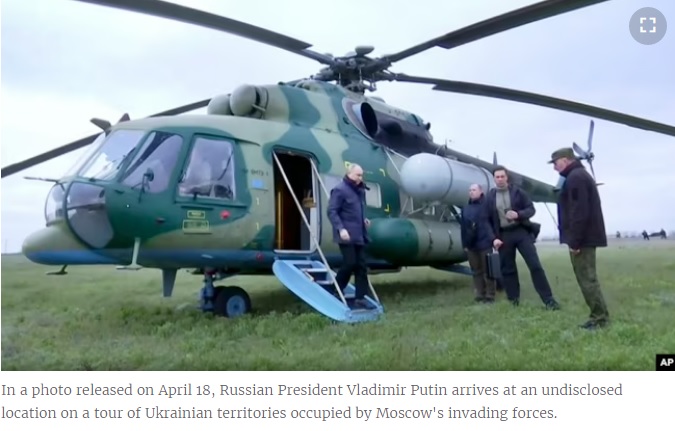 But this is very much an ongoing war, and it requires continued support, continued determination not just on the part of the Ukrainians but on the part of those who are helping them in what I think is about as clear a right-versus-wrong as we've seen in our lifetime: a dictatorial, kleptocratic regime denying the right of its neighbor to even exist, invading and doing so without provocation and in a particularly brutal manner, with a…culture of committing war crimes rather than preventing them and dealing with them when inevitably they might take place; against a country that is a democratically elected government [and] free-market economy, however imperfect that may be. RFE/RL: At the Munich Security Conference in February, I remember you saying that you hoped the war would end by the time of the release of your forthcoming book on Ukraine, which comes out in the autumn. Is it realistic to expect Ukraine to win by that time? Petraeus: Well, I think we should hope, [but] that is not necessarily the likely outcome. A lot depends on what gets achieved by this Ukrainian offensive in the late spring and early summer. And if Russian forces can crumble and collapse, and then that can spread [further], then perhaps you might reach a point at which a negotiated resolution might actually be attainable. But without that, this is going to go on for another year or years, and we need to be prepared for that. We should not be seeking an early exit or anything like this. The Ukrainians are in this for their survival, their independence; they're determined to do what's necessary, and we need to be determined to do the same. 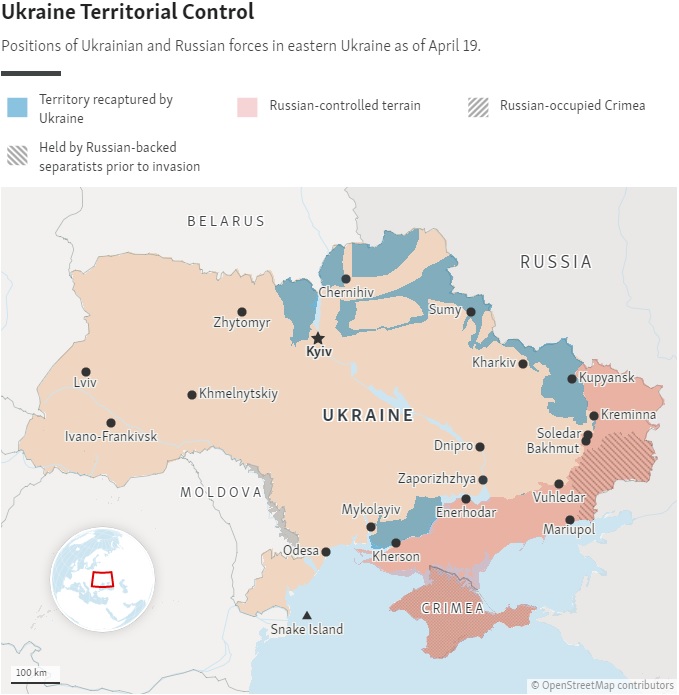 RFE/RL: In your view, what is the most realistic endgame scenario? Petraeus: I think it will either be a negotiated resolution which includes a Western provision of a Marshall-like reconstruction plan of enormous substance and a NATO- or U.S.-led security guarantee when Russia realizes that this war is not sustainable on the battlefield or on the home front. Or there could be, at some point, a new frozen conflict, ideally with Ukraine having liberated all of its territory, including Crimea, but without a formal resolution [or] a formal negotiation. And here we should acknowledge that we failed to give Ukraine the kind of [security] guarantee that we should have provided. We were sensitive to Moscow's concerns about Ukraine joining NATO or having some kind of security relationship that was particularly meaningful -- such as we provided for the Baltic states, and they've turned out pretty well -- and it hasn't, obviously, turned out well for Ukraine. So, any concerns about Kremlin considerations in the future should be completely disregarded. RFE/RL: Let me ask about the neighborhood. What's at stake here, do you think, for countries like Moldova and Georgia? Petraeus: I think Moldova has significant vulnerability. I believe that the U.S. and NATO countries have recognized this and are seeking to provide various forms of support to withstand various Russian efforts to undermine the government, to topple it, [or] to not just hang onto [the breakaway region of] Transdniester but to expand that and to make Moldova a kind of Belarus for Russia if they can. But I don't think the Moldovans want that; a majority of them do not want that. And what we need to do, in addition to enabling the Ukrainians, is also to enable [the Moldovans]. Georgia is a bit of a different situation, given that Russia is so intently focused with just about everything they have on Ukraine and on Eastern Europe, again including Moldova, that I don't think there's much left for anything outside of that focus. You've seen this elsewhere: You've seen it in the Caucasus, you've seen it in the eastern part of Russia, you've seen it in areas where Russia has a boundary with NATO countries. It's all about Ukraine and, to a slightly different degree, Moldova. I think Georgia has some breathing space, but they need to make the most of it. And I thought it was very interesting to see in their domestic political dynamics, of course, a very considerable rejection of Russia in recent months. (Protests erupted in Tbilisi in March until the ruling Georgian Dream party announced the withdrawal of a draft bill on "foreign influence" that critics likened to Russia's harsh "foreign agent" legislation.) RFE/RL: Unlike Moldova, Georgia harbors NATO membership hopes. What impact is this war going to have on those hopes? Was eventual NATO membership more realistic for Georgia before this war or now that it has happened? Petraeus: I suspect it's just a tiny bit more realistic now. I think, at some point, you will see not just Finland, which now is approved to come into NATO, but also Sweden [in NATO]. And Ukraine over time, I think, will ultimately be a NATO member; if there is some kind of requirement in the interim, there will be a security guarantee provided for it. We should not care what the Kremlin thinks anymore about this. We deferred to them in the past, and that set the conditions that enabled Putin and led him to invade Ukraine. Those concerns should be finished; they should be dismissed. And we now need to ensure that Ukraine can be part of what is a defensive alliance, at the end of the day; this is not an offensive alliance, there's no history for that whatsoever. And once that's done, I think that the aspirations of a country like Georgia may be more realistic than they were in the past.
__________________ 💜🧿See Human | Be Human🧿💜 (War Section Hashtags) |
|
#30
●
04-19-2023, 11:16 PM
| ||||||||
| ♚ Legacy Gold Member ♚ Poster Rank:207 Former US Soldier Join Date: Aug 2019 Posts: 7,263 Mentioned: 65 Post(s) Quoted: 3245 Post(s)
| ||||||||
|
Re: Whiskey's Briefing Room II
✔️ New IFF (identify friendly or foe) "arrow" markings on Ukrainian vehicles spotted. The last time we spotted new markings (the + symbol) was during the start of Kherson and Kharkiv offensives. - American supplied M2 Bradley without 25mm M242 Bushmaster autocannon barrel (removing barrel during transport is normal, this is done in the US too). The paint job was very recently done as the Bradleys which entered Ukraine all seemed to have US desert camo. - I've identified this as a Slovakian M-55S, I think this is the first time I've seen media of this tank being operated in Ukraine. They are a heavily upgraded version of the Soviet era T-55. (2 photos) - Unknown type of Ural truck, the 21 and 3 might mean the army unit. 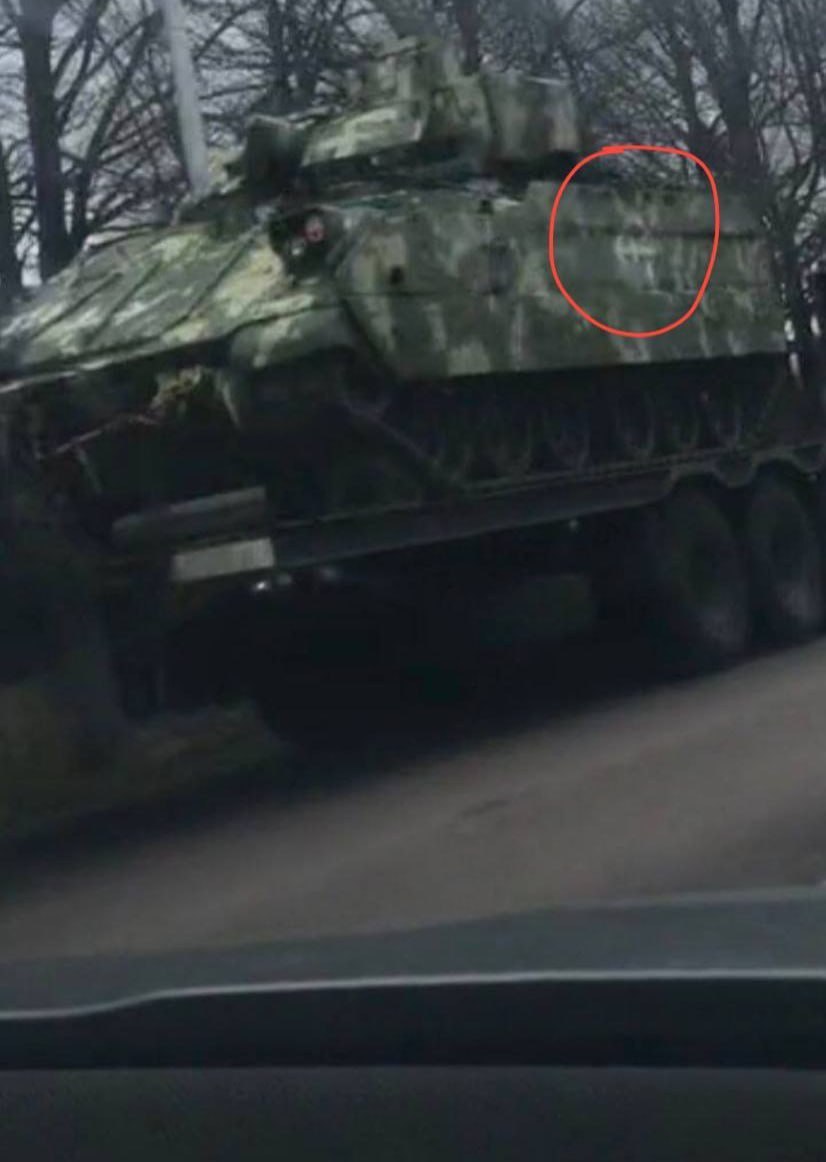 · 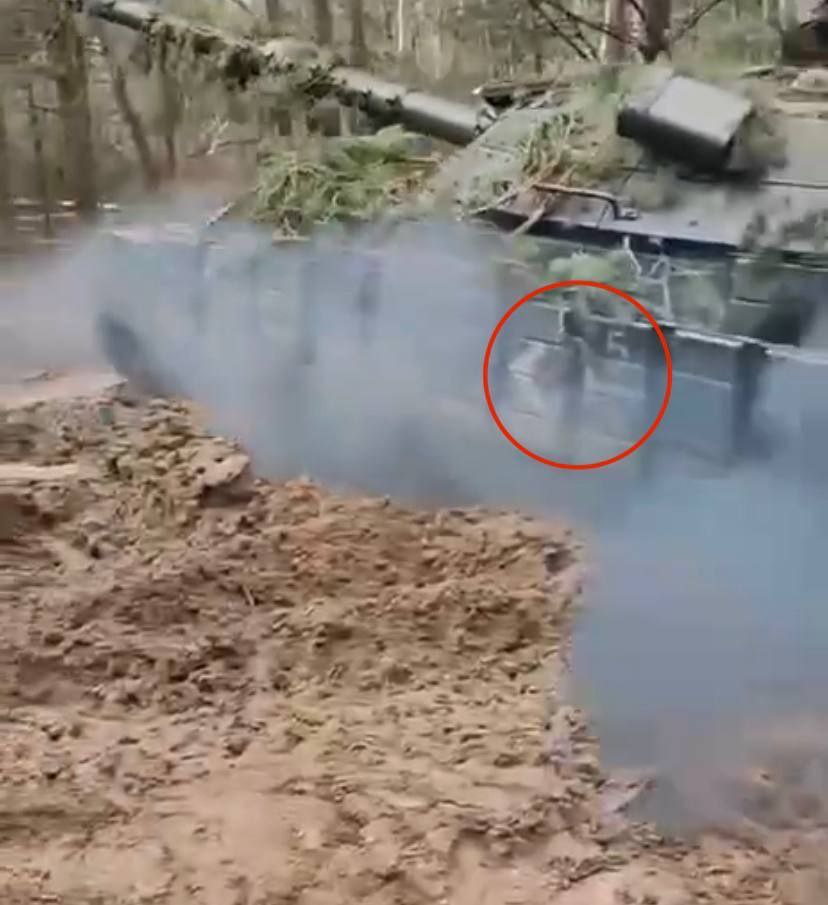 · 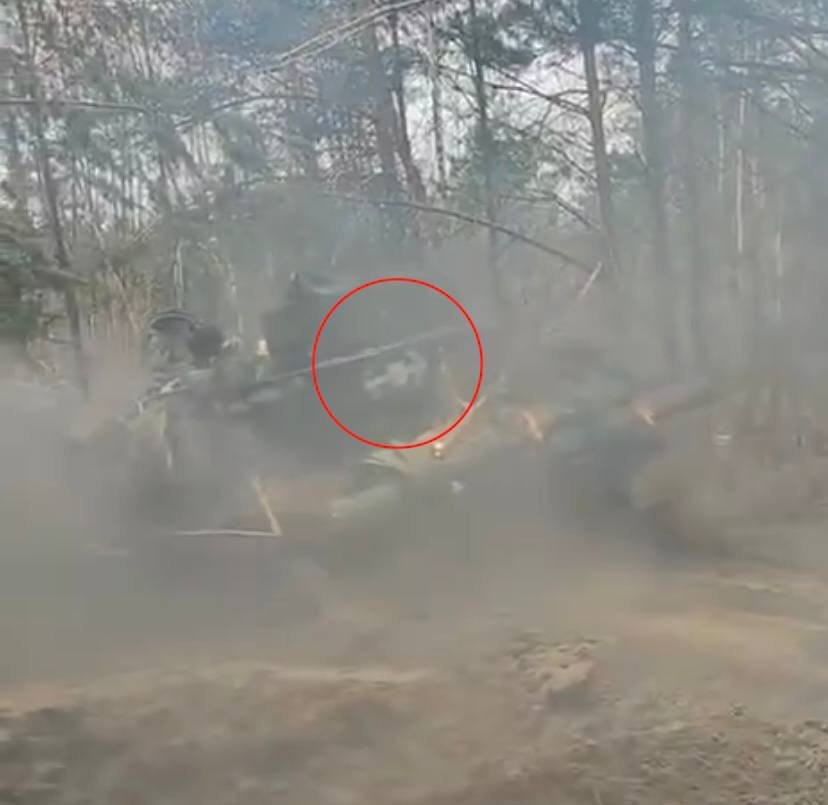 · 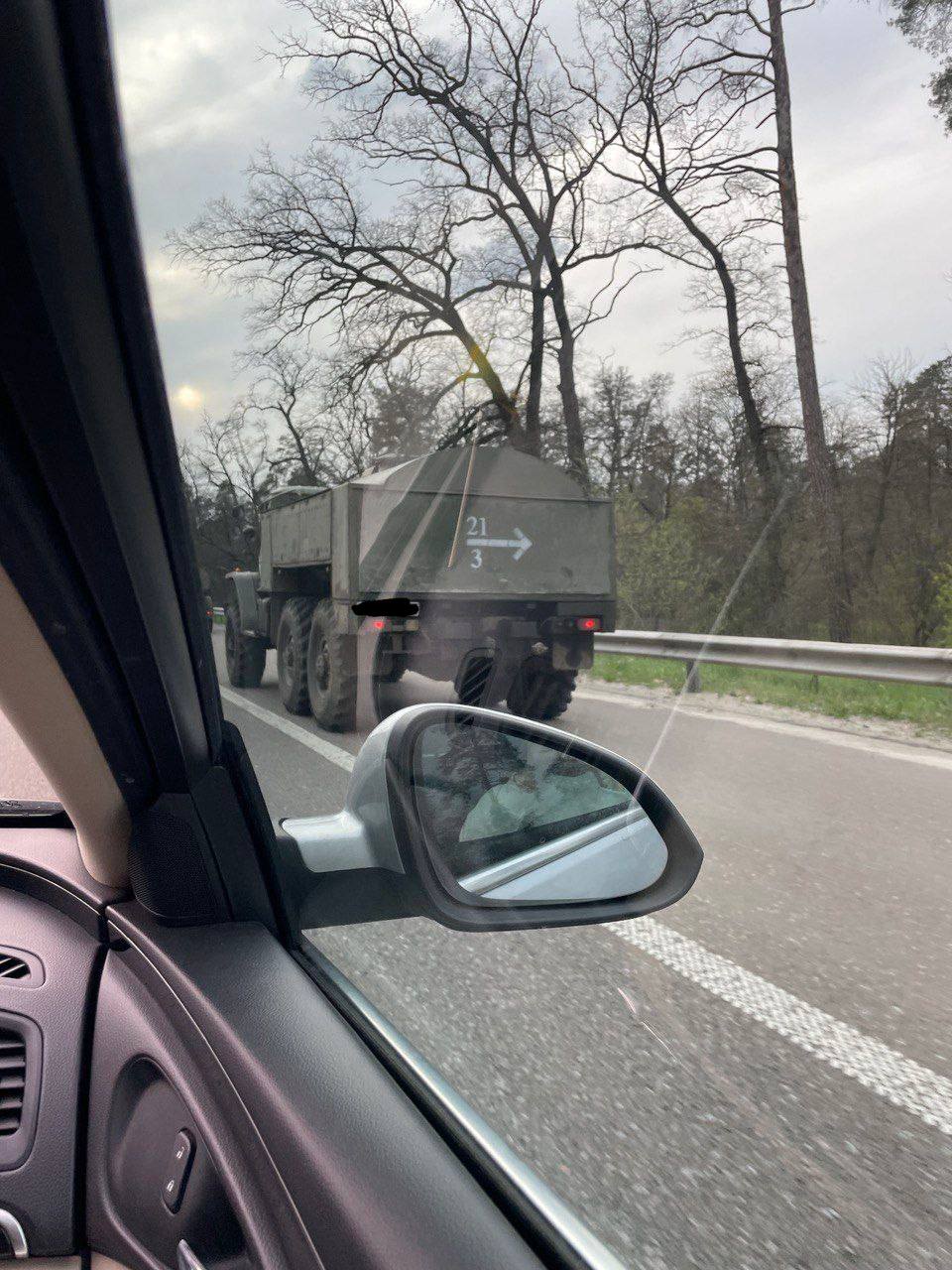 · |