|
#931
●
07-16-2023, 11:35 PM
| ||||||||
 ★ Legacy Member ★ Poster Rank:324 Join Date: Dec 2017 Posts: 3,938 Mentioned: 26 Post(s) Quoted: 1971 Post(s)
| ||||||||
|
Re: Russian/Ukraine War Discussion Thread V
You didn’t watch the video. Obviously there are people who dosnt see it that way, but I learned to know that there are a lot of people who shares his views. Also keep in mind this was 7 years prior to full invasion. There are no morality and law when it comes down to geopolitics. Yeah he couldn’t predict the future fully, he thought Putin wouldn’t do it. And for that you going to judge him and make a fun out of him? Damn |
|
#932
●
07-17-2023, 12:12 AM
| ||||||||
 My Rank: FIRST SERGEANT Poster Rank:474 Join Date: Apr 2013 Posts: 2,267 Mentioned: 1 Post(s) Quoted: 570 Post(s)
| ||||||||
|
Re: Russian/Ukraine War Discussion Thread V
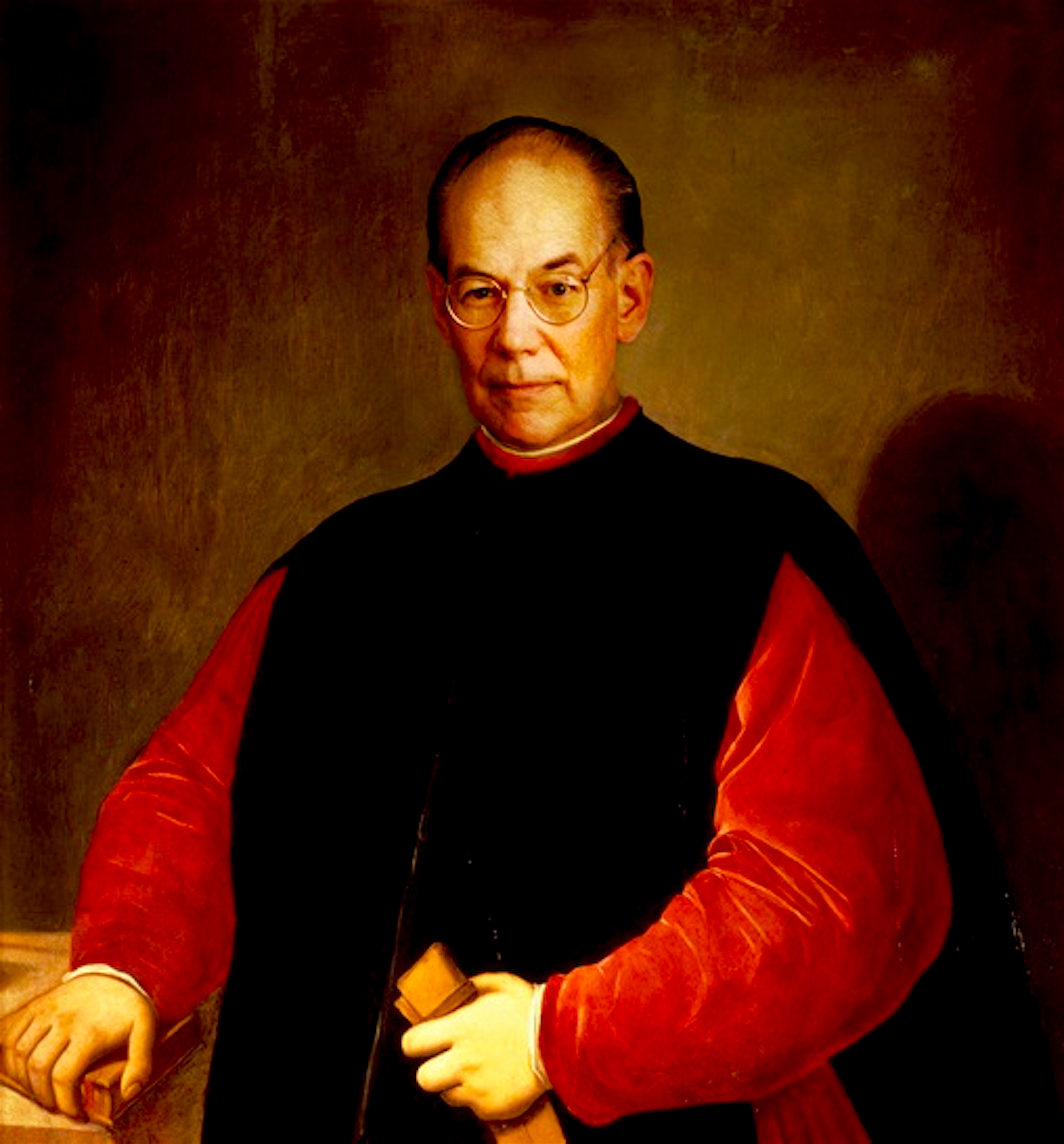
I'm not making fun of him, I just wholeheartedly disagree with him and I place the blame squarely on Putin for the invasion. If it is the Machiavellian costume you are referring to I got that off the front page of his own website: https://www.mearsheimer.com/ |
|
#933
●
07-17-2023, 12:21 AM
| ||||||||
| ★ Legacy Member ★ Poster Rank:324 Join Date: Dec 2017 Posts: 3,938 Mentioned: 26 Post(s) Quoted: 1971 Post(s)
| ||||||||
|
Re: Russian/Ukraine War Discussion Thread V
Understood. But he didn’t know about the invasion back then. He is talking about the build up, that west causing this build up, poking a dog with the stick if you will. He even mentioned US Monroe doctrine - were US warned European powers not to interfere in the affairs of the Western Hemisphere. Meaning if China build a war base in Mexico, US will not tolerate it and most likely will fight, even if Mexico will want that Chinese base there. And he did say if this will continue, UA will be wiped out. |
|
#934
●
07-17-2023, 12:51 AM
| ||||||||
| My Rank: FIRST SERGEANT Poster Rank:474 Join Date: Apr 2013 Posts: 2,267 Mentioned: 1 Post(s) Quoted: 570 Post(s)
| ||||||||
|
Re: Russian/Ukraine War Discussion Thread V
https://slate.com/news-and-politics/...l-science.html Back in February, when he first interviewed Mearsheimer, Chotiner challenged some of these points. What, he asked, if Ukraine wanted to join Western institutions? Too bad, Mearsheimer replied. “When you’re a country like Ukraine and you live next door to a great power like Russia, you have to pay careful attention to what the Russians think.” He assured Chotiner—this was just days after the invasion began—that the assault wouldn’t go far. Putin, Mearsheimer said, “understands that he cannot conquer Ukraine and integrate it into a greater Russia or into a reincarnation of the former Soviet Union. He can’t do that.” And yet Putin himself now says this is precisely his goal. The fact that he is unable to follow through with it doesn’t mean that it isn’t his intention. Mearsheimer ignores the distinction; he simply brushes aside, or at times distorts, what Putin himself has said. In his follow-up interview, published earlier this month, Chotiner recited this passage back to Mearsheimer and asked if he still agreed with it. Remarkably, Mearsheimer said he does. All Putin wants, Mearsheimer claimed, are the four Ukrainian districts that he has (unsuccessfully) annexed (in the first interview, he said Putin would want only two, but who’s counting) as well as “regime change” in Kyiv, adding that this is different from occupying a capital, conquering an entire country. There are many such jaw-droppers in both interviews. But here I want to focus on deeper problems with Mearsheimer’s thesis—beyond the absurdities and non sequiturs that Chotiner prodded him to mutter. The bigger problems lie in his entire concept of “great power politics.” First, for all of Mearsheimer’s allegiance to “realism,” it is a decidedly unrealistic view of the world. It views nations as magnetic markers moving around a gameboard in a deterministic fashion, with the sole aim of maximizing power. This is a useful starting point for analysts, and even practitioners, of international politics; power structures do shape the environment of decision-making. But it only goes so far. Mearsheimer’s framework makes no place for decision-making or decision-makers, or for a nation’s domestic politics. In his scheme, it makes no difference whether a country is a democracy or a dictatorship; it doesn’t matter whether Moscow is run by Stalin, Khrushchev, Gorbachev, or Putin, or whether Beijing is run by Mao, Deng, or Xi. Great nations behave like great nations, period. Second, Mearsheimer never really defines “great nations,” and, when it comes to discussing Russia, this is crucial. Thomas Pepinsky, the Walter F. LaFeber Professor of Government at Cornell (and something of a Realist), blogged after the first Mearsheimer-Chotiner interview, “Russia is not a great power. It is obviously a declining power … Given this, it is not NATO’s responsibility to protect Russian state security interests. It is Russia’s responsibility to give wide berth to NATO, recognizing—as every realist should—that the strong do what they will, the weak do what they must”—a famous quote from that ur-Realist, Thucydides. Finally, Pepinsky delivers the blow: “Invading Ukraine was a stupid strategic error made by a declining power that does not understand The Tragedy of Great Power Politics.” Pepinsky overstates things, possibly for effect. Some attention should be paid by the world to Russia’s security interests, if only because, as Pepinsky notes, it is a major supplier of oil and gas and, more gravely, because Russia possesses a large nuclear arsenal. It’s also indisputable that NATO’s “enlargement,” right up to Russia’s borders, intensified Putin’s resentment and paranoia. But this is no excuse for invasion. Mearsheimer ignores the fact that, in the weeks leading up to the invasion, U.S. officials assured Putin that NATO would not offer membership to Ukraine in the foreseeable future. In early March, just two weeks after the war began, Ukrainian President Volodymyr Zelensky said he had “cooled down” on the need to join NATO. If this were Putin’s only, or even main, fear, he had plenty of chances to stop the war or avoid starting it to begin with. Even now, after the U.S. has sent Ukraine more than $20 billion worth of weapons and is training Ukranian soldiers on how to use them, the U.S. and most other NATO nations have no desire to invite Ukraine to join the alliance (which would require them to send troops to fight and kill Russians). And while the European Union has created a Military Assistance Mission to help Ukraine in its fight, there has been no rush to accept Zelensky’s application for membership in the EU itself. Remarkably, Mearsheimer, in his second interview with Chotiner earlier this month, still contends that Putin’s main fear is Ukraine joining NATO. He denies that Putin has any desire to conquer all of Ukraine or to restore the old Russian empire—even though Putin has said that this is his aim. He claims only that Putin wants to annex four oblasts, without acknowledging that he’d earlier said Putin wanted only two, and—more disturbingly—without allowing that there might be something wrong with simply grabbing land. This is another oddity in Mearsheimer’s brand of Realism. He makes no distinction between how great power politics work and how they should work; he passes no judgment on even the most horrific acts committed in great-power wars because, well, what’s the point of protesting the inevitable? Two problems stand out here. First, in his 2007 book, The Israel Lobby and U.S. Foreign Policy, Mearsheimer and his co-author, Stephen Walt, cite a “moral dimension” in America’s enabling of Israeli “crimes perpetrated against the Palestinians.” Chotiner quotes this passage, expressing surprise that the cold Realist should have moral qualms about anything. Mearsheimer replies that all foreign policy has a moral dimension, but that sometimes, strategic interests must prevail, as when the U.S. allied with Stalin to defeat Hitler. In the same way, he says, Ukrainians “run a grave risk if they alienate the Russians in a fundamental way.” It’s a remarkable statement—that it’s immoral for Israel to crush Palestinians but a fact of life for Russia to stomp on Ukrainians. Finally, Mearsheimer’s premise that great-power expansion—a natural product of great-power politics—inevitably leads to war simply isn’t true. For nearly a half-century, to cite one of many possible examples, the U.S. and the Soviet Union collided with each other’s interests, through proxy wars and occasional near-war crises (e.g., in Berlin and Cuba), yet they never went to war with one other directly. Mearsheimer acknowledged this fact in a 2021 Foreign Affairs article (the thesis of which was that a U.S.-China war is “inevitable”), but explained that, during the U.S.-Soviet rivalry, “both sides understood the fearsome risks of nuclear escalation,” so neither “was willing to start a conflict that would likely have destroyed his own country.” However, in the same article, he wrote: [O]ne cannot assume that there would be no nuclear escalation should Beijing and Washington fight over Taiwan or the South China Sea. Indeed, if one side were losing badly, it would at least consider employing nuclear weapons to rescue the situation. So, the U.S. and the Soviet Union avoided conflict because it might escalate to nuclear war—but a U.S.-China war is “inevitable,” even though it too might go nuclear? Mearsheimer’s theory—like Realism in its various forms—help explains why war will be a fact of life as long as nation-states have offensive weapons, rivalries, and uncertainties about their security. But even these structural roots of war are less inexorable than they once were. Thanks to modern intelligence technology, leaders—especially those of “great states”—know more about what rivals are doing and don’t need to be so swayed by worst-case scenarios. Instant communications can also allay paranoid fears. (During the Cuban missile crisis, John F. Kennedy and Nikita Khrushchev sent each other telegrams, which took as long as a day to reach their destinations.) Human beings—leaders, diplomats, generals, politicians, even, in some countries, ordinary citizens—have some sway over the course of events. They and the policies they devise may make war more or less likely, but structures don’t determine everything, nor do academic theories about those structures. At one point in his first interview with Chotiner, Mearsheimer said, after pondering which areas Russian troops would conquer and which areas they’d hold, “Do I know what’s going to happen? No, none of us know what’s going to happen.” A bit more humility, along those lines, would be welcome in all of his pontifications. |
|
#935
●
07-17-2023, 01:20 AM
| ||||||||
 ♚ Legacy Gold Member ♚ Poster Rank:70 Join Date: Jul 2008 Posts: 22,194 Mentioned: 77 Post(s) Quoted: 11629 Post(s)
| ||||||||
|
Re: Russian/Ukraine War Discussion Thread V
civilian warning ?
|
|
#936
●
07-17-2023, 02:08 AM
| ||||||||
 ☾ Administrator ☽ Poster Rank:76 ஜᎻᎬᎩᎾᏦᎪஜ Join Date: Dec 2011 Posts: 19,514
Contributions: 32
Mentioned: 171 Post(s) Quoted: 6843 Post(s)
| ||||||||
|
Re: Russian/Ukraine War Discussion Thread V
there is no hashtag civilian warning... EDIT: it's been added to the OP, the one with the girl in the windshield of the car. It's not a hashtag, just a warning label at the top. When there are civilians involved from anywhere, regardless of who shelled who, it can get a civilian hashtag and a separate "civilian warning" label up at the top of the post.
__________________ 💜🧿See Human | Be Human🧿💜 (War Section Hashtags) |
|
#938
●
07-17-2023, 03:41 AM
| ||||||||
| ☾ Administrator ☽ Poster Rank:76 ஜᎻᎬᎩᎾᏦᎪஜ Join Date: Dec 2011 Posts: 19,514
Contributions: 32
Mentioned: 171 Post(s) Quoted: 6843 Post(s)
| ||||||||
|
Re: Russian/Ukraine War Discussion Thread V
I got a laugh out of all the talking up on telegram of something big happening. That's been done before and nothing happens. This time it did. I wasn't laughing at the actual bombing. 
__________________ 💜🧿See Human | Be Human🧿💜 (War Section Hashtags) |
|
#939
●
07-17-2023, 04:27 AM
| ||||||||
| ♚ Legacy Gold Member ♚ Poster Rank:70 Join Date: Jul 2008 Posts: 22,194 Mentioned: 77 Post(s) Quoted: 11629 Post(s)
| ||||||||
|
Re: Russian/Ukraine War Discussion Thread V
I find that phenomenon laughable as well.  Or absolute cringe in the case of the Crimea beach party tickets Or absolute cringe in the case of the Crimea beach party tickets  |
|
#940
●
07-17-2023, 07:02 AM
| ||||||||
| My Rank: FIRST SERGEANT Poster Rank:474 Join Date: Apr 2013 Posts: 2,267 Mentioned: 1 Post(s) Quoted: 570 Post(s)
| ||||||||
|
Re: Russian/Ukraine War Discussion Thread V
https://www.saintjavelin.com/en-us/p...t-sale-1-entry  SAINT JAVELIN SUMMER IN SIMFEROPOL BOOK YOUR TICKETS TO OUR 2023 CRIMEA BEACH PARTY ! Cocktails by the beach, boat rides in the Black Sea, scuba dive to the Moskva and a special set by DJ Lil Fella! Not a party funded by the CIA. We’re excited to invite you to our first community event — CRIMEA 2023. Let's celebrate Ukraine’s Independence and Ukraine's victory over the vatniks. All monies are being donated to United 24 and drone army campaign. |