|
#381
●
04-24-2023, 05:35 PM
| ||||||||
 My Rank: MASTER GUNNERY SERGEANT Poster Rank:369 Join Date: Feb 2010 Posts: 3,202 Mentioned: 4 Post(s) Quoted: 553 Post(s)
| ||||||||
|
Re: Russian/Ukraine War Discussion Thread V
RONPMSL   Quite beautiful amongst all this death & destruction. |
|
#382
●
04-24-2023, 10:54 PM
| ||||||||
 My Rank: STAFF SERGEANT Poster Rank:719 Join Date: Jul 2009 Posts: 1,140 Mentioned: 2 Post(s) Quoted: 572 Post(s)
| ||||||||
|
Re: Russian/Ukraine War Discussion Thread V
[QUOTE=Roosta;7907040]Yup, it's quite rare that far south. Luckily, I happened to see it as well. Crazy to think that these beautiful lights in the sky might one day destroy all of our sweet, sweet electrical equipment, like satellites, computers and power grid. |
|
#383
●
04-25-2023, 03:33 AM
| ||||||||
 ☾ Administrator ☽ Poster Rank:76 ஜᎻᎬᎩᎾᏦᎪஜ Join Date: Dec 2011 Posts: 19,519
Contributions: 32
Mentioned: 172 Post(s) Quoted: 6844 Post(s)
| ||||||||
|
Re: Russian/Ukraine War Discussion Thread V
__________________ 💜🧿See Human | Be Human🧿💜 (War Section Hashtags) |
|
#384
●
04-26-2023, 03:33 PM
| ||||||||
 My Rank: CORPORAL Poster Rank:1583 Join Date: Feb 2012 Posts: 352 Mentioned: 1 Post(s) Quoted: 75 Post(s)
| ||||||||
|
Re: Russian/Ukraine War Discussion Thread V
Well, if you feel that Russia is winning... Would you care to explain why?
|
|
#385
●
04-26-2023, 03:48 PM
| ||||||||
| ☾ Administrator ☽ Poster Rank:76 ஜᎻᎬᎩᎾᏦᎪஜ Join Date: Dec 2011 Posts: 19,519
Contributions: 32
Mentioned: 172 Post(s) Quoted: 6844 Post(s)
| ||||||||
|
Re: Russian/Ukraine War Discussion Thread V
Good question. I haven't seen anything about this the entire time the invasion has been taking place. The only disease related thing I've seen talked about a lot was a possible Cholera outbreak during the battle of Mariupol. If other diseases are spread via bodies, it doesn't seem to be something so prolific that it gets reported on by sources on either side. The other major factor here are the Wagner PMC soldiers that were recruited in prisons in Russia who have higher cases of individuals with HIV and Hepatitis C. I did a little digging however and found this article which I've posted below: https://medicalxpress.com/news/2023-...ontagious.html Disruption from war in Ukraine pushes highly contagious infectious diseases to alarming levels by European Society of Clinical Microbiology and Infectious Diseases | 6 April 2023 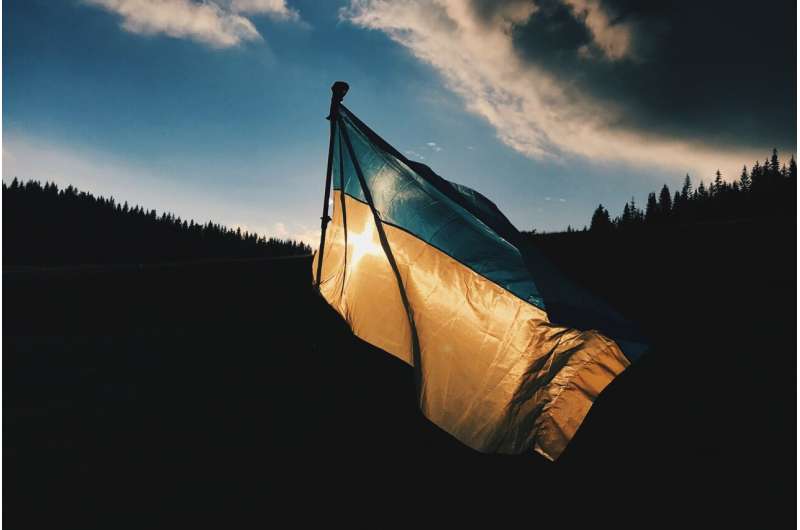 New research being presented at this year's European Congress of Clinical Microbiology & Infectious Diseases (ECCMID) in Copenhagen, Denmark (15–18 April), reveals an extremely worrying picture of rising infectious diseases cases and falling levels of childhood vaccination and case detection in the eastern region of Ukraine in the city of Kharkiv and Kharkiv region, the scene of some of the most intense combat in 2022. The research by Maryna Railian and Tetyana Chumachenko from Kharkiv National Medical University (KhNMU), Ukraine, examines how fierce fighting in the Kharkiv region, which was under attack from the first minutes of the Russian invasion of Ukraine, and continues to be under rocket and artillery fire, significantly disrupted access to medical care, routine vaccinations, and the response to infectious disease outbreaks. They analyzed official data from the State Institution Kharkiv Oblast Center for Disease Control and Prevention of the Ministry of Health to assesses infectious disease incidence and vaccination coverage for the population in the Kharkiv region across 9 months of 2022. Between January and September, 124,170 infectious disease cases were registered in the Kharkiv region—40% less than during the same period before the war in 2021 (207,038 infectious disease cases). Official data also suggests that the total percentage of the population exposed to infectious diseases decreased by 1.7 times compared to the same period in 2021. And the proportion of children affected by infectious diseases fell from 29% in 2021 to 23% in 2022. Nevertheless, new cases of shigellosis, a highly contagious diarrheal disease, were three times higher in the Kharkiv region than average rates across Ukraine. Similarly, new cases of rubella (German measles) were 11 times higher than the Ukraine average, whooping cough five times higher and viral meningitis 2 times higher. Additionally, new cases of viral hepatitis A in the region exceeded the country average by 2.4%, viral hepatitis B by 87%, and chronic viral hepatitis B and C combined by 72%. "During this period, only severe forms of infections and diseases with a pronounced clinical picture were recorded," explains Railian. "These data underscore the unfavorable epidemic situation that arose during the hostilities and partial occupation of the Kharkiv region. Mild cases were not registered or isolated and continued to be sources of infection, exacerbating the spread of diseases." Similar patterns were seen in children, with shigellosis and viral meningitis incidence around six times higher in the Kharkiv region compared to the Ukraine average, rubella incidence 23 times higher, and new cases of whooping cough five times greater than the country average. "The shockingly high incidence of highly contagious infectious diseases in the Kharkiv region compared to Ukraine as a whole reflects the appalling living conditions across the region where water supply interruptions were common and residents were unable to buy even basic healthy foods," says Railian. "The widespread damage and destruction to infrastructure and atrocious living conditions meant much of the population had to be relocated for their safety." The analysis also found that the ongoing crisis has had dramatic effects on routine childhood vaccination coverage across the Kharkiv region, putting the most vulnerable at increased risk of severe illness and death. Between January and September 2022, the rate of polio vaccination fell to 40%, hepatitis B to just 37%, tuberculosis to 43%, measles, mumps and rubella to 50%, and diphtheria, whooping cough and tetanus to 46% (and only 24% in the adult population). However, the authors caution that given the lack of disease surveillance and public health infrastructure available for diagnosis, the true burden of infectious disease remains unknown. Worryingly, the authors say that this might be just the tip of the iceberg. "The upsurge in measles and other vaccine-preventable infectious diseases could soon become uncontrollable. The stark reality is that in the absence of surveillance, diagnostic, and preventive measures, these figures most likely represent an underestimate of the true situation," says Railian. Infectious disease case detection has halved Further analyses examining the impact of the war on infectious disease surveillance capacity in Kharkiv Hospital, reveals that the case detection rate is only half of that prior to the war. Between January and October 2021, 2,306 infectious disease cases were registered, this declined to 1,056 reports during the same period in 2022, with just 31 cases registered from March to August 2022. The hospital in the capital city of the Kharkiv region provides medical care to almost 17,000 adults in 25 medical specialties. Worse still, infectious illness in the hospital wasn't registered in full, with almost two-thirds of cases left without laboratory results between January and October in 2022, and three-quarters of cases not given a final diagnosis. "Because of the hostilities, medical staff could not get to work and large numbers of workers responsible for registration of cases left the country," explains Railian. "Our findings underscore the urgent need to strengthen medical support in the regions of Ukraine where active hostilities are taking place. We must prioritize field vaccination teams in populated areas and health education campaigns to highlight the growing threats of infectious diseases." Another article from Seattle Times: https://www.seattletimes.com/nation-...ing-hiv-drugs/ (paywall) ‘A quick death or a slow death’: Russian prisoners choose war to get HIV drugs April 21, 2023 at 4:13 pm Updated April 21, 2023 at 4:38 pm DNIPRO, Ukraine — In Russian prisons, they said they were deprived of effective treatments for their HIV. On the battlefield in Ukraine, they were offered hope, with the promise of antiviral medications if they agreed to fight. It was a recruiting pitch that worked for many Russian prisoners. About 20% of recruits in Russian prisoner units are HIV positive, Ukrainian authorities estimate based on infection rates in captured soldiers. Serving on the front lines seemed less risky than staying in prison, the detainees said in interviews with The New York Times. “Conditions were very harsh” in Russian prison, said Timur, 37, an HIV-positive Russian soldier interviewed at a detention site in the city of Dnipro in central Ukraine, and identified only by a first name, worried that he would face retaliation if he returned to Russia in a prisoner swap. After he was sentenced to 10 years for drug dealing, the doctors in the Russian prison changed the antiviral medication he had been taking to control HIV to types he feared were not effective, Timur said. He said he did not think he could survive a decade in Russian prison with HIV. In December, he agreed to serve six months in the Wagner mercenary group in exchange for a pardon and supplies of antiviral medications. “I understood I would have a quick death or a slow death,” he said of choosing between poor HIV treatment in prison and participating in assaults in Russia’s war in Ukraine. “I chose a quick death.” Timur had no military experience and was provided two weeks of training before deployment to the front, he said. He was issued a Kalashnikov rifle, 120 bullets, an armored vest and a helmet for the assault. Before sending the soldiers forward, he said, commanders “repeated many times, ‘if you try to leave this field, we will shoot you.’” Soldiers in his platoon, he said, were sent on a risky assault, waves of soldiers with little chance of survival sent into battle on the outskirts of the eastern city of Bakhmut. Most were killed on their first day of combat. Timur was captured. Units of former prisoners have made up the bulk of forces in Russia’s attack on Bakhmut, one of the bloodiest and longest-running battles in the war. Beginning on a wide scale last summer, inmates were promised pardons for going into combat. Those with HIV or hepatitis C were forced to identify their status in a very public manner. When captured by Ukrainian soldiers, many wore red or white rubber wristbands, or both, signifying they had either disease, both widespread in the Russian prison system. They were made to wear the wristbands ostensibly as a warning to other soldiers in case they were wounded, although they would not necessarily be infectious if properly medicated. Antiviral medication can indefinitely treat HIV and suppress the virus to the point where an individual is not infectious. Ukraine allows those who are HIV positive to serve in combat roles with approval from their commanders. The United States does not allow people who are HIV positive to enlist, but lets soldiers who become infected continue to serve while receiving treatment. “If a person is in treatment, and continues treatment, the virus can be undetectable and he can serve, he can work and is not dangerous to those around him,” said Dr. Iryna Dizha, a medical adviser to 100 Percent Life, an HIV advocacy group in Ukraine. The wristbands pose a risk to those wearing them. They are intended to protect other soldiers from infection if the wearer suffers a bloody battlefield wound, the prisoners of war said. Reluctance of fellow soldiers or medics to be exposed to the blood, however, could delay first aid. Another HIV-positive prisoner of war who fought in the Wagner group, Yevgeny, said that he had suffered a gunshot wound a month before his capture by Ukrainian forces, according to a videotaped interrogation by Ukraine’s domestic intelligence agency that was reviewed by the Times. He had received timely medical help despite wearing a red bracelet, he said, but was treated in a hospital where he felt doctors were careless about infecting other patients. “There were no conditions for the HIV infected,” he said. “We were all treated together, the healthy and the unhealthy.” And in the chaos of battle the bracelets serve little purpose, said Vadim, 31, who was convicted of robbery and served in Wagner before being captured in a bunker. After Ukrainian soldiers tossed several hand grenades into the bunker, the Russian soldiers, including two who were HIV positive, hunkered in a corner. Three of 10 soldiers in the bunker were killed and most others wounded, Vadim said. He emerged splattered with blood. “I was always afraid of this disease,” he said in an interview at a Ukrainian detention site. After the exposure, he tested negative. Since the summer, about 50,000 prisoners have signed up to fight in Ukraine, roughly 10% of the incarcerated population, according to Russia Behind Bars, a nongovernmental group monitoring Russian prisons. Ukraine’s military intelligence agency said in a statement last fall that some captured soldiers had HIV and hepatitis C. The domestic intelligence agency has made available videos of interrogations with Wagner prisoners of war describing HIV infection and showing red bracelets. The Ukrainian authorities provide antiviral medicine to HIV-positive prisoners of war. HIV, hepatitis C and tuberculosis, including drug-resistant strains, are prevalent in Russian prisons and penal colonies. About 10% of Russia’s incarcerated population is HIV-positive, said Olga Romanova, the director of Russia Behind Bars. About one-third of the total inmate population has at least one of those three infections, she said. In interviews, HIV-positive prisoners of war said they were asked only to do push-ups before a recruiter to prove their fitness to serve. Ruslan, 42, had served one year of an 11-year sentence for drug dealing when he joined Wagner in December. The medications he received in a penal colony were not suppressing the virus, he said, and he feared for his life. Last year, he had been bedridden for weeks with pneumonia. Ruslan said that after joining Wagner he had a mild bout of pneumonia at a training camp in January. A month later, he was sent on a human wave assault in Bakhmut and was captured. Ruslan said he welcomed Wagner’s policy of accepting HIV-positive inmates. He said he thought he would die in any case from his illness in prison and accepted the front line for a chance at freedom and treatment. “If you have a long sentence,” he said, “it gives you a chance to begin life again.” Other article I found: https://www.thelancet.com/journals/l..._jbs_aip_email
__________________ 💜🧿See Human | Be Human🧿💜 (War Section Hashtags) |
|
#386
●
04-28-2023, 08:53 PM
| ||||||||
| ☾ Administrator ☽ Poster Rank:76 ஜᎻᎬᎩᎾᏦᎪஜ Join Date: Dec 2011 Posts: 19,519
Contributions: 32
Mentioned: 172 Post(s) Quoted: 6844 Post(s)
| ||||||||
|
Re: Russian/Ukraine War Discussion Thread V
"Meeting with American infantrymen at Khreschatyk Vladyslav Yeschenko, a sapper who lost his sight during demining, has a loving wife who did not abandon her husband in a moment of need " 1 May Edit: replaced video for one with English subs.
__________________ 💜🧿See Human | Be Human🧿💜 (War Section Hashtags) |
|
#387
●
04-29-2023, 02:53 PM
| ||||||||
| ☾ Administrator ☽ Poster Rank:76 ஜᎻᎬᎩᎾᏦᎪஜ Join Date: Dec 2011 Posts: 19,519
Contributions: 32
Mentioned: 172 Post(s) Quoted: 6844 Post(s)
| ||||||||
|
Re: Russian/Ukraine War Discussion Thread V
I would like to see more of a balance too. Unfortunately, I don't have the time to delve through Russian sources. All sources should be scrutinized by default, but in my experience, Russian sources need extra attention and verification and I don't have the time nor the patience for it. Last time I posted pro-Russian sources I had to go back and correct something that the Russian source said was UA troops gathering outside of Bakhmut when it was actually a training video, likely in another country. It's tricky and leaves a bad taste in my mouth. Feel free to give it a try yourself but you've been warned. I've listed some pro-Russian sources below that I follow and from there you can probably find some of the sources they get their stuff from (from watermarks).The Grey Zone (Wagner Channel): https://t.me/grey_zone ДОБРОВОЛЕЦ (Volunteer): https://t.me/+6bexV9LMZ443MTFi Форпост (Vorpost/Outpost): https://t.me/vorposte Watermarks are ok if they are military channel or source channel and not too obnoxious. Other gore site watermarks are absolutely frowned upon as are repetitive huge watermarks. There is media I haven't posted because their watermarks are huge. There are a couple of tools you can use to blur them out of videos (if stationary) or in the case of a photo, cover them up with text that says Documenting Reality. I've also linked a free compression tool (you can't upload any video larger than 99mb) and a free file conversion tool. I convert 99.9% of the .mov files to mp4 as they don't jive well with the site unless you're posting them as a single post. Blur watermarks out of videos: https://online-video-cutter.com/remove-logo Add/Cover watermark (you get 5 a day but you can just screenshot and crop to bypass the limit): https://watermarkly.com/add-text-to-photo/ Video Compressor: https://www.freeconvert.com/video-compressor Video Converter: https://www.freeconvert.com/mov-to-mp4 If after all that you still want to give it a go, more power to you. We do need more reliable contributions of Russian sourced media.
__________________ 💜🧿See Human | Be Human🧿💜 (War Section Hashtags) |
|
#388
●
04-30-2023, 12:43 AM
| ||||||||
| ☾ Administrator ☽ Poster Rank:76 ஜᎻᎬᎩᎾᏦᎪஜ Join Date: Dec 2011 Posts: 19,519
Contributions: 32
Mentioned: 172 Post(s) Quoted: 6844 Post(s)
| ||||||||
|
Re: Russian/Ukraine War Discussion Thread V
"In the center of Kyiv, a mural appeared on one of the administrative buildings of the Verkhovna Rada with the inscription "Glory to Ukraine! Glory to the Heroes!" This was reported in the Facebook of the Parliament. The author dedicated the mural to the memory of all those who died during the war. The mural depicts the Hero of Ukraine Olexander Matsievsky, who was shot by the Russians after the words "Glory to Ukraine"." 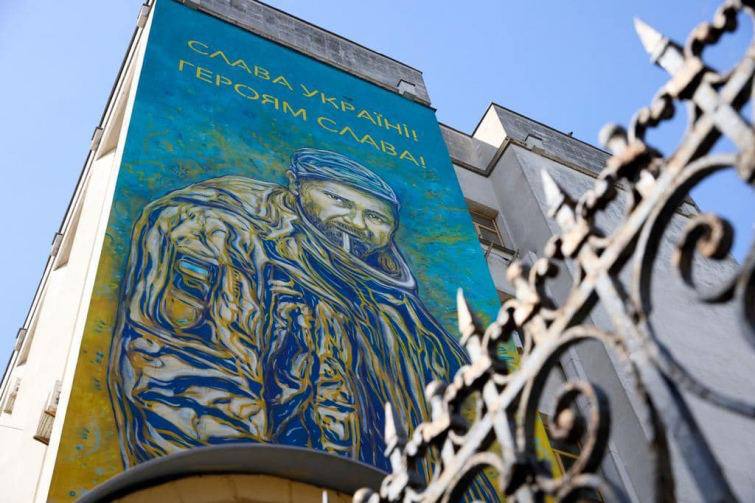 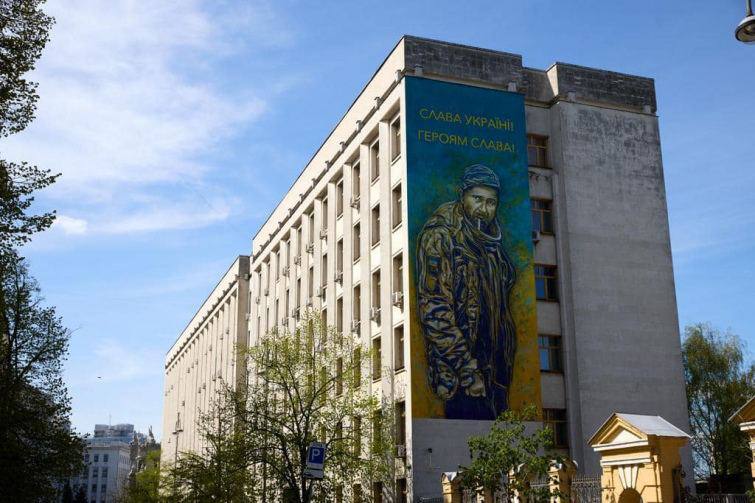
__________________ 💜🧿See Human | Be Human🧿💜 (War Section Hashtags) |
|
#389
●
04-30-2023, 05:17 AM
| ||||||||
 ✝Mudderator from Hell✝ Poster Rank:10 e-mail Join Date: Oct 2006 Posts: 95,107
Contributions: 817
Mentioned: 472 Post(s) Quoted: 10108 Post(s)
| ||||||||
|
Re: Russian/Ukraine War Discussion Thread V
Reminded me a bit of this: |