|
#1591
●
09-29-2023, 01:20 PM
| ||||||||
 ♚ Legacy Gold Member ♚ Poster Rank:207 Former US Soldier Join Date: Aug 2019 Posts: 7,268 Mentioned: 65 Post(s) Quoted: 3248 Post(s)
| ||||||||
|
Re: Russian/Ukraine War Discussion Thread V
No, it doesn't. You're not thinking - if they are bombing bridges in an area they intend to attack, this does a few things: prevents RU from pushing further, stops Ukrainians from reinforcing the area, but also prevents a Ukrainian retreat in the event of a successful Russian attack. Then the Ukrainians just dig in and fight because they have no other choice. Which is precisely what you don't want them to do if you're attacking them, that's very dangerous.
|
|
#1592
●
09-29-2023, 01:36 PM
| ||||||||
 My Rank: FIRST SERGEANT Poster Rank:474 Join Date: Apr 2013 Posts: 2,277 Mentioned: 1 Post(s) Quoted: 572 Post(s)
| ||||||||
|
Re: Russian/Ukraine War Discussion Thread V
Volodymyr Zelenskyy / Володимир Зеленський @ZelenskyyUa Today, Ukraine and the world commemorate the 82nd anniversary of the Babyn Yar massacre, one of the most terrible Nazi crimes committed during the Holocaust. I paid tribute to the victims and thanked the Ukrainian Jewish community leaders for coming to pray and commemorate them. https://twitter.com/i/status/1707701522463588452 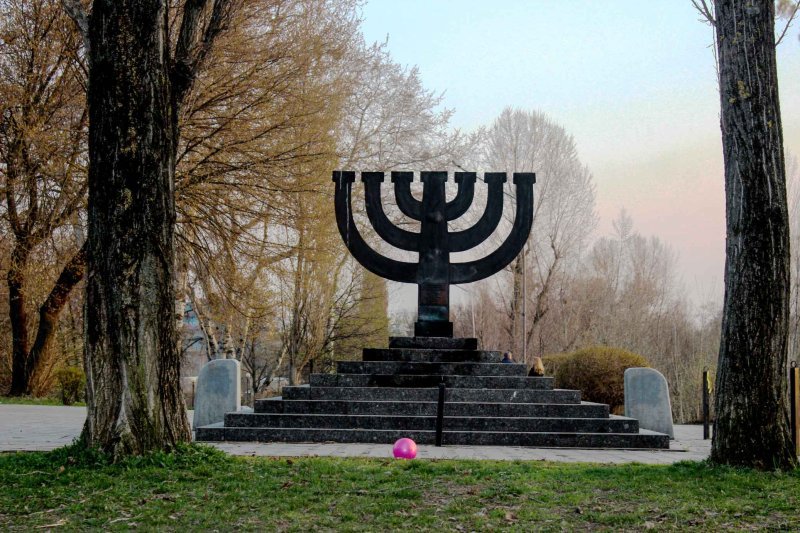 · |
|
#1593
●
09-29-2023, 01:53 PM
| ||||||||
| My Rank: FIRST SERGEANT Poster Rank:474 Join Date: Apr 2013 Posts: 2,277 Mentioned: 1 Post(s) Quoted: 572 Post(s)
| ||||||||
|
Re: Russian/Ukraine War Discussion Thread V
The history of the Babi Yar massacre and its place in Ukraine’s politics of memory 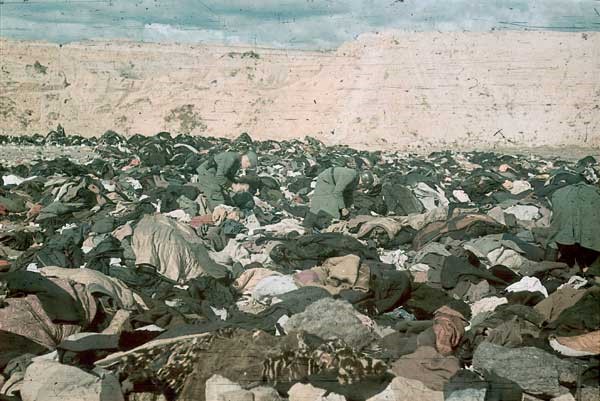 On 29–30 September 1941, in the Babi Yar ravine located on the outskirts of Kyiv German soldiers assisted by the local police killed almost 34,000 city residents of Jewish origin. Although the site is mainly associated with the mass murder of Jews, back in the 1930s it had also served as a place of burial of victims of the Holodomor and of acts of repression perpetrated by the NKVD. In 1941–1943, aside from Jews, other victims buried there were Ukrainians killed by German soldiers, including members of nationalist organisations, people of Romani origin, communists, prisoners of war etc. The total number of individuals buried there is estimated at around 100,000, with Jews accounting for the majority of them. The most recent chapter in the tragic history of this site – the so-called Kurenivka disaster – happened in 1961. In an attempt to erase the memory of the crimes perpetrated there, the Soviet authorities repeatedly dumped industrial waste from the near-by brick factory in the Babi Yar ravine, which resulted in a disastrous mudslide that killed 1,500 city residents. Efforts to erase the memory of the Holocaust, including the Babi Yar massacre, were continued until the final years of the USSR’s existence. Having themselves launched several anti-Semitic campaigns after World War II, the Soviet authorities attempted to conceal the fact that Nazi Germany’s policy had targeted not only Communism but also Jews – a nation that suffered more than other nations as a result of the war. In the Soviet era, the Holocaust was presented as an element of a greater crime, i.e. the genocide of the Soviet nation, and in sites of the mass murders of Jews monuments were built to commemorate “murdered Soviet citizens”. The 1961 mudslide in Babi Yar caused certain landscape changes resulting in the elimination of the ravine, which in turn was intended to be the final stage of the process of erasing all physical objects associated with the events in Babi Yar from collective memory. The knowledge of the tragic history of this place was only spread through unofficial channels – in private conversations, works of art, family stories. It was only on the 50th anniversary of the massacre (and one month following Ukraine’s declaration of independence) that Leonid Kravchuk, then Chairman of the Verkhovna Rada of Ukraine, admitted during the ceremony in Babi Yar that Jews were the main victims of Nazi Germany. In addition, on behalf of Ukrainians he apologised to the Jewish nation for the crimes it had suffered and admitted that some Ukrainians were also involved in these crimes. The Menorah at the Babi Yar site was built at this time.  For many years, in Babi Yar the only object commemorating the tragic events was the monument “to the murdered Soviet citizens, prisoners of war and Red Army officers” built in 1976. Following the collapse of the USSR, several other smaller monuments were built there (at present there are around 30 such monuments) to honour the victims belonging to specific ethnic or political groups.  Menorah-shaped monument to the Jews massacred at Babi Yar opened on Sept. 29, 1991, 50 years after the first mass killing of the Jews at Babi Yar. From Centre for Eastern Studies https://www.osw.waw.pl/en Photos from https://k-larevue.com/en/babi-yar-which-monuments/ |
|
#1595
●
09-29-2023, 04:39 PM
| ||||||||
 My Rank: STAFF SERGEANT Poster Rank:719 Join Date: Jul 2009 Posts: 1,140 Mentioned: 2 Post(s) Quoted: 573 Post(s)
| ||||||||
|
Re: Russian/Ukraine War Discussion Thread V
You dont seem to understand the scale of this war and the enemy we are dealing with. US is used to fighting relatively small third world countries and most Americans want fast results, as if Ukraine is a large country with total air supperiority fighting against a poor, technologically inferior country. Ukraine is much smaller than Ruzzia and it doesnt have endless cheap meat to throw at the artillery. Ruzzia struggled to get Bakhmut too, and it had free meat, artillery and air support. Im fine with Ukraine taking it slow, and methodically grinding away the nazi army until it's it will collapse on its own. Rushing gives you nothing. |
|
#1596
●
09-29-2023, 05:13 PM
| ||||||||
 ✝Mudderator from Hell✝ Poster Rank:11 e-mail Join Date: Oct 2006 Posts: 95,149
Contributions: 817
Mentioned: 472 Post(s) Quoted: 10111 Post(s)
| ||||||||
|
Re: Russian/Ukraine War Discussion Thread V
On the Russia-1 channel, talking about the "improvement of Kaliningrad", they showed footage of the Polish city Elblag  |
|
#1597
●
09-29-2023, 08:28 PM
| ||||||||
 ☾ Administrator ☽ Poster Rank:76 ஜᎻᎬᎩᎾᏦᎪஜ Join Date: Dec 2011 Posts: 19,545
Contributions: 32
Mentioned: 173 Post(s) Quoted: 6869 Post(s)
| ||||||||
|
Re: Russian/Ukraine War Discussion Thread V
She is.  I believe she's a Ukrainian DJ too. She also sings "Welcome to Ukraine". I believe she's a Ukrainian DJ too. She also sings "Welcome to Ukraine".
__________________ 💜🧿See Human | Be Human🧿💜 (War Section Hashtags) |
|
#1599
●
09-29-2023, 09:39 PM
| ||||||||
| ☾ Administrator ☽ Poster Rank:76 ஜᎻᎬᎩᎾᏦᎪஜ Join Date: Dec 2011 Posts: 19,545
Contributions: 32
Mentioned: 173 Post(s) Quoted: 6869 Post(s)
| ||||||||
|
Re: Russian/Ukraine War Discussion Thread V
"A good answer to a journalist's stupid question."
__________________ 💜🧿See Human | Be Human🧿💜 (War Section Hashtags) |
|
#1600
●
09-29-2023, 11:20 PM
| ||||||||
 My Rank: SERGEANT Poster Rank:947 Ukrainian Join Date: Jul 2017 Posts: 765 Mentioned: 8 Post(s) Quoted: 215 Post(s)
| ||||||||
|
Re: Russian/Ukraine War Discussion Thread V
Prerty good answer I'll say |