|
#511
●
11-04-2025, 04:19 PM
| ||||||||
| ♚ Legacy Gold Member ♚ Poster Rank:99 Male Join Date: Nov 2009 Posts: 16,684 Mentioned: 7 Post(s) Quoted: 4602 Post(s)
| ||||||||
|
Re: Russian/Ukraine War Discussion Thread IX
Well, after 3 years, I guess it is time for the Ukrainians to show the Russians what a war really means. I hope they hit the Russians hard. It's the only way to get them to stop, and go home.  |
|
#512
●
11-04-2025, 04:43 PM
| ||||||||
| My Rank: SERGEANT Poster Rank:1158 Join Date: Feb 2014 Posts: 551 Mentioned: 0 Post(s) Quoted: 155 Post(s)
| ||||||||
|
Re: Russian/Ukraine War Discussion Thread IX
I don't think Putin even cares anymore about the war. He knows he'll never win it with Ukraine just tossing out tons of drones, and Russia drone technology is a joke. They rather just get cheap poor young siberian and chechyan men to the frontlines. Theri deaths are meanaingless. Putin is now too proud to end it, so just keep going to no men left to send. |
|
#513
●
11-06-2025, 08:41 AM
| ||||||||
| My Rank: CORPORAL Poster Rank:1526 Join Date: Oct 2011 Posts: 372 Mentioned: 1 Post(s) Quoted: 279 Post(s)
| ||||||||
|
Re: Russian/Ukraine War Discussion Thread IX
everyday there're less rapists and murderers. Less people to TAKE CARE OF when NATO steps in.
|
|
#514
●
11-17-2025, 03:17 AM
| ||||||||
 ✝Mudderator from Hell✝ Poster Rank:11 e-mail Join Date: Oct 2006 Posts: 95,414
Contributions: 817
Mentioned: 473 Post(s) Quoted: 10156 Post(s)
| ||||||||
|
Re: Russian/Ukraine War Discussion Thread IX
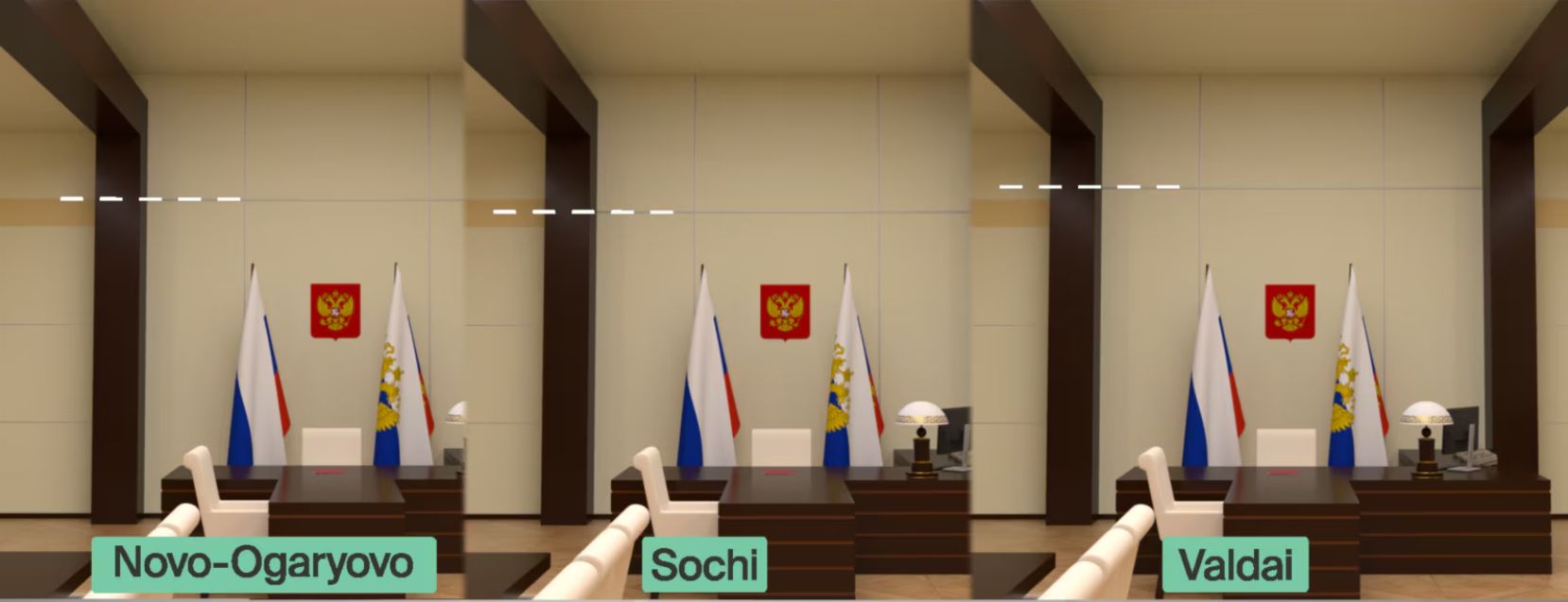
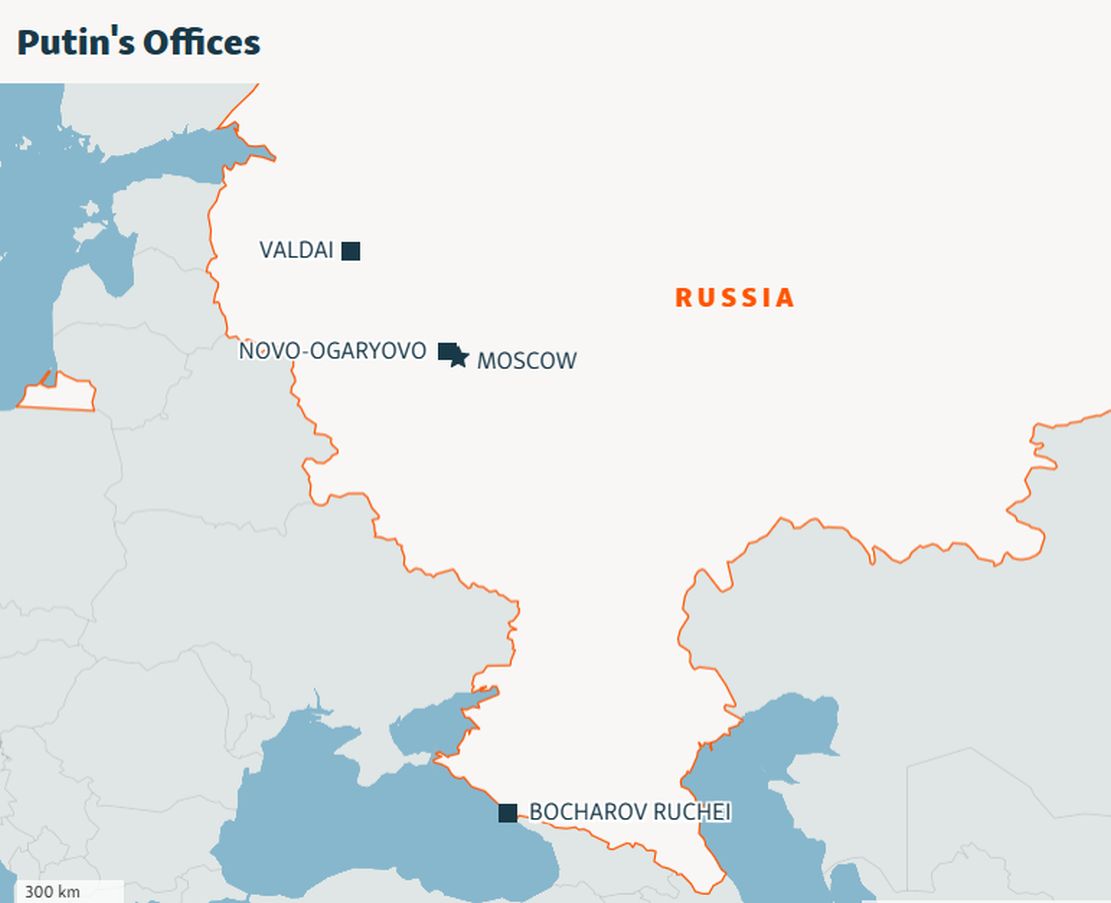
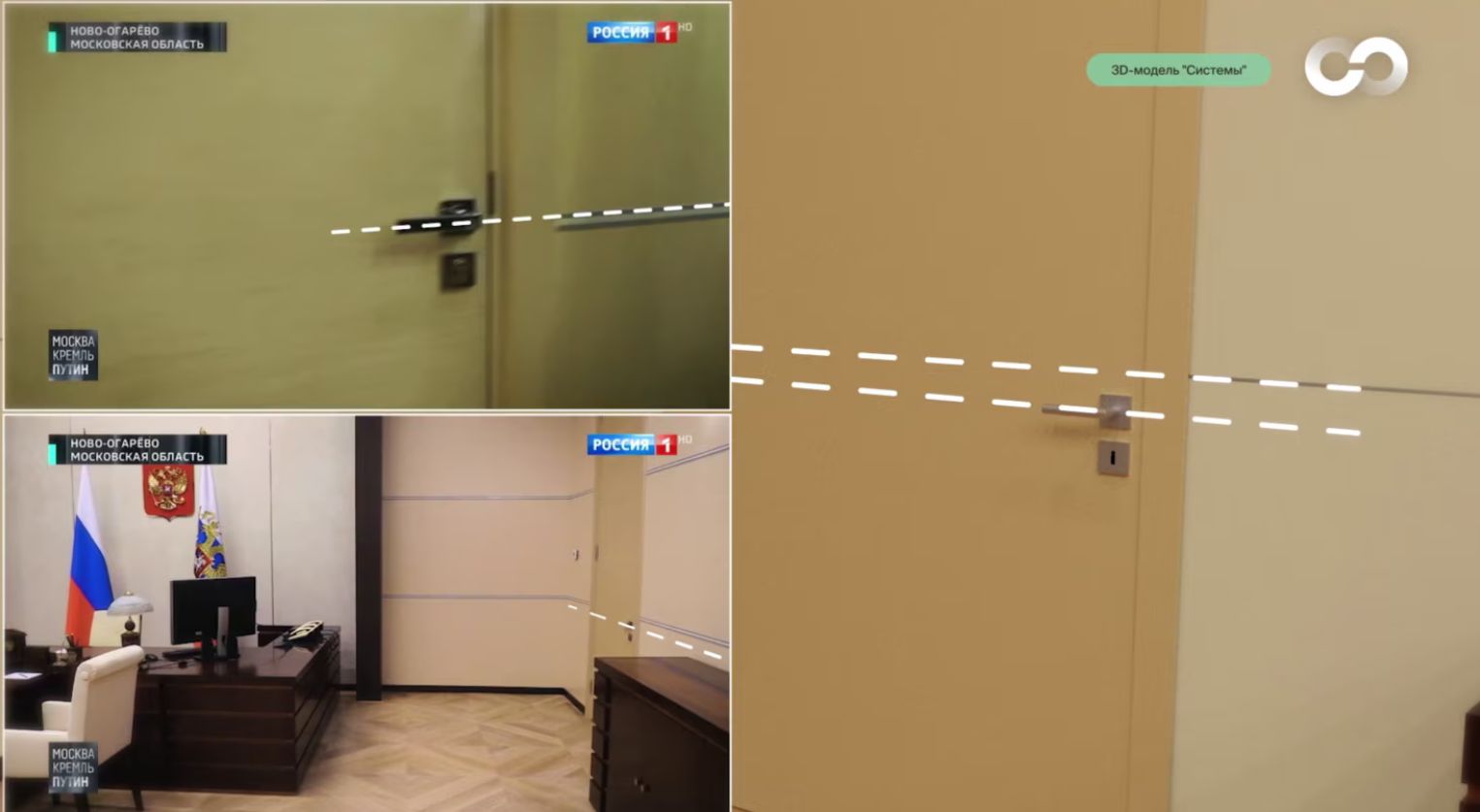
Where's Putin? In a report aired on October 11, 2020, a Russian state TV journalist breathlessly tells viewers what's in store: excerpts from his interview with President Vladimir Putin and news about the test of a hypersonic missile Moscow has been boasting about, among other things. "After the interview, more work," the reporter says, repeating the Kremlin narrative that Putin labors nonstop to keep the country safe and strong. A tag in a corner of the screen says "Novo-Ogaryovo" -- the main presidential residence in the Moscow suburbs -- and the footage shows Putin heading for his office door and reaching for the handle. And that's the giveaway: The placement of the door handle and a few other details reveal the footage was not filmed at Novo-Ogaryovo at all, an RFE/RL investigation has determined. In fact, it was shot more than 1,500 kilometers to the south in an almost identical office at Bocharov Ruchei, a state residence in Sochi, on the Black Sea coast. Systema, RFE/RL's Russian investigative unit, found there are not just one but two copies of Putin's office at Novo-Ogaryovo -- one in Sochi and the other at Valdai, roughly halfway between Moscow and St. Petersburg -- and that the Kremlin has been dishonest about the president's location hundreds of times in recent years. In most cases established by Systema, meetings that ostensibly took place at Novo-Ogaryovo were actually filmed in Sochi or at Valdai, a lakeside town whose forested location Putin has favored since he launched the full-scale invasion of Ukraine, which has led to Ukrainian drone attacks on military and industrial targets in Russia. The investigation points to a highly secretive Kremlin that has misled the public about Putin's location on a regular basis for several years at least. It also adds to questions about the timing of the meetings and talks Putin's administration publicizes. In an investigative report published in August, Systema revealed that at least five Kremlin meetings that ostensibly took place in April or May were actually filmed months earlier. Putin has continued that ruse this autumn: Since August, the Kremlin has released at least seven old videos of the president's meetings, passing them off as new, Systema found. Among other methods, Systema made its findings about the three nearly identical offices by closely watching some 700 videos published by Putin's administration or shown on state TV and examining images posted on the Kremlin website. Journalists also combed thorough reams of material including social media posts and leaked travel records describing plans and actual trips by people on the edges of Putin's entourage, such as security personnel and the state TV journalists who cover him. The October 2020 report is a simple but stunning example. In the Novo-Ogaryovo office, the handle on the door near Putin's desk is set slightly lower than a seam that separates wall panels on either side -- a fact that is clear from footage and photos of the room, including images from the company that laid the parquet floor. But while the handle Putin reaches for as he leaves the office looks the same, it is set slightly higher than the wall seam -- a difference of a few centimeters, but nonetheless unmistakable. And what it means is that the interview was filmed in Sochi, not outside Moscow. Among other details that reveal discrepancies between the location announced by the Kremlin and the actual location of numerous meetings purportedly held at Novo-Ogaryovo: the patterns on Putin's neckties, the shape of a TV stand, the hue of a tabletop, and the grain of a wooden document tray on the desk. Systema corroborated findings about Putin's location in video footage by examining travel documents. For example, an August 2020 TV interview that the Kremlin said took place at Novo-Ogaryovo appeared to have actually been filmed in Sochi, judging by details including the door handle. Sure enough, an e-ticket purchased by a travel agency with ties to the Kremlin and obtained by Systema indicated that the interviewer, Sergei Brilyov, flew from Sochi to Moscow on August 27, the day the interview aired on state television. This and other internal Russian state television documents were obtained by Systema journalists though leaked VGTRK corporate e-mails provided to the journalists by the Organized Crime and Corruption Reporting Project (OCCRP). Separately, footage filmed in September 2020 was purportedly shot at Novo-Ogaryovo. But in an e-mail seen by Systema, a state TV producer asked a colleague to organize a trip to Sochi for prominent journalist Pavel Zarubin and several other TV crew members at that time. Zarubin, a co-creator of a weekly news show on state-run Rossia-1 that focuses on Putin, has frequently traveled to Sochi and brought back footage that the Kremlin then represented as having been filmed at Novo-Ogaryovo, Systema found. A leaked travel document and a short portion of one of Zarubin's shows revealed that a presidential security staffer involved in communications stayed a night in Sochi at a time when footage of Putin purportedly shot at Novo-Ogaryovo, but actually shot at Bocharov Ruchei, was filmed in October 2021. In addition to the door handle, there are other differences between the office at Novo-Ogaryovo and the one at Bocharov Ruchei. The placement of a seam on the wall behind Putin's back is one; the legs of the TV stand are another. The use of Bocharov Ruchei by Kremlin bosses goes back at least as far as Nikita Khrushchev, the Soviet leader from 1953-64, and his successor, Leonid Brezhnev. A building where meetings were held, constructed in the 1950s, was eventually torn down and replaced by a building that went up ahead of the 2014 Sochi Winter Olympics. Footage filed shortly after the ceremony opening of the games shows a reception attended by Russian cultural figures as well as Putin and Alina Kabayeva, the 2004 Olympic rhythmic gymnastics gold medalist who is widely reported to be his longtime partner and the mother of at least two children by him. Over the years, Putin has hosted many other leaders, and other Russian officials, at Bocharov Ruchei. During the COVID era, for much of 2020 and 2021, about one-third of the meetings that were ostensibly held at Novo-Ogaryovo actually took place at Bocharov Ruchei, evidence reviewed by Systema indicates. He also spent a lot of time at Valdai, holding meetings in an office that looks a lot like the one outside Moscow and the one in Sochi. More and more in recent years, Putin has favored Valdai. He has largely stayed away from Bocharov Ruchei since February 2023, one year after he launched Russia's full-scale invasion of Ukraine. Furthermore, Kremlin footage and other materials examined by Systema suggest that almost all his meetings purportedly filmed at Novo-Ogaryovo in 2025 actually took place at Valdai. Valdai is also the site of a state residence, and a pavilion for meetings and conferences was built on what used to be a tennis court in a wooded area on its grounds in 2016 by the same company that handled the renovations at Novo-Ogaryovo and Bocharov Ruchei. As with Bocharov Ruchei, the placement of a seam on the wall behind Putin's chair is one of the signs that this is not Novo-Ogaryovo. Another that distinguishes Valdai from both the other offices is a thermostat switch set dead-center in a wall panel. On Putin's desk, the grain of the wooden document tray has a different pattern. Through visual details, travel times, and other evidence, Systema determined that one of the many meetings held at Valdai was a government huddle three days after a fire ripped through a mall in the Siberian city of Kemerovo in March 2018, killing at least 60 people, most of them children, a week after Putin secured his fourth presidential term. The Kremlin claimed it took place at Novo-Ogaryovo. As Russia amassed forces along Ukraine's borders ahead of the full-scale invasion on February 24, 2022, Putin spoke to then US President Joe Biden by video-link from Sochi on December 7, 2021, with Biden warning against an attack and Putin criticizing Kyiv and NATO. Putin then traveled to Valdai and held several meetings from there, according to Systema's findings, while the Kremlin reported that he was working at Novo-Ogaryovo. From February 24 to April 12, as Russian forces first advanced on several fronts but were then pushed back from the suburbs of Kyiv, failing to subjugate Ukraine and setting the stage for the long war that continues with no end in sight, Putin held at least 12 meetings at or from the Valdai office, Systema found. An analysis of footage and other evidence also shows that all but one of 30 appearances by Putin in the office in question between January and the end of September this year were filmed at Valdai -- where, at some point in the past few years, the thermostat switch has been moved to a spot corresponding with the Novo-Ogaryovo and Sochi offices. Konstantin Gaaze, a sociologist who studies Russian authoritarianism and bureaucracy, says that amid the war against Ukraine, which is targeting Russian energy and military facilities with increasing drone and missile attacks, there's a simple reason for Putin's preference for Valdai. "It's a matter of security, of course," Gaaze said. Bocharov Ruchei is relatively exposed on high ground in Sochi, and prominent defensive measures would attract attention in the tony Moscow suburb where Novo-Ogaryovo is located, he said. The Valdai residence is more secluded, and RFE/RL's Russian Service reported in August that 12 air-defense installations have been set up in the area around it, most of them Pantsir-S1 missile systems. Putin's spokesman, Dmitry Peskov, read questions sent by Systema ahead of publication of this article but did not respond. The press office of VGTRK did not comment in response to the journalists' inquiries. In 2020, after the Russian-language media outlet Proekt first reported that Putin had two very similar offices, at Novo-Ogaryovo and Bocharov Ruchei, Peskov said the report was inaccurate and that there were no "identical offices." Putin's administration has not addressed evidence that it has misled Russians about the locations where hundreds of meetings have been held. |
|
#515
●
11-26-2025, 03:50 PM
| ||||||||
| ✝Mudderator from Hell✝ Poster Rank:11 e-mail Join Date: Oct 2006 Posts: 95,414
Contributions: 817
Mentioned: 473 Post(s) Quoted: 10156 Post(s)
| ||||||||
|
Re: Russian/Ukraine War Discussion Thread IX
Dozens of regions in central and southern Russia are now feeling the war’s proximity as drones and sometimes missiles hit energy sites and residential buildings. Air raid sirens wail almost every night, offering a constant — and very public — reminder of how the conflict is encroaching. Beyond the front lines, the rest of Russia, Moscow included, has started to feel the economic toll. From households cutting back on food spending to struggling steel, mining and energy companies, the country’s economic engine is showing multiple fractures, and the earlier resilience spurred by massive fiscal stimulus and record energy revenues is being tested. The degree of suffering is incomparable to that of Ukraine, and is in any case unlikely to prompt Putin to end the war, yet it underlines the ever-higher cost being extracted for his decision to launch the all-out invasion in February 2022. The fallout is hitting just as the US applies pressure to curb oil and gas revenue flowing to Moscow as part of the Trump administration’s flurry of activity aimed at reaching a ceasefire. Momentum for a deal is growing, with talks shifting to Moscow and US-Russian negotiations known to have been working behind the scenes on a package that would give Kremlin the sanctions relief it wants. “Based on the overall economic indicators, it would be in Russia’s best interest to stop the war now,” said Alexander Gabuev, Berlin-based director of the Carnegie Russia Eurasia Center. “Still, to want to end the war, one must see the edge of the cliff. Russia is not there yet.” In the absence of that realization, things are set to get worse for Russia’s population before they can hope to improve. “Prices are now rising faster than wages,” said Elena, 27, an event company manager from the Moscow region. Bloomberg withheld her surname to protect her identity in case of repercussions. She’s changed her shopping habits, buying fewer clothes and more domestic brands since imports have become too expensive. That’s a sharp contrast with earlier in the war, when gross domestic product was expanding on the back of military-linked investments that drove an almost 20% growth in wages in 2024, boosting consumer demand though also contributing to inflation. Russia’s central bank hiked rates to a record 21% in October last year to cool inflation and slow an overheated economy, but even as borrowing costs have eased the economy is increasingly showing the delayed impact of monetary tightening. In the process, deeper imbalances have been exposed in a country that’s retooled for war while still supporting a civilian economic sector. Inflation eased to about 6.8% in early November, but the key reason is weakening consumer demand, the Center for Macroeconomic Analysis and Short-Term Forecasting, headed by the brother of Russia’s defense minister, said in its latest report. Notably, Russians are cutting back on food, according to SberIndex, lender Sberbank’s open-data platform that tracks incomes, spending and business activity in real time. “The average bill for weekly grocery purchases has more than doubled in recent years,” said Denis, 40, a manager from Tambov, central Russia. Forced to reconsider spending, his family now buys fewer fruits and vegetables. Sales of milk, pork, buckwheat and rice dropped by 8–10% in September and October, according to analysis by Kommersant newspaper. X5 Group, Russia’s largest grocery chain, posted increased revenue in the third quarter largely on the back of inflation, but its net income dropped by almost 20%, reflecting weaker demand and higher costs. Russia’s retail sector is undergoing a major shake-up. Fashion retailers made up 45% of all store closures in the third quarter, with nearly every second outlet shuttering, local media report. According to government-owned Rossiyskaya Gazeta newspaper, the electronics market is experiencing its sharpest drop in demand in 30 years as buyers postpone major purchases. Car sales shrank by almost a quarter in the first nine months of the year, hurt by high borrowing costs and increases in a state tax imposed for recycling, driving up prices especially for imported and electric vehicles as the government seeks to boost budget revenue and support domestic automakers. Then there’s the direct impact of Ukrainian military action. Ukrainian drones now strike oil refineries and ports from the Black Sea to the Baltic coast with seeming impunity, sometimes traveling as far as 2,000 miles deep into Russia to targets in Siberia. Those strikes have exacerbated a crisis in the domestic fuel market, leading to a spike in prices from the end of August. While gasoline prices inched lower in November, they remain high and shortages are still being felt in some regions. Many analysts still expect modest growth this year and next, but the Center for Strategic Research, a Moscow-based think tank, concluded on Nov. 18 that “there is almost no chance left to avoid a recession,” with output having declined in more than half Russian industries. The steel industry is going through a crisis, with total consumption down 14% this year, according to top steelmaker Severstal PJSC. Demand for steel in construction declined 10%, while in machinery it slumped 32%. Coal mining is facing its worst situation in a decade with major companies cutting output. The banking sector is faring little better: The share of troubled corporate debt rose to 10.4% in the second quarter to 9.1 trillion rubles ($112 billion), while in retail it grew to 12%, the Bank of Russia said in a report in September. Economic growth slowed to 0.6% in the third quarter, missing estimates, while the budget deficit hit 1.9% of GDP in October and the Finance Ministry expects it to grow to 2.6% of GDP by year-end. All-important oil and gas revenue dropped by over a fifth in January-October from the same period a year ago to 7.5 trillion rubles, according to Bloomberg calculations based on Finance Ministry data. Lower crude prices, sanctions and a stronger currency all meant that the nation’s producers received fewer rubles for every barrel of oil sold. That was before the US, exasperated at Putin’s refusal to engage with peace efforts, unexpectedly moved in October to sanctioned Russia’s top oil producers, Rosneft PJSC and Lukoil PJSC. While the strains are unlikely to divert Putin from his war goals, he’s been actively trying to ensure that the US doesn’t increase the pressure on the Russian economy. In October, when President Donald Trump was mulling sending longer-range Tomahawk missiles to Kyiv and publicly voicing his frustrations with the Russian leader, Putin reached out to dangle the prospect of more peace negotiations. Indeed, he was encouraged and advised on that call by Trump’s own envoy, Steve Witkoff. Absent a deal, Russian fuel shipments in the first half of November declined to the lowest since the invasion of Ukraine began. Meanwhile, even Russia’s trade boom with China has stalled. “The immunity of the Russian economy has been severely weakened,” said Oleg Buklemishev, head of the Center for Economic Policy Research at Lomonosov Moscow State University. “A systemic crisis may not occur in 2026, but a steady deterioration in economic conditions will continue.” As the deficit widens, the government is increasing debt through expensive domestic sales. Value-added tax is set to rise next year and apply to a broader base, affecting smaller businesses and ultimately consumers. That’s seen adding 1.2 trillion rubles to state coffers. A technology levy on electronic components and devices is coming, as is an increase of the tax due when buying a car. After Putin promised Russians no further tax increases in 2023, the Kremlin has instructed media not to mention his name in reports about the new levies, opposition outlet Meduza, which is banned in Russia, reported. “If Russian authorities want the economy to keep functioning normally, special military operations must be wound down,” said Buklemishev, using Putin’s term for the war. “The realization they need to make the choice has not fully come, but the warning bells are already ringing.” |
|
#516
●
12-04-2025, 08:29 PM
| ||||||||
| My Rank: CORPORAL Poster Rank:1526 Join Date: Oct 2011 Posts: 372 Mentioned: 1 Post(s) Quoted: 279 Post(s)
| ||||||||
|
Re: Russian/Ukraine War Discussion Thread IX
Imagine how many of these ruSSkie orcs you will never see again - nor their breed - on the streets of your cities somewhere in the world.
|
|
#517
●
12-05-2025, 02:41 AM
| ||||||||
| ✝Mudderator from Hell✝ Poster Rank:11 e-mail Join Date: Oct 2006 Posts: 95,414
Contributions: 817
Mentioned: 473 Post(s) Quoted: 10156 Post(s)
| ||||||||
|
Re: Russian/Ukraine War Discussion Thread IX
According to World Prison Brief data, Russia held approximately 602,000 prisoners in 2018. By late 2023, this number plummeted to historic lows of roughly 249,000, as reported by SWP. While differences in reporting methodology account for some variance, the trend is undeniable: the system has been hollowed out. Ukrainian Intelligence attributes at least 180,000 people to inmate recruitment practices. The same intelligence source indicates payment withholding practices and a casualty rate of nearly 70-80%—with tens of thousands killed in action. Which, compounded, underlines an economic reality: Russia’s Federal Penitentiary Service (FSIN) saved more than half a billion USD in 2022-2023, and the Russian Armed Forces gained soldiers who require minimal training and no veteran benefits, healthcare, or pension—a package that represents nearly $12 billion in avoided personnel expenditure. Since then, Ukraine has also implemented similar recruitment practices, with its Shkval Battalion. “I can say with confidence: we’ve lowered crime in Russia tenfold, and we’ve trained former prisoners better than they trained Pioneers and Little Octobrists during Soviet times,” affirmed Prigozhin in 2023. His approach involved high-casualty, often suicidal, “human wave” tactics, which ensures that a significant portion of the most violent criminals are permanently removed from society. “It’s either them [the prisoners] or your children, decide for yourself,” he would say. Wagner’s boss underlined a vision, a message. He implicitly positioned the prisoners as a disposable demographic layer whose sacrifice saves the general population from mobilization and further criminal activity. He would also frame prisoners’ military involvement as a way for them to “redeem [their] debt to the Motherland” and “cleanse [their] sins by blood.” Such a philosophy and spiritual language rationalized the high-risk deployment as a form of societal and personal redemption. The notion of spilled blood is not new either, and can be found still nowadays, for example, in the French Foreign Legion doctrine, which allows every foreigner who served the French Republic to directly access French citizenship (see Français par le sang versé). Either French citizenship or one’s own life and freedom, the idea of trading with individuals who have nothing to lose is at the core. From it, at least three branches of thought spread out: philosophical, societal, and economical. Given the world we are living in, and the priorities that it pushes, focusing on the economy seems appropriate. Russia’s Federal Penitentiary Service traditionally operates on a massive budget; in 2017, it stood at 257.6 billion rubles, or around $4.4 billion USD (at the 2017 mean exchange rates of 58.5 rubles per dollar). The per-prisoner variable spending—for food, clothing, medical and other supplies—is estimated at roughly $3.10/day ($1,125/year) based on 2021 figures. As mentioned in the introduction, Russia hosted 543,000 prisoners pre-invasion, and 249,000 post-invasion. So, pre-invasion annual variable spending on prisoners would be around $611 million, and post-invasion around $280 million. A 54.14% decrease of $330.75 million, or around $661.5 million saved/reallocated cumulatively in 2022 and 2023. Once incorporated, at least 180,000 prisoners became soldiers between February 2022 and December 2023. If around 35% of them survived, then 117,000 were killed in action, captured, or maimed to the point of invalidity. Which stays the same: these men were removed from the FSIN’s long-term financial liability columns. So, if we leave aside the fact that the Russian Armed Forces gained a significant amount of precious units via penitentiary recruitment, its economic reality appears financially positive for the military as well. The promised signing bonus amounted to 195,000-400,000 rubles (around $2,166-$4,444 at the 2022-2023 mean exchange rates of 90 rubles per dollar), the promised monthly salary to 100,000-200,000 rubles/month ($1,111-$2,222), and the promised death benefits to 5,000,000 rubles (around $55,555), according to BBC. The reality turned out much different—the signing bonus got cut by 60%, the rest is clawed back through bureaucratic status changes or simply withheld; the monthly wages went down to around $348.69 for the first 30-40 days, then routinely withheld for the subsequent months, especially for HIV-positive prisoners or otherwise marked as expendable, as reported by the Russia Behind Bars NGO; as for the death benefits, bureaucracy helps yet again: to obtain them, the families must produce a death certificate stamped killed in action, yet, field evidence shows, prisoners are listed as missing or deserter instead, voiding the payout. In the end, by getting 60% of the arithmetic mean between 195,000 and 400,000 rubles, we get 178,500 rubles of signing bonus per recruit, or around $1,983. Add in the only average monthly pay they get before dying, or getting captured, incapacitated, or bureaucratically entangled by the Russian apparatus — $1,666.5 — and, once multiplied by the total number of recruited prisoners (180,000), we get around $657 million total spent on them in 2022 and 2023. In comparison, if these 180,000 soldiers were recruited and maintained as regular contract personnel, the Russian Armed Forces would spend: $3,300 for the signing bonus, around $10,000 for the training, $53,208 for a 2-year contract, then $3,000 for the veteran lump-sum demobilization pay, and $11,000 for accrual minimum 20-yr pension via treasury share. Let’s leave aside the post-duty benefits to render the calculations more accurate in comparison with what the prisoners get: only accounting for the signing bonus, the training and a 2022-2023 contract itself, $66,508 is obtained per soldier. Multiplied by 180,000, we get approximately $11.97 billion total. A far cry from $657 million, with a net difference of roughly $11.3 billion. To put it into perspective, the Russian defense budget for 2022 is estimated to be $86.4 billion. As a result, the penitentiary recruitment allowed for around 6.53% cut/reallocation of the total military expenditure in 2022 alone. By February 2024, from 63,000 surviving and amnestied inmates, a given number of them reoffended. As reported by Mediazona, Russian military personnel convicted of murder increased by 900% in 2023 as compared to 2022. The same source claims that an Interior Ministry leak attributes around 200 serious crimes (e.g. murder, rape, or armed robbery) as well as 750 civilians killed/injured to ex-convicts who underwent the prison recruitment circuit, then got re-arrested as of April 2024. And at least some of those who got re-sentenced and re-imprisoned were ultimately sent back to the frontlines, thus creating a legal loop. For example, in Belgorod and Rostov-on-Don, prosecutors registered around 40 cases of amnestied fighters who went on a second military contract instead of prison, creating an explicit revolving door. Putin himself has publicly called repeat offending by pardoned fighters “inevitable” but “minimal,” signaling tolerance for this loop. Indeed, Russia does not publish centralized recidivism figures for amnestied convicts and many courts no longer flag “SVO veteran” status in case files. Yet, from the leaks and numbers at our disposal, the re-arrest rate of ex-convict veterans is situated at 0.32%. This re-offense rate can be considered a floor value: it only accounts for the cases that reached an arrest warrant and were entered into the Interior-MO I.D. database; it omits offences still under investigation, unreported crimes, and regions that have stopped flagging “SVO veteran” status in court files. The real number can climb to at least 60%, if we take into account the results of the OSW & PONARS-Eurasia analysis that calculated that “around 63% of inmates in Russian prisons are re-offenders.” This future offending trajectory is aggravated by war-specific risk factors (PTSD, combat skills, alcohol, social exclusion) that push the expected rate even higher. If we stay at 60% though, that’s at least 37,800 convict-veterans from 2022 and 2023 alone. These are people who know how to use firearms, who suffer from PTSD, and whose patriotism is disillusioned by the recruitment bureaucracy and its false promises. And at least 200 of them have already committed serious crimes, as stated earlier. Despite such somber numbers, the Ministry of Internal Affairs (MVD) logged in the first half of 2025 a total of 940,500 criminal cases—the lowest half-year figure in at least 16 years. More than $1.3 billion saved by FSIN, up to $12 billion diverted by the Russian Armed Forces, at least 180,000 new easy soldiers, and the criminal rate reduced to its lowest in 16 years. At least, according to the MVD. Indeed, as Prigozhin once said, dead prisoners don’t reoffend. Even as a thought experiment, the establishment of the same recruitment circuit is unimaginable in Western European nations. Despite all the possible pros, and despite the recent rise of the far-right in Europe, however radical it might be. Even despite Ukraine desperately lacking manpower, despite overcrowded European prisons—by 123% in France, 113% in Belgium, 134% in Slovenia, 132% in Cyprus, while the representation of detained foreigners, as of 2021, is 24.6% in France, 44.2% in Belgium, 31.6% in Slovenia, and 43.3% in Cyprus,— and despite the per-prisoner cost in the EU—131.50€/day (48,000 €/year) on average, with a range between 13€/day in Bulgaria and 377€/day in Luxembourg. Indeed, a “European Penal Legion”— volunteer-only detachment of the Ukraine Foreign Legion (which navigates the legal minefield of the European Convention on Human Rights), trained then incorporated in Ukraine, with EU citizenship as reward, targeting third-country nationals with suspended sentences—is highly unlikely in the current EU landscape. Even if it theoretically reduces foreign inmate populations in the eyes of the European far-right, saves/refunnels penitentiary funds, and supports Ukraine without German or French boys dying. In the end, Ukraine’s Shkval Battalion and Russia’s Storm-Z detachments will remain a phenomenon unique to the post-Soviet reality of this war. |
|
#518
●
12-05-2025, 03:58 AM
| ||||||||
 My Rank: FIRST SERGEANT Poster Rank:469 Join Date: Apr 2013 Posts: 2,290 Mentioned: 1 Post(s) Quoted: 572 Post(s)
| ||||||||
|
Re: Russian/Ukraine War Discussion Thread IX
Saving Billions, Cynically: A Very Special Military Operation
|
|
#519
●
12-07-2025, 11:31 PM
| ||||||||
 My Rank: LANCE CORPORAL Poster Rank:2464 Join Date: Apr 2013 Posts: 179 Mentioned: 0 Post(s) Quoted: 110 Post(s)
| ||||||||
|
Re: Russian/Ukraine War Discussion Thread IX
That is a lot of text for irrelevant information. Russians are living no different than before the war. Sanctions have done nothing besides incels complaining that it's not real McDonalds anymore. Russia doesn't care how many Russians you'll never see again, they'll keep sending more. Like has been mentioned, most were locked up in jail, but are serving a combat term to have their jail sentence reduced, the lowest of society. I've said this before, instead of sending 3 drones to kill 1 guy, send 1 drone, let him live and go back to Russia with 1 leg or 1 arm, let the Russian population see the thousands of maimed Russians and watch support drain. Let them live their their next 50 years without a limb, and only then will the Russian population care about the war. And I don't even have a side on this war, I don't care who wins, I've been watching since 2014. But I'm just observing. |
|
#520
●
12-08-2025, 04:59 AM
| ||||||||
| ✝Mudderator from Hell✝ Poster Rank:11 e-mail Join Date: Oct 2006 Posts: 95,414
Contributions: 817
Mentioned: 473 Post(s) Quoted: 10156 Post(s)
| ||||||||
|
Re: Russian/Ukraine War Discussion Thread IX
You mean adaption and apathy to the new situation with even less free speech, internet restrictions for the working class aka the majority. For the rich not much changed indeed. 500,000 to a million mostly younger, educated, urban professionals like IT, academics and doctors etc. fled the country after the beginning of the war and i bet most won't return after adapting to free speech and other values of Western society. The war economy boosts certain sectors and increases wages for those who work in that area and that's needed as products get more expensive or less available. Inflation is between 8 and 12 percent past 3 years and for instance Germany it's around 2.7 and Poland around 4. Interest rate boomed from 7% to 21%, now 16.5%. High interest rates significantly influence russians by making loans (mortgages, consumer credit) much more expensive, squeezing household budgets, increasing business costs (reducing investment/growth), fueling higher prices (inflation), and affecting savings returns, all while the Central Bank tries to cool an overheated, war-driven economy. This creates a complex scenario where borrowing is tough, but saving can offer better returns, yet everyday costs like food and fuel remain high due to inflation, impacting consumer spending and overall economic stability. (Not for the rich though) Huge impact is felt by families of soldiers that do or do not return home. Russian armies do not rebel against victory. They do not rebel merely because of slaughter in their own ranks, even when the scale of that slaughter reaches 1 500 soldiers a month. They only rebel when they realise that their sacrifices have been in vain, when they see that the state and military leadership are incapable of prosecuting the war and defending the state. Russian experience leads one to believe that leadership change, not to say regime change, will follow defeat, not victory. Ukraine will not agree to die, there will be resistance and insurgencies. And so, there will be provocations and reprisals, repressions, purges, and deportations. In the Baltic states, the most massive deportations occurred in 1949, five years after they were reoccupied and four years after Germany was defeated. In 2025 signs of weakness in the russian economy are increasingly visible: high inflation, growing financial stresses, gasoline and food shortages, rapidly slowing oil revenues, shortages of key manufacturing parts, failed auctions of sovereign bonds, and depletion of its sovereign wealth fund. The russian Central Bank and economic officials are quite skilled at creating a narrative of a growing economy, a well-supplied war machine and a thriving consumer sector. In their narrative, sanctions are useless and counterproductive because of the deep strengths and internal unity of russia. So to help understand the current reality two outstanding economists with long experience in studying the black box of the russian economy will tell their story. First, Dr. Volodymyr Lugovskyy, the chairman and professor of the Department of Economics at Indiana University. Lugovskyy’s research spans international trade and finance and applied microeconomics on subjects such as the rare earths and semiconductor industry. He had earned advanced degrees in economics from the Kyiv School of Economics and at Purdue University. Second Dr. Anders Aslund is a longtime observer who many recognize as the Dean of russian and East European Economics. He’s now a senior fellow at the Stockholm Free World Forum and adjunct professor at Georgetown University. There has been an intense debate whether sanctions against russia work. And so critics point to two factors, one is that russian economy has not collapsed. Two, the war in Ukraine is going on. In my opinion, this is the wrong yardstick. A better question we should be asking is what would russia have done, what would russia have achieved without sanctions globally and in Ukraine? So how much more could russia have spent on spreading its influence on covert operations, on disinformation in all these countries? So let’s start outside Ukraine. So in Europe, countries like Germany, France, Italy are breaking those legacy energy ties with russia. Oil is being replaced and the shift is permanent. By middle of 2025, United States is the largest supplier of the liquefied natural gas to Europe, Eastern European countries and russia has not achieved its goals in elections of Moldova and Romania. It’s losing its influence in many other countries with notable exceptions of Hungary and Slovakia. Former Soviet republics, so if you think about countries like Kazakhstan, Azerbaijan, Armenia, these countries are asserting its independence much stronger, and in some cases even directly confront russia. They happened because russia has less resources to spend on all of these countries and to spread its international influence in which it’s actually very skillful. So then of course the question, why hasn’t russian economy collapsed? There are two factors. 1. russia is a country rich in national resources and high oil prices helped. Second, it was spending aggressively, it was using its economic war chest, the National Management Fund, which it was accumulating for decades, prior to the war, it was estimated at $200 billion. Now its liquid assets are estimated about $35 billion. So it was spending aggressively on the war machine, it was spending aggressively on other things. So now their economy is a tipping point. So if you think about budget deficit, originally, so last December or so, it was projected to be only $14 billion. So now by October, russian government has reevaluated the budget deficit estimates and now projects it to be five times higher at $70 billion. Experts expect that at this rate, at the end of the year, probably it’ll be actually close to a $100 billion. You have double-digit inflation, you have persistent shortages of electricity and fuel in many regions. So russia now actually imports fuel, right? So it exports crude oil, but it actually imports fuel. So dependence on China and India these days, so it actually decreases their profit margins international trade. And so what we are thinking about is not just about revenue, it’s not just about GDP, it’s actually about profit margins because these are the margins russia can spend. So the war financing is also declining. So russia relies more and more on mercenary army. A big factor in attracting soldiers are enlistment payments. Up until recently in many regions they were up to $35,000, so that’s an equivalent of three and a half years of russian average salary. Just few weeks ago, they cut them down to $10,000. The human cost of russian army is also staggering. According to UK Ministry of Defense, only in 2025, russia lost 332,000 soldiers killed or wounded. So russian government is expected to pay to the families of fallen soldiers $120,000, and that could contribute to up to $40 billion in fiscal burden. So not to do that, russian military units are increasingly reporting these fallen soldiers missing, contributing to record number of missing persons in russia this year. So all of this happened before sanctions imposed by United States and European countries just recently in October 2025. And so early signals show that these sanctions might be very impactful and now potentially is good time to impose sanctions on russian oil. Why doesn’t russia stop? So russia doesn’t stop because in russia, weakness is dangerous. If Putin stops the war, he might be perceived as a weak leader and so he might be challenged by forces from within russia. So we are talking about security forces, we are talking about Army, we are talking about strong regional leaders, figures like Ramzan Kadyrov in Chechnya already openly confronts federal authorities. So russia currently replies on mercenary army. So that’s expensive, but that allows them to manage political risks because population does not perceive it as something which affects them directly. If they run out of funds, they would probably have to reserve to conscripts rather than the mercenary army. So that would be cheaper, but potentially it’ll reduce the effectiveness of the army. More importantly, it’ll actually increase these political risks. So to conclude, right, so even if russia doesn’t stop the war immediately on the near future, its ability to wage the war effectively is eroding. The russian economy is mediocre, one percent growth this year and going forward, eight percent inflation now, and it’s not going to be less. So this is essentially a stagflation, and I completely agree with what Professor Lugovskyy said about collapse. We should not discuss it as collapse. Collapse is what certain politicians say when they want to show how important they are and say, “Now we are going to impose sanctions from hell and they will break the economy.” It doesn’t work like that. What sanctions do is that they reduce resources. So if we take it in general terms, if there hadn’t been sanctions on russia since 2014, the russian economy might have grown by three percent a year. The russian economy is very vulnerable, and this vulnerability should be more exploited by the west than is currently the case. The military expenditures in russia are now about $180 billion. And for the next budget, there’s three points that are quite important. The first is that for the first time since the war started, russia is not increasing its military budget. So they’ve reached some kind of limit. 180 billion, how much is that? Eight percent of russia’s GDP. And that’s a lot by Western standard, but not by war standards. Ukraine spends 50 percent of its GDP on the military because for Ukraine, this war is existential. Ukraine cannot afford to lose the war, then the country will cease to exist. If russia loses the war, what will happen? Putin will lose power. So it’s existential for Putin, but not for russia. So the first point is that russia has now decided, that is the Kremlin, that is Putin, that it is not prepared to spend more on the war than it does this year. And the second point that follows from that is that russia is no longer trying to win the war. It’s trying to have a long war that it can maintain. And that is quite an important point. And think then that you have a russian population, why would you like to have a long war where more than 200,000 soldiers have been killed? For Putin, it’s better having a bad war than a good peace. And therefore, all of his discussion about ceasefire, it’s just empty talk. Putin has never shown any interest in reducing his demands. He wants to have Ukraine wiped out from the map, and that is the aim of the war. And then a third point about the new budget is that russia is now increasing from the first of January value added tax from 20 to 22 percent because it needs more budget revenues. And that means that it’s now the russian population very directly that has to pay for the war. There’s no escaping and saying that the war doesn’t cost anything to the population. So this is quite a serious situation and how much does that give? 0.5 percent of GDP in the extra revenues. So russia’s federal revenues are 18 percent of GDP. And russia, for the last three years had a budget deficit of two percent of GDP, $40 billion, which by any Western standards are tiny. In particular in the wartime. Why? Because of the financial sanctions. The budget deficit cannot be increased and russia can’t borrow money from anybody, not even from China. China gives technology but not financing to russia. So the financial reserves are vital and they are ending. The other point is the energy sanctions. If you look upon russia’s export revenues, it used to be that two-thirds of it came from oil and gas. Now, in recent years, had gone down to half and it will be less this year. The oil and gas sanctions on russia reduced russia’s export revenues by 28 percent from 2022 to 2023. And there is no forecast of these revenues increasing, and there is a great opportunity to reduce them further. So how could that be done? 50 percent of the russian oil comes is being shipped out of the Baltic Sea, 40 percent from the Black Sea. And these are extremely vulnerable. So what can be done? Well, Ukraine recently bombed one of the big oil terminals in the neighborhood of St. Petersburg. There’s one more. Now, about 600 of russian shadow tankers have been sanctioned. This can be made much more effective. Ukraine is bombing the oil assets and that is costing something immediate. That what Ukrainians are doing is really effective on the russian population. That is when there is shortage of electricity, gas, water, and that these are the things that really matter. And then we come to a third choke point after finance and India revenues, and that is labor. So russia has enormous labor shortage. The official unemployment is 2.2 percent, and all companies are calling for more labor. There is strong wage in inflation and it costs a lot to recruit soldiers. And now the region budgets don’t have the money to recruit soldiers any longer and the military industry has taken very big increases in the costs and that goes straight back to the budget. So this is a shaky situation. So it’s not necessary to defeat russia on the ground. It’s necessary to defeat russia at home. And Elvira Nabiullina as head over the Central Bank is heavily over-advertised. She has been involved in very dubious things. In the fall of 2017, three of the five biggest private banks in russia went under, and Financial Times wrote that at least $30 billion had been stolen. That’s a lot of money even in russia. And she was responsible for this. And these three banks had all got lots of banks that had got under before. She had consolidated banks into very corrupt institutions and she was responsible for a bank inspection. So it’s just one example, there are many others, her dubious practices. So don’t believe that the russian Central Bank is independent. It’s fully dependent on one person, Putin. |