|
#1182
●
07-17-2023, 02:08 AM
| ||||||||
 ♚ Legacy Gold Member ♚ Poster Rank:69 Join Date: Jul 2008 Posts: 22,210 Mentioned: 77 Post(s) Quoted: 11634 Post(s)
| ||||||||
|
Re: Russia/Ukraine War Mobilization, Protests & Sabotage Media III
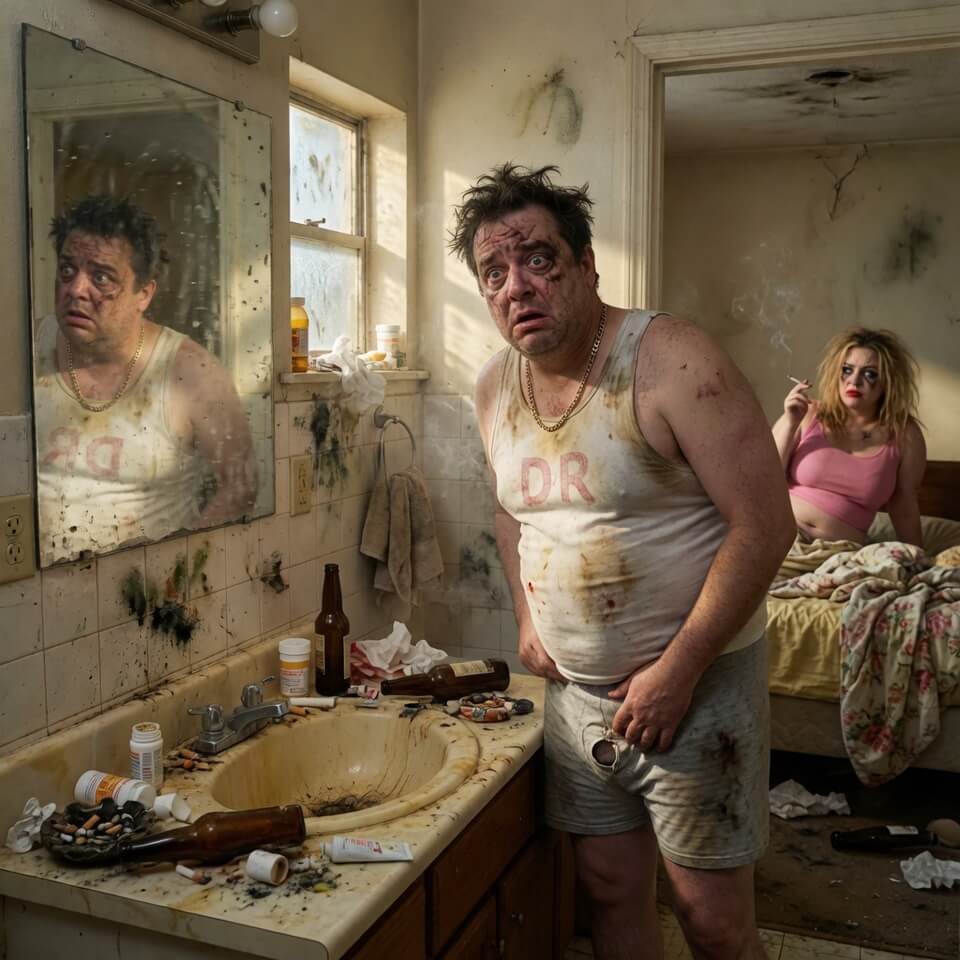
I wonder how happy this guy if once they throw him into a bus and force him onto the front lines
|
|
#1183
●
07-17-2023, 02:24 AM
| ||||||||
 My Rank: FIRST SERGEANT Poster Rank:474 Join Date: Apr 2013 Posts: 2,269 Mentioned: 1 Post(s) Quoted: 571 Post(s)
| ||||||||
|
Re: Russia/Ukraine War Mobilization, Protests & Sabotage Media III
He will feel right at home 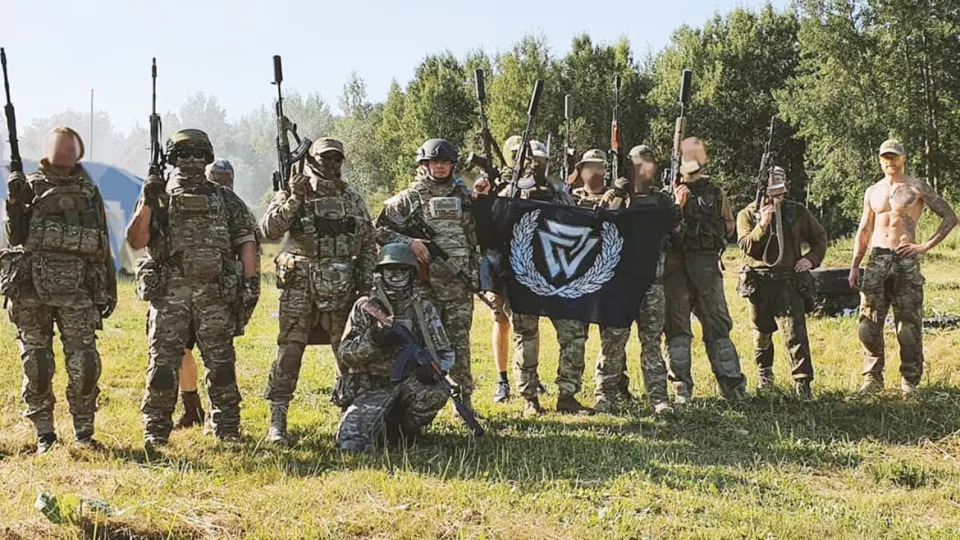 Whoops, sorry I posted the wrong photo these are actually Russian Nazis! |
|
#1184
●
07-17-2023, 02:29 AM
| ||||||||
 ☾ Administrator ☽ Poster Rank:76 ஜᎻᎬᎩᎾᏦᎪஜ Join Date: Dec 2011 Posts: 19,519
Contributions: 32
Mentioned: 171 Post(s) Quoted: 6844 Post(s)
| ||||||||
|
Re: Russia/Ukraine War Mobilization, Protests & Sabotage Media III

__________________ 💜🧿See Human | Be Human🧿💜 (War Section Hashtags) |
|
#1185
●
07-17-2023, 02:47 AM
| ||||||||
| So Fucking Banned Poster Rank:1512 Some LibTard pronoun I can't even remember. Join Date: Jul 2023 Posts: 376 Mentioned: 4 Post(s) Quoted: 222 Post(s)
| ||||||||
|
Re: Russia/Ukraine War Mobilization, Protests & Sabotage Media III
He looks like an alien trying to play the part lol Wtf how strange
|
|
#1187
●
07-17-2023, 11:12 PM
| ||||||||
 My Rank: MASTER GUNNERY SERGEANT Poster Rank:369 Join Date: Feb 2010 Posts: 3,202 Mentioned: 4 Post(s) Quoted: 553 Post(s)
| ||||||||
|
Re: Russia/Ukraine War Mobilization, Protests & Sabotage Media III
So what part of your 3 day invasion don't you get, the part where they got fucked up, or the part where they got fucked over, or the part where they are now in there 500 + days of being told to fuck off. What part of the master plan is that. Waiting the west out,  |
|
#1188
●
07-17-2023, 11:30 PM
| ||||||||
| My Rank: MASTER GUNNERY SERGEANT Poster Rank:369 Join Date: Feb 2010 Posts: 3,202 Mentioned: 4 Post(s) Quoted: 553 Post(s)
| ||||||||
|
Re: Russia/Ukraine War Mobilization, Protests & Sabotage Media III
Democracy shall Prevail, yet your sentiment is quite the pro ruskie anti west rant that we have seen on this site & your no different. Your suggesting that the genocide tactics of the ruskies is democracy in progress & that the west is domed ect ect ect. for lack of hardware & munitions Let me inform you that russia has been cut off from the rest of the world. The great majority of the world is supporting Ukraine with combat systems, money & aid hand over fist so if you think that the combined efforts of the world will exhaust all the hardware & munitions being sent to Ukraine, as that will not happen & democracy will prevail as that's what the Ukrainian ppl are fighting for & that's why they get the support that they do, because their cause is just !Your "Hope that time is on the side of the west" is more than RONPMSL, as what the fuck do you think the NATO alliance is, some kind of scout group. |
|
#1189
●
07-17-2023, 11:47 PM
| ||||||||
| My Rank: MASTER GUNNERY SERGEANT Poster Rank:369 Join Date: Feb 2010 Posts: 3,202 Mentioned: 4 Post(s) Quoted: 553 Post(s)
| ||||||||
|
Re: Russia/Ukraine War Mobilization, Protests & Sabotage Media III
Moving on from the pro ruskie bull shit, Reuters Exclusive-Danone reviews legal options after Russia seizes local business. PARIS/LONDON (Reuters) -French dairy group Danone is reviewing its legal options after the Russian state took control of its subsidiary in the country, a source close to the matter told Reuters on Monday. The source said Danone would write to the Kremlin and was in contact with French authorities, including President Emmanuel Macron's office. The letter will ask for explanations, but Danone does not yet know what is legally feasible, the source added, declining to be named because the matter is confidential. According to a decree signed by President Vladimir Putin on Sunday, foreign-owned stakes in Danone Russia, along with beer company Carlsberg's stake in a local brewer were put under the "temporary management" of government property agency Rosimushchestvo. Moscow's action highlights the vulnerability of other consumer products companies that still have operations in Russia, some of which have announced plans to leave. Dove soap maker Unilever and Swiss food giant Nestle remain in Russia, as well as British American Tobacco, which is trying to sell its unit. Reckitt last year said it had begun a process to transfer ownership of its Russian business, which if successful would make it the first major personal goods maker to do so following the country’s invasion of Ukraine. Western firms face tough exits from Russia after the government in December said they must sell their operations for at least half price and pay 10% to the state, Reuters reported. Danone said in October it would relinquish control of its dairy food business in Russia, which could have led to a write-off of up to 1 billion euros ($1.12 billion). Global companies had at the time been announcing costly exits from Russia. The source close to the matter said Danone had been weeks away from achieving an agreement to sell its Russian subsidiary, which has 7,500 employees spread across 13 factories. The source said Danone, like everyone else, had learnt the news when the Russian presidency announced it to the media and had been very surprised, especially as the company had "initiated a very organised process to leave the country". Nestle, BAT, Reckitt and Procter & Gamble declined to comment on Monday's news, while Unilever did not respond to a request for comment. Unilever had in February said there was a risk it might have to stop doing business in Russia, and that it might have to take a loss or write down its assets there. Kellogg in December said it would divest its business in Russia to a local Russian company, Chernogolovka. "Local government regulatory approval has been granted and the sale of our Russian business has now closed," a Kellogg spokesperson told Reuters on Monday, adding that the sale was finalized last week. P.S There's your democracy right there, Chechnya. |
|
#1190
●
07-18-2023, 12:12 AM
| ||||||||
| My Rank: MASTER GUNNERY SERGEANT Poster Rank:369 Join Date: Feb 2010 Posts: 3,202 Mentioned: 4 Post(s) Quoted: 553 Post(s)
| ||||||||
|
Re: Russia/Ukraine War Mobilization, Protests & Sabotage Media III
Reuters Why does the Black Sea grain deal's expiry matter ? LONDON (Reuters) - A deal allowing Ukraine to export grain via the Black Sea will expire at the end of Monday after Russia said it will suspend its participation. The deal, brokered by the United Nations and Turkey last July, aimed to alleviate a global food crisis by allowing Ukrainian grain blocked by the Russia-Ukraine conflict to be exported safely. WHY IS IT IMPORTANT? Ukraine is a major producer of grains and oilseeds and the interruption to its exports at the outbreak of war pushed global food prices to record highs. The deal, agreed in July 2022 some five months after the war started, helped to bring down prices and ease a global food crisis. Ukraine grain has also played a direct role with 725,200 tonnes, or 2.2%, of the supplies shipped through the corridor used by the United Nations World Food Programme (WFP) as aid to countries such as Ethiopia, Somalia and Yemen. WHAT DOES THIS MEAN FOR FOOD PRICES? Prices for grains and oilseeds have already risen in response to news that Russia will suspend its participation in the deal. The increase will lead to higher prices for staple foods, such as bread and pasta, in the coming months. The situation, however, is better than in the months after the war started as supplies of grain from other producers such as Brazil and Brazil have increased. Prices for wheat, the main ingredient in bread, have fallen by about 14% so far this year and corn is down around 23%. The current global food crisis, however, is far from over. The WFP said last month that multiple emergencies had overlapped creating the largest and most complex hunger and humanitarian crisis in more than 70 years. In 2022, a record 349 million people experienced acute hunger and 772,000 teetered on the edge of famine, the WFP said in an annual review. WHAT IS THE STATE OF GLOBAL FOOD SUPPLIES? Global corn stocks began the 2021/22 season at a six-year low and so Russia's invasion of Ukraine, one of the world's top corn exporters, led to a significant jump in prices. A sharp increase in exports from Brazil, however, has since helped to boost supplies along with the export of nearly 17 million tonnes of corn through the corridor. The U.S. Department of Agriculture has forecast global corn stocks by the end of the 2023/24 season will be at a five-year high. Global wheat stocks are tighter and are forecast to be at an eight-year low at the end of the 2023/24 season, USDA data shows. WHAT WOULD IT MEAN FOR THE WORLD FOOD PROGRAMME? The WFP buys several million tonnes of food commodities every year of which about 75% are grains. In 2021, WFP purchases totalled 4.4 million tonnes with Ukraine its top source, providing 20% of the total. Ukraine mainly supplies wheat and split peas. Most of the food goes to Africa along with some countries in Western Asia such as Yemen and so the WFP tends to source most supplies from eastern Europe, which is closer than major producers in North or South America. The WFP has shipped 725,200 metric tonnes through the corridor. It will have to look elsewhere, potentially at a higher cost when a funding shortfall has already forced it to reduce activities in some countries. WHAT HAS BEEN EXPORTED? Under the pact to create a safe shipping channel, Ukraine has been able to export 32.9 million tonnes of agricultural products, including 16.9 million tonnes of corn and 8.9 million tonnes of wheat. Before the conflict, Ukraine was exporting roughly 25 to 30 million tonnes of corn a year, mostly through the Black Sea, and 16 to 21 million tonnes of wheat. The capacity to ship grain through the Black Sea under the pact has been limited by the inclusion of only three ports. For a full breakdown of the countries and quantities exported: WHY IS RUSSIA WITHDRAWING FROM THE PACT? Russia has repeatedly said it sees no reason to extend the deal. It says commitments made to remove obstacles to Russian food and fertiliser exports have not been fulfilled. Moscow's demands have included the reconnection of Russian Agricultural Bank (Rosselkhozbank) to the SWIFT payment system. Other demands include the resumption of supplies of agricultural machinery and parts, lifting restrictions on insurance and reinsurance, the resumption of the Togliatti-Odesa ammonia pipeline and the unblocking of assets and the accounts of Russian companies involved in food and fertiliser exports. CAN THE CORRIDOR OPERATE WITHOUT RUSSIA? Ukraine's ports were blocked until the agreement was reached in July last year and it is unclear if it will be possible to ship grain now Russia is withdrawing from the pact. Additional war risk insurance premiums, which are charged when entering the Black Sea area, would go up and shipowners could prove reluctant to allow their vessels to enter a war zone without Russia's agreement. Insurance industry sources say that cover arrangements could alter quickly. War risk insurance policies need to be renewed every seven days for ships, costing thousands of dollars. IS THE CORRIDOR NEEDED IF UKRAINE'S HARVESTS SHRINK? Ukraine's grain exports are forecast to fall in the 2023/24 season after the war meant farmers planted less corn and wheat. The U.S. Department of Agriculture has forecast corn exports will drop to 19.5 million tonnes, down from the prior season's 28 million and well below the record 30.3 million shipped in the 2018/19 season when they accounted for 17% of global trade. Wheat exports are expected to fall to 10.5 million tonnes, down from the prior season's 16.8 million and well below a peak of 21 million in 2019/20 that represented 11% of world trade. Exporting even those lower volumes of grain through the eastern European Union would, however, be logistically difficult and expensive particularly for crops grown in eastern regions of Ukraine that face a long and difficult journey just to reach the border. CAN UKRAINE EXPORT MORE GRAIN THROUGH THE EU? Ukraine has been exporting substantial volumes of grain through eastern EU countries since the conflict began. There have, however, been many logistical challenges including different rail gauges. Another issue is that the flow of Ukraine grain through the eastern EU has caused unrest among farmers in the region who say it has undercut local supplies and been purchased by mills, leaving them without a market for their crops. As a result the EU has allowed five countries - Bulgaria, Hungary, Poland, Romania and Slovakia - to ban domestic sales of Ukrainian wheat, corn, rapeseed and sunflower seeds, while allowing transit for export elsewhere. As it stands this will be phased out by mid-September. Larger harvests are also expected in the eastern EU this summer and major ports such as Constanta in Romania are expected to struggle to handle the volume of grain it is likely to receive, leading to congestion and shipping delays. |