|
#1
●
11-09-2026, 06:12 AM
|
 My Rank: FIRST SERGEANT Poster Rank:450 Join Date: Apr 2013 Posts: 2,557
Contributions: 2
2,557Posts 8,266Thanked 608Quoted 1Mentioned 2Contrib. |
|
86 Year Old Man’s Voyage Ends With Rescue From Sailboat After Weeks Adrift
https://www.nytimes.com/2026/11/06/u...alifornia.html Man’s ‘Bucket List’ Voyage Ends With Rescue From Sailboat After Weeks Adrift Against the advice of friends, Harry Blodgett and his one-eyed dog, Sasha, set sail for American Samoa in August. Harry Blodgett was determined to sail from Oregon to American Samoa even though friends and neighbors told him it was a bad idea for an 86-year-old with limited sailing experience, and a one-eyed dog. He had initially planned to set sail in June, but he was delayed by repairs to his 30-foot sailboat, the Willow Wind, which he bought for the voyage in February. He and his terrier-mix, Sasha, eventually left Astoria, Ore., in August. After nearly 60 days of not hearing from his sailing friend, Blodgett’s neighbor filed a missing-vessel report with the U.S. Coast Guard. “We assumed or feared the worst,” said Randy Enders, who lives across the street from Blodgett in Brownsville, Ore., and was among those who advised against the roughly 5,000-nautical-mile trip. Last week, a Coast Guard aircrew located the Willow Wind drifting with damaged sails some 460 miles off San Diego and coordinated help from a commercial vehicle carrier that was at the time about 70 miles away. A Coast Guard aircrew later hoisted Blodgett and Sasha from the vessel and took them to San Diego. In a phone interview Tuesday from his San Diego hospital bed, Blodgett said he had no regrets, had never feared for his life and would still like to sail to American Samoa. About two weeks into his trip, he lost his sails. “I was just drifting along with the winds and the current,” he said. He also ran out of fuel early on. He didn’t activate his emergency position-indicating radio beacon sooner because he wasn’t in any danger, he said: “I wasn’t afraid at all. The boat was doing a great job.” That was despite fierce winds and rough seas day and night, he said, describing 10- to 15-foot waves. “I was just like a rag doll inside the hull of the boat getting banged against all the furniture and the roof of the inside of the cabin,” he said. Sasha had seemed unfazed by the conditions, he added. One of the doctors treating Blodgett was fostering Sasha, Enders said, adding that she seemed to be doing well despite needing to be medicated while temporarily in a shelter after the rescue because she was so anxious. Blodgett said he had possessed plenty of freeze-dried meals from Enders, but his water supply was so “stinky” that Sasha wouldn’t drink it. He said he was grateful for the rescue effort, but he planned to get another boat and make it to Pago Pago, American Samoa. “That trip across the Pacific was the last item on my bucket list,” he said. “You shouldn’t give up on your dreams or your goals.” Next time, he said, he’ll avoid the trip during hurricane season. There really isn’t a good time of year to make such a long trip alone, even for experienced mariners, and Blodgett was lucky to be rescued in the vast Pacific, Cmdr. Jason Nguyen of the Coast Guard said in an interview Thursday. “It is exceptionally difficult to conduct search and rescue, let alone find somebody alive,” he said. “Making a solo journey that far in the middle of the ocean on a relatively small boat is just inherently dangerous.” Luck was on Blodgett’s side, but what truly helped was the emergency beacon he eventually activated, giving rescue crews his location, the commander said. “Had he not had that on board, I don’t think that we would have found him,” Nguyen said. The beacon was still registered to the boat’s previous owners, but once the Coast Guard was able to verify it was the missing sailor, “everybody was surprised and just incredibly relieved,” the commander said. But when an aircrew arrived to the boat in the dark and dropped a life raft and radio, “they saw no signs of life,” he said. The crew stayed on scene for as long their fuel supply allowed and when heading back to Sacramento, contacted the vehicle carrier, the Grand Orion, and asked its crew to check on the sailboat. “Once we in the morning got the pictures and the report from the Grand Orion that he was alive, he was healthy, and so was his dog, everybody was just incredibly happy for the outcome because it doesn’t always happen that way,” the commander said. Enders, who became Blodgett’s power of attorney years ago after being a passenger in a car with him and realizing his peripheral vision was lacking, said he was disappointed that Blodgett wasn’t giving up on this particular dream. Against Enders’ advice, Blodgett liquidated all his belongings and gave up his house, which had a reverse mortgage. He moved into the boat, which he had docked at a marina. Dock neighbors had also tried to talk him out of his trans-Pacific plans, Enders said. Enders and his wife, Margaret, befriended Blodgett when they moved across the street from him 14 years ago. They found his feisty energy endearing, noting that he rode motorcycles, ate healthy food, kept active and was the most interesting person that they knew. They said he was from Canada and described a variety of jobs he had held, including as a deputy sheriff, and flying in helicopters doing fish and wolf surveys. He had built a house and an airplane, the couple said. They also admired how sociable he was, but lamented how he seemed to grow depressed when he wasn’t able to find a wife. In recent years he had tried online dating, they said, noting that he had traveled to China twice and once returned with a woman, though the relationship was short-lived. “Perhaps,” Blodgett replied when asked if he hoped to find a companion in American Samoa. “At my age, I’m not holding my breath for that.” He adopted Sasha, who had an eye that bulged, from a shelter about five years ago, and spent $900 on surgery when a veterinarian determined that the eye should be removed, Randy Enders said. Sasha, believed to be about 6 years old, was very skittish with others but always sat on Blodgett’s lap while they watched television, Randy Enders said. The Enderses are trying to figure out where Blodgett and Sasha will go after he’s released from the hospital. He has only a limited income, from a small pension and Social Security, Randy Enders said. “He wants to go someplace warm so we’re trying to find a warm place for him to go,” Randy Enders said. “Hawaiʻi is one of the possibilities.” 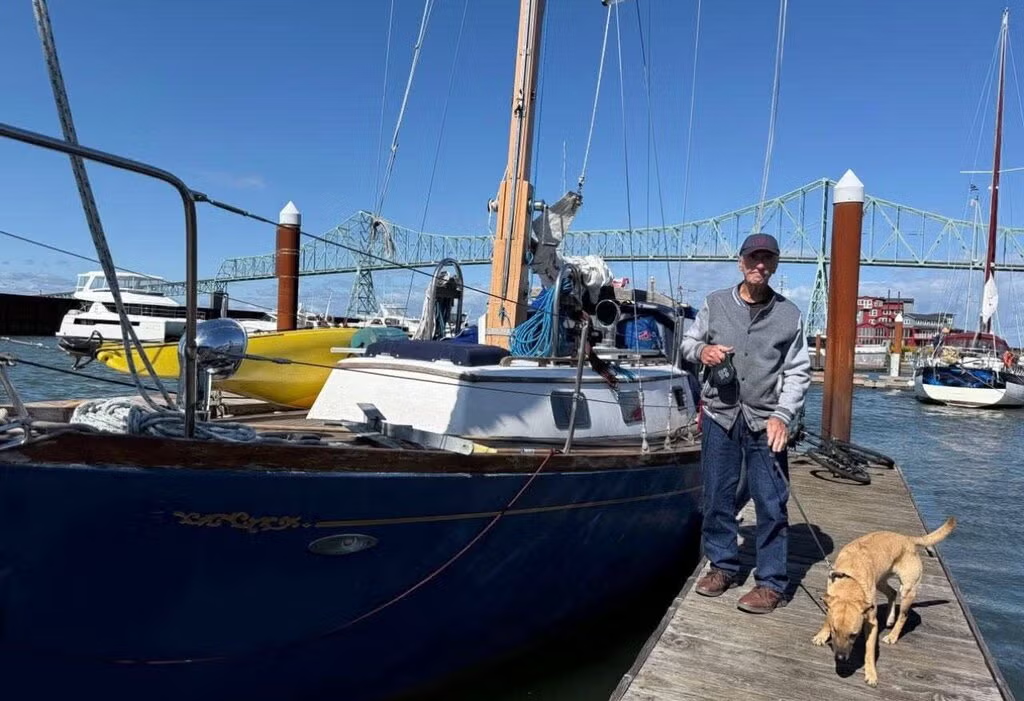 · 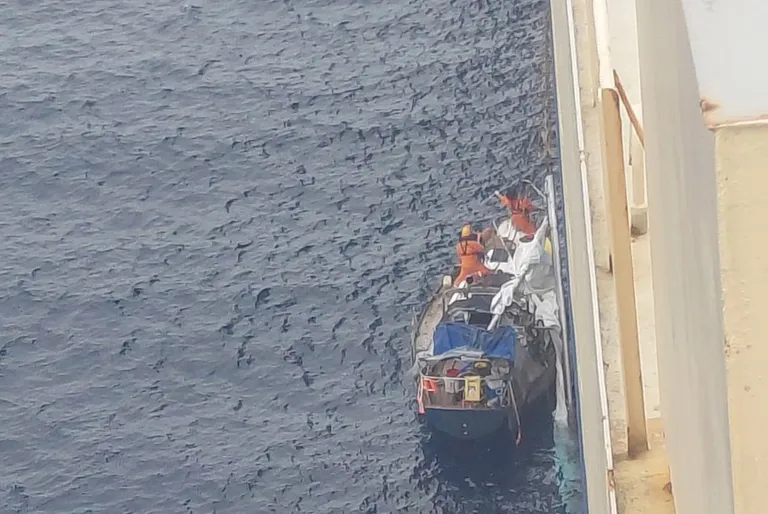 · |