|
#1
●
07-21-2026, 12:56 PM
| ||||||||
 ★ ★ GENERAL ★ ★ Poster Rank:37 male Join Date: Oct 2006 Posts: 42,046
Contributions: 35
Mentioned: 2256 Post(s) Quoted: 21186 Post(s)
| ||||||||
|
The Disappearance of Jennifer Kesse
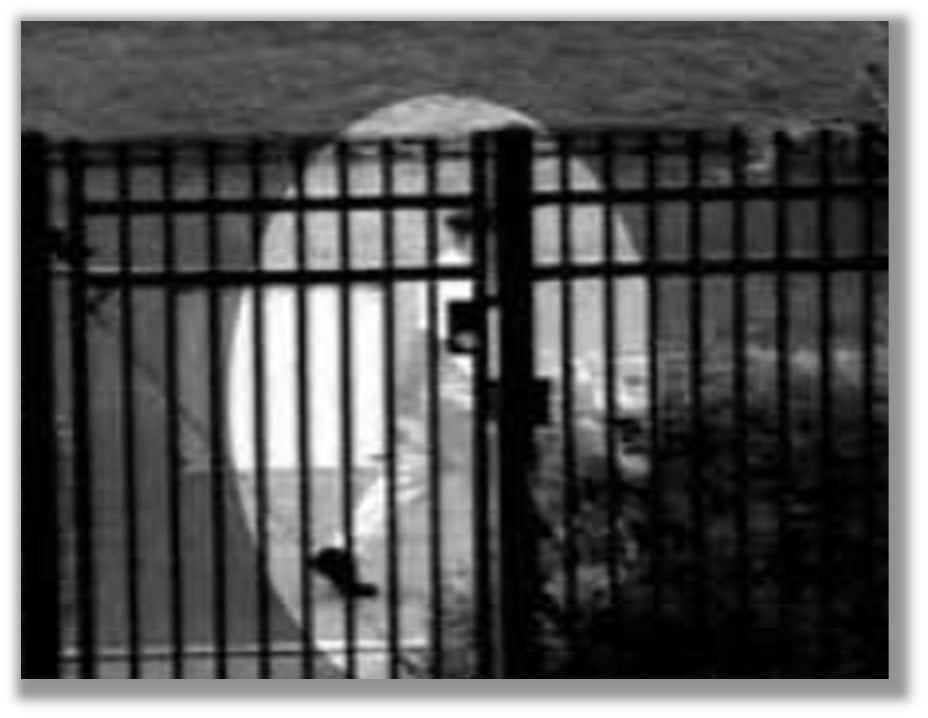
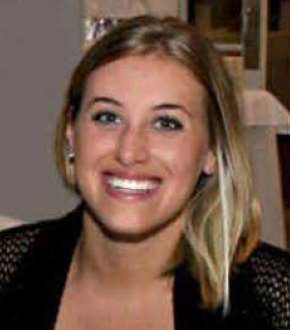
On the morning of Tuesday, January 24, 2006, Jennifer Kesse did everything a person does before a normal workday. She showered. She laid out her clothes. Her makeup was out on the counter, the towel she had used was still damp, and her bed had been slept in. Then, somewhere between her front door and her desk at the office, she vanished. She has not been seen since, and nobody has ever been charged. The FBI still lists her as a missing person. From the bureau's notice: Kesse was not a public figure, and her disappearance is not a household name the way a handful of cases are. That is exactly why it has held the attention of people who follow these things for two decades. It is an ordinary young woman, on an ordinary morning, in a well-lit suburb, taken in a window so narrow that investigators still argue about whether it happened at her door, in her parking lot, or on the short drive to work. And at the center of it is a piece of security footage that should have solved everything and instead became the most frustrating image in Florida cold-case history. Who she was Jennifer Joyce Kesse was born in New Jersey on May 20, 1981, and graduated from the University of Central Florida with a finance degree in 2003. By early 2006 she was 24 and doing well. She worked as a finance and project manager at Central Florida Investments, the timeshare company in Ocoee run by Westgate Resorts founder David Siegel. She had recently bought her own condo at the Mosaic at Millenia complex in southwest Orlando, near the Mall at Millenia. Her boyfriend of about a year, Rob Allen, lived down in Fort Lauderdale, and the two saw each other most weekends. The last normal day From January 16 to 23, Kesse and Allen had been on vacation in St. Croix. She flew back on Monday the 23rd, drove roughly three hours from Fort Lauderdale, and went straight to the office. That evening she spoke with her parents around six, and she spoke with Allen for the last time at about ten. By every account she was tired but fine, an ordinary Monday night at the end of a good trip. The next morning is where the record goes quiet. The condo told investigators she had gotten up and started her day: the damp towel, the clothes set out, the makeup. What it could not tell them was what happened after she walked out the door. She never arrived at work. She never called in, which everyone who knew her described as completely out of character. By late morning her employer was alarmed enough to phone her parents, two hours away near Bradenton. Her family drove up, let themselves into the condo, found nothing obviously wrong and her car gone, and called police that afternoon. The early police read, that a 24-year-old adult might have simply left of her own accord, cost time the case could not afford. The car Kesse's black 2004 Chevrolet Malibu was found on Thursday, January 26, when a resident of the Huntington on the Green condominiums reported a car that had sat too long. It was about a mile and a quarter from her own complex. Security footage from that lot later showed the Malibu had actually been dropped there around noon on the 24th, the same day she disappeared, and left there for two days before anyone flagged it. The car deepened the mystery instead of solving it. Her valuables were still inside, which took a simple robbery off the table. What was missing was specific: her purse, her cell phone, her keys, and the work outfit she had laid out. The phone stayed powered off from that morning on. Her bank card was never used again. Forensically the car gave up almost nothing, a single latent print and a small trace of DNA and fiber, and investigators came away believing it had been deliberately wiped down. When bloodhounds were run from the abandoned Malibu, they tracked her scent back in the direction of her own complex. The figure on the tape The lot where the Malibu was abandoned had a camera, and it caught the person who left it there. For a case with almost no physical evidence, this should have been the break. Instead it produced the detail the case is now known for. The camera captured a frame only about once every three seconds. In that stuttering footage, a figure sits in the car for roughly thirty-two seconds, gets out, and walks away without ever looking back. The figure is short, estimated at somewhere between five foot three and five foot five, notably shorter than Kesse's five foot seven, and dressed in the kind of clothing a painter or manual laborer wears. Investigators were never able to determine the person's sex. Here is the part the case is named for. In every one of the three frames where the figure's head is in view, a vertical post in a perimeter fence lines up directly over the face. Not once, but each time the head clears the car. The spacing of the fence slats and the timing of the camera happened to hide the person's identity at the exact moments it mattered. Enhancement work, reportedly including help from the FBI and NASA, has never resolved the face. Twenty years later, that fence post is still the wall the entire case runs into. The surveillance still is below. The men on the property One piece of context around the Mosaic at Millenia matters, and it is fact, not theory. The complex was in the middle of renovation work when Kesse moved in, and the grounds were full of construction crews. Kesse had told her family that workers there catcalled and harassed her. She was not the only one. Other women living in the complex reported similar harassment, suspected that someone had been in their units, and there was at least one reported peeping incident. Many of the workers did not speak English, and a documented gap in the investigation is that a large number of them were never fully interviewed. There is also the carpet. Workers were laying new carpet at the complex the morning Kesse disappeared, and a tip came in that someone had dumped rolled carpet near a lake around that time. That lead was not investigated until 2019, thirteen years later, when a dive team searched for two days and found nothing. Cold at the department, not at home What happened to the investigation is its own story. Orlando police did not release the surveillance video of the figure until May 2007, roughly sixteen months after she vanished. David Siegel, her employer, offered a one million dollar reward for her safe return, with a deadline, and it went unclaimed. In 2010 the FBI took the case, the original lead detective was reassigned, and the momentum stalled. In 2016 Florida legally declared Kesse deceased. It is important to be clear about what that was: a statutory finding after ten years, not a discovery of remains. No trace of her has ever been found. By 2018 her parents had had enough of what they were not being told, and they sued the Orlando Police Department for the case file. The settlement in 2019 handed them more than sixteen thousand pages of documents and sixty-seven hours of audio and video, at a personal cost of about eighteen thousand dollars. Reading through it, the family found a multi-year stretch during which the file showed almost no activity at all. They moved into Jennifer's condo to work the case themselves and hired a private investigator, a former federal agent, who has since read the entire file more than three times and flagged things the original investigation never pursued. Investigators did run down the obvious leads, and cleared them. Her boyfriend, Rob Allen, was in Fort Lauderdale that morning and had a solid alibi. An ex-boyfriend and a manager at her office were looked at and ruled out. A maintenance worker who had been around the complex was tracked down and interviewed in prison in 2009, and passed a polygraph. Twenty years in, the frustrating shape of the case is that the people closest to Jennifer were eliminated early, while the one person actually caught on camera has never been identified at all. The theories, and none of them is proven No one has been charged, so everything here is a theory, not a finding. The family's investigator has pointed at the construction crews, suggesting Kesse could have been forced into one of the many vacant, mid-renovation units feet from her own door. The original lead detective's stated belief was that she got ready, made it as far as her car, and was taken there before she ever left the complex. Investigators and the family have also said they remain open to a trafficking scenario, but consider it less likely than an abduction by someone already on or near the property. Where it stands in 2026 The case is not closed and it is not, at the moment, quiet. Since December 2022 the active law-enforcement investigation has sat with the Florida Department of Law Enforcement's cold case unit, running alongside the family's own private effort. In May 2025 FDLE said the case was no longer cold: they had re-reviewed thousands of pages, re-interviewed around forty-five people, narrowed to several persons of interest, and begun exploring whether artificial intelligence could finally pull a usable face out of that surveillance image. Then in October 2025 came the most concrete news in years. Her father announced that FDLE had found previously untested DNA in the case, contradicting the long-standing claim that the only usable DNA had come off the steering wheel. Testing was expanded from nineteen markers to twenty-six, the persons-of-interest list was said to be greatly reduced, and a documentary series was in the works timed to the twenty-year mark. In January 2026, on the anniversary, her parents said what they have said for two decades, that they have searched almost every single day, and that they believe the technology has finally caught up to the one image that has always held the answer. If you have information on the Jennifer Kesse case, tips go to the Florida Department of Law Enforcement and to Crimeline at 1-800-423-8477. Her family has kept an awareness site running under her name for years.
__________________ Support the site and our continued existance by upgrading to a Green Name |