|
#1
●
07-21-2026, 06:29 PM
| ||||||||
 ★ ★ GENERAL ★ ★ Poster Rank:37 male Join Date: Oct 2006 Posts: 42,046
Contributions: 35
Mentioned: 2256 Post(s) Quoted: 21186 Post(s)
| ||||||||
|
The Disappearance of Carla Vicentini
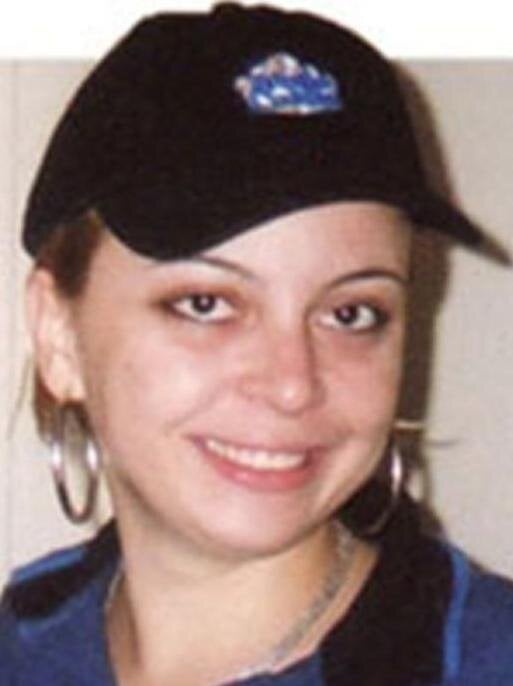
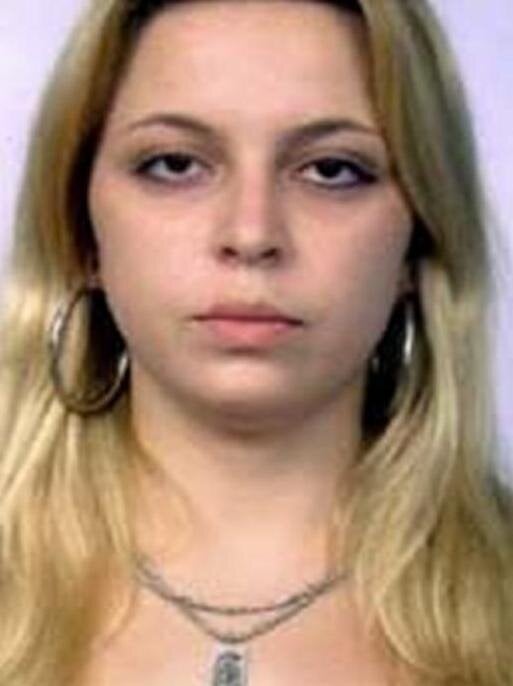
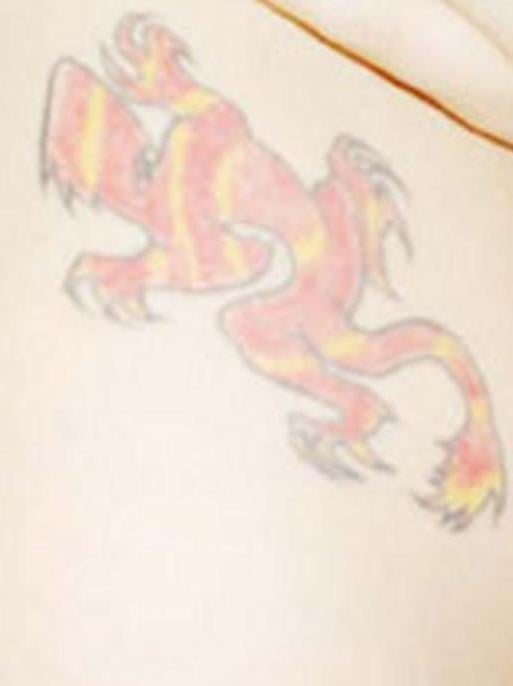
She had been in the United States for barely three weeks. Carla Vicentini was 22 years old, a university student from Goioere, a small city in the Brazilian state of Parana. She had come to New Jersey on a cultural-exchange program to study English and work for a few months before heading home. On the night of February 9 into the early hours of February 10, 2006, she was inside a bar on Ferry Street in Newark's Ironbound district, the Portuguese and Brazilian neighborhood where she had only just moved. At around 2:30 in the morning she walked out to a man's car to look at a photograph. She has not been seen since. Who she was Carla was born on April 29, 1983, and grew up in Goioere. She was described as about 5 feet 7 inches and roughly 140 pounds, with blonde hair and brown eyes, several piercings, and a few distinctive tattoos: a gray winged angel on her back, a red-and-yellow chameleon on her left hip, and a tribal design on her lower back. Those details would later fill an FBI flyer, but at the start of 2006 she was simply a young woman on a short adventure abroad. She left Brazil on January 18, 2006 and arrived in the United States the next day, January 19, on an overnight flight. Her plan was to stay only a few months, study English, and earn some money. The exchange program first placed her in the Dover and Ledgewood area of northern New Jersey, working at a White Castle on Route 46 and living at the Roxbury Motel with other exchange women. The working and housing conditions were poor, and before long she wanted out. Around February 5, 2006, she moved to an apartment on Ferry Street in Newark's Ironbound with a friend named Maria Eduarda Ribeiro, known as "Duda," whom she had met on the flight over from Brazil. She took a new job at the Mediterranean Manor banquet hall on Jefferson Street. The Ferry Street apartment belonged to Jose Madeira Martins Fernandes, a Newark businessman and a friend of Carla's father, Orlando Vicentini. Fernandes later said Orlando had worked as his accountant back in Goioere. Carla had been in this new life for less than a week when she vanished. The night at the Adega In the early hours of February 9 into February 10, at about 2:30 a.m., Carla was at the Adega Bar and Grill at 130 Ferry Street, where Duda worked as a waitress. According to the FBI, she was last seen leaving the bar with an unidentified white male. The FBI states she was thought to have been intoxicated, and that she told her roommate she was going to the man's car to look at a photograph. Then she was gone. The man has never been identified. The FBI describes him as roughly in his 30s, about 5 feet 8 inches and around 200 pounds, stocky and fair-skinned, with light or blue eyes, short salt-and-pepper hair, and an unshaven beard. In the Essex County Sheriff's case documentation his first name is listed as possibly "Antonio," but that is a possible label from the sheriff's records, not an FBI identification. The FBI has never named him. He is a description, not a suspect with a name. The evidence and its quirks One detail has puzzled people from the beginning. According to the Essex County Sheriff's summary of the case, Carla's jacket, wallet, passport, and a bag of work clothing were later found back in the Ferry Street apartment. That would suggest she may have briefly returned home after she was last seen. The problem is that it sits in direct tension with the witness accounts that had her getting into the man's car and never coming back. The sheriff's summary frames the recovered belongings as a contradiction, not as a finding, and no one has ever established that she actually returned to the apartment. There was another strange moment. Several days after she vanished, an unidentified caller screamed for help during a phone call placed to her boss's cell phone. Nothing came of it that anyone made public. When Newark police went looking for the Adega's security footage, they ran into walls. The bar's owner initially refused to hand over the video, and police were later told that the entrance cameras had failed because of a kitchen fire. The landlord, Jose Fernandes, reportedly gave varying accounts of that night and left for Brazil within days of Carla's disappearance. None of that is proof of anything; it is a record of a case that kept slipping out of investigators' hands. The investigation The disappearance was worked by the Newark Police Department and the FBI, which treated it as a possible-kidnapping and missing-person case and still carries it on its Kidnappings and Missing Persons list. Early on, Newark police offered a small reward, reported at about $2,000 and later supplemented toward roughly $5,000, part of it said to have come from an Italian-American businessman, and the Brazilian Consulate hired an attorney. Investigators conducted more than 70 interviews without producing concrete leads, and the FBI reportedly obtained bank records to identify the bar's customers that night in order to trace potential witnesses. On the ninth anniversary, in February 2015, the FBI's Newark Division raised the stakes, offering a reward of up to $20,000 for information leading to Carla's location or to the identity of anyone involved in her disappearance. What makes this case unusual is how far it traveled. In Brazil, Carla's disappearance became national news and was taken up by a Mixed Parliamentary Commission of Inquiry, the CPMI, that was investigating illegal emigration. Carla's mother, Tania Vicentini, traveled to Brasilia, met with Justice Minister Marcio Thomaz Bastos in April 2006, and testified before the commission. On May 4, 2006, the landlord Jose Fernandes testified before the same commission and denied any involvement in the disappearance, saying he had housed Carla and Duda only briefly out of friendship with Carla's father and urging investigators to look hard at the Adega bar. The commission was chaired by Senator Marcelo Crivella, and Deputy Hermes Parcianello, who was also from Goioere and knew the family, pressed the case and suggested hiring a lawyer in the United States. Brazil's Foreign Ministry, Itamaraty, followed the case closely for roughly its first two years before official contact tapered off. Theories No one has been charged, so everything here is a theory. Carla's mother, Tania Vicentini, publicly distrusted the landlord Fernandes's account of the night and pressed authorities to scrutinize it. That is her attributed allegation from the hearings, not a finding; Fernandes denied any wrongdoing and was never charged. Duda, the roommate and friend, was a witness and was likewise never charged. The unidentified man from the bar remains exactly that, unidentified, and the recovered belongings in the apartment have never been squared with the accounts of Carla leaving in his car. Every one of these threads is unresolved. It is worth stating plainly what has not happened here: no remains have ever been found, and there has never been any death finding. The FBI has publicly said it has not ruled out that Carla could be alive. Where it stands Three years after the disappearance, Tania Vicentini said she had lost hope of finding her daughter alive, describing it as if Carla had been abducted with no trace left behind. As of the 20-year anniversary in February 2026, the case remains unsolved and open. No remains have been found, no one has been arrested, and the FBI's reward of up to $20,000 still stands. Anyone with information about Carla Vicentini is asked to contact the FBI's Newark Division. The reward of up to $20,000 remains in effect.
__________________ Support the site and our continued existance by upgrading to a Green Name |