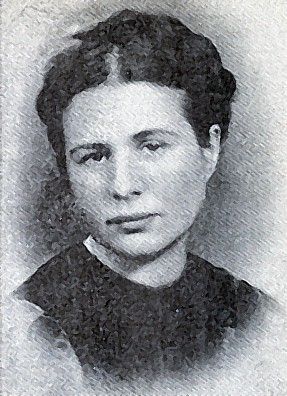
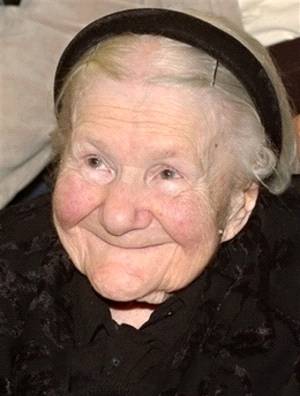
Irena Sendler (née Krzyżanowska, in Poland commonly referred to as Irena Sendlerowa, 15 February 1910 – 12 May 2008) was a Polish Catholic social worker who served in the Polish Underground and the Żegota resistance organization in German-occupied Warsaw during World War II. Assisted by some two dozen other Żegota members, Sendler saved 2,500 Jewish children by smuggling them out of the Warsaw Ghetto, providing them with false documents, and sheltering them in individual and group children's homes outside the Ghetto.
During the German occupation of Poland Sendler lived in Warsaw (prior to that, she had lived in Otwock and Tarczyn while working for urban Social Welfare departments). As early as 1939, when the Germans invaded Poland, she began aiding Jews. She and her helpers created over 3,000 false documents to help Jewish families, prior to joining the organized Żegota resistance and the children's division. Helping Jews was very risky—in German-occupied Poland, all household members risked death if they were found to be hiding Jews, a more severe punishment than in other occupied European countries.
In December 1942 the newly created Żegota (the Council to Aid Jews) nominated her (by her cover name Jolanta) to head its children's section. As an employee of the Social Welfare Department, she had a special permit to enter the Warsaw Ghetto to check for signs of typhus, something the Nazis feared would spread beyond the Ghetto. During these visits, she wore a Star of David as a sign of solidarity with the Jewish people and so as not to call attention to herself.
She cooperated with the Children's Section of the Municipal Administration, linked with the RGO (Central Welfare Council), a Polish relief organization that was tolerated under German supervision. She organized the smuggling of Jewish children out of the Ghetto, carrying them out in boxes, suitcases and trolleys. Under the pretext of conducting inspections of sanitary conditions during a typhoid outbreak Sendler visited the Ghetto and smuggled out babies and small children in ambulances and trams, sometimes disguising them as packages. She also used the old courthouse at the edge of the Warsaw Ghetto (still standing) as one of the main routes for smuggling out children.
The children were placed with Polish families, the Warsaw orphanage of the Sisters of the Family of Mary, or Roman Catholic convents such as the Little Sister Servants of the Blessed Virgin Mary Conceived Immaculate at Turkowice and Chotomów. Some children were smuggled to priests in parish rectories. She hid lists of their names in jars in order to keep track of their original and new identities. Żegota assured the children that, when the war was over, they would be returned to Jewish relatives.
In 1943 Sendler was arrested by the Gestapo, severely tortured, and sentenced to death. Żegota saved her by bribing German guards on the way to her execution. She was left in the woods, unconscious and with broken arms and legs. She was listed on public bulletin boards as among those executed. For the remainder of the war, she lived in hiding, but continued her work for the Jewish children. After the war, she dug up the jars containing the children's identities and attempted to find the children and return them to their parents. However, almost all of their parents had been killed at the Treblinka extermination camp or had gone missing otherwise.