JavaScript and Cookies are required to view this site. Please enable both in your browser settings.
http://www.about-garden.com/a/en/1932-desmodium-gyrans-telegraph-plant/ Euphorbia obesa: the Baseball Plant Euphorbia Obesa, also known as the Baseball Plant, is endemic to the Great Karoo region of South Africa. Unsustainable harvesting by plant collectors who value Euphorbia obesa for its interesting and curious appearance has severely impacted wild populations. Consequently, national and international legislation have been enacted to protect remaining populations. While Euphorbia obesa remains endangered in its native habitat, it has become very common in cultivation. By growing large numbers of Euphorbia obesa, nurseries and botanical gardens have been working to ensure that specimens being traded and sold among plant collectors are not obtained from the wild. http://www.usbg.gov/plant-collections/conservation/Euphorbia-obesa.cfm Amorphophallus titanum: the Corpse Flower A flower taller than a man, stinking strongly of putrefying roadkill and colored deep burgundy to mimic rotting flesh, sounds like something from a low-budget science fiction movie. But Indonesia's titan arum—or "corpse flower," as known by locals—is a real, if rare, phenomenon, pollinated in the wild by carrion-seeking insects. This Indonesian plant, called titan arum or amorphophallus titanium, has the world's biggest inflorescence. Due to its fragrance, which is reminiscent of the smell of a decomposing mammal, the Titan Arum is also known as a carrion flower, the "Corpse flower", or "Corpse plant". http://en.wikipedia.org/wiki/Titan_arum http://news.nationalgeographic.com/news/2003/07/0718_030718_stinkyflower.html Baobab: the Bottle Tree Baobab is the common name of a genus (Adansonia) containing eight species of trees, native to Madagascar, mainland Africa and Australia. Also known as the Bottle Tree, not only do they look like bottles, but the trees typically store around 300 liters of water! No wonder why they often live over 500 years! http://en.wikipedia.org/wiki/Adansonia Dracaena cinnabari: the Dragon Blood Tree Dracaena Cinnabari is a Dragon Tree native to the Socotra archipelago. It is also referred to as the Dragon Blood Tree and Socotra Dragon Tree. It is one of the most striking of Socotra's plants, a strange-looking, umbrella-shaped tree. It was first formally described by Isaac Bayley Balfour in 1882. A miniature Icon of this tree is in Windows as Network-Icon. Its red sap was the dragon's blood of the ancients, sought after as a medicine and a dye. http://en.wikipedia.org/wiki/Dracaena_cinnabari http://www.absoluteastronomy.com/topics/Socotra Mimosa púdica: the Shy Plant Mimosa Pudica (pudica = shy), or the Sensitive Plant, has a curiosity value: the compound leaves fold inward and droop when touched or shaken, re-opening within minutes. The species is native to South America and Central America, but is now a pantropical weed. Who would know that plants have feelings too? http://en.wikipedia.org/wiki/Mimosa_pudica Selaginella lepidophylla: the Resurrection Plant Also known as Rose of Jericho, the Selaginella Lepidophylla is a species of desert plant noted for its ability to survive almost complete desiccation; during dry weather in its native habitat, its stems curl into a tight ball and uncurl when exposed to moisture. It is native to the Chihuahuan Desert. http://en.wikipedia.org/wiki/Selaginella_lepidophylla" /> http://www.about-garden.com/a/en/1932-desmodium-gyrans-telegraph-plant/ Euphorbia obesa: the Baseball Plant Euphorbia Obesa, also known as the Baseball Plant, is endemic to the Great Karoo region of South Africa. Unsustainable harvesting by plant collectors who value Euphorbia obesa for its interesting and curious appearance has severely impacted wild populations. Consequently, national and international legislation have been enacted to protect remaining populations. While Euphorbia obesa remains endangered in its native habitat, it has become very common in cultivation. By growing large numbers of Euphorbia obesa, nurseries and botanical gardens have been working to ensure that specimens being traded and sold among plant collectors are not obtained from the wild. http://www.usbg.gov/plant-collections/conservation/Euphorbia-obesa.cfm Amorphophallus titanum: the Corpse Flower A flower taller than a man, stinking strongly of putrefying roadkill and colored deep burgundy to mimic rotting flesh, sounds like something from a low-budget science fiction movie. But Indonesia's titan arum—or "corpse flower," as known by locals—is a real, if rare, phenomenon, pollinated in the wild by carrion-seeking insects. This Indonesian plant, called titan arum or amorphophallus titanium, has the world's biggest inflorescence. Due to its fragrance, which is reminiscent of the smell of a decomposing mammal, the Titan Arum is also known as a carrion flower, the "Corpse flower", or "Corpse plant". http://en.wikipedia.org/wiki/Titan_arum http://news.nationalgeographic.com/news/2003/07/0718_030718_stinkyflower.html Baobab: the Bottle Tree Baobab is the common name of a genus (Adansonia) containing eight species of trees, native to Madagascar, mainland Africa and Australia. Also known as the Bottle Tree, not only do they look like bottles, but the trees typically store around 300 liters of water! No wonder why they often live over 500 years! http://en.wikipedia.org/wiki/Adansonia Dracaena cinnabari: the Dragon Blood Tree Dracaena Cinnabari is a Dragon Tree native to the Socotra archipelago. It is also referred to as the Dragon Blood Tree and Socotra Dragon Tree. It is one of the most striking of Socotra's plants, a strange-looking, umbrella-shaped tree. It was first formally described by Isaac Bayley Balfour in 1882. A miniature Icon of this tree is in Windows as Network-Icon. Its red sap was the dragon's blood of the ancients, sought after as a medicine and a dye. http://en.wikipedia.org/wiki/Dracaena_cinnabari http://www.absoluteastronomy.com/topics/Socotra Mimosa púdica: the Shy Plant Mimosa Pudica (pudica = shy), or the Sensitive Plant, has a curiosity value: the compound leaves fold inward and droop when touched or shaken, re-opening within minutes. The species is native to South America and Central America, but is now a pantropical weed. Who would know that plants have feelings too? http://en.wikipedia.org/wiki/Mimosa_pudica Selaginella lepidophylla: the Resurrection Plant Also known as Rose of Jericho, the Selaginella Lepidophylla is a species of desert plant noted for its ability to survive almost complete desiccation; during dry weather in its native habitat, its stems curl into a tight ball and uncurl when exposed to moisture. It is native to the Chihuahuan Desert. http://en.wikipedia.org/wiki/Selaginella_lepidophylla" /> World's Strangest Plant Species

World's Strangest Plant Species 

Current Rating:

Unlimited Views No Ads No Algorithms Lifetime Account

Documenting Reality

Community Forum · Est. 2006

Join Now
Thread Tools
  #1  
09-18-2011, 01:40 PM
Faline's Avatar
Faline
Offline:
My Rank: MAJOR
Poster Rank:11
Join Date: Jun 2009
Posts: 93,130
Contributions: 226
 
Mentioned: 91 Post(s)
Quoted: 2009 Post(s)
Activity Longevity
0/20 18/20
Today Posts
0/11 ssss93130
World's Strangest Plant Species

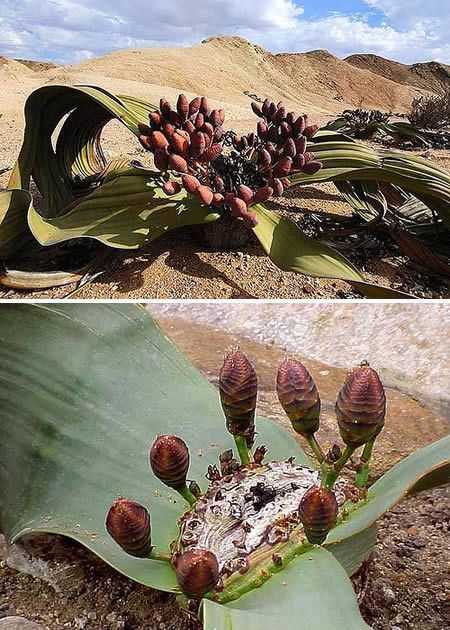
Welwitschia mirabilis:World's Most Resistant Plant
Click image for larger version

Name:	a96804_a503_resistant-plant.jpg
Views:	195
Size:	94.2 KB
ID:	305001
It's not pretty to look at, but Namibia's plant Welwitschia Mirabilis can truly claim to be one of a kind. There really is nothing like it. Welwitschia plant consists of only two leaves and a sturdy stem with roots. That's all! Two leaves continue to grow until they resemble the shaggy mane of some sci-fi alien. The stem thickens, rather than gains in height, and can grow to be almost 2 meters high and 8 meters wide. Their estimated lifespan is 400 to 1500 years. It can survive up to five years with no rain. The plant is said to be very tasty either raw or baked in hot ashes, and this is how it got its other name, Onyanga, which means onion of the desert.
http://www.darkroastedblend.com/2007...-on-earth.html

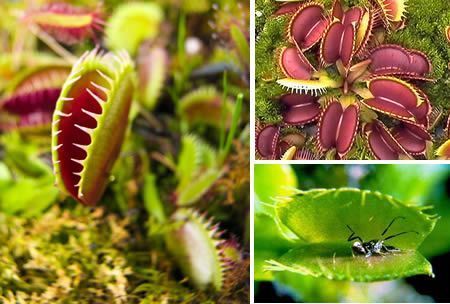
Dionaea muscipula: the Venus Fly Trap
Click image for larger version

Name:	a96804_a503_venus-trap.jpg
Views:	448
Size:	40.8 KB
ID:	305002
The Venus Fly Trap is the most famous of all carnivorous plants due to the active and efficient nature of its unique traps. It may be famous, but it's also threatened. The plant's two hinged leaves are covered in ultra sensitive fine hairs that detect the presence of everything from ants to arachnids. Trigger the hairs and snap! The trap will shut in less than a second.
http://www.collectorscorner.com.au/C.../Venusmain.htm

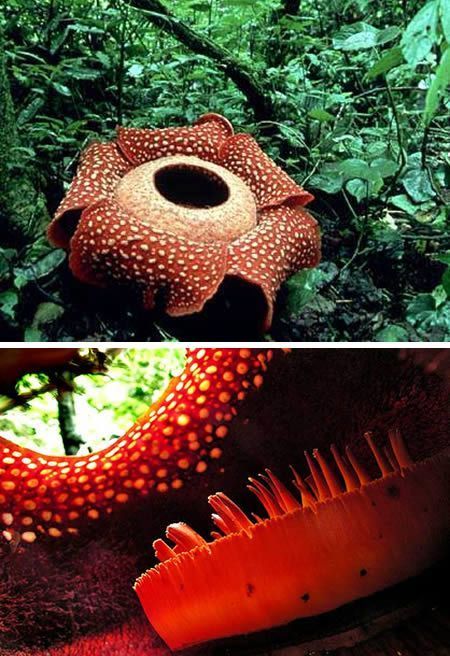
Rafflesia arnoldii: World's Largest Flower
Click image for larger version

Name:	a96804_a503_largest-plant.jpg
Views:	276
Size:	86.6 KB
ID:	305003
There is one exotic and rare plant you wouldn't likely want to grow anywhere near your landscape no matter how famous it would make you for doing so. That would be growing the largest flower in the world. This exotic, very rare, speckled, though not particularly pretty, rust colored flower is called Rafflesia Arnoldii.

Rafflesia Arnoldii, recently assigned to the Euphorbiaceae family, is the biggest individually produced flower in the world. It gets to be 3 feet across and weighing a whopping 15- 24 pounds. That's pretty darn big but still you would not like this flower in your perennial bed. Why is that? If you could mimic a rainforest type environment for this plant, it gives off a most offensive odor when in bloom. This scent is somewhat like rotting meat. This is why it is often called the Corpse Plant by some natives of Indonesia where it originates.

Its blossoms only last three days to a week. But in those few days it needs a miracle or two just for survival. This hideous smell it produces attracts pollinating insects to it to help perpetuate the species. But even when this happens only 10-20 percent of the tiny seedlings make it. With any luck in nine months it blooms.

http://www.greenthumbarticles.com/ar...rld-a2471.html

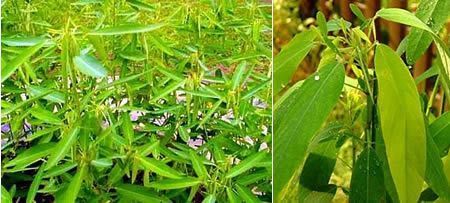
Desmodium gyrans: the Dancing Plant
Click image for larger version

Name:	a96804_a503_dancing-plant.jpg
Views:	136
Size:	35.4 KB
ID:	305004
Darwin called the plant Hedysarum; modern botanists call it either Desmodium Gyrans, or more correctly these days, Codariocalyx Motorius. Its common name is Dancing Grass or Telegraph Plant or Semaphore Plant -- after the leaf movements, which resemble semaphore signals. For all of its uses this plant is easy to grow, dancing happily on a sunny windowsill and watered when dry. Some say it dances best to the "Greatful Dead!"
<iframe width="480" height="360" src="http://www.youtube.com/embed/mVBTqh37TGM" frameborder="0" allowfullscreen></iframe>
http://www.about-garden.com/a/en/193...legraph-plant/

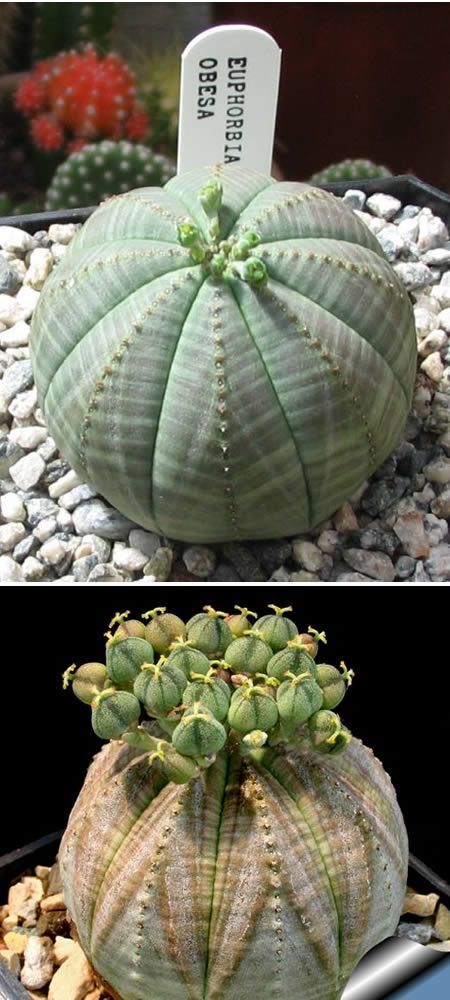
Euphorbia obesa: the Baseball Plant
Click image for larger version

Name:	a96804_a503_baseball-plant.jpg
Views:	169
Size:	85.4 KB
ID:	305005
Euphorbia Obesa, also known as the Baseball Plant, is endemic to the Great Karoo region of South Africa. Unsustainable harvesting by plant collectors who value Euphorbia obesa for its interesting and curious appearance has severely impacted wild populations. Consequently, national and international legislation have been enacted to protect remaining populations. While Euphorbia obesa remains endangered in its native habitat, it has become very common in cultivation. By growing large numbers of Euphorbia obesa, nurseries and botanical gardens have been working to ensure that specimens being traded and sold among plant collectors are not obtained from the wild.
http://www.usbg.gov/plant-collection...rbia-obesa.cfm

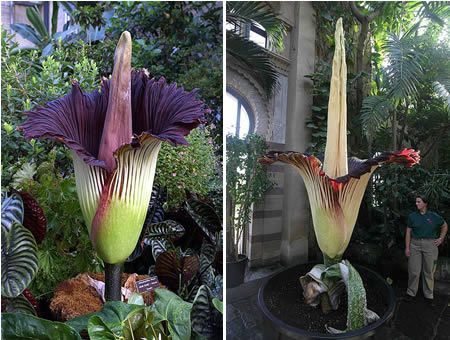
Amorphophallus titanum: the Corpse Flower
Click image for larger version

Name:	a96804_a503_corpse-flower.jpg
Views:	210
Size:	52.6 KB
ID:	305006
A flower taller than a man, stinking strongly of putrefying roadkill and colored deep burgundy to mimic rotting flesh, sounds like something from a low-budget science fiction movie. But Indonesia's titan arum—or "corpse flower," as known by locals—is a real, if rare, phenomenon, pollinated in the wild by carrion-seeking insects. This Indonesian plant, called titan arum or amorphophallus titanium, has the world's biggest inflorescence. Due to its fragrance, which is reminiscent of the smell of a decomposing mammal, the Titan Arum is also known as a carrion flower, the "Corpse flower", or "Corpse plant".
http://en.wikipedia.org/wiki/Titan_arum
http://news.nationalgeographic.com/n...nkyflower.html

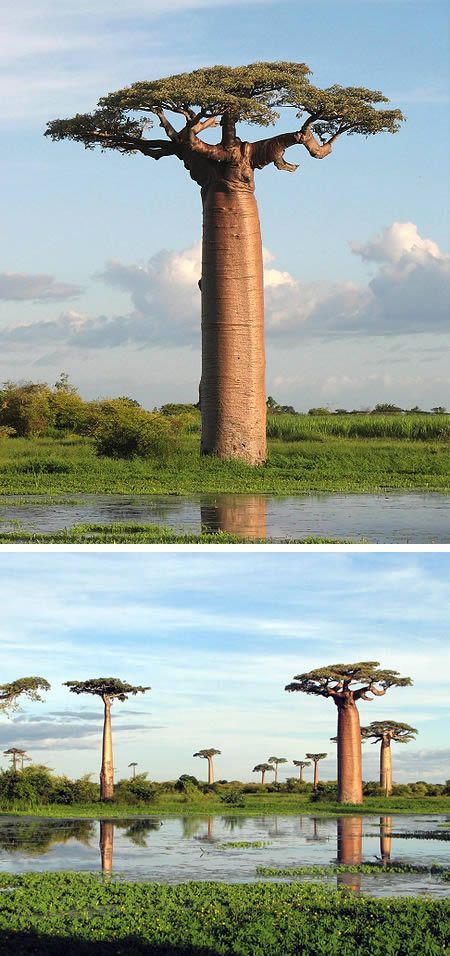
Baobab: the Bottle Tree
Click image for larger version

Name:	a96804_a503_bottle-tree.jpg
Views:	329
Size:	95.9 KB
ID:	305007
Baobab is the common name of a genus (Adansonia) containing eight species of trees, native to Madagascar, mainland Africa and Australia. Also known as the Bottle Tree, not only do they look like bottles, but the trees typically store around 300 liters of water! No wonder why they often live over 500 years!
http://en.wikipedia.org/wiki/Adansonia

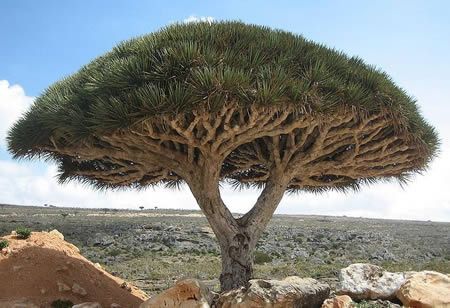
Dracaena cinnabari: the Dragon Blood Tree
Click image for larger version

Name:	a96804_a503_dragon-blood2.jpg
Views:	277
Size:	37.0 KB
ID:	305008
Dracaena Cinnabari is a Dragon Tree native to the Socotra archipelago. It is also referred to as the Dragon Blood Tree and Socotra Dragon Tree. It is one of the most striking of Socotra's plants, a strange-looking, umbrella-shaped tree. It was first formally described by Isaac Bayley Balfour in 1882. A miniature Icon of this tree is in Windows as Network-Icon. Its red sap was the dragon's blood of the ancients, sought after as a medicine and a dye.
http://en.wikipedia.org/wiki/Dracaena_cinnabari
http://www.absoluteastronomy.com/topics/Socotra

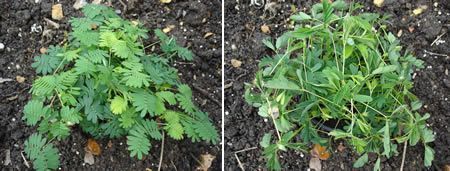
Mimosa púdica: the Shy Plant
Click image for larger version

Name:	a96804_a503_shy-plant.jpg
Views:	162
Size:	33.0 KB
ID:	305009
Mimosa Pudica (pudica = shy), or the Sensitive Plant, has a curiosity value: the compound leaves fold inward and droop when touched or shaken, re-opening within minutes. The species is native to South America and Central America, but is now a pantropical weed. Who would know that plants have feelings too?
<iframe width="480" height="360" src="http://www.youtube.com/embed/2Fyre3lAt64" frameborder="0" allowfullscreen></iframe>
http://en.wikipedia.org/wiki/Mimosa_pudica

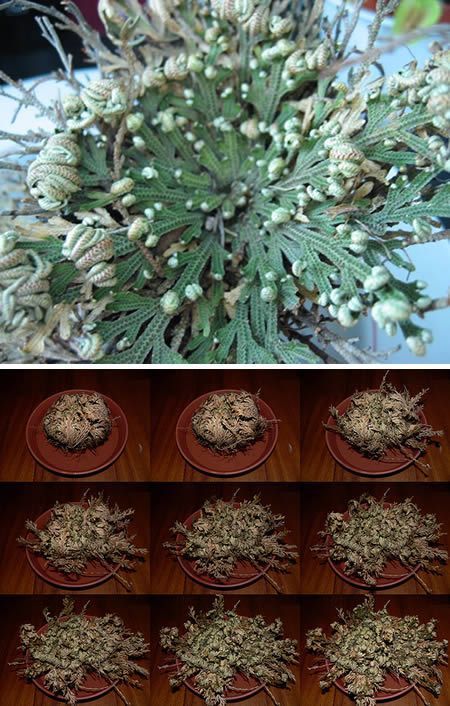
Selaginella lepidophylla: the Resurrection Plant
Click image for larger version

Name:	a96804_a503_ressurrection-plant.jpg
Views:	355
Size:	93.3 KB
ID:	305010
Also known as Rose of Jericho, the Selaginella Lepidophylla is a species of desert plant noted for its ability to survive almost complete desiccation; during dry weather in its native habitat, its stems curl into a tight ball and uncurl when exposed to moisture. It is native to the Chihuahuan Desert.
http://en.wikipedia.org/wiki/Selaginella_lepidophylla
10 Users Say Thank You For This Post:
Gregore Mortis, kellyhound, Keydog, Kim, redelefant, Sharon, slapchoppa, tearsraven, Viking64, Warack60
▼ PROMO FROM DOCUMENTING REALITY
Cheaper than the doctor visit tomorrow
Join Now
Hidden for upgraded members.
  #2  
09-18-2011, 05:14 PM
redelefant's Avatar
redelefant
Offline:
My Rank: SERGEANT
Poster Rank:1134
m
Join Date: Mar 2010
Posts: 571
 
Mentioned: 0 Post(s)
Quoted: 38 Post(s)
Activity Longevity
0/20 17/20
Today Posts
0/11 ssssss571
Re: World's Strangest Plant Species

Thanks Kelly!
This User Says Thank You For This Post:
Faline
  #3  
09-18-2011, 05:34 PM
Lee's Avatar
Lee
Offline:
All Seeing Eye
Poster Rank:228
Homosapien
Join Date: Nov 2009
Posts: 6,221
 
Mentioned: 1 Post(s)
Quoted: 19 Post(s)
Activity Longevity
0/20 17/20
Today Posts
0/11 sssss6221
Re: World's Strangest Plant Species

Nice I want a venus fly trap!
  #4  
09-18-2011, 07:45 PM
sassieroses's Avatar
sassieroses
Offline:
Halo or Horns today?
Poster Rank:415
Ladybug
Join Date: Sep 2010
Posts: 2,788
 
Mentioned: 0 Post(s)
Quoted: 49 Post(s)
Activity Longevity
0/20 16/20
Today Posts
0/11 sssss2788
Re: World's Strangest Plant Species

  #5  
09-18-2011, 07:51 PM
Wolf's Avatar
Wolf
Offline:
on the outside looking in
Poster Rank:328
male
Join Date: Jun 2011
Posts: 3,896
 
Mentioned: 1 Post(s)
Quoted: 39 Post(s)
Activity Longevity
0/20 16/20
Today Posts
0/11 sssss3896
Re: World's Strangest Plant Species

Great variety of plants,I used to have a venus fly trap.I like the reaction of Mimosa Pudica-the shy plant.
  #6  
09-18-2011, 08:04 PM
Sharon's Avatar
Sharon
Offline:
♚ Legacy Gold Member ♚
Poster Rank:34
Female
Join Date: Nov 2008
Posts: 43,403
Contributions: 204
 
Mentioned: 95 Post(s)
Quoted: 2281 Post(s)
Activity Longevity
0/20 18/20
Today Posts
0/11 ssss43403
Re: World's Strangest Plant Species

Beautifully thought-out thread, love it
  #7  
09-18-2011, 09:09 PM
benado's Avatar
benado
Offline:
My Rank: CORPORAL
Poster Rank:1474
female
Join Date: Apr 2009
Posts: 391
 
Mentioned: 0 Post(s)
Quoted: 33 Post(s)
Activity Longevity
0/20 18/20
Today Posts
0/11 ssssss391
Re: World's Strangest Plant Species

Aah I used to play with Mimosa pudica when I was little and lived in Caracas Venezuela. Hours of complete entertainment! So cool I'm finally gonna be able to show this to my hubby..Told him about the plant n he wouldn't believe me. Vindication!
  #8  
09-18-2011, 09:29 PM
Sandbwoy's Avatar
Sandbwoy
Offline:
My Rank: GUNNERY SERGEANT
Poster Rank:624
Male
Join Date: Jun 2010
Posts: 1,438
 
Mentioned: 0 Post(s)
Quoted: 11 Post(s)
Activity Longevity
0/20 17/20
Today Posts
0/11 sssss1438
Re: World's Strangest Plant Species

I want a dragon blood tree!
  #9  
09-18-2011, 10:20 PM
Viking64's Avatar
Viking64
Offline:
★Wizard Of Gore★
Poster Rank:1
Join Date: Aug 2009
Posts: 126,381
Contributions: 1
 
Mentioned: 445 Post(s)
Quoted: 30201 Post(s)
Activity Longevity
20/20 17/20
Today Posts
4/11 sss126381
Re: World's Strangest Plant Species

Those trees are cool.
  #10  
09-19-2011, 02:38 PM
kellyhound's Avatar
kellyhound
Online
✝Mudderator from Hell✝
Poster Rank:10
e-mail
Join Date: Oct 2006
Posts: 95,094
Contributions: 817
 
Mentioned: 472 Post(s)
Quoted: 10104 Post(s)
Activity Longevity
18/20 20/20
Today Posts
6/11 ssss95094
Re: World's Strangest Plant Species

some interesting plants, esp. the Baobab.
the trees typically store around 300 liters of water


Powered by vBulletin Copyright 2000-2010 Jelsoft Enterprises Limited.

Search Engine Friendly URLs by vBSEO