|
#1
●
11-07-2025, 05:07 AM
|
 ✝Mudderator from Hell✝ Poster Rank:10 e-mail Join Date: Oct 2006 Posts: 96,741
Contributions: 902
96,741Posts 544,070Thanked 10,377Quoted 479Mentioned 902Contrib. |
|
World’s Largest Spiderweb with 111,000 Arachnids Found in a European Cave
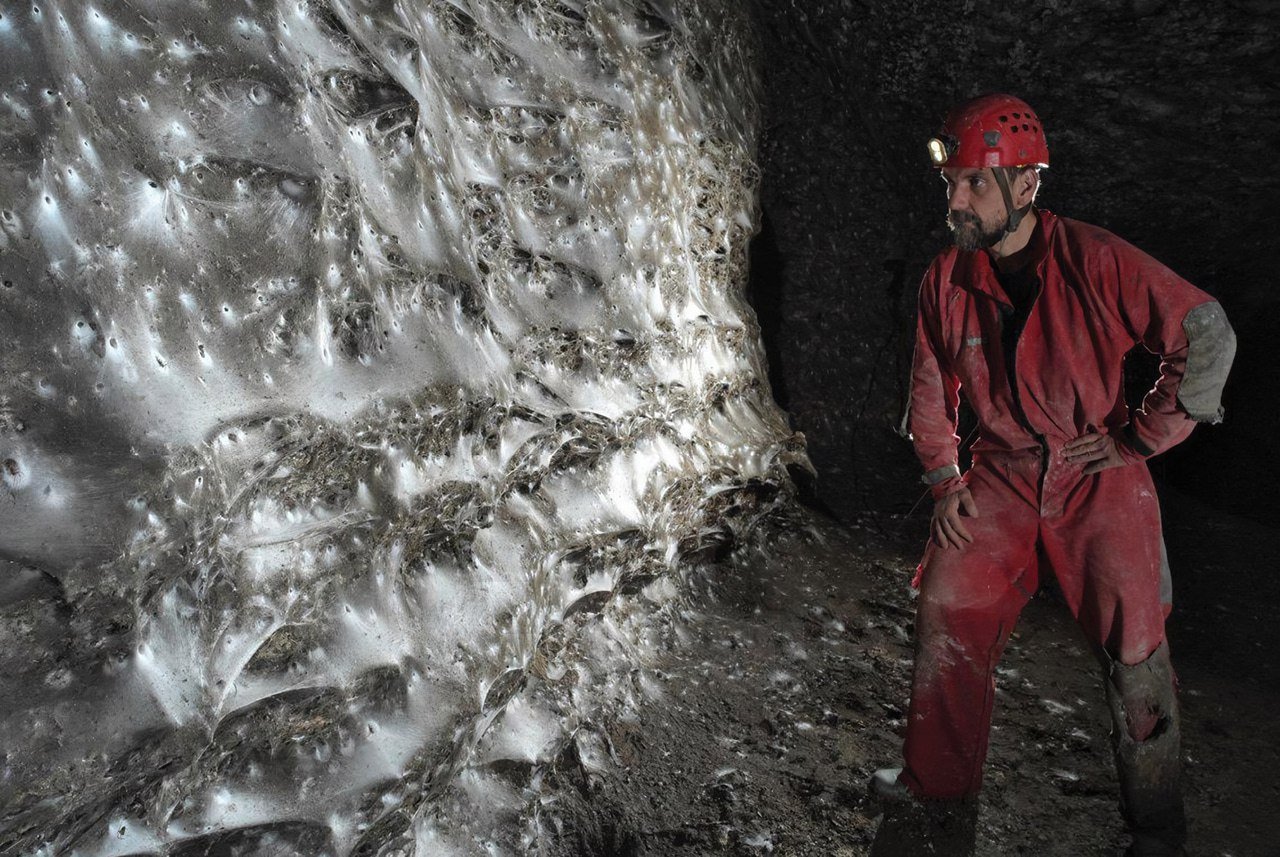
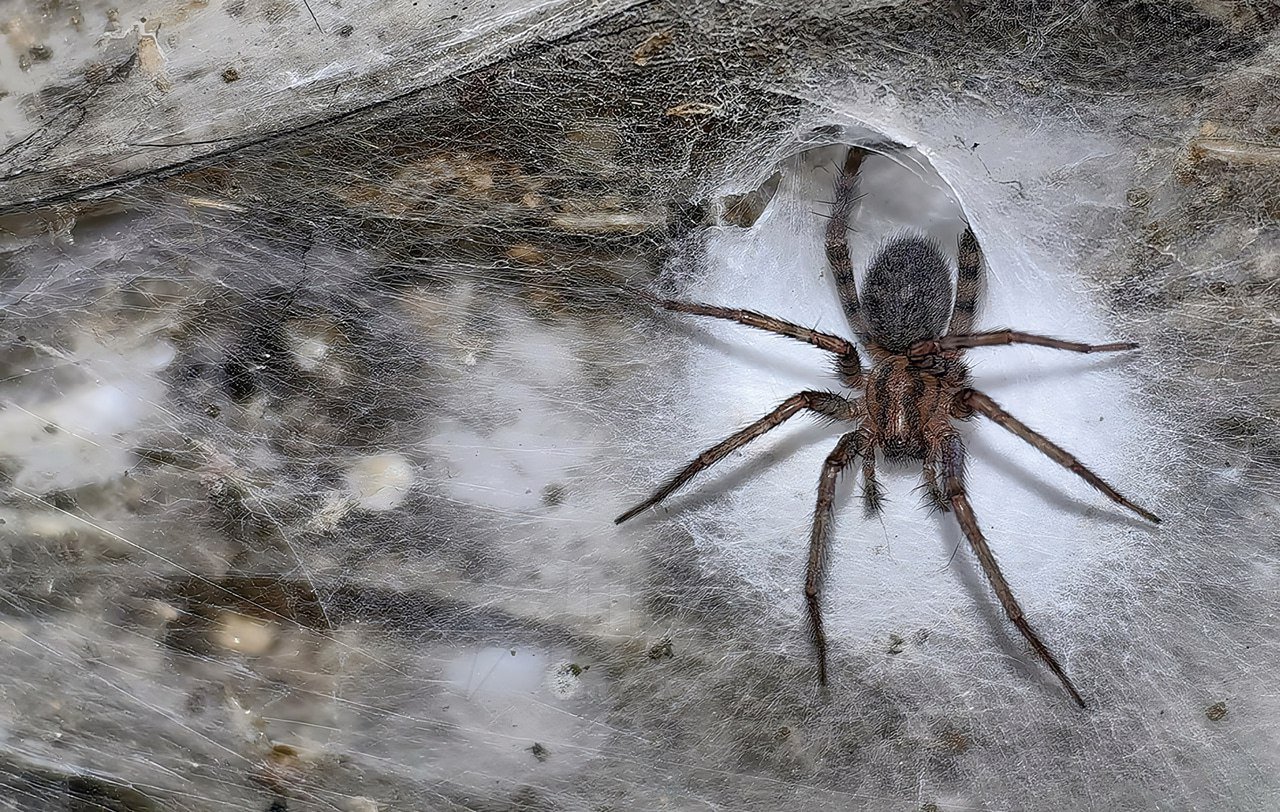
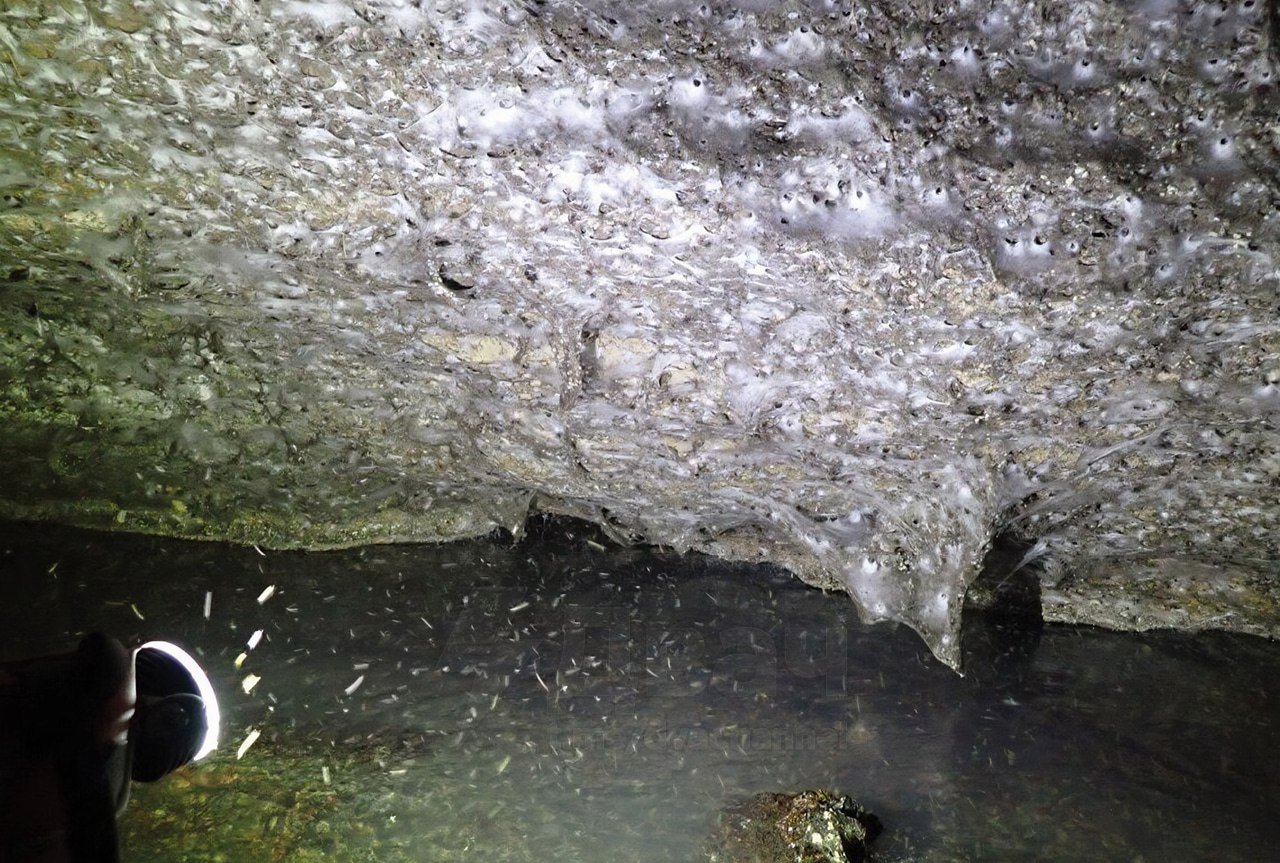
Researchers have documented what is believed to be the world’s largest spiderweb inside Sulfur Cave on the Albanian-Greek border. The massive web is home to an estimated over 111,000 spiders, all living within a patchwork of thousands of individual, funnel-shaped webs. Stretching across the wall of a dark, narrow passage near the entrance, the web measures 106 square meters (1,140 square feet). The colony consists of two common species: 69,000 individuals of Tegenaria domestica (barn funnel weavers/domestic house spiders) and over 42,000 Prinerigone vagans. According to researchers from the Sapientia Hungarian University of Transylvania in Romania, this is the first documented case of these two widespread spider species exhibiting colonial behavior. Sulfur Cave was formed by sulfuric acid resulting from the oxidation of hydrogen sulfide in groundwater. Live Science reported that the giant web was first discovered in 2022 by cavers from the Czech Speleological Society during an expedition in the Vromoner Canyon. After this, a team of scientists visited the cave in 2024 to collect specimens for analysis by lead author István Urák, who later conducted his own expedition to Sulfur Cave. Fresh DNA analysis confirmed the presence of two spider species that dominate the web. Interestingly, the spider colony features species not previously known to exhibit this behavior. Researchers wrote in the study paper that it represents the “first documented case of colonial web formation in these species.” The two species are common near human homes. However, the cohabitation and cooperation of these two species within a single, enormous web and in such high density is considered a unique phenomenon. It is typically expected that the barn funnel weavers (T. domestica) prey on the P. vagans. The study suggests that the lack of light in the cave may impair the spiders’ vision, potentially disrupting their normal predatory instincts and allowing them to coexist. A unique, sulfur-driven food web sustains the massive spider colony within the cave. The spiders’ primary diet consists of non-biting midges. These midges, in turn, feed on white microbial biofilms, which are slimy secretions produced by sulfur-oxidizing bacteria living in the cave environment. A sulfur-rich stream, sourced by natural springs flowing through Sulfur Cave, sustains this entire ecosystem. It fills the cavern with hydrogen sulfide, a key ingredient that allows the microbes, the midges, and ultimately their spider predators to thrive in this pitch-black environment. Moreover, the unique, sulfur-rich diet of cave spiders has led to distinct biological changes, as indicated by molecular and gut content analyses. Their diet causes the cave spiders’ microbiomes to be less diverse compared to spiders of the same two species living outside the cave. Additionally, molecular data reveal that the cave-dwelling spiders are genetically different from their outside relatives, strongly suggesting they have adapted to their perpetually dark, sulfurous environment. Researchers are currently working on a follow-up study to gather more information about the unique inhabitants of Sulfur Cave. |
|
#3
●
11-07-2025, 08:33 AM
|
 My Rank: FIRST LIEUTENANT Poster Rank:238 Male Join Date: Jun 2009 Posts: 6,076
Contributions: 44
6,076Posts 36,696Thanked 735Quoted 1Mentioned 44Contrib. |
|
Re: World’s Largest Spiderweb with 111,000 Arachnids Found in a European Cave
spider   |
|
#4
●
11-07-2025, 12:37 PM
|
 ★ Legacy Member ★ Poster Rank:109 Secret Agent Join Date: Dec 2009 Posts: 14,883 14,883Posts 49,425Thanked 3,066Quoted 6Mentioned 0Contrib. |
|
Re: World’s Largest Spiderweb with 111,000 Arachnids Found in a European Cave
Dude!!! Quit pushing in the wall of my home!! Didn’t your mother teach you anything!?!  |
|
#5
●
11-08-2025, 12:23 AM
|
 ☾ Administrator ☽ Poster Rank:75 ஜᎻᎬᎩᎾᏦᎪஜ Join Date: Dec 2011 Posts: 20,059
Contributions: 46
20,059Posts 80,248Thanked 7,118Quoted 200Mentioned 46Contrib. |
|
Re: World’s Largest Spiderweb with 111,000 Arachnids Found in a European Cave
Finally we see where iridopelma lives. 
__________________ 💜🧿See Human | Be Human🧿💜 (War Section Hashtags) |
|
#6
●
11-08-2025, 10:41 PM
|
| My Rank: PRIVATE Poster Rank:6224 Join Date: Jan 2010 Posts: 36 36Posts 56Thanked 13Quoted 0Mentioned 0Contrib. |
|
Re: World’s Largest Spiderweb with 111,000 Arachnids Found in a European Cave
That would be an incredible place to take an arachnophobe without telling them what's in there.
|