|
#1
●
06-04-2013, 06:06 PM
| ||||||||
 ★The Queen★ Poster Rank:68 Female Join Date: Jun 2011 Posts: 23,496
Contributions: 120
Mentioned: 95 Post(s) Quoted: 3083 Post(s)
| ||||||||
|
Why Finnish Babies Sleep in Cardboard Boxes
I wasn't sure where to put this, but, I found it interesting. 4 June 2013 Last updated at 06:15 ET. By Helena Lee BBC News For 75 years, Finland's expectant mothers have been given a box by the state. It's like a starter kit of clothes, sheets and toys that can even be used as a bed. And some say it helped Finland achieve one of the world's lowest infant mortality rates. It's a tradition that dates back to the 1930s and it's designed to give all children in Finland, no matter what background they're from, an equal start in life. The maternity package - a gift from the government - is available to all expectant mothers. Mothers have a choice between taking the box, or a cash grant, currently set at 140 euros, but 95% opt for the box as it's worth much more. It contains bodysuits, a sleeping bag, outdoor gear, bathing products for the baby, as well as nappies, bedding and a small mattress. With the mattress in the bottom, the box becomes a baby's first bed. Many children, from all social backgrounds, have their first naps within the safety of the box's four cardboard walls. The tradition dates back to 1938. To begin with, the scheme was only available to families on low incomes, but that changed in 1949. "Not only was it offered to all mothers-to-be but new legislation meant in order to get the grant, or maternity box, they had to visit a doctor or municipal pre-natal clinic before their fourth month of pregnancy," says Heidi Liesivesi, who works at Kela - the Social Insurance Institution of Finland. So the box provided mothers with what they needed to look after their baby, but it also helped steer pregnant women into the arms of the doctors and nurses of Finland's nascent welfare state. In the 1930s, Finland was a poor country and infant mortality was high - 65 out of 1,000 babies died. But the figures improved rapidly in the decades that followed. Mika Gissler, a professor at the National Institute for Health and Welfare in Helsinki, gives several reasons for this - the maternity box and pre-natal care for all women in the 1940s, followed in the 60s by a national health insurance system and the central hospital network. At 75 years old, the box is now an established part of the Finnish rite of passage towards motherhood, uniting generations of women. Reija Klemetti, a 49-year-old from Helsinki, remembers going to the post office to collect a box for one of her six children. Box Anticipation by Mark Bosworth, photo below Finland "My partner, Milla, and I were living in London when we had our first child, Jasper, so we weren't eligible for a free box. But Milla's parents didn't want us to miss out, so they bought one and put it in the post. We couldn't wait to get the lid off. There were all the clothes you would expect, with the addition of a snowsuit for Finland's icy winters. And then the box itself. I had never considered putting my baby to sleep in a cardboard box, but if it's good enough for the majority of Finns, then why not? Jasper slept in it - as you might expect - like a baby. We now live in Helsinki and have just had our second child, Annika. She did get a free box from the Finnish state. This felt to me like evidence that someone cared, someone wanted our baby to have a good start in life. And now when I visit friends with young children it's nice to see we share some common things. It strengthens that feeling that we are all in this together." "It was lovely and exciting to get it and somehow the first promise to the baby," she says. "My mum, friends and relatives were all eager to see what kind of things were inside and what colours they'd chosen for that year." Her mother-in-law, aged 78, relied heavily on the box when she had the first of her four children in the 60s. At that point she had little idea what she would need, but it was all provided. More recently, Klemetti's daughter Solja, aged 23, shared the sense of excitement that her mother had once experienced, when she took possession of the "first substantial thing" prior to the baby itself. She now has two young children. "It's easy to know what year babies were born in, because the clothing in the box changes a little every year. It's nice to compare and think, 'Ah that kid was born in the same year as mine'," says Titta Vayrynen, a 35-year-old mother with two young boys. For some families, the contents of the box would be unaffordable if they were not free of charge, though for Vayrynen, it was more a question of saving time than money. She was working long hours when pregnant with her first child, and was glad to be spared the effort of comparing prices and going out shopping. "There was a recent report saying that Finnish mums are the happiest in the world, and the box was one thing that came to my mind. We are very well taken care of, even now when some public services have been cut down a little," she says. When she had her second boy, Ilmari, Vayrynen opted for the cash grant instead of the box and just re-used the clothes worn by her first, Aarni. A boy can pass on clothes to a girl too, and vice versa, because the colours are deliberately gender-neutral. The contents of the box have changed a good deal over the years, reflecting changing times. During the 30s and 40s, it contained fabric because mothers were accustomed to making the baby's clothes. Would you put your baby or toddler outside in the freezing cold for their lunchtime nap? Most Nordic parents wouldn't give it a second thought. For them it's part of their daily routine. "I think it's good for them to be in the fresh air as soon as possible," says Lisa Mardon, a mother-of-three from Stockholm, who works for a food distribution company. "Especially in the winter when there's lots of diseases going around... the kids seem healthier." The babies who nap in sub-zero temperatures. But during World War II, flannel and plain-weave cotton were needed by the Defence Ministry, so some of the material was replaced by paper bed sheets and swaddling cloth. The 50s saw an increase in the number of ready-made clothes, and in the 60s and 70s these began to be made from new stretchy fabrics. In 1968, a sleeping bag appeared, and the following year disposable nappies featured for the first time. Not for long. At the turn of the century, the cloth nappies were back in and the disposable variety were out, having fallen out of favour on environmental grounds. Encouraging good parenting has been part of the maternity box policy all along. "Babies used to sleep in the same bed as their parents and it was recommended that they stop," says Panu Pulma, professor in Finnish and Nordic History at the University of Helsinki. "Including the box as a bed meant people started to let their babies sleep separately from them." At a certain point, baby bottles and dummies were removed to promote breastfeeding. "One of the main goals of the whole system was to get women to breastfeed more," Pulma says. And, he adds, "It's happened." He also thinks including a picture book has had a positive effect, encouraging children to handle books, and, one day, to read. And in addition to all this, Pulma says, the box is a symbol. A symbol of the idea of equality, and of the importance of children. The Story of the Maternity Pack 1938: Finnish Maternity Grants Act introduced - two-thirds of women giving birth that year eligible for cash grant, maternity pack or mixture of the two Pack could be used as a cot as poorest homes didn't always have a clean place for baby to sleep 1940s: Despite wartime shortages, scheme continued as many Finns lost homes in bombings and evacuations 1942-6: Paper replaced fabric for items such as swaddling wraps and mother's bedsheet 1949: Income testing removed, pack offered to all mothers in Finland - if they had prenatal health checks, 1957: Fabrics and sewing materials completely replaced with ready-made garments 1969: Disposable nappies added to the pack 1970s: With more women in work, easy-to-wash stretch cotton and colourful patterns replace white non-stretch garments 2006: Cloth nappies reintroduced, bottle left out to encourage breastfeeding Photo 1 - Sleeping Baby in Box Photo 2 - Contents of the Box, (1953 Pack) Mattress, mattress cover, undersheet, duvet cover, blanket, sleeping bag/quilt Box itself doubles as a crib Snowsuit, hat, insulated mittens and booties Light hooded suit and knitted overalls Socks and mittens, knitted hat and balaclava Bodysuits, romper suits and leggings in unisex colours and patterns Hooded bath towel, nail scissors, hairbrush, toothbrush, bath thermometer, nappy cream, wash cloth Cloth nappy set and muslin squares Picture book and teething toy Bra pads, condoms Dressing Baby for the Weather: Finland's Official Childcare Advice Photo 3 - Infant Mortality Statistics Chart 1936-2010 per 1000 Births Photo 4 - A 1947 Maternity Pack Photo 5- Baby Buggy Photo 6 - Bosworth, who described their first experience above. 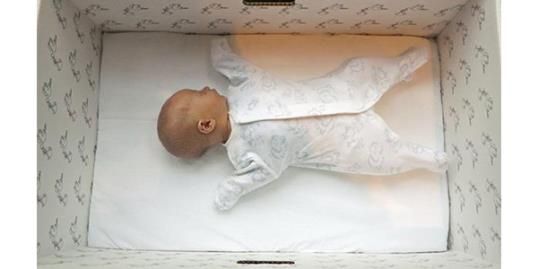 · 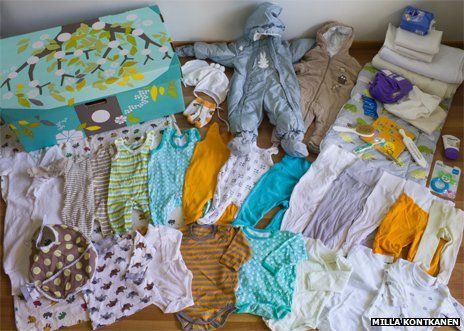 · 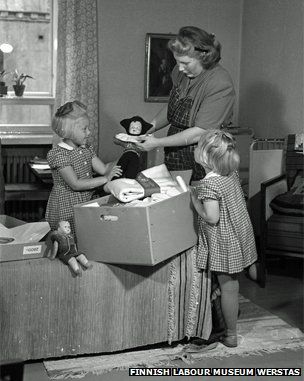 · 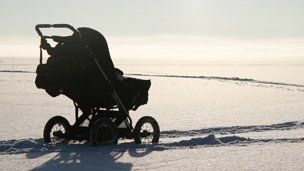 ·  · |
|
#5
●
06-06-2013, 06:23 AM
| ||||||||
 My Rank: SERGEANT Poster Rank:1195 Male Join Date: May 2013 Posts: 534 Mentioned: 0 Post(s) Quoted: 57 Post(s)
| ||||||||
|
Re: Why Finnish Babies Sleep in Cardboard Boxes
I'm a fan. Too bad social welfare here in the states will never allow it.
|
|
#6
●
06-06-2013, 12:16 PM
| ||||||||
| So Fucking Banned Poster Rank:145 Cyborg. Join Date: Feb 2010 Posts: 11,585 Mentioned: 12 Post(s) Quoted: 1515 Post(s)
| ||||||||
|
Re: Why Finnish Babies Sleep in Cardboard Boxes
Much respect to the Finnish gov't  |
|
#8
●
06-07-2013, 01:34 PM
| ||||||||
| So Fucking Banned Poster Rank:669 Join Date: Dec 2009 Posts: 1,304 Mentioned: 14 Post(s) Quoted: 267 Post(s)
| ||||||||
|
Re: Why Finnish Babies Sleep in Cardboard Boxes
how great. the u.s should adopt this tradition considering the fact that we have one of the highest infant mortality rates of any first world country. also, maybe the "documentaries, people, & events in history" forum would have been better for this thread. since babies are people and this is about history after all. this one is good too but yeah lol
|
|
#9
●
06-08-2013, 12:57 AM
| ||||||||
| My Rank: LANCE CORPORAL Poster Rank:1897 Join Date: May 2010 Posts: 270 Mentioned: 0 Post(s) Quoted: 55 Post(s)
| ||||||||
|
Re: Why Finnish Babies Sleep in Cardboard Boxes
Ill never understand why people accept women who are selfish enough to give birth to babies they cant afford to properly care for. Disgusting.
|
|
#10
●
06-08-2013, 02:37 AM
| ||||||||
| ★The Queen★ Poster Rank:68 Female Join Date: Jun 2011 Posts: 23,496
Contributions: 120
Mentioned: 95 Post(s) Quoted: 3083 Post(s)
| ||||||||
|
Re: Why Finnish Babies Sleep in Cardboard Boxes
What does that have to do with the story  It is offered to all new mothers. I think it's a great start for a new mother, especially one who may not have had experience with infants and had no clue what she needed  |