A mosaic of Jupiter's ring system, acquired by NASA's Galileo spacecraft when the Sun was behind the planet, and the spacecraft was in Jupiter's shadow peering back toward the Sun.
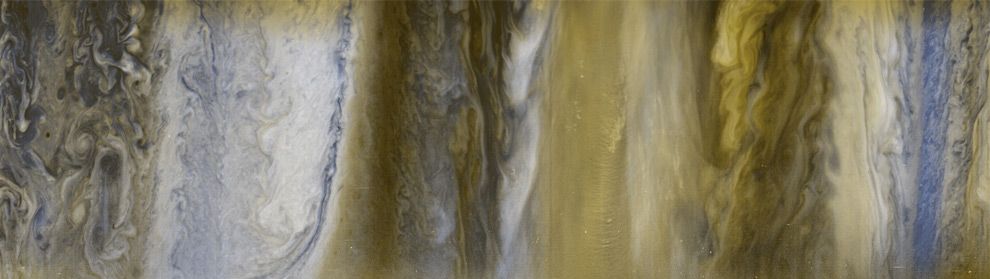
The first color movie of Jupiter from NASA's Cassini spacecraft shows what it would look like to peel the entire globe of Jupiter, stretch it out on a wall into the form of a rectangular map, and watch its atmosphere evolve with time. The brief movie clip spans 24 Jupiter rotations between Oct. 31 and Nov. 9, 2000. The darker blips that appear are several moons and their shadows.
An image of the leading hemisphere of Ganymede seen by NASA's Galileo spacecraft. Many fragmented regions of dark terrain split by lanes of bright grooved terrain cover the surface. Several bright young craters can be seen, including a linear chain of craters near the center of the image which may have resulted from the impact of a fragmented comet, similar to comet Shoemaker-Levy/9 which hit Jupiter in 1994.
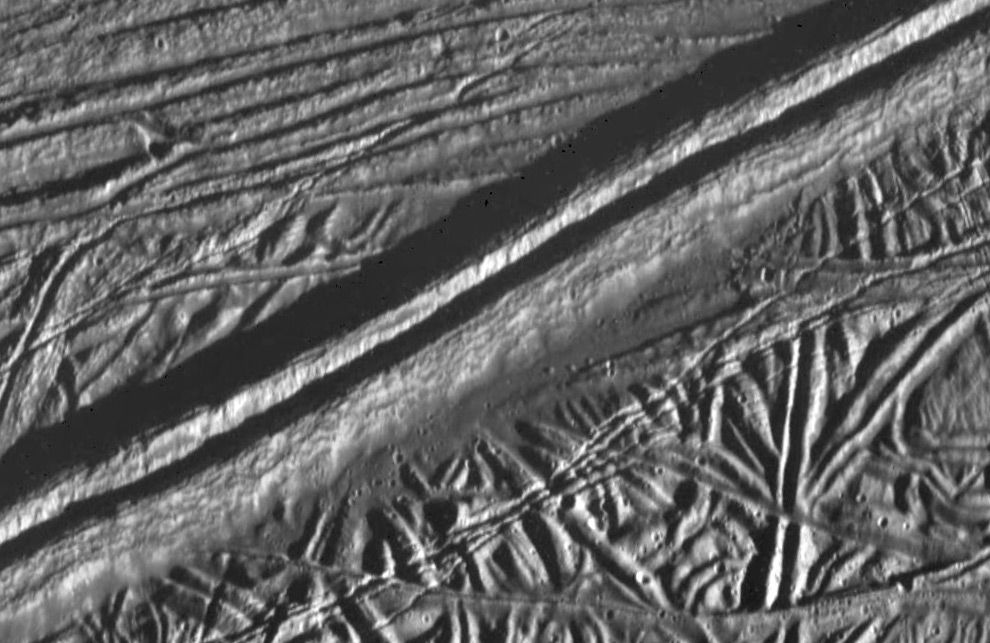
The area of Nicholson Regio and Arbela Sulcus illustrates many of the diverse terrain types on Jupiter's moon Ganymede, as seen in this image taken by NASA's Galileo spacecraft. The image covers an area approximately 89 by 26 kilometers (55by 16 miles).
Jupiter's Great Red seen by NASA's Voyager spacecraft. July, 1979 Around the northern boundary a white cloud is seen, which extends to east of the region. The presence of this cloud prevents small cloud vortices from circling the spot in the manner seen in the Voyager 1 encounter. Another white oval cloud (different from the one present in this position three months ago) is seen south of the Great Red Spot. This image was taken on July 6, 1979 from a range of 2,633,003 kilometers. The Red Spot is 20,000 km across.
This true color mosaic of Jupiter was constructed from images taken by the narrow angle camera onboard NASA's Cassini spacecraft on December 29, 2000, as the spacecraft neared Jupiter during its flyby of the giant planet. It is the most detailed global color portrait of Jupiter ever produced. Although Cassini's camera can see more colors than humans can, Jupiter here looks the way that the human eye would see it.
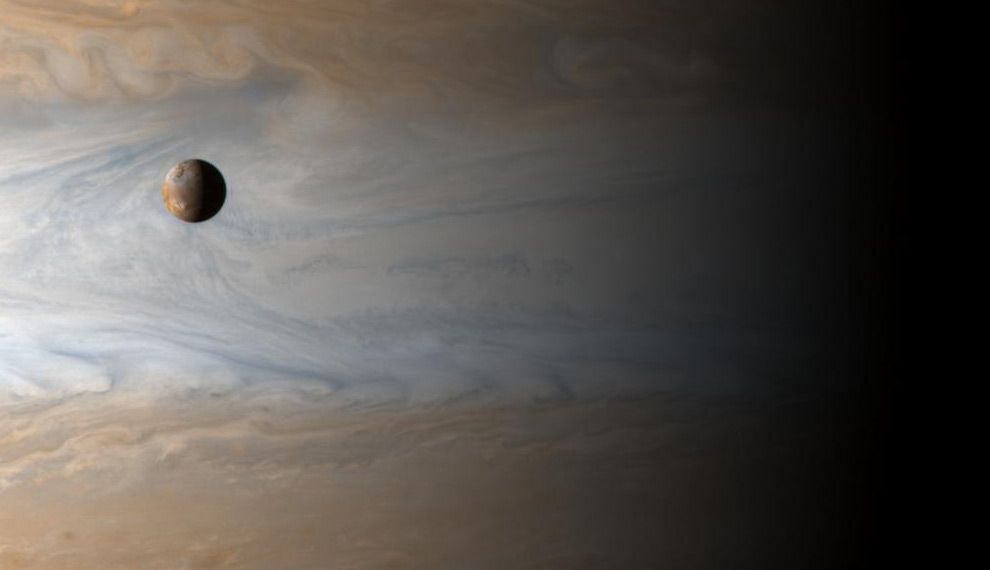
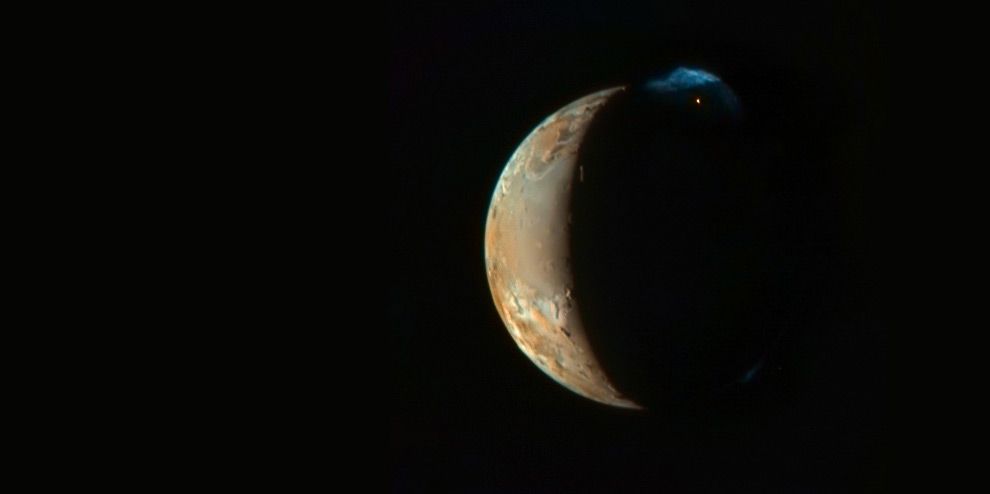
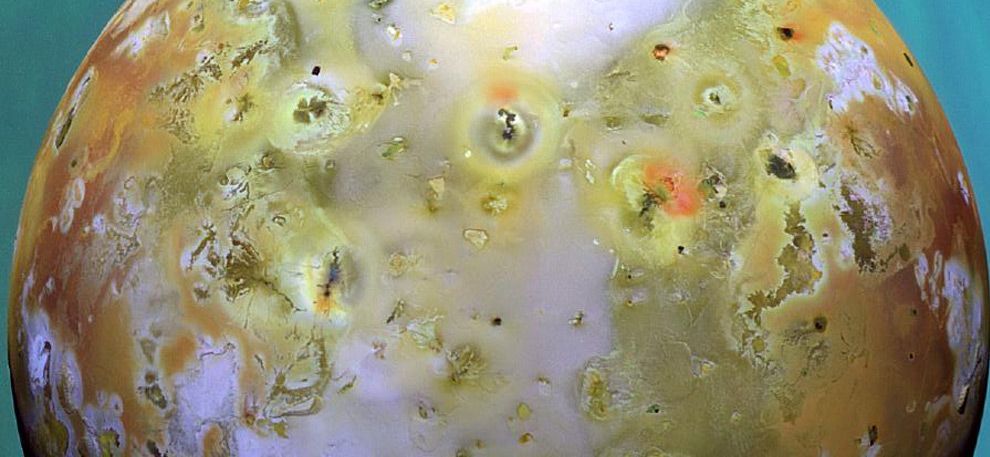
Jupiter amazes me in it's size,activity and moons. Very nice,clear pictures of Io and a good one of The Great Red Spot,which always intrigued me from a young age