for more threads like this one :
http://www.documentingreality.com/fo...me-line-45276/
In April I posted about political unrest in Thailand
http://www.documentingreality.com/fo...-2010-a-45881/
below is a Late MaY update :
http://www.documentingreality.com/fo...art-2-a-50724/ 14 May-present crisis
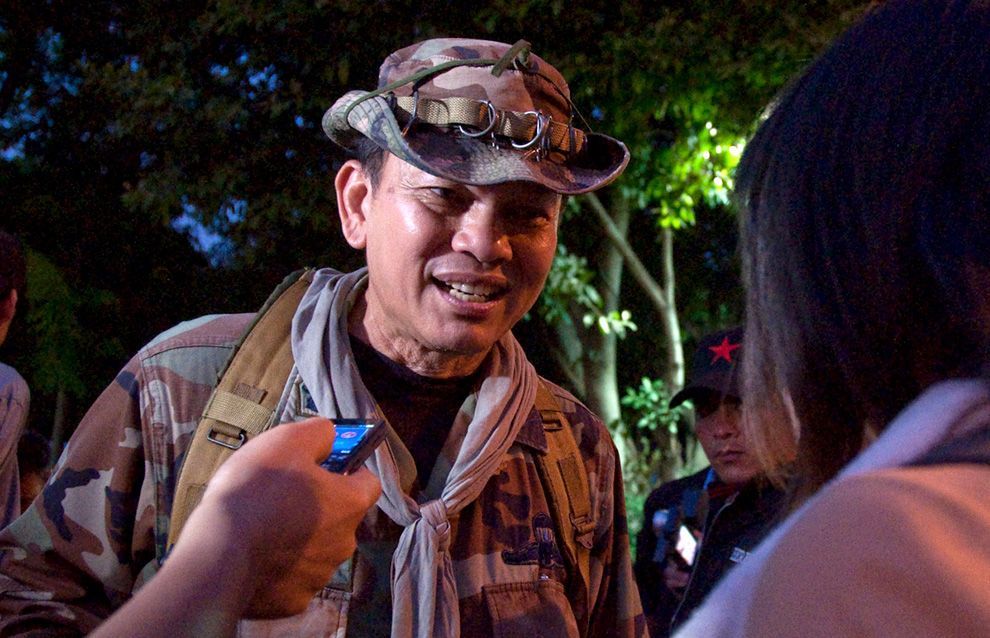
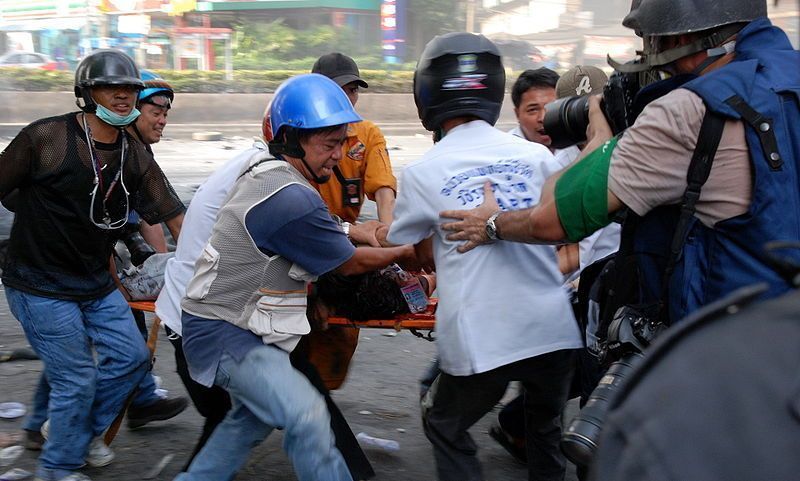
On Friday, 14 May, Thai police and army units moved in to surround and cut off the protesters main camp, meeting heavy resistance from the red shirts resulting in the deaths of two people with dozens more injured, including Thai Army Major-General Khattiya Sawasdipol, better known as Seh Daeng (Commander Red), a self-described key military adviser to the red-shirts who was suspended from duty in the Thai army. A backer and part of the protesters' more radical wing, he had accused red-shirt leaders of not being hardline enough. He was hit in the head by a sniper's bullet and died on 17th May.
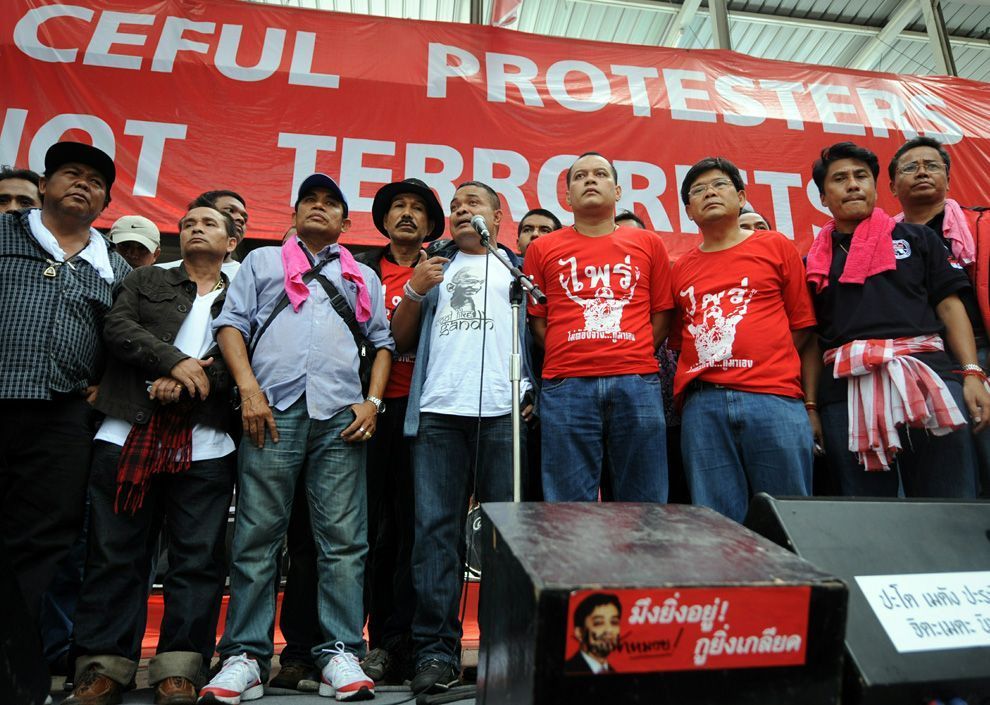
One of the Red Shirt leaders, Nattawut Saikuar, accuses the Prime Minister Abhisit Vejjajiva of starting a civil war. This comes as there are reports of a policeman opening fire on soldiers near a police station in Bangkok, showing that there may be divisions within the security services themselves. Both the British and American embassies in Bangkok confirm they are to close for security reasons.
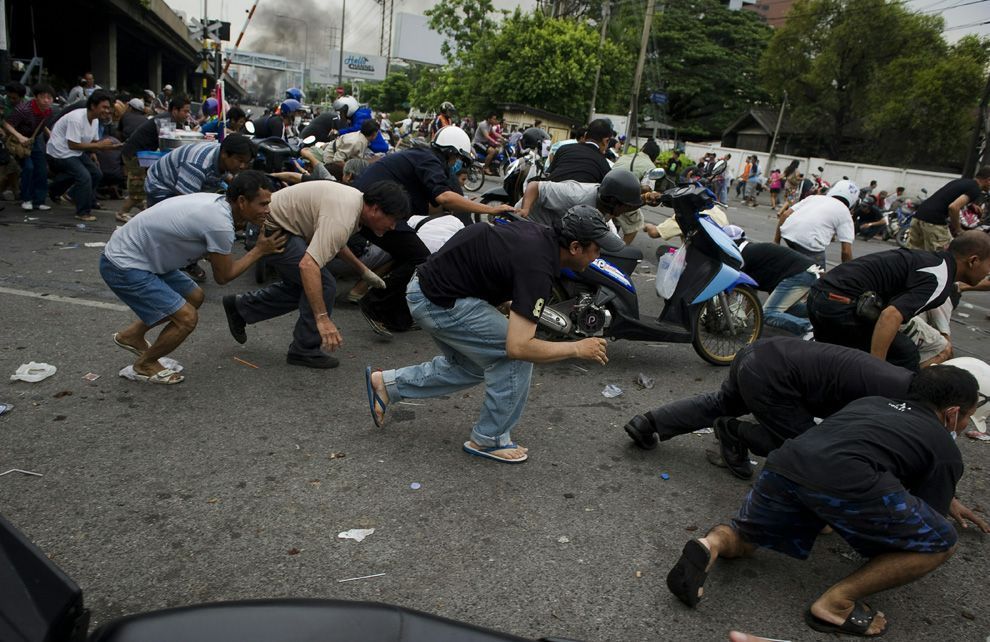
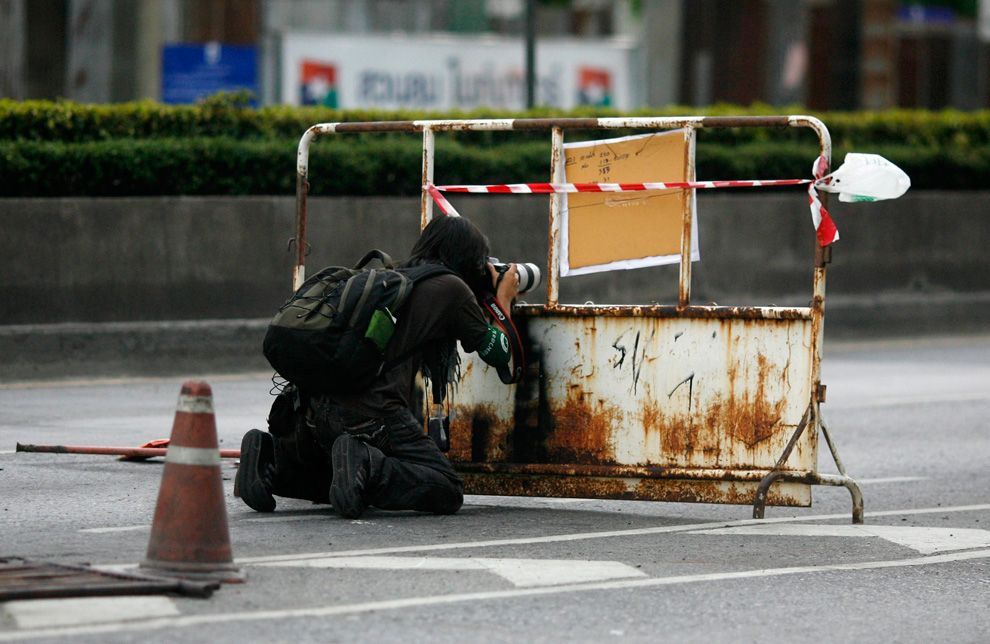
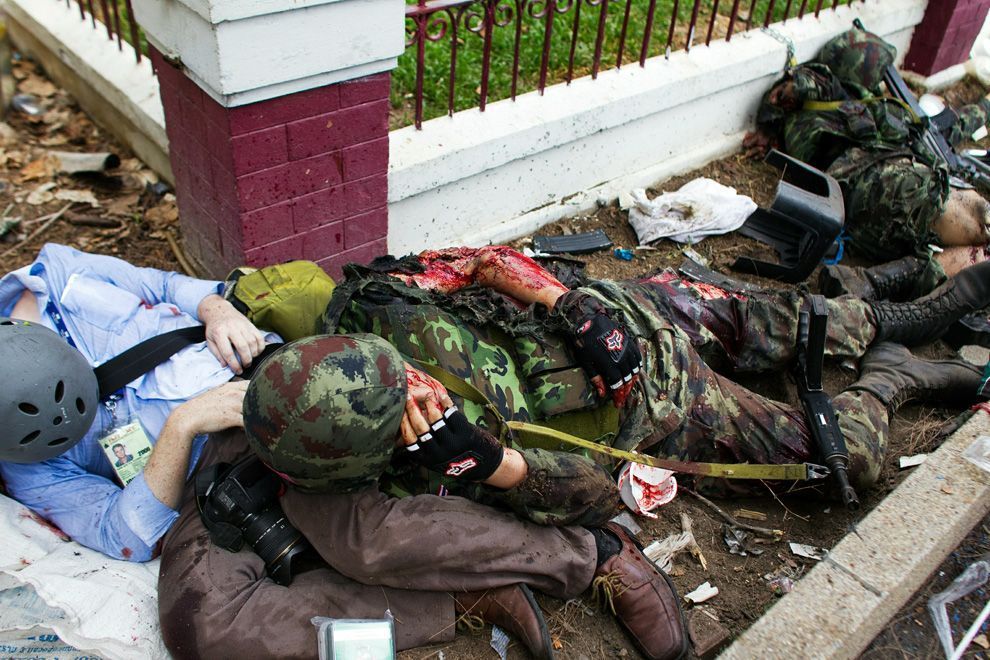
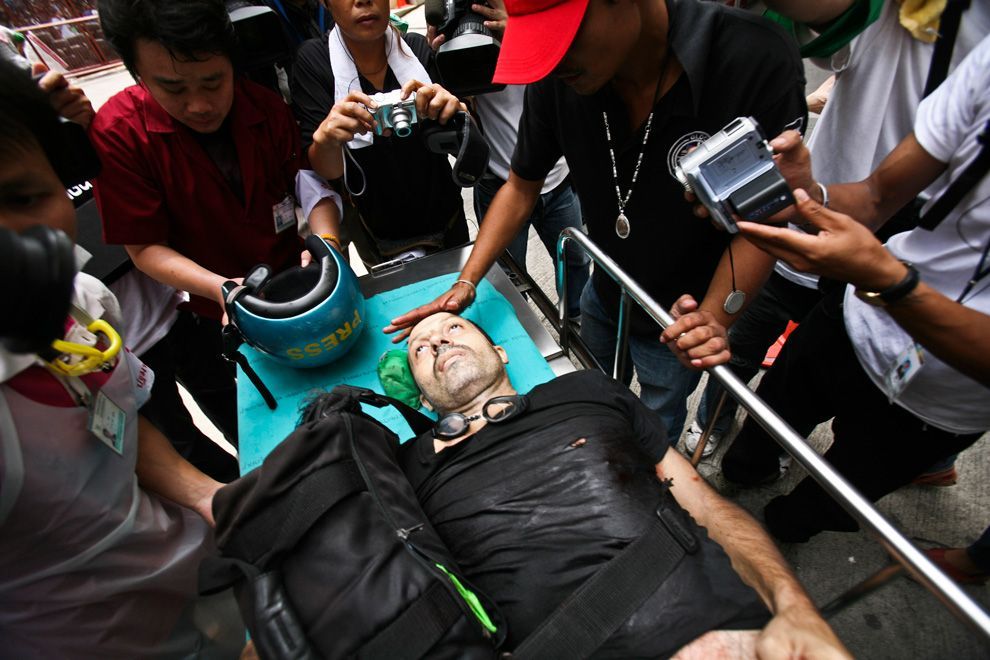
Just before 3:00 pm GMT on 14 May, Sky News reported that the death-toll from the latest fighting had risen to five, with 46 others wounded. People there claim that the area has descended into a war zone as the two sides battle for control. During the clashes, France 24 journalist Nelson Rand was "gravely wounded" by bullets from a Thai Army assault rifle, although who actually used the weapon is still unknown. On Friday night, several grenade explosions were heard from a nearby shopping centre and municipal railway station in the up-scale shopping area. As of 6:00 pm May 10, the BBC reports that 7 people have died and over 100 wounded in the latest violence in Bangkok, just as Canada announces temporary closure of its embassy.
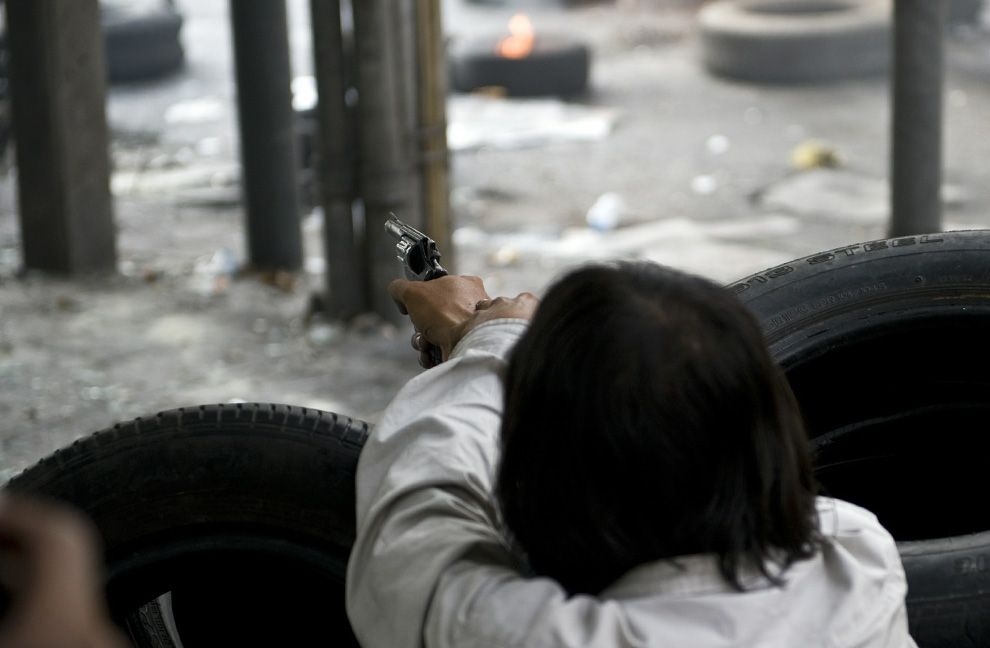
According to The Telegraph, as of 9:40 pm GMT 14 May, at least 16 people had been killed, none of whom are members of the security services. There have been several incidents of police officers joining with the red shirts and exchanging fire with the Thai Army, prompting fears that a civil war is coming. The number of injured is thought to be 157, with that number predicted to rise significantly as fighting continues.
By 2:20 am GMT on 15 May, the death toll reached 16, with more than 157 injured. Street battles continued, with no end in sight. Total casualties since 12 May amount to 24 killed, with 187 injured on the night of 14/15 May alone. One of the dead was a sergeant of the Royal Thai Air Force, who was killed by friendly fire.
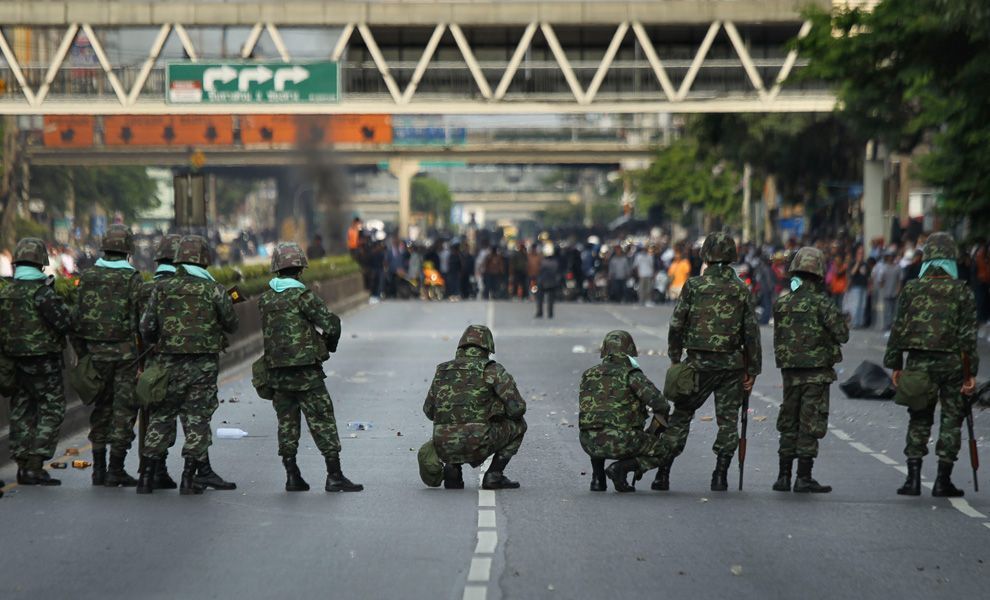
Protest leaders once again warn of civil war if the army attempts to storm their camp. Several areas of the city near the protesters were designated as "live fire zones" by the military, and protesters entering these zones were to be shot on sight. Due to food and water shortages as a result of the army blockade, it is estimated the protesters will only be able to hold out for a few more days, and after that start plundering the available local shops.
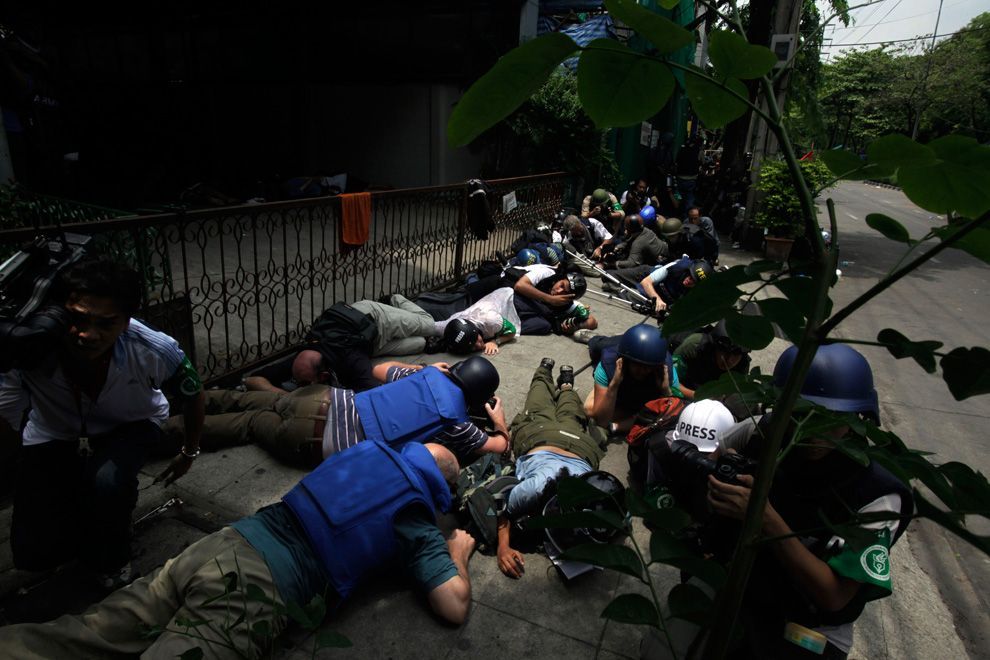
On the 16th of May, the death-toll rose to 33, with the number of wounded rising to 230. Reporters in the vicinity of the violence had to cancel live broadcasts due to the threat of sniper attacks from military forces in the area. The government has urged the very young and very old to leave the camp by Monday afternoon, prompting fears of an army crackdown. They also started telling the public that the foreign media, such as CNN, BBC, Reuters, and many others, cannot be trusted as they are biased, prompting backlash of the international from the Thai public. On 17 May Thai Army Major General Khattiya Sawasdiphol, who was shot in the head by a sniper on May 13, died.
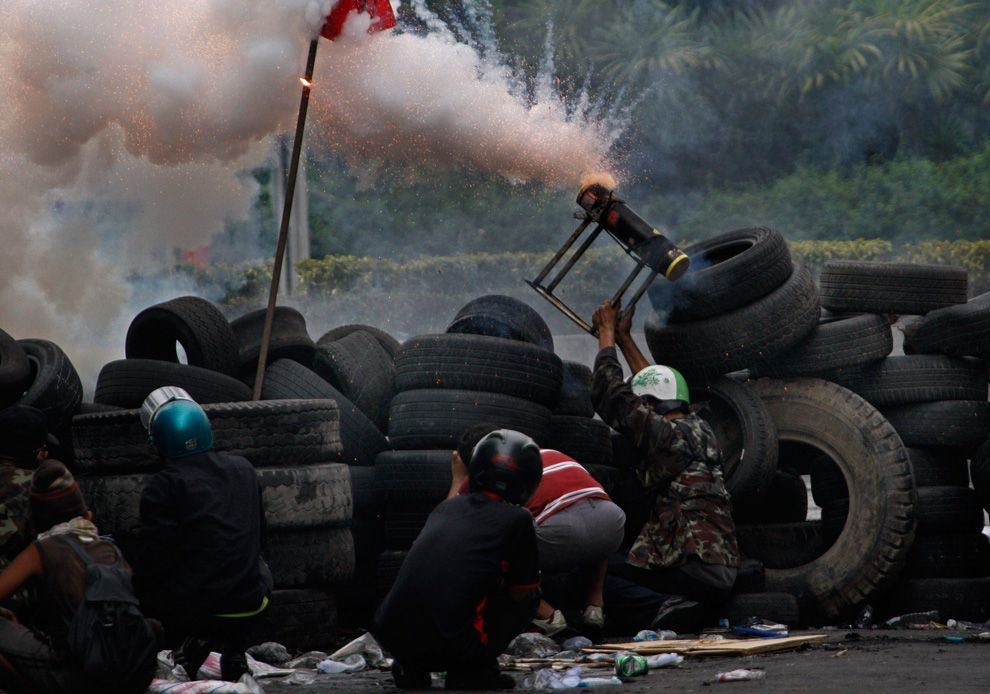
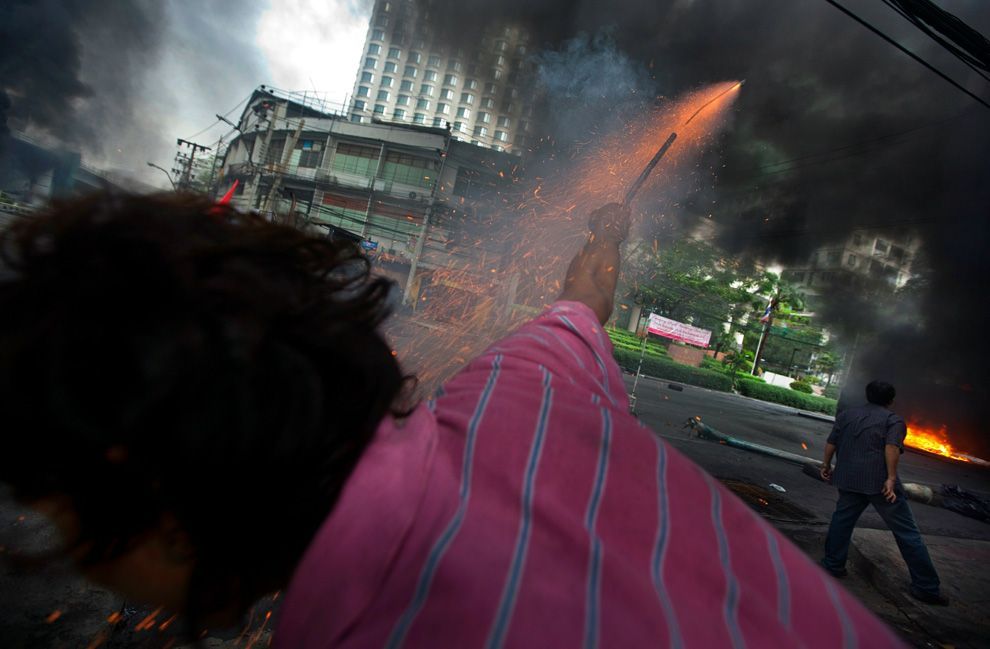
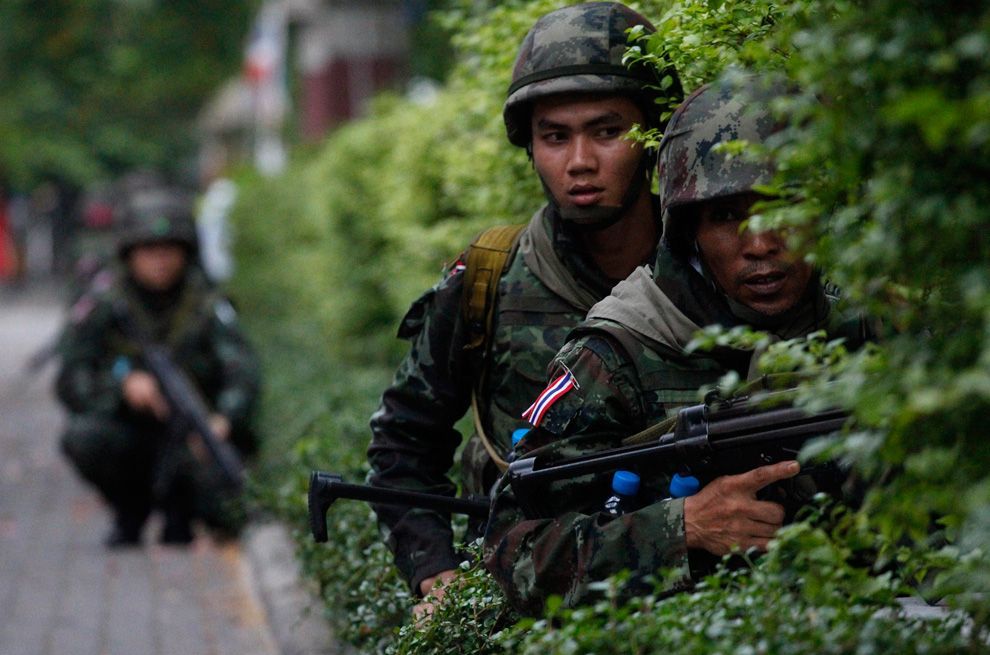
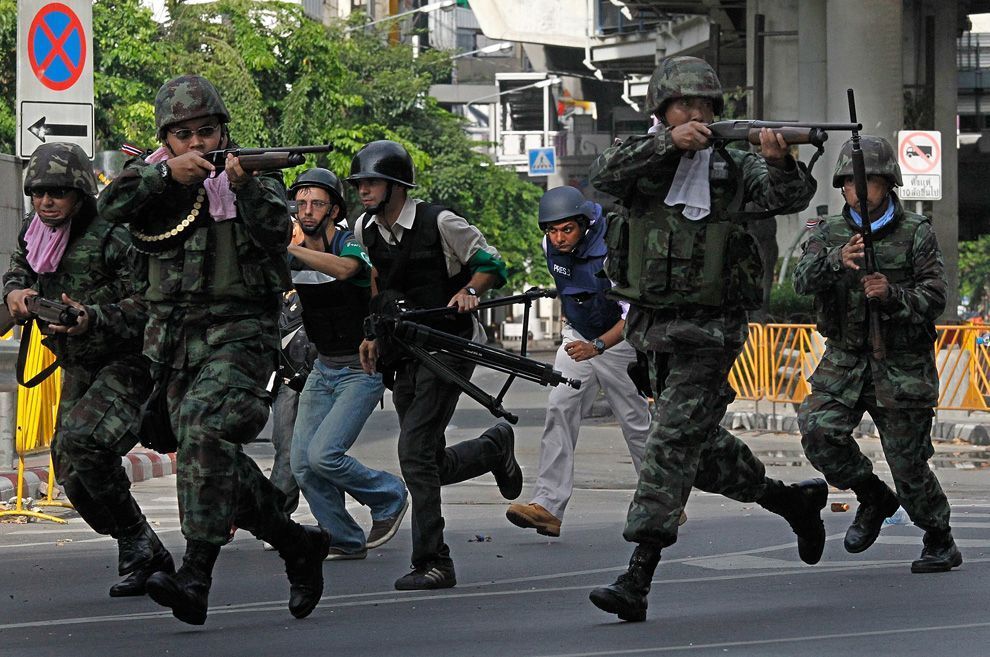
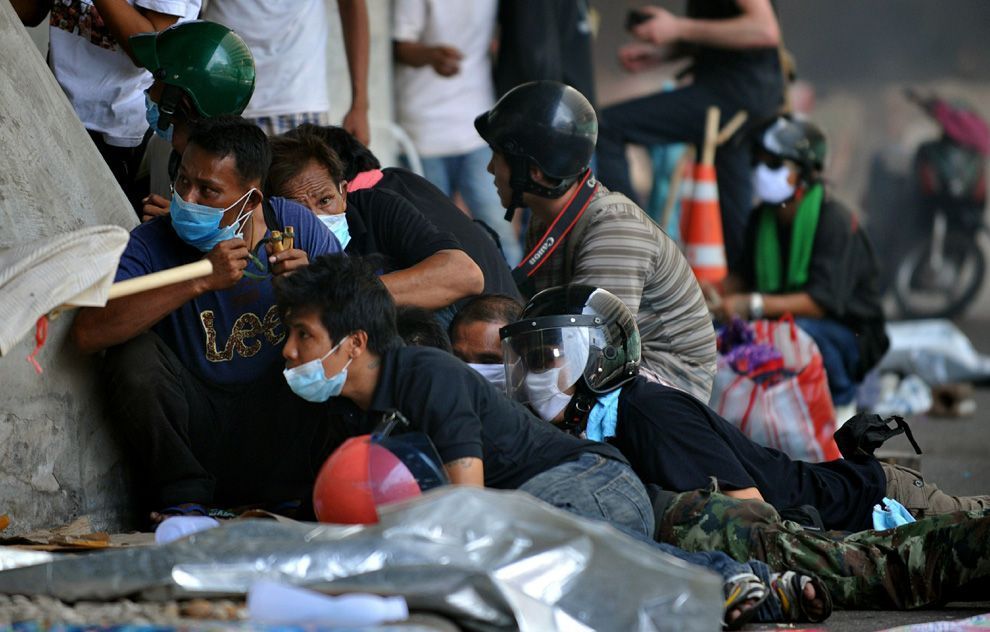
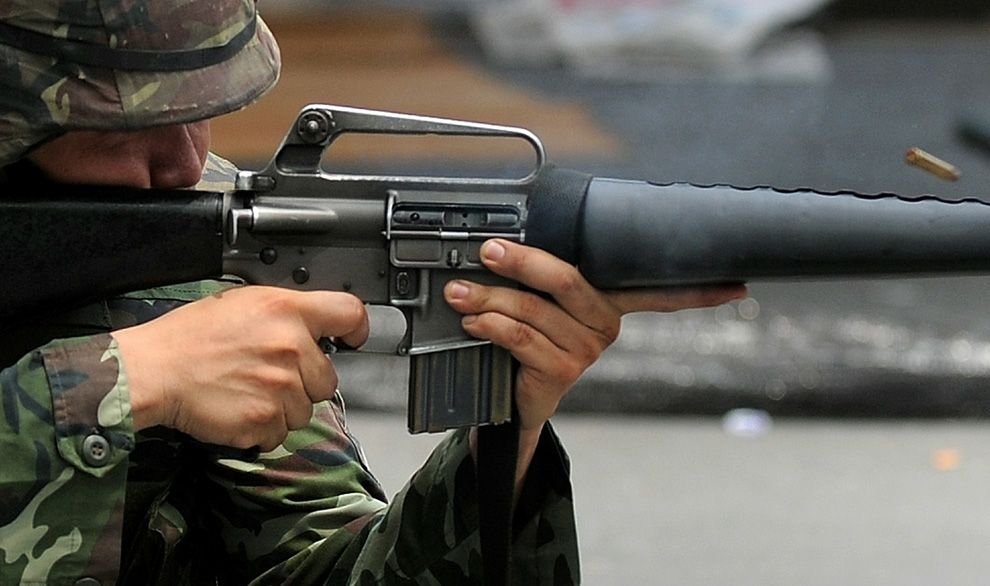
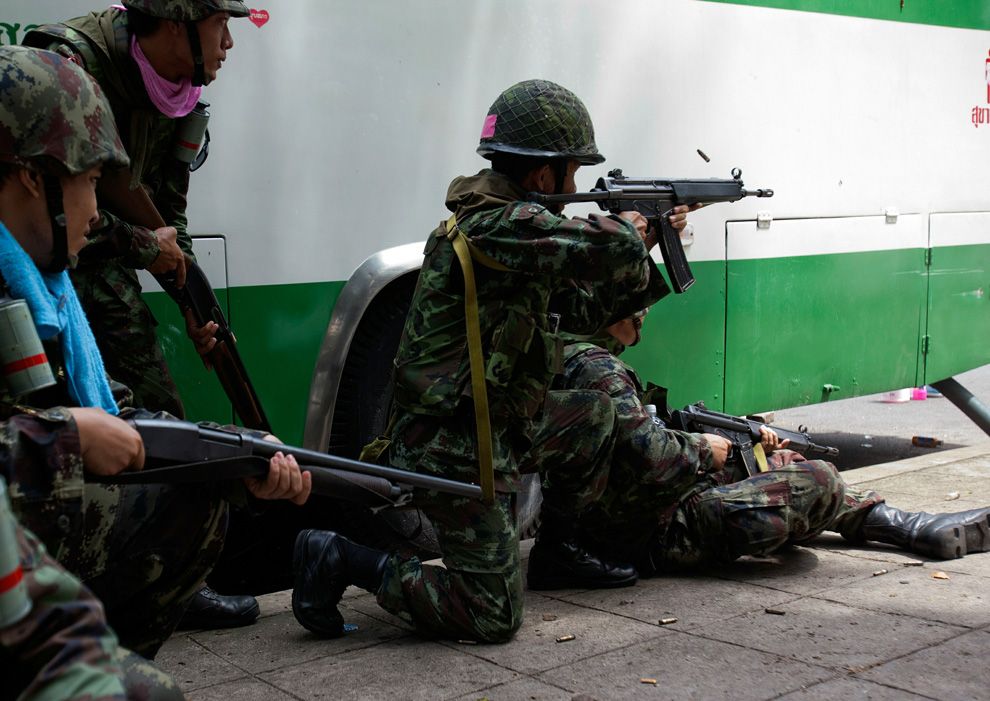
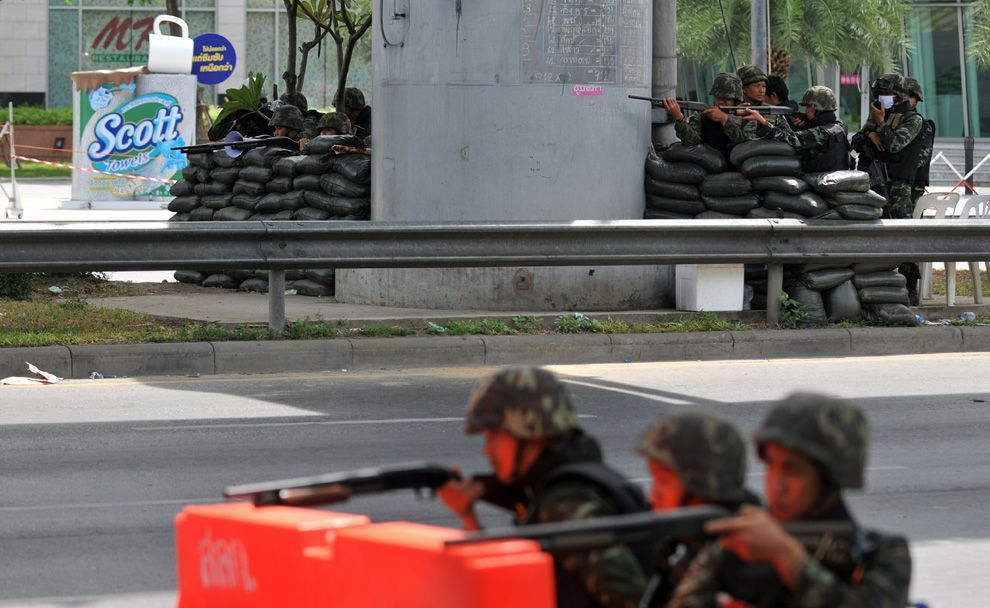
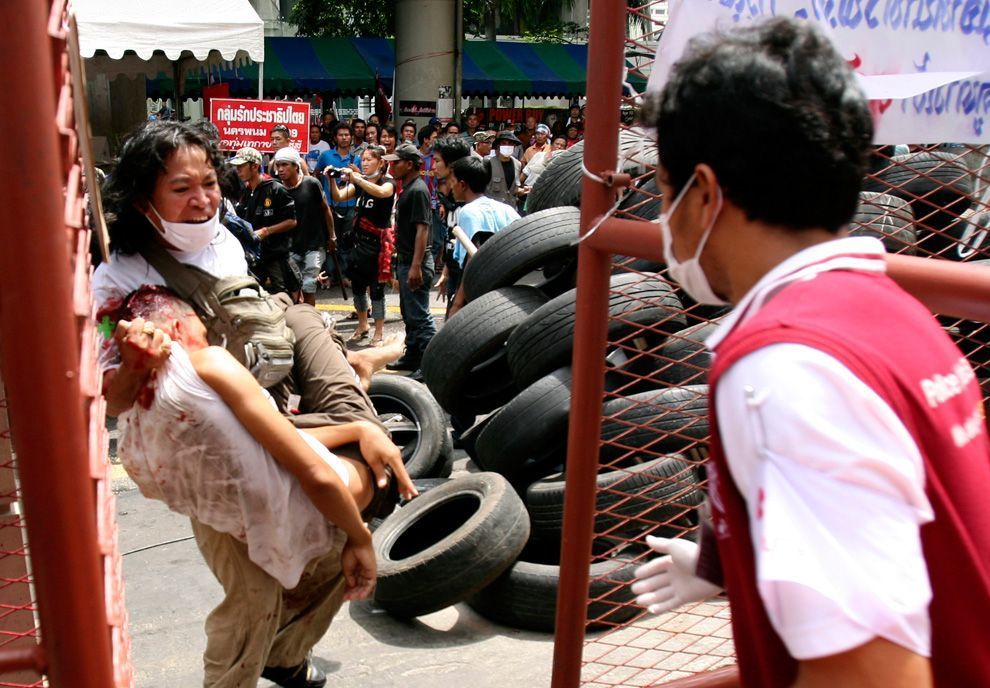
On May 17, Thai military helicopters dropped leaflets on the Red Shirt's main encampment, urging them to leave. The Red Shirts responded by firing homemade rockets at the helicopters. The encampment was completely surrounded, and the Thai government gave Red Shirts a deadline of 3:00 PM local time to withdraw. Clashes continued, with Thai troops firing directly any movement around the protest perimeter with live ammunition, and protesters also using potentially lethal tactics, according to a Canadian journalist. Red Shirts shot fireworks at the Army, and utilized a broom handle to rapidly fire firecrackers. At least two red shirt protesters were shot by Thai Army snipers. According to Thai medical officials, the casualty toll stood at 35 dead, and 242 wounded. By the end of the day, the casualty toll had risen to 37 dead and 266 wounded.
Sporadic clashes continued on May 18, but these were less intense than previous ones were.

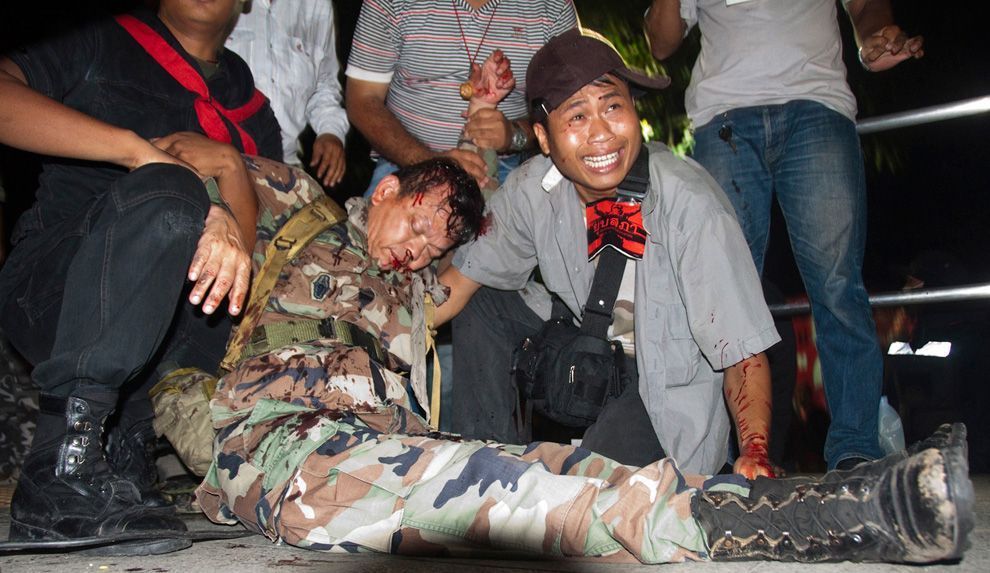
Renegade Thai major-general Khattiya Sawasdipol, only moments before being shot while being interviewed by Thai and foreign reporters in Bangkok on May 13, 2010. Khattiya, better known as Seh Daeng, a rogue soldier and de facto military chief of Thailand's red shirt protest movement later died from the wound.
Renegade Thai major-general Khattiya Sawasdipol slumps on the ground moments after being shot in the head while being interviewed by Thai and foreign reporters in Bangkok on May 13, 2010.
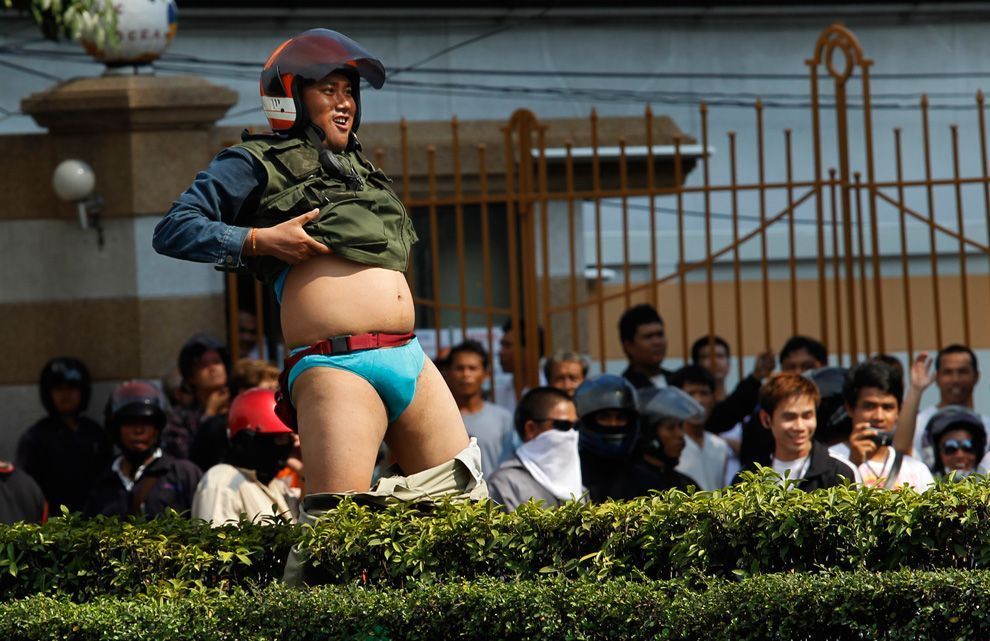
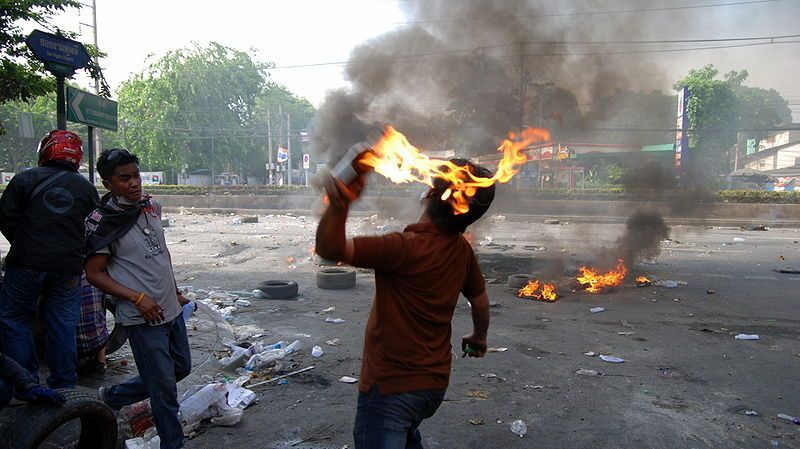
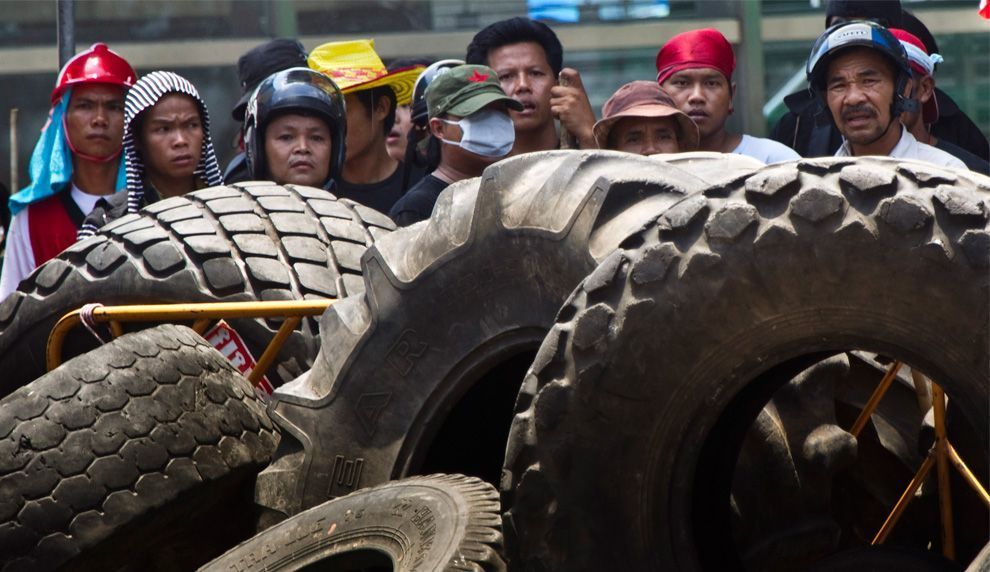
A Red Shirt demonstrator taunts Thai soldiers in downtown Bangkok, Thailand on Friday, May 14, 2010
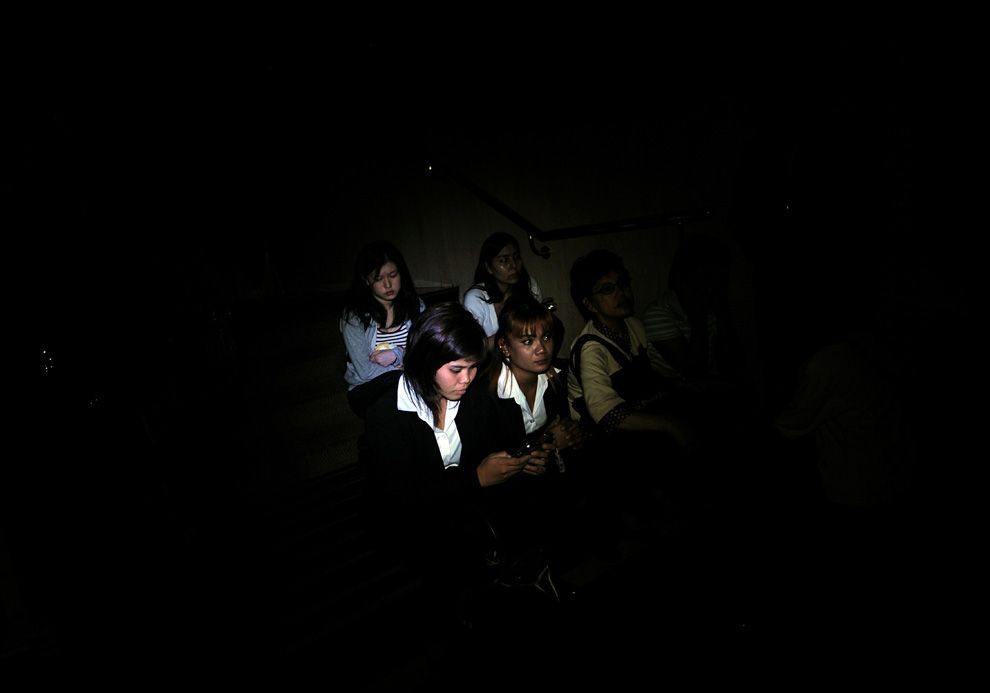
Guests and hotel staff sit in dark in the basement of the Dusit Thani hotel after they were evacuated following an explosion and gunfire being heard around the hotel early on May 17, 2010. An explosion nearby rattled the hotel room. Bullets hit the wall outside, then their telephones rang: "Come down you are under attack," the voice from reception warned.
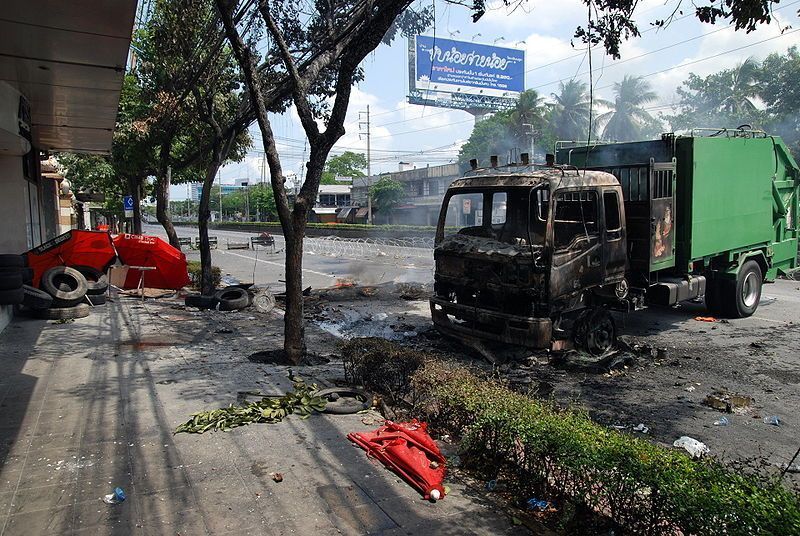
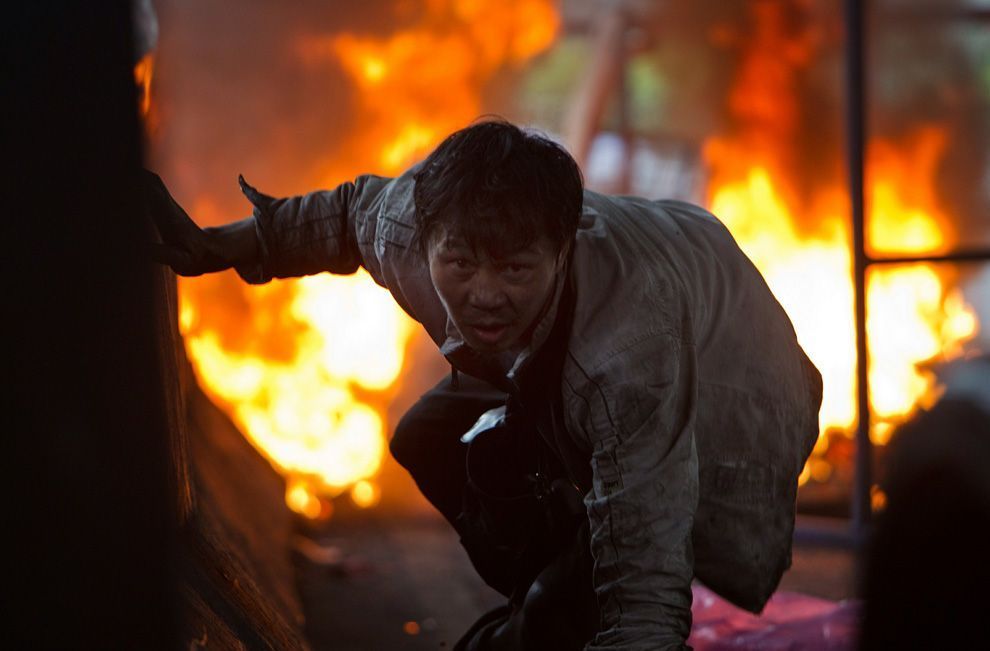
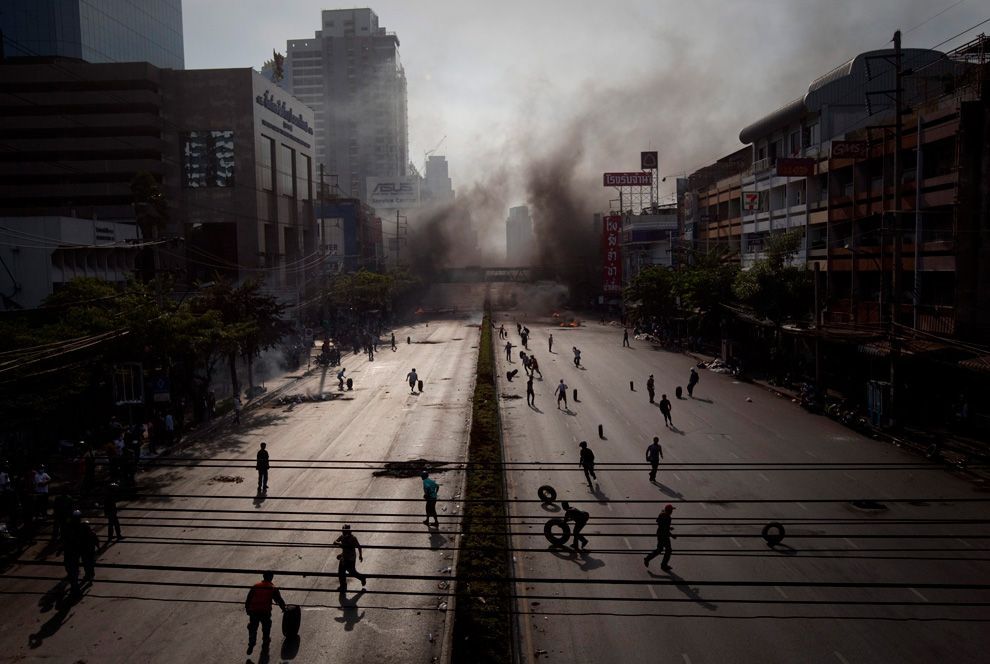
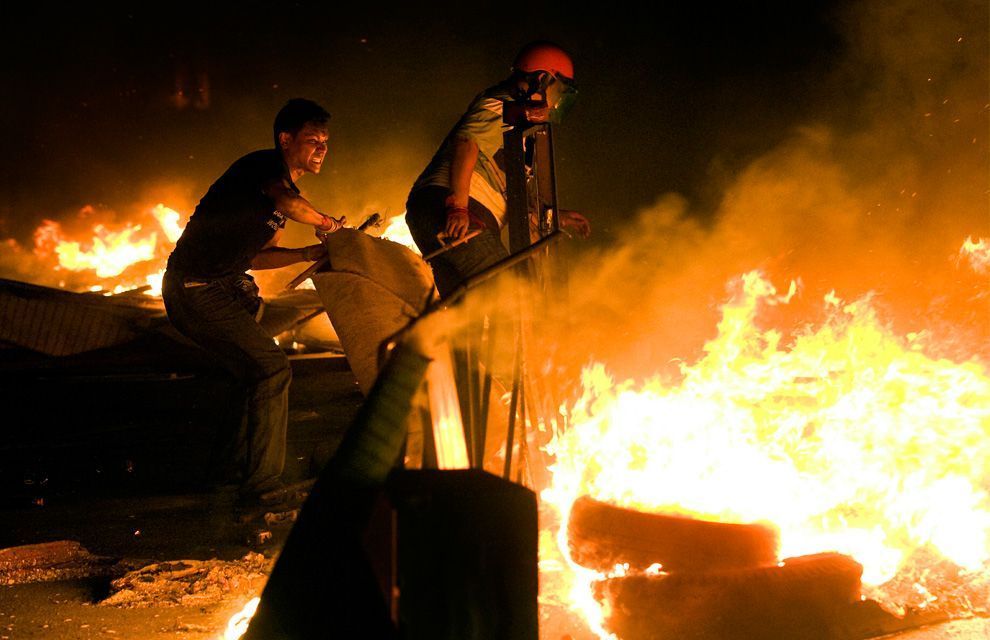
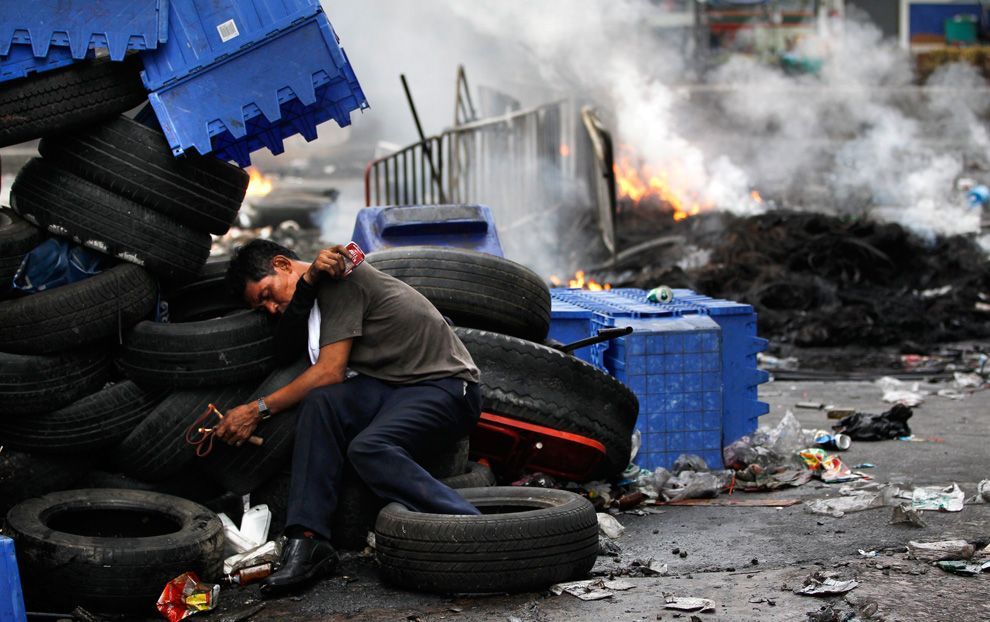
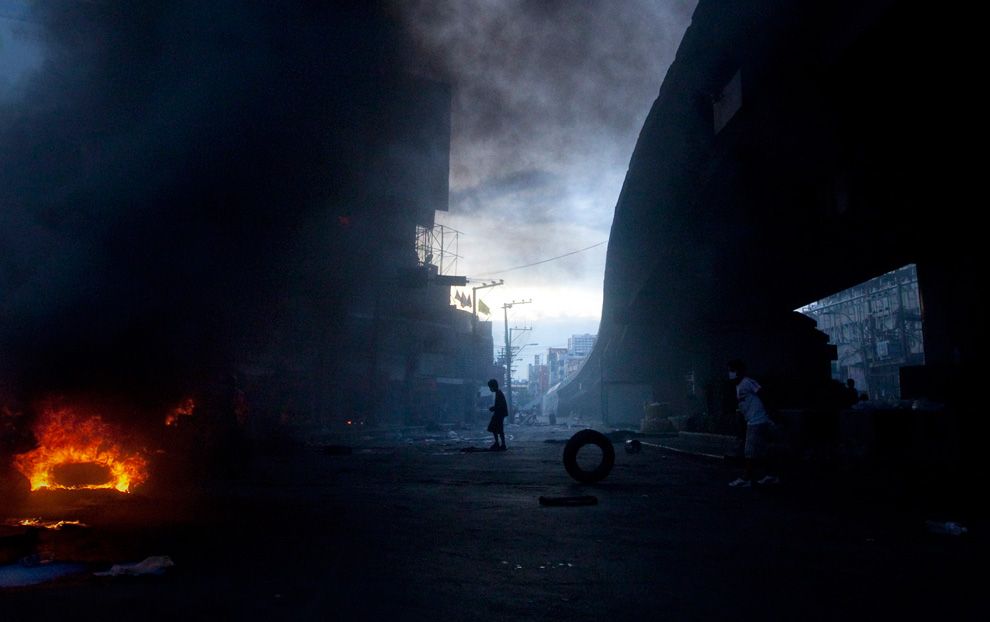
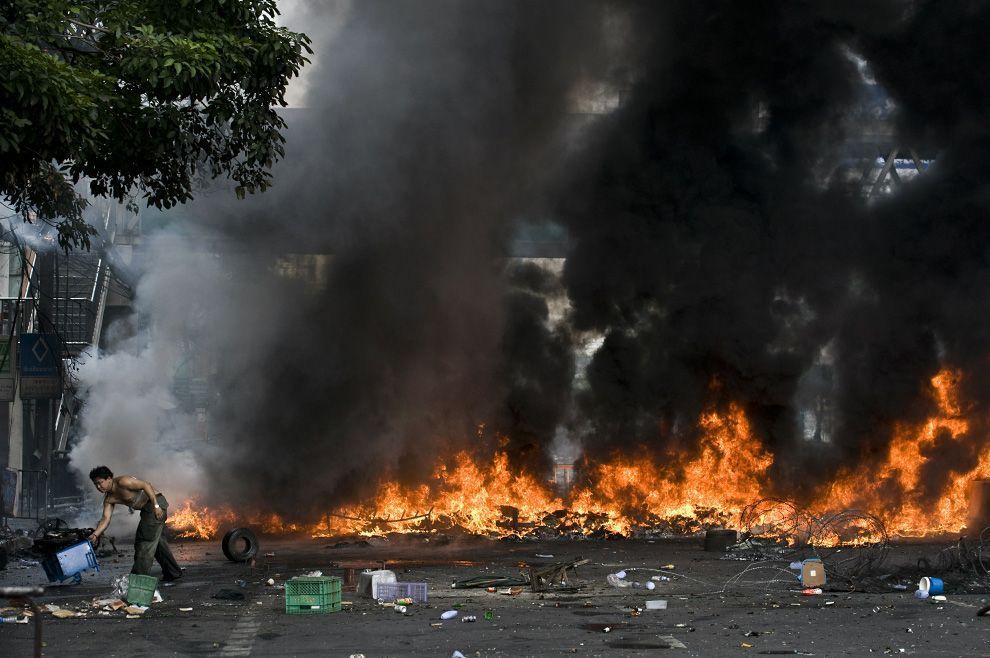
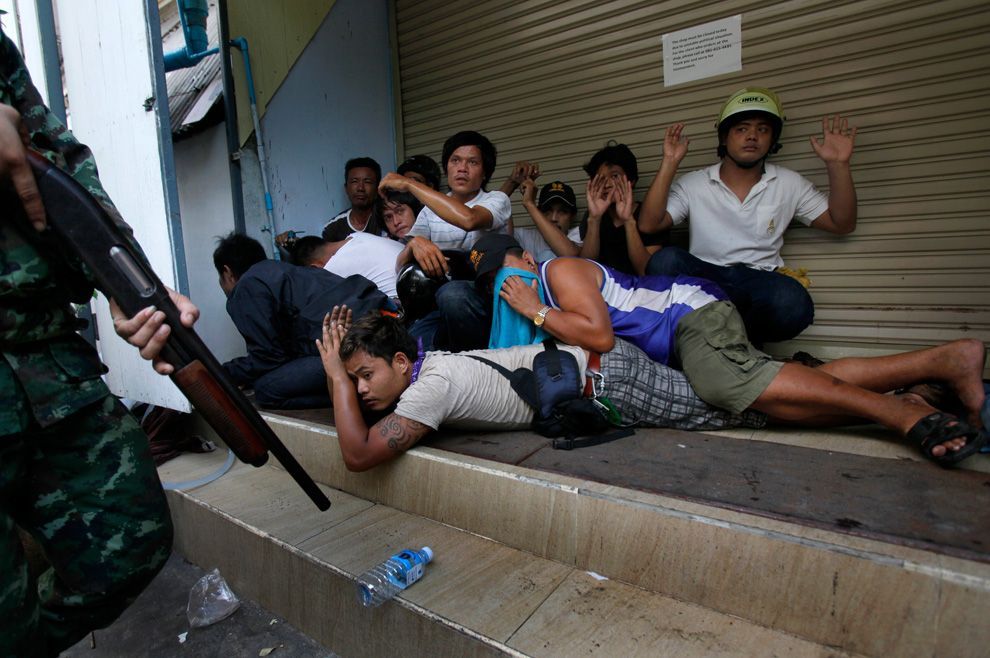
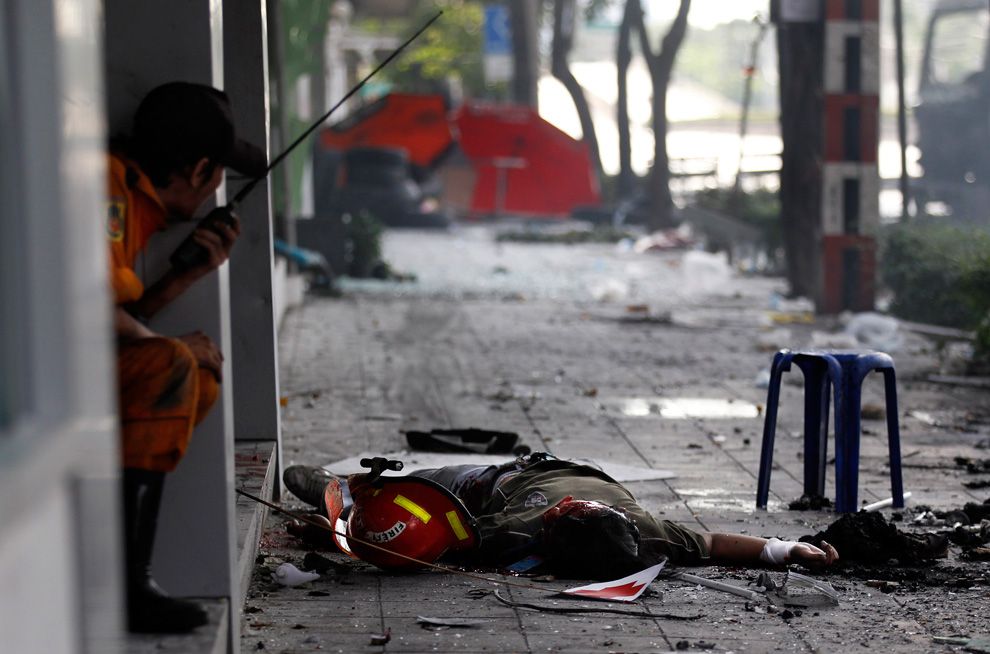
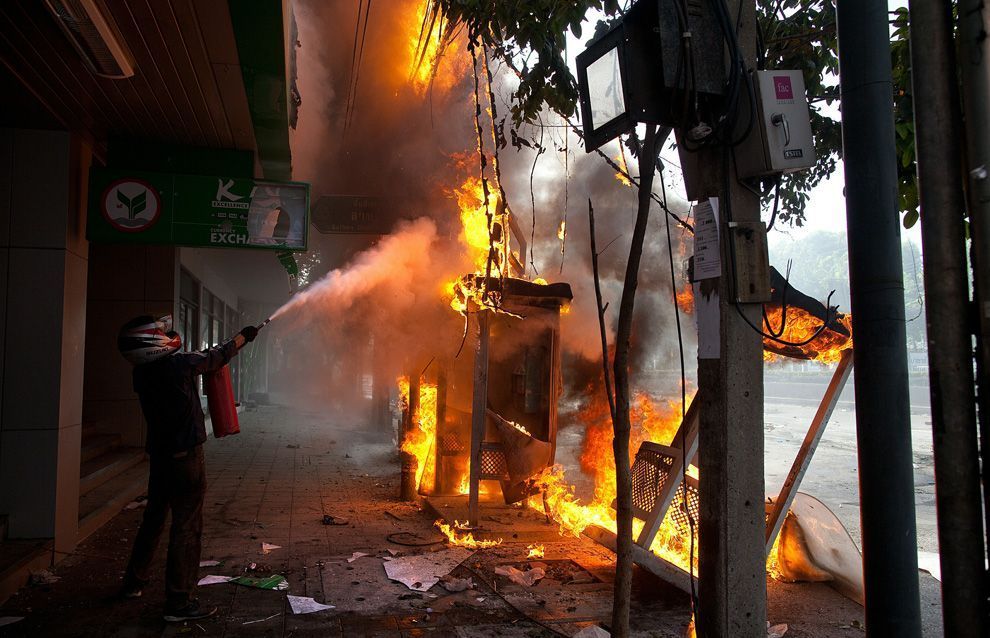
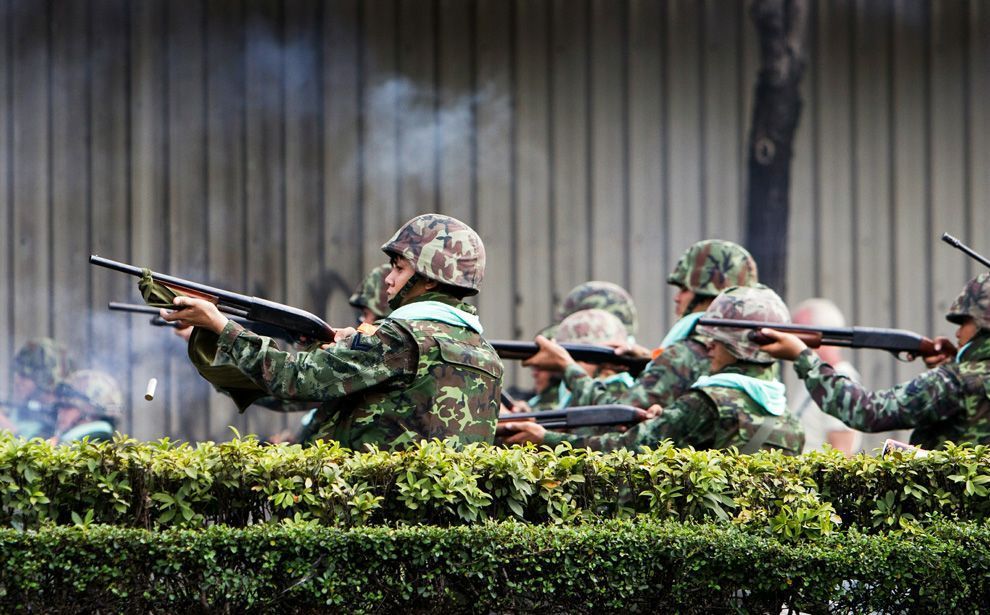
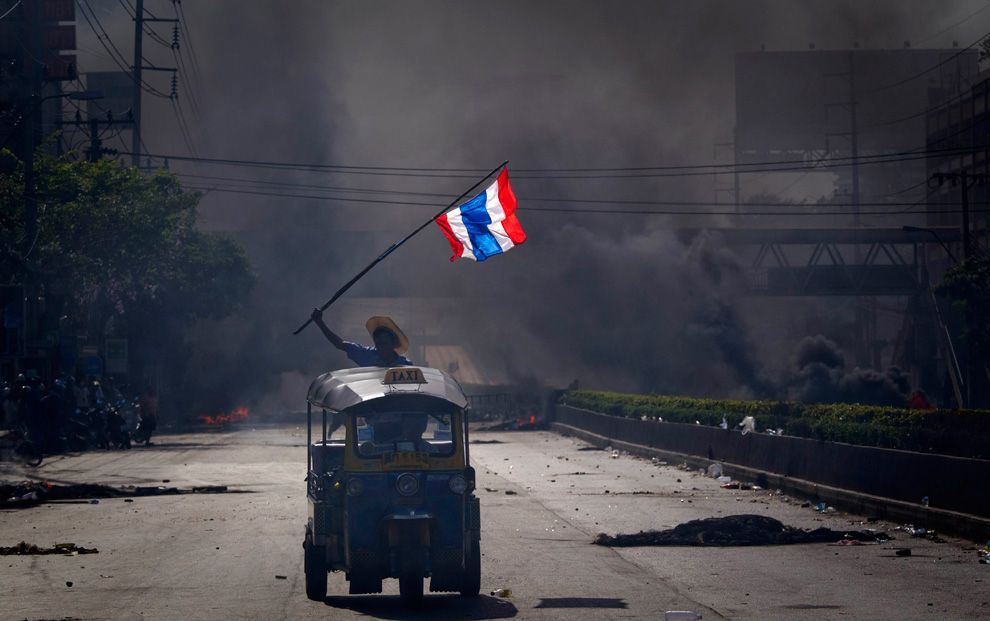
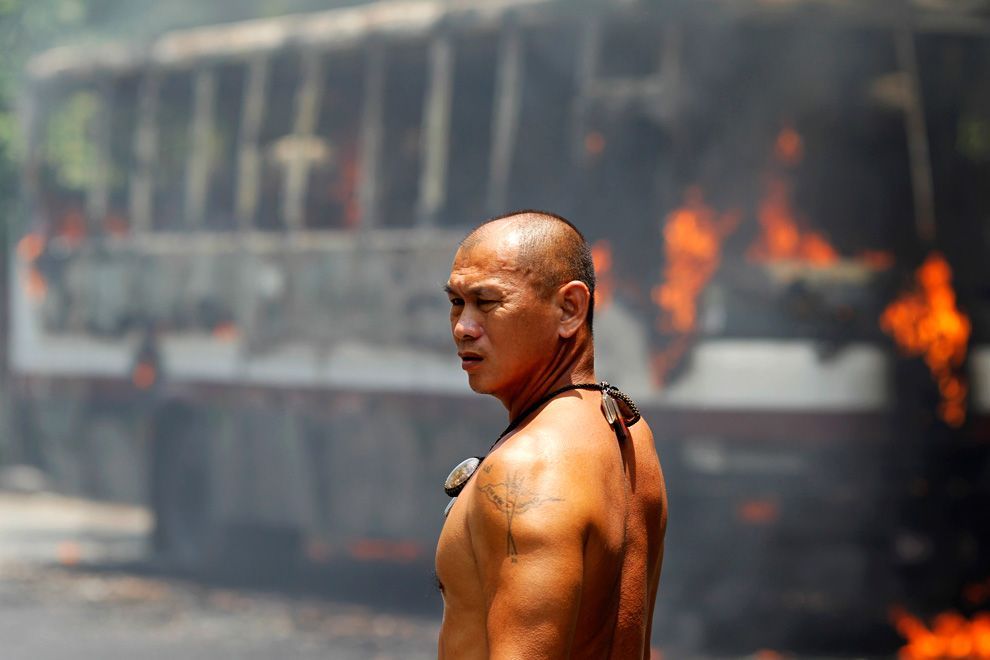
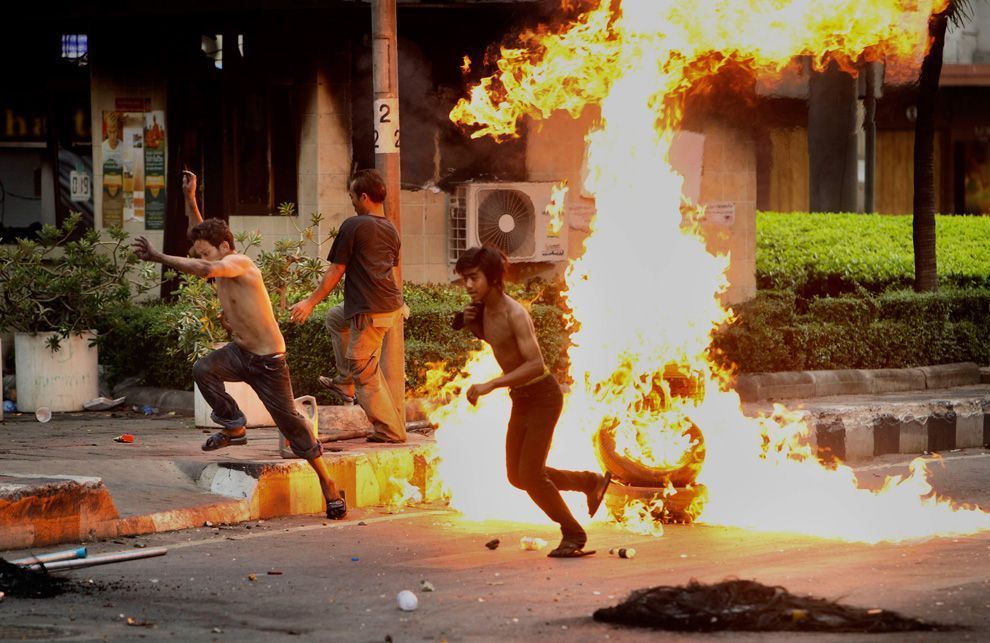
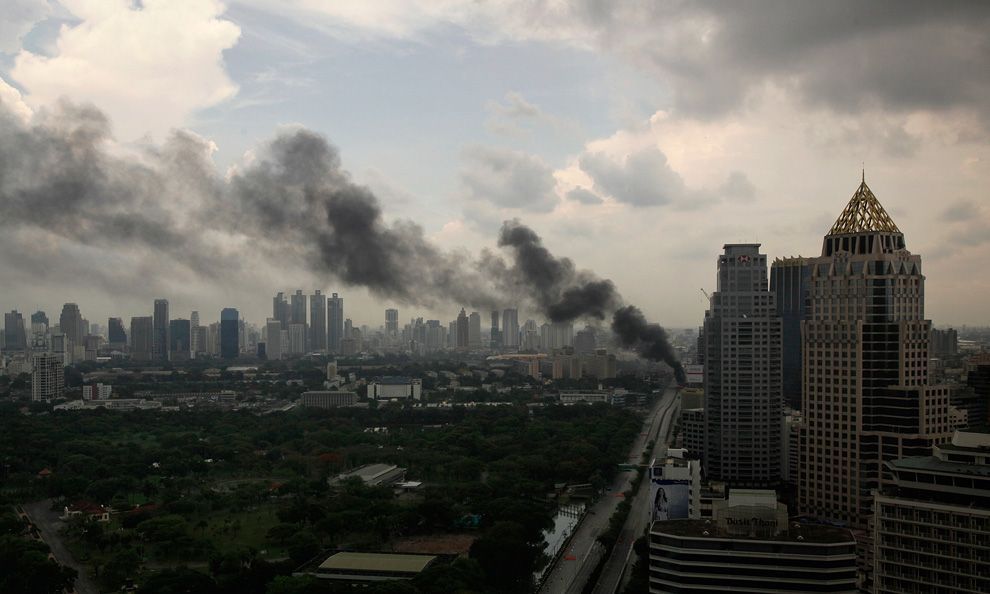
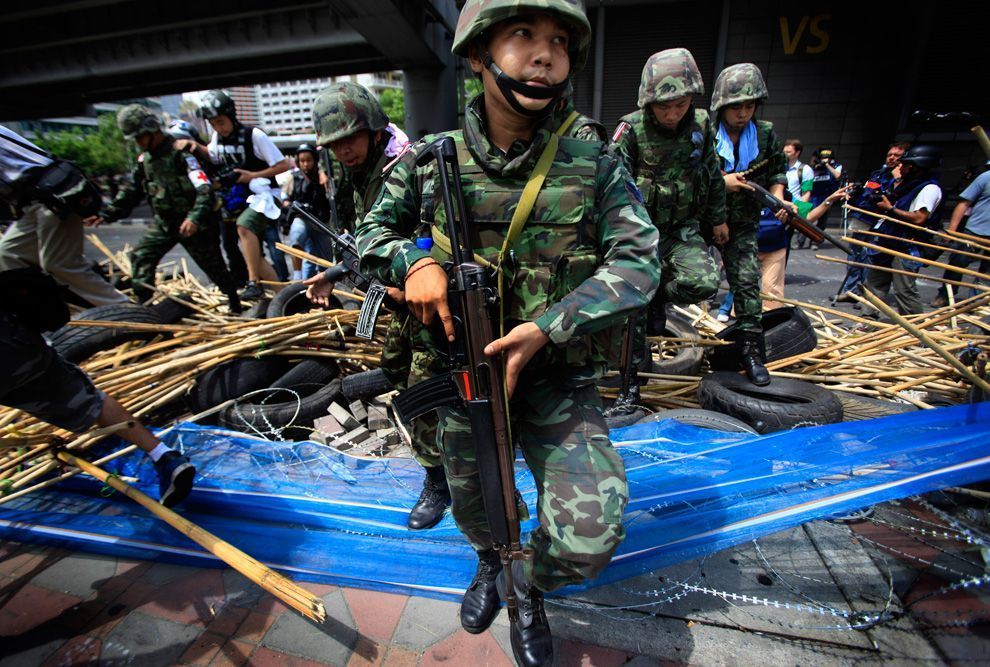
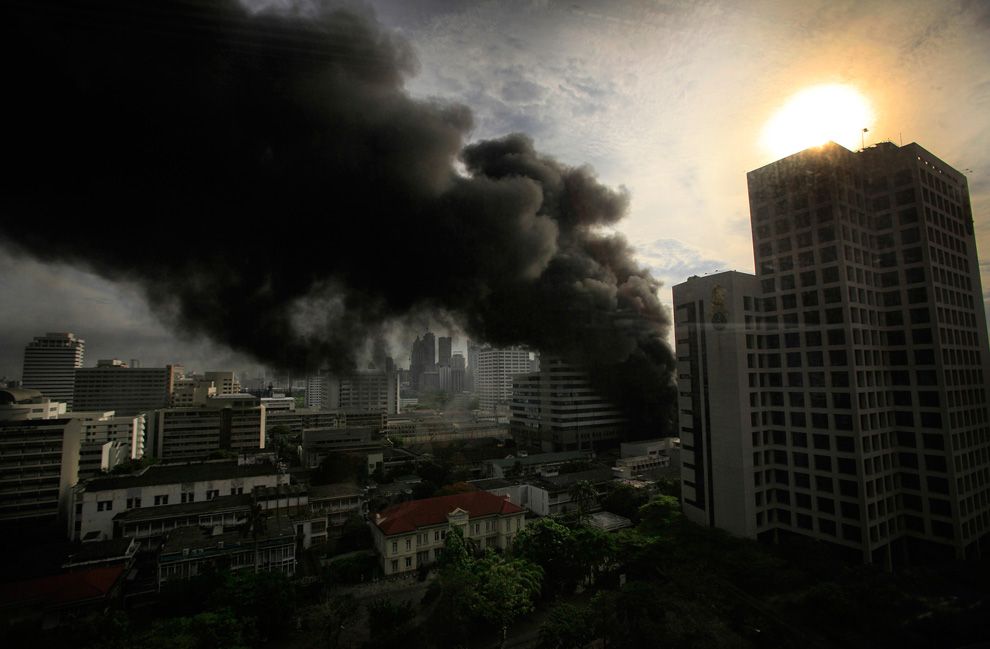
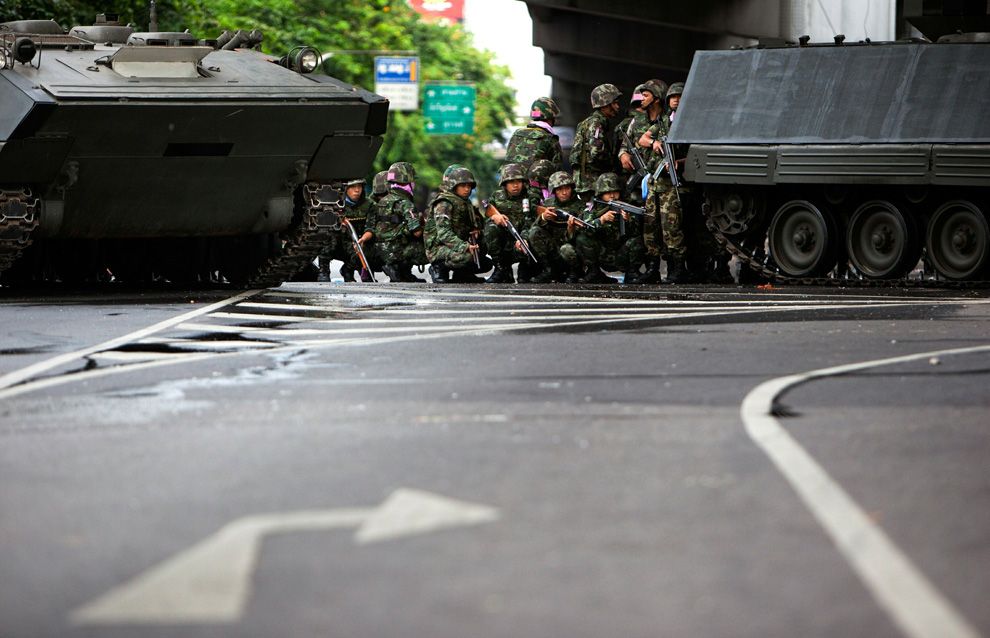
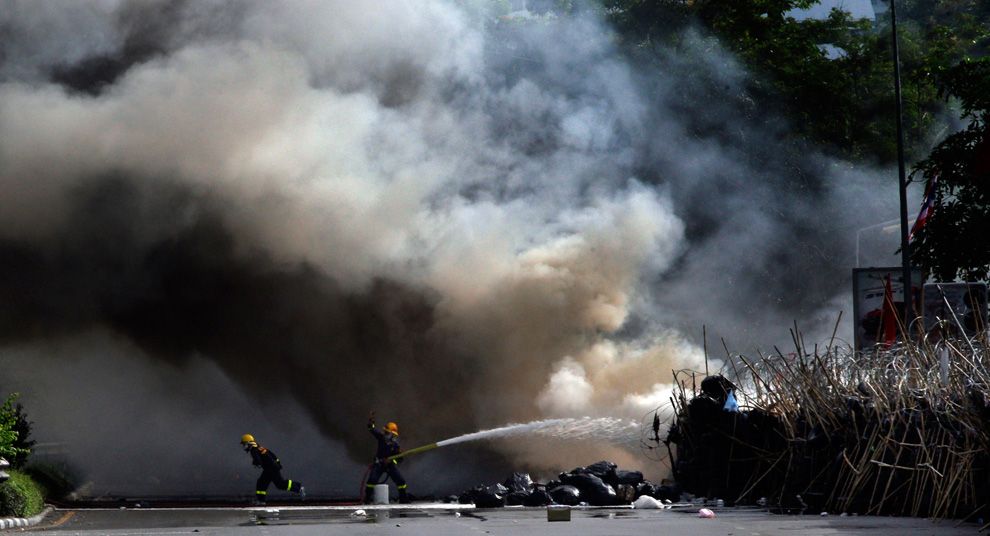
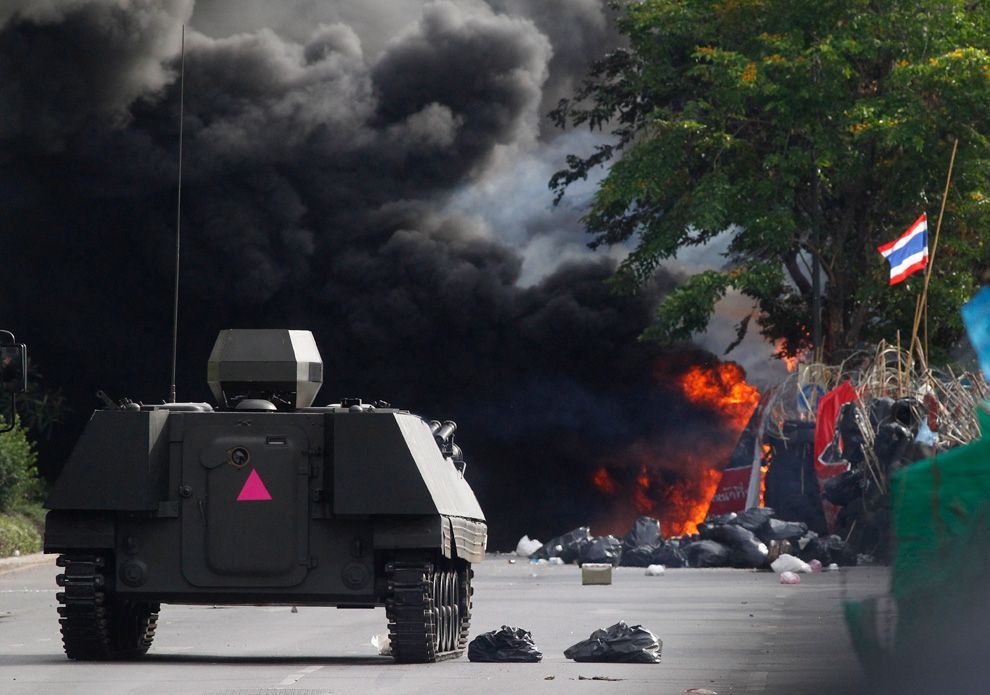
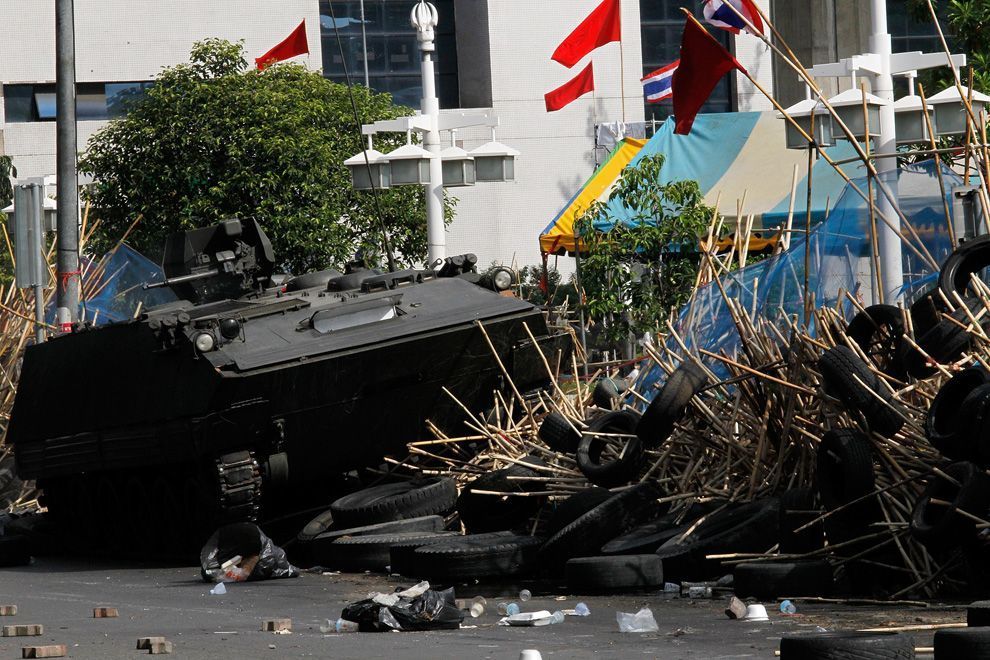
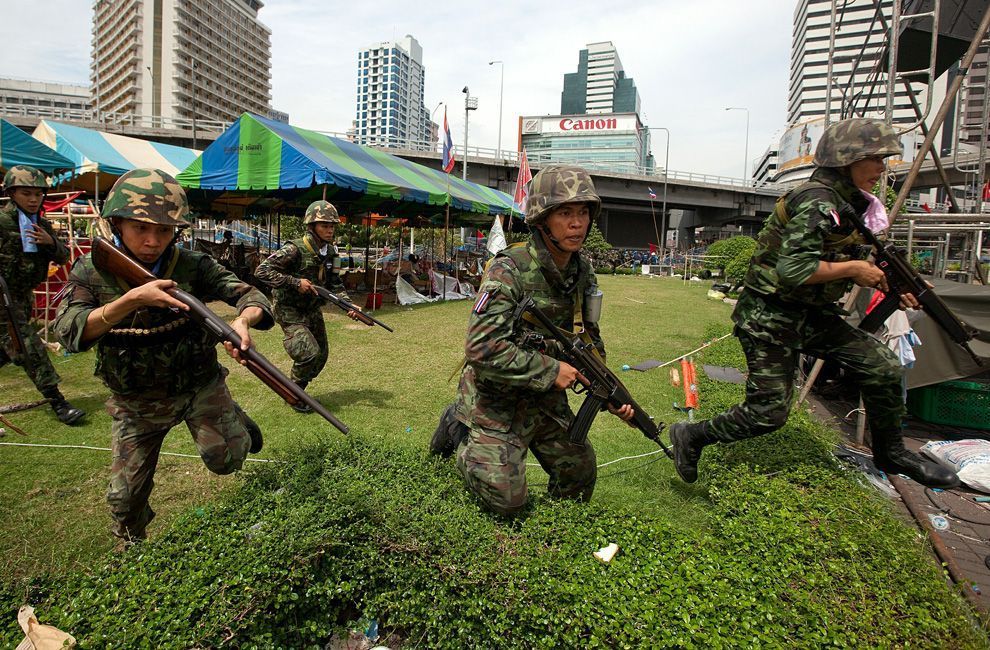
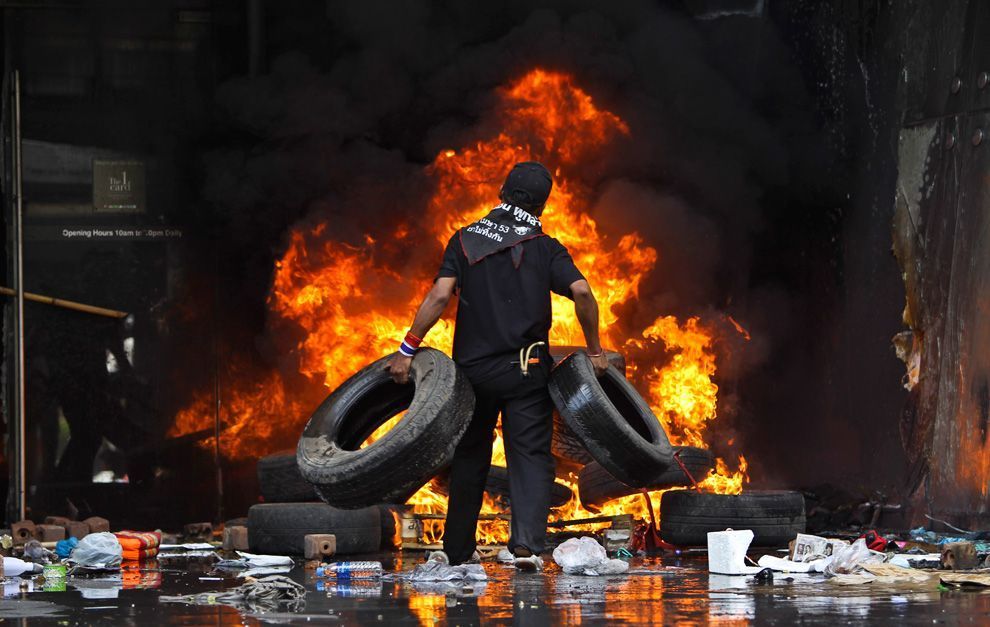
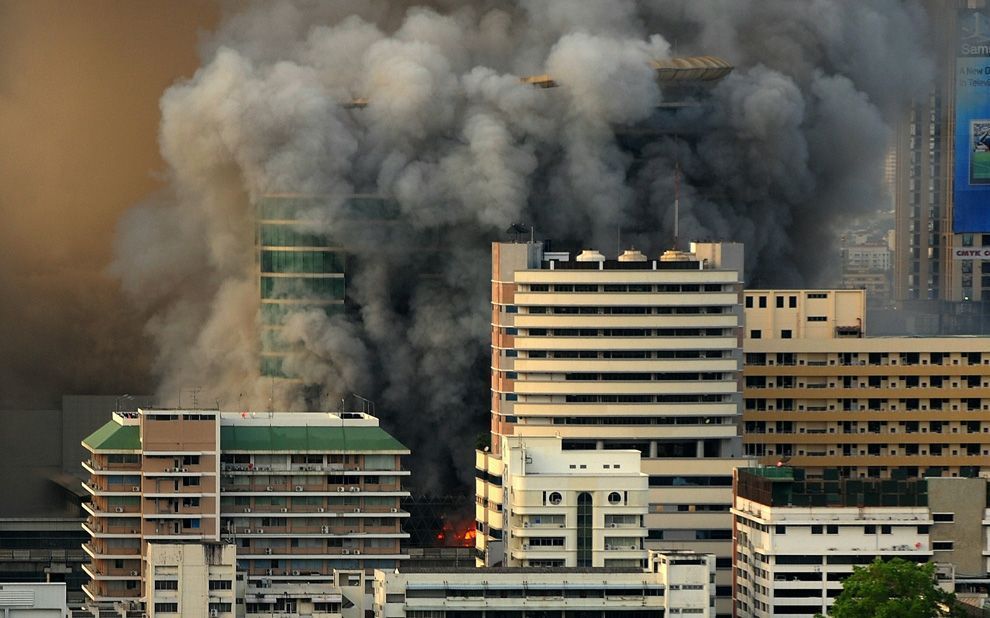
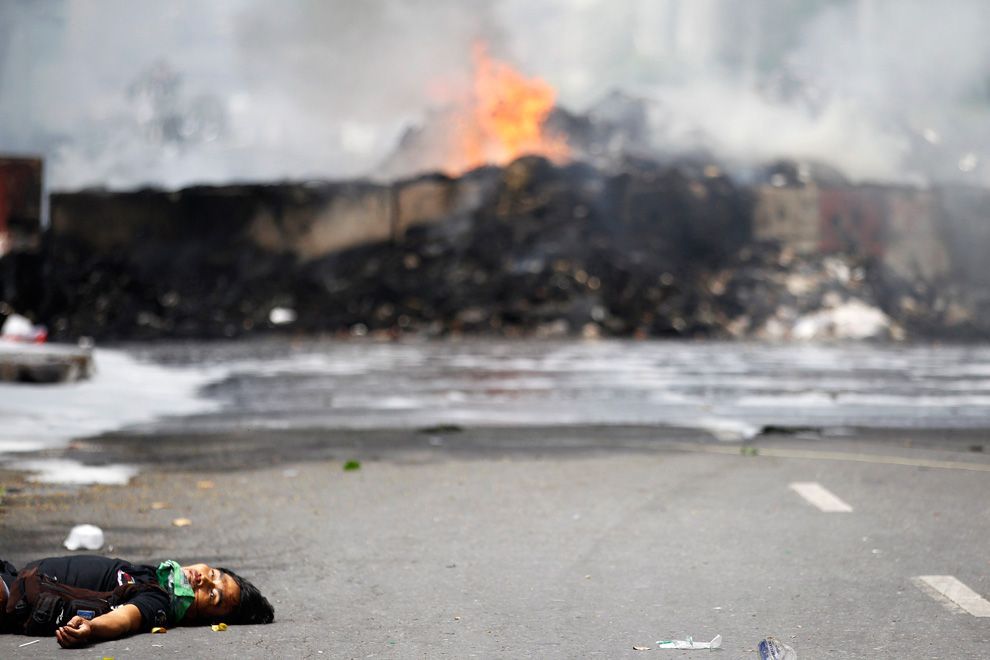
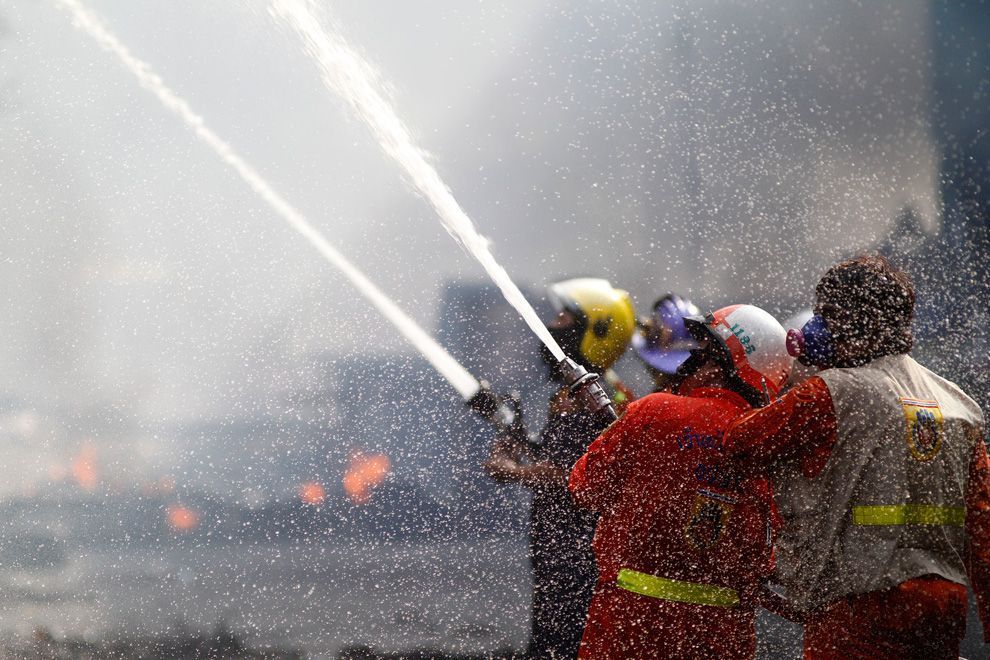
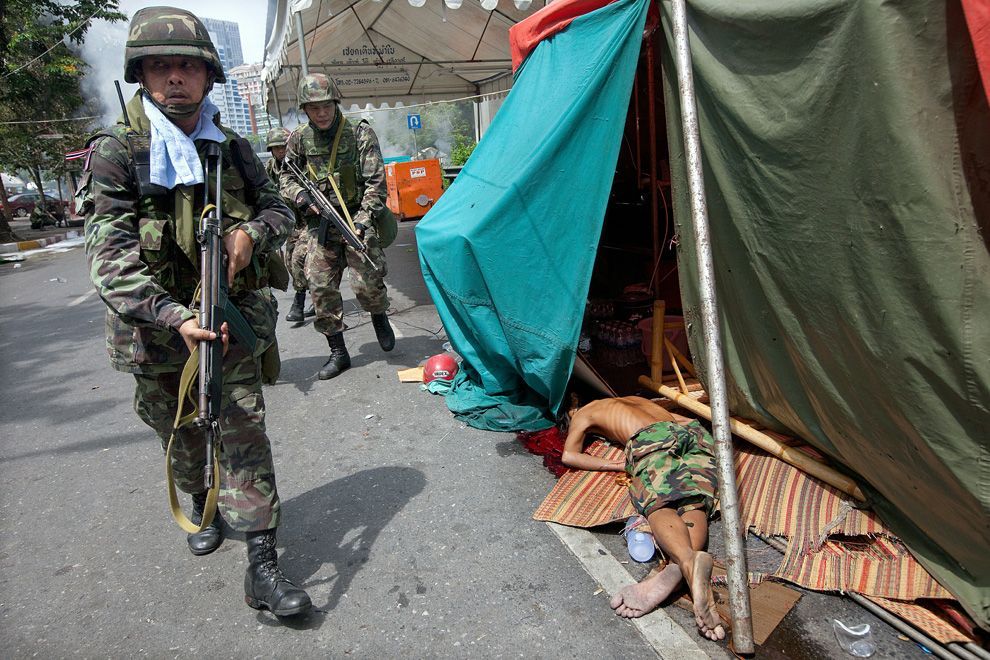
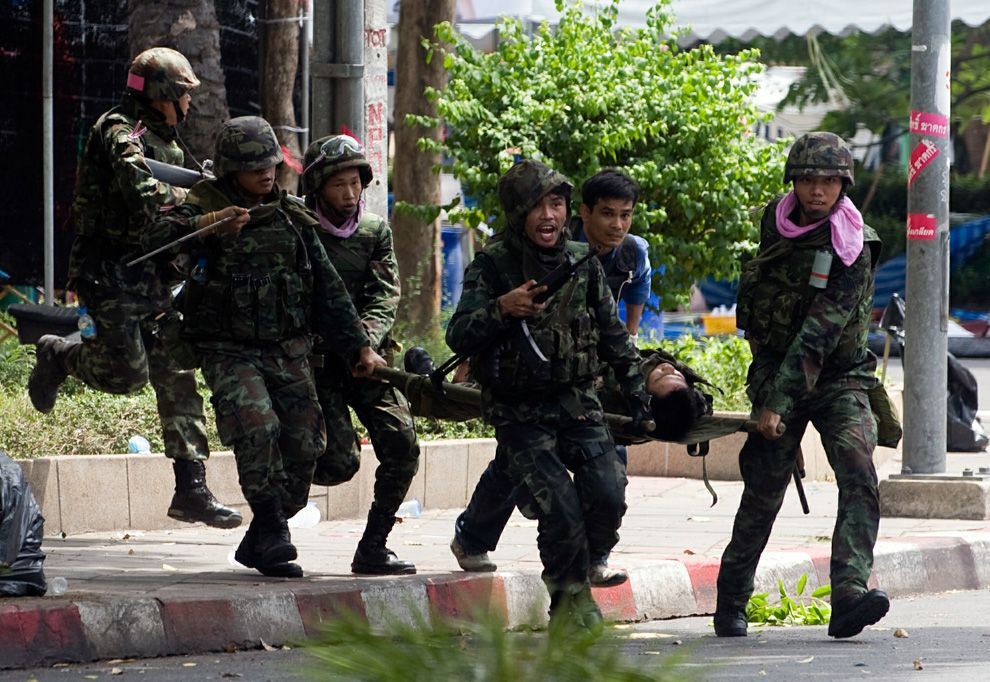
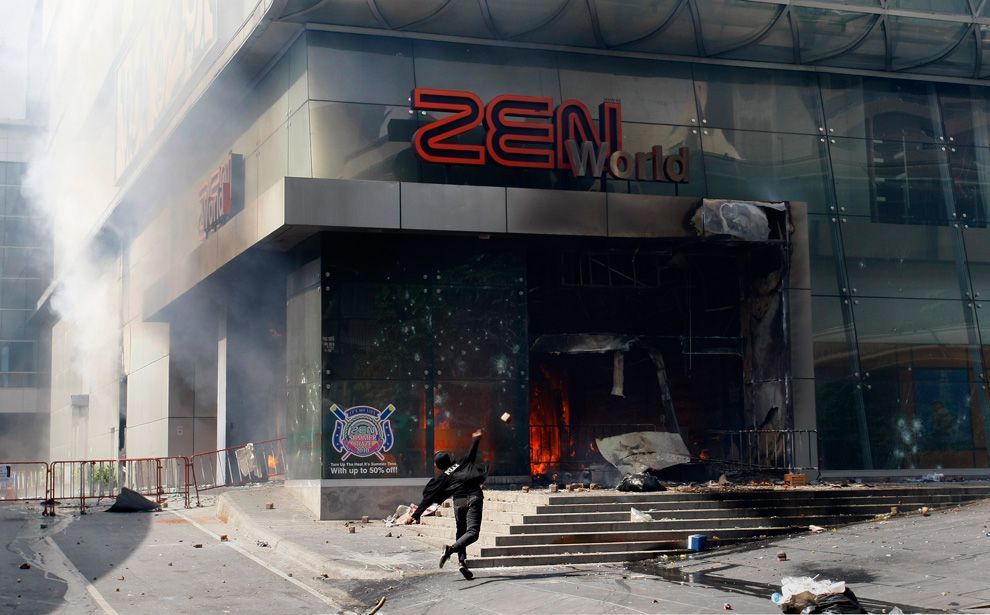
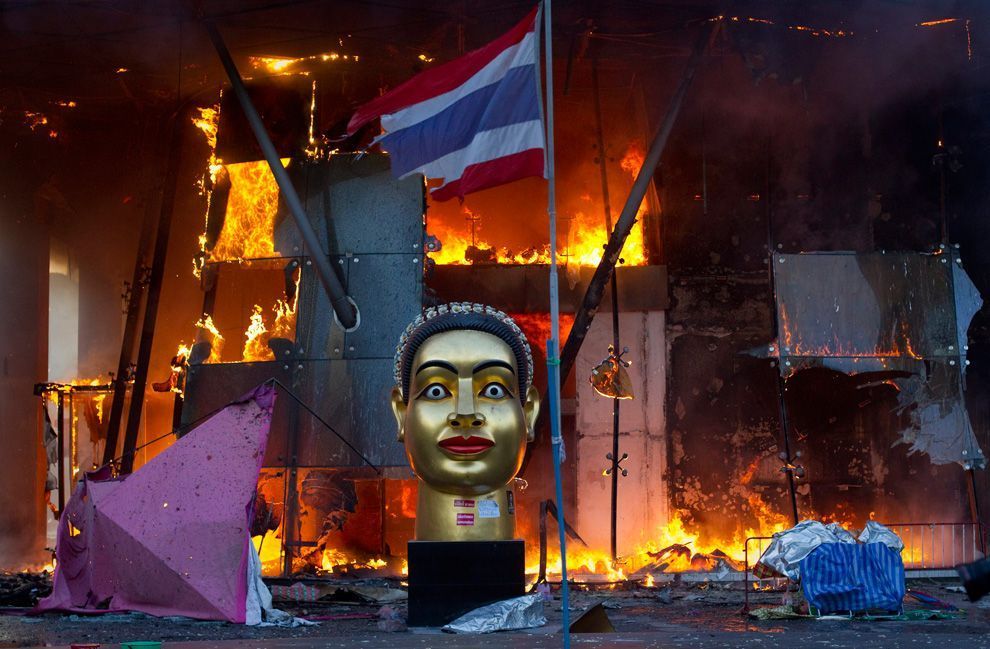
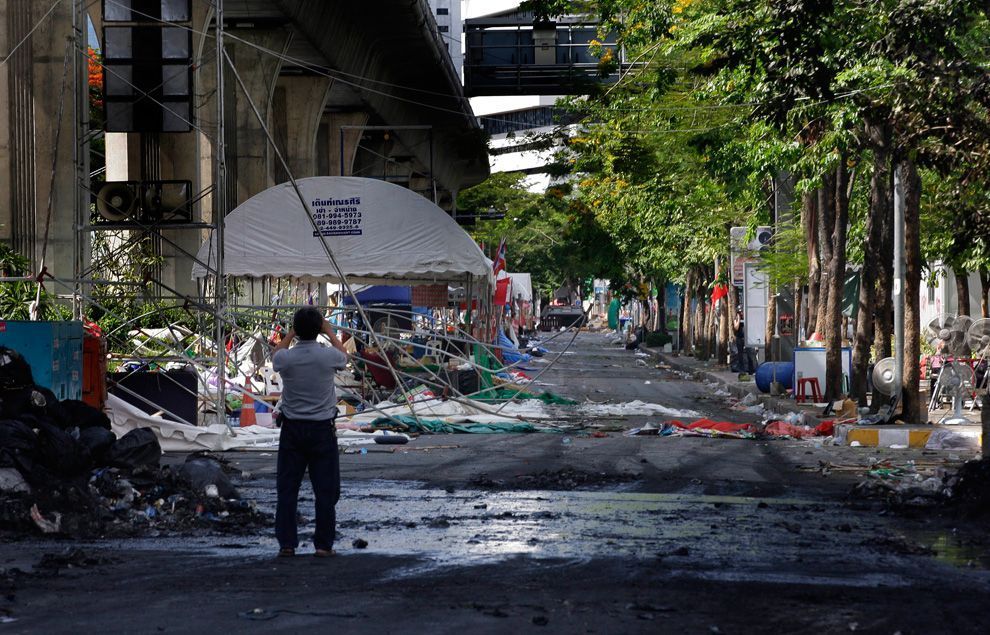
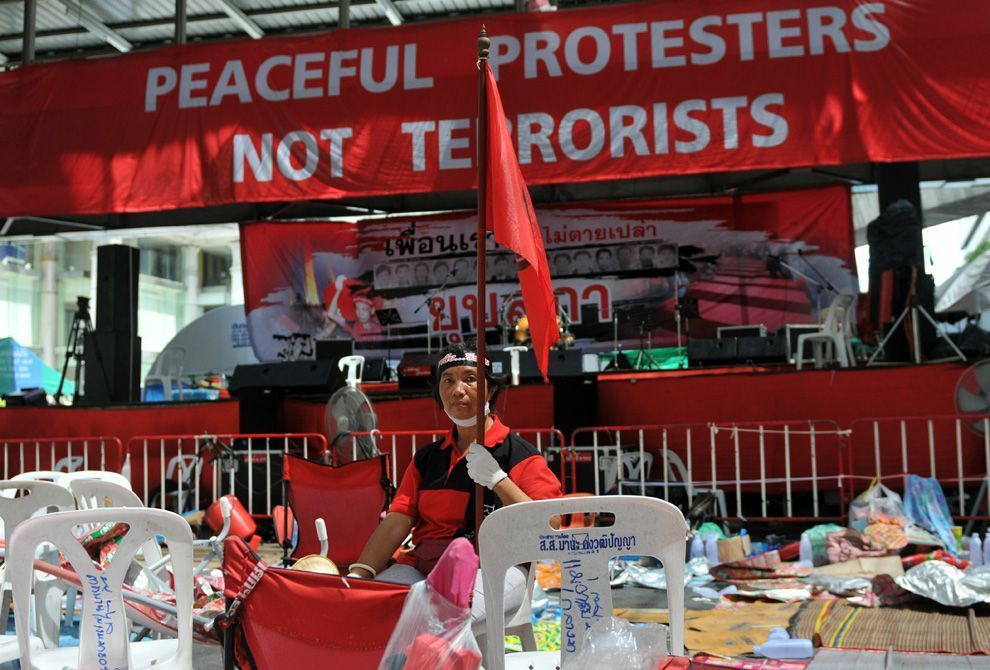
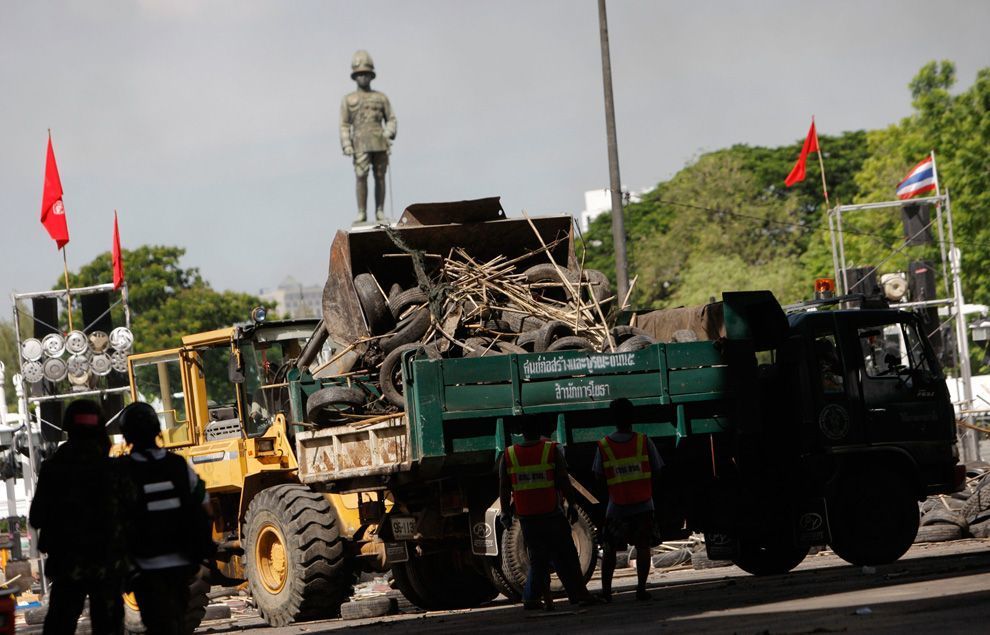
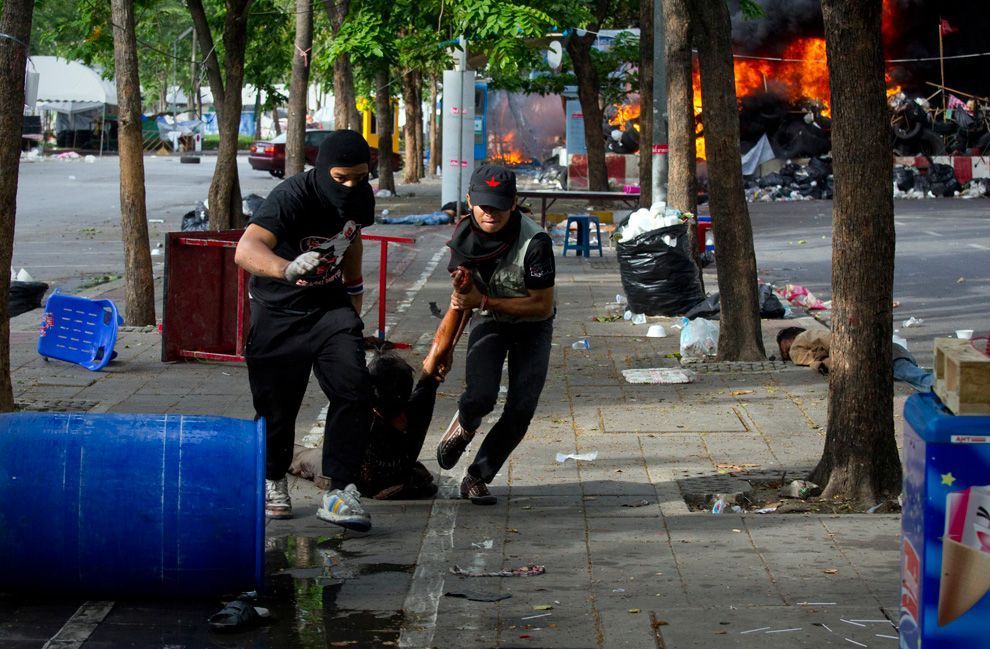
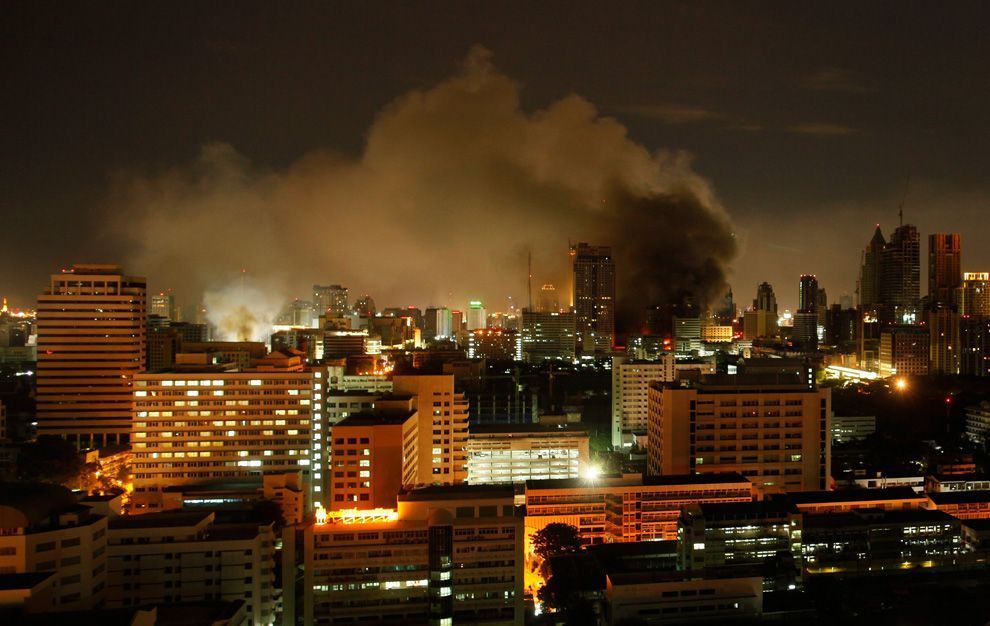
MAY 19th 2010 On 19 May, the Army launched an all out assault using APC's and defeated the red shirts defences leaving at least five dead, including an Italian journalist and two soldiers were seriously wounded in a grenade attack. The protest leaders surrendered to police in a bid to avoid further bloodshed. The majority of protesters booed at the protest leaders as they declared to end the protests and did not follow them to surrender to the authorities. Fighting between red shirt protestors and army continued in many parts of the city. Red shirts protesters set fire to the Stock Exchange, banks, at least two shopping centres (including Central World at the red shirts main protest site), a TV station,a cinema which burnt to the ground, and hotels built barricades to protect themselves. The total deathtoll since 14 May is believed to stand at 44. There were reports of clashes in Thailand's northern provinces after the surrender was announced, resulting in a town hall being burned by red shirts in Udon Thani. Since May 14, 51 people have been killed in clashes, 12 of whom died during the army crackdown and subsequent fighting in Bangkok.

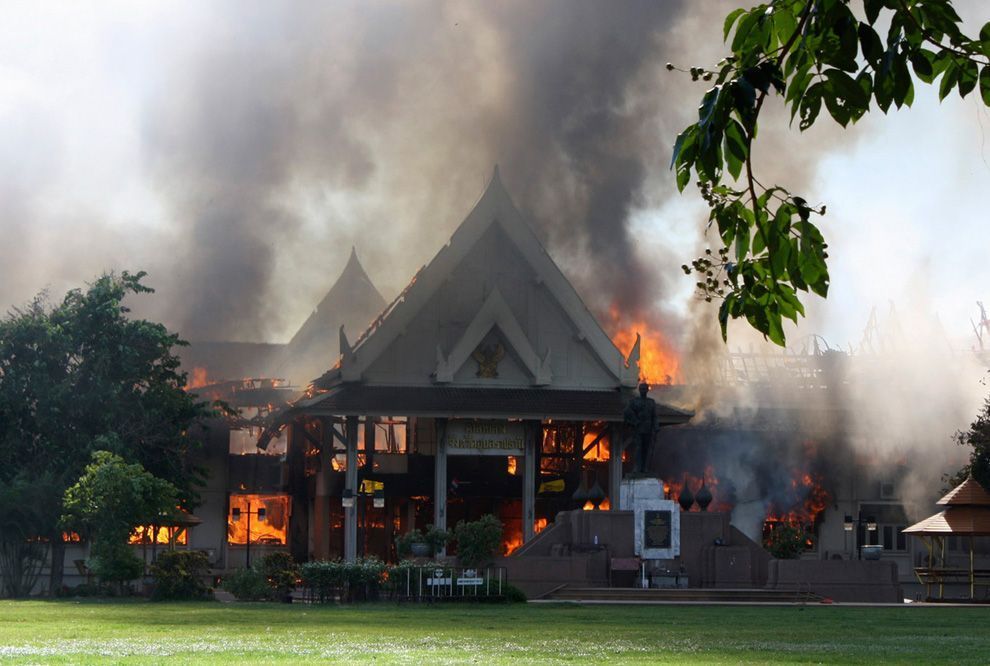
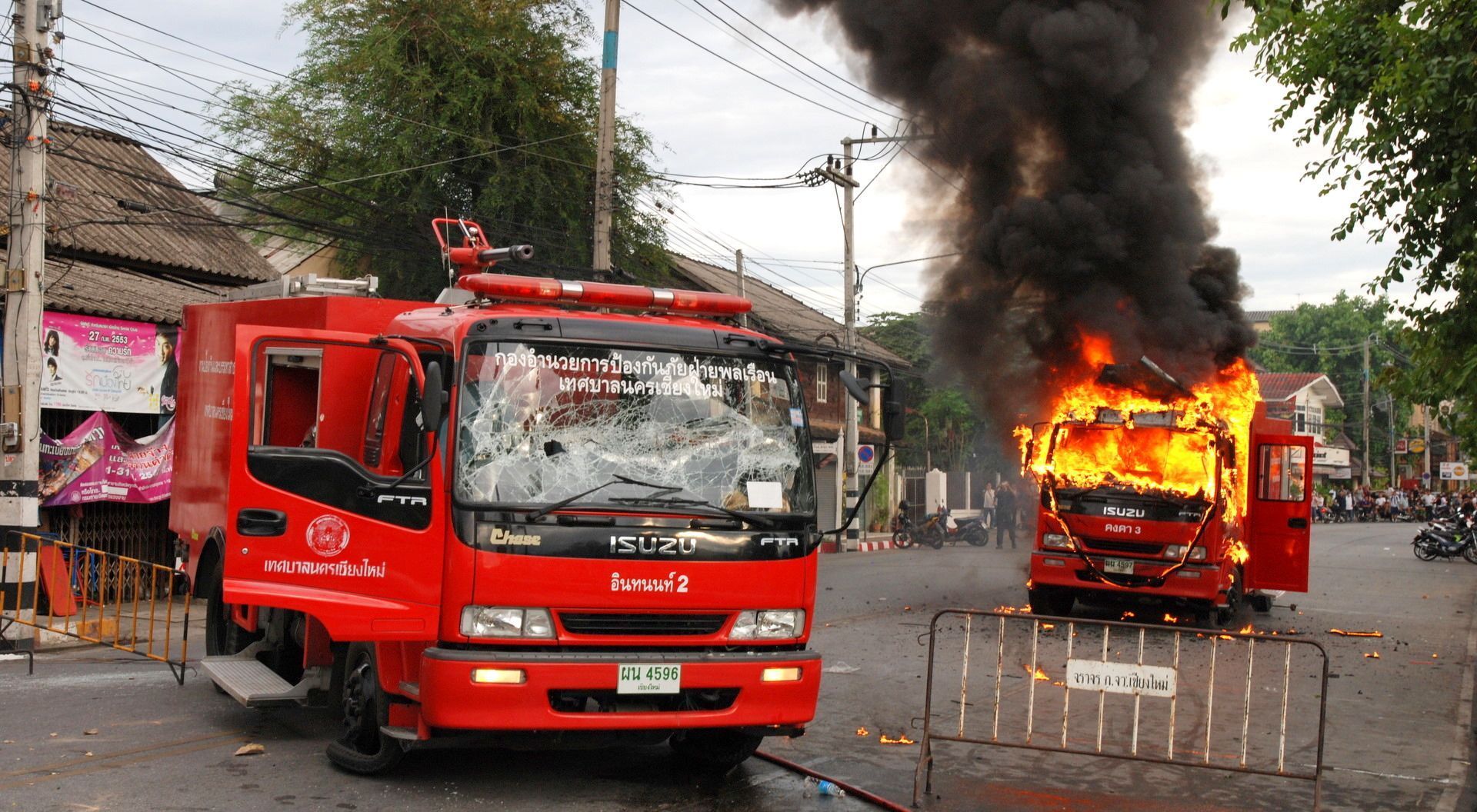
The City Hall building burns after it was set on fire by Red Shirt protesters in Ubon Ratchathani province, north-east of Bangkok, May 19, 2010. Rioting and fires swept Bangkok on Wednesday after troops stormed a protest encampment, forcing protest leaders to surrender, but sparking clashes in Bangkok and triggering other unrest in northern Thailand.
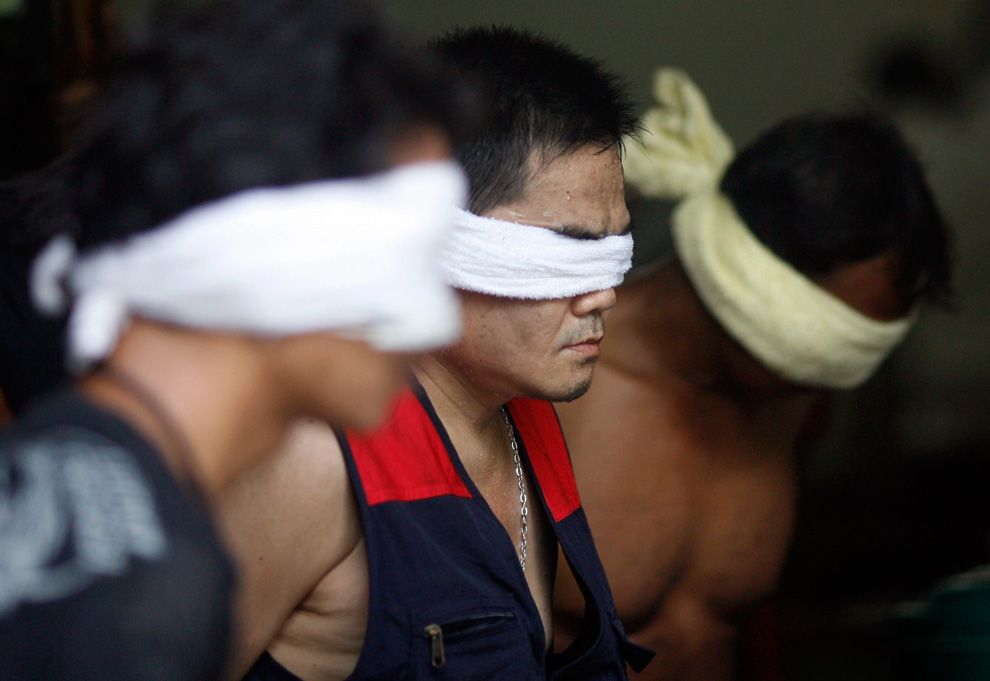
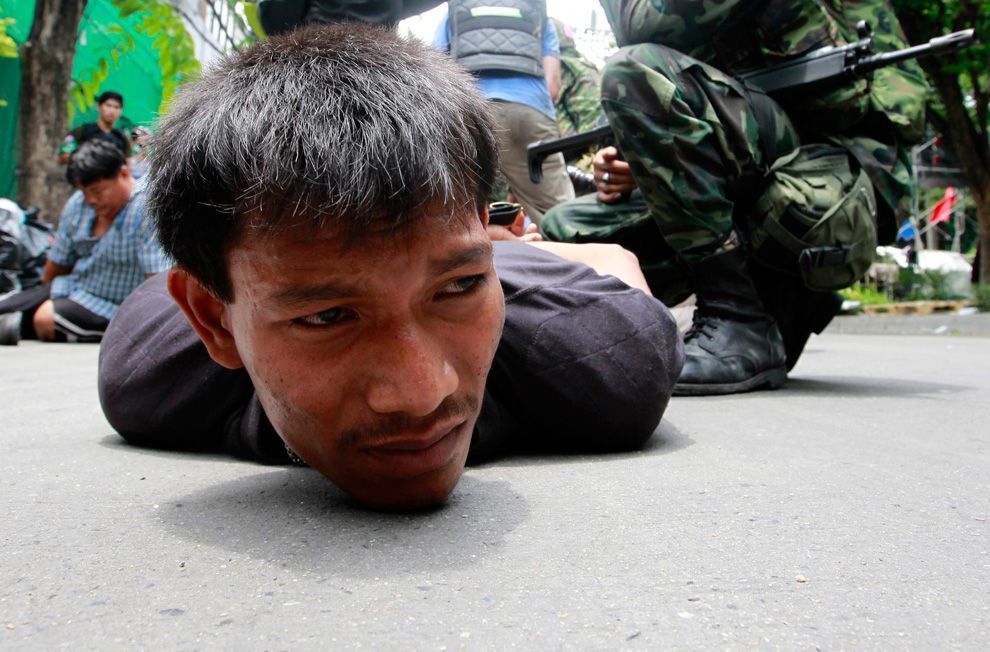
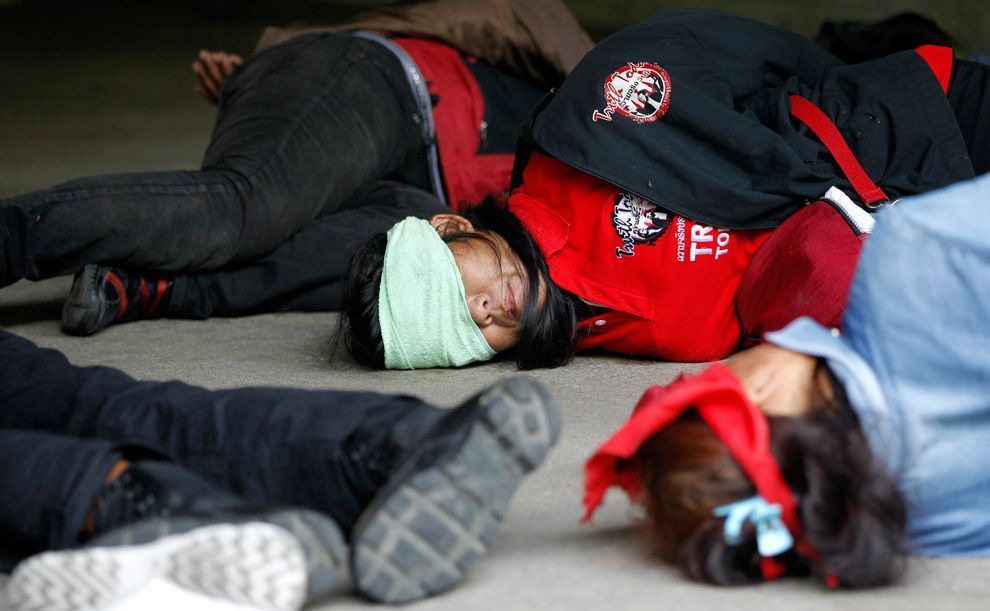
Blindfolded detainees sit on the ground during an operation to evict Red Shirt protesters from their encampment in Bangkok May 19, 2010.
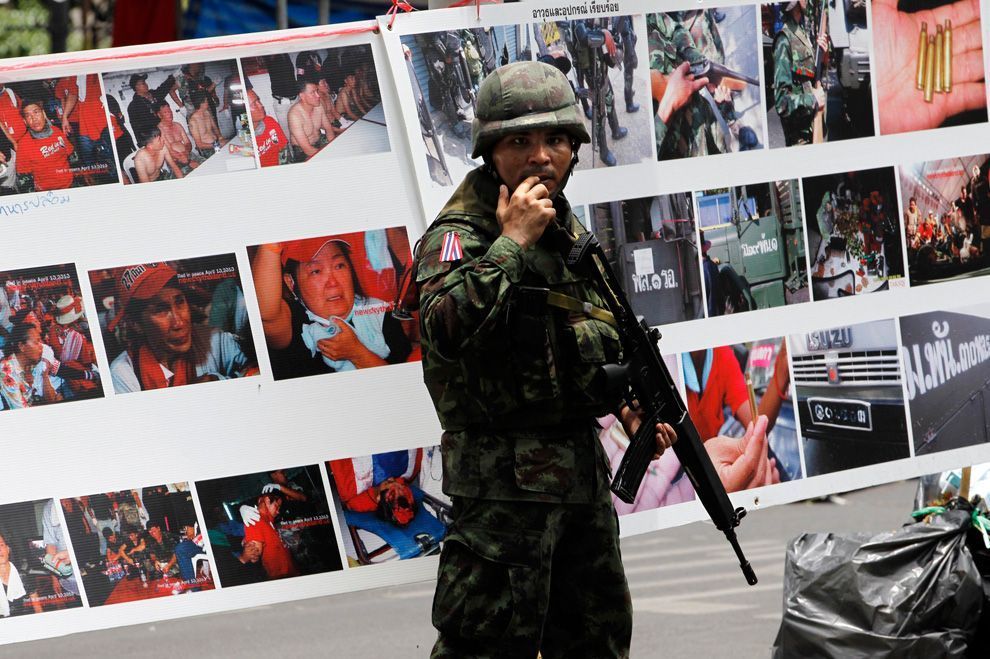
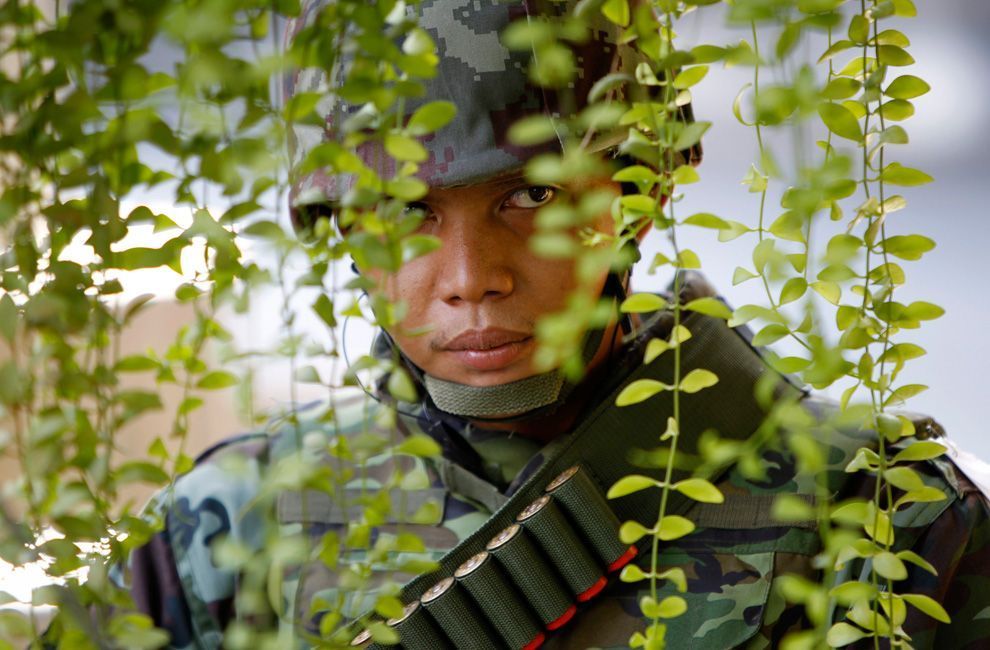
A Thai soldier stands in front of photographs put up by protesters in the Red Shirt encampment in Bangkok May 19, 2010.