Tengu (天狗 ?, "heavenly dogs") are a class of supernatural creatures found in Japanese folklore, art, theater and literature. They are one of the best known yōkai (monster-spirits) and are sometimes worshipped as Shinto kami (revered spirits or gods). Although they take their name from a dog-like Chinese demon (Tiangou), the tengu were originally thought to take the forms of birds of prey, and they are traditionally depicted with both human and avian characteristics. The earliest tengu were pictured with beaks, but this feature has often been humanized as an unnaturally long nose, which today is practically the tengu's defining characteristic in the popular imagination.
Buddhism long held that the tengu were disruptive demons and harbingers of war. Their image gradually softened, however, into one of protective, if still dangerous, spirits of the mountains and forests. Tengu are associated with the ascetic practice known as Shugendō, and they are usually depicted in the distinctive garb of its followers, the yamabushi.
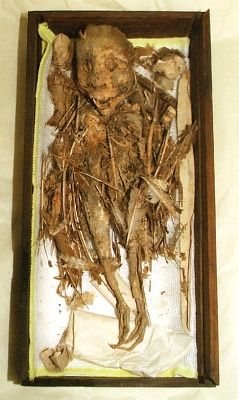
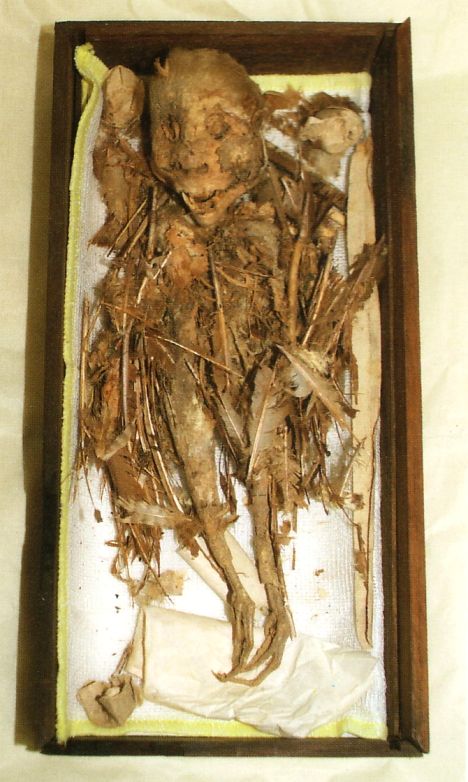
The Tengu is a legendary supernatural sky creature, a dangerous demon often depicted in art as being part human and part bird. The Hachinohe Museum (Aomori prefecture) in northern Japan is home to a tengu mummy, which is said to have once belonged to Nambu Nobuyori, a Nambu clan leader who ruled the Hachinohe domain in the mid-18th century.
The mummy, which appears to have a humanoid head and the feathers and feet of a bird, is believed to have originated in the town of Nobeoka (Miyazaki prefecture) in southern Japan. Theories suggest the tengu mummy made its way north after being passed around between members of Japan’s ruling samurai families, some of whom were deeply interested in collecting and trading these curiosities.





 )
)


