|
#1
●
02-26-2014, 10:32 AM
| ||||||||
 They Lied. There ALL LIES Poster Rank:309 <--We Did It. So Can You Join Date: Mar 2013 Posts: 4,213
Contributions: 48
Mentioned: 23 Post(s) Quoted: 894 Post(s)
| ||||||||
|
Tardigrade Goes 10 Years No Food Water
In order to understand how life might thrive on alien worlds, it helps to understand how life thrives in some of the most extreme places on Earth. And no living organism is quite as extreme as the tardigrade. Because of their stumpy appearance, tardigrades are frequently referred to as “water bears.” Under a microscope, they resemble a plump, squishy bear that waddles around on tiny little legs, each of which has a number of claw-like appendages. Generally, tardigrades only reach 1mm in length. But size isn’t everything—these tiny creatures are much tougher than your average bear. 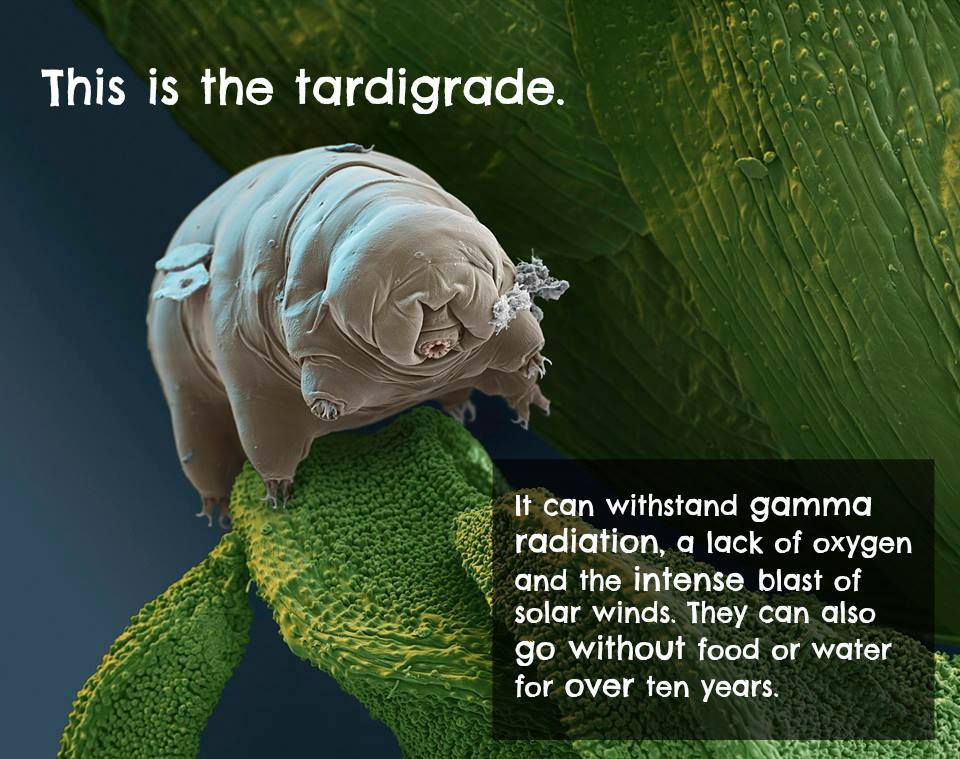 Tardigrades have been frozen and defrosted, roasted and boiled, zapped with X-Rays, placed in a vacuum, exposed to pressures far exceeding those found in the deepest ocean trenches—and lived to tell the tale. They can withstand gamma radiation, oxygen deprivation, and the intense blast of solar wind. They can go without food or water for over ten years, and live quite comfortably in temperatures far exceeding the boiling point of water or plunging to a sub-zero chill. Even when temperatures are hovering just above absolute zero (-458ºF or -272ºC), tardigrades can survive for quite some time without experiencing adverse effects. In short, they can withstand environmental conditions that would be instantly lethal to most other living organisms. 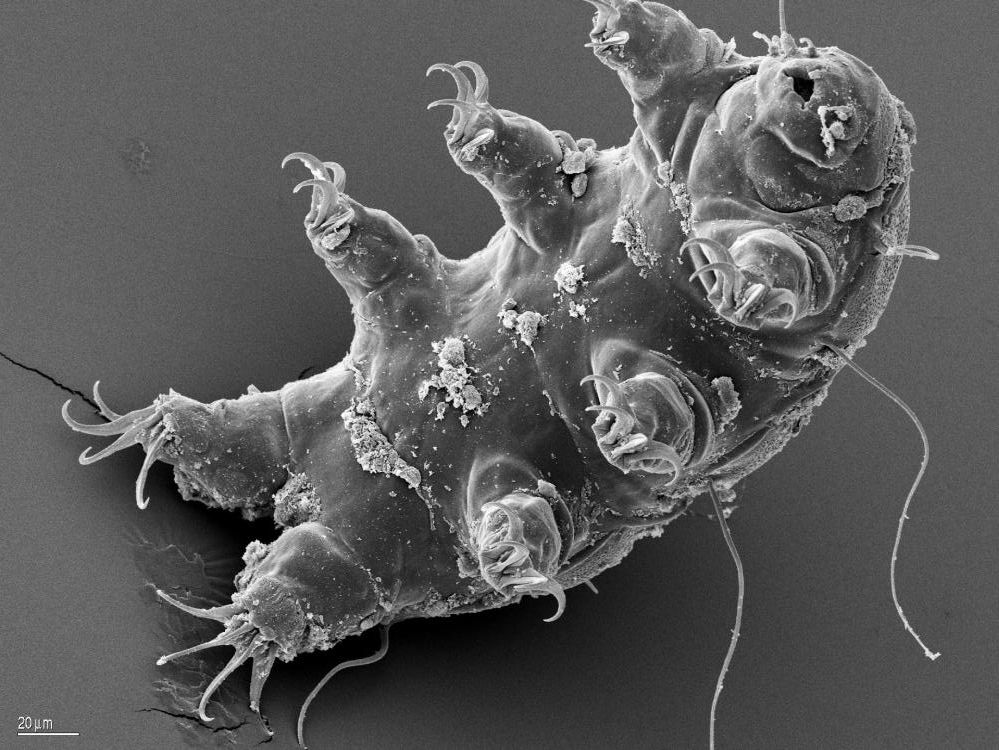 How are tardigrades able to survive such extreme environments? 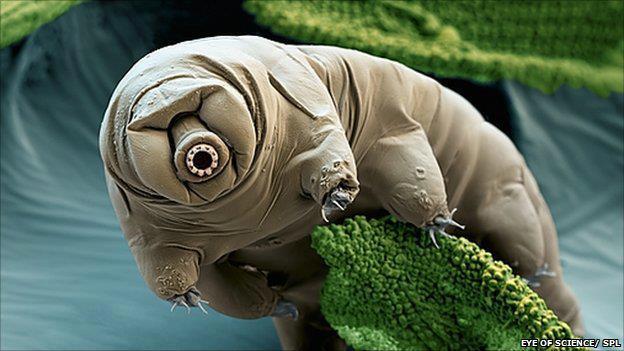 Simple. By dying (or coming rather close to it). When faced with extreme conditions, tardigrades can enter a kind of hibernation known as “cryptobiosis,” a death-like state during which the tardigrade undergoes an almost complete loss of body water (they lose over 99% of their water when in this state). Amazingly, tardigrades are able to survive in this suspended animation for a number of years. Then, when reintroduced to a more temperate environment, they recover in a matter of hours. Even more amazing, when tardigrades are in a state of cryptobiosis, they are almost completely impervious to environmental hazards. And there’s some hope in that. The fact that tardigrades are able to survive in such inhospitable places is, quite frankly, rather inspiring. As it turns out, many alien worlds have conditions that are inhospitable to earthlings (read: ridiculously lethal). However, the tardigrade ultimately allows us to assert that these worlds are lethal to most earthlings… but not all. If such a resilient creature developed on our own pale blue dot, who knows what wonders may live on other worlds. |
|
#5
●
03-01-2014, 09:57 PM
| ||||||||
| My Rank: LANCE CORPORAL Poster Rank:2399 Join Date: Feb 2010 Posts: 188 Mentioned: 0 Post(s) Quoted: 12 Post(s)
| ||||||||
|
Re: Tardigrade Goes 10 Years No Food Water
There is acutally really interesting type of gazelle that can go its entire life without drinking any actual water. All moisture it consumes basically comes from plants. http://listverse.com/2013/11/29/10-e...s-and-animals/ its Number 10
|
|
#6
●
03-02-2014, 04:12 AM
| ||||||||
| So Fucking Banned Poster Rank:589 BLACK SKULLS SHATTER Join Date: Apr 2013 Posts: 1,628
Contributions: 1
Mentioned: 5 Post(s) Quoted: 340 Post(s)
| ||||||||
|
Re: Tardigrade Goes 10 Years No Food Water
Those little bastard's is the real Terminator.
|
|
#8
●
01-24-2015, 09:14 AM
| ||||||||
 ★ Legacy Member ★ Poster Rank:22 Join Date: Oct 2009 Posts: 60,085
Contributions: 26
Mentioned: 400 Post(s) Quoted: 31502 Post(s)
| ||||||||
|
Re: Tardigrade Goes 10 Years No Food Water
5 Reasons Why The Tardigrade Is Nature’s Toughest Animal 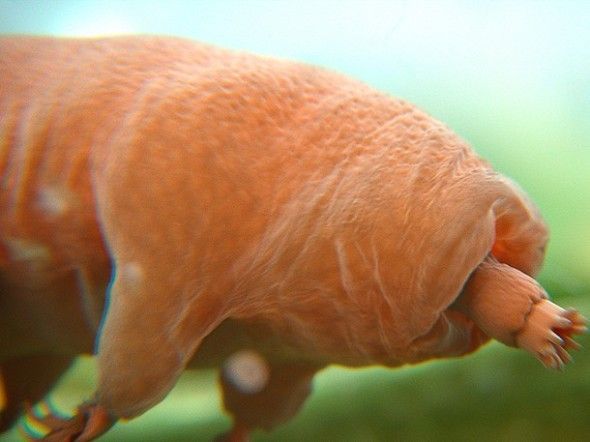 Earth’s most tenacious creature can live in boiling water, solid ice, and the intense radiation of space. It can survive a decade in a desert, without a drop of water to drink, or in the deepest trenches of the sea. Meet the tardigrade.  This week on COSMOS: A Spacetime Odyssey, Neil deGrasse Tyson introduced viewers to the tardigrade, or the water bear. The small aquatic invertebrates are nearly invincible, able to tolerate conditions and temperatures that would kill nearly any other living creature.  So what gives the tiny tardigrade its enormous strength? Find out below. 1. Tardigrades change form to survive without water. When faced with extreme conditions, tardigrades can dry out completely, replacing almost of the water in their bodies with a sugar called trehalose. As a result, they're able to survive environments that would otherwise kill them.  2. Tardigrades’ minuscule size hides them from predators. For all their resilience, the tardigrade is one of nature’s smallest creatures. Barely the size of a poppy seed at less than 1.5 millimeters long, the tardigrade can exist hidden in sediments and seas, unnoticed by potential predators.  3. Tardigrades’ mouths contain sharp daggers. Though they may be little, they are fierce! The tardigrade’s mouth is a serious weapon, its dagger-like teeth used to spear algae and even other small animals.  4. Tardigrades traveled to space – and survived. To test the true resilience of tardigrades, Swedish researcher K. Ingemar Jonsson from Kristianstad University launched tardigrades into space on the FOTON-M3 spacecraft on low-Earth orbit in 2007. Exposed to open space conditions, most of the tardigrades survived exposure to vacuum and cosmic rays, with some even surviving deadly levels of UV radiation.  5. They’ve been around longer than nearly every other living organism. Tardigrades roamed the earth and seas far before humans did – and will most likely outlast us. Will the tardigrades be nature’s last organisms standing? Only time will tell.  |