|
#1
●
04-04-2013, 02:21 PM
| ||||||||
 My Rank: MASTER SERGEANT Poster Rank:571 M Join Date: Feb 2011 Posts: 1,724
Contributions: 1
Mentioned: 1 Post(s) Quoted: 47 Post(s)
| ||||||||
|
Tarantula The Size Of A Human Face Discovered
Scientists have found an enormous, previously unknown, species of venomous spider in a remote Sri Lankan village. Its legs, which have unique daffodil-yellow markings, span a massive 20cm (eight inches). The arachnid also has a distinctive pink band around its body. The new species was found in the war-torn north of the South Asian country by scientists from Sri Lanka's Biodiversity Education and Research (BER) organisation. It has been named Poecilotheria rajaei, in recognition of a senior police officer called Michael Rajakumar Purajah, who guided the research team through a hazardous jungle overrun by civil unrest in order to seek out the spider. The arachnid had originally been presented to BER three years ago by villagers in Mankulam, who had killed a male specimen. Scientists immediately realised the dead spider was not like anything they already knew and a group was charged with finding any living relatives. The living Poecilotheria rajaei were eventually discovered in the former doctor's quarters of the village's hospital. According to wired.com, Ranil Nanayakkara, the co-founder of BER, said: "They are quite rare. "They prefer well-established old trees, but due to deforestation the number have dwindled and due to lack of suitable habitat they enter old buildings." The website described the tarantula as "colourful, fast and venomous". The species is said to be related to a class of South American tarantula that includes the Goliath bird-eater, one of the world's largest spiders. In other reports Mr Nanayakkara is quoted as saying none of the tarantulas found in Sri Lanka have bites that are deadly to humans. However, the Poecilotheria rajaei would be able to kill animals as large as mice, lizards and small birds and snakes. Peter Kirk, who covered the discovery for the British Tarantula Society's journal, told Sky News: "Ranil has been working on these spiders since 2009 out in Sri Lanka and this is the first of what is thought to be a number of new species he has discovered in what was previously the inaccessible northern region of the island. "It demonstrates that wildlife continues to survive whilst we are in the throes of conflict and that they can adapt to its changing environment - but also highlights that we risk destroying the habitats of species new to science and condemning them to extinction before they are even discovered."  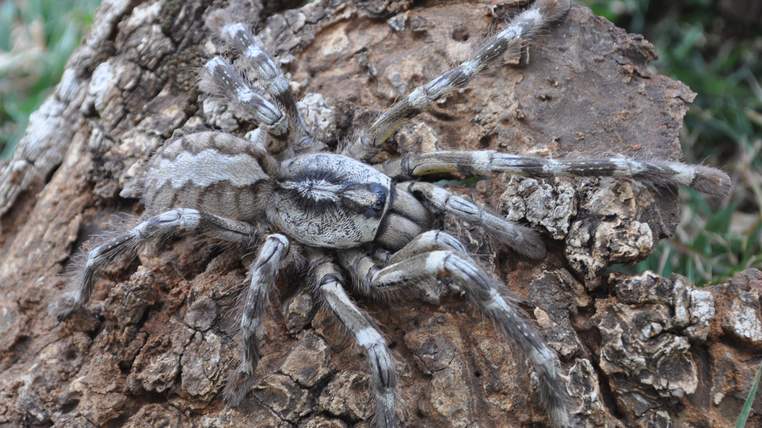 · |
|
#2
●
04-04-2013, 02:49 PM
| ||||||||
 My Rank: MASTER SERGEANT Poster Rank:424 Join Date: Jun 2011 Posts: 2,775
Contributions: 3
Mentioned: 13 Post(s) Quoted: 471 Post(s)
| ||||||||
|
Re: Tarantula The Size Of A Human Face Discovered
I love spiders, when they are on a tv screen or in photos. Would hate to run into that fucker
|
|
#3
●
04-05-2013, 05:47 PM
| ||||||||
 ★ Legacy Member ★ Poster Rank:340 Male Join Date: Mar 2010 Posts: 3,794 Mentioned: 0 Post(s) Quoted: 28 Post(s)
| ||||||||
|
Re: Tarantula The Size Of A Human Face Discovered
lol i have just signed on to add this on the news section, good job i checked here first!! cool isnt it!! http://news.nationalpost.com/2013/04...-in-sri-lanka/ If you thought that tarantulas weren’t terrifying enough, scientists have now discovered a new kind of tarantula about the same size as a human face. The Poecilotheria rajaei, discovered in Sri Lanka, was at first thought to be a subspecies of another known type of spider. “This species has enough significant differences to separate it from the other species,” Peter Kirk, the editor of the British Tarantula Society‘s journal, told Wired. The BTS published a paper on the Poecilotheria rajaei in late December. The spider’s distinctive leg markings and grey inlays are what sets it apart from other tarantulas. However, arachnologist Robert Raven, curator at the Queensland Museum in Australia, told Wired he isn’t quite sure the spider is a new species quite yet, though he says the team did a good job detailing the arachnid. “The description and figures are excellent and will provide a good basis for establishing whether it is a good species,” he told Wired. The spider was first spotted scientifically by Ranil Nanayakkara, who led a survey for the spider. In 2009, a local villager gave Nanayakkara and his team a dead specimen the team didn’t recognize. Which is when they decided on a spider hunt. “They are quite rare,” Nanayakkara told Wired. “They prefer well-established old trees, but due to deforestation the number have dwindled and due to lack of suitable habitat they enter old buildings.” The spider is also venomous, though it isn’t thought to be fatal to most humans.  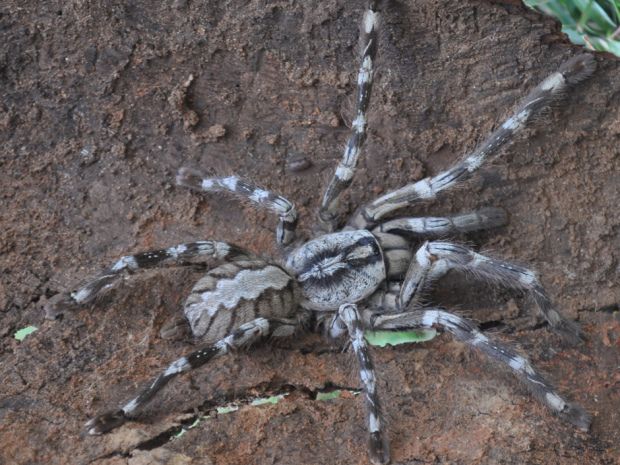 · |
|
#4
●
04-05-2013, 07:37 PM
| ||||||||
 Born in the USA Poster Rank:126 100% female Join Date: Jul 2012 Posts: 12,876
Contributions: 1
Mentioned: 81 Post(s) Quoted: 1799 Post(s)
| ||||||||
|
Re: Tarantula The Size Of A Human Face Discovered
Beautiful specimens. That 1st pic incredible! |
|
#5
●
04-05-2013, 07:57 PM
| ||||||||
 My Rank: MAJOR Poster Rank:203 Join Date: Jan 2010 Posts: 7,658
Contributions: 5
Mentioned: 22 Post(s) Quoted: 2389 Post(s)
| ||||||||
|
Re: Tarantula The Size Of A Human Face Discovered
I love spiders! I have owned 3 tarantulas in my lifetime. I want one of these! This does make me want to go out and get one now.
|





 They never cease to enchant me.