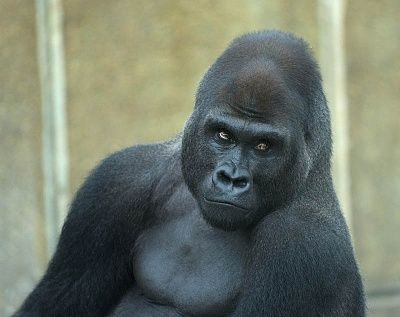
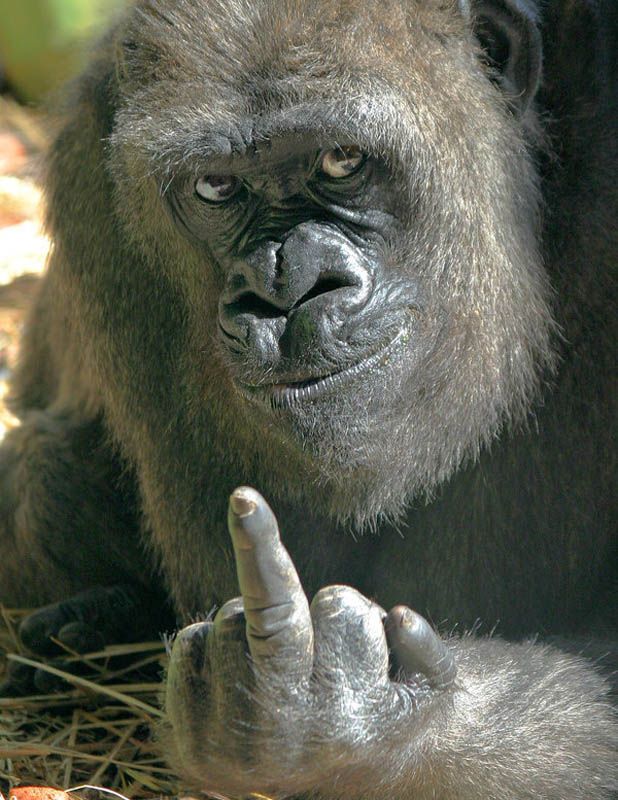
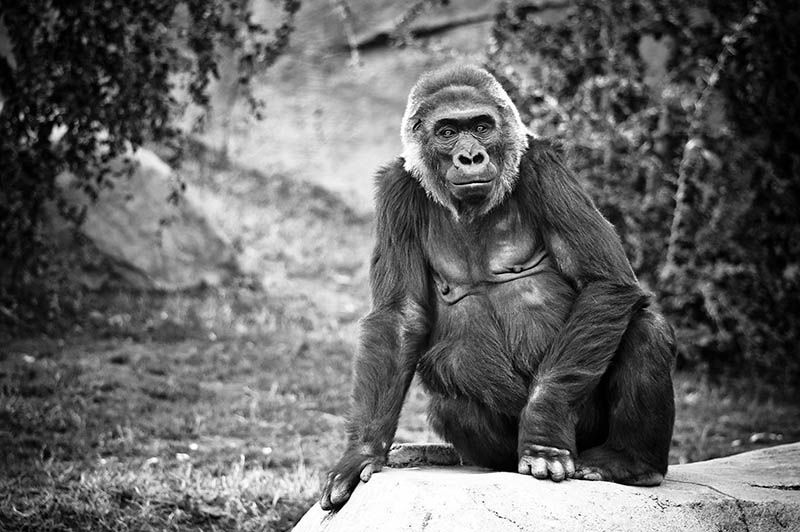
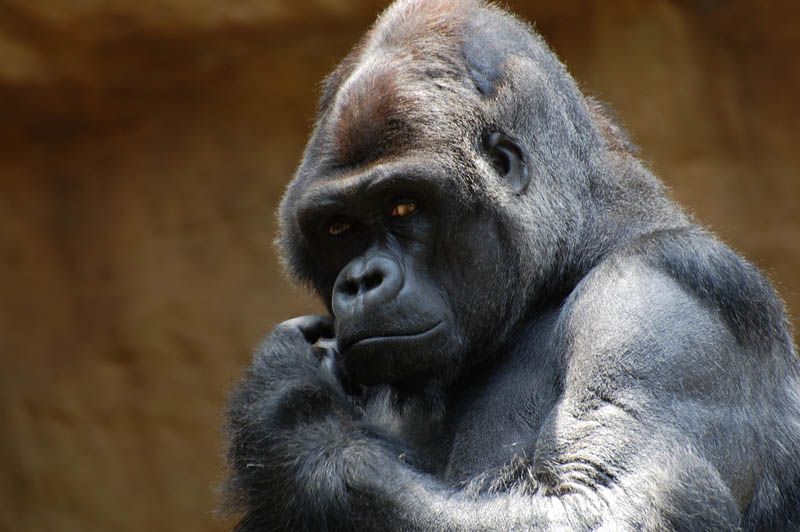
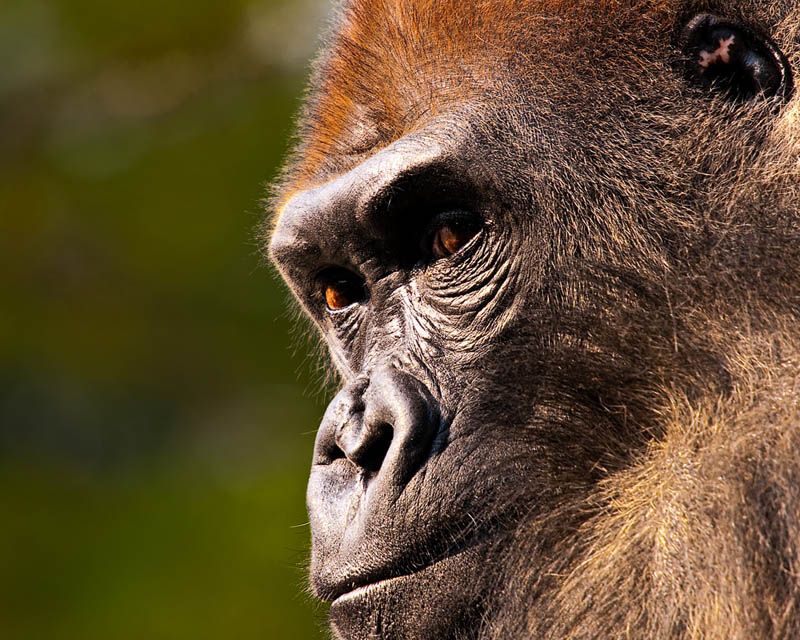
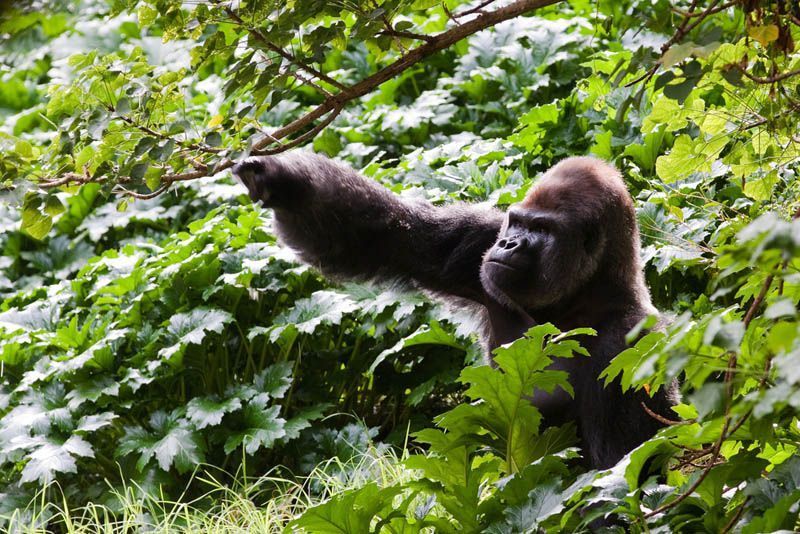
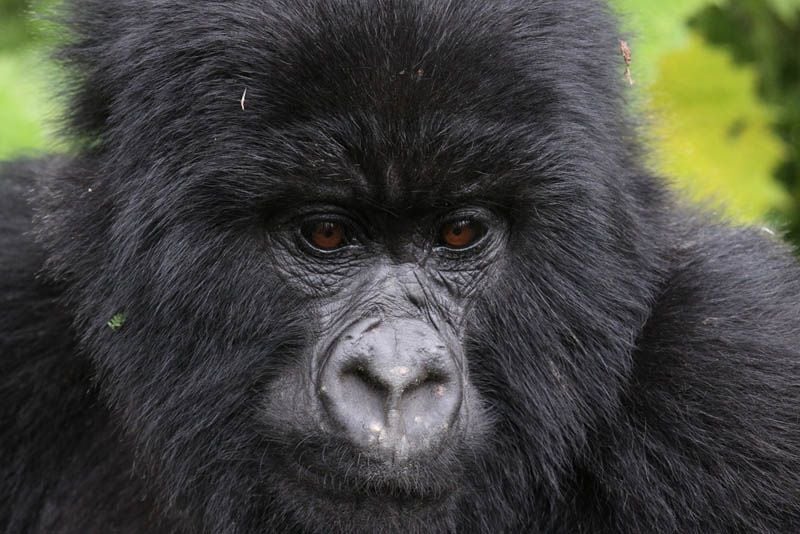
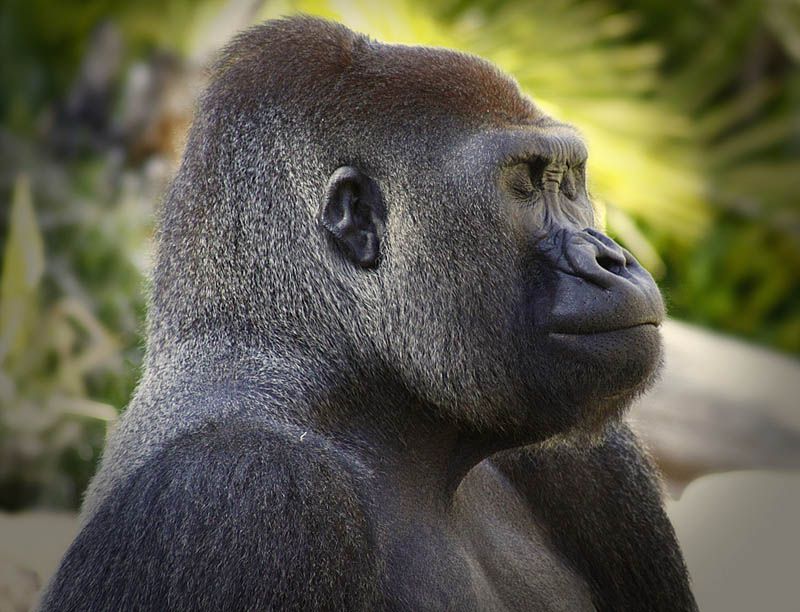
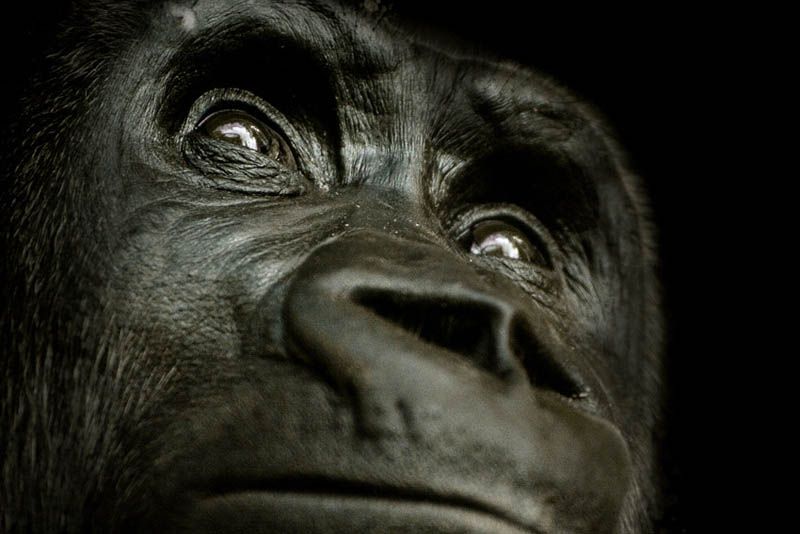
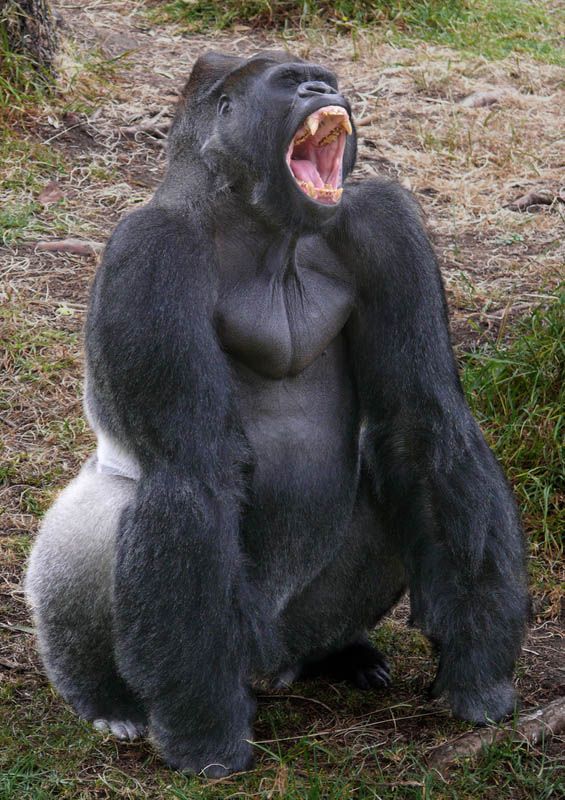
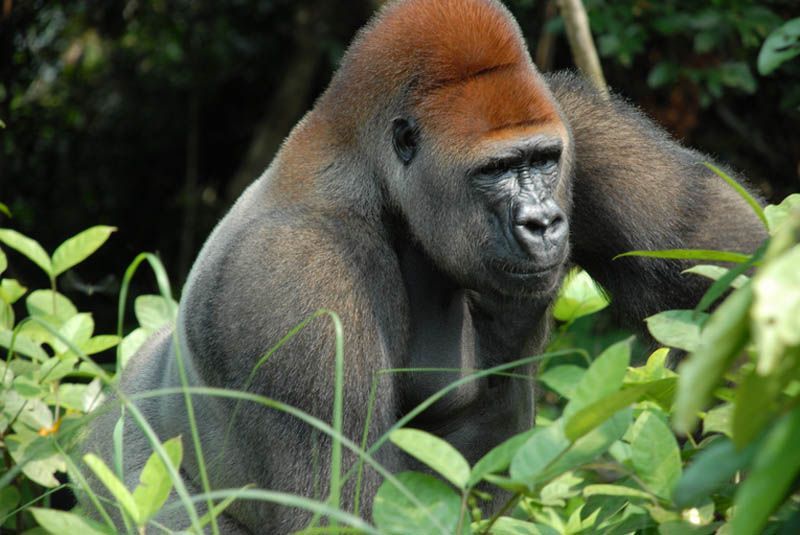
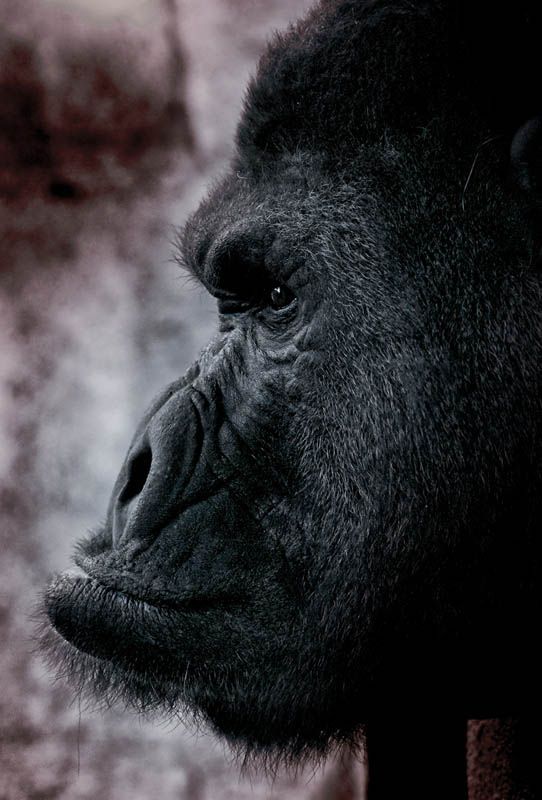
Gorillas are the world’s largest primates and the closest living relatives to humans next to the chimpanzee. They are magnificent creatures with above average intelligence. Their facial expressions can be hauntingly human-like and unfortunately they are an endangered species.
The DNA of gorillas is highly similar to that of a human, from 95-99% depending on what is counted. They are the next closest living relatives to humans after the two chimpanzee species, with all of the Hominidae having diverged from a common ancestor about 7 million years ago.
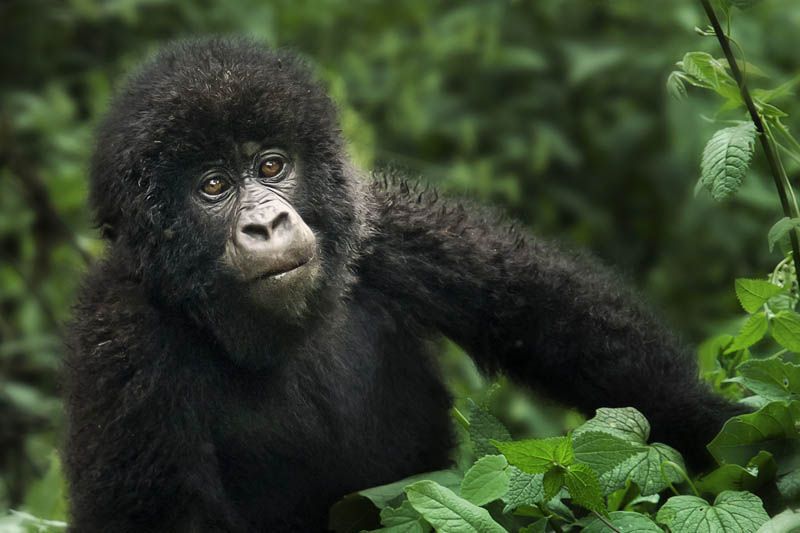
There are now thought to be over 100,000 western lowland gorillas in the wild, with 4,000 in zoos; eastern lowland gorillas have a population of 4,000 in the wild and 24 in zoos. Mountain Gorillas are the most severely endangered, with an estimated population of about 620 left in the wild and none in zoos.
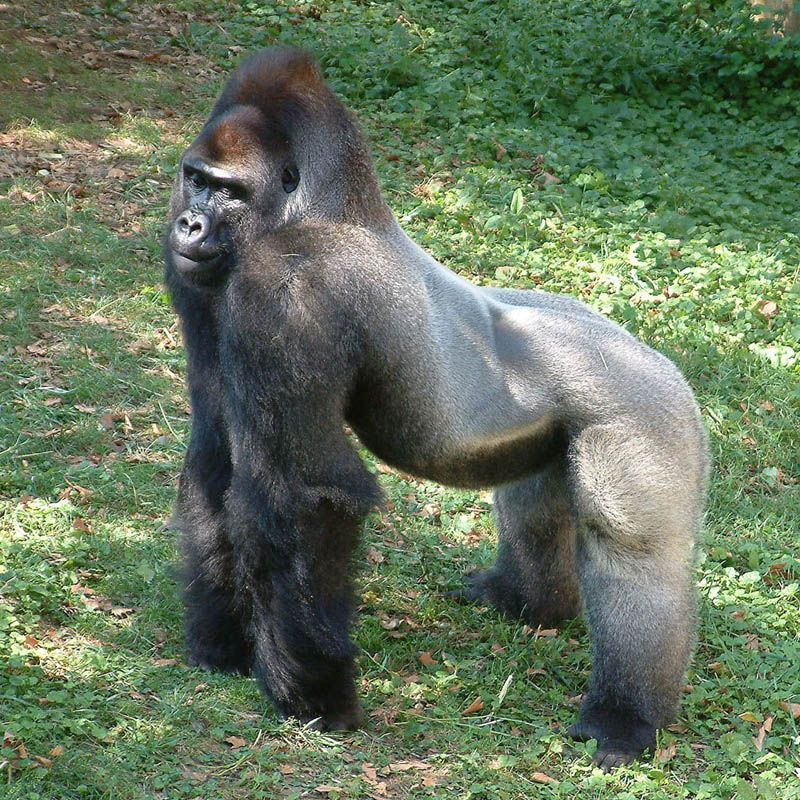
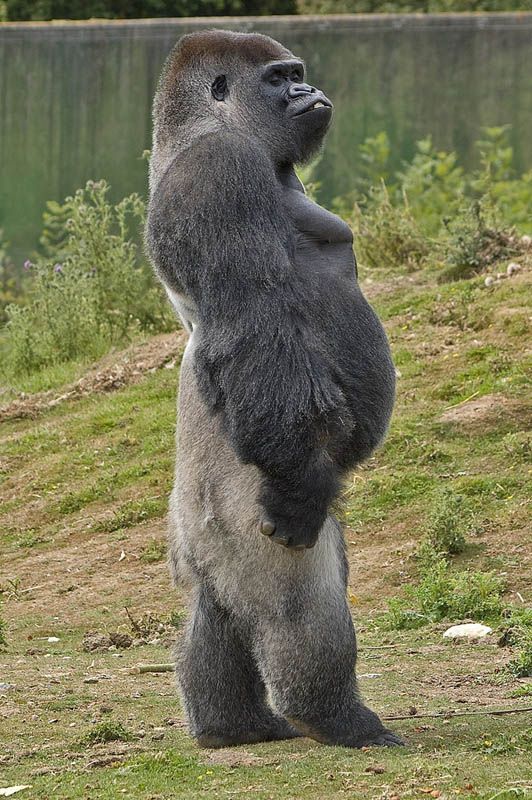
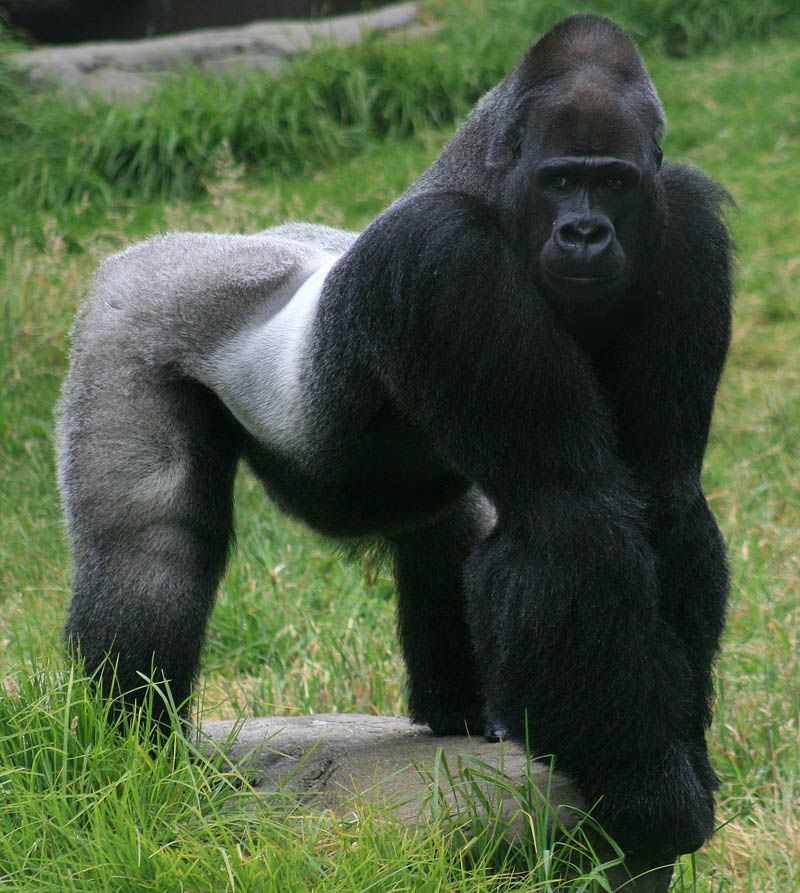
Gorillas move around by knuckle-walking, although they sometimes walk bipedally for short distances while carrying food or in defensive situations. Knuckle-walking is a form of quadrupedal walking in which the forelimbs hold the fingers in a partially flexed posture that allows body weight to press down on the ground through the knuckles. Gorillas and chimpanzees use this style of locomotion as do anteaters and platypuses.
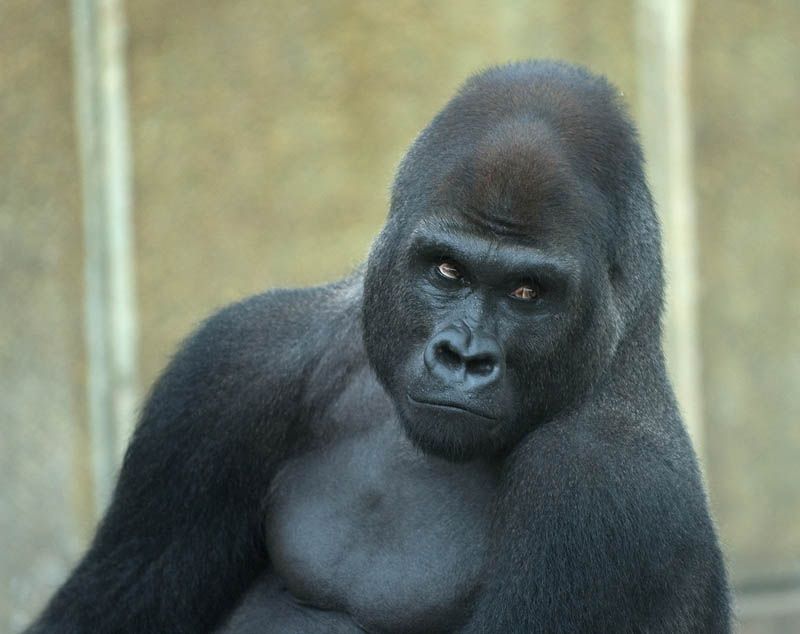
Adult males range in height 1.65–1.75 metres (5 ft 5 in–5 ft 9 in), and in weight 140–200 kg (310–440 lb). Adult females are often half the size of, averaging about 1.4 metres (4 ft 7 in) tall and 100 kg (220 lb).
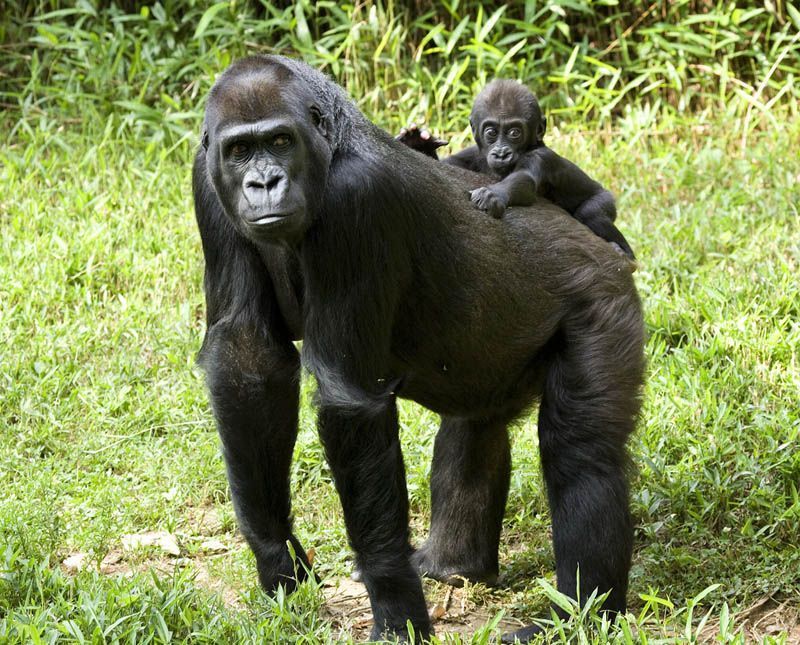
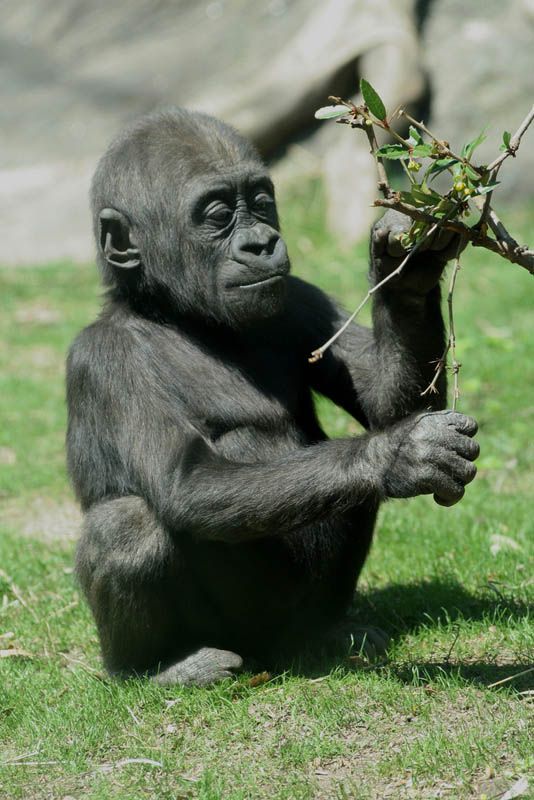
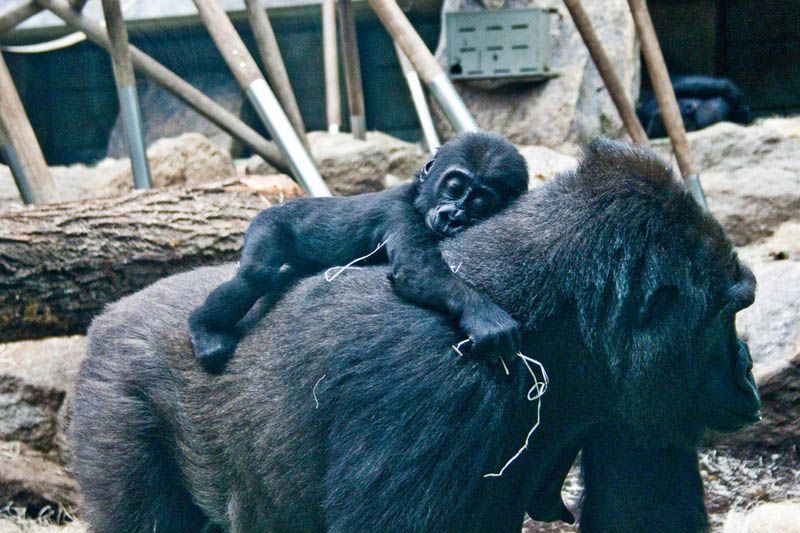
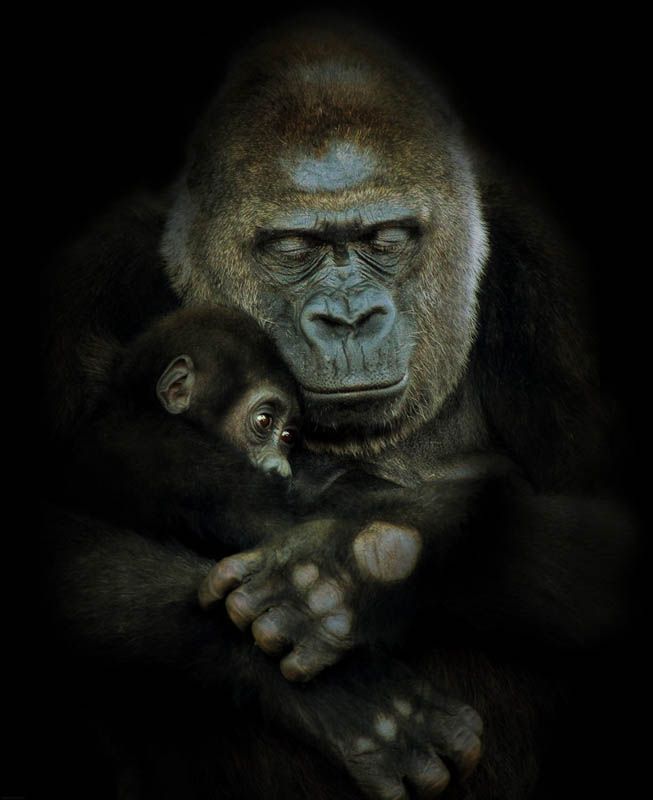
Gorilla infants are vulnerable and dependant and thus mothers, their primary caregivers, are important to their survival. Gorilla mothers invest years caring for their offspring. Male gorillas are not active in caring for the young. However they do play a role in socializing them as they will associate with older infants and juveniles.
A group of gorillas living together is called a “troop.” There can be 5 to 30 gorillas in one troop, led by a strong, experienced male known as a “silverback.” His job is a big one. He is responsible for the safety and well being of the members of his troop. The silverback makes all the decisions, such as where the troop will travel for food each day, when they will stop to eat or rest, and where they will spend the night.
Females mature at 10–12 years (earlier in captivity); males at 11–13 years. Lifespan is between 30–50 years, although there have been exceptions.


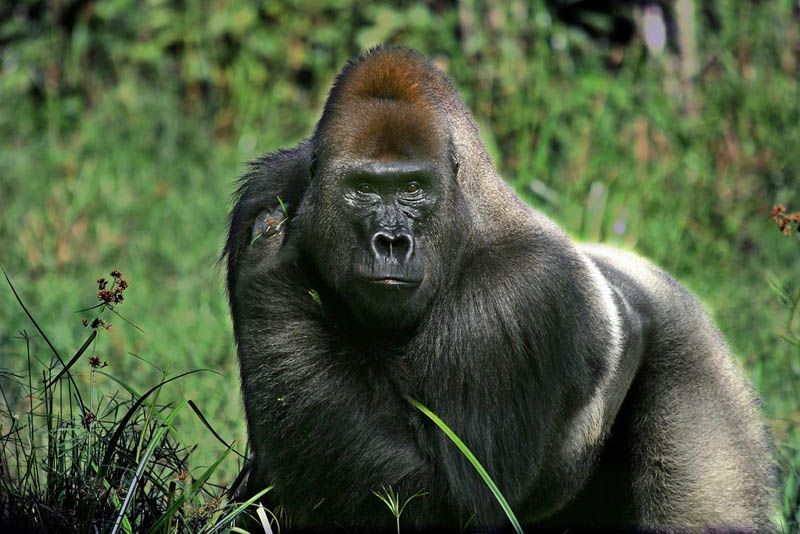
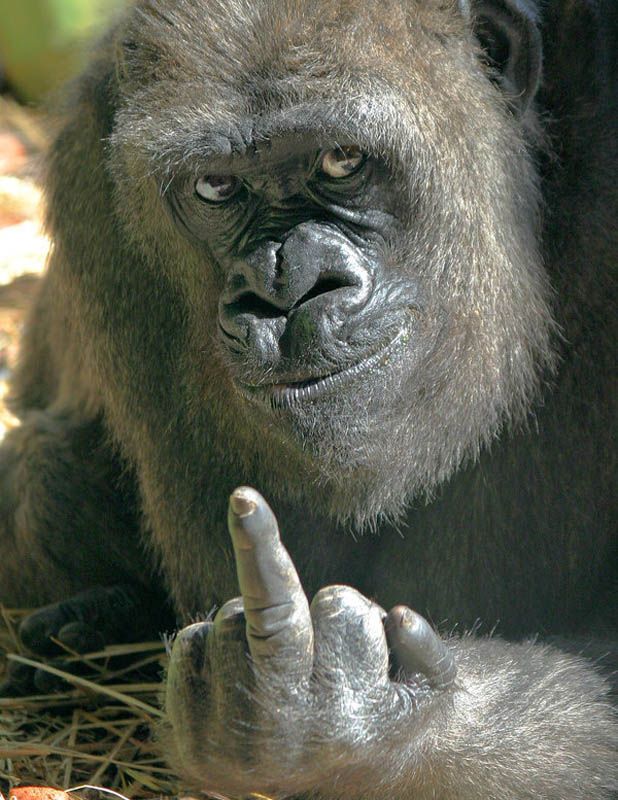
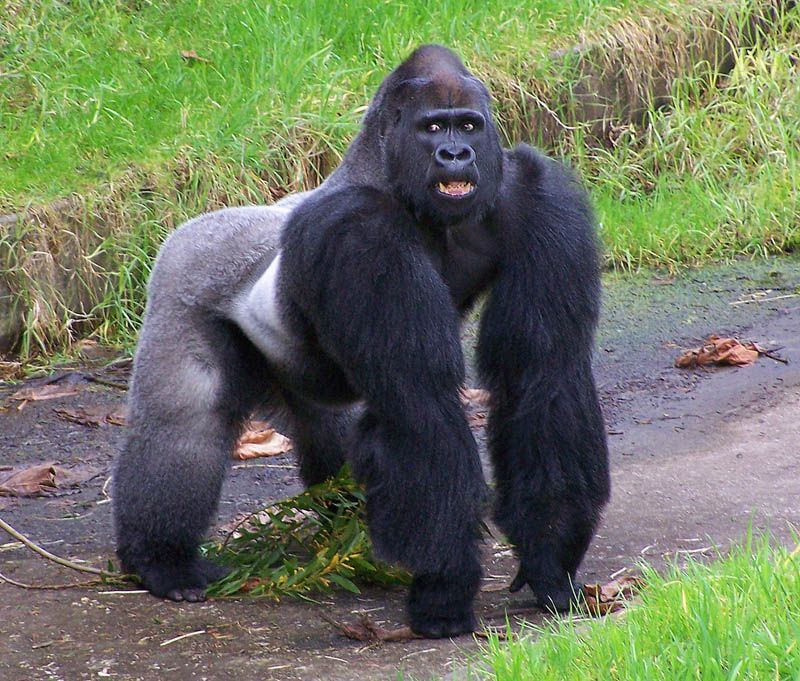
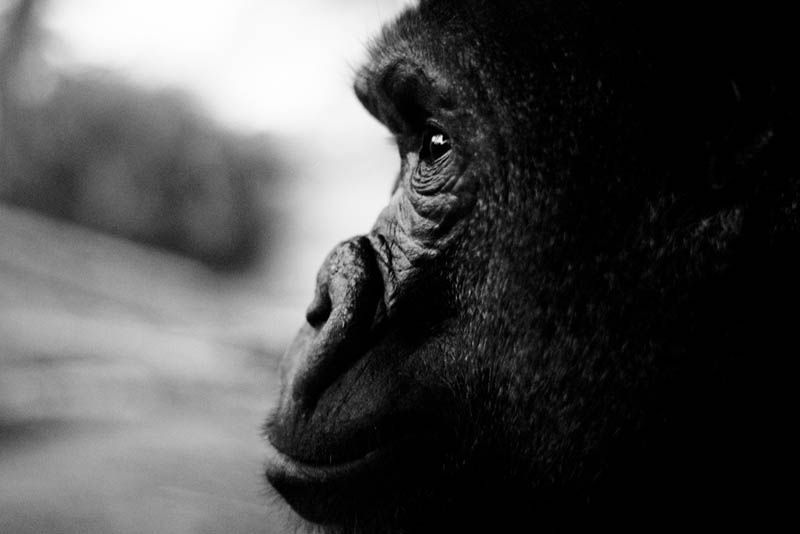





 "Can I help you!?"