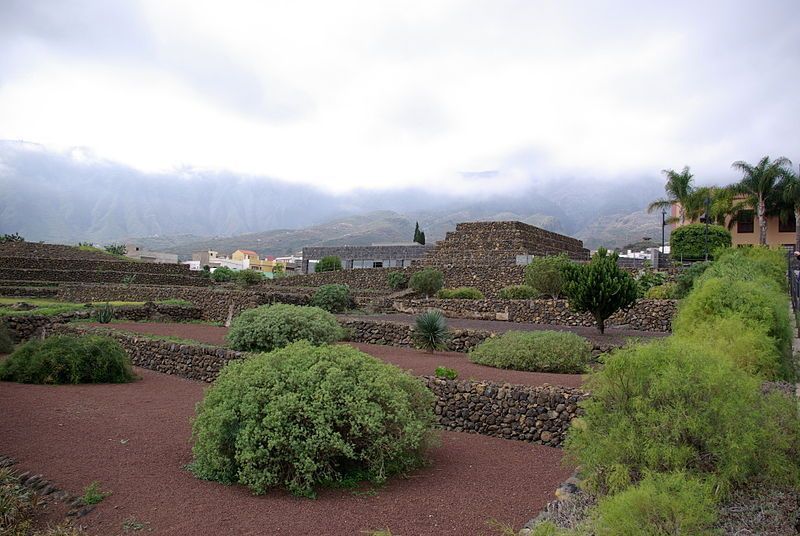
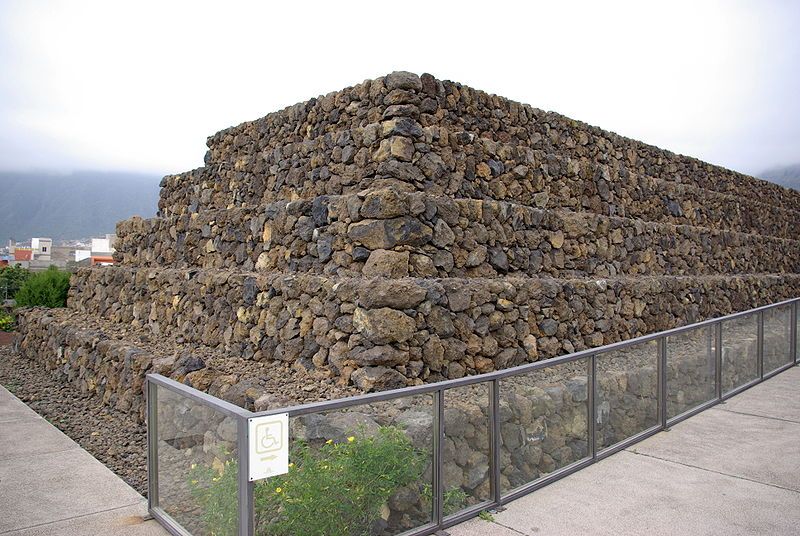
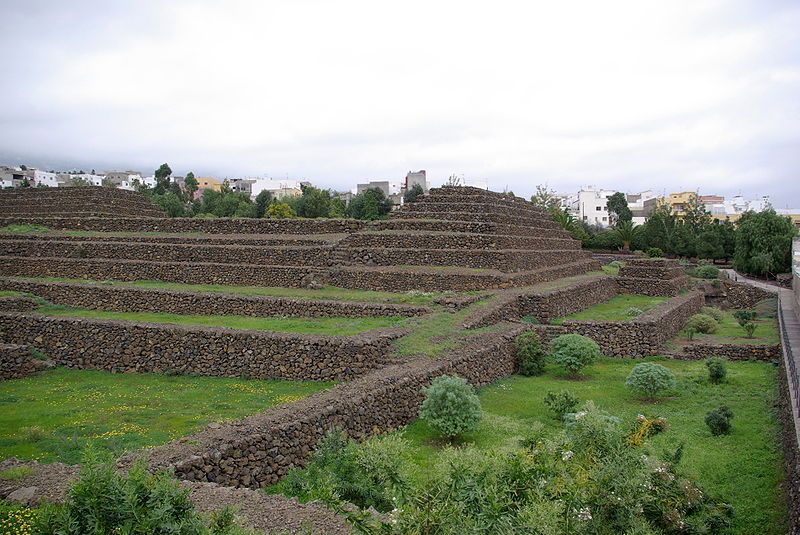
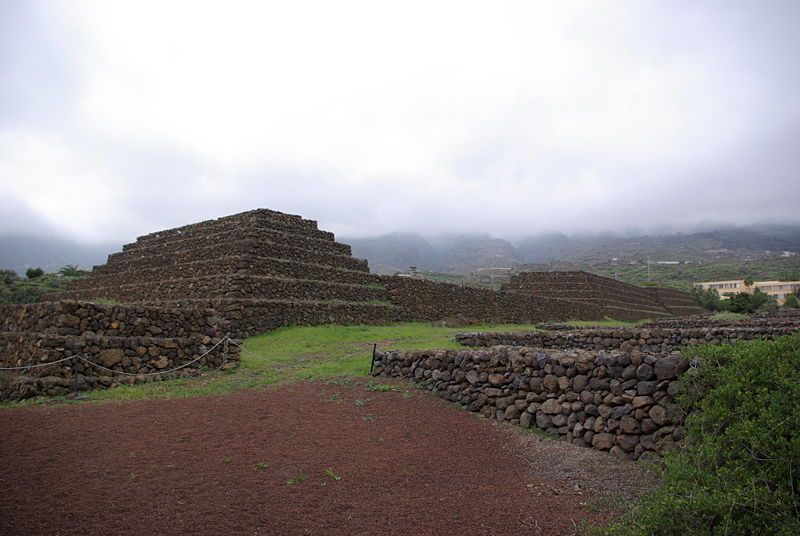
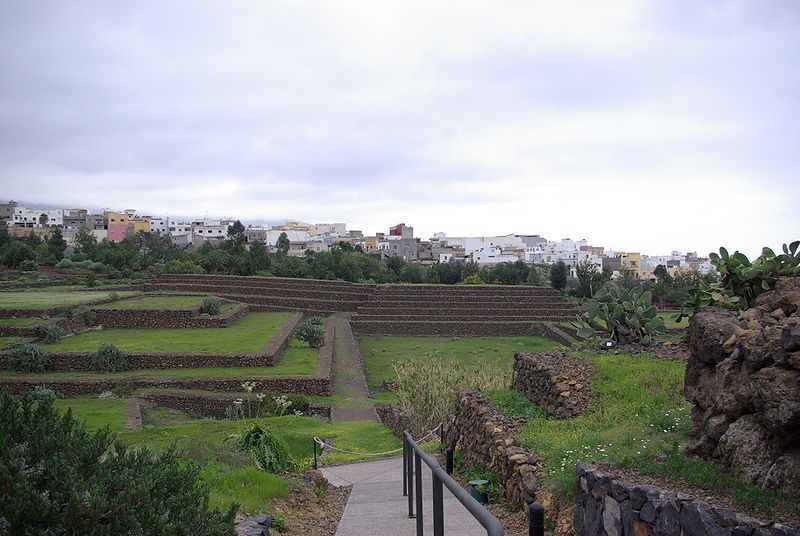
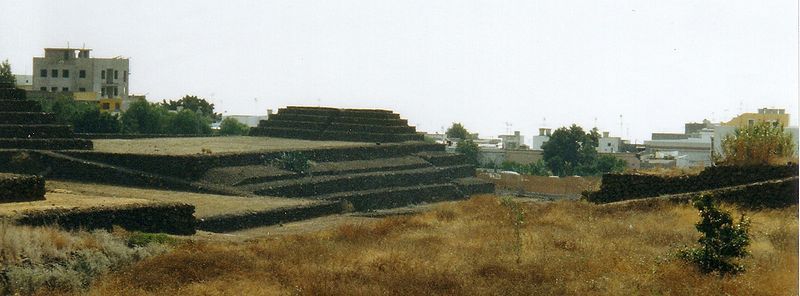
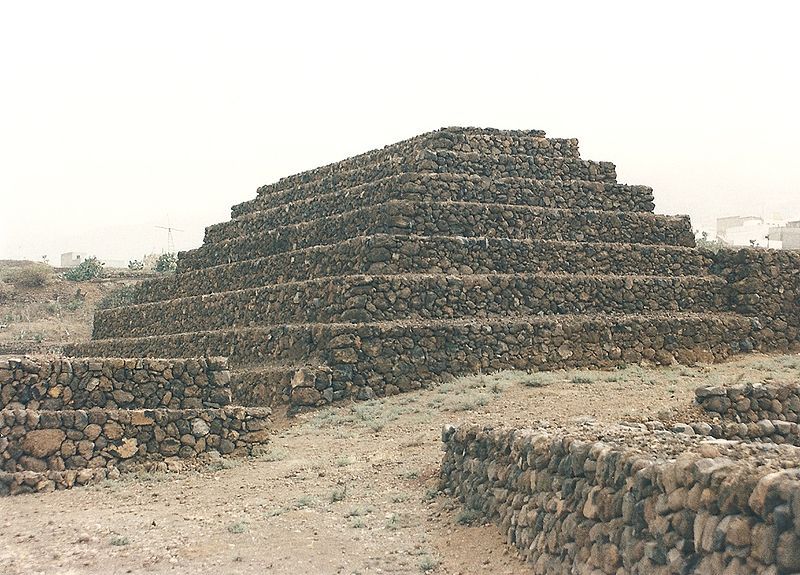
The Pyramids of Güímar refer to six rectangular pyramid-shaped, terraced structures, built from lava stone without the use of mortar. They are located in the district of Chacona, part of the town of Güímar on the island of Tenerife in the Canary Islands. The structures have been dated to the 19th century and their original function explained as a byproduct of contemporary agricultural techniques.
Local traditions as well as surviving images indicate that similar structures (also known as, "Morras", "Majanos", "Molleros", or "Paredones") could once have been found in many locations on the island. However, over time they have been dismantled and used as a cheap building material. In Güímar itself there were nine pyramids, only six of which survive.
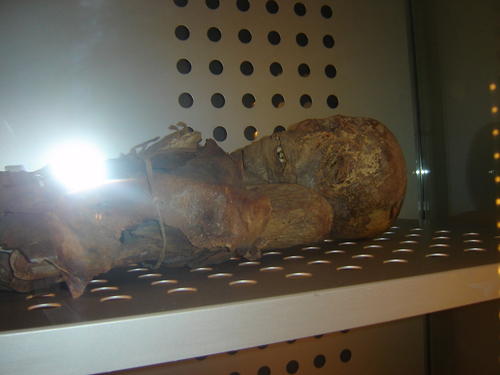
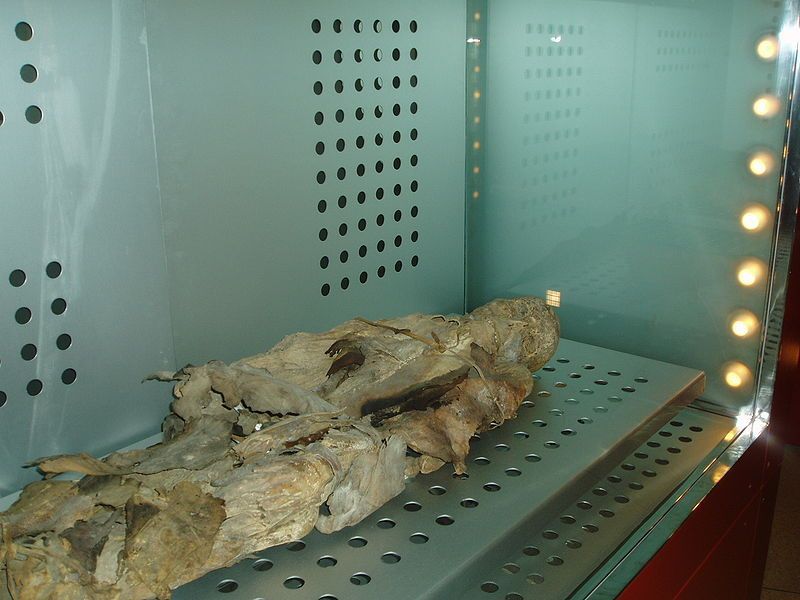
The Guanches, the ancient inhabitants of the Canary Islands (Spain) mummified their dead.
This practice was intended to preserve the body of the deceased through embalming techniques similar to those performed in other ancient civilizations. Its purpose, linked to their religious beliefs, was to protect the body and also to distinguish the social relevance. The method used by the aborigines of the island of Tenerife was more perfect, because their mummies are the best preserved and most famous of the islands and Spain.
Significantly Guanche mummification is in many respects similar to that practiced by the ancient Egyptians. To preserve the bodies of corruption in the process took great care, body, and above all kept a special memory and honor the dead. Mummification blackbirds, as they called the early Spanish chroniclers of the "Fortunate Islands" (Canary Islands), was not in general use among the Guanche population, there are several processes that show some gradation in practice correspond to a funeral and social difference economic relationship between the different castes of society. Naturally, the mummies of their kings (Menceyes) were older than those receiving care in mummification. The Guanches as the ancient Egyptians often kept in the viscera of their kings "menceyes".
In 1933, the largest Guanche necropolis of the Canary Islands was found, the Guanche necropolis of Uchova in the municipality of San Miguel de Abona in the south of the island of Tenerife. This cemetery was almost completely looted, it is estimated that between 74 and 60 contained Guanche mummies.
The Museum of Nature and Man (Archaeological Museum of Tenerife), Santa Cruz de Tenerife, exhibits some of these mummies (Mummy of San Andrés), which for centuries were the subject of collecting and scientific curiosity in Europe. The Museum of Nature and Man is a world reference in regard to preservation of mummies. The Museo Nacional de Antropología de Madrid presents a Guanche mummy is now claimed by the Cabildo of Tenerife, after a few years ago made a law in the Canary Islands to return the canary heritage that is outside the archipelago.