awaharlal Nehru (Hindi: जवाहरलाल नेहरू, pronounced [dʒəʋaːɦərˈlaːl ˈneːɦruː]; 14 November 1889–27 May 1964) was an Indian statesman who was the first (and to date the longest-serving) prime minister of India, from 1947 until 1964. A leading figure in the Indian independence movement, Nehru was elected by the Congress Party to assume office as independent India's first Prime Minister, and re-elected when the Congress Party won India's first general election in 1952. As one of the founders of the Non-aligned Movement, he was also an important figure in the international politics of the post-war era. He is frequently referred to as Pandit Nehru ("pandit" being a Sanskrit and Hindi honorific meaning "scholar" or "teacher") and, specifically in India, as Panditji (with "-ji" being a suffix to the honorific).
The son of a wealthy Indian barrister and politician, Motilal Nehru, Nehru became a leader of the left wing of the Indian National Congress when still fairly young. Rising to become Congress President, under the mentorship of Mahatma Gandhi, Nehru was a charismatic and radical leader, advocating complete independence from the British Empire. In the long struggle for Indian independence, in which he was a key player, Nehru was eventually recognized as Gandhi's political heir. Throughout his life, Nehru was also an advocate for Fabian socialism and the public sector as the means by which long-standing challenges of economic development could be addressed by poorer nations.
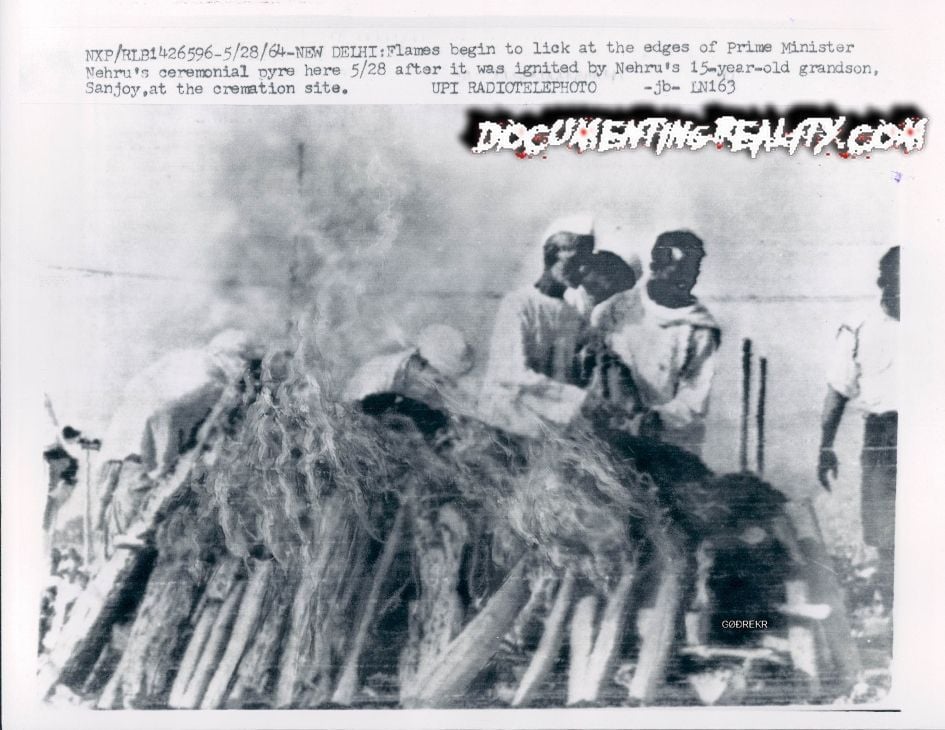
in May 1964, Nehru suffered a stroke and later a heart attack. He died in the early hours of 27 May 1964. Nehru was cremated in accordance with Hindu rites at the Shantivana on the banks of the Yamuna River, witnessed by hundreds of thousands of mourners who had flocked into the streets of Delhi and the cremation grounds.