|
#4
●
01-09-2009, 12:45 PM
|
 My Rank: SERGEANT Poster Rank:1231 Join Date: Nov 2008 Posts: 514 514Posts 135Thanked 2Quoted 1Mentioned 0Contrib. |
|
Re: Polar/Grizzly Hybrid
$50,000 to hunt a bear? I can hunt deer in my backyard for $23.75 and the meat is better!
__________________ -The anticipation of death is worse than death itself- |
|
#6
●
01-21-2009, 12:55 AM
|
 My Rank: PRIVATE Poster Rank:9934 Join Date: Jan 2009 Posts: 14 14Posts 5Thanked 0Quoted 0Mentioned 0Contrib. |
|
Re: Polar/Grizzly Hybrid
anyone else get the impression from the article that polar bears are rather endangered....yet for 50k I can hunt and kill one for the hell of it? how does that make any sense at all...
|
|
#8
●
05-12-2010, 09:27 PM
|
 TROLLBEGONE!!!!! Poster Rank:23 female Join Date: Feb 2009 Posts: 59,614 59,614Posts 34,256Thanked 10,860Quoted 70Mentioned 0Contrib. |
|
Re: Polar/Grizzly Hybrid
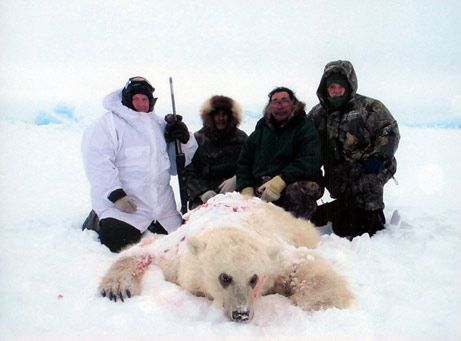
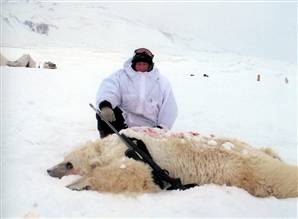
and other species can not? When polar bears and grizzlies breed, they can produce fertile offspring. Why can't other species? 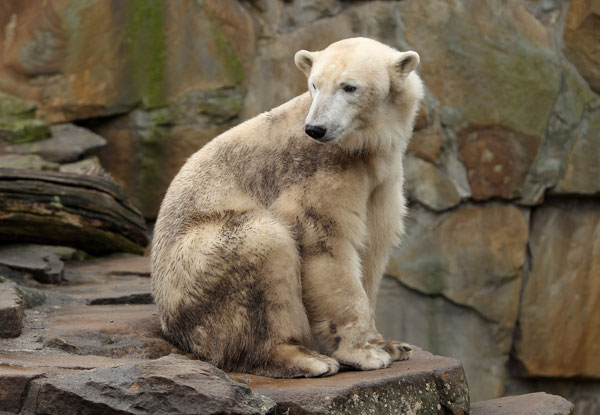 Scientists confirmed last week that a bear shot by an Inuvialuit hunter in the Northwest Territories is a second-generation grizzly-polar bear hybrid—a "pizzly" or "grolar" bear. Why can some interbreeding species produce fertile offspring, while others—like horses and donkeys—cannot? Because they have more recent common ancestry. When geographical barriers—such as rising sea levels or retracting ice floes—separate populations, they may develop genetic, physiological, or behavioral differences; changes in chromosome structure or number; differently shaped genitalia; or incompatible mating times and rituals—any of which can prevent successful reproduction. Take horses and donkeys, which probably diverged about 2.4 million years ago. Horses have 64 chromosomes, while donkeys have 62, and when they mate, their chromosomes don't pair up properly, inhibiting meiosis in their offspring. As a result, mules are sterile. Brown bears and polar bears, by contrast, evolved from the same ancestor only about 150,000 years ago—a relatively brief period—and have not developed significant genetic differences. The prevailing theory holds that polar bears diverged from brown bears at the end of the last ice age (the Pleistocene), when a population followed retreating ice northward. As they adapted to their new arctic home, the separated population lost the brown bear's hump and developed the polar bear's characteristic hair (which is actually clear), narrower shoulders, longer neck, smaller head, and partially webbed toes. Despite appearances, polar bears and grizzlies are still genetically quite similar. In fact, there are multiple instances of the two species successfully interbreeding in zoos. |
|
#9
●
05-12-2010, 10:21 PM
|
 Server Supporter Poster Rank:196 Male Join Date: Feb 2010 Posts: 7,788 7,788Posts 3,825Thanked 230Quoted 1Mentioned 0Contrib. |
|
Re: Polar/Grizzly Hybrid
Worst names ever. Nice post, interesting to see how they adapted to their environment beyond just the white coat compared to Grizzlies.
|