|
#1
●
11-05-2011, 12:49 PM
| ||||||||
 My Rank: MAJOR Poster Rank:12 Join Date: Jun 2009 Posts: 93,128
Contributions: 226
Mentioned: 91 Post(s) Quoted: 2009 Post(s)
| ||||||||
|
Orionids Light Up Aurora And More
The annual Orionid meteor shower peaked in activity in the early morning hours of October 22, as tiny remnants shed from Halley's cometplummeted through Earth's atmosphere. From dark locations, up to two dozen shooting stars an hour were visible during the peak. Jeffrey Berkes of West Chester, Pennsylvania, managed to frame an Orionid streaking above a country lake, keeping the glare from a waning crescent moon in check behind autumn foliage. "The moon beginning its ascent around 2:15 a.m. worried me a little bit, but the Orionids were streaking bright, and I counted a couple dozen during the night," Berkes wrote in his caption for the shot, submitted October 24 to National Geographic's My Shot website. "I also saw 3 random meteors. Two of them were borderline fireballs!" 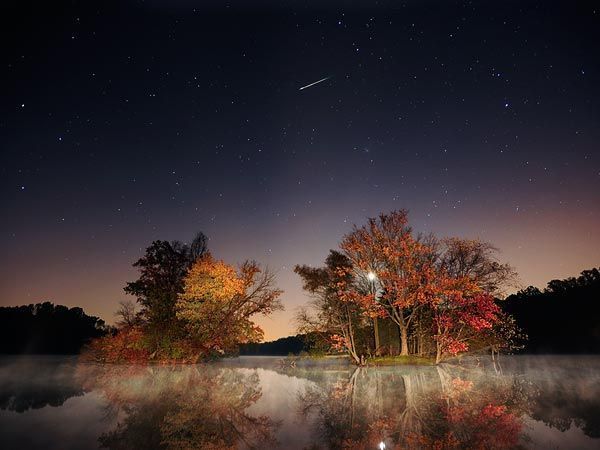 Sometimes sky-watchers get a cosmic two-for-one deal: With a 13-second exposure, Antti Pietikäinen managed to snap an Orionid meteor seeming to fall toward a ghostly green aurora over Muonio, Finland. In the predawn hours of October 22, a cloud of charged particles from the sun reached Earth and created geomagnetic activity at higher latitudes, spawning auroras. The solar storm coincided with the peak of the Orionid meteor shower, making for an unusual northern light show. 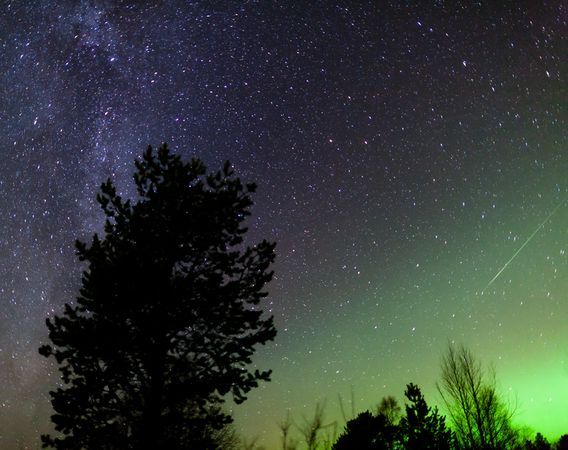 The starry skies above a rural road are punctured by a meteor flash in a picture taken from Vallentuna, Sweden, early on October 24—shortly after the peak of the Orionids. Most meteors visible during a shower are pieces of comet debris, each about the size of a grain of sand. The tiny particles get ionized—electrically charged—and break apart as they race through Earth's upper atmosphere, creating streaks of light. The Orionids speed through the sky at more than 90,000 miles (145,000 kilometers) an hour. 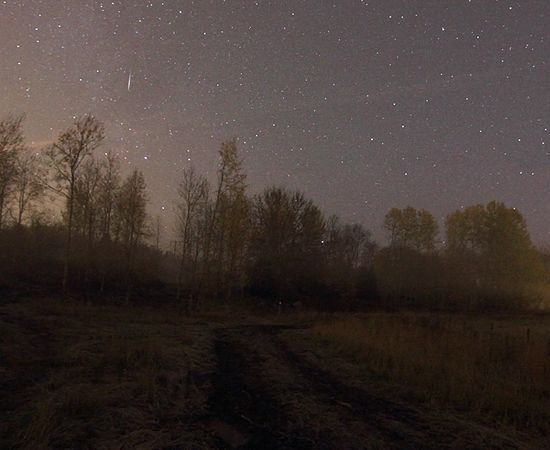 As with other meteor showers, the Orionids are named after the constellation from which the meteors appears to radiate—in this case, the mythical hunter Orion. In the picture above, a meteor streaks through the autumn sky above Roanoke, Virginia, on October 23. The bright stars that make up the familiar shape of Orion can be seen in the upper right of this frame. "We spent 2 hours out in the early morning cold and saw 6 meteor streaks with our eyes, and I was certain that I did not capture any on the camera until I got home and started to post-process the images," wrote photographer Mike Kline. But "there in 2 photos was a faint streak." 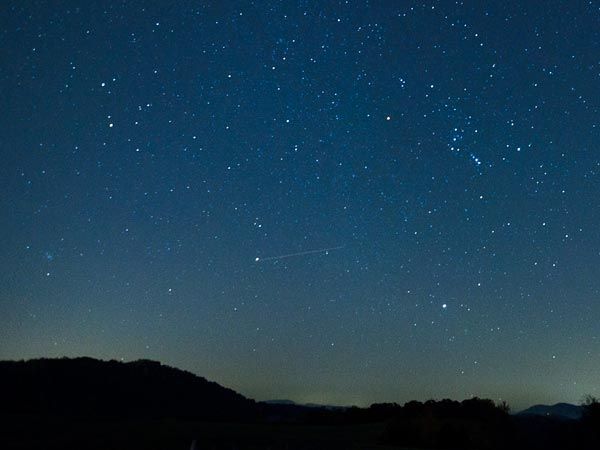 |
|
#2
●
11-05-2011, 01:27 PM
| ||||||||
 ★Wizard Of Gore★ Poster Rank:2 Join Date: Aug 2009 Posts: 127,763
Contributions: 1
Mentioned: 457 Post(s) Quoted: 30201 Post(s)
| ||||||||
|
Re: Orionids Light Up Aurora And More
For anybody that wants to see where the familiar winter constellation of Orion can be found in the last photo, I mapped it out for you. I also added a closer view of the Orion Nebula and the Horsehead Nebula that can be found close to Orions "Belt".  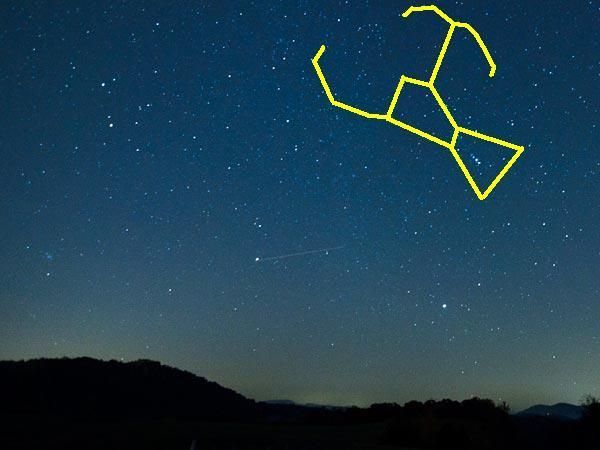 · 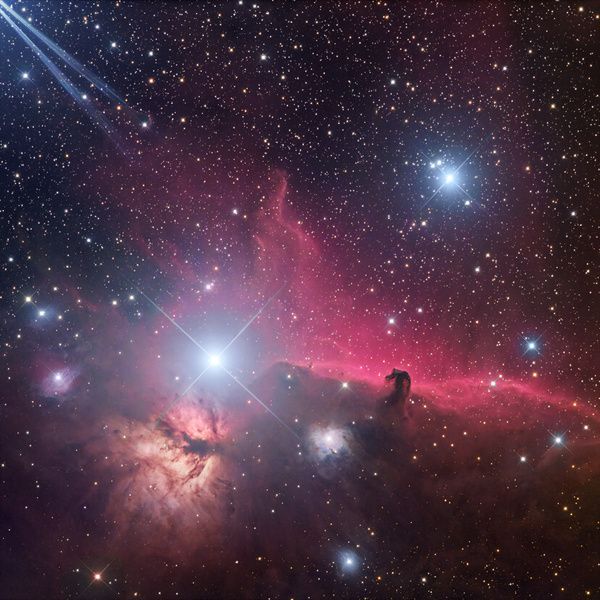 · 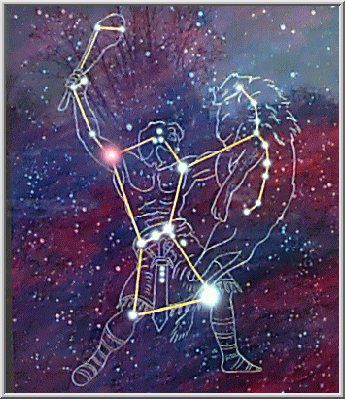 · |