|
#1
●
11-25-2010, 11:32 PM
| ||||||||
 My Rank: STAFF SERGEANT Poster Rank:580 Male Join Date: Dec 2009 Posts: 1,687 Mentioned: 0 Post(s) Quoted: 9 Post(s)
| ||||||||
|
New Ocean Species
Acantharians are one of four types of large amoebae This undated handout image provided by the Census of Marine Life shows, the acantharians are one of the four types of large amoebae that occur in marine open waters. Their fragile skeletons are made of a single crystal of strontium sulfate that quickly dissolves in the ocean water after the cell dies. If the Census Bureau thinks it has it;s hands full counting Americans, imagine the problems of scientists trying to tally everything living in the oceans, including microbes so small they seem invisible  Platybrachium Antarcticum In this undated photo released by the University of Alaska Fairbanks, Census of Marine Life, is shown a ghost-like sea-angel, platybrachium antarcticum, going through the deep Antarctic waters hunting the shelled pteropods (another type of snail) on which it feeds. (AP Photo/University of Alaska Fairbanks, Census of Marine Life, Russ Hopcroft)  Calycopsis Borchgrevinki In this undated photo released by the University of Alaska Fairbanks, Census of Marine Life, is shown a marble-sized jellyfish, calycopsis borchgrevinki, which is one of the more common hydromedusae encountered in Antarctic waters. (AP Photo/University of Alaska Fairbanks, Census of Marine Life, Russ Hopcroft)  Clione Limacina In this undated photo released by the University of Alaska Fairbanks, Census of Marine Life, is shown a shell-less pteropod or swimming snail, clione limacina, found in both Arctic and Antarctic waters, which preys exclusively on its fellow shelled pteropods. (AP Photo/University of Alaska Fairbanks, Census of Marine Life, Russ Hopcroft)  Limacina Helicina In this undated photo released by the University of Alaska Fairbanks, Census of Marine Life, is shown a bean-sized swimming snail, limacina helicina, occurring in both Arctic and Antarctic waters. It spins a mucus-net off its paddle-like foot-wings to trap algae and other small particles on which it feeds. (AP Photo/University of Alaska Fairbanks, Census of Marine Life, Russ Hopcroft)  Chionodraco Hamatus In this undated photo released by the University of Alaska Fairbanks, Census of Marine Life, is shown a chionodraco hamatus, one of the Antarcticís ice fish, which can withstand temperatures that freeze the blood of all other types of fish. (AP Photo/University of Alaska Fairbanks, Census of Marine Life, Russ Hopcroft)  Hyperoche Capucinus In this undated photo released by the University of Alaska Fairbanks, Census of Marine Life, is shown a sand-flea hyperoche capucinus, a common predator swimming in polar waters. (AP Photo/University of Alaska Fairbanks, Census of Marine Life, Russ Hopcroft)  Transparent sea cucumber, Enypniastes This undated photo released by Census of Marine Life and the Woods Hole Oceanographic Institution shows a transparent sea cucumber, Enypniastes, creeping forward on its many tentacles at about 2 cm per minute while sweeping detritus-rich sediment into its mouth at 2,750 meters in the Northern Gulf of Mexico. Thousands of marine species eke out an existence in the ocean's pitch-black depths by feeding on the snowlike decaying matter that cascades down, and even sunken whale bones, according to a report released Sunday, Nov. 22, 2009.  Eaugaptilis hyperboreus In this undated photo provided by Census of Marine Life, a deepwater copepod, Eaugaptilis hyperboreus, bearing its eggs, is shown. Half way into a census of the world's oceans, researchers say they are finding both rich diversity in the sea along with signs of decline for many species.  Fishing Lure This undated handout photo provided by the Census for Marine Life shows the Sargassum Fish (Histrio histrio), a member of the frogfish family (Antennariidae), a group of small, globular fishes with stalked, grasping, limb-like pectoral fins with small gill openings behind the base, a trapdoor-like mouth high on the head, and a 'fishing lure' (formed by the first dorsal spine) on the snout. It typically lives in open waters in close association with floating Sargassum Weed (Sargassum natans and S. fluitans), but is frequently blown into nearshore and bay waters during storms. Although the Sargassum Fish is capable of swimming quite rapidly, it often crawls through the Sargassum Weed, using its pectoral fins like arms.  Dragonfish that even has teeth on its tongue This undated handout photo provided by the Census for Marine Life shows a dragonfish that even has teeth on its tongue. They would be terrifying animals if they weren't the size of a banana.  Squidworm Scientists from the Scripps Institution of Oceanography in California unveiled the squidworm, a ghostly creature discovered in the ocean between Indonesia and the Philippines  Squidworm, gossamer The squidworm, a gossamer, ghostly creature discovered in the deepest reaches of the ocean between Indonesia and the Philippines.  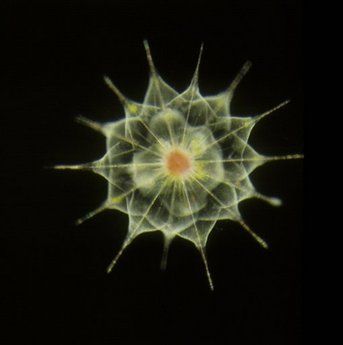 · 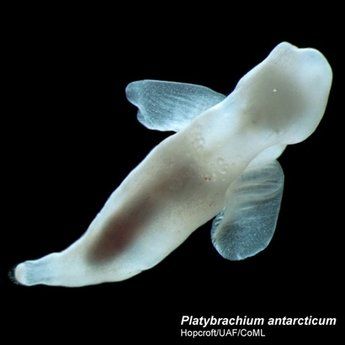 · 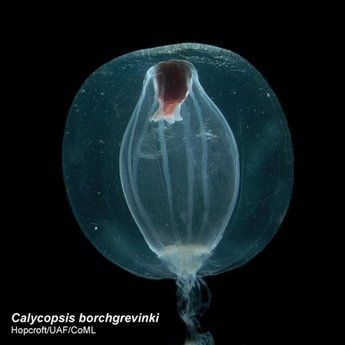 · 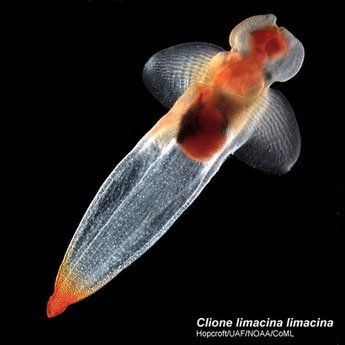 · 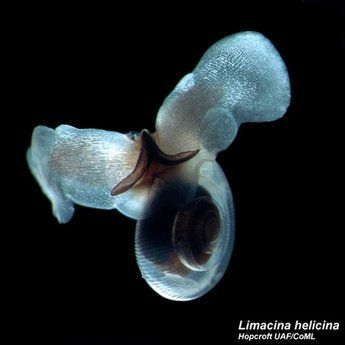 · 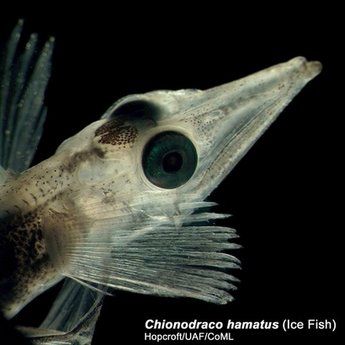 · 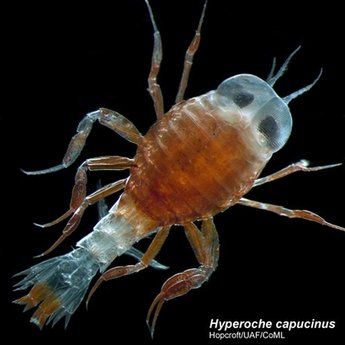 · 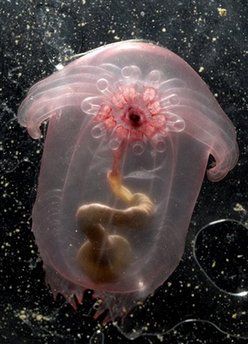 · 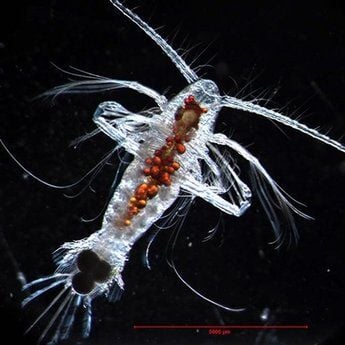 · 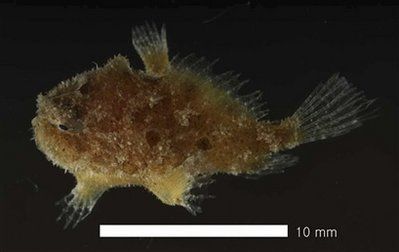 · 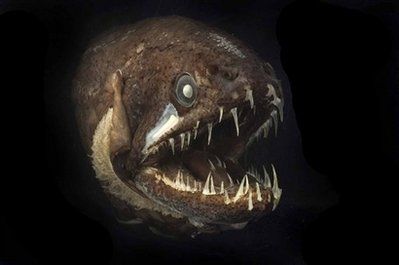 · 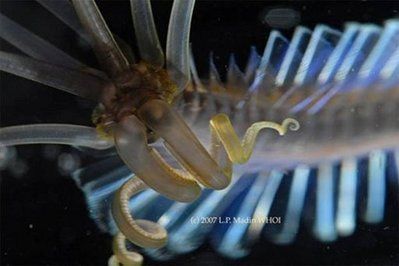 · |
|
#9
●
11-26-2010, 07:07 AM
| ||||||||
| My Rank: STAFF SERGEANT Poster Rank:580 Male Join Date: Dec 2009 Posts: 1,687 Mentioned: 0 Post(s) Quoted: 9 Post(s)
| ||||||||
|
Re: New Ocean Species
Thanx everybody; One thing cool is they are working on a way to develop legitimate cryogenic freezing in human beings from the fluids in the Chionodraco Hamatus up there, right now several colleges are racing to find it first. |