|
#1
●
02-08-2013, 02:24 PM
| ||||||||
 My Rank: MAJOR Poster Rank:12 Join Date: Jun 2009 Posts: 93,128
Contributions: 226
Mentioned: 91 Post(s) Quoted: 2009 Post(s)
| ||||||||
|
Nembrotha Cristata - Colourful Sea-slug
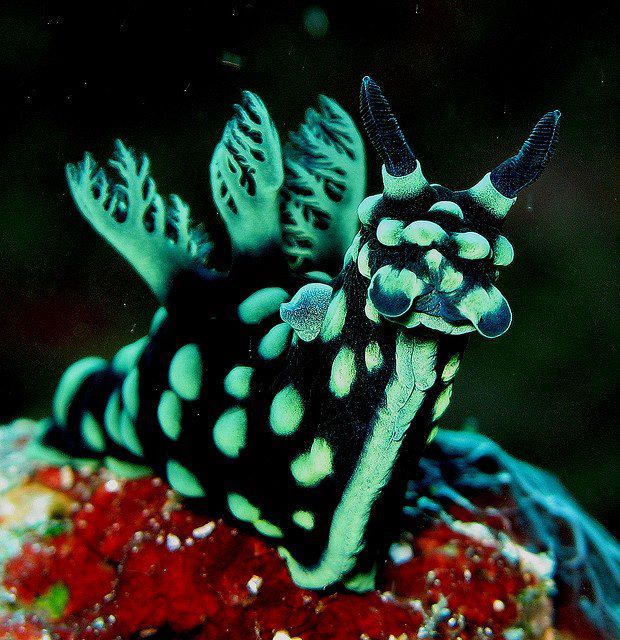 What is a nudibranch A nudibranch /ˈnjuːdɨbræŋk/ is a member of Nudibranchia, a group of soft-bodied, marine gastropod mollusks which shed their shell after their larval stage. They are noted for their often extraordinary colors and striking forms. There are more than 3,000 described species of nudibranchs. The word "nudibranch" comes from the Latin nudus, naked, and the Greek βραγχια, brankhia, gills. Nudibranchs are often casually called sea slugs, but many sea slugs belong to several taxonomic groups which are not closely related to nudibranchs. A number of these other sea slugs, such as the colorful Aglajidae, are often confused with nudibranchs. Distribution and habitat Nudibranchs occur in seas worldwide, including both the tropics and Antarctica. Nudibranchs live at virtually all depths of salt water, from the intertidal zone to over 700m. Their greatest size and variation is in warm, shallow waters.[citation needed] Nudibranchs are benthic animals, found crawling over the bottom substrate. An exception to this is the neustonic Glaucus and Glaucilla nudibranchs, which float upside down just under the ocean's surface. Another exception is the pelagic nudibranch, Cephalopyge trematoides, which swims in the water column. Anatomical description The body forms of nudibranchs vary a great deal, but because they are opisthobranchs, unlike most other gastropods they are bilaterally symmetrical both externally and internally because they have undergone secondary detorsion. They lack a mantle cavity. Some species have venomous appendages (cerata) on their sides, which are used to deter predators. Many also have a simple gut and a mouth with a radula. Their eyes are simple and able to discern little more than light and dark. The eyes are set into the body, are about a quarter of a millimeter in diameter, and consist of a lens and five photoreceptors. They vary in adult size from 20 to 600 millimetres (0.79 to 24 in). The adult form is without a shell or operculum (in shelled gastropods the operculum is a bony or horny plate that can cover the opening of the shell when the body is withdrawn). The name nudibranch is appropriate, since the dorids (infraclass Anthobranchia) breathe through a "naked gill" shaped into branchial plumes in a rosette on their backs. By contrast, on the back of the aeolids in the clade Cladobranchia there are brightly colored sets of protruding organs called cerata. Nudibranchs have cephalic (head) tentacles, which are sensitive to touch, taste, and smell. Club-shaped rhinophores detect odours. Defense mechanisms Nudibranchs (Nembrotha kubaryana) eating clavelina tunicate colonies. They also take the stinging cells from jellyfish when they eat them. This group includes some of the most colorful creatures on earth. In the course of evolution, nudibranchs have lost their shell because they have developed other defense mechanisms. Some species evolved an external anatomy with textures and colors that mimicked surrounding plants to avoid predators (see camouflage). Other nudibranchs, as seen especially well on chromodorids, have an intensely bright and contrasting color pattern that makes them especially conspicuous in their surroundings. This is believed to be an example of aposematic coloration; the shocking coloration warns potential predators that the slugs are distasteful or poisonous. Nudibranchs that feed on hydrozoids can store the hydrozoids' nematocysts (stinging cells) in the dorsal body wall, the cerata. These stolen nematocysts, called kleptocnidae, wander through the alimentary tract without harming the nudibranch. Once further into the organ, the cells are brought to specific placements on the creature's hind body via intestinal protuberances. Nudibranchs can protect themselves from the hydrozoids and their nematocysts. It is not yet clear how, but special cells with large vacuoles probably play an important role. They can also take in plant cells and reuse the chloroplasts (plant cell organelles used for photosynthesis) to make food for themselves. Nudibranchs use a variety of chemical defenses to aid in protection, but it is not necessary for the strategy to be lethal in order to be effective: some successful toxins induce bradycardia or hypotension in a predator, allowing the nudibranch to escape consumption while its attacker is incapacitated. Some sponge-eating nudibranchs concentrate the toxins from their prey sponge in their bodies, rendering themselves toxic to predators. The evidence that suggests the toxins used by dorid nudibranchs do in fact come from dietary sponges lies in the similarities between the primary and secondary metabolites of prey and nudibranchs, respectively. Furthermore, nudibranchs contain a mixture of sponge chemicals when they are in the presence of multiple food sources as well as change defense chemicals with a concurrent change in diet. This, however, is not the only way for nudibranchs to develop chemical defenses. Certain species are able to produce their own chemicals de novo without dietary influence. Evidence for the different methods of chemical production comes with the characteristic uniformity of chemical composition across drastically different environments and geographic locations found throughout de novo production species compared to the wide variety of dietary and environmentally dependent chemical composition in sequestering species. Another method of protection is the release of an acid from the skin. Once the specimen is physically irritated or touched by another creature, it will release the mucus automatically. Nudibranchs are hermaphroditic, and thus have a set of reproductive organs for both sexes, but they cannot fertilize themselves. Nudibranchs typically deposit their eggs within a gelatinous spiral. 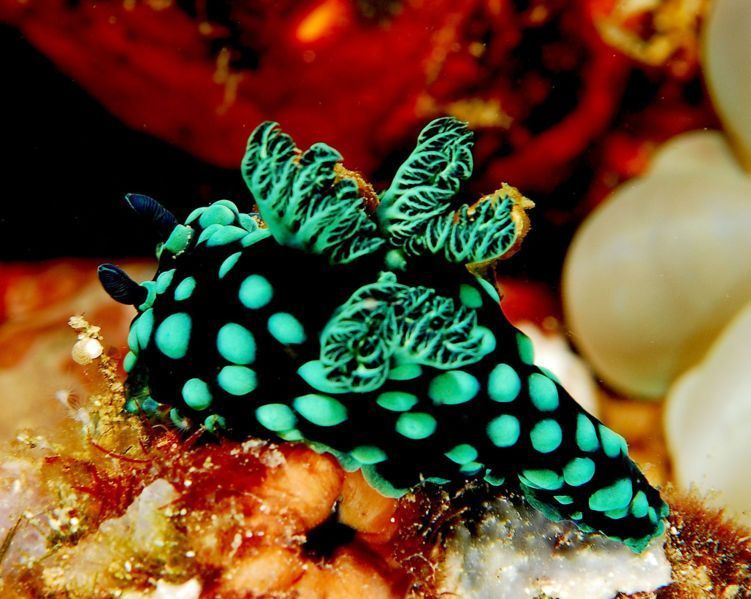 · 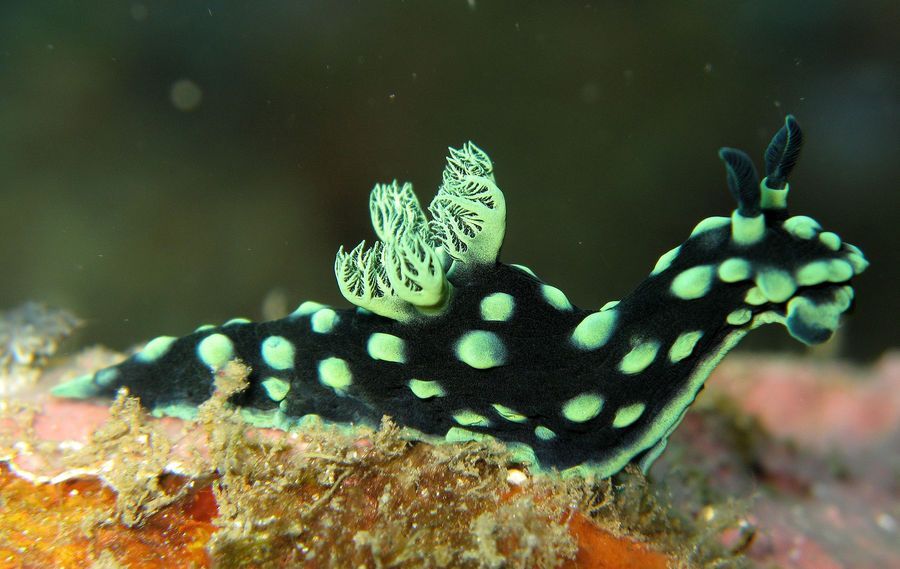 · 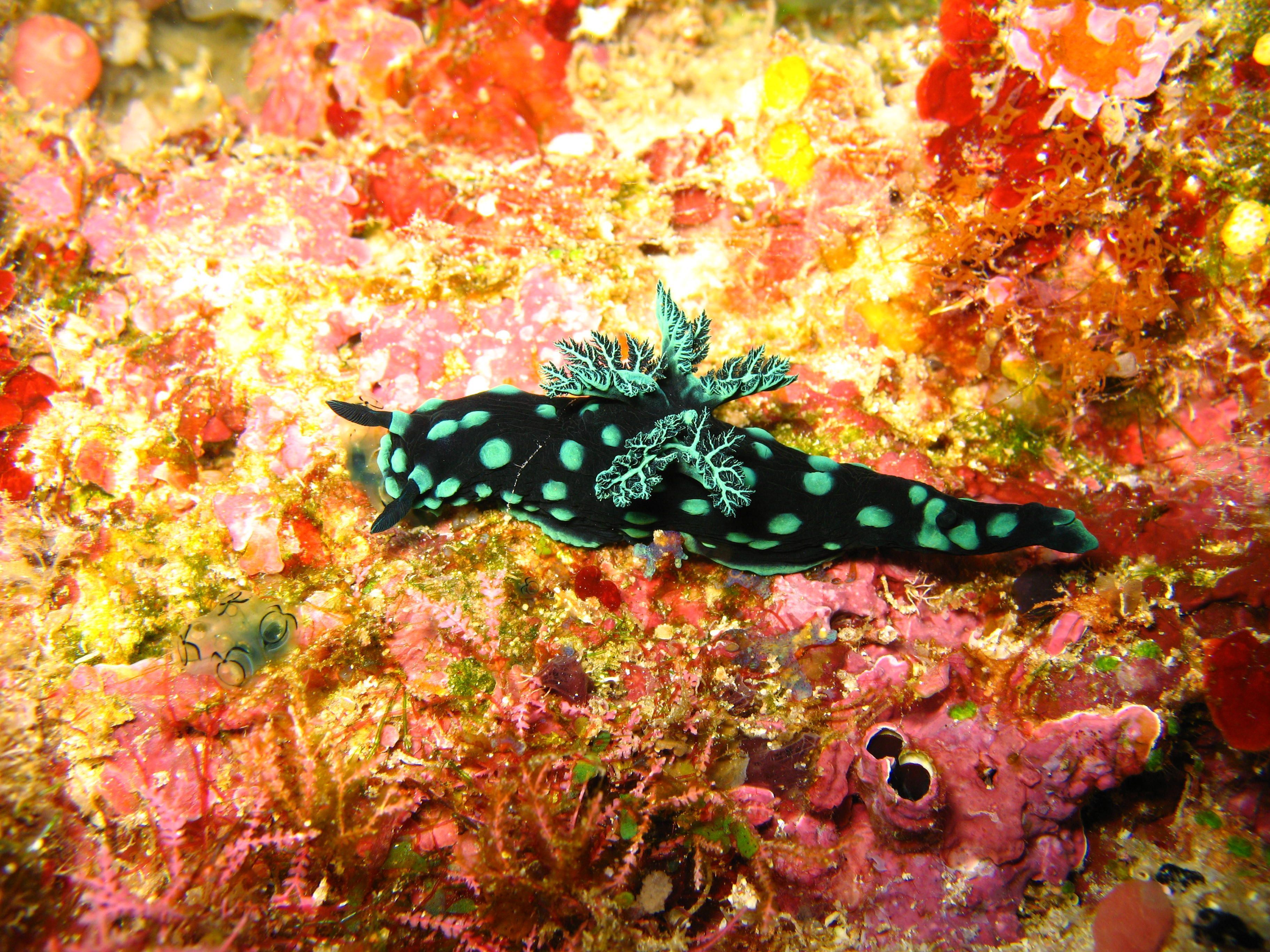 · |
|
#8
●
03-06-2013, 01:50 PM
| ||||||||
 Born in the USA Poster Rank:127 100% female Join Date: Jul 2012 Posts: 12,876
Contributions: 1
Mentioned: 81 Post(s) Quoted: 1799 Post(s)
| ||||||||
|
Re: Nembrotha Cristata - Colourful Sea-slug
Would be nice to have him in a marine aquarium, if that's even possible. If our garden slugs were this lovely, I wouldn't mind them eating my tomatoes as much.  |
|
#9
●
03-06-2013, 03:11 PM
| ||||||||
 ★ Legacy Member ★ Poster Rank:64 male Join Date: Jun 2012 Posts: 24,213 Mentioned: 169 Post(s) Quoted: 11648 Post(s)
| ||||||||
|
Re: Nembrotha Cristata - Colourful Sea-slug
Yeah you can keep them in an aquarium, they are tricky to keep because of their specialized diets but some are easier than others. They also like eels get into places they shouldn't like pipes and filters and die there.
|