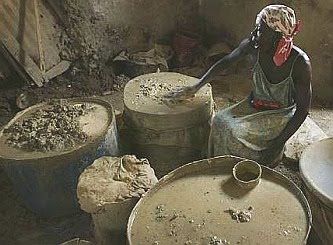
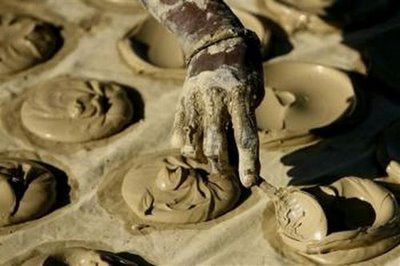
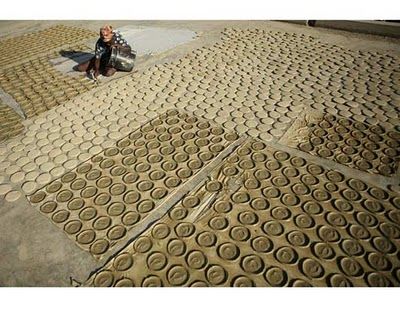
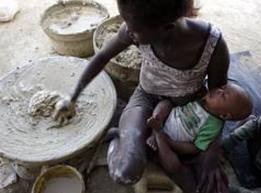
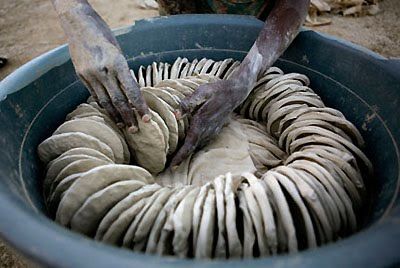
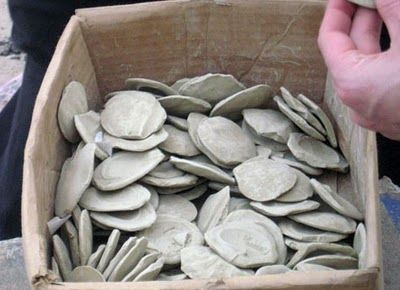
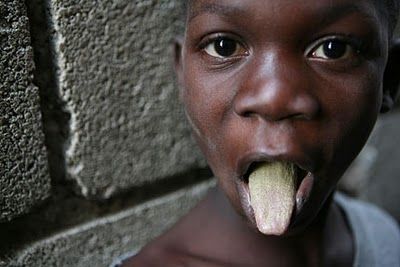
In Haiti, the practice has become routine. To stave off hunger, men, women and children have become accustomed to chew biscuits made of sand, salt and fat of animals. In the market, a lot is sold with three for 5 gourdes, the local currency, which gives about $ 0.25.With high food prices, Haiti's poorest can not afford a daily plate of rice, and some of them end up adopting desperate measures to stave off hunger. The mud biscuits are daily meal in the lives of these people.Charlene, a young 16 year old Haitian, who appears with her son in her arms, said the mud biscuits are the only source of food for his family. She tends to feed the baby with sand and says that the cookies tend to give a lot of pain in the stomach, leading her baby crying and writhing in pain.About 80 percent of Haiti's population lives on less than $ 2 per day and a tiny elite controls the economy.The biscuit is made as follows: Women buy the land, then remove it rocks and leaves, add water, salt and lard.Soon after, the mixture is beaten and placed in small ways where they remain drying in the hot sun. When they are dry, sand the cookies are carried in buckets to markets or sold on the streets.The cookies have an unpleasant taste and remove all moisture from the mouth so they touch the tongue, leaving a bitter taste of dirt."I'm hoping that the day I'll have enough food to eat, then I can stop eating these," said Charlene. "I know this is not good for me."