|
#1
●
07-20-2014, 05:26 PM
| ||||||||
 ✖ The Antique Christ ✖ Poster Rank:105 Gonzo Punk Join Date: Jan 2009 Posts: 15,488
Contributions: 58
Mentioned: 23 Post(s) Quoted: 2046 Post(s)
| ||||||||
|
Mothers to the Motherless: The First Policewomen in Chicago
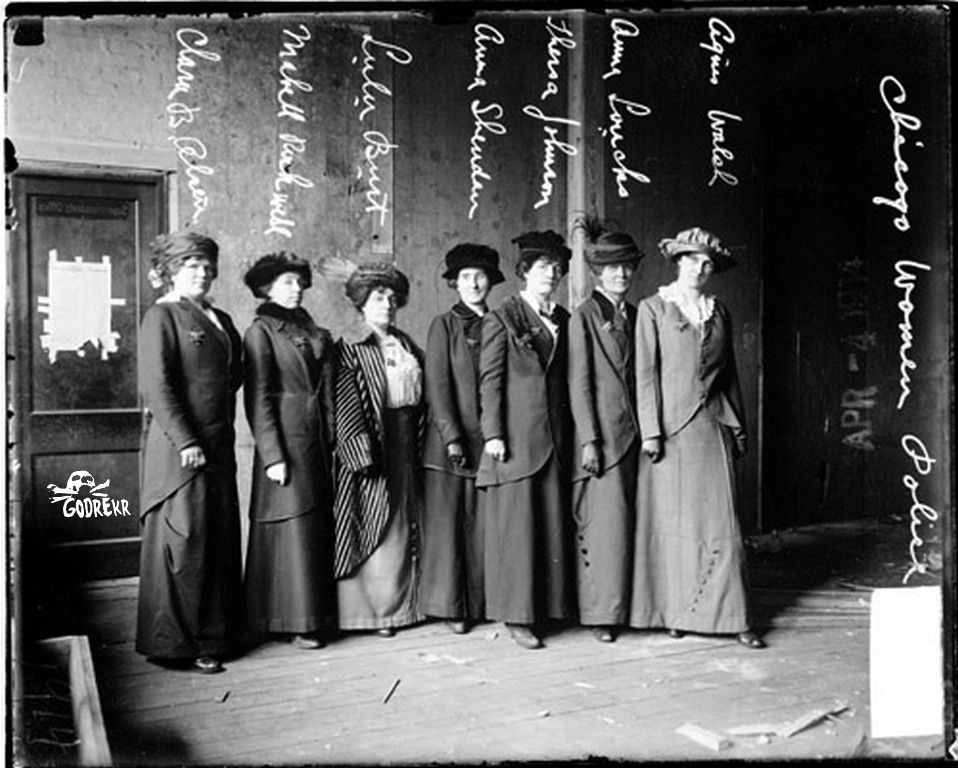 Policewomen Agnes Walsh (from right), Anna Loucks, Theresa Johnson, Anna Sheridan, Lulu Burt, Mabel Rockwell, and Miss Clara B. Olsen. 1914 On August 5, 1913, ten women were sworn in as officers – or “copettes” as one reporter called them – for the Chicago Police Department. The women, all trained as social workers, did not wear uniforms or carry revolvers but they did have a badge. The fight for female officers had been raging for decades. Women’s groups had long argued that female detainees and juveniles needed protection from male officers and other male prisoners. Searched, interrogated, and detained in cells often beside or within sight of men, women detainees often suffered rape and sexual assault. Even outside of jails and courtrooms, advocates argued that women with police authority could keep better order and protect the morals of women and children at beaches, public parks, and other places of amusement than male officers. They could become, in effect, “mothers to the motherless.” Few police departments and politicians supported the effort. Many labeled the crusade unnecessary and a waste of money. Others argued that women were physically incapable of being officers. Even after many cities passed ordinances authorizing the hiring of women officers in the late 19th and early 20th centuries, few appropriations were made to actually make the hires. Chicago Mayor Carter Harrison pushed the city council to hire female officers for the department in 1913. An order was passed, and Harrison appointed ten women. Police training consisted of a two hour lecture delivered by the terrifically named Chief McWeeny (especially fitting considering the pervasive belief that women were not strong enough to be officers) who told the new recruits to have compassion, not be “too strenuous,” “don’t be too nosy,” and to “present all cases fairly and squarely.” The women then received a police whistle, a book of rules, and badge. Two days later, on August 7th, two of the female officers made their first arrest. It was of another woman, Nellie Cameron, for disorderly conduct. The novelty of women arresting women attracted a fair bit of media attention. Everyone was eager to see how women would handle a potentially physical interaction in making arrests. One officer claimed that female criminals would put up a bigger fight than normal for policewomen because they would not be afraid of another woman. Those opposed to policewomen jumped on every opportunity to show that women could not handle the work, though given the limited role and power (not to mention gear and a proper uniform) afforded these early women officers, the comparison of male and female officers could hardly be fair. Concern about women’s physical strength led the police chief to assign a new batch of women officers to jujitsu instruction in 1914, a development that led to the New York Times to report, “Policewomen to Wrestle.” Women’s path into police work and law enforcement was long and hard. In 1913, there were 38 in the U.S. By 1915, this number had risen to 70 in 26 cities. Most served in limited roles, mostly keeping order among women and children, in public places. It would be decades more before they earned a more equal place on the force. Even so, these early women forged a pioneering course. 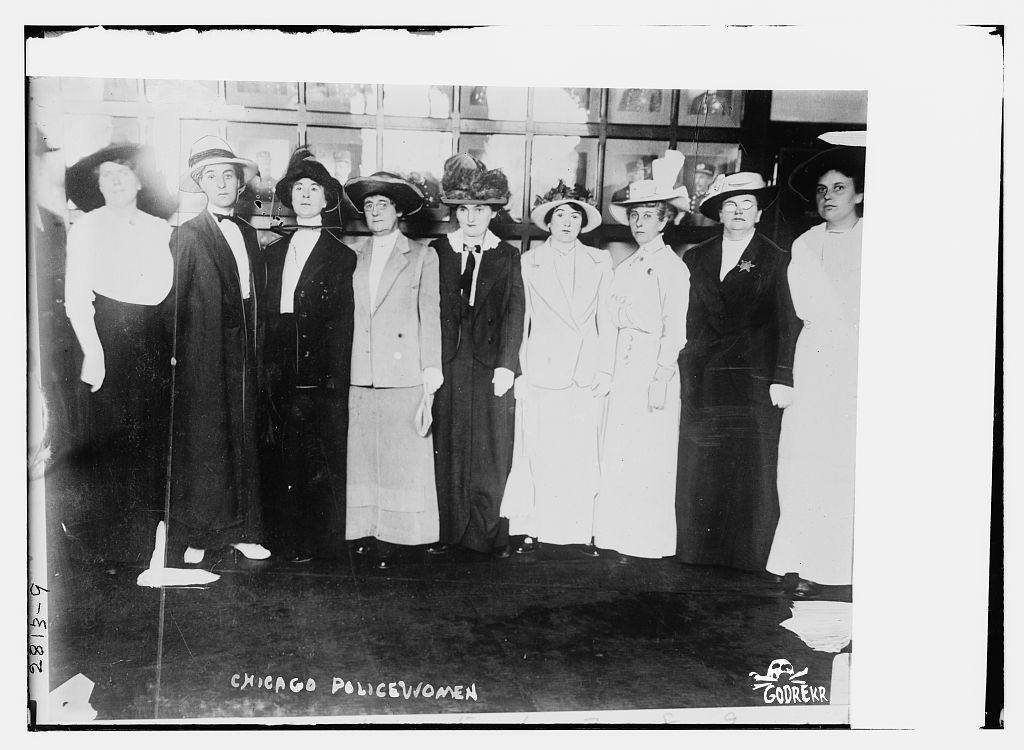 Photo shows ten newly appointed policewomen, Chicago, Illinois. They are (left to right) Mrs. Anna Loucks, Miss Clara Olsen, Miss Fannie Willsey, Miss Margaret Wilson, Mrs. L. C. Parks, Mrs. Margaret Butler, Mrs. Alice Clement, Mrs. Emma F. Neukon, Mrs. T. D. Meder (supervisor) and Gertrude Howe Britton (supervisor.) Chicago Daily News, Aug. 5, 1913, and Chicago History Museum From The Chicago History Museum: |
|
#2
●
07-20-2014, 08:00 PM
| ||||||||
| ✖ The Antique Christ ✖ Poster Rank:105 Gonzo Punk Join Date: Jan 2009 Posts: 15,488
Contributions: 58
Mentioned: 23 Post(s) Quoted: 2046 Post(s)
| ||||||||
|
Re: Mothers to the Motherless: The First Policewomen in Chicago
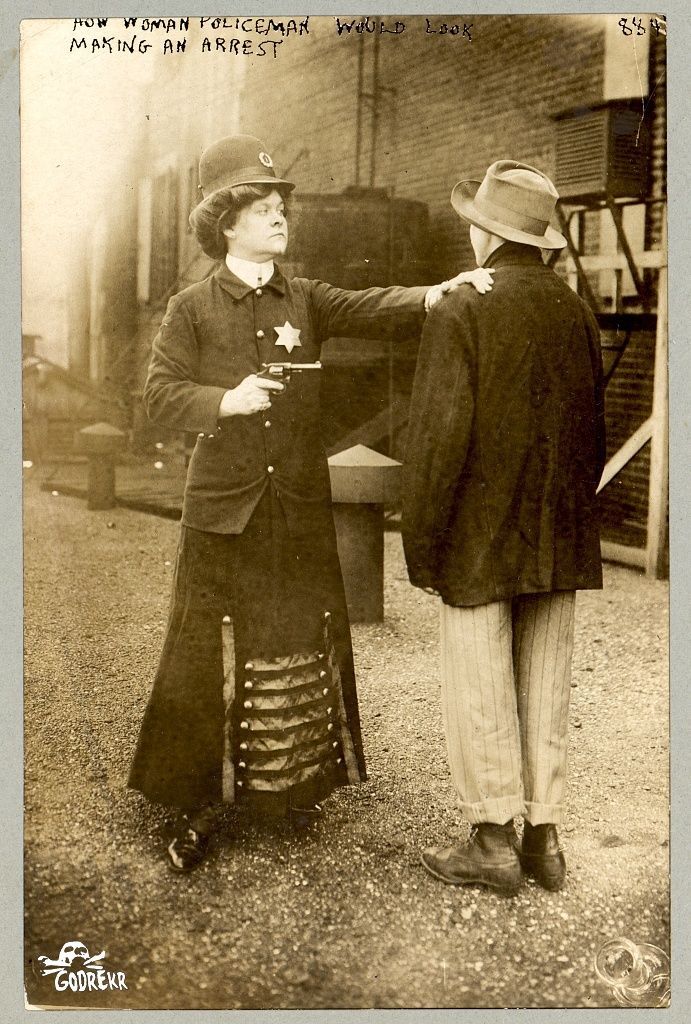 What they were hoping to accomplish... 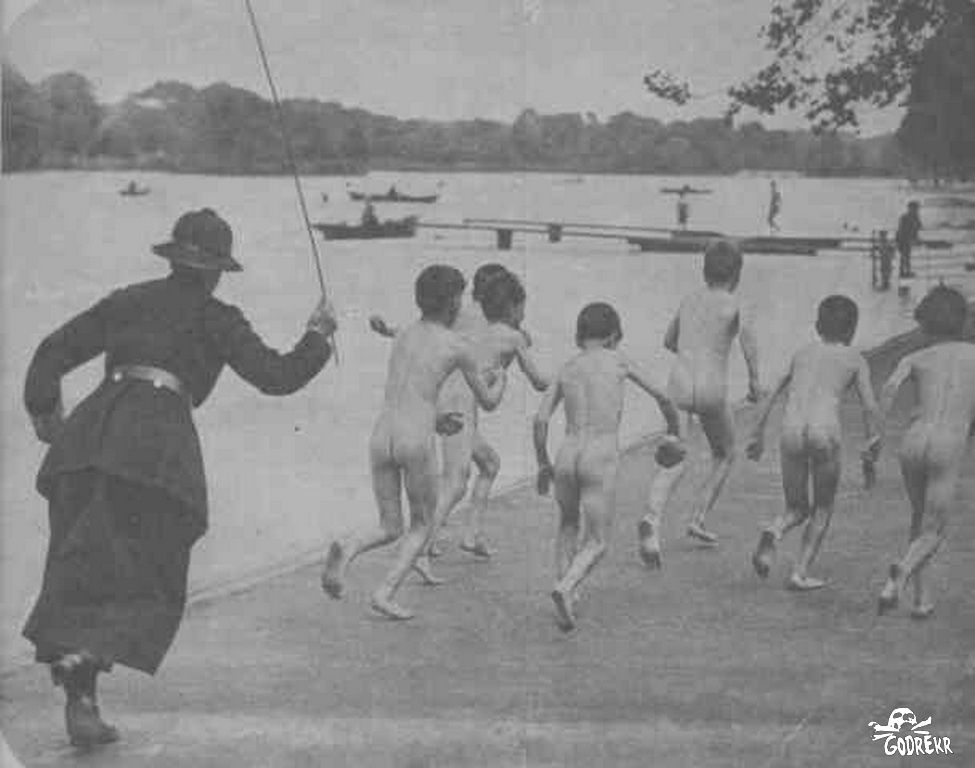 The sad reality! |