|
#1
●
12-24-2009, 11:06 AM
| ||||||||
 My Rank: LANCE CORPORAL Poster Rank:2788 Join Date: Dec 2009 Posts: 145 Mentioned: 0 Post(s) Quoted: 1 Post(s)
| ||||||||
|
A List of Horrendous Ways To Die
I think I'd rather die peacefully in my sleep, thank you very much.  Whether they be modern or ancient, these would be awful. 1. Skinned Alive Or Flaying One of the most gruesome torture methods, flaying promises hours of agony and pain. Being flayed alive is almost as painful as being burned alive. Skinning a person is an ancient practice to torture or execute a person. Some tribes, like the Aztecs of Mexico, flayed their victims as part of their rituals for human sacrifice. On the other hand, in Medieval Europe, traitors were executed by being skinned alive in public. There are many ways to flay a person; some would directly remove their victim’s skin or flesh, while others would pour boiling water on their victim’s skin to make the flaying easier. Either way, the pain was unbearable considering that the victims were alive during the process. 2. Decapitation Decapitation is arguably the most painless execution. The head, if quickly severed, would produce little or no pain at all; however, for those decapitated slowly, the experience was as revolting as the scene it produced. Although decapitation or beheading is rarely practiced today as a method of state-sanctioned execution, it is still practiced in some parts of the world. Previously, decapitation was used to carry out capital punishment, with the ax or sword as the weapon of choice. It was prevalent mostly in Europe and Asia, and was considered an honorable form of death for noblemen. However, if the blade was blunt and the strike was clumsy, multiple strokes were required to sever the head. Today, decapitation is practiced in a more grotesque fashion by some rebel groups. Their victims’ heads are sawed off using a knife that could be no bigger than your ordinary kitchen knife. 3. Hanged, Drawn and Quartered The most dreadful and unbearable of deaths comes in the form of being hanged, drawn and quartered. Although this form of punishment, which was once used to execute men guilty of high treason, is no longer applicable, it is still considered one of the most inhumane forms of penalties. Before 1814, the prisoner condemned under this penalty was made to undergo the following: 1. The condemned was dragged by a horse or on a hurdle to the execution place. 2. He was momentarily hanged until almost dead. 3. The condemned’s genitals were cut off and burned before him together with his entrails that were slowly drawn out from a cut made on his belly. 4. Finally, the condemned was beheaded and his body was divided into four different parts and gibbeted in different places in England. It was only in 1870 that this penalty was repealed and deemed too inhumane as a form of punishment. Some of those who died by such a manner were William Wallace, Guy Fawkes and William Blake, to name a few. 4. Dismemberment In the Medieval era, the authorities were very keen on inflicting unforgettably excruciating penalties to those who violated the most sacred laws of the land. One of those penalties was dismemberment. Under this punishment, the condemned’s limbs were tied to two or more separate movable objects, such as a horse-drawn vehicle. The objects were then made to move in opposite directions, stretching the person’s limbs until these were torn apart. Francois Ravaillac and Robert-Francois Damiens were executed in such a manner in 1610. In 1998, James Byrd, Jr. of Texas was dismembered by three men who chained him to their pick up truck that dragged him several miles. 5. Burning/ Immolation Burning is said to be one of the most painful of deaths: imagine yourself cooked to a crisp on an open fire, just like your favorite roasted chicken or pig, but alive and still kicking, feeling every flicker of fire roast an inch of your skin slowly. Although most people who were caught in a fire (whether intended or not) died of carbon monoxide poisoning before the flames devoured them, those unfortunate enough not to die from suffocation or poisoning were slowly and agonizingly burnt to a crisp. Carbon monoxide poisoning usually occurred if the fire was large; however, if the fire was small, the victim usually died from stroke, shock, or loss of blood plasma. As a form of execution, burning was used as a penalty for those guilty of witchcraft, heresy and treason. To minimize the pain of the condemned, family members would bring additional straw, called *******, and firecrackers to the site, placing these on strategic places on the condemned’s body. The lower extremities would burn first before the torso, breasts and face. 6. Poisoning Used often to commit suicide or to carry out assassination plots, poison has been around for hundreds of centuries that it comes in many forms and with varying potencies. Death by poisoning is not always painful as some think. The pain depends on the type of poison used to kill the victim. Like most methods of dying, poison is also used as a method of execution, such as through lethal injection. Chemicals or synthetic poisons are now popular; however, in the past, natural poisons like venom, were commonly used. Today, people who commit suicide consume household cleaning products like bleach or detergent to poison themselves, while others prefer the ever-trusty arsenic to carry out the deed. Household cleaning products used as poison, however, causes extreme pain. The chemicals in these products burn the victim’s mouth, throat and internal organs slowly, causing internal bleeding and finally death. 7. Drowning Just like burning, drowning involves a slow process. It is an agonizing experience that is caused by suffocation because the liquid (usually water) interrupts the body’s absorption of oxygen. In other words, the lungs fill up with liquid, blocking the airways. However, the main cause of death is cardiac arrest due to acidosis (increase of acidity in the body’s blood plasma) and hypoxia (deprivation of oxygen). Death by drowning is not uncommon today; however, in the past, it was also used as a method of execution. The condemned were drowned in a large body of water with their heels tied to a heavy object so they didn’t float and swim away. 8. Heart Removed from the Body While Still Alive Human sacrifices are no longer common these days, but in the past, these were as common and as natural as any form of ritual you’d encounter in church. Sacrificing humans to the deities or gods were supposed to please or appease them. Although it is now considered a primitive and pagan form of ritual, it cannot be discounted that such practices indeed happened in the past. Both young kids and adults were used as sacrifices, though the manner of sacrificing the individual varied greatly on the customs of the people who practiced such rituals. One of the most inhumane forms of human sacrifice was the removing the heart from the victim while he or she was still alive. The Aztecs are famous for this type of human sacrifice although they’ve used other forms of rituals as well. Mass sacrifices were made to the gods; most of the victims were prisoners of war or captives from other villages. A cut was made on the victim’s chest and the priest would rip the heart out of its victim while it was still beating. After this, the victim’s head was chopped off and the head and body were thrown down the long steps of the temple. 9. Sickness: HIV, Cancer In the modern world, where burning at the stake, dismemberment and other scary forms of torture are not immediate threats, most people worry about dying because of sickness. The only non-violent modes of death in this top-ten list involve two types of sickness some people consider scarier than death: HIV and cancer. Though there are a sundry of far deadlier diseases in the world, HIV and cancer are ranked among the most dreaded forms of diseases because not only do they cause pain, but they are also very common. People with HIV are considered dead men/women walking—it will only take a matter of time before they succumb to complications caused by other diseases. On the other hand, people with cancer have a fighting chance of survival. Still, not everyone wins the battle with cancer since there is no cure and only treatment is available. 10. Electrocution A portmanteau for electric execution, the term electrocution refers to any manner of death caused by electric shock. Deliberate electrocution was used widely as a form of capital punishment in the past. Today, not many countries or states practice electrocution by electric chair since a more humane form of execution–that by lethal injection–is currently preferred. People who die due to electrocution have their innards burnt due to the electric current; however, what kills them is the direct impact of the electric current on the brain. Unlike being burned at the stake, the victim’s skin usually stays intact, without much physical manifestation of burning. It takes some time for the victim to die, depending on the voltage of the current that passes to the brain. A very strong current could mean instant death. When used as a form of capital punishment, the victim’s head is covered with a wet sponge to quicken the process. However, even with it, the process is still agonizing and extremely painful. 11. Ebola Imagine having the flu. You've got a fever, a touch of diarrhea, and a sore throat, but instead of puking up last night's pot roast, you're leaking blood from every orifice in your body. That's the Ebola virus. Not only does the victim suffer from nausea, headache, and chills, but after seven days, blood begins leaking from the eyes, ears, and anus. Thankfully for the bedside nurses, the victim has usually been fully drained and dead by the eighth day. 12. Stoning No, not a single human has ever died from an overdose of marijuana, but thousands of people have died from a good stoning. Even today in countries like Iran and Nigeria, public stonings are still a family affair. Just as it was practiced hundreds of years ago, the victim is placed in the center of a circle and covered with a blanket. Sometimes buried up to their waist, or necks. The crowd then pelts the victim with jagged rocks until death 13. Iron Bed Here, the victim is strapped to an iron bed and placed over a stoked fire until he roasts to death. Totally stoked. 14. The Cauldron First a small iron pot is placed, mouth down, on top of a prisoner's naked stomach. Next, rats are placed inside the cauldron and the executioners begin pre-heating the container with a flame. Then they watched as the rodents began to gnaw their way into the guts of the victim as they flee the intense heat. 15. Concentration Camp Among the gas chambers, hangings, and public shootings, there is one form of death that stands out among all others. Not because of the intense pain inflicted, but rather the sheer mental and physical torture that the victim had to endure. In Daschow, arguably the worst concentration camp, the prisoners were forced to live in "Standing Bunkers". The bunkers were 33 cells in which up to 6 men were forced to use as their sleeping quarters. With no room to sit or lay down, the men had to stand all night, sleeping on one another as they stood, only to be awakened 6 hours later for another 18 hour work day. If a man died, he was there all night, rotting, as the other occupants endured the smell of death. 16. Crucifixion There were three devices used in crucifixion, an old tree, an upright pole, and then the infamous wooden cross, which consisted of an upright pole permanently fixed in the ground with a removable crossbar, usually weighing between 75-100 lbs. The victim was then placed on his back, arms stretched out and nailed to the cross bar. Two seven to nine inch nails were driven between forearm and hand in a way that resulted in minimal bleeding, and tightly secured the body to the cross. A third iron nail was driven through the victim's feet, also in a prime area that would result in minimal bleeding, and position the body in a way that it would not fall. Death was a slow process. First, the weight of the body caused the shoulders, elbows and wrists to dislocate. This put an immense amount of weight on the victim's rib cage, causing a state of "perpetual inhalation." To exhale, the victim had to try and stand, causing severe pain in his spike-ridden feet. After a few hours, the legs become fatigued, and soon the heart begins to fail, the lungs collapse and fill with fluid. This sends the victim into a state of dehydration and hyperventilation, which eventually results in suffocation. Depending on the severity of the victim's crime, the executioners would either break his legs immediately, causing him to die in a matter of minutes, or place a small seat on the cross, allowing the victim to bear his own body weight, and die in about nine days. It's hard to say which was more just. 17. Rabies One night as you lie peacefully sleeping, a small bat gets in your room through an open window or a small hole in your home that you don't know about. It bites you, leaving a barely noticeable mark that you won't even feel upon waking up. You find the dead bat's body later in the week, but don't even suspect in the slightest that it bit you. Depending on where it bit you, a few weeks, months, or even a year later, you begin to have double vision, loss of appetite, fever, headache, and fatigue. Flu symptoms. You also feel numbness, discomfort, pain, itching, and tingling at the place where the bat bit you. At this point, you're a dead man/woman walking. As you progress, thinking it's the flu as most people do, you develop insomnia, depression, anxiety, confusion, slight or partial paralysis, excitation, hallucinations, agitation, extreme salivation, difficulty swallowing, disorientation, and you become terrified of water despite the fact that you are also parched and desperately thirsty. Every time you even see that drink that everyone takes for granted, your throat starts constricting in excruciating contractions, which causes the fear. You begin to be over sensitive to touch, so much that if somebody merely touched your arm with a finger, it'd be painful. You also become terrified of light due to the horrible pain it causes your eyes upon looking at it. You may or may not become aggressive and combative to people you formerly loved and would never think of hurting. You might bare your teeth at them like a dog, due to an overwhelming urge to bite. Your mind is no longer yours. It belongs to the Rabies virus, and you're nothing more than a train carrying a load of passengers, the Rabies virus, to it's destination, a new victim. After a few days of those symptoms, your lungs and heart begin to fail. You foam at the mouth so much that, if placed on your back for too long, you'll choke on it due to the inability to swallow. You are pretty much gone by now, but not completely. You have a vague reality of what's happening to you. Yet you are powerless to stop it. Soon you enter cardiac or respiratory arrest and die in violent fits and convulsions. 18. Starvation When a person is starved to death they suffer a lot of pain. They have bad stomach pains, bad headaches, their arms and legs cramp from not eating, and they try to cry out from the pain but they can't shed any tears because there is no fluid in their body. A person can live 10 to 14 days without food and water. Eventually they will go in to a coma right before death. Their kidneys will shut down and then from there on everything in the body starts shutting down. 19. Hypothermia/ Freezing There are three stages of freezing to death. In stage one, body temperature drops by 2 to 3 degrees below normal. Mild to strong shivering occurs. The victim is unable to perform complex tasks with the hands; the hands become numb. Blood vessels in the outer extremities constrict, lessening heat loss to the outside air. Breathing becomes quick and shallow. Goose bumps form, raising body hair on end in an attempt to create an insulating layer of air around the body (which is of limited use in humans due to lack of sufficient hair, but useful in other species). Victim may feel sick to their stomach, and very tired. Often, a person will experience a warm sensation, as if they have recovered, but they are in fact heading into Stage 2. Another test to see if the person is entering stage 2 is if they are unable to touch their thumb with their little finger; this is the first stage of muscles not working. They might start to have trouble seeing. In stage two, body temperature has dropped four to eight degrees below normal. Shivering becomes more violent. Muscle mis-coordination becomes apparent. Movements are slow and labored, accompanied by a stumbling pace and mild confusion, although the victim may appear alert. Surface blood vessels contract further as the body focuses its remaining resources on keeping the vital organs warm. The victim becomes pale. Lips, ears, fingers and toes may become blue. In stage three, body temperature has dropped below 89 degrees. Shivering usually stops, meaning the body is giving up. Difficulty speaking, sluggish thinking, and amnesia start to appear; inability to use hands and stumbling is also usually present. Cellular metabolic processes shut down. Below 86 degrees, the exposed skin becomes blue and puffy, muscle coordination becomes very poor, walking becomes almost impossible, and the victim exhibits incoherent/irrational behavior including terminal burrowing or even a stupor.Pulse and respiration rates decrease significantly, but fast heart rates (ventricular tachycardia, atrial fibrillation) can occur. Major organs fail. Clinical death occurs. Because of decreased cellular activity in stage 3 hypothermia, the body will actually take longer to undergo brain death. Twenty to fifty percent of hypothermal deaths are associated with a phenomenon known as paradoxical undressing. This typically occurs during moderate to severe hypothermia, as the victim becomes disoriented, confused, and combative. The hypothermic victim may begin discarding their clothing, which, in turn, increases the rate of heat loss. There have been several published case studies of victims throwing off their clothes before help reached them. 20. Boiled or Fried This penalty was carried out using a large cauldron filled with water, oil, tar, tallow or even molten lead. Sometimes the victim was immersed, the liquid then being heated, or he was plunged into the already boiling contents, usually head first. The executioner could then help speed their demise by means of a large hook with which he sank the criminal deeper. An alternative method was to use a large shallow receptacle rather than a cauldron; oil, tallow or pitch then being poured in. The victim was then partially immersed in the liquid and fried to death. While not as common as other methods of execution, boiling to death has seen widespread use in Europe and Asia over the past two to three thousand years. 21. The Breaking Wheel Breaking on the wheel was a form of torturous execution formerly in use, especially in ancient Greece (where it originated), France, Germany, Sweden, and Russia. The wheel itself was similar to a large wooden wagon wheel, with many radial spokes, but a wheel was not always used. In France the condemned were placed on a cart-wheel with their limbs stretched out along the spokes over two sturdy wooden beams. The wheel was made to slowly revolve, and a large hammer or an iron bar was then applied to the limb over the gap between the beams, breaking the bones. This process was repeated several times per limb. Sometimes it was 'mercifully' ordered that the executioner should strike the criminal on chest and stomach, blows known as coups de grâce (French: "blow of mercy"), which caused lethal injuries, leading to the end of the torture by death; without those, the broken man could take hours, even days, before shock and dehydration caused death. In France, a special grace, called the retentum, could be granted, by which the condemned was strangled after the second or third blow, or in special cases, even before the breaking began. Afterwards, the condemned's shattered limbs were woven ('braiden') through the spokes of the wheel which was then hoisted onto a tall pole, so that birds could eat the sometimes still-living individual. Legend has it that Saint Catherine of Alexandria was to be executed on one of these devices, which thereafter became known as the Catherine wheel, also used as an iconographic attribute. Ouch.. Repeated breaking of the bones of one's limbs, and having the mangled remains twisted around the spokes of the wheel before being left to die of eventual exposure, dehydration, and/or shock.. Not fun. 22. The Crocodile Tube The crocodile tube wasn't common, but it was used to kill many infidels and thieves. The victim was fixed inside a tube just big enough for the victim's entrance. The tube, having crocodile teeth-like spikes, was slowly compressed leaving the victim totally immobilized. The torturer could only see his face and feet. With the help of carbon and fire underneath the tube, the torturer gradually heated the tube until he extracted a confession or killed the victim. The former was most common, as this is one of the cruelest and most painful tortures ever used on human beings. With the face and feet exposed, the torturer was able to inflict painful wounds on the victim. Facial mutilation and toe ripping were preferred choices. 23. The Head Crusher The head crusher was widely used during most of the Middle Ages, especially the Inquisition. With the chin placed over the bottom bar and the head under the upper cap, the torturer slowly turned the screw pressing the bar against the cap. This resulted in the head being slowly compressed. First the teeth are shattered into the jaw; then the victim slowly died with agonizing pain, but not before his eyes were squeezed from his sockets. This instrument was a formidable way to extract confessions from victims as the period of pain could be prolonged for many hours if the torturer chose to. This could be done by repeatedly turning the screw both ways. If the torture was stopped midway, the victim often had irreparable damage done to the brain, jaw or eyes. Many variants of this instrument existed, some that had small containers in front of the eyes to receive them as they fell out of their sockets. 24. The Black Death The Black Death was one of the worst pandemics in all of human history. The total number of deaths worldwide were about 75 million. This horrible disease has five stages. There were actually three types of the Black Death. Bubonic Plague, Pneumonic Plague, and Septicemic Plague. Bubonic Plague was an infection of the lymph nodes, Pneumonic Plague of the lungs, and Septicemic of the blood. Septicemic was by far the deadliest of the three. The Black Death kept returning every year from it's start in 1320 to 1700. It seemed intent on wiping out humans. Let's just hope it doesn't come back. The three forms of plague brought an array of signs and symptoms to those infected. The septicemic plague is a form of "blood poisoning," and pneumonic plague is an airborne plague that attacks the lungs before the rest of the body. The classic sign of bubonic plague was the appearance of buboes, large lumps, in the groin, the neck and armpits, which oozed pus and bled. Most victims died within four to seven days after infection. The bubonic plague was the most commonly seen form during the Black Death, with a mortality rate of thirty to seventy-five percent and symptoms including fever of 101 - 105, headaches, painful aching joints, nausea and vomiting, and a general feeling of malaise. Of those who contracted the bubonic plague, 4 out of 5 died within eight days. Pneumonic plague was the second most commonly seen form during the Black Death, with a mortality rate of ninety to ninety-five percent. Symptoms included fever, cough, and blood-tinged sputum. As the disease progressed, sputum became free flowing and bright red. Septicemic plague was the least common of the three forms, with a mortality rate close to one hundred percent. Symptoms were high fevers and purple skin patches. 25. Tuberculosis You don’t hear much about this disease, romantically named “The White Plague.” Which is downright mind-boggling. Currently, 1/3 people in the entire world are infected with TB. It is the worst killer disease currently on the market, reaping several million deaths a year. One person is infected per second. Thankfully, most cases don’t result in disease. That said, 10% do. Symptoms typically start off mild, then progress to a severe cough, extreme exhaustion and weight loss. Over time, TB eats away at your lungs, and you spit out blood. Also known as “consumption,” because being infected is much like slowly being consumed alive. Like its cousin The Black Death, TB can be treated by antibiotics. Doing so, however, can take up to six months, meaning that hardly anyone follows the treatment regime and progressively more resistant and nasty strains are emerging by the year. Death count: 2 million annually 26. Premature Burial. Otherwise known as being buried alive. Animals and humans may be buried alive intentionally as a form of torture, murder, or execution, voluntarily (as a stunt, with the intention to escape or as a form of suicide), accidentally (e.g., under rubble due to a disaster or collapse of a building or cave), or unintentionally (in the mistaken belief that the living person is dead). Live Burial is said to be one of the most widespread of human fears. If buried alive, death arrives in the form of one of these. asphyxiation, dehydration, starvation, or (in cold climates) exposure. Although human survival may be briefly extended in some environments as body metabolism slows, in the absence of air, loss of consciousness will take place within 2 to 4 minutes and death by asphyxia within 5 to 15 minutes. Permanent brain damage through oxygen starvation is likely after a few minutes, even if the person is rescued before death. If fresh air is accessible in some way, survival is more likely to be on the order of days (in the absence of serious injury). A person trapped with air to breathe can thus last a considerable time, and burial has been used as a very cruel method of execution, lasting sufficiently long for the victim to comprehend and imagine every stage of what is happening (being trapped in total darkness with very limited or no movement) and to experience great psychological and physical torment including panic and extreme claustrophobia. The medical term for the irrational fear of being buried alive is "taphephobia" 27. Snake Pits Snake pits were a historical European means of imposing capital punishment. Convicts were cast into a deep pit containing venomous snakes, such as vipers. They died from snake venom poisoning as the irritated snakes attacked them. An example of execution by this method is that of the Viking warlord Ragnar Lodbrok in 865, after his army was defeated in battle by King Aelle II of Northumbria. 28. The Rack The rack is a torture device comprising of a rectangular, usually wooden frame, slightly raised from the ground, with a roller at one, or both, ends, having at one end a fixed bar to which the legs were fastened, and at the other a movable bar to which the hands were tied. The victim's feet are fastened to one roller, and the wrists are chained to the other. As the interrogation progresses, a handle and ratchet attached to the top roller are used to very gradually stepwise increase the tension on the chains, inducing excruciating pain. By means of pulleys and levers this roller could be rotated on its own axis, thus straining the ropes until the sufferer's joints were dislocated and eventually separated. Additionally, once muscle fibers have been stretched past a certain point they lose their ability to contract, thus victims who were released had ineffective muscles as well as problems arising from dislocation. Because of its mechanically precise, graded operation, it was particularly suited for hard interrogation, as to extract a confession. One gruesome aspect of being stretched too far on the rack is the loud popping noises made by snapping cartilage, ligaments or bones. Eventually, if the application of the rack is continued, the victim's limbs are completely separated from the body. One powerful method for putting pressure upon a prisoner was to merely force him to view someone else being subjected to the rack. A similar device was the intestinal crank. This method of torture involved making an incision in the abdominal area, separating the duodenum from the pylorus, and attaching of the upper part of the intestine to a crank. The crank would then be rotated to extract the intestines from the gastrointestinal cavity of a conscious person. 29. The Brazen Bull The brazen bull, bronze bull, or the Sicilian bull is a torture and execution device designed in ancient Greece. Perillos of Athens, a brass-founder, proposed to Phalaris, the tyrant of Akragas, Sicily, the invention of a new means for executing criminals. Accordingly, he cast a bull, made entirely of brass, hollow, with a door in the side. The condemned were shut in the bull and a fire was set under it, heating the metal until it became yellow hot and causing the person inside to roast to death. Phalaris commanded that the bull be designed in such a way that its smoke rose in spicy clouds of incense. The head of the bull was designed with a complex system of tubes and stops so that the prisoner's screams were converted into sounds like the bellowing of an infuriated bull. It is also said that when the bull was reopened, the scorched bones of the remains shone like jewels and were made into bracelets. 30. Scaphism Scaphism, also known as the boats, was an ancient Persian method of execution designed to inflict torturous death. The name comes from the Greek word skaphe, meaning "scooped (or hollowed) out". The naked person was firmly fastened within a back-to-back pair of narrow rowing boats (or a hollowed-out tree trunk), with the head, hands, and feet protruding. The condemned was forced to ingest milk and honey to the point of developing severe diarrhea, and more honey would be rubbed on his body in order to attract insects to the exposed appendages. He or she would then be left to float on a stagnant pond or be exposed to the sun. The defenseless individual's feces accumulated within the container, attracting more insects, which would eat and breed within his or her exposed and increasingly gangrenous flesh. The feeding would be repeated each day in some cases to prolong the torture, so that dehydration or starvation did not provide him or her with the release of death. Death, when it eventually occurred, was probably due to a combination of dehydration, starvation and septic shock. Delirium would typically set in after a few days. In other recorded versions, the insects did not eat the person; biting and stinging insects such as wasps, which were attracted by honey on the body, acted as the torture. Death by scaphism was painful, humiliating, and protracted. Plutarch writes in his biography of Artaxerxes that Mithridates, sentenced to die in this manner for killing Cyrus the Younger, survived 17 days before dying. 31. Disembowelment It has historically been used as a severe form of capital punishment. Your belly was sliced open and your guts pulled out. The last organs to be removed were invariably the heart and lungs so as to keep the condemned alive (and in pain) as long as possible. 32. Impalement Classic form of execution, and favorite of Vlad Tepes, who served largely as a model for Bram Stoker's Dracula character, who was often referred to (especially by his enemies) as Vlad the Impaler. Having a large spike or pole shoved into your abdomen, mouth, or other sensitive bodily orifice. Frequently, the pole was set into the ground after partial impalement was complete so that the victim's weight and struggles would serve to slowly force the pole further through the vital organs of the body. Death could take days. Oooof.. Not a good way to go. 33. Keelhauling (from Dutch kielhalen; "to drag along the keel") was a severe form of corporal punishment meted out to sailors at sea. The sailor was tied to a rope that looped beneath the vessel, thrown overboard on one side of the ship, and dragged under the ship's keel to the other side. As the hull was often covered in barnacles and other marine growth, this could result in lacerations and other injuries. This generally happened if the offender was pulled quickly. If pulled slowly, his weight might lower him sufficiently to miss the barnacles but might result in his drowning. If the rope snapped, the Captain could conclude that the punishment was not done properly and order it carried out again. Keelhauling was legally permitted as a punishment in the Dutch Navy. The earliest official mention of keelhauling is a Dutch ordinance of 1560: the practice was not formally abolished until 1853. While not an official punishment, it was reportedly used by some British Royal Navy and merchant marine captains, and has become strongly associated with pirate lore. 34. Getting Mauled Getting ripped to pieces by a bear, cougar, wolf pack, lion, countless other animals, would suck. Yet it's happened to many people. Feeling those sharp canines tearing through flesh and muscle, crushing your bones.... Bears have been known to eat a struggling human being. One survivor clearly remembers the bear eating parts of him. The attack exposed the man's bladder. One method to stave off a bear attack is to play dead. This usually works, but not with a hungry bear. One woman who tried this was horrified when the bear approached her and started eating her arm. She survived by reaching up and pinching the sensitive skin between his nostrils as hard as she could. A lot of people think a bear will not eat off an animal he believes to be dead, unless he just killed it. That's not true. A truly creepy killer, is the cougar. They are so sneaky that many people don't even know the cat is upon them until they're on the ground being attacked. The creepy thing is, they will leap on your back, and sever your spinal cord with their teeth, which have special nerves that allow the cougar to feel for your spine. After that, you are rendered completely helpless. People who miraculously survived this actually watched the cougar tear into their stomachs, while they were paralyzed and unable to feel. 35. The Chinese Death Bed The “death board” (or “death bed”) is a particularly hideous torture device. It is an iron or wood board with handcuffs and shackles to lock the victims four limbs in a stretched position. A victim is usually confined to a death board for a minimum of seven days. As movement is completely restricted, the confinement of a victim on the death bed leads to painful muscular atrophy. In severe cases, the victim even loses control of bladder and bowel movements. The excretion of stool and urine is directly on the iron bed, resulting in an unsanitary condition. To save them-selves the trouble of cleaning, the torturers usually strip the victim down to a T-shirt or even naked, adding to the humiliation. Since the victim is not released from the board for many days, torture on the death board is usually coupled with the torture of force-feeding. The death board was originally devised for use against political dissidents subjected to the death penalty. The muscular atrophy resulting from the death board torture will cause the victim to wither and collapse on the ground at the moment of sentencing making the government seem powerful and the victim defeated. 36. Force-feeding Force-feeding is NOT an attempt to nourish or feed; rather, it is a a torture method, the brutal procedure has resulted in at least 100 deaths of Falun Gong practitioners in China labour camps. The force-feeding is most often carried out by labour camp staff with no medical training, or by criminal inmates who are coerced to assist. Firm, unsanitized tubes are forced into a practitioner’s nose and into the stomach, often rupturing or damaging tissues; sometimes the tube enters the lungs instead. The tubes are sometimes left in a practitioner’s stomach for days or weeks, causing severe infections, or pulled out and reinserted repeatedly. The practitioners are often “fed” irritants such as highly concentrated salt water, hot pepper oil, boiling water, or detergent. In the summer of 2003, the Gaoyang Forced Labour Camp (in Baoding City, Hubei province, north China) began force-feeding Falun Gong practitioners with human urine and excrement; the Chinese government awarded them for this innovation, and sent labour camp staff from around the country to learn this procedure. 37. Judas Cradle The Judas Cradle, a terrible medieval torture where the victim would be placed on top of a pyramid-like seat. The victim's feet were tied to each other in a way that moving one leg would force the other to move as well - increasing pain. The time it took someone to die varied enormously from individual to individual. Torturers would sometimes add weight to the victim's legs as to increase pain and hurry the victim's death. Other torturers would place oil on the device which increased pain considerably. This device was rarely, if at all, washed. If the victim did not die quickly enough, or their painful execution was interrupted, they would invariantly die from an infection. The victim was sometimes rocked or made fall repeatedly onto the "pyramid". This was done so torturers could acquire vital information from the victim. If he or she refused to talk, the torturer would either add more weight to the victim or make him or her fall repeatedly on the device. The victim was usually naked when subject to the Judas Cradle. This was to increase humiliation. To prolong the victim's life and cause more pain, torturers would sometimes rise the victim with ropes for the night and continue the torture during the morning. 38. The Saw The Saw was widely used throughout the Middle Ages, mainly because the tools required were found in most houses and no complex devices were required. It was a cheap way to torture and kill a victim who was often accused of: witchery, adultery, murder, blasphemy or even theft. The victim was tied to an inverted position. This had several "benefits": first, it assured sufficient blood diverted to the brain, second, it slowed down the loss of blood and third, it humiliated the victim. Depending on the victim and torturer, this torture could last several hours. When a confession was required, the victim was frequently forced to watch someone else be subject to this method. If he didn't confess, he'd be slowly cut in half. During the Inquisition, this method became even more popular as the inquisitors traveled from village to village often without any torture devices at their disposal. While some victims were cut completely in half as a symbolical gesture, most had only up to their abdomen cut, this was done to prolong the time of death. 39. The Iron Maiden The Iron Maiden, otherwise known as the Virgin of Nuremberg, was a device used from the XVI century to torture criminals. It stands 7 feet tall and is able to accommodate a man. The victim was tied inside the Maiden and one of the two doors was shut, penetrating the victim's flesh with the strategically-placed spikes that didn't penetrate any vital organs. When completely closed, the screams from the victim could not be heard outside, nor could the victim see any light or hear anything. This increased the psychological pain. Additionally, the spikes blocked the wounds so it took many hours - or even days - for death to occur. If the door was opened, the victim would stand in the exact same position so if the torturer chose to close the door again, the spikes would penetrate the exact same wounds. Sometimes the door was intermittently closed to maximise the victim's pain without delivering death. 40. The Spanish Tickler This terrible device was used in most of Europe during the Middle Ages. It's a very simple instrument that was used to tear a victim's skin apart. Due to its shape, neither bones nor muscles were spared. The victim was naked and tied making him or her completely defenseless. Then the torturers began the (sometimes public) act of mutilating the victim. They often began with the limbs and slowly moved into the chest, back, neck and finally the face. In short, the Spanish Tickler or Cat's Paw, is nothing but an extension to the torturer's hand. The spikes were sharp enough to tear anything in their path. This instrument was very common in Spain, mostly during the Spanish Inquisition. Though its use in France and England is well recorded, they often adopted different torture methods. The Spanish Tickler varied in shape and size. Some were long and had a pole attached to the rear so the torturer could tear the skin from a distance, while others were nothing but the claw itself. Depending on the instrument, the torture varied. This torture often resulted in death, but some victims were spared or convicted to a shorter torture session. 41. Garrotte Very common in all the world, the Garrotte received its Spanish name due to its popularity in the area. The Spanish also perfected this instrument to cause a painful and decisive death. The victim was tied to the instrument and his or her neck forced inside the iron collar. With the handle that can be seen in the picture, the executioner slowly crushed the victim's neck causing death from asphyxia. The garrote was widely used during the Spanish Inquisition in order to kill heretics who confessed to their crime. If he didn't confess, he was burned at the stake alive instead. The reason is that being killed by the garrote takes a few minutes at most, while being burned alive takes much longer. This device was used in Spain until 1975, when a student was executed. He was later found innocent. 42. The Pear of Anguish Used during Medieval Times, the Pear of Anguish was an extremely painful device used to punish homosexuals, witches and women accused of inducing a miscarriage. The Pear of Anguish had the shape of a pear; As a handle was turned, the spoon-shaped lobes opened; increasing pain. Even though the Pear of Anguish was mostly used for oral punishments, homosexuals had it fixed in their anus and women in their vagina. Causing severe pain, after this torture was employed on the mouth; the victim's teeth would get destroyed; making blood pour out of the victim's mouth often causing death. If introduced in the anus or vagina, death was a step away. The Pear of Anguish was rarely washed, thus causing infections very frequently. If the victim didn't die by an infection however, he would die by other diseases caused by the severe damage of his or her intestines. 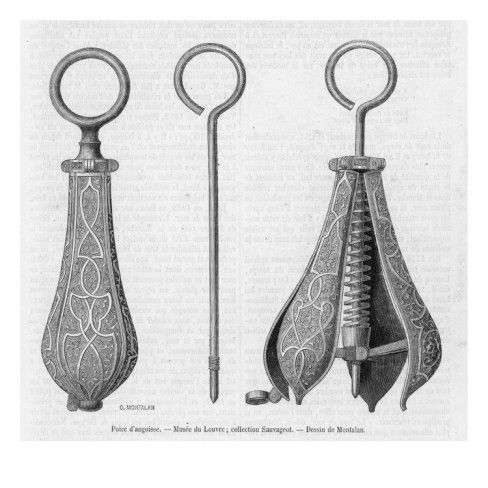 · |
|
#4
●
12-24-2009, 11:15 AM
| ||||||||
 So Fucking Banned Poster Rank:1263 Join Date: Dec 2009 Posts: 489 Mentioned: 0 Post(s) Quoted: 0 Post(s)
| ||||||||
|
Re: A List of Horrendous Ways To Die
You stumble, shit faced out of a bar and see half a joint laying in the gutter...you stoop to pick it up and fall over cracking your skull on the curb...a wino walking along ses you bleeding and pukes in your face...you die of disgust. -S |
|
#9
●
12-24-2009, 03:17 PM
| ||||||||
 Joseph Goebbels Poster Rank:240 Male Join Date: Nov 2009 Posts: 5,773 Mentioned: 2 Post(s) Quoted: 12 Post(s)
| ||||||||
|
Re: A List of Horrendous Ways To Die
The Brazen Bull fascinated me as a kid. When Perillos gave the bull to Phalaris, Phalaris tested it out on Perillos, didn't cook him for too long then dumped him in a field. A nice thankyou. |
|
#10
●
12-24-2009, 06:27 PM
| ||||||||
 My Rank: PRIVATE Poster Rank:6055 female Join Date: Oct 2009 Posts: 38 Mentioned: 0 Post(s) Quoted: 0 Post(s)
| ||||||||
|
Re: A List of Horrendous Ways To Die
"The creepy thing is, they will leap on your back, and sever your spinal cord with their teeth, which have special nerves that allow the cougar to feel for your spine. " Is this possibly true?? Source? |