|
#1
●
11-06-2013, 04:29 PM
| ||||||||
 They Lied. There ALL LIES Poster Rank:309 <--We Did It. So Can You Join Date: Mar 2013 Posts: 4,213
Contributions: 48
Mentioned: 23 Post(s) Quoted: 894 Post(s)
| ||||||||
|
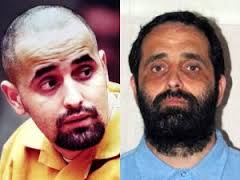
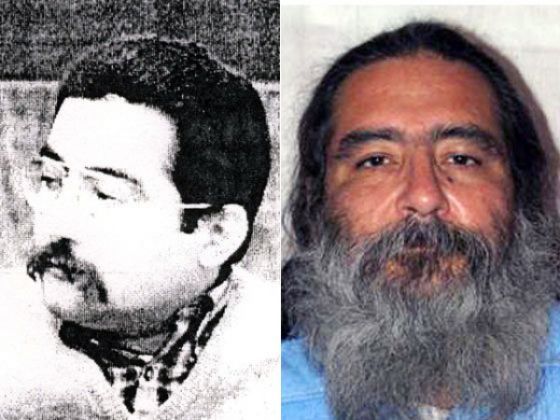
John Galen Davenport, Pictures And Short Bio
The area where the body was found is bounded by Myford and Michelle Streets; a dirt berm two to three feet high lies between Myford Street and the field. Between the road and the berm was an area in which items from a woman's purse were scattered among random, twisting footprints. This evidence suggested a struggle had occurred in that location. Behind the berm, about 20-30 feet from the body, was a large pool of bloodied water, a pair of woman's pants, a woman's underpants, and a pair of boots. There were two sets of motorcycle tracks in the area. One set left and re-entered Myford in the area of struggle. The second set of tracks led from Myford, over the end of the dirt berm within four to five feet of the body, and back to the street. Appellant's nickname was "Honda Dave." Police learned that he had left the Sit `N Bull with the victim on the night of her death and that he rode a 350 cc Honda motorcycle. On March 28 the officers, who had a warrant to arrest appellant for an unrelated traffic offense, entered the open carport at appellant's home where they examined and photographed the tires on appellant's bike. The examination indicated a possible match between the tracks at the murder scene and the tread on appellant's tires. The officers went to the house and arrested appellant. The prosecution produced three eyewitnesses who placed a motorcycle similar to one owned by appellant at the murder scene between 12:30 and 1:30 a.m. on March 27. The first witness had left his workplace on Myford Road shortly after 1 a.m. As he passed by the intersection of Michelle and 257*257 Myford he saw a motorcycle parked beside the road which looked similar to a 350 cc Honda that his son owned. The second witness testified that she also had driven past the intersection about 12:30 a.m. and that she had seen a motorcycle parked off the road near a telephone pole. She had seen a man crouched on the far side of the dirt berm. The man wore a plaid shirt and had shoulder length hair. She could not ascertain the nature of his activity. The motorcycle was dark in color, and of a foreign, probably Japanese, make. This witness did not identify appellant. A third witness testified that she had driven around that corner at 12:35 a.m. As her headlights swept the field she saw a parked motorcycle and a man who was crouched over and appeared to be digging. The motorcycle resembled the bike belonging to the appellant which was in the courtroom as a prosecution exhibit. The man was white and had collar length hair. She saw his face when he briefly looked into her headlights. Prior to trial this witness had picked appellant's photo as one of three which could have been the man she saw. She was unable to select appellant from a live lineup. At trial the district attorney displayed the photographic line-up from which the witness had originally selected several pictures. She selected a photograph of appellant and testified that she thought that was the person she had seen in the field although she could not be positive that it was. Three expert witnesses testified to facts that connected defendant's motorcycle to the crime. Bonnie Driver, a criminalist employed by the Orange County Sheriff's Department, testified that she had examined vegetable matter taken from appellant's motorcycle and compared it with vegetation taken from the area where the victim's body was found. Driver found the gross morphology of the plants in both samples to be consistent with each other. A forensic microscopist, Skip Pallinick, examined and compared the heavy mineral content of soil samples taken from appellant's bike with samples taken at the murder scene. He testified that the samples were generally consistent with each other. One of the samples from the motorcycle contained sufficient similarity to the murder scene samples that the witness concluded they were virtually indistinguishable. Both of these witnesses admitted they had not compared the samples taken from appellant's bike with samples taken from other parts of Orange County. Dr. Stephen Dana, a geologist retained by the defendant, examined the same soil samples and found similarities and differences in all of them. Based on his knowledge of the geology of the area Dr. Dana opined that the samples could have come from anywhere in Orange County. Jack Leonard, the production manager for the International Sport and Rally Division of Dunlop Tire Company, testified that appellant's motorcycle could have made the tracks at the scene. Mr. Leonard had examined plaster casts of the tracks found near the victim's body and the actual tires 258*258 on appellant's motorcycle. He found that the tracks of the rear tire had the same highly unique and distinctive characteristics as the rear tire of the motorcycle. Both were Dunlop brand motorcycle tires, size 4.00-18 with a K-70 tread pattern. Both were characterized by a defect in a portion of the tread pattern known as the cross-slot. The defect was caused by damage to the upper half of the manufacturing mold. Mr. Leonard testified that tires with such blemishes are routinely removed from the regular production line. They are sold as "blems" at a reduced price but pursuant to trade restrictions are not shipped to the U.S. It was Leonard's opinion that not more than two or three tires with this defect which were manufactured at the same time and place as the tire on appellant's bike would have eluded inspectors and been shipped to the U.S. Similar tires are currently manufactured in the U.S., but the steel utilized for the molds here is stronger than the aluminum used in Britain and not subject to the kind of breakage which caused this defect. The witness also explained that it was unusual for a nine-year-old tire to show only 40 percent wear, as did the tire on appellant's motorcycle.[2] The vast majority (95 percent) of similar tires are completely worn out after five or six years of use. This degree of wear was consistent with the tracks at the scene. Finally, Leonard testified that the track of the front motorcycle tire at the scene showed a tread pattern which he recognized as a Bridgestone tire, similar to the front tire on appellant's motorcycle. The nature of the charge against appellant requires that we describe the grotesque details of the condition of the victim's body and the cause of her death. The body, nude except for a sweater draped over the upper torso, had suffered numerous and extensive stabbing and slashing wounds about the neck, chin and jaw as well as defensive wounds to the hands and forearms. The victim's carotid artery had been severed. Her breasts were bruised. A long wooden stake had been inserted into her rectum. An autopsy revealed that the stake was forced deeply into the body, injuring various internal organs and tissues before it came to rest just under the right armpit. The autopsy pathologist, Dr. Walter Fischer, testified that the cause of death was the loss of blood from the carotid artery, and that the insertion of the wooden stake was a contributing factor. Dr. Fischer testified that it was his opinion that the victim was alive at the time the wooden stake was inserted, because the 200 cc's of blood which he found in the pleural cavity could only have been pumped out of the perforation in the lung by a beating — and thus living — heart. Dr. Fischer did not believe that the surprisingly small amounts of blood found at the point where the stake contacted the 259*259 anus and liver contradicted his conclusion. He attributed the lack of further bleeding to the probability that the victim's body had entered a state of shock after the carotid artery was cut and before the stake was inserted. When in shock, he explained, blood is channeled to the most vital organs — primarily the brain, heart and lungs — and the vessels in organs of lesser immediate importance, such as intestines, contract. Dr. Fischer testified that the neck and hand wounds had probably occurred before the penetration of the stake. He testified that the victim could have lived from 5 to 20 minutes after the artery was severed. He could not offer a medical opinion that the victim was or was not conscious when the stake was inserted. Dr. Renee Modglin, an experienced pathologist, reached different conclusions. Based on an examination of photographs of the victim's body and Dr. Fischer's autopsy report, Dr. Modglin formed the professional opinion that the stake had probably entered the victim's body after her death. He suggested blood could have entered the lung either through one of the initial cuts in the carotid artery or during post-mortem movements of the body. He offered his opinion that a state of shock would not have prevented bleeding in all of the areas which the stake had contacted. The prosecution also called as a witness John Farmer who testified to incriminating admissions appellant made to him while both were in a holding cell at the Orange County Superior Court at various times between September 8, 1980, and December 19, 1980. According to the testimony, appellant told Farmer he had killed a girl, that he had sodomized her while she yelled for him to stop, that he had stabbed her and tried to cut off her head but could not succeed because his knife was too small. Appellant said that after he stabbed her, he had lowered the girl's body onto a wooden stake because he wanted to make a scarecrow of her. When the stake came out of the ground, he had pushed and kicked it further into her body. According to Farmer, appellant variously said he had killed her because she had sexual relations with another man and because she had led appellant on. Appellant's testimony was consistent with that of the other witnesses who had been at the Sit `N Bull Bar on March 26. After cashing his paycheck at a local bowling alley, he had gone to the bar around 8:30. There he played pool, drank beer and visited with people. He was acquainted with the victim and with her boyfriend. Lingle had asked Larry Richards for a ride home but Richards said she would have to wait until he finished playing pool. Appellant had then offered her a ride but she had not replied. Some time later after she indicated she wished to purchase some beer to take home appellant bought her a six-pack. His motive was to return the favor the 260*260 victim and her boyfriend had done for appellant when he was too broke to buy himself a drink. He walked out of the bar with her and carried the beer. In the parking lot he gave her the six-pack and again offered her a ride; she again declined. Appellant left on his motorcycle and went to a nearby coffee shop, alone, and drank two cups of coffee. He then went home to bed. The following morning appellant got up at a quarter to seven, showered and headed for his job at Apri Cosmetics, in Orange. He was due to begin work at 8 a.m. but his motorcycle developed a flat tire in Tustin. Appellant stopped and called his supervisor. At 8:30 a.m. he purchased a new inner tube from Tustin Honda and changed the tire. He arrived at work at 9:30 a.m. Appellant's girlfriend testified that she had gone to sleep at 10 p.m. on March 26. Appellant was not at home at that time but was in their bed when she awoke at 6 the following morning. Appellant was dressed only in his undershorts and she could see his arms, legs and torso. There were no cuts, scratches or blood on him. She had heard no sounds during the night which indicated he had showered or cleaned himself or his clothes. Susan Stock, appellant's supervisor at Apri Cosmetics, testified that she had tried to verify appellant's excuse for being tardy on March 27. She had examined the bike and formed the opinion that neither tire had recently been changed. Officer Veach, an investigator for the Irvine Police Department examined the tires on appellant's motorcycle after his arrest. He also formed the opinion that neither tire had been recently changed. Paul Jorgensen, the manager of Tustin Honda, testified that the business opened at 9 a.m. and that his sales records for March 27 showed no sale of a motorcycle tube such as that appellant claimed to have purchased. |
|
#2
●
11-07-2013, 01:22 AM
| ||||||||
 ★ Legacy Member ★ Poster Rank:21 MAN Join Date: Nov 2009 Posts: 61,094 Mentioned: 825 Post(s) Quoted: 37482 Post(s)
| ||||||||
|
Re: John Galen Davenport, Pictures And Short Bio
Wow, what a fucking prick this douche is, jamming a piece of wood up her ass to her armpit while she was still alive.   |
|
#3
●
11-07-2013, 01:32 AM
| ||||||||
| They Lied. There ALL LIES Poster Rank:309 <--We Did It. So Can You Join Date: Mar 2013 Posts: 4,213
Contributions: 48
Mentioned: 23 Post(s) Quoted: 894 Post(s)
| ||||||||
|
Re: John Galen Davenport, Pictures And Short Bio
in many, and i mean many appeals to higher courts to try to change a sentence or whatever, this case is the benchmark as to what constitutes torture. that is to argue that, what i did in my crime aint nearly as bad as this fucker
|
|
#4
●
11-07-2013, 08:35 AM
| ||||||||
 ✝Mudderator from Hell✝ Poster Rank:10 e-mail Join Date: Oct 2006 Posts: 96,366
Contributions: 817
Mentioned: 476 Post(s) Quoted: 10316 Post(s)
| ||||||||
|
Re: John Galen Davenport, Pictures And Short Bio
what an evil pos.
 · |
|
#6
●
11-07-2013, 12:32 PM
| ||||||||
| They Lied. There ALL LIES Poster Rank:309 <--We Did It. So Can You Join Date: Mar 2013 Posts: 4,213
Contributions: 48
Mentioned: 23 Post(s) Quoted: 894 Post(s)
| ||||||||
|
Re: John Galen Davenport, Pictures And Short Bio
the bar where they met is no longer there... but iv been over there a few times.. my aunt lived near there
|
|
#8
●
11-09-2013, 12:12 AM
| ||||||||
| They Lied. There ALL LIES Poster Rank:309 <--We Did It. So Can You Join Date: Mar 2013 Posts: 4,213
Contributions: 48
Mentioned: 23 Post(s) Quoted: 894 Post(s)
| ||||||||
|
Re: John Galen Davenport, Pictures And Short Bio
me thinks he may have misunderst00d the a good bars discription as... A MEAT Market
|
|
#9
●
11-29-2013, 11:21 PM
| ||||||||
 My Rank: SERGEANT Poster Rank:1225 Join Date: May 2009 Posts: 517 Mentioned: 3 Post(s) Quoted: 49 Post(s)
| ||||||||
|
Re: John Galen Davenport, Pictures And Short Bio
There is no soul in that man. An empty vessel of evil. Go to hell you bastard. Bless her heart, she took a ride with a madman.
|