for more threads like this one :
http://www.documentingreality.com/fo...me-line-45276/
40new pix added 18th May 2010
Late May update :
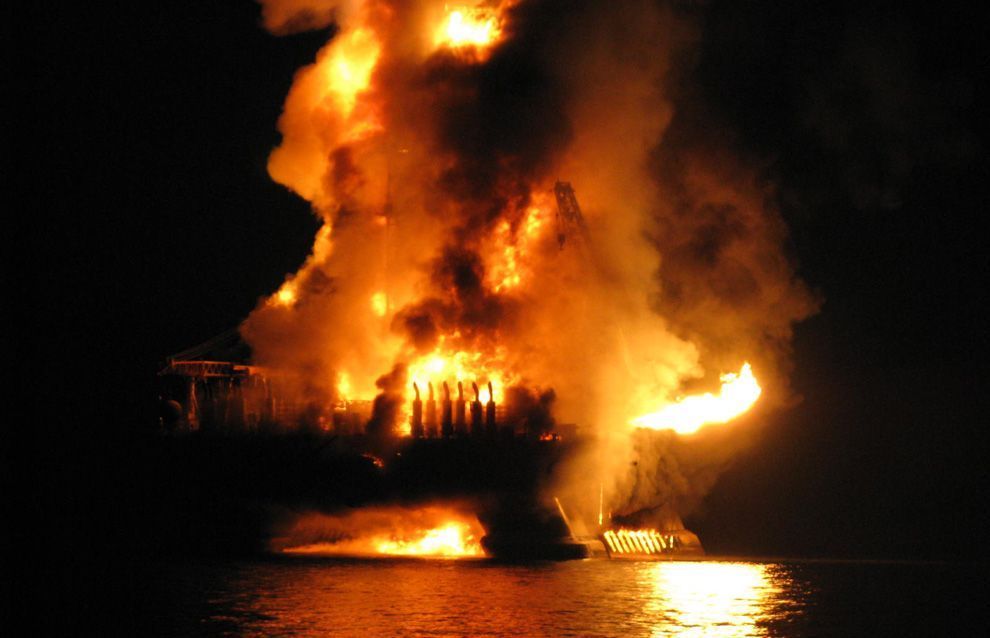
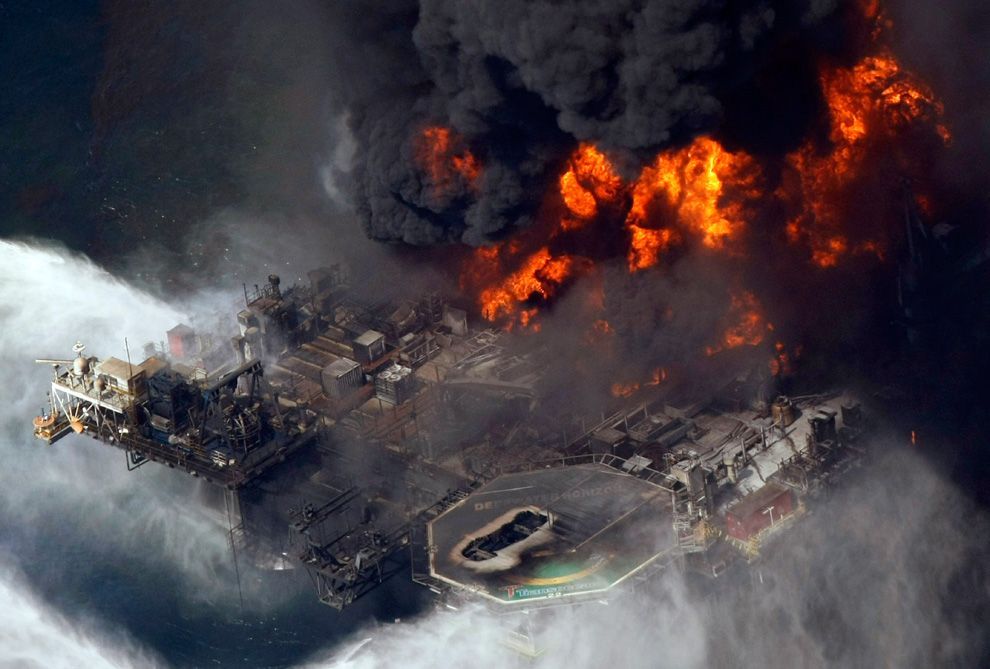
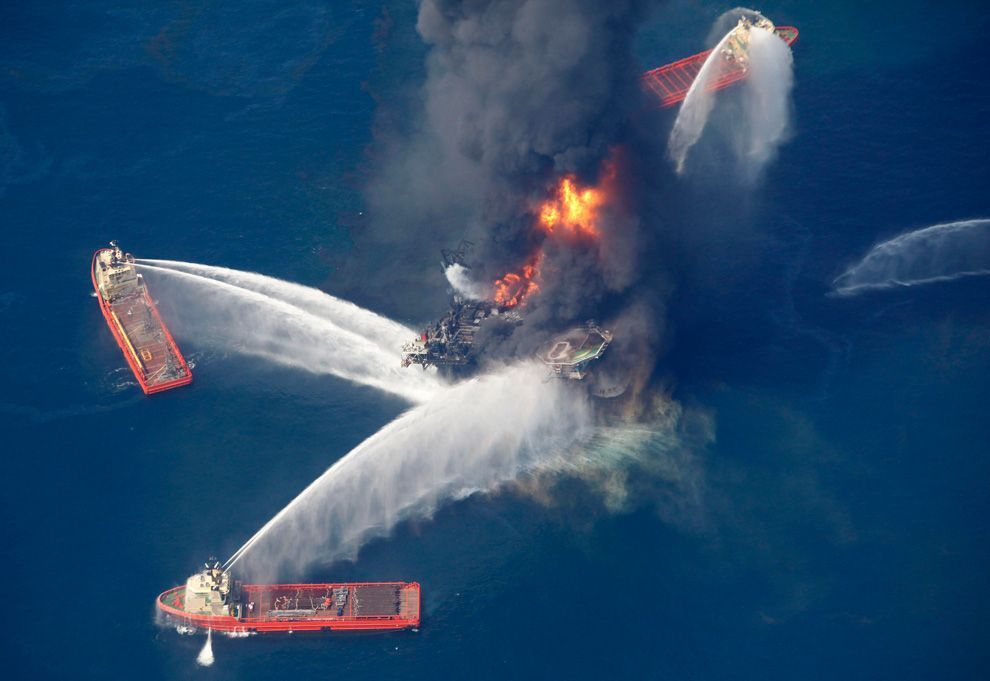
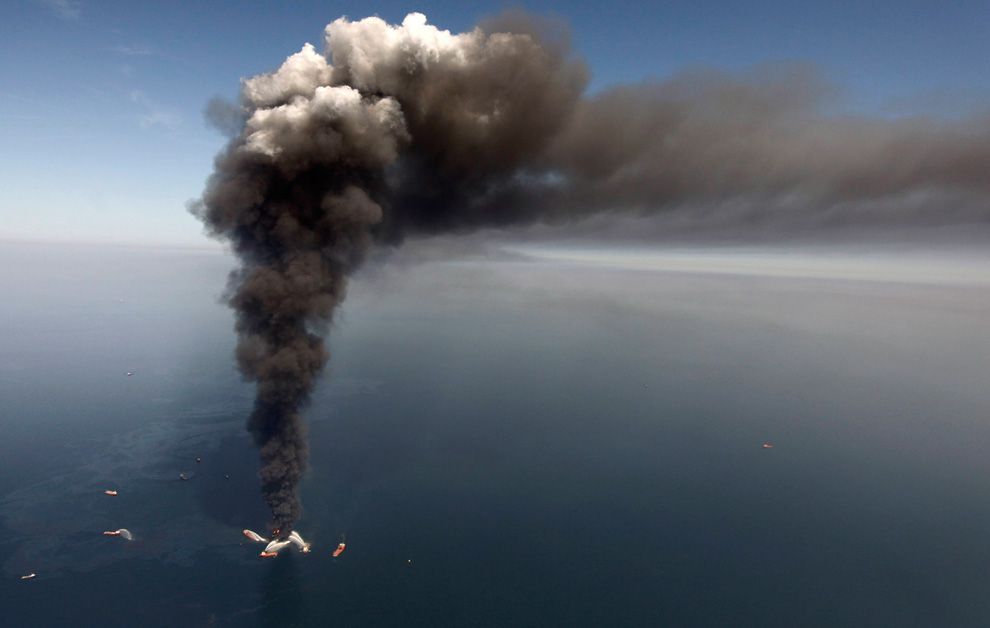
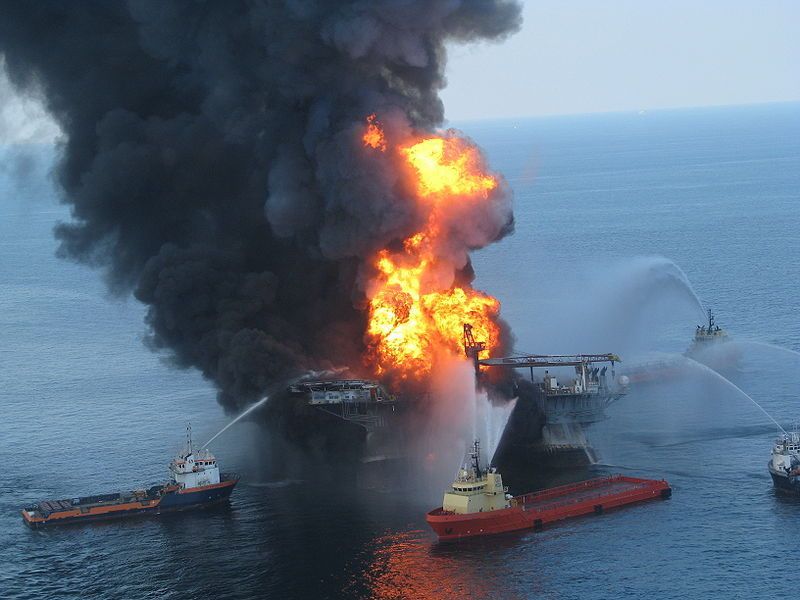
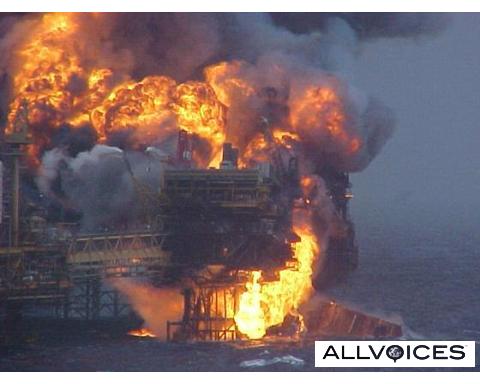
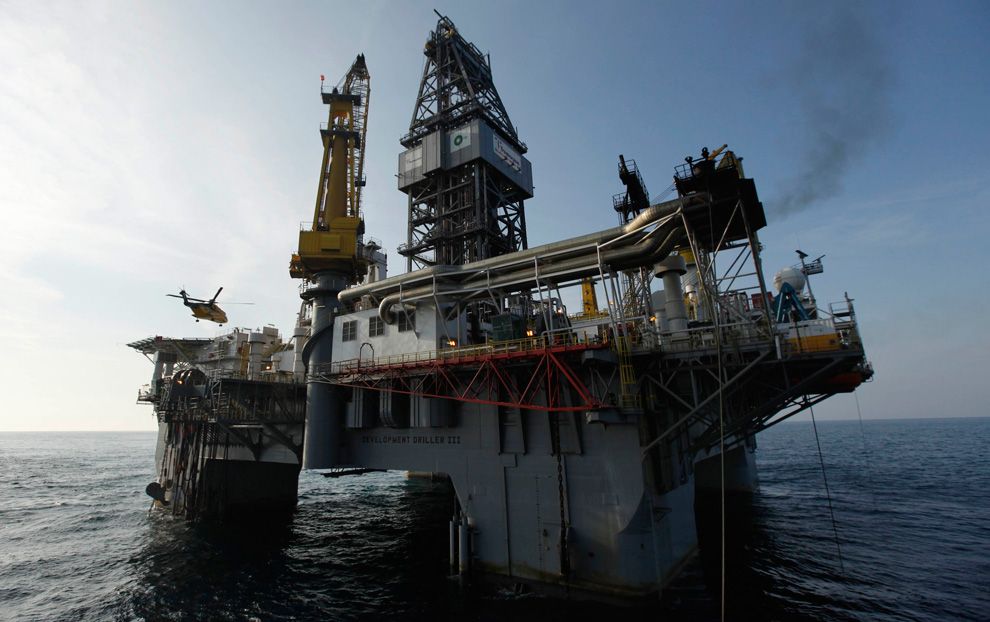
http://www.documentingreality.com/fo...-photos-51458/ The Deepwater Horizon, a semi-submersible offshore drilling rig in the Gulf of Mexico, exploded after a blowout on April 20, 2010, and sank two days later, taking with it eleven lives and causing a significant oil spill. It is the worst drilling accident in the Gulf of Mexico since the blowout of Ixtoc I. Experts fear environmental disaster.
Explosion and rescue efforts
The fire reportedly started at 10 p.m. CST. Adrian Rose, a vice president of Transocean, Ltd., said workers had been performing their standard routines with "no indication of any problems" just prior to the explosion. According to officials, 126 individuals were on board at the time of the explosion, many of whom were able to escape and were brought onshore on a workboat. According to spokesperson of Transocean Ltd, at the time of the explosion the rig was drilling but was not in production. Survivors described the incident as a sudden explosion which gave them less than five minutes to escape as the alarm went off. Most of the survivors escaped via fiberglass lifeboats equipped with diesel engines and travelled nearly 45 minutes before reaching a supply boat that BP had hired to pick up the survivors. The survivors were brought to Port Fourchon to go through a medical check-up and be reunited with their families. On April 22, officials stated 11 missing workers could have been near the blast and not been able to escape due to the sudden explosion. After having been on fire for more than a day, Deepwater Horizon sank on April 22, 2010.
115 of the 126 member crew were recovered, 94 of the survivors were taken to shore with no major injuries and four others were transported to another vessel and eleven remain missing. 17 were evacuated from the rig by helicopter and taken for medical treatment; two of them were airlifted to a trauma center in Mobile, Alabama. Six were taken to University of South Alabama Medical Center with one admitted to the burn unit and the other five released. Four were taken to the West Jefferson Medical Center in Marrero, two by air and two by ground, all of whom were treated and released by 11:15 a.m. on April 21. Initial reports indicated between 12 to 15 were missing. As of April 23, 2010, Rear Admiral Mary E. Landry, commander of the Eighth Coast Guard District said that the conditions of four of the injured had improved with two of them released from the hospital, one soon to be and another expected to be released in seven to ten days.
The United States Coast Guard launched a massive rescue operation. Four helicopters, four coast guard ships and one plane were used for rescue operations. Two Coast Guard cutters continued searching overnight. By the morning of April 22 the Coast Guard surveyed nearly 1,940 mi (3,120 km) in 17 separate air and sea search missions. On April 23 the Coast Guard called off the search for the 11 missing persons. The eleven are not expected to be found alive, as Landry stated at a news conference, "We have just made a very difficult decision. After a three-day search covering 5,300 miles, we have reached a point where reasonable expectations of survival have passed."
Oil spill
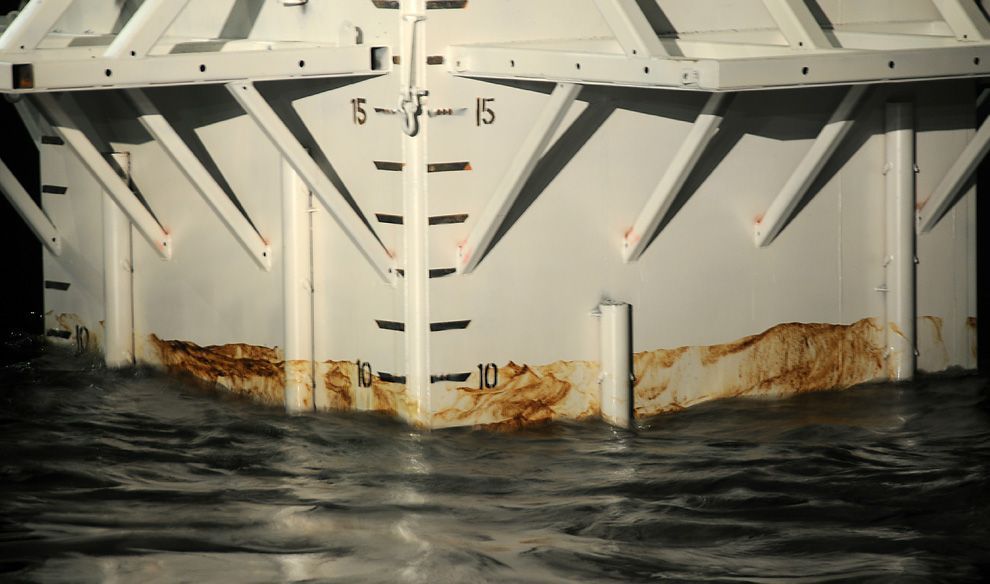
On the morning of April 22, CNN quoted Coast Guard Petty Officer Ashley Butler as saying that "oil was leaking from the rig at the rate of about 8,000 barrels of crude per day." That afternoon, as a large oil slick spread, Senior Chief Petty Officer Michael O'Berry told CNN that a submersible crew had been unable to cap the well and that, based on the rig's previous daily production, up to 336,000 gallons of oil a day could spill into the Gulf. Butler warned of a leak of up to 700,000 gallons of diesel fuel, and BP Vice President David Rainey termed the incident as being a potential "major spill."
The next morning, interviewed by CBS, and specifically asked how much oil was emanating from the ocean floor wellhead or the broken pipes or risers, Landry stated that no oil was emanating from either. In response to another TV reporter who said, "You have to feel confident about where you are now, environmentally speaking," Landry stated, "The fact that there is no oil spilled other than that small amount we were able to work with, that's a good thing," and expressed "cautious optimism" of zero environmental impact. Subsequently, the news stories of April 23 quoted Admiral Landry as saying that no oil appeared to be leaking from either the undersea wellhead or at the water's surface, and that oil spilled from the explosion and sinking was being contained.
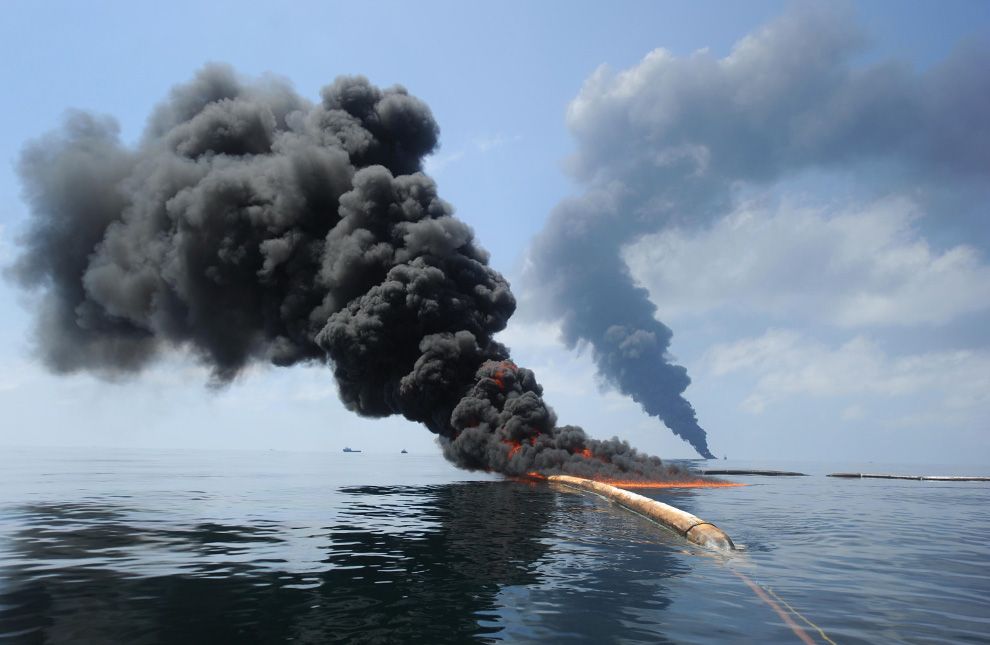
The following day, April 24, Landry announced the discovery of a damaged wellhead leaking oil into the Gulf. Landry described it as "a very serious spill, absolutely." BP, which was leading the cleanup, employed remotely operated vehicles (ROVs), 700 workers, four airplanes and 32 vessels to contain the oil.
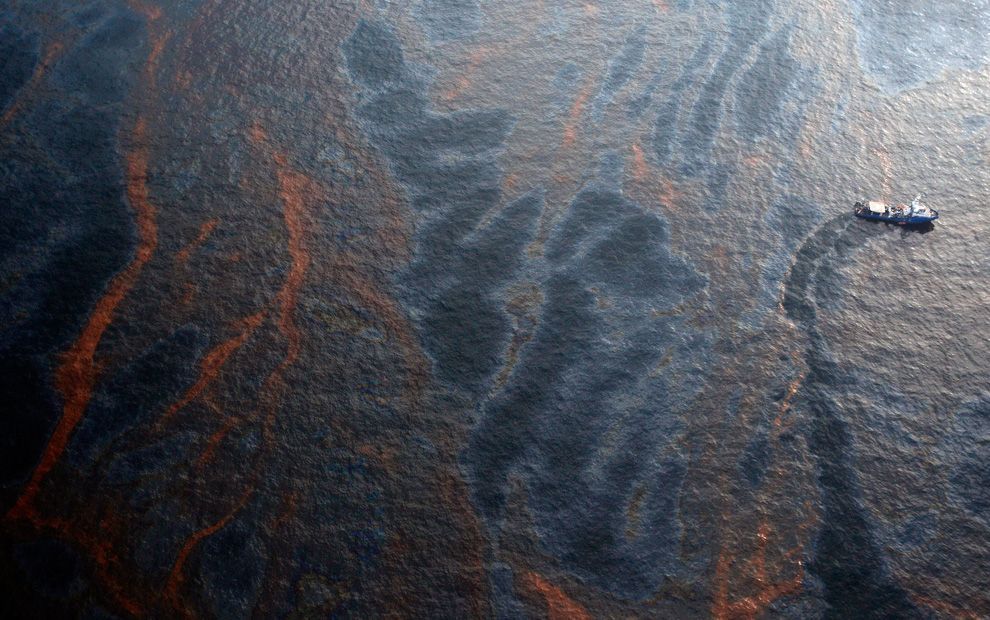
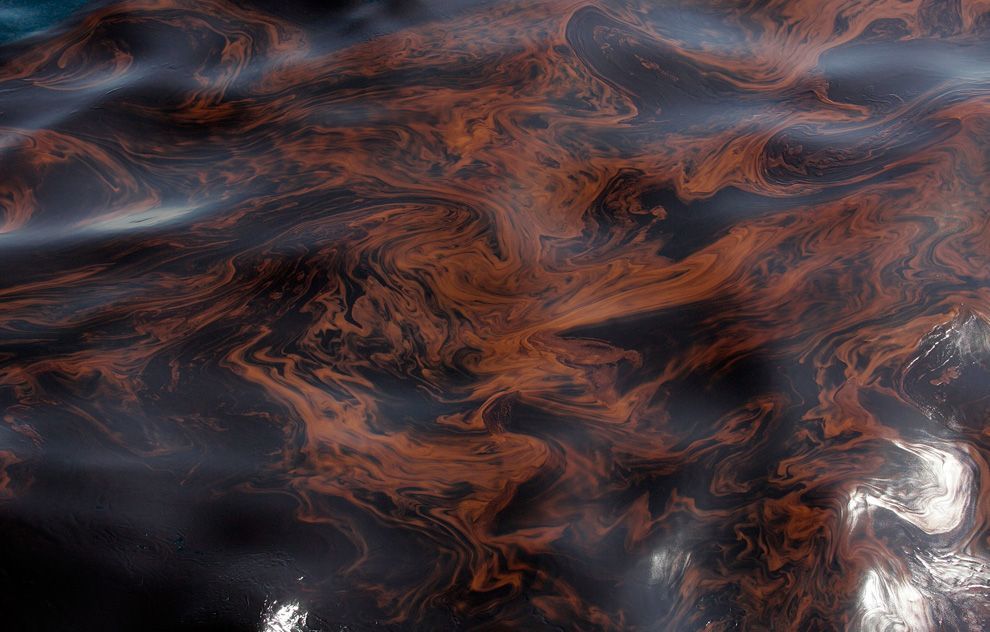
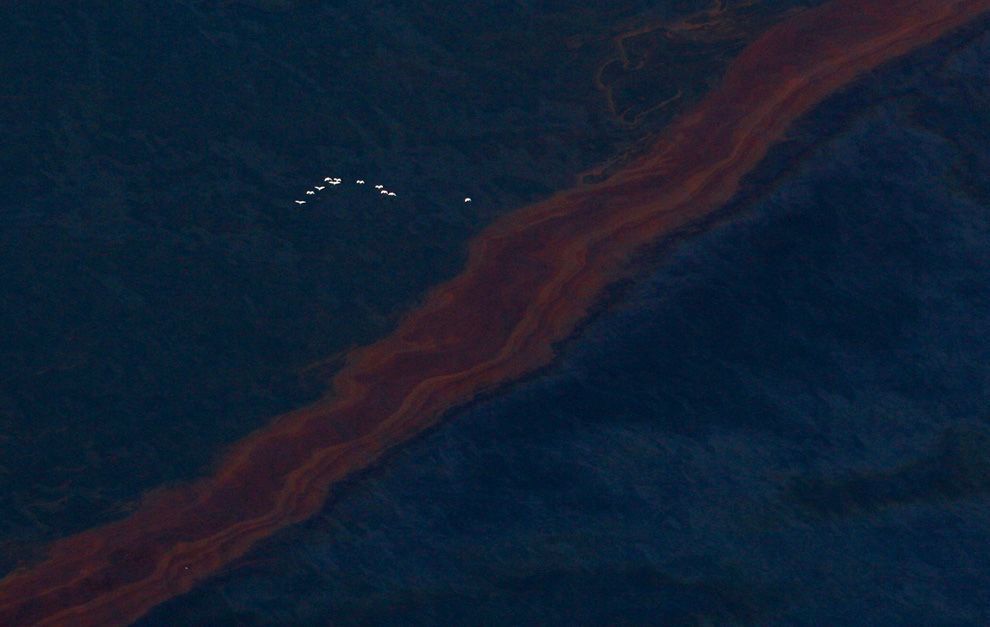
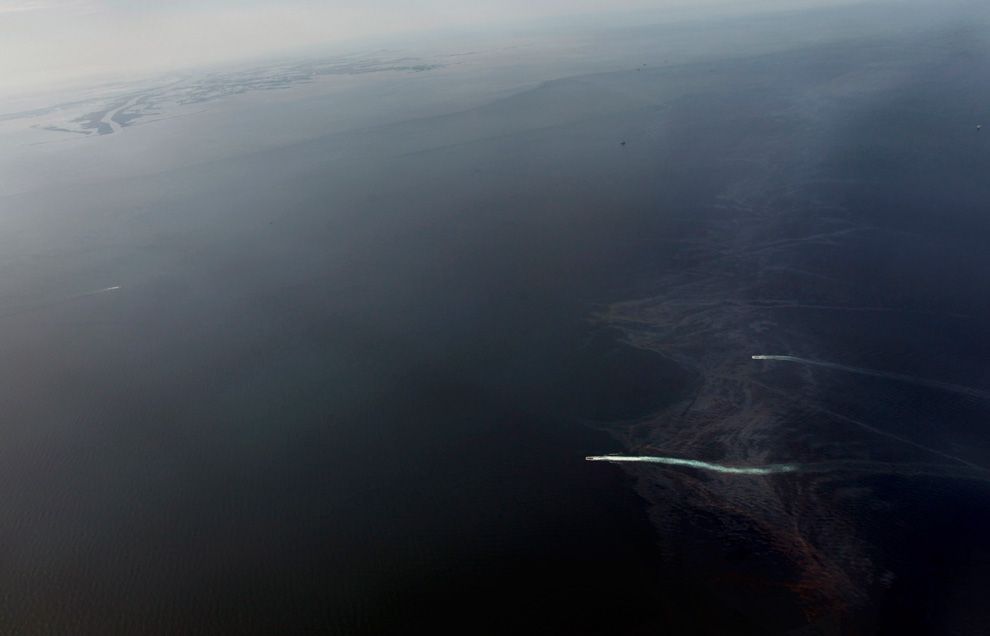
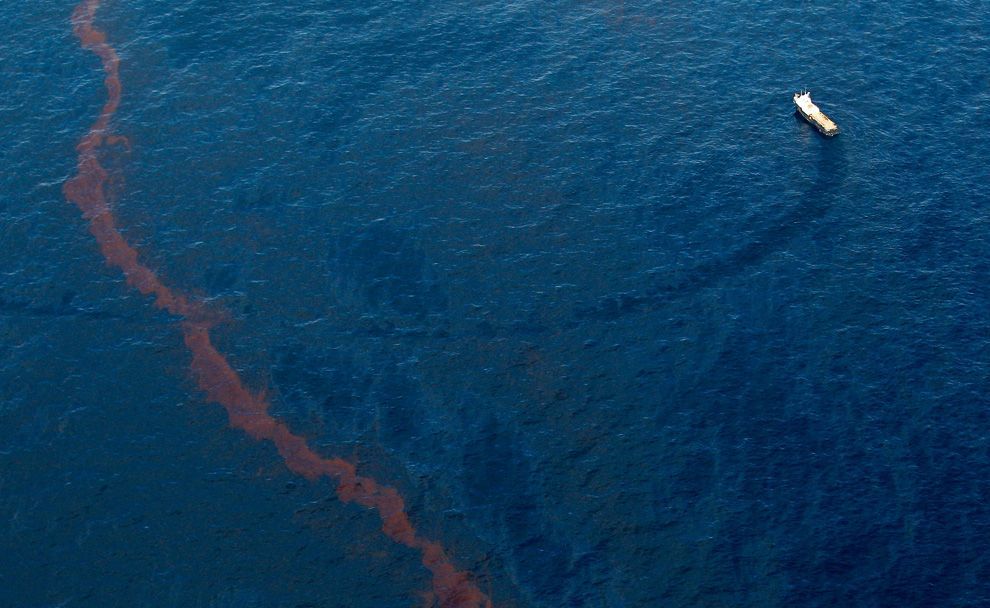
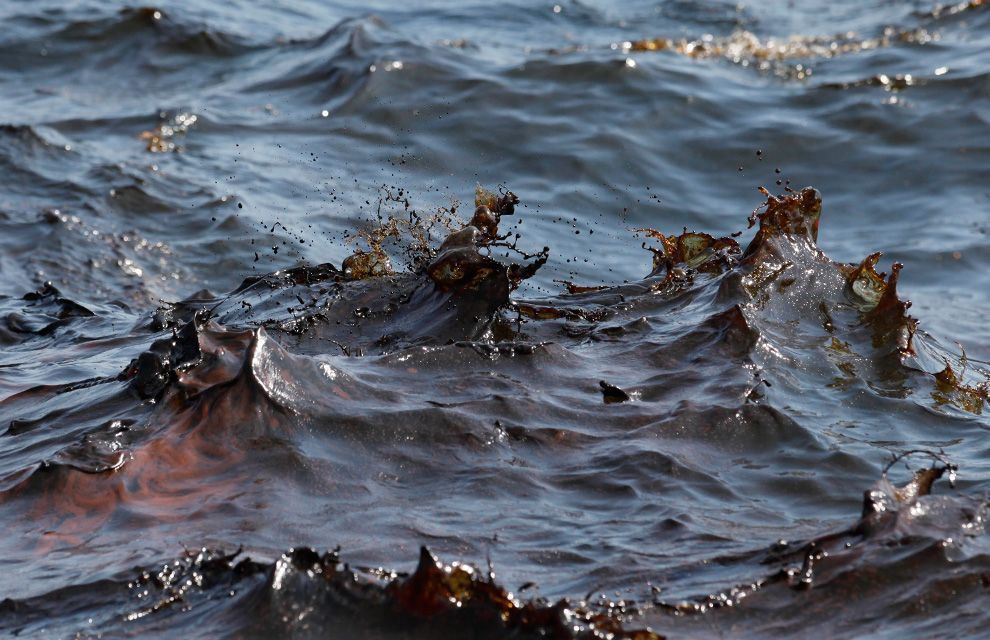
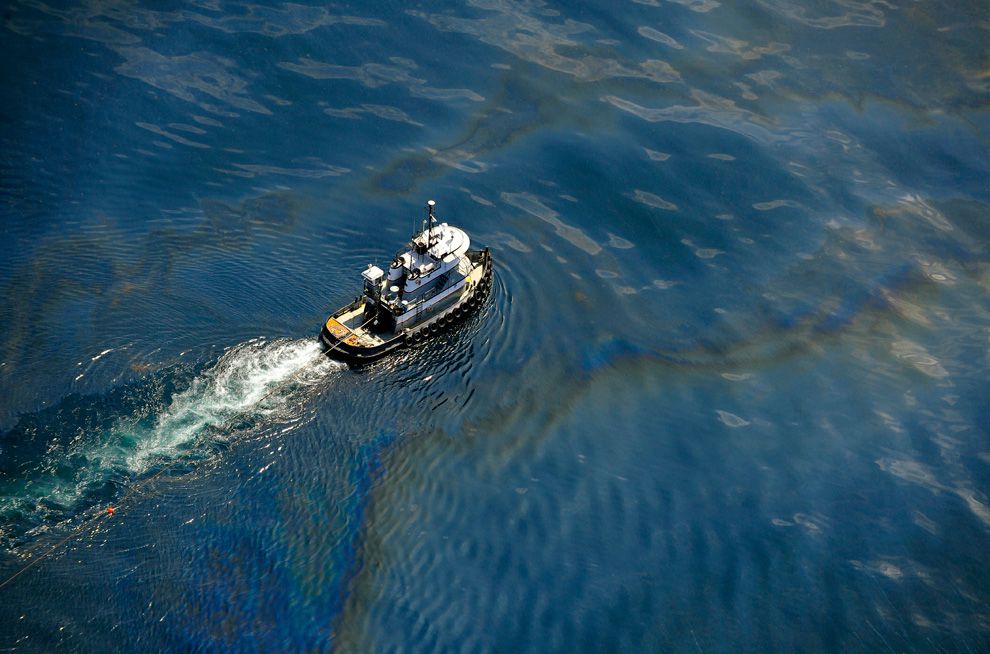
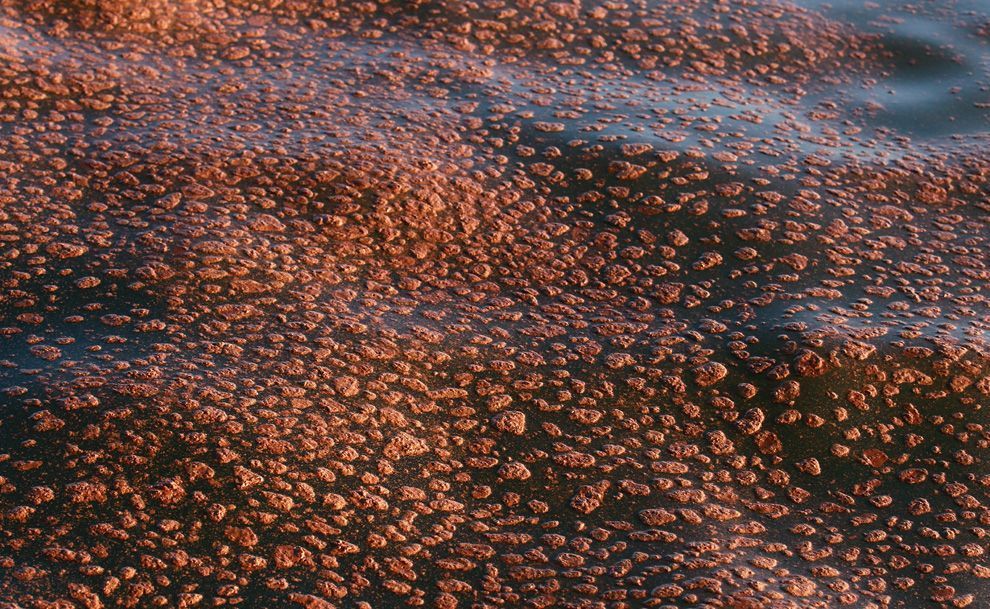
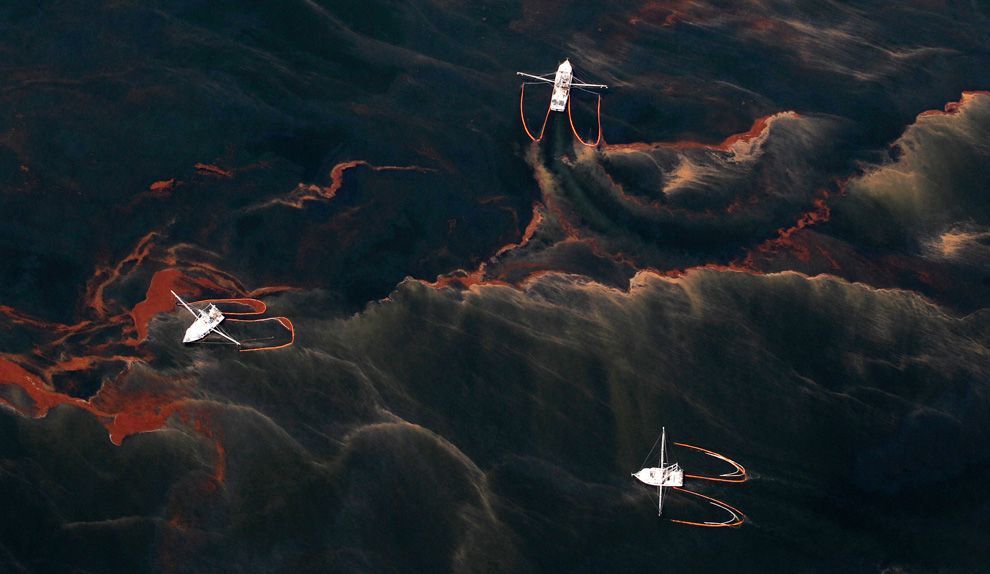
Up to 1,000 barrels of oil a day (1.84 litres/second) were originally estimated to be leaking from the wellhead according to BP, but by April 28, the NOAA said that it was probably five times that estimate, i.e., 5,000 barrels, or about 210,000 gallons, per day (9.2 litres/second). Other sources using satellite imagery have put that number as high as 5,000 to 10,000 barrels a day (9.2 to 18.4 litres/second). Estimating the flow is very difficult, as there is no metering of the flow underwater. However, the slick was estimated, as of April 30, to cover 6,000 square miles, or an area approximately equivalent to that of Jamaica. The spread of the oil has been greatly increased by strong southernly winds caused by an impending cold front. This front consequently also creates a bottle neck in the airflow as it progresses north, thus spreading the oil slick wider. The oil slick may eventually exceed the volume of oil in the 1989 Exxon Valdez oil spill, as the spill may take months to contain and is quickly approaching the Delta National Wildlife Refuge. The same day, Governor of Louisiana Bobby Jindal declared a state of emergency in the state after weather forecasts predicted the slick would reach the Louisiana coast by April 30 while President Barack Obama announced that the Federal Government is using "every single resource at our disposal" to control the slick.
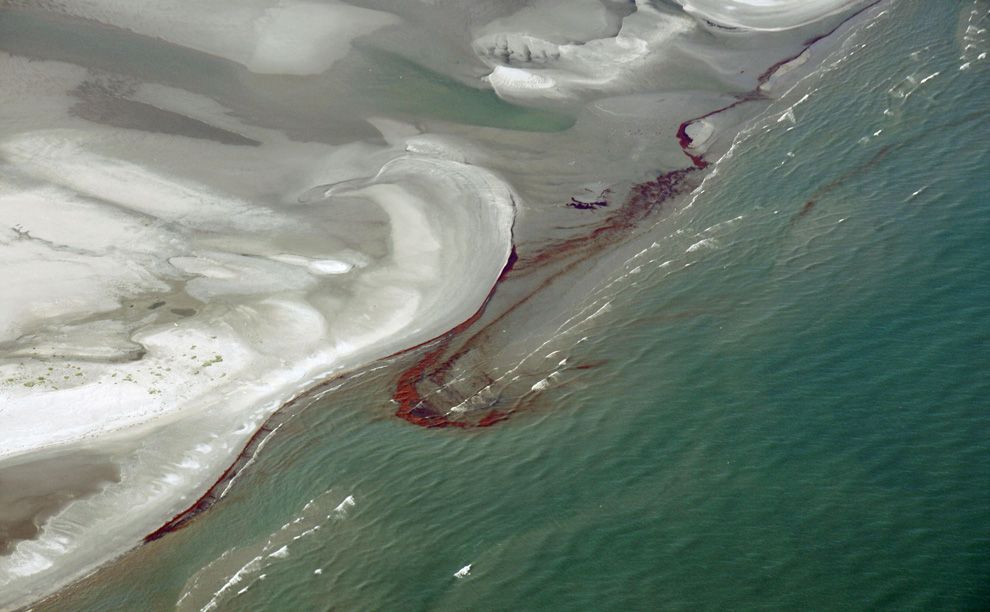
By April 30, the US coast guard received reports that oil is washing up on the Gulf Coast and is investigating them. Because of the risk that the oil spill can affect the shrimping industry, an emergency shrimping season was opened on Thursday so that a catch can be brought in before the oil advanced too far.
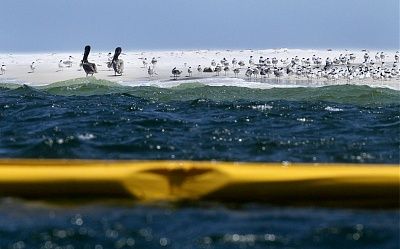
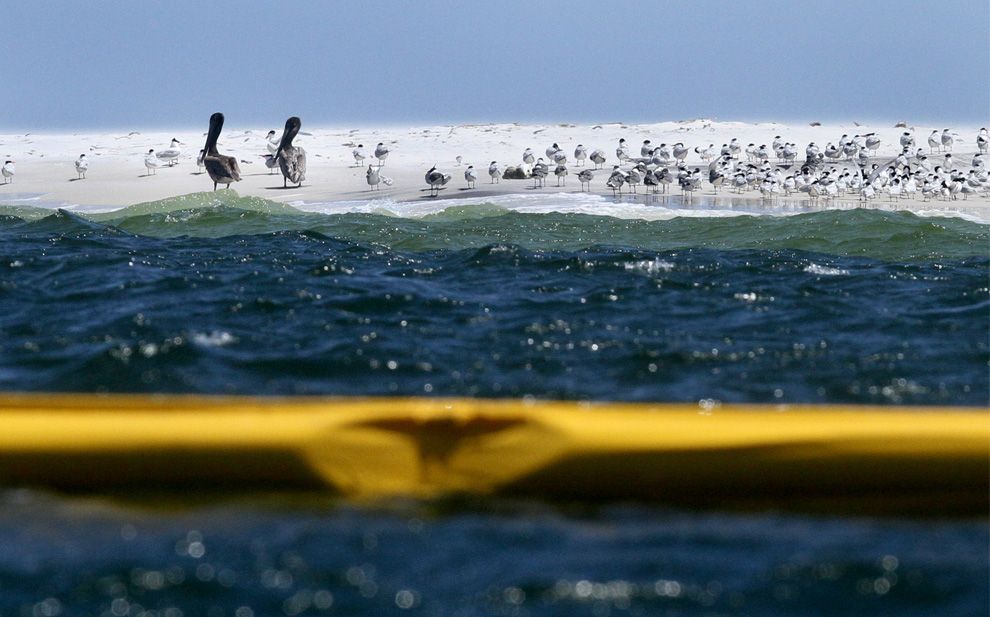
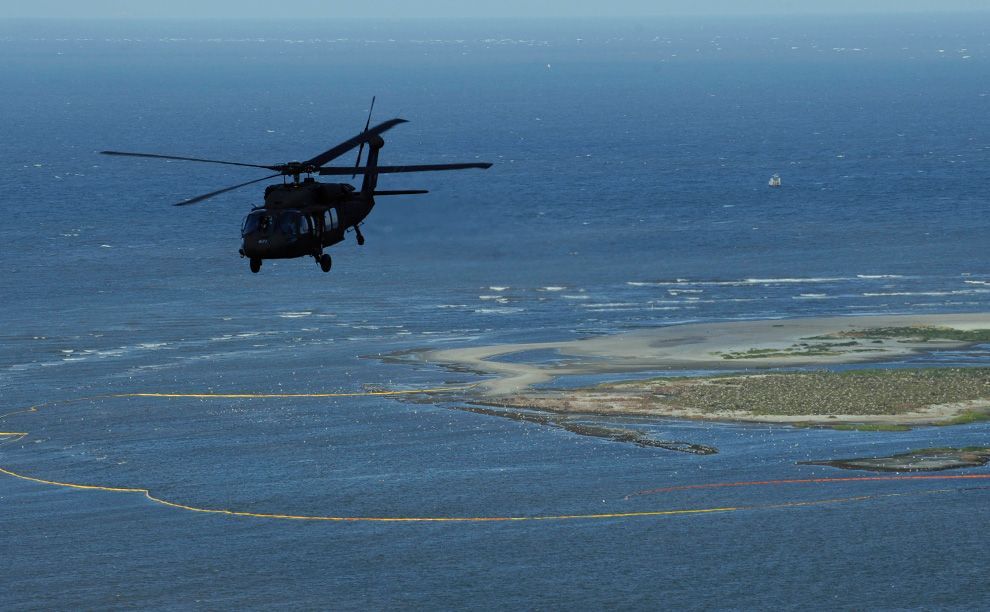
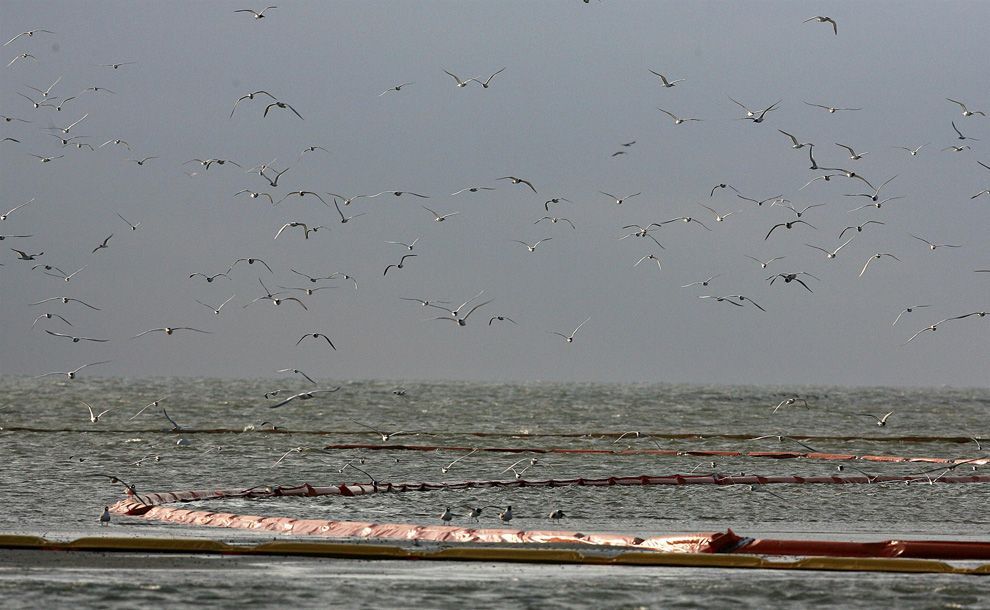
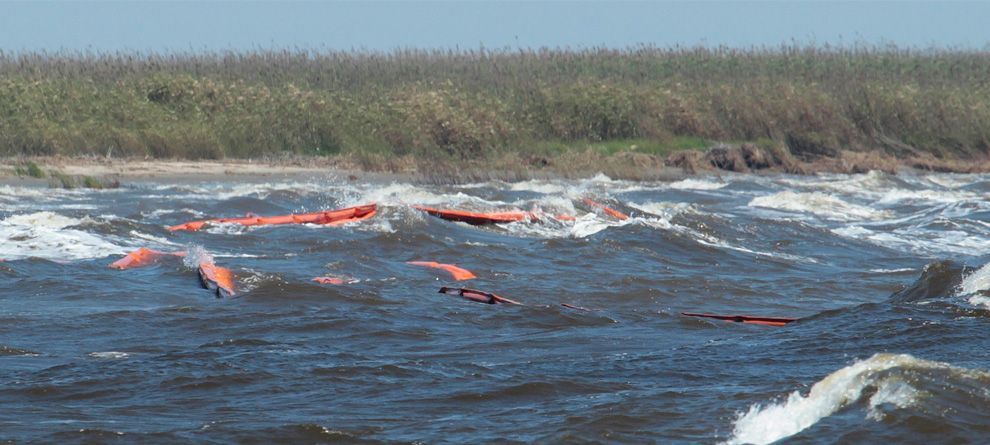
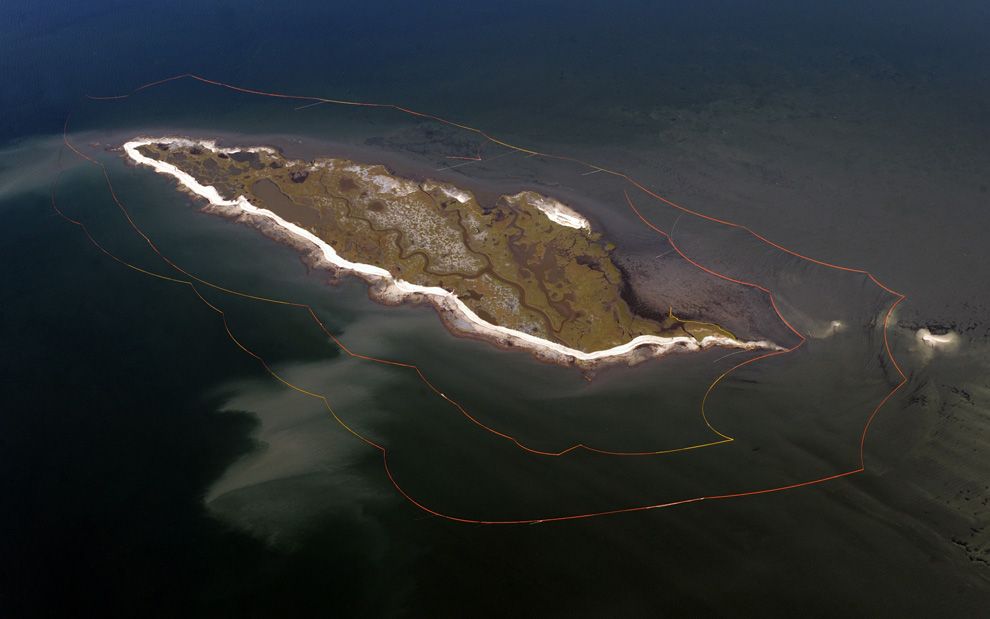
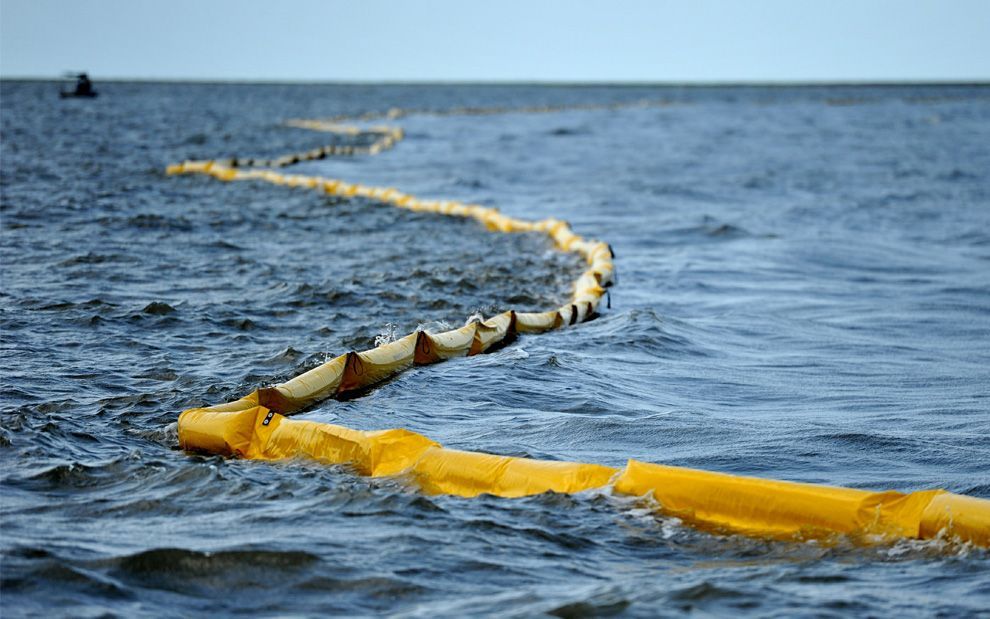
Two brown pelicans and a flock of seagulls rest on the shore of Ship Island as a boom line floats just offshore Thursday, April 29, 2010 in Gulfport, Miss. Several hundred yards of boom line has been set up on the north side of the island to try and contain the oncoming oil spill. Crews are placing the boom in different areas on Coast waterways to help protect against an approaching oil slick in the Gulf of Mexico.
This image provided by the U.S. Coast Guard Saturday April 24, 2010 shows oil leaking from the drill pipe of the Deepwater Horizon drilling rig after it sank Thursday.
Two brown pelicans and a flock of seagulls rest on the shore of Ship Island as a boom line floats just offshore Thursday, April 29, 2010 in Gulfport, Miss. Several hundred yards of boom line has been set up on the north side of the island to try and contain the oncoming oil spill. Crews are placing the boom in different areas on Coast waterways to help protect against an approaching oil slick in the Gulf of Mexico.
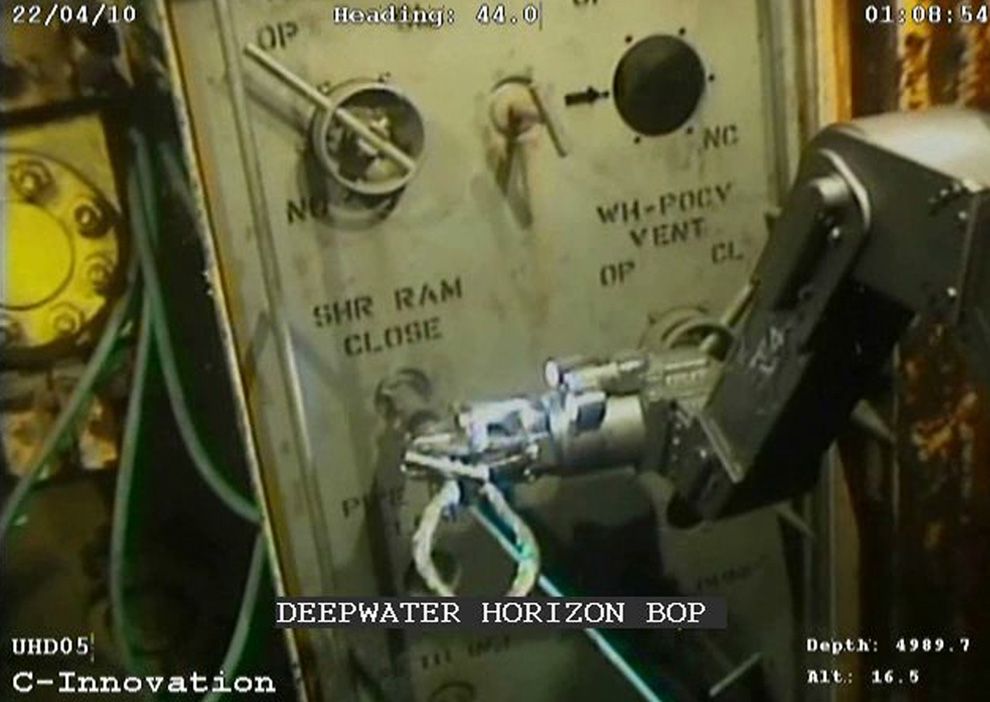
This April 22, 2010 photo provided Sunday, April 25 by the US Coast Guard shows the arm of a robot submarine in an unsuccessful attempt to activate a shutoff device known as a blowout preventer (BOP) to close off the flow of oil at the Deepwater Horizon well head.
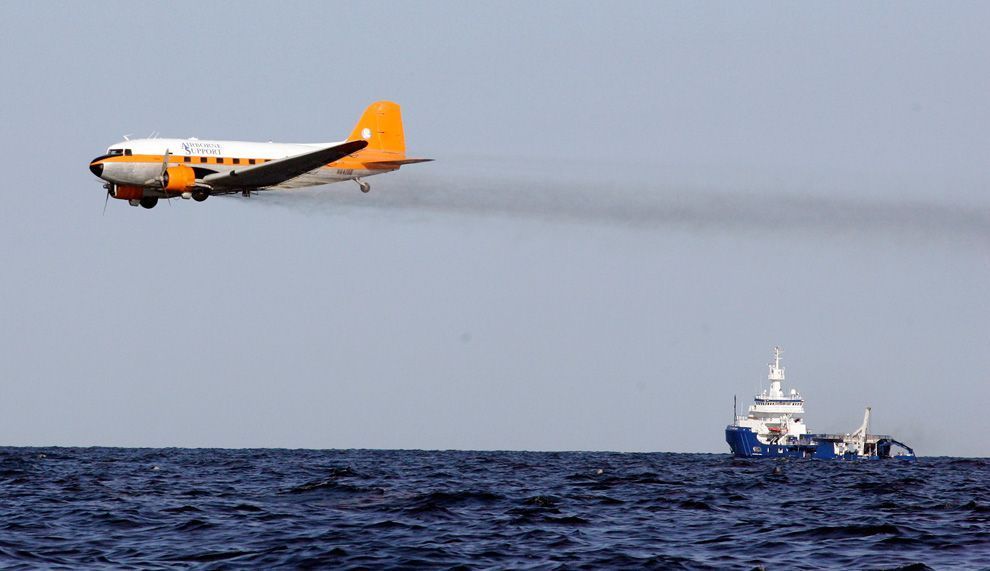
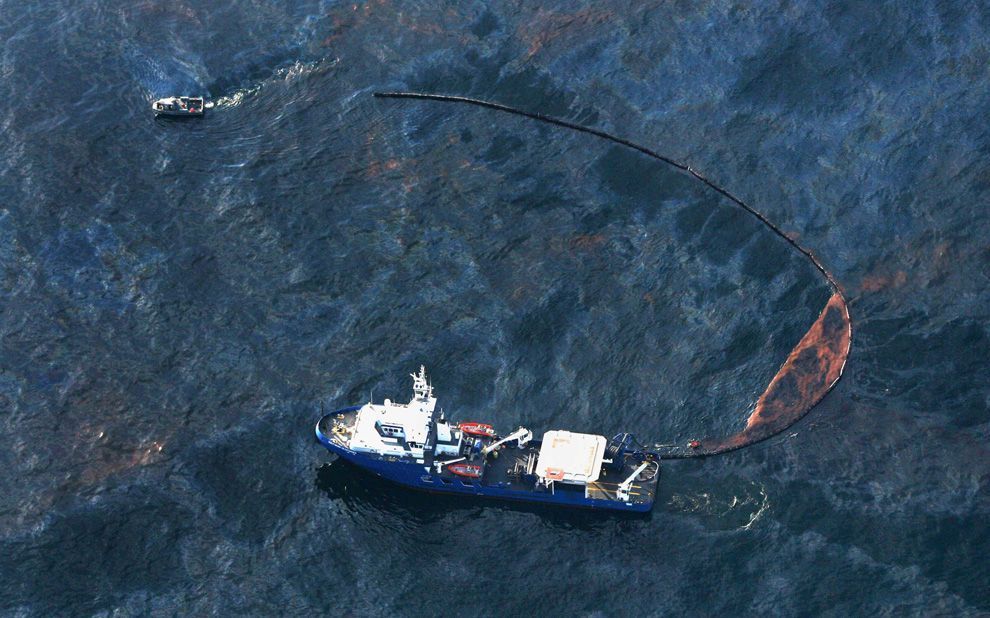
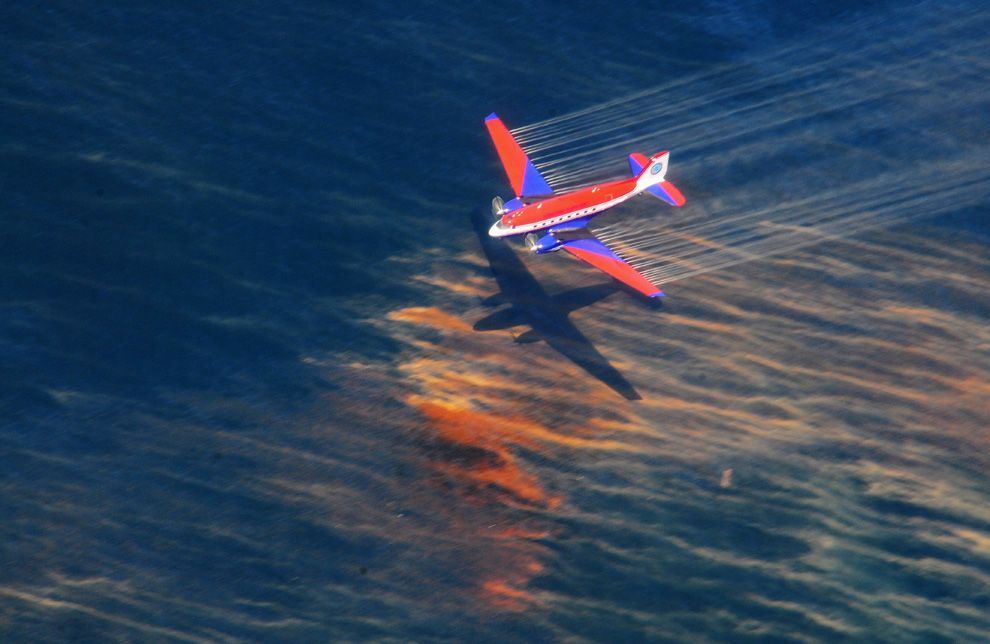
A dispersant plane passes over an oil skimmer as it cleans oil from a leaking pipeline that resulted from last week's explosion and collapse of the Deepwater Horizon oil rig in the Gulf of Mexico near the coast of Louisiana Tuesday, April 27, 2010.
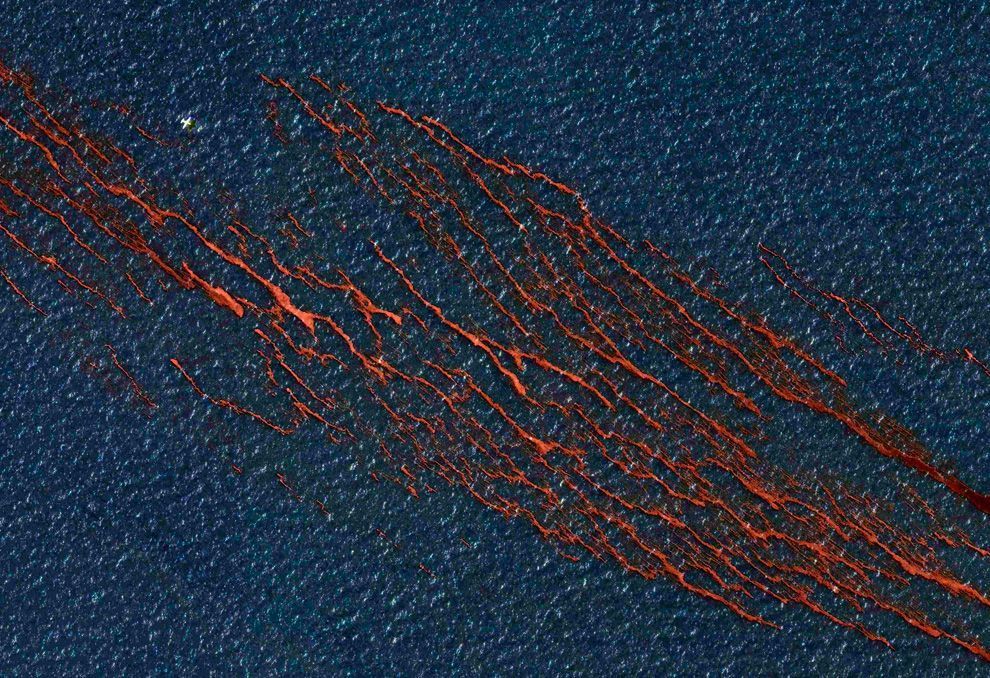
A satellite image taken on April 26, 2010, shows an airplane (upper left) flying over part of the oil slick resulting from the explosion of the Transocean Deepwater Horizon oil rig, in the Gulf of Mexico.
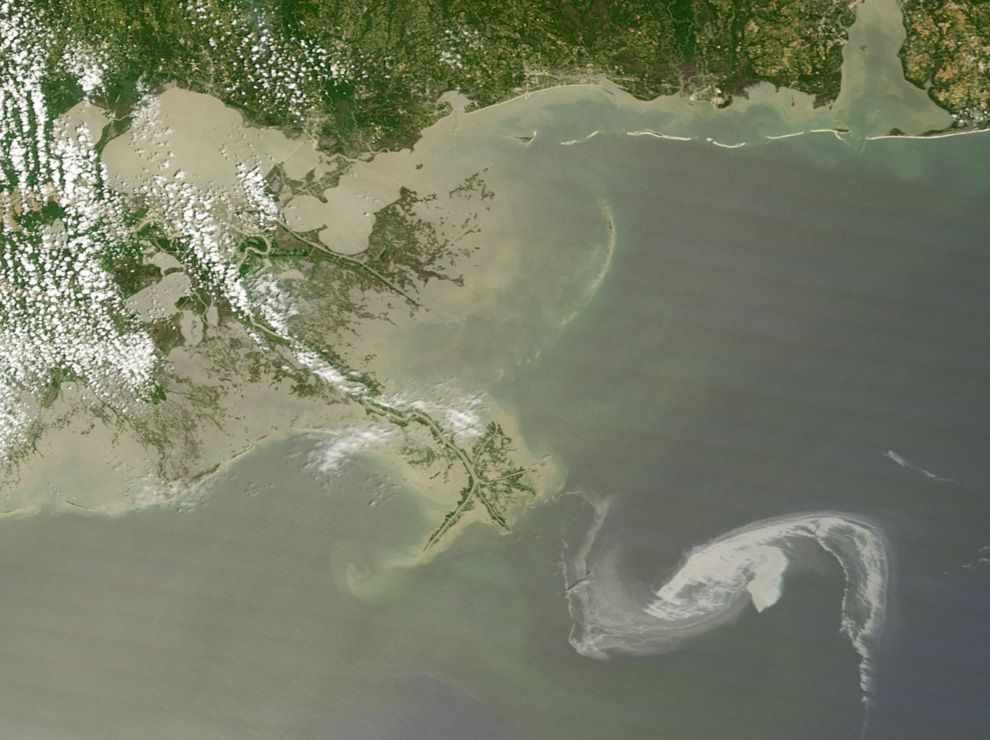
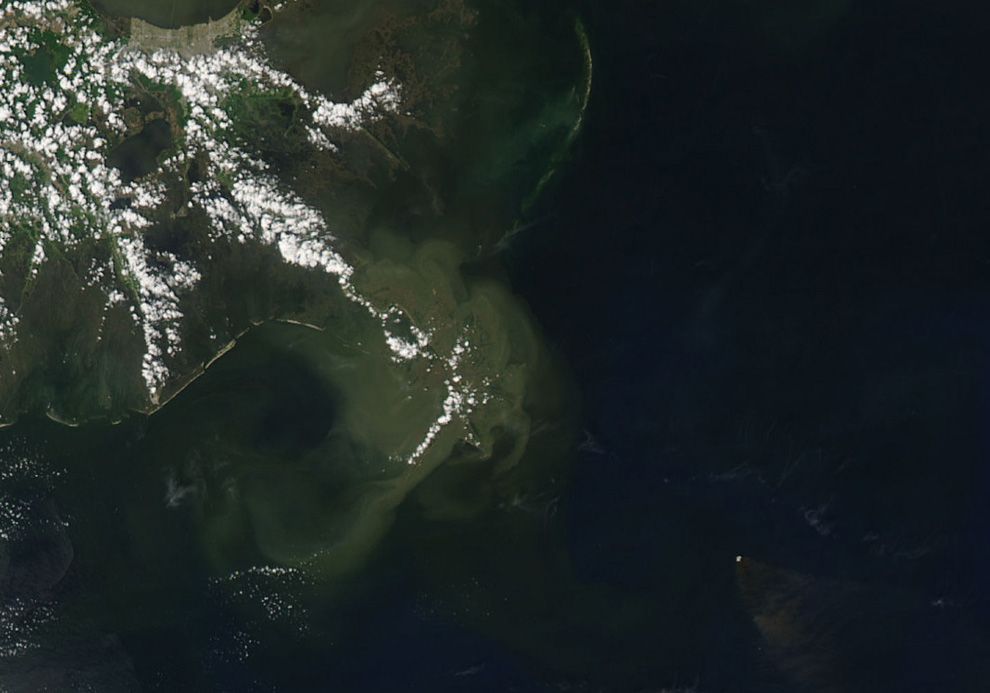
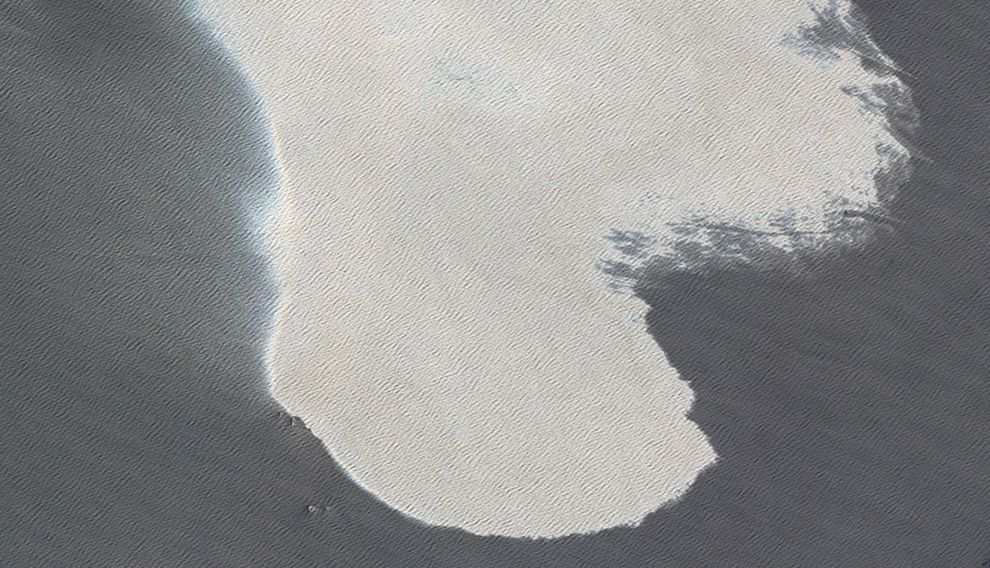
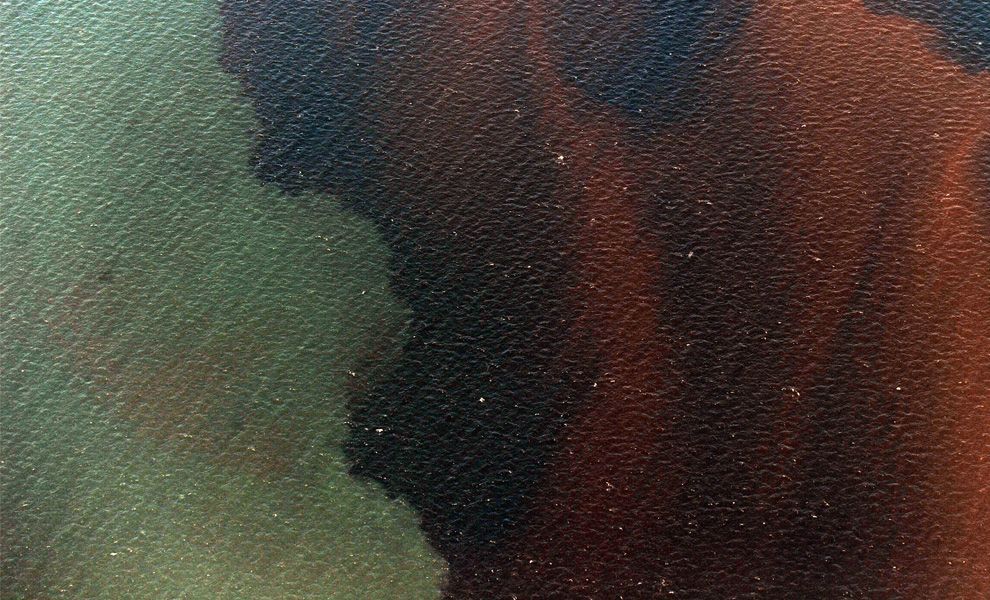
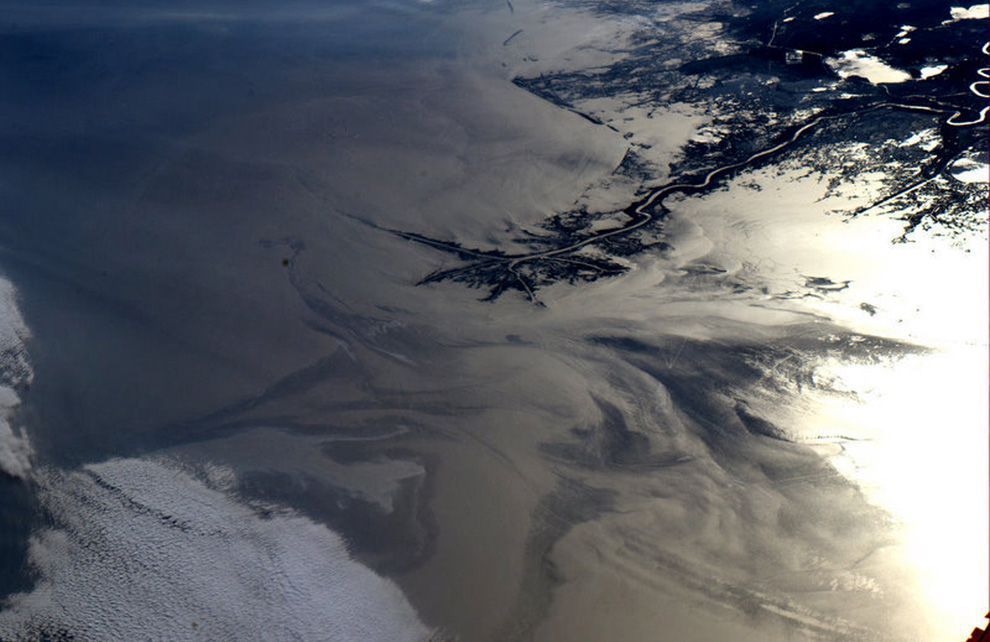
The growing oil slick in the Gulf of Mexico is captured in this image from NASA's (MODIS) instrument aboard the Terra satellite. This natural-color image acquired April 29, 2010 shows a twisting patch of oil nearly 125 km (78 mi) wide.
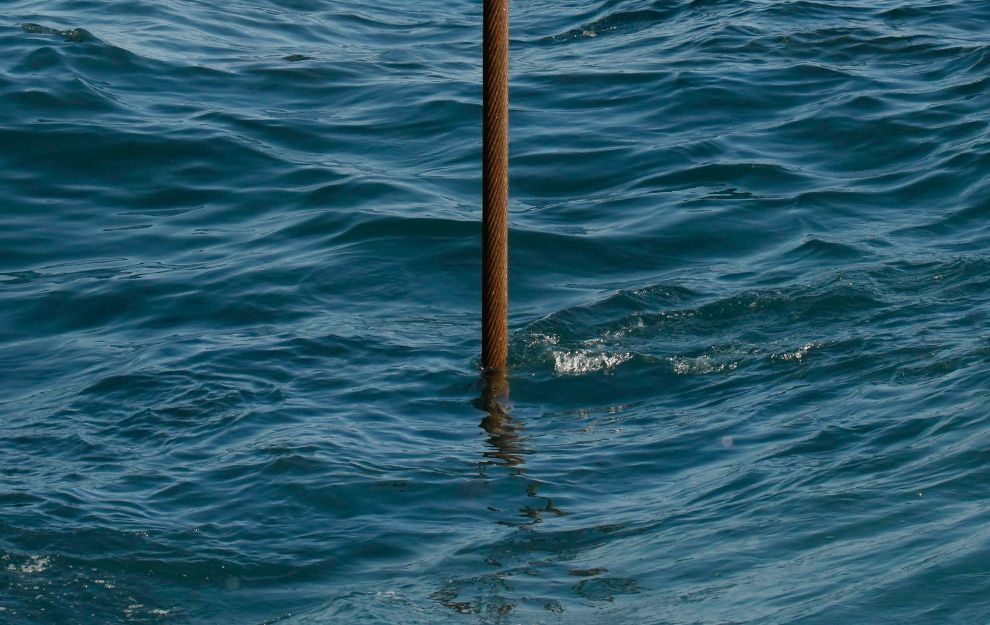
The single cable supporting the 100-ton oil containment device being lowered to the sea floor disappears into Gulf waters off the side of the Q400 mobile drilling platform on Sunday, May 9, 2010. Efforts to contain the leak with the device were unsuccessful due to ice crystals forming in its domed roof.
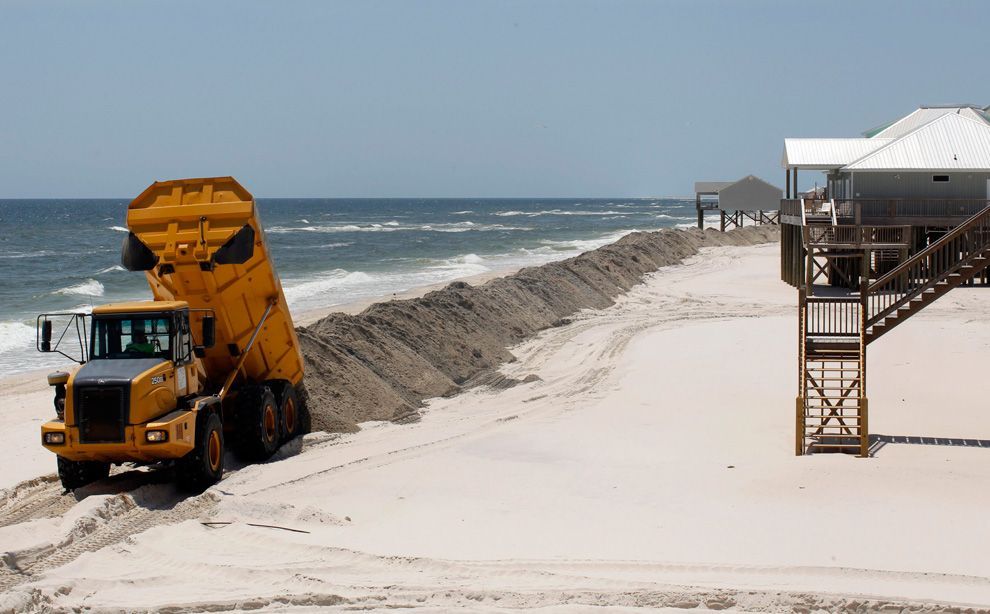
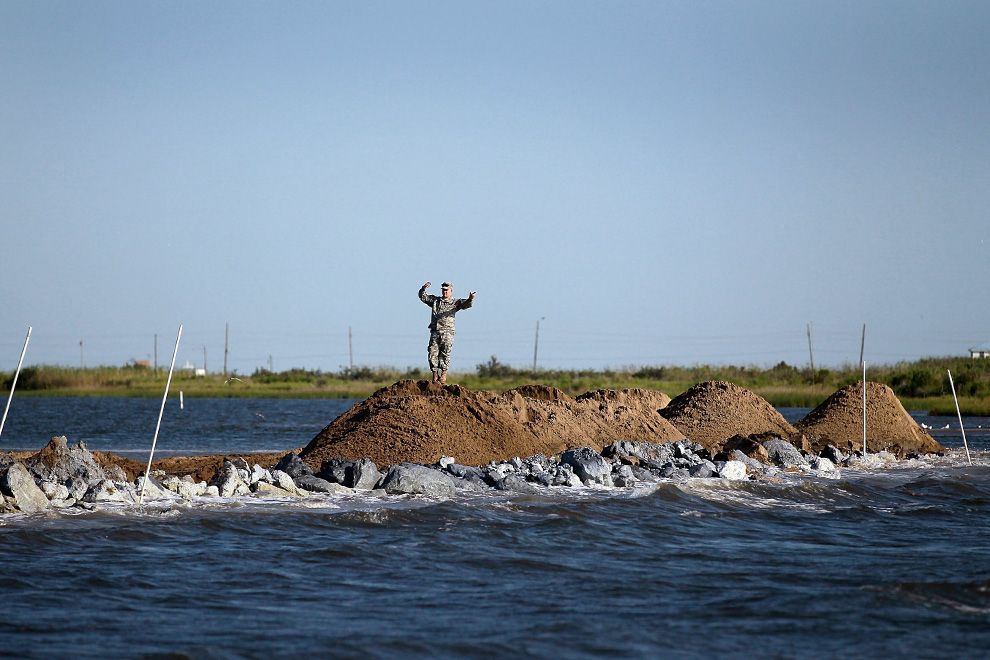
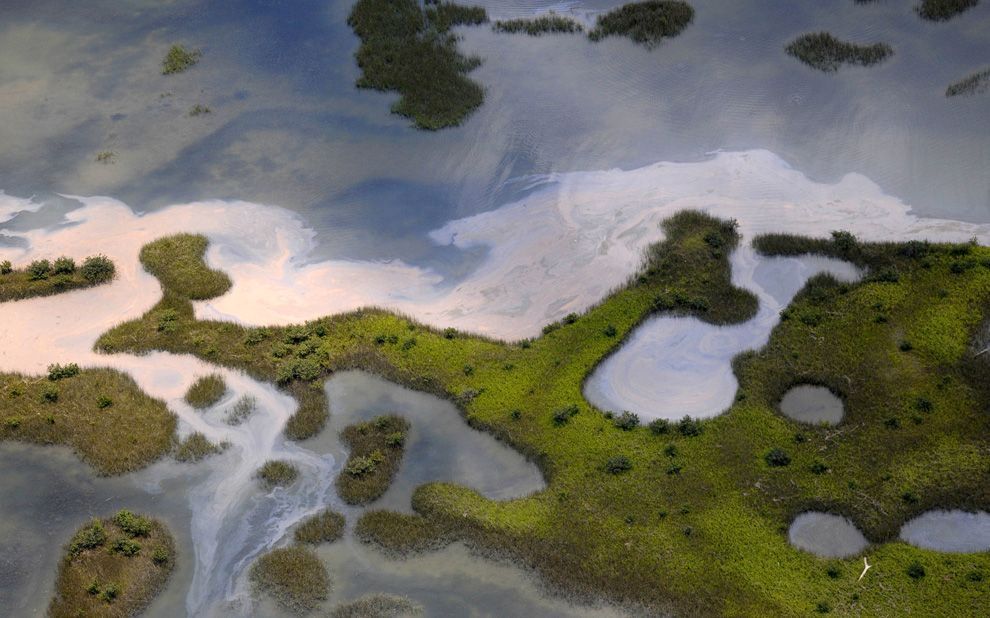
Crews build a sand berm to protect the island from the potential of oil washing onshore, on Dauphin Island, Alabama May 10, 2010.
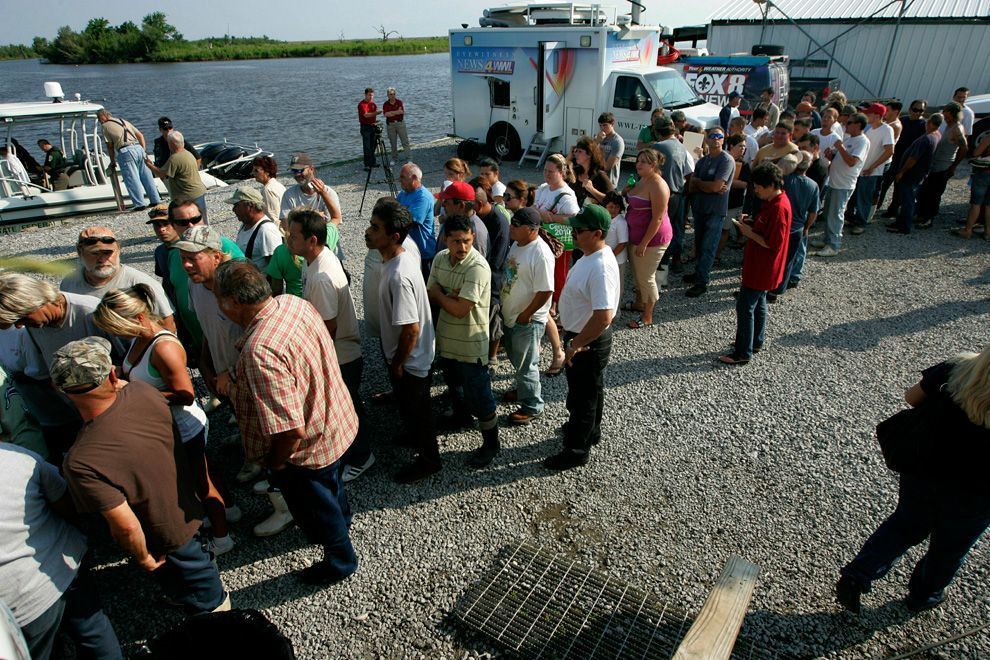
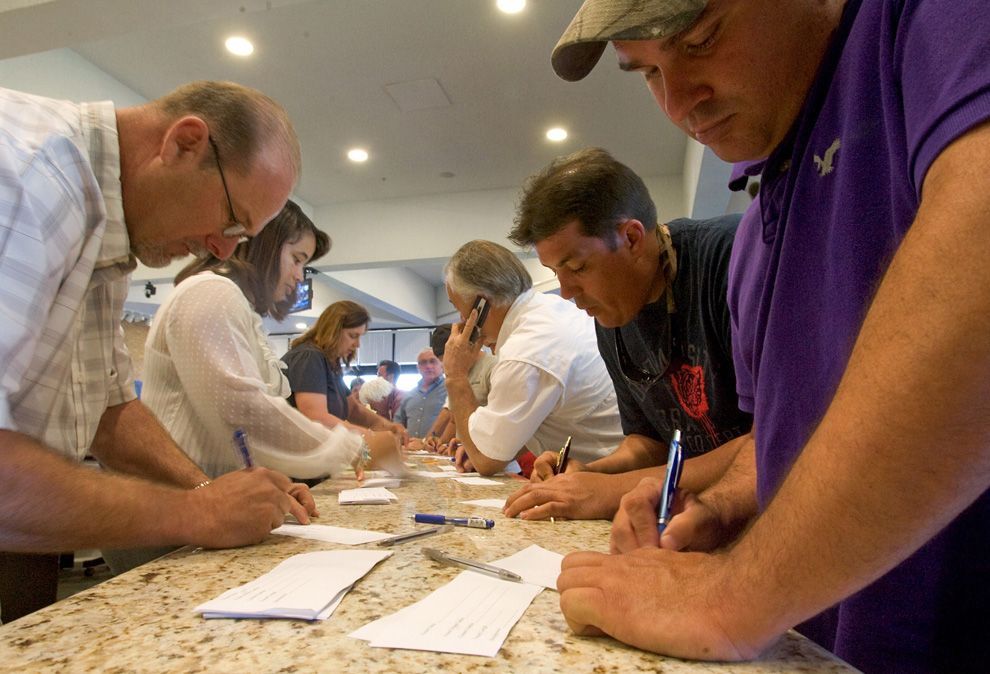
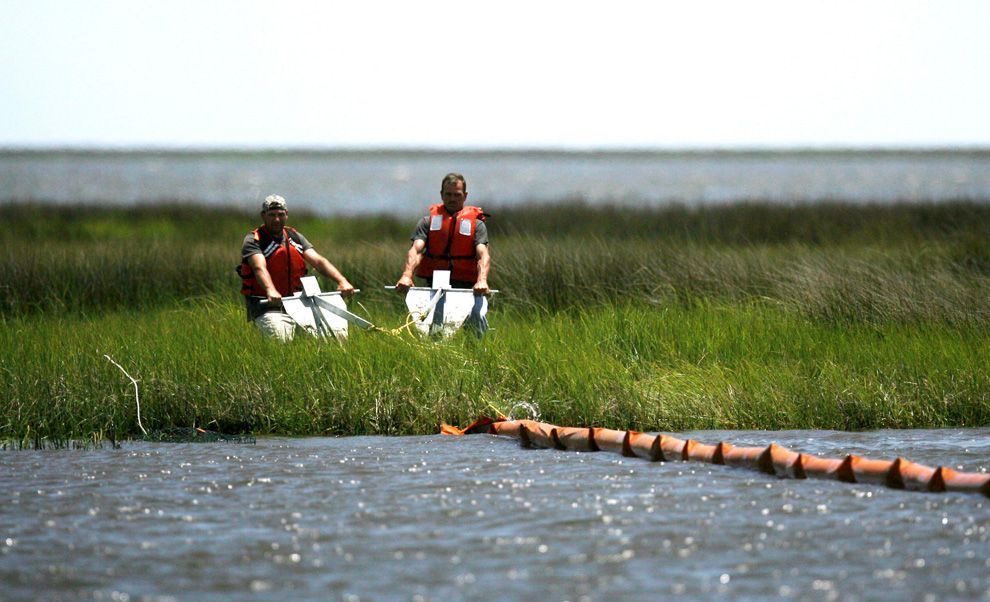
Unemployed commercial fishermen and their families wait in line to receive handouts from New Orleans Catholic Charities on May 5, 2010 in Hopedale, Louisiana. Many local fishermen have been temporarily shut down but have been hired by British Petroleum (BP) to lay oil booms in sensitive areas.
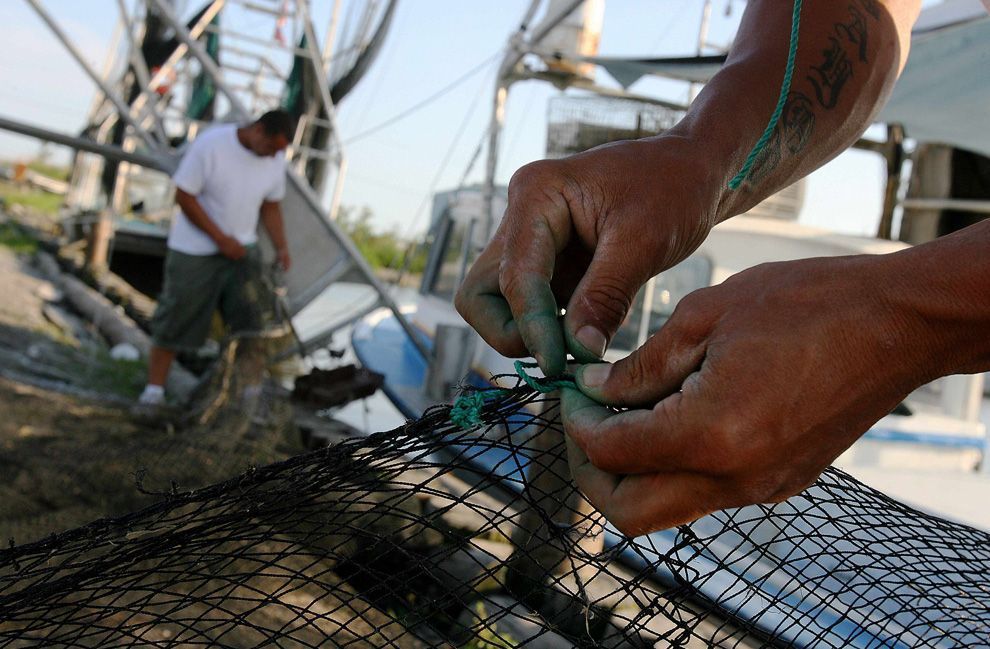
Captain Johnny Bourgeois and deckhand Chris Crappel (left) of Venice, Louisiana retie netting for shrimp trawling as they wait for the shrimp season to reopen in Venice, Louisiana May 9, 2010. Louisiana Department of Wildlife and Fisheries (LDWF) Secretary Robert Barham announced that the shrimp season in the territorial seas of the central coast of Louisiana from Four Bayou Pass to Freshwater Bayou were closed effective sunset Saturday.
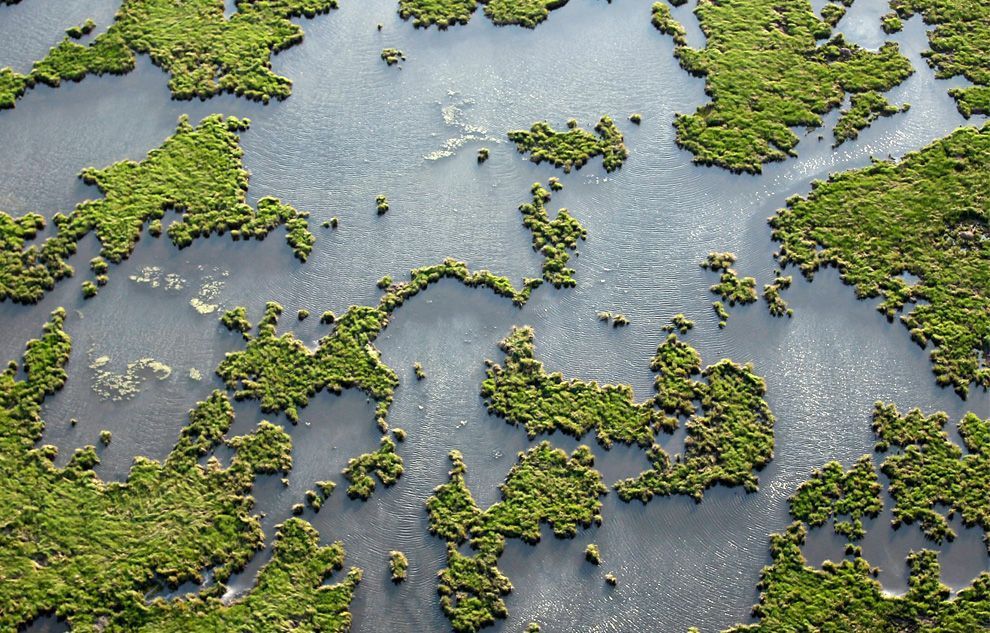
Louisiana National Guard Private Dallas Bacon guides a dump truck as they use dirt to create an earthen barrier as they try to protect an estuary from the massive oil spill on May 10, 2010 in Lafourche Parish, Louisiana.
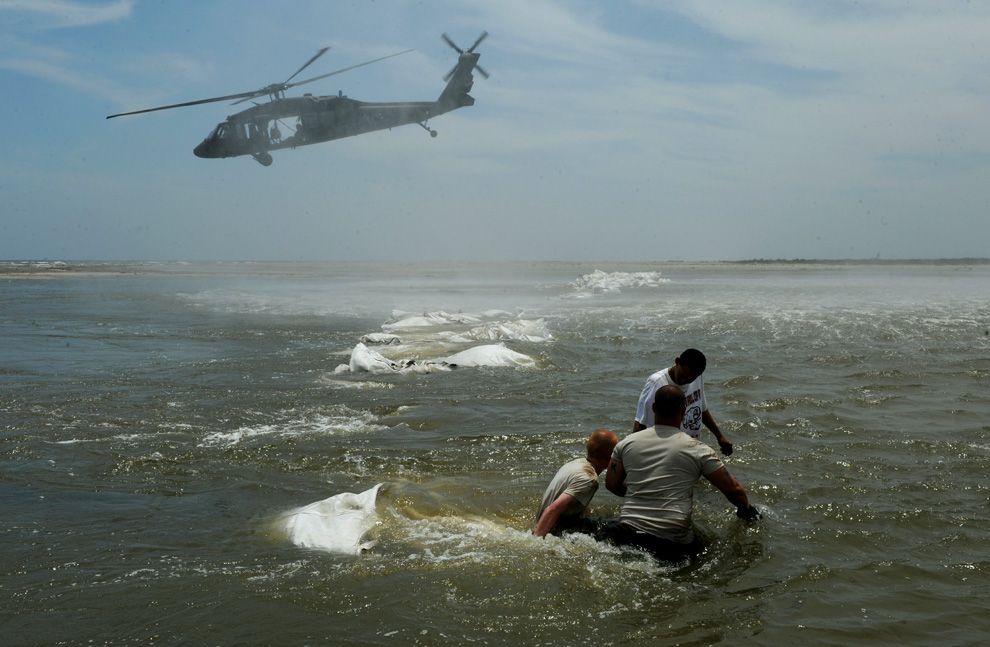
Louisiana National Guardsmen use Blackhawk helicopters to build a dam to protect the fragile wetlands known locally as "Bayou" near the town of Grand Isle, as work continues to protect the coastline from oil after the BP Deepwater Horizon platform disaster off Louisiana, on May 11, 2010.
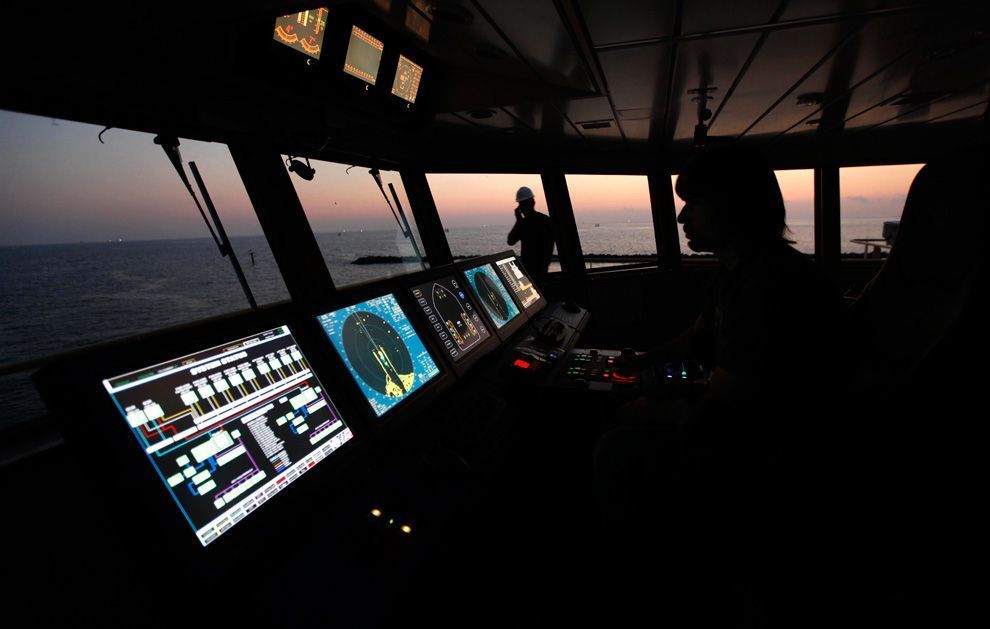
Capt. Demi Shaffer pilots the Joe Griffin as it enters the Gulf of Mexico carrying the containment vessel to the rig collapse site which will be used to try to contain the Deepwater Horizon oil, Wednesday, May 5, 2010.
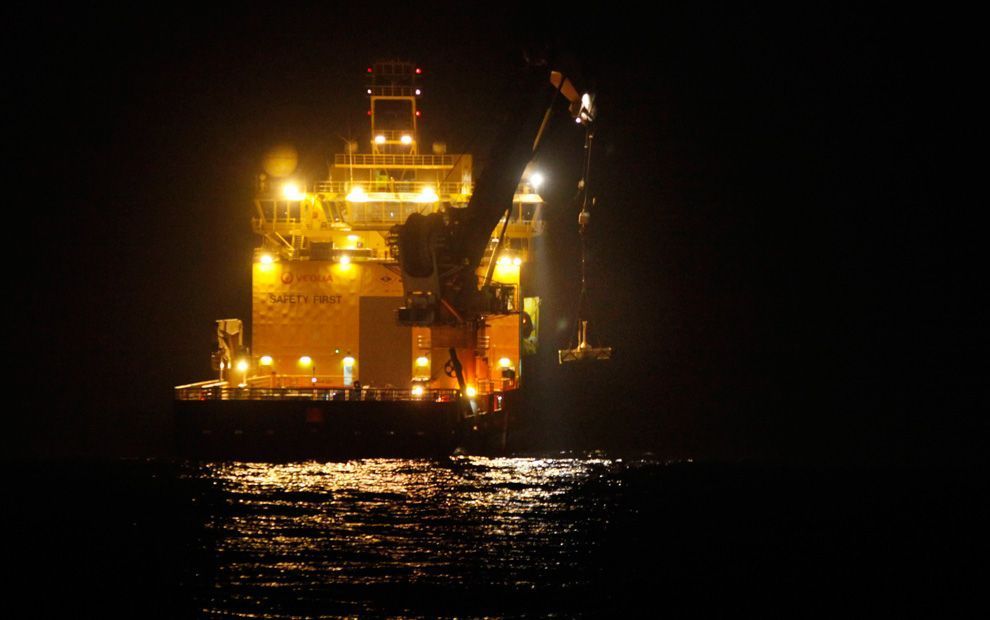
The Viking Poseidon lowers a new leak-containment device named the "top hat", at the site of the Deepwater Horizon oil spill in the Gulf of Mexico on Tuesday, May 11, 2010.