|
#1
●
07-07-2012, 07:24 PM
| ||||||||
 So Fucking Banned Poster Rank:338 Male Join Date: May 2010 Posts: 3,762
Contributions: 26
Mentioned: 1 Post(s) Quoted: 32 Post(s)
| ||||||||
|
THE GULAG ARCHIPELAGO (Архипелаг ГУЛАГ, Arkhipelag GULAG)
Aleksandr I. Solzhenitsyn  THE GULAG ARCHIPELAGO Map of the Gulag system  1918-1956 An Experiment in Literary Investigation I-II Translated from the Russian by Thomas P. Whitney Aleksandr Isayevich Solzhenitsyn  Autobiography 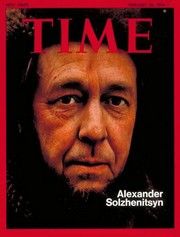 I was born at Kislovodsk on 11th December, 1918. My father had studied philological subjects at Moscow University, but did not complete his studies, as he enlisted as a volunteer when war broke out in 1914. He became an artillery officer on the German front, fought throughout the war and died in the summer of 1918, six months before I was born. I was brought up by my mother, who worked as a shorthand-typist, in the town of Rostov on the Don, where I spent the whole of my childhood and youth, leaving the grammar school there in 1936. Even as a child, without any prompting from others, I wanted to be a writer and, indeed, I turned out a good deal of the usual juvenilia. In the 1930s, I tried to get my writings published but I could not find anyone willing to accept my manuscripts. I wanted to acquire a literary education, but in Rostov such an education that would suit my wishes was not to be obtained. To move to Moscow was not possible, partly because my mother was alone and in poor health, and partly because of our modest circumstances. I therefore began to study at the Department of Mathematics at Rostov University, where it proved that I had considerable aptitude for mathematics. But although I found it easy to learn this subject, I did not feel that I wished to devote my whole life to it. Nevertheless, it was to play a beneficial role in my destiny later on, and on at least two occasions, it rescued me from death. For I would probably not have survived the eight years in camps if I had not, as a mathematician, been transferred to a so-called sharashia, where I spent four years; and later, during my exile, I was allowed to teach mathematics and physics, which helped to ease my existence and made it possible for me to write. If I had had a literary education it is quite likely that I should not have survived these ordeals but would instead have been subjected to even greater pressures. Later on, it is true, I began to get some literary education as well; this was from 1939 to 1941, during which time, along with university studies in physics and mathematics, I also studied by correspondence at the Institute of History, Philosophy and Literature in Moscow. In 1941, a few days before the outbreak of the war, I graduated from the Department of Physics and Mathematics at Rostov University. At the beginning of the war, owing to weak health, I was detailed to serve as a driver of horsedrawn vehicles during the winter of 1941-1942. Later, because of my mathematical knowledge, I was transferred to an artillery school, from which, after a crash course, I passed out in November 1942. Immediately after this I was put in command of an artillery-position-finding company, and in this capacity, served, without a break, right in the front line until I was arrested in February 1945. This happened in East Prussia, a region which is linked with my destiny in a remarkable way. As early as 1937, as a first-year student, I chose to write a descriptive essay on "The Samsonov Disaster" of 1914 in East Prussia and studied material on this; and in 1945 I myself went to this area (at the time of writing, autumn 1970, the book August 1914 has just been completed). I was arrested on the grounds of what the censorship had found during the years 1944-45 in my correspondence with a school friend, mainly because of certain disrespectful remarks about Stalin, although we referred to him in disguised terms. As a further basis for the "charge", there were used the drafts of stories and reflections which had been found in my map case. These, however, were not sufficient for a "prosecution", and in July 1945 I was "sentenced" in my absence, in accordance with a procedure then frequently applied, after a resolution by the OSO (the Special Committee of the NKVD), to eight years in a detention camp (at that time this was considered a mild sentence). I served the first part of my sentence in several correctional work camps of mixed types (this kind of camp is described in the play, The Tenderfoot and the Tramp). In 1946, as a mathematician, I was transferred to the group of scientific research institutes of the MVD-MOB (Ministry of Internal Affairs, Ministry of State Security). I spent the middle period of my sentence in such "SPECIAL PRISONS" (The First Circle). In 1950 I was sent to the newly established "Special Camps" which were intended only for political prisoners. In such a camp in the town of Ekibastuz in Kazakhstan (One Day in the Life of Ivan Denisovich), I worked as a miner, a bricklayer, and a foundryman. There I contracted a tumour which was operated on, but the condition was not cured (its character was not established until later on). One month after I had served the full term of my eight-year sentence, there came, without any new judgement and even without a "resolution from the OSO", an administrative decision to the effect that I was not to be released but EXILED FOR LIFE to Kok-Terek (southern Kazakhstan). This measure was not directed specially against me, but was a very usual procedure at that time. I served this exile from March 1953 (on March 5th, when Stalin's death was made public, I was allowed for the first time to go out without an escort) until June 1956. Here my cancer had developed rapidly, and at the end of 1953, I was very near death. I was unable to eat, I could not sleep and was severely affected by the poisons from the tumour. However, I was able to go to a cancer clinic at Tashkent, where, during 1954, I was cured (The Cancer Ward, Right Hand). During all the years of exile, I taught mathematics and physics in a primary school and during my hard and lonely existence I wrote prose in secret (in the camp I could only write down poetry from memory). I managed, however, to keep what I had written, and to take it with me to the European part of the country, where, in the same way, I continued, as far as the outer world was concerned, to occupy myself with teaching and, in secret, to devote myself to writing, at first in the Vladimir district (Matryona's Farm) and afterwards in Ryazan. During all the years until 1961, not only was I convinced that I should never see a single line of mine in print in my lifetime, but, also, I scarcely dared allow any of my close acquaintances to read anything I had written because I feared that this would become known. Finally, at the age of 42, this secret authorship began to wear me down. The most difficult thing of all to bear was that I could not get my works judged by people with literary training. In 1961, after the 22nd Congress of the U.S.S.R. Communist Party and Tvardovsky's speech at this, I decided to emerge and to offer One Day in the Life of Ivan Denisovich. Such an emergence seemed, then, to me, and not without reason, to be very risky because it might lead to the loss of my manuscripts, and to my own destruction. But, on that occasion, things turned out successfully, and after protracted efforts, A.T. Tvardovsky was able to print my novel one year later. The printing of my work was, however, stopped almost immediately and the authorities stopped both my plays and (in 1964) the novel, The First Circle, which, in 1965, was seized together with my papers from the past years. During these months it seemed to me that I had committed an unpardonable mistake by revealing my work prematurely and that because of this I should not be able to carry it to a conclusion. It is almost always impossible to evaluate at the time events which you have already experienced, and to understand their meaning with the guidance of their effects. All the more unpredictable and surprising to us will be the course of future events. [/QUOTE] |
|
#2
●
07-07-2012, 07:32 PM
| ||||||||
| So Fucking Banned Poster Rank:338 Male Join Date: May 2010 Posts: 3,762
Contributions: 26
Mentioned: 1 Post(s) Quoted: 32 Post(s)
| ||||||||
|
Re: THE GULAG ARCHIPELAGO (Архипелаг ГУЛАГ, Arkhipelag GULAG)
Preface  In 1949 some friends and I came upon a noteworthy news item in Nature, 2l magazine of the Academy of Sciences. It re- ported in tiny type that in the course of excavations on the Kolyma River a subterranean ice lens had been discovered which was actually a frozen stream — and in it were found frozen speci- mens of prehistoric fauna some tens of thousands of years old. Whether fish or salamander, these were preserved in so fresh a state, the scientific correspondent reported, that those present immediately broke open the ice encasing the specimens and de- voured them with relish on the spot. The magazine no doubt astonished its small audience with the news of how successfully the flesh of fish could be kept fresh in a frozen state. But few, indeed, among its readers were able to decipher the genuine and heroic meaning of this incautious report. As for us, however — we understood instantly. We could picture the entire scene right down to the smallest details: how those present broke up the ice in frenzied haste; how, flouting the higher claims of ichthyology and elbowing each other to be first, they tore off chunks of the prehistoric flesh and hauled them over to the bonfire to thaw them out and bolt them down. We understood because we ourselves were the same kind of people as those present at that event. We, too, were from that powerful tribe of zeks, unique on the face of the earth, the only people who could devour prehistoric salamander with relish. And the Kolyma was the greatest and most famous island, the pole of ferocity of that amazing country of Gulag which, though scattered in an Archipelago geographically, was, in the psycho- logical sense, fused into a continent — an almost invisible, almost imperceptible country inhabited by the zek people.  And this Archipelago crisscrossed and patterned that other country within which it was located, like a gigantic patchwork, cutting into its cities, hovering over its streets. Yet there were many who did not even guess at its presence and many, many others who had heard something vague. And only those who had been there knew the whole truth. But, as though stricken dumb on the islands of the Archipelago, they kept their silence. By an unexpected turn of our history, a bit of the truth, an insignificant part of the whole, was allowed out in the open. But those same hands which once screwed tight our handcuffs now hold out their palms in reconciliation: "No, don't! Don't dig up the past! Dwell on the past and you'll lose an eye." But the proverb goes on to say: "Forget the past and you'll lose both eyes." Decades go by, and the scars and sores of the past are healing over for good. In the course of this period some of the islands of the Archipelago have shuddered and dissolved and the polar sea of oblivion rolls over them. And someday in the future, this Archipelago, its air, and the bones of its inhabitants, frozen in a lens of ice, will be discovered by our descendants like some im- probable salamander. I would not be so bold as to try to write the history of the Archipelago. I have never had the chance to read the documents. And, in fact, will anyone ever have the chance to read them? Those who do not wish to recall have already had enough time — and will have more — to destroy all the documents, down to the very last one. I have absorbed into myself my own eleven years there not as something shameful nor as a nightmare to be cursed: I have come almost to love that monstrous world, and now, by a happy turn of events, I have also been entrusted with many recent reports and letters. So perhaps I shall be able to give some account of the bones and flesh of that salamander — which, incidentally, is still alive.  |
|
#3
●
07-07-2012, 08:05 PM
| ||||||||
| So Fucking Banned Poster Rank:338 Male Join Date: May 2010 Posts: 3,762
Contributions: 26
Mentioned: 1 Post(s) Quoted: 32 Post(s)
| ||||||||
|
Re: THE GULAG ARCHIPELAGO (Архипелаг ГУЛАГ, Arkhipelag GULAG)
Preface I xi This book could never have been created by one person alone. In addition to what I myself was able to take away from the Archipelago — on the skin of my back, and with my eyes and ears — material for this book was given me in reports, memoirs, and letters by 227 witnesses, whose names were to have been listed here. What I here express to them is not personal gratitude, because this is our common, collective monument to all those who were tortured and murdered. From among them I would like to single out in particular those who worked hard to help me obtain supporting bibliographical material from books to be found in contemporary libraries or from books long since removed from libraries and destroyed; great persistence was often required to find even one copy which had been preserved. Even more would I like to pay tribute to those who helped me keep this manuscript concealed in difficult periods and then to have it copied. But the time has not yet come when I dare name them. The old Solovetsky Islands prisoner Dmitri Petrovich Vitkov- sky was to have been editor of this book. But his half a lifetime spent there — indeed, his own camp memoirs are entitled "Half a Lifetime" — resulted in untimely paralysis, and it was not until after he had already been deprived of the gift of speech that he was able to read several completed chapters only and see for himself that everything will be told. 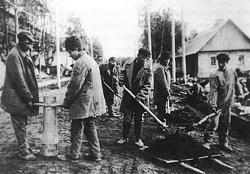    |
|
#4
●
07-07-2012, 08:13 PM
| ||||||||
| So Fucking Banned Poster Rank:338 Male Join Date: May 2010 Posts: 3,762
Contributions: 26
Mentioned: 1 Post(s) Quoted: 32 Post(s)
| ||||||||
|
Re: THE GULAG ARCHIPELAGO (Архипелаг ГУЛАГ, Arkhipelag GULAG)
Xll I PREFACE And if freedom still does not dawn on my country for a long time to come, then the very reading and handing on of this book will be very dangerous, so that I am bound to salute future readers as well — on behalf of those who have perished. When I began to write this book in 1958, 1 knew of no memoirs nor works of literature dealing with the camps. During my years of work before 1967 I gradually became acquainted with the Kolyma Stories of Varlam Shalamov and the memoirs of Dmitri Vitkovsky, Y. Ginzburg, and O. Adamova-Sliozberg, to which I refer in the course of my narrative as literary facts known to all (as indeed they someday shall be). Despite their intent and against their will, certain persons pro- vided invaluable material for this book and helped preserve many important facts and statistics as well as the very air they breathed: M. I. Sudrabs-Latsis, N. V. Krylenko, the Chief State Prosecutor for many years, his heir A. Y. Vyshinsky, and those jurists who were his accomplices, among whom one must single out in par- ticular I. L. Averbakh. Material for this book was also provided by thirty-six Soviet writers, headed by Maxim Gorky, authors of the disgraceful book on the White Sea Canal, which was the first in Russian literature to glorify slave labor. |
|
#5
●
07-07-2012, 08:39 PM
| ||||||||
| So Fucking Banned Poster Rank:338 Male Join Date: May 2010 Posts: 3,762
Contributions: 26
Mentioned: 1 Post(s) Quoted: 32 Post(s)
| ||||||||
|
Re: THE GULAG ARCHIPELAGO (Архипелаг ГУЛАГ, Arkhipelag GULAG)
Arrest How do people get to this clandestine Archipelago? Hour by hour planes fly there, ships steer their course there, and trains thunder off to it—but all with nary a mark on them to tell of their destination. And at ticket windows or at travel bureaus for Soviet or foreign tourists the employees would be astounded if you were to ask for a ticket to go there. They know nothing and they've never heard of the Archipelago as a whole or of any one of its innumerable islands. Those who go to the Archipelago to administer it get there via the training schools of the Ministry of Internal Affairs. Those who go there to be guards are conscripted via the military conscription centers. And those who, like you and me, dear reader, go there to die, must get there solely and compulsorily via arrest. Arrest! Need it be said that it is a breaking point in your life, a bolt of lightning which has scored a direct hit on you? That it is an unassimilable spiritual earthquake not every person can cope with, as a result of which people often slip into insanity? The Universe has as many different centers as there are living beings in it. Each of us is a center of the Universe, and that Universe is shattered when they hiss at you: "You are under arrest." If you are arrested, can anything else remain unshattered by this cataclysm? But the darkened mind is incapable of embracing these displacements in our universe, and both the most sophisticated and the veriest simpleton among us, drawing on all life's experience, can gasp out only: "Me? What for?" And this is a question which, though repeated millions and millions of times before, has yet to receive an answer. Arrest is an instantaneous, shattering thrust, expulsion, somersault from one state into another. We have been happily borne—or perhaps have unhappily dragged our weary way—down the long and crooked streets of our lives, past all kinds of walls and fences made of rotting wood, rammed earth, brick, concrete, iron railings. We have never given a thought to what lies behind them. We have never tried to penetrate them with our vision or our understanding. But there is where the Gulag country begins, right next to us, two yards away from us. In addition, we have failed to notice an enormous number of closely fitted, well-disguised doors and gates in these fences. All those gates were prepared for us, every last one! And all of a sudden the fateful gate swings quickly open, and four white male hands, unaccustomed to physical labor but nonetheless strong and tenacious, grab us by the leg, arm, collar, cap, ear, and drag us in like a sack, and the gate behind us, the gate to our past life, is slammed shut once and for all. That's all there is to it! You are arrested! And you'll find nothing better to respond with than a lamblike bleat: "Me? What for?" That's what arrest is: it's a blinding flash and a blow which shifts the present instantly into the past and the impossible into omnipotent actuality. That's all. And neither for the first hour nor for the first day will you be able to grasp anything else. Except that in your desperation the fake circus moon will blink at you: "It's a mistake! They'll set things right!" And everything which is by now comprised in the traditional, even literary, image of an arrest will pile up and take shape, not in your own disordered memory, but in what your family and your neighbors in your apartment remember: The sharp night-time ring or the rude knock at the door. The insolent entrance of the unwiped jackboots of the unsleeping State Security operatives. The frightened and cowed civilian witness at their backs. (And what function does this civilian witness serve? The victim doesn't even dare think about it and the operatives don't remember, but that's what the regulations call for, and so he has to sit there all night long and sign in the morning. [The regulation, purposeless in itself, derives, N.M. recalls, from that strange time when the citizenry not only was supposed to but actually dared to verify the actions of the police.] For the witness, jerked from his bed, it is torture too—to go out night after night to help arrest his own neighbors and acquaintances.) The traditional image of arrest is also trembling hands packing for the victim—a change of underwear, a piece of soap, something to eat; and no one knows what is needed, what is permitted, what clothes are best to wear; and the Security agents keep interrupting and hurrying you: "You don't need anything. They'll feed you there. It's warm there." (It's all lies. They keep hurrying you to frighten you.) The traditional image of arrest is also what happens afterward, when the poor victim has been taken away. It is an alien, brutal, and crushing force totally dominating the apartment for hours on end, a breaking, ripping open, pulling from the walls, emptying things from wardrobes and desks onto the floor, shaking, dumping out, and ripping apart—piling up mountains of litter on the floor—and the crunch of things being trampled beneath jackboots. And nothing is sacred in a search! During the arrest of the locomotive engineer Inoshin, a tiny coffin stood in his room containing the body of his newly dead child. The "jurists" dumped the child's body out of the coffin and searched it. They shake sick people out of their sickbeds, and they unwind bandages to search beneath them. [When in 1937 they wiped out Dr. Kazakov's institute, the "commission" broke up the jars containing the lysates developed by him, even though patients who had been cured and others still being treated rushed around them, begging them to preserve the miraculous medicines. (According to the official version, the lysates were supposed to be poisons; in that case, why should they not have been kept as material evidence?)] Nothing is so stupid as to be inadmissible during a search! For example, they seized from the antiquarian Chetverukhin "a certain number of pages of Tsarist decrees"—to wit, the decree on ending the war with Napoleon, on the formation of the Holy Alliance, and a proclamation of public prayers against cholera during the epidemic of 1830. From our greatest expert on Tibet, Vostrikov, they confiscated ancient Tibetan manuscripts of great value; and it took the pupils of the deceased scholar thirty years to wrest them from the KGB! When the Orientalist Nevsky was arrested, they grabbed Tangut manuscripts—and twenty-five years later the deceased victim was posthumously awarded a Lenin Prize for deciphering them. From Karger they took his archive of the Yenisei Ostyaks and vetoed the alphabet and vocabulary he had developed for this people—and a small nationality was thereby left without any written language. It would take a long time to describe all this in educated speech, but there's a folk saying about the search which covers the subject: They are looking for something which was never put there. They carry off whatever they have seized, but sometimes they compel the arrested individual to carry it. Thus Nina Aleksandrovna Palchinskaya hauled over her shoulder a bag filled with the papers and letters of her eternally busy and active husband, the late great Russian engineer, carrying it into their maw—once and for all, forever. For those left behind after the arrest there is the long tail end of a wrecked and devastated life. And the attempts to go and deliver food parcels. But from all the windows the answer comes in barking voices: "Nobody here by that name!" "Never heard of him!" Yes, and in the worst days in Leningrad it took five days of standing in crowded lines just to get to that window. And it may be only after half a year or a year that the arrested person responds at all. Or else the answer is tossed out: "Deprived of the right to correspond." And that means once and for all. "No right to correspondence"—and that almost for certain means: "Has been shot." [In other words, "We live in the cursed conditions in which a human being can disappear into the void and even his closest relatives, his mother and his wife ... do not know for years what has become of him." Is that right or not? That is what Lenin wrote in 1910 in his obituary of Babushkin. But let's speak frankly: Babushkin was transporting arms for an uprising, and was caught with them when he was shot. He knew what he was doing. You couldn't say that about helpless rabbits like us.] That's how we picture arrest to ourselves. The kind of night arrest described is, in fact, a favorite, because it has important advantages. Everyone living in the apartment is thrown into a state of terror by the first knock at the door. The arrested person is torn from the warmth of his bed. He is in a daze, half-asleep, helpless, and his judgment is befogged. In a night arrest the State Security men have a superiority in numbers; there are many of them, armed, against one person who hasn't even finished buttoning his trousers. During the arrest and search it is highly improbable that a crowd of potential supporters will gather at the entrance. The unhurried, step-by-step visits, first to one apartment, then to another, tomorrow to a third and a fourth, provide an opportunity for the Security operations personnel to be deployed with the maximum efficiency and to imprison many more citizens of a given town than the police force itself numbers. In addition, there's an advantage to night arrests in that neither the people in neighboring apartment houses nor those on the city streets can see how many have been taken away. Arrests which frighten the closest neighbors are no event at all to those farther away. It's as if they had not taken place. Along that same asphalt ribbon on which the Black Marias scurry at night, a tribe of youngsters strides by day with banners, flowers, and gay, untroubled songs. But those who take, whose work consists solely of arrests, for whom the horror is boringly repetitive, have a much broader understanding of how arrests operate. They operate according to a large body of theory, and innocence must not lead one to ignore this. The science of arrest is an important segment of the course on general penology and has been propped up with a substantial body of social theory. Arrests are classified according to various criteria: nighttime and daytime; at home, at work, during a journey; first-time arrests and repeats; individual and group arrests. Arrests are distinguished by the degree of surprise required, the amount of resistance expected (even though in tens of millions of cases no resistance was expected and in fact there was none). Arrests are also differentiated by the thoroughness of the required search;by instructions either to make out or not to make out an inventory of confiscated property or seal a room or apartment; to arrest the wife after the husband and send the children to an orphanage, or to send the rest of the family into exile, or to send the old folks to a labor camp too. [And there is a separate Science of Searches too. I have had the chance to read a pamphlet on this subject for correspondence-school law students in Alma-Ata. Its author praises highly those police officials who in the course of their searches went so far as to turn over two tons of manure, eight cubic yards of firewood, or two loads of hay; cleaned the snow from an entire collective-farm vegetable plot, dismantled brick ovens, dug up cesspools, checked out toilet bowls, looked into doghouses, chicken coops, birdhouses, tore apart mattresses, ripped adhesive tape off people's bodies and even tore out metal teeth in the search for microfilm. Students were advised to begin and to end with a body search (during the course of the search the arrested person might have grabbed up something that had already been examined). They were also advised to return to the site of a search at a different time of day and carry out the search all over again.] No, no: arrests vary widely in form. In 1926 Irma Mendel, a Hungarian, obtained through the Comintern two front-row tickets to the Bolshoi Theatre. Interrogator Klegel was courting her at the time and she invited him to go with her. They sat through the show very affectionately, and when it was over he took her—straight to the Lubyanka. And if on a flowering June day in 1927 on Kuznetsky Most, the plump-cheeked, redheaded beauty Anna Skripnikova, who had just bought some navy-blue material for a dress, climbed into a hansom cab with a young man-about-town, you can be sure it wasn't a lovers' tryst at all, as the cabman understood very well and showed by his frown (he knew the Organs don't pay). It was an arrest. In just a moment they would turn on the Lubyanka and enter the black maw of the gates. And if, some twenty-two springs later, Navy Captain Second Rank Boris Burkovsky, wearing a white tunic and a trace of expensive eau de cologne, was buying a cake for a young lady, do not take an oath that the cake would ever reach the young lady and not be sliced up instead by the knives of the men searching the captain and then delivered to him in his first cell. No, one certainly cannot say that daylight arrest, arrest during a journey, or arrest in the middle of a crowd has ever been neglected in our country. However, it has always been clean-cut—and, most surprising of all, the victims, in cooperation with the Security men, have conducted themselves in the noblest conceivable manner, so as to spare the living from witnessing the death of the condemned. Not everyone can be arrested at home, with a preliminary knock at the door (and if there is a knock, then it has to be the house manager or else the postman). And not everyone can be arrested at work either. If the person to be arrested is vicious, then it's better to seize him outside his ordinary milieu—away from his family and colleagues, from those who share his views, from any hiding places. It is essential that he have no chance to destroy, hide, or pass on anything to anyone. VIP's in the military or the Party were sometimes first given new assignments, ensconced in a private railway car, and then arrested en route. Some obscure, ordinary mortal, scared to death by epidemic arrests all around him and already depressed for a week by sinister glances from his chief, is suddenly summoned to the local Party committee, where he is beamingly presented with a vacation ticket to a Sochi sanatorium. The rabbit is overwhelmed and immediately concludes that his fears were groundless. After expressing his gratitude, he hurries home, triumphant, to pack his suitcase. It is only two hours till train time, and he scolds his wife for being too slow. He arrives at the station with time to spare. And there in the waiting room or at the bar he is hailed by an extraordinarily pleasant young man: "Don't you remember me, Pyotr Ivanich?" Pyotr Ivanich has difficulty remembering: "Well, not exactly, you see, although ..." The young man, however, is overflowing with friendly concern: "Come now, how can that be? I'll have to remind you. . . ." And he bows respectfully to Pyotr Ivanich's wife: "You must forgive us. I'll keep him only one minute." The wife accedes, and trustingly the husband lets himself be led away by the arm—forever or for ten years! The station is thronged—and no one notices anything. . . . Oh, you citizens who love to travel! Do not forget that in every station there are a GPU Branch and several prison cells. This importunity of alleged acquaintances is so abrupt that only a person who has not had the wolfish preparation of camp life is likely to pull back from it. Do not suppose, for example, that if you are an employee of the American Embassy by the name of Alexander D. you cannot be arrested in broad daylight on Gorky Street, right by the Central Telegraph Office. Your unfamiliar friend dashes through the press of the crowd, and opens his plundering arms to embrace you: "Saaasha!" He simply shouts at you, with no effort to be inconspicuous. "Hey, pal! Long time no see! Come on over, let's get out of the way." At that moment a Pobeda sedan draws up to the curb. . . . And several days later TASS will issue an angry statement to all the papers alleging that informed circles of the Soviet government have no information on the disappearance of Alexander D. But what's so unusual about that? Our boys have carried out such arrests in Brussels—which was where Zhora Blednov was seized—not just in Moscow. One has to give the Organs their due: in an age when public speeches, the plays in our theaters, and women's fashions all seem to have come off assembly lines, arrests can be of the most varied kind. They take you aside in a factory corridor after you have had your pass checked—and you're arrested. They take you from a military hospital with a temperature of 102, as they did with Ans Bernshtein, and the doctor will not raise a peep about your arrest—just let him try! They'll take you right off the operating table—as they took N. M. Vorobyev, a school inspector, in 1936, in the middle of an operation for stomach ulcer—and drag you off to a cell, as they did him, half-alive and all bloody (as Karpunich recollects). Or, like Nadya Levitskaya, you try to get information about your mother's sentence, and they give it to you, but it turns out to be a confrontation—and your own arrest! In the Gastronome—the fancy food store—you are invited to the special-order department and arrested there. You are arrested by a religious pilgrim whom you have put up for the night "for the sake of Christ." You are arrested by a meterman who has come to read your electric meter. You are arrested by a bicyclist who has run into you on the street, by a railway conductor, a taxi driver, a savings bank teller, the manager of a movie theater. Any one of them can arrest you, and you notice the concealed maroon-colored identification card only when it is too late. Sometimes arrests even seem to be a game—there is so much superfluous imagination, so much well-fed energy, invested in them. After all, the victim would not resist anyway. Is it that the Security agents want to justify their employment and their numbers? After all, it would seem enough to send notices to all the rabbits marked for arrest, and they would show up obediently at the designated hour and minute at the iron gates of State Security with a bundle in their hands—ready to occupy a piece of floor in the cell for which they were intended. And, in fact, that's the way collective farmers are arrested. Who wants to go all the way to a hut at night, with no roads to travel on? They are summoned to the village soviet—-and arrested there. Manual workers are called into the office. Of course, every machine has a point at which it is overloaded, beyond which it cannot function. In the strained and overloaded years of 1945 and 1946, when trainload after trainload poured in from Europe, to be swallowed up immediately and sent off to Gulag, all that excessive theatricality went out the window, and the whole theory suffered greatly. All the fuss and feathers of ritual went flying in every direction, and the arrest of tens of thousands took on the appearance of a squalid roll call: they stood there with lists, read off the names of those on one train, loaded them onto another, and that was the whole arrest. For several decades political arrests were distinguished in our country precisely by the fact that people were arrested who were guilty of nothing and were therefore unprepared to put up any resistance whatsoever. There was a general feeling of being destined for destruction, a sense of having nowhere to escape from the GPU-NKVD (which, incidentally, given our internal passport system, was quite accurate). And even in the fever of epidemic arrests, when people leaving for work said farewell to their families every day, because they could not be certain they would return at night, even then almost no one tried to run away and only in rare cases did people commit suicide. And that was exactly what was required. A submissive sheep is a find for a wolf. This submissiveness was also due to ignorance of the mechanics of epidemic arrests. By and large, the Organs had no profound reasons for their choice of whom to arrest and whom not to arrest. They merely had over-all assignments, quotas for a specific number of arrests. These quotas might be filled on an orderly basis or wholly arbitrarily. In 1937 a woman came to the reception room of the Novocherkassk NKVD to ask what she should do about the unfed unweaned infant of a neighbor who had been arrested. They said: "Sit down, we'll find out." She sat there for two hours—whereupon they took her and tossed her into a cell. They had a total plan which had to be fulfilled in a hurry, and there was no one available to send out into the city—and here was this woman already in their hands! On the other hand, the NKVD did come to get the Latvian Andrei Pavel near Orsha. But he didn't open the door; he jumped out the window, escaped, and shot straight to Siberia. And even though he lived under his own name, and it was clear from his documents that he had come from Orsha, he was never arrested, nor summoned to the Organs, nor subjected to any suspicion whatsoever. After all, search for wanted persons falls into three categories: Ail-Union, republican, and provincial. And the pursuit of nearly half of those arrested in those epidemics would have been confined to the provinces. A person marked for arrest by virtue of chance circumstances, such as a neighbor's denunciation, could be easily replaced by another neighbor. Others, like Andrei Pavel, who found themselves in a trap or an ambushed apartment by accident, and who were bold enough to escape immediately, before they could be questioned, were never caught and never charged; while those who stayed behind to await justice got a term in prison. And the overwhelming majority—almost all—behaved just like that: without any spirit, helplessly, with a sense of doom. It is true, of course, that the NKVD, in the absence of the person it wanted, would make his relatives guarantee not to leave the area. And, of course, it was easy enough to cook up a case against those who stayed behind to replace the one who had fled. Universal innocence also gave rise to the universal failure to act. Maybe they won't take you? Maybe it will all blow over? A. I. Ladyzhensky was the chief teacher in a school in remote Kologriv. In 1937 a peasant approached him in an open market and passed him a message from a third person: "Aleksandr Ivanich, get out of town, you are on the list!" But he stayed: After all, the whole school rests on my shoulders, and their own children are pupils here. How can they arrest me? (Several days later he was arrested.) Not everyone was so fortunate as to understand at the age of fourteen, as did Vanya Levitsky: "Every honest man is sure to go to prison. Right now my papa is serving time, and when I grow up they'll put me in too." (They put him in when he was twenty-three years old.) The majority sit quietly and dare to hope. Since you aren't guilty, then how can they arrest you? It's a mistake! They are already dragging you along by the collar, and you still keep on exclaiming to yourself: "It's a mistake! They'll set things straight and let me out!" Others are being arrested en masse, and that's a bothersome fact, but in those other cases there is always some dark area: "Maybe he was guilty . . . ?" But as for you, you are obviously innocent! You still believe that the Organs are humanly logical institutions: they will set things straight and let you out. Why, then, should you run away? And how can you resist right then? After all, you'll only make your situation worse; you'll make it more difficult for them to sort out the mistake. And it isn't just that you don't put up any resistance; you even walk down the stairs on tiptoe, as you are ordered to do, so your neighbors won't hear. [And how we burned in the camps later, thinking: What would things have been like if every Security operative, when he went out at night to make an arrest, had been uncertain whether he would return alive and had to say good-bye to his family? Or if, during periods of mass arrests, as for example in Leningrad, when they arrested a quarter of the entire city, people had not simply sat there in their lairs, paling with terror at every bang of the downstairs door and at every step on the staircase, but had understood they had nothing left to lose and had boldly set up in the downstairs hall an ambush of half a dozen people with axes, hammers, pokers, or whatever else was at hand? After all, you knew ahead of time that those bluecaps were out at night for no good purpose. And you could be sure ahead of time that you'd be cracking the skull of a cutthroat. Or what about the Black Maria sitting out there on the street with one lonely chauffeur—what if it had been driven off or its tires spiked? The Organs would very quickly have suffered a shortage of officers and transport and, notwithstanding all of Stalin's thirst, the cursed machine would have ground to a halt! If ... if ... We didn't love freedom enough. And even more—we had no awareness of the real situation. We spent ourselves in one unrestrained outburst in 1917, and then we hurried to submit. We submitted with pleasure! (Arthur Ransome describes a workers' meeting in Yaroslavl in 1921. Delegates were sent to the workers from the Central Committee in Moscow to confer on the substance of the argument about trade unions. The representative of the opposition, Y. Larin, explained to the workers that their trade union must be their defense against the administration, that they possessed rights which they had won and upon which no one else had any right to infringe. The workers, however, were completely indifferent, simply not comprehending whom they still needed to be defended against and why they still needed any rights. When the spokesman for the Party line rebuked them for their laziness and for getting out of hand, and demanded sacrifices from them—overtime work without pay, reductions in food, military discipline in the factory administration—this aroused great elation and applause.) We purely and simply deserved everything that happened afterward.] At what exact point, then, should one resist? When one's belt is taken away? When one is ordered to face into a corner? When one crosses the threshold of one's home? An arrest consists of a series of incidental irrelevancies, of a multitude of things that do not matter, and there seems no point in arguing about any one of them individually—especially at a time when the thoughts of the person arrested are wrapped tightly about the big question: "What for?"—and yet all these incidental irrelevancies taken together implacably constitute the arrest. Almost anything can occupy the thoughts of a person who has just been arrested! This alone would fill volumes. There can be feelings which we never suspected. When nineteen-year-old Yevgeniya Doyarenko was arrested in 1921 and three young Chekists were poking about her bed and through the underwear in her chest of drawers, she was not disturbed. There was nothing there, and they would find nothing. But all of a sudden they touched her personal diary, which she would not have shown even to her own mother. And these hostile young strangers reading the words she had written was more devastating to her than the whole Lubyanka with its bars and its cellars. It is true of many that the outrage inflicted by arrest on their personal feelings and attachments can be far, far stronger than their political beliefs or their fear of prison. A person who is not inwardly prepared for the use of violence against him is always weaker than the person committing the violence. There are a few bright and daring individuals who understand instantly. Grigoryev, the Director of the Geological Institute of the Academy of Sciences, barricaded himself inside and spent two hours burning up his papers when they came to arrest him in 1948. Sometimes the principal emotion of the person arrested is relief and even happiness! This is another aspect of human nature. It happened before the Revolution too: the Yekaterinodar schoolteacher Serdyukova, involved in the case of Aleksandr Ulyanov, felt only relief when she was arrested. But this feeling was a thousand times stronger during epidemics of arrests when all around you they were hauling in people like yourself and still had not come for you; for some reason they were taking their time. After all, that kind of exhaustion, that kind of suffering, is worse than any kind of arrest, and not only for a person of limited courage. Vasily Vlasov, a fearless Communist, whom we shall recall more than once later on, renounced the idea of escape proposed by his non-Party assistants, and pined away because the entire leadership of the Kady District was arrested in 1937, and they kept delaying and delaying his own arrest. He could only endure the blow head on. He did endure it, and then he relaxed, and during the first days after his arrest he felt marvelous. In 1934 the priest Father Irakly went to Alma-Ata to visit some believers in exile there. During his absence they came three times to his Moscow apartment to arrest him. When he returned, members of his flock met him at the station and refused to let him go home, and for eight years hid him in one apartment after another. The priest suffered so painfully from this harried life that when he was finally arrested in 1942 he sang hymns of praise to God. In this chapter we are speaking only of the masses, the helpless rabbits arrested for no one knows what reason. But in this book we will also have to touch on those who in postrevolutionary times remained genuinely political. Vera Rybakova, a Social Democratic student, dreamed when she was in freedom of being in the detention center in Suzdal. Only there did she hope to encounter her old comrades—for there were none of them left in freedom. And only there could she work out her world outlook. The Socialist Revolutionary—the SR—Yekaterina Olitskaya didn't consider herself worthy of being imprisoned in 1924. After all, Russia's best people had served time and she was still young and had not yet done anything for Russia. But freedom itself was expelling her. And so both of them went to prison—with pride and happiness. "Resistance! Why didn't you resist?" Today those who have continued to live on in comfort scold those who suffered. Yes, resistance should have begun right there, at the moment of the arrest itself. But it did not begin. And so they are leading you. During a daylight arrest there is always that brief and unique moment when they are leading you, either inconspicuously, on the basis of a cowardly deal you have made, or else quite openly, their pistols unholstered, through a crowd of hundreds of just such doomed innocents as yourself. You aren't gagged. You really can and you really ought to cry out—to cry out that you are being arrested! That villains in disguise are trapping people! That arrests are being made on the strength of false denunciations! That millions are being subjected to silent reprisals! If many such outcries had been heard all over the city in the course of a day, would not our fellow citizens perhaps have begun to bristle? And would arrests perhaps no longer have been so easy? In 1927, when submissiveness had not yet softened our brains to such a degree, two Chekists tried to arrest a woman on Serpukhov Square during the day. She grabbed hold of the stanchion of a streetlamp and began to scream, refusing to submit. A crowd gathered. (There had to have been that kind of woman; there had to have been that kind of crowd too! Passers-by didn't all just close their eyes and hurry by!) The quick young men immediately became flustered. They can't work in the public eye. They got into their car and fled. (Right then and there she should have gone to a railroad station and left! But she went home to spend the night. And during the night they took her off to the Lubyanka.) Instead, not one sound comes from your parched lips, and that passing crowd naively believes that you and your executioners are friends out for a stroll. I myself often had the chance to cry out. On the eleventh day after my arrest, three SMERSH bums, more burdened by four suitcases full of war booty than by me (they had come to rely on me in the course of the long trip), brought me to the Byelorussian Station in Moscow. They were called a Special Convoy—in other words, a special escort guard —but in actual fact their automatic pistols only interfered with their dragging along the four terribly heavy bags of loot they and their chiefs in SMERSH counterintelligence on the Second Byelorussian Front had plundered in Germany and were now bringing to their families in the Fatherland under the pretext of convoying me. I myself lugged a fifth suitcase with no great joy since it contained my diaries and literary works, which were being used as evidence against me. Not one of the three knew the city, and it was up to me to pick the shortest route to the prison. I had personally to conduct them to the Lubyanka, where they had never been before (and which, in fact, I confused with the Ministry of Foreign Affairs). I had spent one day in the counterintelligence prison at army headquarters and three days in the counterintelligence prison at the headquarters of the front, where my cellmates had educated me in the deceptions practiced by the interrogators, their threats and beatings; in the fact that once a person was arrested he was never released; and in the inevitability of a tenner, a ten-year sentence; and then by a miracle I had suddenly burst out of there and for four days had traveled like a free person among free people, even though my flanks had already lain on rotten straw beside the latrine bucket, my eyes had already beheld beaten-up and sleepless men, my ears had heard the truth, and my mouth had tasted prison gruel. So why did I keep silent? Why, in my last minute out in the open, did I not attempt to enlighten the hoodwinked crowd? I kept silent, too, in the Polish city of Brodnica—but maybe they didn't understand Russian there. I didn't call out one word on the streets of Bialystok—but maybe it wasn't a matter that concerned the Poles. I didn't utter a sound at the Volkovysk Station—but there were very few people there. I walked along the Minsk Station platform beside those same bandits as if nothing at all were amiss—but the station was still a ruin. And now I was leading the SMERSH men through the circular upper concourse of the Byelorussian-Radial subway station on the Moscow circle line, with its white-ceilinged dome and brilliant electric lights, and opposite us two parallel escalators, thickly packed with Muscovites, rising from below. It seemed as though they were all looking at me! They kept coming in an endless ribbon from down there, from the depths of ignorance—on and on beneath the gleaming dome, reaching toward me for at least one word of truth—so why did I keep silent? Every man always has handy a dozen glib little reasons why he is right not to sacrifice himself. Some still have hopes of a favorable outcome to their case and are afraid to ruin their chances by an outcry. (For, after all, we get no news from that other world, and we do not realize that from the very moment of arrest our fate has almost certainly been decided in the worst possible sense and that we cannot make it any worse.) Others have not yet attained the mature concepts on which a shout of protest to the crowd must be based. Indeed, only a revolutionary has slogans on his lips that are crying to be uttered aloud; and where would the uninvolved, peaceable average man come by such slogans? He simply does not know what to shout. And then, last of all, there is the person whose heart is too full of emotion, whose eyes have seen too much, for that whole ocean to pour forth in a few disconnected cries. As for me, I kept silent for one further reason: because those Muscovites thronging the steps of the escalators were too few for me, too few! Here my cry would be heard by 200 or twice 200, but what about the 200 million? Vaguely, unclearly, I had a vision that someday I would cry out to the 200 million. But for the time being I did not open my mouth, and the escalator dragged me implacably down into the nether world. And when I got to Okhotny Ryad, I continued to keep silent. Nor did I utter a cry at the Metropole Hotel. Nor wave my arms on the Golgotha of Lubyanka Square. Mine was, probably, the easiest imaginable kind of arrest. It did not tear me from the embrace of kith and kin, nor wrench me from a deeply cherished home life. One pallid European February it took me from our narrow salient on the Baltic Sea, where, depending on one's point of view, either we had surrounded the Germans or they had surrounded us, and it deprived me only of my familiar artillery battery and the scenes of the last three months of the war. The brigade commander called me to his headquarters and asked me for my pistol; I turned it over without suspecting any evil intent, when suddenly, from a tense, immobile suite of staff officers in the corner, two counterintelligence officers stepped forward hurriedly, crossed the room in a few quick bounds, their four hands grabbed simultaneously at the star on my cap, my shoulder boards, my officer's belt, my map case, and they shouted theatrically: "You are under arrest!" Burning and prickling from head to toe, all I could exclaim was: "Me? What for?" And even though there is usually no answer to this question, surprisingly I received one! This is worth recalling, because it is so contrary to our usual custom. Hardly had the SMERSH men finished "plucking" me and taken my notes on political subjects, along with my map case, and begun to push me as quickly as possible toward the exit, urged on by the German shellfire rattling the windowpanes, than I heard myself firmly addressed—yes! Across the sheer gap separating me from those left behind, the gap created by the heavy-falling word "arrest," across that quarantine line not even a sound dared penetrate, came the unthinkable, magic words of the brigade commander: "Solzhenitsyn. Come back here." With a sharp turn I broke away from the hands of the SMERSH men and stepped back to the brigade commander. I had never known him very well. He had never condescended to run-of-the-mill conversations with me. To me his face had always conveyed an order, a command, wrath. But right now it was illuminated in a thoughtful way. Was it from shame for his own involuntary part in this dirty business? Was it from an impulse to rise above the pitiful subordination of a whole lifetime? Ten days before, I had led my own reconnaissance battery almost intact out of the fire pocket in which the twelve heavy guns of his artillery battalion had been left, and now he had to renounce me because of a piece of paper with a seal on it? "You have . . ."he asked weightily, "a friend on the First Ukrainian Front?" "It's forbidden! You have no right!" the captain and the major of counterintelligence shouted at the colonel. In the corner, the suite of staff officers crowded closer to each other in fright, as if they feared to share the brigade commander's unbelievable rashness (the political officers among them already preparing to present materials against him). But I had already understood: I knew instantly I had been arrested because of my correspondence with a school friend, and understood from what direction to expect danger. Zakhar Georgiyevich Travkin could have stopped right there! But no! Continuing his attempt to expunge his part in this and to stand erect before his own conscience, he rose from behind his desk—he had never stood up in my presence in my former life—and reached across the quarantine line that separated us and gave me his hand, although he would never have reached out his hand to me had I remained a free man. And pressing my hand, while his whole suite stood there in mute horror, showing that warmth that may appear in an habitually severe face, he said fearlessly and precisely: "I wish you happiness, Captain!" Not only was I no longer a captain, but I had been exposed as an enemy of the people (for among us every person is totally exposed from the moment of arrest). And he had wished happiness—to an enemy? [ Here is what is most surprising of all: one can be a human being despite everything! Nothing happened to Travkin. Not long ago, we met again cordially, and I really got to know him for the first time. He is a retired general and an inspector of the Hunters' Alliance.] The panes rattled. The German shells tore up the earth two hundred yards away, reminding one that this could not have happened back in the rear, under the ordinary circumstances of established existence, but only out here, under the breath of death, which was not only close by but in the face of which all were equal. This is not going to be a volume of memoirs about my own life. Therefore I am not going to recount the truly amusing details of my arrest, which was like no other. That night the SMERSH officers gave up their last hope of being able to make out where we were on the map—they never had been able to read maps anyway. So they politely handed the map to me and asked me to tell the driver how to proceed to counterintelligence at army headquarters. I, therefore, led them and myself to that prison, and in gratitude they immediately put me not in an ordinary cell but in a punishment cell. And I really must describe that closet in a German peasant house which served as a temporary punishment cell. It was the length of one human body and wide enough for three to lie packed tightly, four at a pinch. As it happened, I was the fourth, shoved in after midnight. The three lying there blinked sleepily at me in the light of the smoky kerosene lantern and moved over, giving me enough space to lie on my side, half between them, half on top of them, until gradually, by sheer weight, I could wedge my way in. And so four overcoats lay on the crushed-straw-covered floor, with eight boots pointing at the door. They slept and I burned. The more self-assured I had been as a captain half a day before, the more painful it was to crowd onto the floor of that closet. Once or twice the other fellows woke up numb on one side, and we all turned over at the same time. Toward morning they awoke, yawned, grunted, pulled up their legs, moved into various corners, and our acquaintance began. "What are you in for?" But a troubled little breeze of caution had already breathed on me beneath the poisoned roof of SMERSH and I pretended to be surprised: "No idea. Do the bastards tell you?" However, my cellmates—tankmen in soft black helmets—hid nothing. They were three honest, openhearted soldiers—people of a kind I had become attached to during the war years because I myself was more complex and worse. All three had been officers. Their shoulder boards also had been viciously torn off, and in some places the cotton batting stuck out. On their stained field shirts light patches indicated where decorations had been removed, and there were dark and red scars on their faces and arms, the results of wounds and burns. Their tank unit had, unfortunately, arrived for repairs in the village where the SMERSH counterintelligence headquarters of the Forty-eighth Army was located. Still damp from the battle of the day before, yesterday they had gotten drunk, and on the outskirts of the village broke into a bath where they had noticed two raunchy broads going to bathe. The girls, half-dressed, managed to get away all right from the soldiers' staggering, drunken legs. But one of them, it turned out, was the property of the army Chief of Counterintelligence, no less. Yes! For three weeks the war had been going on inside Germany, and all of us knew very well that if the girls were German they could be raped and then shot. This was almost a combat distinction. Had they been Polish girls or our own displaced Russian girls, they could have been chased naked around the garden and slapped on the behind—an amusement, no more. But just because this one was the "campaign wife" of the Chief of Counterintelligence, right off some deep-in-the-rear sergeant had viciously torn from three front-line officers the shoulder boards awarded them by the front headquarters and had taken off the decorations conferred upon them by the Presidium of the Supreme Soviet. And now these warriors, who had gone through the whole war and who had no doubt crushed more than one line of enemy trenches, were waiting for a court-martial, whose members, had it not been for their tank, could have come nowhere near the village. We put out the kerosene lamp, which had already used up all the air there was to breathe. A Judas hole the size of a postage stamp had been cut in the door and through it came indirect light from the corridor. Then, as if afraid that with the coming of daylight we would have too much room in the punishment cell, they tossed in a fifth person. He stepped in wearing a newish Red Army tunic and a cap that was also new, and when he stopped opposite the peephole we could see a fresh face with a turned-up nose and red cheeks. "Where are you from, brother? Who are you?" "From the other side," he answered briskly. "A shhpy." "You're kidding!" We were astounded. (To be a spy and to admit it—Sheinin and the brothers Tur had never written that kind of spy story!) "What is there to kid about in wartime?" the young fellow sighed reasonably. "And just how else can you get back home from being a POW? Well, you tell me!" He had barely begun to tell us how, some days back, the Germans had led him through the front lines so that he could play the spy and blow up bridges, whereupon he had gone immediately to the nearest battalion headquarters to turn himself in; but the weary, sleep-starved battalion commander hadn't believed his story about being a spy and had sent him off to the nurse to get a pill. And at that moment new impressions burst upon us: "Out for toilet call! Hands behind your backs!" hollered a master sergeant hardhead as the door sprang open; he was just built for swinging the tail of a 122-millimeter cannon. A circle of machine gunners had been strung around the peasant courtyard, guarding the path which was pointed out to us and which went behind the barn. I was bursting with indignation that some ignoramus of a master sergeant dared to give orders to us officers: "Hands behind your backs!" But the tank officers put their hands behind them and I followed suit. Back of the barn was a small square area in which the snow had been all trampled down but had not yet melted. It was soiled all over with human feces, so densely scattered over the whole square that it was difficult to find a spot to place one's two feet and squat. However, we spread ourselves about and the five of us did squat down. Two machine gunners grimly pointed their machine pistols at us as we squatted, and before a minute had passed the master sergeant brusquely urged us on: "Come on, hurry it up! With us they do it quickly!" Not far from me squatted one of the tankmen, a native of Rostov, a tall, melancholy senior lieutenant. His face was blackened by a thin film of metallic dust or smoke, but the big red scar stretching across his cheek stood out nonetheless. "What do you mean, with us? " he asked quietly, indicating no intention of hurrying back to the punishment cell that still stank of kerosene. "In SMERSH counterintelligence!" the master sergeant shot back proudly and more resonantly than was called for. (The counterintelligence men used to love that tastelessly concocted word "SMERSH," manufactured from the initial syllables of the words for "death to spies." They felt it intimidated people.) "And with us we do it slowly," replied the senior lieutenant thoughtfully. His helmet was pulled back, uncovering his still untrimmed hair. His oaken, battle-hardened rear end was lifted toward the pleasant coolish breeze. "Where do you mean, with us? " the master sergeant barked at him more loudly than he needed to. "In the Red Army," the senior lieutenant replied very quietly from his heels, measuring with his look the cannon-tailer that never was. Such were my first gulps of prison air. |
|
#6
●
07-07-2012, 08:39 PM
| ||||||||
| So Fucking Banned Poster Rank:338 Male Join Date: May 2010 Posts: 3,762
Contributions: 26
Mentioned: 1 Post(s) Quoted: 32 Post(s)
| ||||||||
|
Re: THE GULAG ARCHIPELAGO (Архипелаг ГУЛАГ, Arkhipelag GULAG)
The History of Our Sewage Disposal System When people today decry the abuses of the cult, they keep getting hung up on those years which are stuck in our throats, '37 and '38. And memory begins to make it seem as though arrests were never made before or after, but only in those two years. Although I have no statistics at hand, I am not afraid of erring when I say that the wave of 1937 and 1938 was neither the only one nor even the main one, but only one, perhaps, of the three biggest waves which strained the murky, stinking pipes of our prison sewers to bursting. Before it came the wave of 1929 and 1930, the size of a good River Ob, which drove a mere fifteen million peasants, maybe even more, out into the taiga and the tundra. But peasants are a silent people, without a literary voice, nor do they write complaints or memoirs. No interrogators sweated out the night with them, nor did they bother to draw up formal indictments—it was enough to have a decree from the village soviet. This wave poured forth, sank down into the permafrost, and even our most active minds recall hardly a thing about it. It is as if it had not even scarred the Russian conscience. And yet Stalin (and you and I as well) committed no crime more heinous than this. And after it there was the wave of 1944 to 1946, the size of a good Yenisei, when they dumped whole nations down the sewer pipes, not to mention millions and millions of others who (because of us!) had been prisoners of war, or carried off to Germany and subsequently repatriated. (This was Stalin's method of cauterizing the wounds so that scar tissue would form more quickly, and thus the body politic as a whole would not have to rest up, catch its breath, regain its strength.) But in this wave, too, the people were of the simpler kind, and they wrote no memoirs. But the wave of 1937 swept up and carried off to the Archipelago people of position, people with a Party past, yes, educated people, around whom were many who had been wounded and remained in the cities . . . and what a lot of them had pen in hand! And today they are all writing, speaking, remembering: "Nineteen thirty-seven!" A whole Volga of the people's grief! But just say "Nineteen thirty-seven" to a Crimean Tatar, a Kalmyk, a Chechen, and he'll shrug his shoulders. And what's 1937 to Leningrad when 1935 had come before it? And for the second-termers (i.e., repeaters), or people from the Baltic countries—weren't 1948 and 1949 harder on them? And if sticklers for style and geography should accuse me of having omitted some Russian rivers, and of not yet having named some of the waves, then just give me enough paper! There were enough waves to use up the names of all the rivers of Russia! It is well known that any organ withers away if it is not used. Therefore, if we know that the Soviet Security organs, or Organs (and they christened themselves with this vile word), praised and exalted above all living things, have not died off even to the extent of one single tentacle, but, instead, have grown new ones and strengthened their muscles—it is easy to deduce that they have had constant exercise. Through the sewer pipes the flow pulsed. Sometimes the pressure was higher than had been projected, sometimes lower. But the prison sewers were never empty. The blood, the sweat, and the urine into which we were pulped pulsed through them continuously. The history of this sewage system is the history of an endless swallow and flow; flood alternating with ebb and ebb again with flood; waves pouring in, some big, some small; brooks and rivulets flowing in from all sides; trickles oozing in through gutters; and then just plain individually scooped-up droplets. The chronological list which follows, in which waves made up of millions of arrested persons are given equal attention with ordinary streamlets of unremarkable handfuls, is quite incomplete, meager, miserly, and limited by my own capacity to penetrate the past. What is really needed is a great deal of additional work by survivors familiar with the material. In compiling this list the most difficult thing is to begin, partly because the further back into the decades one goes, the fewer the eyewitnesses who are left, and therefore the light of common knowledge has gone out and darkness has set in, and the written chronicles either do not exist or are kept under lock and key. Also, it is not entirely fair to consider in a single category the especially brutal years of the Civil War and the first years of peacetime, when mercy might have been expected. But even before there was any Civil War, it could be seen that Russia, due to the makeup of its population, was obviously not suited for any sort of socialism whatsoever. It was totally polluted. One of the first blows of the dictatorship was directed against the Cadets—the members of the Constitutional Democratic Party. (Under the Tsar they had constituted the most dangerous ranks of revolution, and under the government of the proletariat they represented the most dangerous ranks of reaction.) At the end of November, 1917, on the occasion of the first scheduled convening of the Constituent Assembly, which did not take place, the Cadet Party was outlawed and arrests of its members began. At about the same time, people associated with the "Alliance for the Constituent Assembly" and the students enrolled in the "soldiers' universities" were being thrown in the jug. Knowing the sense and spirit of the Revolution, it is easy to guess that during these months such central prisons as Kresty in Petrograd and the Butyrki in Moscow, and many provincial prisons like them, were filled with wealthy men, prominent public figures, generals and officers, as well as officials of ministries and of the state apparatus who refused to carry out the orders of the new authority. One of the first operations of the Cheka was to arrest the entire committee of the All-Russian Union of Employees. One of the first circulars of the NKVD, in December, 1917, stated: "In view of sabotage by officials . . . use maximum initiative in localities, not excluding confiscations, compulsion, and arrests." [Vestnik NKVD (NKVD Herald), 1917, No. 1, p. 4.] And even though V. I. Lenin, at the end of 1917, in order to establish "strictly revolutionary order," demanded "merciless suppression of attempts at anarchy on the part of drunkards, hooligans, counterrevolutionaries, and other persons"—in other words, foresaw that drunkards and hooligans represented the principal danger to the October Revolution, with counterrevolutionaries somewhere back in third place—he nonetheless put the problem more broadly. In his essay "How to Organize the Competition" (January 7 and 10, 1918), V. I. Lenin proclaimed the common, united purpose of "purging the Russian land of all kinds of harmful insects." And under the term insects he included not only all class enemies but also "workers malingering at their work"—for example, the typesetters of the Petrograd Party printing shops. (That is what time does. It is difficult for us nowadays to understand how workers who had just become dictators were immediately inclined to malinger at work they were doing for themselves.) And then again: "In what block of a big city, in what factory, in what village . . . are there not . . . saboteurs who call themselves intellectuals?" True, the forms of insect-purging which Lenin conceived of in this essay were most varied: in some places they would be placed under arrest, in other places set to cleaning latrines; in some, "after having served their time in punishment cells, they would be handed yellow tickets"; in others, parasites would be shot; elsewhere you could take your pick of imprisonment "or punishment at forced labor of the hardest kind." Even though he perceived and suggested the basic directions punishment should take, Vladimir Ilyich proposed that "communes and communities" should compete to find the best methods of purging. It is not possible for us at this time fully to investigate exactly who fell within the broad definition of insects; the population of Russia was too heterogeneous and encompassed small, special groups, entirely superfluous and, today, forgotten. The people in the local zemstvo self-governing bodies in the provinces were, of course, insects. People in the cooperative movement were also insects, as were all owners of their own homes. There were not a few insects among the teachers in the gymnasiums. The church parish councils were made up almost exclusively of insects, and it was insects, of course, who sang in church choirs. All priests were insects—and monks and nuns even more so. And all those Tolstoyans who, when they undertook to serve the Soviet government on, for example, the railroads, refused to sign the required oath to defend the Soviet government with gun in hand thereby showed themselves to be insects too. (We will later see some of them on trial.) The railroads were particularly important, for there were indeed many insects hidden beneath railroad uniforms, and they had to be rooted out and some of them slapped down. And telegraphers, for some reason, were, for the most part, inveterate insects who had no sympathy for the Soviets. Nor could you say a good word about Vikzhel, the All-Russian Executive Committee of the Union of Railroad Workers, nor about the other trade unions, which were often filled with insects hostile to the working class. Just those groups we have so far enumerated represent an enormous number of people—several years' worth of purge activity. In addition, how many kinds of cursed intellectuals there were—restless students and a variety of eccentrics, truth-seekers, and holy fools, of whom even Peter the Great had tried in vain to purge Russia and who are always a hindrance to a well-ordered, strict regime. It would have been impossible to carry out this hygienic purging, especially under wartime conditions, if they had had to follow outdated legal processes and normal judicial procedures. And so an entirely new form was adopted: extrajudicial reprisal, and this thankless job was self-sacrificingly assumed by the Cheka, the Sentinel of the Revolution, which was the only punitive organ in human history that combined in one set of hands investigation, arrest, interrogation, prosecution, trial, and execution of the verdict. In 1918, in order to speed up the cultural victory of the Revolution as well, they began to ransack the churches and throw out the relics of saints, and to carry off church plate. Popular disorders broke out in defense of the plundered churches and monasteries. Here and there the alarm bells rang out, and the true Orthodox believers rushed forth, some of them with clubs. Naturally, some had to be expended right on the spot and others arrested. In considering now the period from 1918 to 1920, we are in difficulties: Should we classify among the prison waves all those who were done in before they even got to prison cells? And in what classification should we put those whom the Committees of the Poor took behind the wing of the village soviet or to the rear of the courtyard, and finished off right there? Did the participants in the clusters of plots uncovered in every province (two in Ryazan; one in Kostroma, Vyshni Volochek, and Velizh; several in Kiev; several in Moscow; one in Saratov, Chernigov, Astrakhan, Seliger, Smolensk, Bobruisk, the Tambov Cavalry, Chembar, Velikiye Luki, Mstislavl, etc.) at least succeed in setting foot on the land of the Archipelago, or did they not—and are they therefore not related to the subject of our investigations? Bypassing the repression of the now famous rebellions (Yaroslavl, Murom, Rybinsk, Arzamas), we know of certain events only by their names—for instance, the Kolpino executions of June, 1918. What were they? Who were they? And where should they be classified? There is also no little difficulty in deciding whether we should classify among the prison waves or on the balance sheets of the Civil War those tens of thousands of hostages, i.e., people not personally accused of anything, those peaceful citizens not even listed by name, who were taken off and destroyed simply to terrorize or wreak vengeance on a military enemy or a re- bellious population. After August 30, 1918, the NKVD ordered the localities "to arrest immediately all Right Socialist Revolutionaries and to take a significant number of hostages from the bourgeoisie and military officers." [Vestnik NKVD, 1918, No. 21-22, p. 1.] (This was just as if, for example, after the attempt of Aleksandr Ulyanov's group to assassinate the Tsar, not only its members but all the students in Russia and a significant number of zemstvo officials had been arrested.) By a decree of the Defense Council of February 15, 1919—apparently with Lenin in the chair—the Cheka and the NKVD were ordered to take hostage peasants from those localities where the removal of snow from railroad tracks "was not proceeding satisfactorily," and "if the snow removal did not take place they were to be shot." [Dekrety Sovetskoi Vlasti (Decrees of the Soviet Regime), Vol. 4, Moscow, 1968, p. 627.] (At the end of 1920, by decree of the Council of People's Commissars, permission was given to take Social Democrats as hostages too.) But even restricting ourselves to ordinary arrests, we can note that by the spring of 1918 a torrent of socialist traitors had already begun that was to continue without slackening for many years. All these parties—the SR's, the Mensheviks, the Anarchists, the Popular Socialists—had for decades only pretended to be revolutionaries; they had worn socialism only as a mask, and for that they went to hard labor, still pretending. Only during the violent course of the Revolution was the bourgeois essence of these socialist traitors discovered. What could be more natural than to begin arresting them! Soon after the outlawing of the Cadets, the dispersal of the Constituent Assembly, the disarming of the Preobrazhensky and other regiments, they began in a small way to arrest, quietly at first, both SR's and Mensheviks. After June 14, 1918, the day members of these parties were excluded from all the Soviets, the arrests proceeded in a more intensive and more coordinated fashion. From July 6 on, they began to deal with the Left SR's in the same way, though the Left SR's had been cleverer and had gone on pretending longer that they were allies of the one and only consistent party of the proletariat. From then on, it was enough for a workers' protest, a disturbance, a strike, to occur at any factory or in any little town (and there were many of them in the summer of 1918; and in March, 1921, they shook Petrograd, Moscow, and then Kronstadt and forced the inauguration of the NEP), and—coinciding with concessions, assurances, and the satisfaction for the just demands of the workers—the Cheka began silently to pick up Mensheviks and SR's at night as being the people truly to blame for these disorders. In the summer of 1918 and in April and October of 1919, they jailed Anarchists right and left. In 1919 they arrested all the members of the SR Central Committee they could catch—and kept them imprisoned in the Butyrki up to the time of their trial in 1922. In that same year, Latsis, a leading Chekist, wrote of the Mensheviks: "People of this sort are more than a mere hindrance to us. That is why we remove them from our path, so they won't get under our feet. . . . We put them away in a secluded, cozy place, in the Butyrki, and we are going to keep them there until the struggle between capital and labor comes to an end." In 1919, also, the delegates to the Non-Party Workers Congress were arrested; as a result, the Congress never took place. In 1919, suspicion of our Russians returning from abroad was already having its effect (Why? What was their alleged assignment?)—thus the officers of the Russian expeditionary force in France were imprisoned on their homecoming. In 1919, too, what with the big hauls in connection with such actual and pseudo plots as the "National Center" and the "Military Plot," executions were carried out in Moscow, Petrograd, and other cities on the basis of lists—in other words, free people were simply arrested and executed immediately, and right and left those elements of the intelligentsia considered close to the Cadets were raked into prison. (What does the term "close to the Cadets" mean? Not monarchist and not socialist: in other words, all scientific circles, all university circles, all artistic, literary, yes, and, of course, all engineering circles. Except for the extremist writers, except for the theologians and theoreticians of socialism, all the rest of the intelligentsia, 80 percent of it, was "close to the Cadets.") In that category, for example, Lenin placed the writer Korolenko—"a pitiful petty bourgeois, imprisoned in bourgeois prejudices." He considered it was "not amiss" for such "talents" to spend a few weeks in prison. From Gorky's protests we learn of individual groups that were arrested. On September 15, 1919, Lenin replied to him: "It is clear to us that there were some mistakes." But: "What a misfortune, just think about it! What injustice!" And he advised Gorky "not to waste [his] energy whimpering over rotten intellectuals." From January, 1919, on, food requisitioning was organized and food-collecting detachments were set up. They encountered resistance everywhere in the rural areas, sometimes stubborn and passive, sometimes violent. The suppression of this opposition gave rise to an abundant flood of arrests during the course of the next two years, not counting those who were shot on the spot. I am deliberately bypassing here the major part of the grinding done by the Cheka, the Special Branches, and the Revolutionary Tribunals as the front line advanced and cities and provinces were occupied. And that same NKVD directive of August 30, 1918, ordered that efforts be made to ensure "the unconditional execution of all who had been involved in White Guard work." But sometimes it is not clear where to draw the line. By the summer of 1920, for example, the Civil War had not entirely ended everywhere. But it was over on the Don; nonetheless officers were sent from there en masse—from Rostov, and from Novocherkassk—to Archangel, whence they were transported to the Solovetsky Islands, and, it is said, several of the barges were sunk in the White Sea and in the Caspian Sea. Now should this be billed to the Civil War or to the beginning of peacetime reconstruction? In Novocherkassk, in the same year, they shot the pregnant wife of an officer because she had hidden her husband. In what classification should she be put? In May, 1920, came the well-known decree of the Central Committee "on Subversive Activity in the Rear." We know from experience that every such decree is a call for a new wave of widespread arrests; it is the outward sign of such a wave. A particular difficulty—and also a particular advantage—in the organization of all these waves was the absence of a criminal code or any system of criminal law whatsoever before. 1922. Only a revolutionary sense of justice (always infallible) guided those doing the purging and managing the sewage system when they were deciding whom to take and what to do with them. In this survey we are not going to investigate the successive waves of habitual criminals (ugolovniki) and nonpolitical offenders (bytoviki). Therefore we will merely recall that the country-wide poverty and shortages during the period when the government, all institutions, and the laws themselves were being reorganized could serve only to increase greatly the number of thefts, robberies, assaults, bribes, and the resale of merchandise for excessive profit (speculation). Even though these crimes presented less danger to the existence of the Republic, they, too, had to be repressed, and their own waves of prisoners served to swell the waves of counterrevolutionaries. And there was speculation, too, of a purely political character, as was pointed out in the decree of the Council of People's Commissars signed by Lenin on July 22, 1918: "Those guilty of selling, or buying up, or keeping for sale in the way of business food products which have been placed under the monopoly of the Republic [A peasant keeps grains for sale in the way of business. What else is his business anyway?] . . . imprisonment for a term of not less than ten years, combined with the most severe forced labor and confiscation of all their property." From that summer on, the countryside, which had already been strained to the utmost limits, gave up its harvest year after year without compensation. This led to peasant revolts and, in the upshot, suppression of the revolts and new arrests. ["The hardest-working sector of the nation was positively uprooted." Korolenko, letter to Gorky, August 10, 1921.] It was in 1920 that we knew (or failed to know) of the trial of the "Siberian Peasants' Union." And at the end of 1920 the repression of the Tambov peasants' rebellion began. There was no trial for them. But the main drive to uproot people from the Tambov villages took place mostly in June, 1921. Throughout the province concentration camps were set up for the families of peasants who had taken part in the revolts. Tracts of open field were enclosed with barbed wire strung on posts, and for three weeks every family of a suspected rebel was confined there. If within that time the man of the family did not turn up to buy his family's way out with his own head, they sent the family into exile. [Tukhachevsky, "Borba s Kontrrevolyutsionnymi Vostaniyami" ("The Struggle Against Counterrevolutionary Revolts"), in Voina i Revolyutsiya (War and Revolution), 1926, No. 7/8.] Even earlier, in March, 1921, the rebellious Kronstadt sailors, minus those who had been shot, were sent to the islands of the Archipelago via the Trubetskoi bastion of the Peter and Paul Fortress. That same year, 1921, began with Cheka Order No. 10, dated January 8: "To intensify the repression of the bourgeoisie." Now, when the Civil War had ended, repression was not to be reduced but intensified! Voloshin has pictured for us in several of his poems how this worked out in the Crimea. In the summer of 1921, the State Commission for Famine Relief, including Kuskova, Prokopovich, Kishkin, and others, was arrested. They had tried to combat the unprecedented famine in Russia. The heart of the matter, however, was that theirs were the wrong hands to be offering food and could not be allowed to feed the starving. The chairman of this commission, the dying Korolenko, who was pardoned, called the destruction of the commission "the worst of dirty political tricks, a dirty political trick by the government." [Korolenko's letter to Gorky, September 14, 1921. Korolenko also reminds us of a particularly important situation in the prisons of 1921: "Everywhere they are saturated with typhus." This has been confirmed by Skripnikova and others imprisoned at the time.] In that same year the practice of arresting students began (for example, the group of Yevgeniya Doyarenko in the Timiryazev Academy) for "criticism of the system" (not in public, merely in conversation among themselves). Such cases, however, were evidently few, because the group in question was interrogated by Menzhinsky and Yagoda personally. Also in 1921 the arrests of members of all non-Bolshevik parties were expanded and systematized. In fact, all Russia's political parties had been buried, except the victorious one. (Oh, do not dig a grave for someone else!) And so that the dissolution of these parties would be irreversible, it was necessary that their members should disintegrate and their physical bodies too. Not one citizen of the former Russian state who had ever joined a party other than the Bolshevik Party could avoid his fate. He was condemned unless, like Maisky or Vyshinsky, he succeeded in making his way across the planks of the wreck to the Bolsheviks. He might not be arrested in the first group. He might live on, depending on how dangerous he was believed to be, until 1922, 1932, or even 1937, but the lists were kept; his turn would and did come; he was arrested or else politely invited to an interrogation, where he was asked just one question: Had he been a member of such and such, from then till then? (There were also questions about hostile activity, but the first question decided everything, as is clear to us now, decades later.) From there on his fate might vary. Some were put immediately in one of the famous Tsarist central prisons—fortunately, all the Tsarist central prisons had been well preserved—and some socialists even ended up in the very same cells and with the very same jailers they had had before. Others were offered the opportunity of going into exile—oh, not for long, just for two or three years. And some had it even easier: they were merely given a minus (a certain number of cities were forbidden) and told to pick out a new place of residence themselves, and for the future would they please be so kind as to stay fixed in that one place and await the pleasure of the GPU. This whole operation was stretched out over many years because it was of primary importance that it be stealthy and unnoticed. It was essential to clean out, conscientiously, socialists of every other stripe from Moscow, Petrograd, the ports, the industrial centers, and, later on, the outlying provinces as well. This was a grandiose silent game of solitaire, whose rules were totally incomprehensible to its contemporaries, and whose outlines we can appreciate only now. Someone's far-seeing mind, someone's neat hands, planned it all, without letting one wasted minute go by. They picked up a card which had spent three years in one pile and softly placed it on another pile. And the person who had been imprisoned in a central prison was thereby shifted into exile—and a good way off. Someone who had served out a "minus" sentence was sent into exile, too, but out of sight of the rest of the "minus" category, or else from exile to exile, and then back again into the central prison—but this time a different one. Patience, overwhelming patience, was the trait of the person playing out the solitaire. And without any noise, without any outcry, the members of all the other parties slipped gradually out of sight, lost all connection with the places and people where they and their revolutionary activities were known, and thus—imperceptibly and mercilessly—was prepared the annihilation of those who had once raged against tyranny at student meetings and had clanked their Tsarist shackles in pride. [V. G. Korolenko wrote to Gorky, June 29, 1921: "History will someday note that the Bolshevik Revolution used the same means to deal with true revolutionaries and socalists as did the Tsarist regime, in other words, purely police measures."] In this game of the Big Solitaire, the majority of the old political prisoners, survivors of hard labor, were destroyed, for it was primarily the SR's and the Anarchists—not the Social Democrats—who had received the harshest sentences from the Tsarist courts. They in particular had made up the population of the Tsarist hard-labor political prisons. There was justice in the priorities of destruction, however; in 1920 they were all offered the chance to renounce in writing their parties and party ideologies. Some declined—and they, naturally, came up first for annihilation. Others signed such renunciations, and thereby added a few years to their lifetimes. But their turn, too, came implacably, and their heads rolled implacably from their shoulders. [Sometimes, reading a newspaper article, one is astonished to the point of disbelief. In Izvestiya of May 24, 1959, one could read that a year after Hitler came to power Maximilian Hauke was arrested for belonging to none other than the Communist Party. Was he destroyed? No, they sentenced him to two years. After this was he, naturally, sentenced to a second term? No, he was released. You can interpret that as you please! He proceeded to live quietly and build an underground organization, in connection with which the Izvestiya article on his courage appeared.] In the spring of 1922 the Extraordinary Commission for Struggle Against Counterrevolution, Sabotage, and Speculation, the Cheka, recently renamed the GPU, decided to intervene in church affairs. It was called on to carry out a "church revolution"—to remove the existing leadership and replace it with one which would have only one ear turned to heaven and the other to the Lubyanka. The so-called "Living Church" people seemed to go along with this plan, but without outside help they could not gain control of the church apparatus. For this reason, the Patriarch Tikhon was arrested and two resounding trials were held, followed by the execution in Moscow of those who had publicized the Patriarch's appeal and, in Petrograd, of the Metropolitan Veniamin, who had attempted to hinder the transfer of ecclesiastical power to the "Living Church" group. Here and there in the provincial centers and even further down in the administrative districts, metropolitans and bishops were arrested, and, as always, in the wake of the big fish, followed shoals of smaller fry: archpriests, monks, and deacons. These arrests were not even reported in the press. They also arrested those who refused to swear to support the "Living Church" "renewal" movement. Men of religion were an inevitable part of every annual "catch," and their silver locks gleamed in every cell and in every prisoner transport en route to the Solovetsky Islands. From the early twenties on, arrests were also made among groups of theosophists, mystics, spiritualists. (Count Palen's group used to keep official transcripts of its communications with the spirit world.) Also, religious societies and philosophers of the Berdyayev circle. The so-called "Eastern Catholics"—followers of Vladimir Solovyev—were arrested and destroyed in passing, as was the group of A. I. Abrikosova. And, of course, ordinary Roman Catholics—Polish Catholic priests, etc.—were arrested, too, as part of the normal course of events. However, the root destruction of religion in the country, which throughout the twenties and thirties was one of the most important goals of the GPU-NKVD, could be realized only by mass arrests of Orthodox believers. Monks and nuns, whose black habits had been a distinctive feature of Old Russian life, were intensively rounded up on every hand, placed under arrest, and sent into exile. They arrested and sentenced active laymen. The circles kept getting bigger, as they raked in ordinary believers as well, old people, and particularly women, who were the most stubborn believers of all and who, for many long years to come, would be called "nuns" in transit prisons and in camps. True, they were supposedly being arrested and tried not for their actual faith but for openly declaring their convictions and for bringing up their children in the same spirit. As Tanya Khodkevich wrote: (She received a ten-year sentence for these verses.) |
|
#7
●
07-07-2012, 09:13 PM
| ||||||||
| So Fucking Banned Poster Rank:338 Male Join Date: May 2010 Posts: 3,762
Contributions: 26
Mentioned: 1 Post(s) Quoted: 32 Post(s)
| ||||||||
|
Re: THE GULAG ARCHIPELAGO (Архипелаг ГУЛАГ, Arkhipelag GULAG)
A person convinced that he possessed spiritual truth was required to conceal it from his own children! In the twenties the religious education of children was classified as a political crime under Article 58-10 of the Code—in other words, counterrevolutionary propaganda! True, one was still permitted to renounce one's religion at one's trial: it didn't often happen but it nonetheless did happen that the father would renounce his religion and remain at home to raise the children while the mother went to the Solovetsky Islands. (Throughout all those years women manifested great firmness in their faith.) All persons convicted of religious activity received tenners, the longest term then given. (In those years, particularly in 1927, in purging the big cities for the pure society that was coming into being, they sent prostitutes to the Solovetsky Islands along with the "nuns." Those lovers of a sinful earthly life were given three-year sentences under a more lenient article of the Code. The conditions in prisoner transports, in transit prisons, and on the Solovetsky Islands were not of a sort to hinder them from plying their merry trade among the administrators and the convoy guards. And three years later they would return with laden suitcases to the places they had come from. Religious prisoners, however, were prohibited from ever returning to their children and their home areas.) As early as the early twenties, waves appeared that were purely national in character—at first not very large in proportion to the populations of their homelands, especially by Russian yardsticks: Mussavatists from Azerbaijan; Dashnaks from Armenia; Georgian Mensheviks; and Turkmenian Basmachi, who were resisting the establishment of Soviet power in Central Asia. (The first Central Asian Soviets were Russian in makeup by an overwhelming majority, and were therefore seen as outposts of Russian power.) In 1926 the Zionist society of "Hehalutz" was exiled in toto—since it had failed to respond to the all-powerful upsurge of internationalism. Among subsequent generations, a picture has evolved of the twenties as some kind of holiday of totally unlimited freedom. In this book we shall encounter people who viewed the twenties quite differently. The non-Party students at this time sought "autonomy for higher educational institutions," the right of assembly, and the removal from the curriculum of excessive political indoctrination. Arrests were the answer. These were intensified during holidays—for example, on May 1, 1924. In 1925, about one hundred Leningrad students were sentenced to three years in political detention for reading the Sotsialistichesky Vestnik—the organ of the Mensheviks abroad—and for studying Plekhanov. (In his youth Plekhanov himself had gotten off far more lightly for speaking out against the government in front of Kazan Cathedral.) In 1925 they had already begun to arrest the first (young) Trotskyites. (Two naive Red Army men, remembering the Russian tradition, began to collect funds for the arrested Trotskyites—and they, too, were put in political detention.) And, of course, it is obvious that the exploiting classes were not spared. Throughout the twenties the hunt continued for former officers who had managed to survive: "Whites" (those who had not already earned execution during the Civil War); "White-Reds," who had fought on both sides; and "Tsarist Reds," Tsarist officers who had gone over to the Red Army but had not served in it for the whole period or who had gaps in their army service records and no documents to account for them. They were truly put through the mill because instead of being sentenced immediately they, too, were put through the solitaire game: endless verifications, limitations on the kind of work they could do and on where they could live; they were taken into custody, released, taken into custody again. And only gradually did they proceed to the camps, from which they did not return. However, sending these officers to the Archipelago did not end the problem but only set it in motion. After all, their mothers, wives, and children were still at liberty. With the help of unerring social analysis it was easy to see what kind of mood they were in after the heads of their households had been arrested. And thus they simply compelled their own arrest too! And one more wave was set rolling. In the twenties there was an amnesty for Cossacks who had taken part in the Civil War. Many of them returned from the island of Lemnos to the Kuban, where they were given land. All of them were subsequently arrested. And, of course, all former state officials had gone into hiding and were likewise liable to be hunted down. They had hidden well and disguised themselves cleverly, making use of the fact that there was as yet no internal passport system nor any unified system of work-books in the Republic—and they managed to creep into Soviet institutions. In such cases, slips of the tongue, chance recognitions, and the denunciations of neighbors helped battle intelligence—so to speak. (Sometimes sheer accident took a hand. Solely out of a love of order, a certain Mova kept at home a list of all former employees of the provincial judiciary. This was discovered by accident in 1925, and they were all arrested and shot.) And so the waves rolled on—for "concealment of social origin" and for "former social origin." This received the widest interpretation. They arrested members of the nobility for their social origin. They arrested members of their families. Finally, unable to draw even simple distinctions, they arrested members of the "individual nobility"—i.e., anybody who had simply graduated from a university. And once they had been arrested, there was no way back. You can't undo what has been done! The Sentinel of the Revolution never makes a mistake! (No. There were a few ways back! The counterwaves were thin, sparse, but they did sometimes break through. The first is worthy of mention right here. Among the wives and daughters of the nobility and the officers there were quite often women of outstanding personal qualities and attractive appearance. Some succeeded in breaking through in a small reverse wave! They were the ones who remembered that life is given to us only once and that nothing is more precious to us than our own life. They offered their services to the Cheka-GPU as informers, as colleagues, in any capacity whatsoever—and those who were liked were accepted. These were the most fertile of all informers! They helped the GPU a great deal, because "former" people trusted them. Here one can name the last Princess Vyazemskaya, a most prominent postrevolutionary informer [as was her son on the Solovetsky Islands]. And Konkordiya Nikolayevna Iosse was evidently a woman of brilliant qualities: her husband was an officer who had been shot in her presence, and she herself was exiled to the Solovetsky Islands. But she managed to beg her way out and to set up a salon near the Big Lubyanka which the important figures of that establishment loved to frequent. She was not arrested again until 1937, along with her Yagoda customers.) It is strange to recount, but as a result of an absurd tradition the Political Red Cross had been preserved from Old Russia. There were three branches: the Moscow branch (Y. Peshkova-Vinaver); the Kharkov (Sandormirskaya); and the Petrograd. The one in Moscow behaved itself and was not dissolved until 1937. The one in Petrograd (the old Narodnik Shevtsov, the cripple Gartman, and Kocherovsky) adopted an intolerably impudent stance, mixed into political cases, tried to get support from such former inmates of the Schlüsselburg Prison as Novorussky, who had been convicted in the same case as Lenin's brother, Aleksandr Ulyanov, and helped not only socialists but also KR's—Counter-Revolutionaries. In 1926 it was shut down and its leaders were sent into exile. The years go by, and everything that has not been freshly recalled to us is wiped from our memory. In the dim distance, we see the year 1927 as a careless, well-fed year of the still untruncated NEP. But in fact it was tense; it shuddered as newspaper headlines exploded; and it was considered at the time, and portrayed to us then, as the threshold of a war for world revolution. The assassination of the Soviet ambassador in Warsaw, which filled whole columns of the papers that June, aroused Mayakovsky to dedicate four thunderous verses to the subject. But here's bad luck for you: Poland offered an apology; Voikov's lone assassin was arrested there—and so how and against whom was the poet's appeal to be directed? [Evidently, the monarchist in question assassinated Voikov as an act of private vengeance: it is said that as Urals Provincial Commissar of Foodstuffs, in July, 1918, P. L. Voikov had directed the destruction of all traces of the shooting of the Tsar's family (the dissection and dismemberment of the corpses, the cremation of the remains, and the dispersal of the ashes).] Who was to be repressed? Whose neck should be wrung? It was then that the so-called Voikov draft began. As always happened when there were incidents of disturbance or tension, they arrested former people: Anarchists, SR's, Mensheviks, and also the intelligentsia as such. Indeed, who else was there to arrest in the cities? Not the working class! But the old "close-to-the-Cadets" intelligentsia had already been thoroughly shaken up, starting in 1919. Had the time not come to shake up that part of the intelligentsia which imagined itself to be progressive? To give the students a once-over? Once again Mayakovsky came to the rescue: A convenient world outlook gives rise to a convenient juridical term: social prophylaxis. It was introduced and accepted, and it was immediately understood by all. (Lazar Kogan, one of the bosses of the White Sea Canal construction, would, in fact, soon say: "I believe that you personally were not guilty of anything. But, as an educated person, you have to understand that social prophylaxis was being widely applied!") And when else, in fact, should unreliable fellow travelers, all that shaky intellectual rot, be arrested, if not on the eve of the war for world revolution? When the big war actually began, it would be too late. And so in Moscow they began a systematic search, block by block. Someone had to be arrested everywhere. The slogan was: "We are going to bang our fist on the table so hard that the world will shake with terror!" It was to the Lubyanka, to the Butyrki, that the Black Marias, the passenger cars, the enclosed trucks, the open hansom cabs kept moving, even by day. There was a jam at the gates, a jam in the courtyard. They didn't have time to unload and register those they'd arrested. (And the same situation existed in other cities. In Rostov-on-the-Don during those days the floor was so crowded in the cellar of House 33 that the newly arrived Boiko could hardly find a place to sit down.) A typical example from this wave: Several dozen young people got together for some kind of musical evening which had not been authorized ahead of time by the GPU. They listened to music and then drank tea. They got the money for the tea by voluntarily contributing their own kopecks. It was quite clear, of course, that this music was a cover for counterrevolutionary sentiments, and that the money was being collected not for tea but to assist the dying world bourgeoisie. And they were all arrested and given from three to ten years—Anna Skripnikova getting five, while Ivan Nikolayevich Varentsov and the other organizers of the affair who refused to confess were shot! And in that same year, somewhere in Paris, a group of Russian emigre Lycee graduates gathered to celebrate the traditional Pushkin holiday. A report of this was published in the papers. It was clearly an intrigue on the part of mortally wounded imperialism, and as a result all Lycee graduates still left in the U.S.S.R. were arrested, as were the so-called "law students" (graduates of another such privileged special school of prerevolutionary Russia). Only the size of SLON—the Solovetsky Special Purpose Camp—limited for the time being the scale of the Voikov draft. But the Gulag Archipelago had already begun its malignant life and would shortly metastasize throughout the whole body of the nation. A new taste had been acquired and a new appetite began to grow. The time had long since arrived to crush the technical intelligentsia, which had come to regard itself as too irreplaceable and had not gotten used to catching instructions on the wing. In other words, we never did trust the engineers—and from the very first years of the Revolution we saw to it that those lackeys and servants of former capitalist bosses were kept in line by healthy suspicion and surveillance by the workers. However, during the reconstruction period, we did permit them to work in our industries, while the whole force of the class assault was directed against the rest of the intelligentsia. But the more our own economic leadership matured—in VSNKh (the Supreme Council of the Economy) and Gosplan (the State Planning Commission) —the more the number of plans increased, and the more those plans overlapped and conflicted with one another, the clearer became the old engineers' basic commitment to wrecking, their insincerity, slyness, venality. The Sentinel of the Revolution narrowed its eyes with even greater vigilance—and wherever it directed its narrowed gaze it immediately discovered a nest of wreckers. This therapy continued full speed from 1927 on, and immediately exposed to the proletariat all the causes of our economic failures and shortages. There was wrecking in the People's Commissariat of Railroads—that was why it was hard to get aboard a train, why there were interruptions in supplies. There was wrecking in the Moscow Electric Power System—and interruptions in power. There was wrecking in the oil industry—hence the shortage of kerosene. There was wrecking in textiles—hence nothing for a workingman to wear. In the coal industry there was colossal wrecking—hence no heat! In the metallurgy, defense, machinery, shipbuilding, chemical, mining, gold and platinum industries, in irrigation, everywhere there were these pus-filled boils of wrecking! Enemies with slide rules were on all sides. The GPU puffed and panted in its efforts to grab off and drag off the "wreckers." In the capitals and in the provinces, GPU collegiums and proletarian courts kept hard at work, sifting through this viscous sewage, and every day the workers gasped to learn (and sometimes they didn't learn) from the papers of new vile deeds. They learned about Palchinsky, von Meek, and Velichko, and how many others who were nameless. Every industry, every factory, and every handicraft artel had to find wreckers in its ranks, and no sooner had they begun to look than they found them (with the help of the GPU). If any prerevolutionary engineer was not yet exposed as a traitor, then he could certainly be suspected of being one. And what accomplished villains these old engineers were! What diabolical ways to sabotage they found! Nikolai Karlovich von Meek, of the People's Commissariat of Railroads, pretended to be terribly devoted to the development of the new economy, and would hold forth for hours on end about the economic problems involved in the construction of socialism, and he loved to give advice. One such pernicious piece of advice was to increase the size of freight trains and not worry about heavier than average loads. The GPU exposed von Meek, and he was shot: his objective had been to wear out rails and roadbeds, freight cars and locomotives, so as to leave the Republic without railroads in case of foreign military intervention! When, not long afterward, the new People's Commissar of Railroads, Comrade Kaganovich, ordered that average loads should be increased, and even doubled and tripled them (and for this discovery received the Order of Lenin along with others of our leaders)—the malicious engineers who protested became known as limiters. They raised the outcry that this was too much, and would result in the breakdown of the rolling stock, and they were rightly shot for their lack of faith in the possibilities of socialist transport. These limiters were pursued for several years. In all branches of the economy they brandished their formulas and calculations and refused to understand that bridges and lathes could respond to the enthusiasm of the personnel. (These were the years when all the norms of folk psychology were turned inside out: the circumspect folk wisdom expressed in such a proverb as "Haste makes waste" was ridiculed, and the ancient saying that "The slower you go, the farther you'll get" was turned inside out.) The only thing which at times delayed the arrest of the old engineers was the absence of a new batch to take their place. Nikolai Ivanovich Ladyzhensky, chief engineer of defense plants in Izhevsk, was first arrested for "limitation theories" and "blind faith in safety factors" (which explained why he considered inadequate the funds allocated by Ordzhonikidze for factory expansion). Then they put him under house arrest and ordered him back to work in his old job. Without him the work was collapsing. He put it back in shape. But the funds allocated were just as inadequate as they had been earlier, and so once again he was thrown in prison, this time for "incorrect use of funds": the funds were insufficient, they charged, because the chief engineer had used them inefficiently! Ladyzhensky died in camp after a year of timbering. Thus in the course of a few years they broke the back of the Old Russian engineers who had constituted the glory of the country, who were the beloved heroes of such writers as Garin-Mikhailovsky, Chekhov, and Zamyatin. It is to be understood, of course, that in this wave, as in all of them, other people were taken too: for example, those who had been near and dear to and connected with those doomed. I hesitate to sully the shining bronze countenance of the Sentinel of the Revolution, yet I must: they also arrested persons who refused to become informers. We would ask the reader to keep in mind at all times, but especially in connection with the first postrevolutionary decade, this entirely secret wave, which never surfaced in public: at that time people still had their pride, and many of them quite failed to comprehend that morality is a relative thing, having only a narrow class meaning, and they dared to reject the employment offered them, and they were all punished without mercy. In fact, at this time young Magdalena Edzhubova was supposed to act as an informer on a group of engineers, and she not only dared to refuse but also told her guardian (it was against him she was supposed to inform). However, he was arrested soon anyway, and in the course of the investigation he confessed everything. Edzhubova, who was pregnant, was arrested for "revealing an operational secret" and was sentenced to be shot—but subsequently managed to get off with a twenty-five-year string of sentences. In that same year, 1927, though in a completely different milieu, among the leading Kharkov Communists, Nadezhda Vitalyevna Surovets refused to become an informer and spy on members of the Ukrainian government. For this she was arrested by the GPU, and not until a quarter of a century later did she manage to emerge, barely alive, in the Kolyma. As for those who didn't survive—of them we know nothing. (In the thirties this wave of the disobedient fell off to zero: if they asked you to, then it meant you had to inform—where would you hide? "The weakest go to the wall." "If I don't, someone else will." "Better me than someone bad." Meanwhile there were plenty of volunteers; you couldn't get away from them: it was both profitable and praiseworthy.) In 1928 in Moscow the big Shakhty case came to trial—big in terms of the publicity it was given, in the startling confessions and self-flagellation of the defendants (though not yet all of them). Two years later, in September, 1930, the famine organizers were tried with a great hue and cry. (They were the ones! There they are!) There were forty-eight wreckers in the food industry. At the end of 1930, the trial of the Promparty was put on with even greater fanfare. It had been faultlessly rehearsed. In this case every single defendant took upon himself the blame for every kind of filthy rubbish—and then, like a monument unveiled, there arose before the eyes of the workers the grandiose, cunningly contrived skein in which all the separate wrecking cases previously exposed were tied into one diabolical knot along with Milyukov, Ryabushinsky, Deterding, and Poincaré. As we begin to understand our judicial practices, we realize now that the public trials were only the surface indications of the mole's tunnel, and that all the main digging lay beneath the surface. At these trials only a small number of those arrested were produced in court—only those who agreed to the unnatural practice of accusing themselves and others in the hope of getting off more easily. The majority of the engineers, who had the courage and intelligence to reject and refute the interrogators' stupidities, were tried out of earshot. But even though they did not confess, they got the same tenners from the Collegium of the GPU. The waves flowed underground through the pipes; they provided sewage disposal for the life flowering on the surface. It was precisely at this moment that an important step was taken toward universal participation in sewage disposal, universal distribution of responsibility for it. Those who had not yet been swept bodily down the sewer hatches, who had not yet been carried through the pipes to the Archipelago, had to march up above, carrying banners praising the trials, and rejoicing at the judicial reprisals. (And this was very farsighted! Decades would pass, and history would have its eyes opened, but the interrogators, judges, and prosecutors would turn out to be no more guilty than you and I, fellow citizens! The reason we possess our worthy gray heads is that in our time we worthily voted "for.") Stalin carried out the first such effort in connection with the trial of the famine organizers—and how could it not succeed when everyone was starving in bounteous Russia, and everyone was always looking about and asking: "Where did all our dear bread get to?" Therefore, before the court verdict, the workers and employees wrathfully voted for the death penalty for the scoundrels on trial. And by the time of the Promparty trial, there were universal meetings and demonstrations (including even school-children). It was the newspaper march of millions, and the roar rose outside the windows of the courtroom: "Death! Death! Death!" At this turning point in our history, there were some lonely voices of protest or abstention—and very, very great bravery was required to say "No!" in the midst of that roaring chorus of approval. It is incomparably easier today! (Yet even today people don't very often vote "against") To the extent that we know about them, it was those same spineless, slushy intellectuals. At the meeting of the Leningrad Polytechnic Institute, Professor Dmitri Apollinaryevich Rozhansky abstained (he was an enemy of capital punishment in general, you see; in the language of science, you see, this was an irreversible process), and he was arrested then and there! The student Dima Olitsky abstained and was arrested then and there! Thus all these protests were silenced at the very source. So far as we know, the gray-mustached working class approved these executions. So far as we know, from the blazing Komsomols right up to the Party leaders and the legendary army commanders, the entire vanguard waxed unanimous in approving these executions. Famous revolutionaries, theoreticians, and prophets, seven years before their own inglorious destruction, welcomed the roar of the crowd, not guessing then that their own time stood on the threshold, that soon their own names would be dragged down in that roar of "Scum!" "Filth!" In fact, for the engineers the rout soon came to an end. At the beginning of 1931 Iosif Vissarionovich spake his "Six Conditions" for construction. And His Autocracy vouchsafed as the fifth condition: We must move from a policy of destruction of the old technical intelligentsia to a policy of concern for it, of making use of it. Concern for it! What had happened in the meantime to our just wrath? Where had all our terrible accusations gone to? At this very moment, as it happened, a trial of "wreckers" in the porcelain industry was under way (they had been playing their filthy tricks even there!). All the defendants had damned each other in unison and confessed to everything—and suddenly they cried out in unison again: "We are innocent!" And they were freed! (There was even a small reverse wave to be remarked in this particular year: some engineers who had already been sentenced or put under interrogation were released. Thus D. A. Rozhansky came back. Should we not say he had won his duel with Stalin? And that if people had been heroic in exercising their civil responsibilities, there would never have been any reason to write either this chapter or this whole book?) That same year Stalin was still engaged in grinding beneath his hoof the long-since prostrate Mensheviks. (There was a public trial in March, 1931, of the "All-Union Bureau of Mensheviks," Groman, Sukhanov, and Yakubovich, and a certain number of small, scattered, unannounced arrests took place in addition.) [The Sukhanov referred to here was the same Sukhanov in whose apartment, on the Karpovka, in Petrograd, and with whose knowledge (and the guides there nowadays are lying when they say it was without his knowledge), the Bolshevik Central Committee met on October 10, 1917, and adopted its decision to launch an armed uprising.] And suddenly Stalin "reconsidered." The White Sea folk say of the tide, the water reconsiders, meaning the moment just before it begins to fall. Well, of course, it is inappropriate to compare the murky soul of Stalin with the water of the White Sea. And perhaps he didn't reconsider anything whatever. Nor was there any ebb tide. But one more miracle happened that year. In 1931, following the trial of the Promparty, a grandiose trial of the Working Peasants Party was being prepared—on the grounds that they existed (never, in actual fact!) as an enormous organized underground force among the rural intelligentsia, including leaders of consumer and agricultural cooperatives and the more advanced upper layer of the peasantry, and supposedly were preparing to overthrow the dictatorship of the proletariat. At the trial of the Promparty this Working Peasants Party—the TKP—was referred to as if it were already well known and under detention. The interrogation apparatus of the GPU was working flawlessly: thousands of defendants had already fully confessed their adherence to the TKP and participation in its criminal plans. And no less than two hundred thousand "members" altogether were promised by the GPU. Mentioned as "heading" the party were the agricultural economist Aleksandr Vasilyevich Chayanov; the future "Prime Minister" N. D. Kondratyev; L. N. Yurovsky; Makarov; and Aleksei Doyarenko, a professor from the Timiryazev Academy (future Minister of Agriculture). [He might well have been a better one than those who held the job for the next forty years! But how strange is human fate! As a matter of principle, Doyarenko was always nonpolitical! When his daughter used to bring home fellow students who expressed opinions savoring of Socialist Revolutionary views, he made them leave!] Then all of a sudden, one lovely night, Stalin reconsidered. Why? Maybe we will never know. Did he perhaps wish to save his soul? Too soon for that, it would seem. Did his sense of humor come to the fore—was it all so deadly, monotonous, so bitter-tasting? But no one would ever dare accuse Stalin of having a sense of humor! Likeliest of all, Stalin simply figured out that the whole countryside, not just 200,000 people, would soon die of famine anyway, so why go to the trouble? And instantly the whole TKP trial was called off. All those who had "confessed" were told they could repudiate their confessions (one can picture their happiness!). And instead of the whole big catch, only the small group of Kondratyev and Chayanov was hauled in and tried. [Kondratyev, sentenced to solitary confinement, became mentally ill there and died. Yurovsky also died. Chayanov was exiled to Alma-Ata after five years in solitary and was arrested again there in 1948.] (In 1941, the charge against the tortured Vavilov was that the TKP had existed and he had been its head.) Paragraph piles on paragraph, year on year—and yet there is no way we can describe in sequence everything that took place (but the GPU did its job effectively! The GPU never let anything get by!). But we must always remember that: • Religious believers, of course, were being arrested uninterruptedly. (There were, nonetheless, certain special dates and peak periods. There was a "night of struggle against religion" in Leningrad on Christmas Eve, 1929, when they arrested a large part of the religious intelligentsia and held them—not just until morning either. And that was certainly no "Christmas tale." Then in February, 1932, again in Leningrad, many churches were closed simultaneously, while, at the same time, large-scale arrests were made among the clergy. And there are still more dates and places, but they haven't been reported to us by anyone.) • Non-Orthodox sects were also under constant attack, even those sympathetic to Communism. (Thus, in 1929, they arrested every last member of the communes between Sochi and Khosta. These communes ran everything—both production and distribution—on a Communist basis, and it was all done fairly and honestly, in a way the rest of the country won't achieve in a hundred years. But, alas, they were too literate; they were well read in religious literature; and atheism was not their philosophy, which combined Baptist and Tolstoyan beliefs with those of Yoga. It appeared that such a commune was criminal and that it could not bring people happiness.) In the twenties, a large group of Tolstoyans was exiled to the foothills of the Altai and there they established communal settlements jointly with the Baptists. When the construction of the Kuznetsk industrial complex began, they supplied it with food products. Then arrests began—first the teachers (they were not teaching in accordance with the government programs), and the children ran after the cars, shouting. And after that the commune leaders were taken. • The Big Solitaire game played with the socialists went on and on uninterruptedly—of course. • In 1929, also, those historians who had not been sent abroad in time were arrested: Platonov, Tarle, Lyubavsky, Gotye, Likhachev, Izmailov, and the outstanding literary scholar M. M. Bakhtin. • From one end of the country to the other, nationalities kept pouring in. The Yakuts were imprisoned after the revolt of 1928. The Buryat-Mongols were imprisoned after the uprising of 1929—and they say about 35,000 were shot, a figure it has been impossible to verify. The Kazakhs were imprisoned after Budenny's cavalry heroically crushed their revolt in 1930 and 1931. The Union for Liberation of the Ukraine was put on trial at the beginning of 1930 (Professor Yefremov, Chekhovsky, Nikovsky, etc.), and, knowing the ratio in our country of what is public to what is secret, how many others followed in their footsteps? How many were secretly arrested? Then came the time—slowly, it is true, but surely—when it was the turn of the members of the ruling Party to do time in prison! At first—from 1927 to 1929—it was a question of the "workers' opposition," in other words, the Trotskyites, who had chosen themselves such an unsuccessful leader. They numbered hundreds at the start; soon there would be thousands. But it's the first step that's the hardest! Just as these Trotskyites had observed with approval the arrest of members of other parties, so the rest of the Party now watched approvingly as the Trotskyites were arrested. But everyone would have his turn. The nonexistent "rightist opposition" would come later, and, limb by limb, beginning with its own tail, the ravenous maw would devour itself . . . right up to its head. From 1928 on, it was time to call to a reckoning those late stragglers after the bourgeoisie—the NEPmen. The usual practice was to impose on them ever-increasing and finally totally intolerable taxes. At a certain point they could no longer pay; they were immediately arrested for bankruptcy, and their property was confiscated. (Small tradesmen such as barbers, tailors, even those who repaired primus stoves, were only deprived of their licenses to ply their trade.) |
|
#8
●
07-07-2012, 09:13 PM
| ||||||||
| So Fucking Banned Poster Rank:338 Male Join Date: May 2010 Posts: 3,762
Contributions: 26
Mentioned: 1 Post(s) Quoted: 32 Post(s)
| ||||||||
|
Re: THE GULAG ARCHIPELAGO (Архипелаг ГУЛАГ, Arkhipelag GULAG)
A person convinced that he possessed spiritual truth was required to conceal it from his own children! In the twenties the religious education of children was classified as a political crime under Article 58-10 of the Code—in other words, counterrevolutionary propaganda! True, one was still permitted to renounce one's religion at one's trial: it didn't often happen but it nonetheless did happen that the father would renounce his religion and remain at home to raise the children while the mother went to the Solovetsky Islands. (Throughout all those years women manifested great firmness in their faith.) All persons convicted of religious activity received tenners, the longest term then given. (In those years, particularly in 1927, in purging the big cities for the pure society that was coming into being, they sent prostitutes to the Solovetsky Islands along with the "nuns." Those lovers of a sinful earthly life were given three-year sentences under a more lenient article of the Code. The conditions in prisoner transports, in transit prisons, and on the Solovetsky Islands were not of a sort to hinder them from plying their merry trade among the administrators and the convoy guards. And three years later they would return with laden suitcases to the places they had come from. Religious prisoners, however, were prohibited from ever returning to their children and their home areas.) As early as the early twenties, waves appeared that were purely national in character—at first not very large in proportion to the populations of their homelands, especially by Russian yardsticks: Mussavatists from Azerbaijan; Dashnaks from Armenia; Georgian Mensheviks; and Turkmenian Basmachi, who were resisting the establishment of Soviet power in Central Asia. (The first Central Asian Soviets were Russian in makeup by an overwhelming majority, and were therefore seen as outposts of Russian power.) In 1926 the Zionist society of "Hehalutz" was exiled in toto—since it had failed to respond to the all-powerful upsurge of internationalism. Among subsequent generations, a picture has evolved of the twenties as some kind of holiday of totally unlimited freedom. In this book we shall encounter people who viewed the twenties quite differently. The non-Party students at this time sought "autonomy for higher educational institutions," the right of assembly, and the removal from the curriculum of excessive political indoctrination. Arrests were the answer. These were intensified during holidays—for example, on May 1, 1924. In 1925, about one hundred Leningrad students were sentenced to three years in political detention for reading the Sotsialistichesky Vestnik—the organ of the Mensheviks abroad—and for studying Plekhanov. (In his youth Plekhanov himself had gotten off far more lightly for speaking out against the government in front of Kazan Cathedral.) In 1925 they had already begun to arrest the first (young) Trotskyites. (Two naive Red Army men, remembering the Russian tradition, began to collect funds for the arrested Trotskyites—and they, too, were put in political detention.) And, of course, it is obvious that the exploiting classes were not spared. Throughout the twenties the hunt continued for former officers who had managed to survive: "Whites" (those who had not already earned execution during the Civil War); "White-Reds," who had fought on both sides; and "Tsarist Reds," Tsarist officers who had gone over to the Red Army but had not served in it for the whole period or who had gaps in their army service records and no documents to account for them. They were truly put through the mill because instead of being sentenced immediately they, too, were put through the solitaire game: endless verifications, limitations on the kind of work they could do and on where they could live; they were taken into custody, released, taken into custody again. And only gradually did they proceed to the camps, from which they did not return. However, sending these officers to the Archipelago did not end the problem but only set it in motion. After all, their mothers, wives, and children were still at liberty. With the help of unerring social analysis it was easy to see what kind of mood they were in after the heads of their households had been arrested. And thus they simply compelled their own arrest too! And one more wave was set rolling. In the twenties there was an amnesty for Cossacks who had taken part in the Civil War. Many of them returned from the island of Lemnos to the Kuban, where they were given land. All of them were subsequently arrested. And, of course, all former state officials had gone into hiding and were likewise liable to be hunted down. They had hidden well and disguised themselves cleverly, making use of the fact that there was as yet no internal passport system nor any unified system of work-books in the Republic—and they managed to creep into Soviet institutions. In such cases, slips of the tongue, chance recognitions, and the denunciations of neighbors helped battle intelligence—so to speak. (Sometimes sheer accident took a hand. Solely out of a love of order, a certain Mova kept at home a list of all former employees of the provincial judiciary. This was discovered by accident in 1925, and they were all arrested and shot.) And so the waves rolled on—for "concealment of social origin" and for "former social origin." This received the widest interpretation. They arrested members of the nobility for their social origin. They arrested members of their families. Finally, unable to draw even simple distinctions, they arrested members of the "individual nobility"—i.e., anybody who had simply graduated from a university. And once they had been arrested, there was no way back. You can't undo what has been done! The Sentinel of the Revolution never makes a mistake! (No. There were a few ways back! The counterwaves were thin, sparse, but they did sometimes break through. The first is worthy of mention right here. Among the wives and daughters of the nobility and the officers there were quite often women of outstanding personal qualities and attractive appearance. Some succeeded in breaking through in a small reverse wave! They were the ones who remembered that life is given to us only once and that nothing is more precious to us than our own life. They offered their services to the Cheka-GPU as informers, as colleagues, in any capacity whatsoever—and those who were liked were accepted. These were the most fertile of all informers! They helped the GPU a great deal, because "former" people trusted them. Here one can name the last Princess Vyazemskaya, a most prominent postrevolutionary informer [as was her son on the Solovetsky Islands]. And Konkordiya Nikolayevna Iosse was evidently a woman of brilliant qualities: her husband was an officer who had been shot in her presence, and she herself was exiled to the Solovetsky Islands. But she managed to beg her way out and to set up a salon near the Big Lubyanka which the important figures of that establishment loved to frequent. She was not arrested again until 1937, along with her Yagoda customers.) It is strange to recount, but as a result of an absurd tradition the Political Red Cross had been preserved from Old Russia. There were three branches: the Moscow branch (Y. Peshkova-Vinaver); the Kharkov (Sandormirskaya); and the Petrograd. The one in Moscow behaved itself and was not dissolved until 1937. The one in Petrograd (the old Narodnik Shevtsov, the cripple Gartman, and Kocherovsky) adopted an intolerably impudent stance, mixed into political cases, tried to get support from such former inmates of the Schlüsselburg Prison as Novorussky, who had been convicted in the same case as Lenin's brother, Aleksandr Ulyanov, and helped not only socialists but also KR's—Counter-Revolutionaries. In 1926 it was shut down and its leaders were sent into exile. The years go by, and everything that has not been freshly recalled to us is wiped from our memory. In the dim distance, we see the year 1927 as a careless, well-fed year of the still untruncated NEP. But in fact it was tense; it shuddered as newspaper headlines exploded; and it was considered at the time, and portrayed to us then, as the threshold of a war for world revolution. The assassination of the Soviet ambassador in Warsaw, which filled whole columns of the papers that June, aroused Mayakovsky to dedicate four thunderous verses to the subject. But here's bad luck for you: Poland offered an apology; Voikov's lone assassin was arrested there—and so how and against whom was the poet's appeal to be directed? [Evidently, the monarchist in question assassinated Voikov as an act of private vengeance: it is said that as Urals Provincial Commissar of Foodstuffs, in July, 1918, P. L. Voikov had directed the destruction of all traces of the shooting of the Tsar's family (the dissection and dismemberment of the corpses, the cremation of the remains, and the dispersal of the ashes).] Who was to be repressed? Whose neck should be wrung? It was then that the so-called Voikov draft began. As always happened when there were incidents of disturbance or tension, they arrested former people: Anarchists, SR's, Mensheviks, and also the intelligentsia as such. Indeed, who else was there to arrest in the cities? Not the working class! But the old "close-to-the-Cadets" intelligentsia had already been thoroughly shaken up, starting in 1919. Had the time not come to shake up that part of the intelligentsia which imagined itself to be progressive? To give the students a once-over? Once again Mayakovsky came to the rescue: A convenient world outlook gives rise to a convenient juridical term: social prophylaxis. It was introduced and accepted, and it was immediately understood by all. (Lazar Kogan, one of the bosses of the White Sea Canal construction, would, in fact, soon say: "I believe that you personally were not guilty of anything. But, as an educated person, you have to understand that social prophylaxis was being widely applied!") And when else, in fact, should unreliable fellow travelers, all that shaky intellectual rot, be arrested, if not on the eve of the war for world revolution? When the big war actually began, it would be too late. And so in Moscow they began a systematic search, block by block. Someone had to be arrested everywhere. The slogan was: "We are going to bang our fist on the table so hard that the world will shake with terror!" It was to the Lubyanka, to the Butyrki, that the Black Marias, the passenger cars, the enclosed trucks, the open hansom cabs kept moving, even by day. There was a jam at the gates, a jam in the courtyard. They didn't have time to unload and register those they'd arrested. (And the same situation existed in other cities. In Rostov-on-the-Don during those days the floor was so crowded in the cellar of House 33 that the newly arrived Boiko could hardly find a place to sit down.) A typical example from this wave: Several dozen young people got together for some kind of musical evening which had not been authorized ahead of time by the GPU. They listened to music and then drank tea. They got the money for the tea by voluntarily contributing their own kopecks. It was quite clear, of course, that this music was a cover for counterrevolutionary sentiments, and that the money was being collected not for tea but to assist the dying world bourgeoisie. And they were all arrested and given from three to ten years—Anna Skripnikova getting five, while Ivan Nikolayevich Varentsov and the other organizers of the affair who refused to confess were shot! And in that same year, somewhere in Paris, a group of Russian emigre Lycee graduates gathered to celebrate the traditional Pushkin holiday. A report of this was published in the papers. It was clearly an intrigue on the part of mortally wounded imperialism, and as a result all Lycee graduates still left in the U.S.S.R. were arrested, as were the so-called "law students" (graduates of another such privileged special school of prerevolutionary Russia). Only the size of SLON—the Solovetsky Special Purpose Camp—limited for the time being the scale of the Voikov draft. But the Gulag Archipelago had already begun its malignant life and would shortly metastasize throughout the whole body of the nation. A new taste had been acquired and a new appetite began to grow. The time had long since arrived to crush the technical intelligentsia, which had come to regard itself as too irreplaceable and had not gotten used to catching instructions on the wing. In other words, we never did trust the engineers—and from the very first years of the Revolution we saw to it that those lackeys and servants of former capitalist bosses were kept in line by healthy suspicion and surveillance by the workers. However, during the reconstruction period, we did permit them to work in our industries, while the whole force of the class assault was directed against the rest of the intelligentsia. But the more our own economic leadership matured—in VSNKh (the Supreme Council of the Economy) and Gosplan (the State Planning Commission) —the more the number of plans increased, and the more those plans overlapped and conflicted with one another, the clearer became the old engineers' basic commitment to wrecking, their insincerity, slyness, venality. The Sentinel of the Revolution narrowed its eyes with even greater vigilance—and wherever it directed its narrowed gaze it immediately discovered a nest of wreckers. This therapy continued full speed from 1927 on, and immediately exposed to the proletariat all the causes of our economic failures and shortages. There was wrecking in the People's Commissariat of Railroads—that was why it was hard to get aboard a train, why there were interruptions in supplies. There was wrecking in the Moscow Electric Power System—and interruptions in power. There was wrecking in the oil industry—hence the shortage of kerosene. There was wrecking in textiles—hence nothing for a workingman to wear. In the coal industry there was colossal wrecking—hence no heat! In the metallurgy, defense, machinery, shipbuilding, chemical, mining, gold and platinum industries, in irrigation, everywhere there were these pus-filled boils of wrecking! Enemies with slide rules were on all sides. The GPU puffed and panted in its efforts to grab off and drag off the "wreckers." In the capitals and in the provinces, GPU collegiums and proletarian courts kept hard at work, sifting through this viscous sewage, and every day the workers gasped to learn (and sometimes they didn't learn) from the papers of new vile deeds. They learned about Palchinsky, von Meek, and Velichko, and how many others who were nameless. Every industry, every factory, and every handicraft artel had to find wreckers in its ranks, and no sooner had they begun to look than they found them (with the help of the GPU). If any prerevolutionary engineer was not yet exposed as a traitor, then he could certainly be suspected of being one. And what accomplished villains these old engineers were! What diabolical ways to sabotage they found! Nikolai Karlovich von Meek, of the People's Commissariat of Railroads, pretended to be terribly devoted to the development of the new economy, and would hold forth for hours on end about the economic problems involved in the construction of socialism, and he loved to give advice. One such pernicious piece of advice was to increase the size of freight trains and not worry about heavier than average loads. The GPU exposed von Meek, and he was shot: his objective had been to wear out rails and roadbeds, freight cars and locomotives, so as to leave the Republic without railroads in case of foreign military intervention! When, not long afterward, the new People's Commissar of Railroads, Comrade Kaganovich, ordered that average loads should be increased, and even doubled and tripled them (and for this discovery received the Order of Lenin along with others of our leaders)—the malicious engineers who protested became known as limiters. They raised the outcry that this was too much, and would result in the breakdown of the rolling stock, and they were rightly shot for their lack of faith in the possibilities of socialist transport. These limiters were pursued for several years. In all branches of the economy they brandished their formulas and calculations and refused to understand that bridges and lathes could respond to the enthusiasm of the personnel. (These were the years when all the norms of folk psychology were turned inside out: the circumspect folk wisdom expressed in such a proverb as "Haste makes waste" was ridiculed, and the ancient saying that "The slower you go, the farther you'll get" was turned inside out.) The only thing which at times delayed the arrest of the old engineers was the absence of a new batch to take their place. Nikolai Ivanovich Ladyzhensky, chief engineer of defense plants in Izhevsk, was first arrested for "limitation theories" and "blind faith in safety factors" (which explained why he considered inadequate the funds allocated by Ordzhonikidze for factory expansion). Then they put him under house arrest and ordered him back to work in his old job. Without him the work was collapsing. He put it back in shape. But the funds allocated were just as inadequate as they had been earlier, and so once again he was thrown in prison, this time for "incorrect use of funds": the funds were insufficient, they charged, because the chief engineer had used them inefficiently! Ladyzhensky died in camp after a year of timbering. Thus in the course of a few years they broke the back of the Old Russian engineers who had constituted the glory of the country, who were the beloved heroes of such writers as Garin-Mikhailovsky, Chekhov, and Zamyatin. It is to be understood, of course, that in this wave, as in all of them, other people were taken too: for example, those who had been near and dear to and connected with those doomed. I hesitate to sully the shining bronze countenance of the Sentinel of the Revolution, yet I must: they also arrested persons who refused to become informers. We would ask the reader to keep in mind at all times, but especially in connection with the first postrevolutionary decade, this entirely secret wave, which never surfaced in public: at that time people still had their pride, and many of them quite failed to comprehend that morality is a relative thing, having only a narrow class meaning, and they dared to reject the employment offered them, and they were all punished without mercy. In fact, at this time young Magdalena Edzhubova was supposed to act as an informer on a group of engineers, and she not only dared to refuse but also told her guardian (it was against him she was supposed to inform). However, he was arrested soon anyway, and in the course of the investigation he confessed everything. Edzhubova, who was pregnant, was arrested for "revealing an operational secret" and was sentenced to be shot—but subsequently managed to get off with a twenty-five-year string of sentences. In that same year, 1927, though in a completely different milieu, among the leading Kharkov Communists, Nadezhda Vitalyevna Surovets refused to become an informer and spy on members of the Ukrainian government. For this she was arrested by the GPU, and not until a quarter of a century later did she manage to emerge, barely alive, in the Kolyma. As for those who didn't survive—of them we know nothing. (In the thirties this wave of the disobedient fell off to zero: if they asked you to, then it meant you had to inform—where would you hide? "The weakest go to the wall." "If I don't, someone else will." "Better me than someone bad." Meanwhile there were plenty of volunteers; you couldn't get away from them: it was both profitable and praiseworthy.) In 1928 in Moscow the big Shakhty case came to trial—big in terms of the publicity it was given, in the startling confessions and self-flagellation of the defendants (though not yet all of them). Two years later, in September, 1930, the famine organizers were tried with a great hue and cry. (They were the ones! There they are!) There were forty-eight wreckers in the food industry. At the end of 1930, the trial of the Promparty was put on with even greater fanfare. It had been faultlessly rehearsed. In this case every single defendant took upon himself the blame for every kind of filthy rubbish—and then, like a monument unveiled, there arose before the eyes of the workers the grandiose, cunningly contrived skein in which all the separate wrecking cases previously exposed were tied into one diabolical knot along with Milyukov, Ryabushinsky, Deterding, and Poincaré. As we begin to understand our judicial practices, we realize now that the public trials were only the surface indications of the mole's tunnel, and that all the main digging lay beneath the surface. At these trials only a small number of those arrested were produced in court—only those who agreed to the unnatural practice of accusing themselves and others in the hope of getting off more easily. The majority of the engineers, who had the courage and intelligence to reject and refute the interrogators' stupidities, were tried out of earshot. But even though they did not confess, they got the same tenners from the Collegium of the GPU. The waves flowed underground through the pipes; they provided sewage disposal for the life flowering on the surface. It was precisely at this moment that an important step was taken toward universal participation in sewage disposal, universal distribution of responsibility for it. Those who had not yet been swept bodily down the sewer hatches, who had not yet been carried through the pipes to the Archipelago, had to march up above, carrying banners praising the trials, and rejoicing at the judicial reprisals. (And this was very farsighted! Decades would pass, and history would have its eyes opened, but the interrogators, judges, and prosecutors would turn out to be no more guilty than you and I, fellow citizens! The reason we possess our worthy gray heads is that in our time we worthily voted "for.") Stalin carried out the first such effort in connection with the trial of the famine organizers—and how could it not succeed when everyone was starving in bounteous Russia, and everyone was always looking about and asking: "Where did all our dear bread get to?" Therefore, before the court verdict, the workers and employees wrathfully voted for the death penalty for the scoundrels on trial. And by the time of the Promparty trial, there were universal meetings and demonstrations (including even school-children). It was the newspaper march of millions, and the roar rose outside the windows of the courtroom: "Death! Death! Death!" At this turning point in our history, there were some lonely voices of protest or abstention—and very, very great bravery was required to say "No!" in the midst of that roaring chorus of approval. It is incomparably easier today! (Yet even today people don't very often vote "against") To the extent that we know about them, it was those same spineless, slushy intellectuals. At the meeting of the Leningrad Polytechnic Institute, Professor Dmitri Apollinaryevich Rozhansky abstained (he was an enemy of capital punishment in general, you see; in the language of science, you see, this was an irreversible process), and he was arrested then and there! The student Dima Olitsky abstained and was arrested then and there! Thus all these protests were silenced at the very source. So far as we know, the gray-mustached working class approved these executions. So far as we know, from the blazing Komsomols right up to the Party leaders and the legendary army commanders, the entire vanguard waxed unanimous in approving these executions. Famous revolutionaries, theoreticians, and prophets, seven years before their own inglorious destruction, welcomed the roar of the crowd, not guessing then that their own time stood on the threshold, that soon their own names would be dragged down in that roar of "Scum!" "Filth!" In fact, for the engineers the rout soon came to an end. At the beginning of 1931 Iosif Vissarionovich spake his "Six Conditions" for construction. And His Autocracy vouchsafed as the fifth condition: We must move from a policy of destruction of the old technical intelligentsia to a policy of concern for it, of making use of it. Concern for it! What had happened in the meantime to our just wrath? Where had all our terrible accusations gone to? At this very moment, as it happened, a trial of "wreckers" in the porcelain industry was under way (they had been playing their filthy tricks even there!). All the defendants had damned each other in unison and confessed to everything—and suddenly they cried out in unison again: "We are innocent!" And they were freed! (There was even a small reverse wave to be remarked in this particular year: some engineers who had already been sentenced or put under interrogation were released. Thus D. A. Rozhansky came back. Should we not say he had won his duel with Stalin? And that if people had been heroic in exercising their civil responsibilities, there would never have been any reason to write either this chapter or this whole book?) That same year Stalin was still engaged in grinding beneath his hoof the long-since prostrate Mensheviks. (There was a public trial in March, 1931, of the "All-Union Bureau of Mensheviks," Groman, Sukhanov, and Yakubovich, and a certain number of small, scattered, unannounced arrests took place in addition.) [The Sukhanov referred to here was the same Sukhanov in whose apartment, on the Karpovka, in Petrograd, and with whose knowledge (and the guides there nowadays are lying when they say it was without his knowledge), the Bolshevik Central Committee met on October 10, 1917, and adopted its decision to launch an armed uprising.] And suddenly Stalin "reconsidered." The White Sea folk say of the tide, the water reconsiders, meaning the moment just before it begins to fall. Well, of course, it is inappropriate to compare the murky soul of Stalin with the water of the White Sea. And perhaps he didn't reconsider anything whatever. Nor was there any ebb tide. But one more miracle happened that year. In 1931, following the trial of the Promparty, a grandiose trial of the Working Peasants Party was being prepared—on the grounds that they existed (never, in actual fact!) as an enormous organized underground force among the rural intelligentsia, including leaders of consumer and agricultural cooperatives and the more advanced upper layer of the peasantry, and supposedly were preparing to overthrow the dictatorship of the proletariat. At the trial of the Promparty this Working Peasants Party—the TKP—was referred to as if it were already well known and under detention. The interrogation apparatus of the GPU was working flawlessly: thousands of defendants had already fully confessed their adherence to the TKP and participation in its criminal plans. And no less than two hundred thousand "members" altogether were promised by the GPU. Mentioned as "heading" the party were the agricultural economist Aleksandr Vasilyevich Chayanov; the future "Prime Minister" N. D. Kondratyev; L. N. Yurovsky; Makarov; and Aleksei Doyarenko, a professor from the Timiryazev Academy (future Minister of Agriculture). [He might well have been a better one than those who held the job for the next forty years! But how strange is human fate! As a matter of principle, Doyarenko was always nonpolitical! When his daughter used to bring home fellow students who expressed opinions savoring of Socialist Revolutionary views, he made them leave!] Then all of a sudden, one lovely night, Stalin reconsidered. Why? Maybe we will never know. Did he perhaps wish to save his soul? Too soon for that, it would seem. Did his sense of humor come to the fore—was it all so deadly, monotonous, so bitter-tasting? But no one would ever dare accuse Stalin of having a sense of humor! Likeliest of all, Stalin simply figured out that the whole countryside, not just 200,000 people, would soon die of famine anyway, so why go to the trouble? And instantly the whole TKP trial was called off. All those who had "confessed" were told they could repudiate their confessions (one can picture their happiness!). And instead of the whole big catch, only the small group of Kondratyev and Chayanov was hauled in and tried. [Kondratyev, sentenced to solitary confinement, became mentally ill there and died. Yurovsky also died. Chayanov was exiled to Alma-Ata after five years in solitary and was arrested again there in 1948.] (In 1941, the charge against the tortured Vavilov was that the TKP had existed and he had been its head.) Paragraph piles on paragraph, year on year—and yet there is no way we can describe in sequence everything that took place (but the GPU did its job effectively! The GPU never let anything get by!). But we must always remember that: • Religious believers, of course, were being arrested uninterruptedly. (There were, nonetheless, certain special dates and peak periods. There was a "night of struggle against religion" in Leningrad on Christmas Eve, 1929, when they arrested a large part of the religious intelligentsia and held them—not just until morning either. And that was certainly no "Christmas tale." Then in February, 1932, again in Leningrad, many churches were closed simultaneously, while, at the same time, large-scale arrests were made among the clergy. And there are still more dates and places, but they haven't been reported to us by anyone.) • Non-Orthodox sects were also under constant attack, even those sympathetic to Communism. (Thus, in 1929, they arrested every last member of the communes between Sochi and Khosta. These communes ran everything—both production and distribution—on a Communist basis, and it was all done fairly and honestly, in a way the rest of the country won't achieve in a hundred years. But, alas, they were too literate; they were well read in religious literature; and atheism was not their philosophy, which combined Baptist and Tolstoyan beliefs with those of Yoga. It appeared that such a commune was criminal and that it could not bring people happiness.) In the twenties, a large group of Tolstoyans was exiled to the foothills of the Altai and there they established communal settlements jointly with the Baptists. When the construction of the Kuznetsk industrial complex began, they supplied it with food products. Then arrests began—first the teachers (they were not teaching in accordance with the government programs), and the children ran after the cars, shouting. And after that the commune leaders were taken. • The Big Solitaire game played with the socialists went on and on uninterruptedly—of course. • In 1929, also, those historians who had not been sent abroad in time were arrested: Platonov, Tarle, Lyubavsky, Gotye, Likhachev, Izmailov, and the outstanding literary scholar M. M. Bakhtin. • From one end of the country to the other, nationalities kept pouring in. The Yakuts were imprisoned after the revolt of 1928. The Buryat-Mongols were imprisoned after the uprising of 1929—and they say about 35,000 were shot, a figure it has been impossible to verify. The Kazakhs were imprisoned after Budenny's cavalry heroically crushed their revolt in 1930 and 1931. The Union for Liberation of the Ukraine was put on trial at the beginning of 1930 (Professor Yefremov, Chekhovsky, Nikovsky, etc.), and, knowing the ratio in our country of what is public to what is secret, how many others followed in their footsteps? How many were secretly arrested? Then came the time—slowly, it is true, but surely—when it was the turn of the members of the ruling Party to do time in prison! At first—from 1927 to 1929—it was a question of the "workers' opposition," in other words, the Trotskyites, who had chosen themselves such an unsuccessful leader. They numbered hundreds at the start; soon there would be thousands. But it's the first step that's the hardest! Just as these Trotskyites had observed with approval the arrest of members of other parties, so the rest of the Party now watched approvingly as the Trotskyites were arrested. But everyone would have his turn. The nonexistent "rightist opposition" would come later, and, limb by limb, beginning with its own tail, the ravenous maw would devour itself . . . right up to its head. From 1928 on, it was time to call to a reckoning those late stragglers after the bourgeoisie—the NEPmen. The usual practice was to impose on them ever-increasing and finally totally intolerable taxes. At a certain point they could no longer pay; they were immediately arrested for bankruptcy, and their property was confiscated. (Small tradesmen such as barbers, tailors, even those who repaired primus stoves, were only deprived of their licenses to ply their trade.) |
|
#9
●
07-08-2012, 12:50 AM
| ||||||||
| So Fucking Banned Poster Rank:338 Male Join Date: May 2010 Posts: 3,762
Contributions: 26
Mentioned: 1 Post(s) Quoted: 32 Post(s)
| ||||||||
|
Re: THE GULAG ARCHIPELAGO (Архипелаг ГУЛАГ, Arkhipelag GULAG)
 There was an economic purpose to the development of the NEPmen wave. The state needed property and gold, and there was as yet no Kolyma. The famous gold fever began at the end of 1929, only the fever gripped not those looking for gold but those from whom it was being shaken loose. The particular feature of this new, "gold" wave was that the GPU was not actually accusing these rabbits of anything, and was perfectly willing not to send them off to Gulag country, but wished only to take away their gold by main force. So the prisons were packed, the interrogators were worn to a frazzle, but the transit prisons, prisoner transports, and camps received only relatively minor reinforcements. Who was arrested in the "gold" wave? All those who, at one time or another, fifteen years before, had had a private "business," had been involved in retail trade, had earned wages at a craft, and could have, according to the GPU's deductions, hoarded gold. But it so happened that they often had no gold. They had put their money into real estate or securities, which had melted away or been taken away in the Revolution, and nothing remained. They had high hopes, of course, in arresting dental technicians, jewelers, and watch repairmen. Through denunciations, one could learn about gold in the most unexpected places: a veteran lathe worker had somewhere gotten hold of, and held on to, sixty gold five-ruble pieces from Tsarist times. The famous Siberian partisan Muravyev had come to Odessa, bringing with him a small bag full of gold. The Petersburg Tatar draymen all had gold hidden away. Whether or not these things were so could be discovered only inside prison walls. Nothing—neither proletarian origin nor revolutionary services—served as a defense against a gold denunciation. All were arrested, all were crammed into GPU cells in numbers no one had considered possible up to then—but that was all to the good: they would cough it up all the sooner! It even reached a point of such confusion that men and women were imprisoned in the same cells and used the latrine bucket in each other's presence—who cared about those niceties? Give up your gold, vipers! The interrogators did not write up charge sheets because no one needed their papers. And whether or not a sentence would be pasted on was of very little interest. Only one thing was important: Give up your gold, viper! The state needs gold and you don't. The interrogators had neither voice nor strength left to threaten and torture; they had one universal method: feed the prisoners nothing but salty food and give them no water. Whoever coughed up gold got water! One gold piece for a cup of fresh water! People perish for cold metal. This wave was distinguished from those that preceded and followed it because, even though fewer than half its victims held their fate in their own hands, some did. If you in fact had no gold, then your situation was hopeless. You would be beaten, burned, tortured, and steamed to the point of death or until they finally came to believe you. But if you had gold, you could determine the extent of your torture, the limits of your endurance, and your own fate. Psychologically, this situation was, incidentally, not easier but more difficult, because if you made an error you would always be ridden by a guilty conscience. Of course, anyone who had already mastered the rules of the institution would yield and give up his gold—that was easier. But it was a mistake to give it up too readily. They would refuse to believe you had coughed it all up, and they would continue to hold you. But you'd be wrong, too, to wait too long before yielding: you'd end up kicking the bucket or they'd paste a term on you out of meanness. One of the Tatar draymen endured all the tortures: he had no gold! They imprisoned his wife, too, and tortured her, but the Tatar stuck to his story: no gold! Then they arrested his daughter: the Tatar couldn't take it any more. He coughed up 100,000 rubles. At this point they let his family go, but slapped a prison term on him. The crudest detective stories and operas about brigands were played out in real life on a vast national scale. The introduction of the passport system on the threshold of the thirties also provided the camps with a good-sized draft of reinforcements. Just as Peter I simplified the social structure, sweeping clean all the nooks and crannies of the old Russian class system, so our socialist passport system swept out, in particular, the betwixt-and-between insects. It hit at the clever, homeless portion of the population which wasn't tied down to anything. In the early stages, people made many mistakes with those passports—and those not registered at their places of residence, and those not registered as having left their former places of residence, were raked into the Archipelago, if only for a single year. And so the waves foamed and rolled. But over them all, in 1929-1930, billowed and gushed the multimillion wave of dispossessed kulaks. It was immeasurably large and it could certainly not have been housed in even the highly developed network of Soviet interrogation prisons (which in any case were packed full by the "gold" wave). Instead, it bypassed the prisons, going directly to the transit prisons and camps, onto prisoner transports, into the Gulag country. In sheer size this nonrecurring tidal wave (it was an ocean) swelled beyond the bounds of anything the penal system of even an immense state can permit itself. There was nothing to be compared with it in all Russian history. It was the forced resettlement of a whole people, an ethnic catastrophe. But yet so cleverly were the channels of the GPU-Gulag organized that the cities would have noticed nothing had they not been stricken by a strange three-year famine—a famine that came about without drought and without war. This wave was also distinct from all those which preceded it because no one fussed about with taking the head of the family first and then working out what to do with the rest of the family. On the contrary, in this wave they burned out whole nests, whole families, from the start; and they watched jealously to be sure that none of the children—fourteen, ten, even six years old—got away: to the last scrapings, all had to go down the same road, to the same common destruction. (This was the first such experiment—at least in modern history. It was subsequently repeated by Hitler with the Jews, and again by Stalin with nationalities which were disloyal to him or suspected by him.) This wave included only pathetically few of those kulaks for whom it was named, in order to draw the wool over people's eyes. In Russian a kulak is a miserly, dishonest rural trader who grows rich not by his own labor but through someone else's, through usury and operating as a middleman. In every locality even before the Revolution such kulaks could be numbered on one's fingers. And the Revolution totally destroyed their basis of activity. Subsequently, after 1917, by a transfer of meaning, the name kulakbegan to be applied (in official and propaganda literature, whence it moved into general usage) to all those who in any way hired workers, even if it was only when they were temporarily short of working hands in their own families. But we must keep in mind that after the Revolution it was impossible to pay less than a fair wage for all such labor—the Committees of the Poor and the village Soviets looked after the interests of landless laborers. Just let somebody try to swindle a landless laborer! To this very day, in fact, the hiring of labor at a fair wage is permitted in the Soviet Union. But the inflation of this scathing term kulak proceeded relentlessly, and by 1930 all strong peasants in general were being so called—all peasants strong in management, strong in work, or even strong merely in convictions. The term kulak was used to smash the strength of the peasantry. Let us remember, let us open our eyes: only a dozen years had passed since the great Decree on the Land—that very decree without which the peasants would have refused to follow the Bolsheviks and without which the October Revolution would have failed. The land was allocated in accordance with the number of "mouths" per family, equally. It had been only nine years since the men of the peasantry had returned from the Red Army and rushed onto the land they had wrested for themselves. Then suddenly there were kulaks and there were poor peasants. How could that be? Sometimes it was the result of differences in initial stock and equipment; sometimes it may have resulted from luck in the mixture of the family. But wasn't it most often a matter of hard work and persistence? And now these peasants, whose breadgrain had fed Russia in 1928, were hastily uprooted by local good-for-nothings and city people sent in from outside. Like raging beasts, abandoning every concept of "humanity," abandoning all humane principles which had evolved through the millennia, they began to round up the very best farmers and their families, and to drive them, stripped of their possessions, naked, into the northern wastes, into the tundra and the taiga. Such a mass movement could not help but develop subsequent ramifications. It became necessary to rid the villages also of those peasants who had merely manifested an aversion to joining the collective farms, or an absence of inclination for the collective life, which they had never seen with their own eyes, about which they knew nothing, and which they suspected (we now know how well founded their suspicions were) would mean a life of forced labor and famine under the leadership of loafers. Then it was also necessary to get rid of those peasants, some of them not at all prosperous, who, because of their daring, their physical strength, their determination, their outspokenness at meetings, and their love of justice, were favorites with their fellow villagers and by virtue of their independence were therefore dangerous to the leadership of the collective farm. [This kind of peasant and his fate were portrayed immortally in the character of Stepan Chausov in S. Zalygin's novel.] Beyond this, in every village there were people who in one way or another had personally gotten in the way of the local activists. This was the perfect time to settle accounts with them of jealousy, envy, insult. A new word was needed for all these new victims as a class—and it was born. By this time it had no "social" or "economic" content whatsoever, but it had a marvelous sound: podkulachnik—"a person aiding the kulaks." In other words, I consider you an accomplice of the enemy. And that finishes you! The most tattered landless laborer in the countryside could quite easily be labeled a podkulachnik. [ I remember very well that in our youth this term seemed quite logical; there was nothing in the least unclear about it.] And so it was that these two terms embraced everything that constituted the essence of the village, its energy, its keenness of wit, its love of hard work, its resistance, and its conscience. They were torn up by the roots—and collectivization was accomplished.   But new waves rolled from the collectivized villages: one of them was a wave of agricultural wreckers. Everywhere they began to discover wrecker agronomists who up until that year had worked honestly all their lives but who now purposely sowed weeds in Russian fields (on the instructions, of course, of the Moscow institute, which had now been totally exposed; indeed, there were those same 200,000 unarrested members of the Working Peasants Party, the TKP!). Certain agronomists failed to put into effect the profound instructions of Lysenko—and in one such wave, in 1931, Lorkh, the so-called "king" of the potato, was sent to Kazakhstan. Others carried out the Lysenko directives too precisely and thus exposed their absurdity. (In 1934 Pskov agronomists sowed flax on the snow—exactly as Lysenko had ordered. The seeds swelled up, grew moldy, and died. The big fields lay empty for a year. Lysenko could not say that the snow was a kulak or that he himself was an ass. He accused the agronomists of being kulaks and of distorting his technology. And the agronomists went off to Siberia.) Beyond all this, in almost every Machine and Tractor Station wrecking in the repairing of tractors was discovered—and that is how the failures of the first collective farm years were explained! There was a wave "for harvest losses" (losses in comparison with the arbitrary harvest figures announced the preceding spring by the "Commission for Determination of the Harvest"). There was a wave "for failure to fulfill obligations undertaken for delivery to the state of breadgrains"—the District Party Committee had undertaken the obligation, and the collective farm had not fulfilled it: go to prison! There was a wave for snipping ears, the nighttime snipping of individual ears of grain in the field—a totally new type of agricultural activity, a new type of harvesting! The wave of those caught doing this was not small—it included many tens of thousands of peasants, many of them not even adults but boys, girls, and small children whose elders had sent them out at night to snip, because they had no hope of receiving anything from the collective farm for their daytime labor. For this bitter and not very productive occupation (an extreme of poverty to which the peasants had not been driven even in serfdom) the courts handed out a full measure: ten years for what ranked as an especially dangerous theft of socialist property under the notorious law of August 7, 1932—which in prisoners' lingo was known simply as the law of Seven-eighths. This law of "Seven-eighths" produced another big, separate wave from the construction projects of the First and Second Five-Year Plans, from transport, trade, and industry. Big thefts were turned over to the NKVD. This wave must further be kept in mind as one that kept on flowing steadily for the next fifteen years, until 1947, especially during the war years. (Then in 1947 the original law was expanded and made more harsh.) Now at last we can catch our breath! Now at last all the mass waves are coming to an end! Comrade Molotov said on May 17, 1933: "We do not see our task as being mass repressions." Whew! At last! Begone, nighttime fears! But what's that dog howling out there? Go get 'em. Go get 'em. And here we are! The Kirov wave from Leningrad has begun. While it lasted the tension was acknowledged to be so great that special staffs of the NKVD were set up in each and every District Executive Committee of the city and an "accelerated" judicial procedure was introduced. (Even earlier, it had not been famous for being slow.) And there was no right of appeal. (There had been no appeal earlier.) It is also believed that one-quarter of Leningrad was purged—cleaned out—in 1934-1935. Let this estimate be disproved by those who have the exact statistics and are willing to publish them. (To be sure, this wave took in much more than Leningrad alone. It had a substantial impact on the rest of the country in a form that was consistent though chaotic: the firing from the civil service of all those still left there whose fathers had been priests, all former noble- women, and all persons having relatives abroad.) Among such lashing waves as this, certain modest, changeless wavelets always got lost; they were little heard of, but they, too, kept flowing on and on: • There were Schutzbündlers who had lost the class battles in Vienna and had come to the Fatherland of the world proletariat for refuge. • There were Esperantists—a harmful group which Stalin undertook to smoke out during the years when Hitler was doing the same thing. • There were the unliquidated remnants of the Free Philosophic Society—illegal philosophical circles. • There were teachers who disagreed with the advanced laboratory-team system of instruction. (In 1933, for instance, Natalya Ivanovna Bugayenko was arrested by the Rostov GPU—but in the third month of her interrogation, a government decree suddenly announced that the system was a faulty one. And she was let go.) • There were employees of the Political Red Cross, which, through the efforts of Yekaterina Peshkova, was still defending its existence. • There were mountain tribes of the North Caucasus who were arrested for their 1935 revolt. And non-Russian nationalities kept rolling in from one area, then another. (On the Volga Canal construction site newspapers were published in four national languages: Tatar, Turkish, Uzbek, and Kazakh. And, of course, there were readers to read them!) • There were once again believers, who this time were unwilling to work on Sundays. (They had introduced the five and the six-day week.) And there were collective farmers sent up for sabotage because they refused to work on religious feast days, as had been their custom in the era of individual farms. • And, always, there were those who refused to become NKVD informers. (Among them were priests who refused to violate the secrecy of the confessional, for the Organs had very quickly discovered how useful it was to learn the content of confessions—the only use they found for religion.) • And members of non-Orthodox sects were arrested on an ever-wider scale. • And the Big Solitaire game with the socialists went on and on. And last of all there was a category I have not yet named, a wave that was continually flowing: Section 10, also known as KRA (Counter-Revolutionary Agitation) and also known as ASA (Anti-Soviet Agitation). The wave of Section 10 was perhaps the most constant of all. It never stopped, and whenever there was another big wave, as, for instance, in 1937, 1945, and 1949, its waters became particularly swollen. [This particular unremitting wave grabbed up anyone at all at any moment. But when it came to outstanding intellectuals in the thirties, they sometimes considered it cleverer to fabricate a case based on some conspicuously shameful violation (like pederasty; or, in the case of Professor Pletnev, the allegation that, left alone with a woman patient, he bit her breast. A national newspaper reports such an incident—and just try to deny it!).] Paradoxically enough, every act of the all-penetrating, eternally wakeful Organs, over a span of many years, was based solely on one article of the 140 articles of the nongeneral division of the Criminal Code of 1926. One can find more epithets in praise of this article than Turgenev once assembled to praise the Russian language, or Nekrasov to praise Mother Russia: great, powerful, abundant, highly ramified, multiform, wide-sweeping 58, which summed up the world not so much through the exact terms of its sections as in their extended dialectical interpretation. Who among us has not experienced its all-encompassing embrace? In all truth, there is no step, thought, action, or lack of action under the heavens which could not be punished by the heavy hand of Article 58. The article itself could not be worded in such broad terms, but it proved possible to interpret it this broadly. Article 58 was not in that division of the Code dealing with political crimes; and nowhere was it categorized as "political." No. It was included, with crimes against public order and organized gangsterism, in a division of "crimes against the state." Thus the Criminal Code starts off by refusing to recognize anyone under its jurisdiction as a political offender. All are simply criminals. Article 58 consisted of fourteen sections. In Section 1 we learn that any action (and, according to Article 6 of the Criminal Code, any absence of action) directed toward the weakening of state power was considered to be counterrevolutionary. Broadly interpreted, this turned out to include the refusal of a prisoner in camp to work when in a state of starvation and exhaustion. This was a weakening of state power. And it was punished by execution. (The execution of malingerers during the war.) From 1934 on, when we were given back the term Motherland, subsections were inserted on treason to the Motherland—1a, 1b, 1c, 1d. According to these subsections, all actions directed against the military might of the U.S.S.R. were punishable by execution (1b), or by ten years' imprisonment (1a), but the lighter penalty was imposed only when mitigating circumstances were present and upon civilians only. Broadly interpreted: when our soldiers were sentenced to only ten years for allowing themselves to be taken prisoner (action injurious to Soviet military might), this was humanitarian to the point of being illegal. According to the Stalinist code, they should all have-been shot on their return home. (Here is another example of broad interpretation. I remember well an encounter in the Butyrki in the summer of 1946. A certain Pole had been born in Lemberg when that city was part of the Austro-Hungarian Empire. Until World War II he lived in his native city, by then located in Poland; then he went to Austria, where he entered the service, and in 1945 he was arrested there by the Russians. Since by this time Austrian Lemberg had become Ukrainian Lvov, he received a tenner under Article 54-1a of the Ukrainian Criminal Code: i.e., for treason to his motherland, the Ukraine! And at his interrogation the poor fellow couldn't prove that treason to the Ukraine had not been his purpose when he went to Vienna! And that's how he conned his way into becoming a traitor.) One important additional broadening of the section on treason was its application "via Article 19 of the Criminal Code"- -"via intent." In other words, no treason had taken place; but the interrogator envisioned an intention to betray—and that was enough to justify a full term, the same as for actual treason. True, Article 19 proposes that there be no penalty for intent, but only for preparation, but given a dialectical reading one can understand intention as preparation. And "preparation is punished in the same way [i.e., with the same penalty] as the crime itself" (Criminal Code). In general, "we draw no distinction between intention and the crime itself, and this is an instance of the superiority of Soviet legislation to bourgeois legislation." [A. Y. Vyshinsky (editor), Ot Tyurem k Vospitatelnym Uchrezhdeniyam (From Prisons to Rehabilitative Institutions), a collection of articles published by the Criminal Policy Institute, Moscow, Sovetskoye Zakonodatelstvo Publishing House, 1934.] Section 2 listed armed rebellion, seizure of power in the capital or in the provinces, especially for the purpose of severing any part of the U.S.S.R. through the use of force. For this the penalties ranged up to and included execution (as in every succeeding section). This was expanded to mean something which could not be explicitly stated in the article itself but which revolutionary sense of justice could be counted on to suggest: it applied to every attempt of any national republic to act upon its right to leave the U.S.S.R. After all, the word "force" is not defined in terms of whom it applies to. Even when the entire population of a republic wants to secede, if Moscow is opposed, the attempted secession will be forcible. Thus, all Estonian, Latvian, Lithuanian, Ukrainian, and Turkestan nationalists very easily received their tens and their twenty-fives under this section. Section 3 was "assisting in any way or by any means a foreign state at war with the U.S.S.R." This section made it possible to condemn any citizen who had been in occupied territory—whether he had nailed on the heel of a German soldier's shoe or sold him a bunch of radishes. And it could be applied to any citizeness who had helped lift the fighting spirit of an enemy soldier by dancing and spending the night with him. Not everyone was actually sentenced under this section—because of the huge numbers who had been in occupied territory. But everyone who had been in occupied territory could have been sentenced under it. Section 4 spoke about (fantastic!) aid to the international bourgeoisie. To whom, one wonders, could this possibly refer? And yet, broadly interpreted, and with the help of a revolutionary conscience, it was easy to find categories: All emigres who had left the country before 1920, i.e., several years before the Code was even written, and whom our armies came upon in Europe a quarter-century later—in 1944 and 1945—received 58-4: ten years or execution. What could they have been doing abroad other than aiding the international bourgeoisie? (In the example of the young people's musical society already cited, we have seen that the international bourgeoisie could also be aided from inside the U.S.S.R.) They were, in addition, aided by all SR's, all Mensheviks (the section was drafted with them in mind), and, subsequently, by the engineers of the State Planning Commission and the Supreme Council of the Economy. Section 5 was inciting a foreign state to declare war against the U.S.S.R. A chance was missed to apply this section against Stalin and his diplomatic and'military circle in 1940—1941. Their blindness and insanity led to just that. Who if not they drove Russia into shameful, unheard-of defeats, incomparably worse than the defeats of Tsarist Russia in 1904 or 1915? Defeats such as Russia had never known since the thirteenth century. Section 6 was espionage. This section was interpreted so broadly that if one were to count up all those sentenced under it one might conclude that during Stalin's time our people supported life not by agriculture or industry, but only by espionage on behalf of foreigners, and by living on subsidies from foreign intelligence services. Espionage was very convenient in its simplicity, comprehensible both to an undeveloped criminal and to a learned jurist, to a journalist and to public opinion. [And very likely spy mania was not merely the narrow-minded predilection of Stalin alone. It was very useful for everyone who possessed any privileges. It became the natural justification for increasingly widespread secrecy, the withholding of information, closed doors and security passes, fenced-off dachas and secret, restricted special shops. People had no way of penetrating the armor plate of spy mania and learning how the bureaucracy made its cozy arrangements, loafed, blundered, ate, and took its amusements.] The breadth of interpretation of Section 6 lay further in the fact that people were sentenced not only for actual espionage but also for: PSh—Suspicion of Espionage—or NSh—Unproven Espionage —for which they gave the whole works. And even SVPSh—Contacts Leading to (!) Suspicion of Espionage. In other words, let us say that an acquaintance of an acquaintance of your wife had a dress made by the same seamstress (who was, of course, an NKVD agent) used by the wife of a foreign diplomat. These 58-6 PSh's and SVPSh's were sticky sections. They required the strict confinement and incessant supervision of those convicted (for, after all, an intelligence service might reach out its tentacles to its protege even in a camp); also, such prisoners could be moved only under convoy—armed escort. In general, all the lettered articles—which were, in fact, not articles of the Code at all but frightening combinations of capital letters (and we shall encounter more of them in this chapter)—always contained a touch of the enigmatic, always remained incomprehensible, and it wasn't at all clear whether they were offshoots of Article 58 or independent and extremely dangerous. In many camps prisoners convicted under the provisions of these lettered articles were subjected to restrictions even more stringent than those of the ordinary 58's. Section 7 applied to subversion of industry, transport, trade, and the circulation of money. In the thirties, extensive use was made of this section to catch masses of people—under the simplified and widely understood catchword wrecking. In reality, everything enumerated under Section 7 was very obviously and plainly being subverted daily. So didn't someone have to be guilty of it all? For centuries the people had built and created, always honorably, always honestly, even for serf-owners and nobles. Yet no one, from the days of Ryurik on, had ever heard of wrecking. But now, when for the first time all the wealth had come to belong to the people, hundreds of thousands of the best sons of the people inexplicably rushed off to wreck. (Section 7 did not provide for wrecking in agriculture, but since it was impossible otherwise to explain rationally how and why the fields were choked with weeds, why harvests were falling off, why machines were breaking down, then dialectic sensitivity brought agriculture, too, under its sway.) Section 8 covered terror (not that terror from above for which the Soviet Criminal Code was supposed to "provide a foundation and basis in legality," but terrorism from below). Terror was construed in a very broad sense, not simply a matter of putting bombs under governors' carriages, but, for example, smashing in the face of a personal enemy if he was an activist in the Party, the Komsomol, or the police!—that was already terror. The murder of an activist, especially, was always treated more seriously than the murder of an ordinary person (as in the Code of Hammurabi in the eighteenth century B.C.). If a husband killed his wife's lover, it was very fortunate for him if the victim turned out not to be a Party member; he would be sentenced under Article 136 as a common criminal, who was a "social ally" and didn't require an armed escort. But if the lover turned out to have been a Party member, the husband became an enemy of the people, with a 58-8 sentence. An even more important extension of the concept was attained by interpreting Section 8 in terms of that same Article 19, i.e., intent in the sense of preparation, to include not only a direct threat against an activist uttered near a beer hall ("Just you wait!") but also the quick-tempered retort of a peasant woman at the market ("Oh, drop dead!"). Both qualified as TN—Terrorist Intent—and provided a basis for applying the article in all its severity. [This sounds like an exaggeration, a farce, but it was not I who invented that farce. I was in prison with these individuals.] Section 9 concerned destruction or damage by explosion or arson (always with a counterrevolutionary purpose), for which the abbreviated term was "diversion"—in other words, sabotage. The expansion of this section was based on the fact that the counterrevolutionary purpose could be discerned by the interrogator, who knew best what was going on in the criminal's mind. And every human error, failure, mistake at work or in the production process, remained unforgiven, and was therefore considered to be a case of "diversion." But there was no section in Article 58 which was interpreted as broadly and with so ardent a revolutionary conscience as Section 10. Its definition was: "Propaganda or agitation, containing an appeal for the overthrow, subverting, or weakening of the Soviet power . . . and, equally, the dissemination or preparation or possession of literary materials of similar content." For this section in peacetime a minimum penalty only was set (not any less! not too light!); no upper limit was set for the maximum penalty. Such was the fearlessness of the great Power when confronted by the word of a subject. The famous extensions of this famous section were as follows: The scope of "agitation containing an appeal" was enlarged to include a face-to-face conversation between friends or even between husband and wife, or a private letter. The word "appeal" could mean personal advice. And we say "could mean" because, in fact, it did. "Subverting and weakening" the government could include any idea which did not coincide with or rise to the level of intensity of the ideas expressed in the newspaper on any particular day. After all, anything which does not strengthen must weaken: Indeed, anything which does not completely fit in, coincide, subverts! And he who sings not with us today is against us! —MAYAKOVSKY The term "preparation of literary materials" covered every letter, note, or private diary, even when only the original document existed. Thus happily expanded, what thought was there, whether merely in the mind, spoken aloud, or jotted down, which was not covered by Section 10? Section 11 was a special one; it had no independent content of its own, but provided for an aggravating factor in any of the preceding ones: if the action was undertaken by an organization or if the criminal joined an organization. In actual practice, the section was so broadened that no organization whatever was required. I myself experienced the subtle application of this section. Two of us had secretly exchanged thoughts—in other words we were the beginnings of an organization, in other words an organization! Section 12 concerned itself closely with the conscience of our citizens: it dealt with the failure to make a denunciation of any action of the types listed. And the penalty for the mortal sin of failure to make a denunciation carried no maximum limit! This section was in itself such a fantastic extension of everything else that no further extension was needed. He knew and he did not tell became the equivalent of "He did it himself"! Section 13, presumably long since out of date, had to do with service in the Tsarist secret police—the Okhrana. (A subsequent form of analogous service was, on the contrary, considered patriotic.) [There are psychological bases for suspecting I. Stalin of having been liable under this section of Article 58 also. By no means all the documents relating to this type of service survived February, 1917, to become matters of public knowledge. V. F. Dzhunkovsky a former Tsarist police director, who died in the Kolyma, declared that the hasty burning of police archives in the first days of the February Revolution was a joint effort on the part of certain self-interested revolutionaries.] Section 14 stipulated the penalties for "conscious failure to carry out defined duties or intentionally careless execution of same." In brief this was called "sabotage" or "economic counter-revolution"—and the penalties, of course, included execution. It was only the interrogator who, after consulting his revolutionary sense of justice, could separate what was intentional from what was unintentional. This section was applied to peasants who failed to come across with food deliveries. It was also applied to collective farmers who failed to work the required minimum number of "labor days"; to camp prisoners who failed to complete their work norms; and, in a peculiar ricochet, after the war it came to be applied to members of Russia's organized underworld of thieves, the blatnye or blatari, for escaping from camp. In other words, by an extension, a thief's flight from camp was interpreted as subversion of the camp system rather than as a dash to freedom. Such was the last rib of the fan of Article 58—a fan whose spread encompassed all human existence. Now that we have completed our review of this great Article of the Criminal Code, we are less likely to be astounded further on. Wherever the law is, crime can be found. The damascene steel of Article 58, first tried out in 1927, right after it was forged, was wetted by all the waves of the following decade, and with whistle and slash was used to the full to deal telling blows in the law's attack upon the people in 1937-1938. Here one has to make the point that the 1937 operation was not arbitrary or accidental, but well planned well ahead of time, and that in the first half of that year many Soviet prisons were re-equipped. Cots were taken out of the cells and continuous one- or two-storied board benches or bunks were built. [It was similarly not by chance that the "Big House" in Leningrad was finished in 1934, just in time for Kirov's asassination.] Old prisoners claim to remember that the first blow allegedly took the form of mass arrests, striking virtually throughout the whole country on one single August night. (But, knowing our clumsiness, I don't really believe this.) In that autumn, when people were trustingly expecting a big, nationwide amnesty on the twentieth anniversary of the October Revolution, Stalin, the prankster, added unheard-of fifteen- and twenty-year prison terms to the Criminal Code. [The twenty-five-year term was added for the thirtieth anniversary of the Revolution in 1947.] There is hardly any need to repeat here what has already been widely written, and will be written many times more, about 1937: that a crushing blow was dealt the upper ranks of the Party, the government, the military command, and the GPU-NKVD itself. [These days, as we observe the Chinese Cultural Revolution at the same stage—in the seventeenth year after its final victory—we can begin to consider it very likely that there exists a fundamental law of historical development. And even Stalin himself begins to seem only a blind and perfunctory executive agent.] There was hardly one province of the Soviet Union in which the first secretary of the Party Committee or the Chairman of the Provincial Executive Committee survived. Stalin picked more suitable people for his purposes. Olga Chavchavadze tells how it was in Tbilisi. In 1938 the Chairman of the City Executive Committee, his first deputy, department chiefs, their assistants, all the chief accountants, all the chief economists were arrested. New ones were appointed in their places. Two months passed, and the arrests began again: the chairman, the deputy, all eleven department chiefs, all the chief accountants, all the chief economists. The only people left at liberty were ordinary accountants, stenographers, charwomen, and messengers. . . . In the arrest of rank-and-file members of the Party there was evidently a hidden theme not directly stated anywhere in the indictments and verdicts: that arrests should be carried out predominantly among Party members who had joined before 1924. This was pursued with particular rigor in Leningrad, because all of them there had signed the "platform" of the New Opposition. (And how could they have refused to sign? How could they have refused to "trust" their Leningrad Provincial Party Committee?) Here is one vignette from those years as it actually occurred. A district Party conference was under way in Moscow Province. It was presided over by a new secretary of the District Party Committee, replacing one recently arrested. At the conclusion of the conference, a tribute to Comrade Stalin was called for. Of course, everyone stood up (just as everyone had leaped to his feet during the conference at every mention of his name). The small hall echoed with "stormy applause, rising to an ovation." For three minutes, four minutes, five minutes, the "stormy applause, rising to an ovation," continued. But palms were getting sore and raised arms were already aching. And the older people were panting from exhaustion. It was becoming insufferably silly even to those who really adored Stalin. However, who would dare be the first to stop? The secretary of the District Party Committee could have done it. He was standing on the platform, and it was he who had just called for the ovation. But he was a newcomer. He had taken the place of a man who'd been arrested. He was afraid! After all, NKVD men were standing in the hall applauding and watching to see who quit first! And in that obscure, small hall, unknown to the Leader, the applause went on—six, seven, eight minutes! They were done for! Their goose was cooked! They couldn't stop now till they collapsed with heart attacks! At the rear of the hall, which was crowded, they could of course cheat a bit, clap less frequently, less vigorously, not so eagerly—but up there with the presidium where everyone could see them? The director of the local paper factory, an independent and strong-minded man, stood with the presidium. Aware of all the falsity and all the impossibility of the situation, he still kept on applauding! Nine minutes! Ten! In anguish he watched the secretary of the District Party Committee, but the latter dared not stop. Insanity! To the last man! With make-believe enthusiasm on their faces, looking at each other with faint hope, the district leaders were just going to go on and on applauding till they fell where they stood, till they were carried out of the hall on stretchers! And even then those who were left would not falter. . . . Then, after eleven minutes, the director of the paper factory assumed a businesslike expression and sat down in his seat. And, oh, a miracle took place! Where had the universal, uninhibited, indescribable enthusiasm gone? To a man, everyone else stopped dead and sat down. They had been saved! The squirrel had been smart enough to jump off his revolving wheel. That, however, was how they discovered who the independent people were. And that was how they went about eliminating them. That same night the factory director was arrested. They easily pasted ten years on him on the pretext of something quite different. But after he had signed Form 206, the final document of the interrogation, his interrogator reminded him: "Don't ever be the first to stop applauding!" [Told me by N. G------ko.] (And just what are we supposed to do? How are we supposed to stop?) Now that's what Darwin's natural selection is. And that's also how to grind people down with stupidity. But today a new myth is being created. Every story of 1937 that is printed, every reminiscence that is published, relates without exception the tragedy of the Communist leaders. They have kept on assuring us, and we have unwittingly fallen for it, that the history of 1937 and 1938 consisted chiefly of the arrests of the big Communists—and virtually no one else. But out of the millions arrested at that time, important Party and state officials could not possibly have represented more than 10 percent. Most of the relatives standing in line with food parcels outside the Leningrad prisons were lower-class women, the sort who sold milk. The composition of the hordes who were arrested in that powerful wave and lugged off, half-dead, to the Archipelago was of such fantastic diversity that anyone who wants to deduce the rationale for it scientifically will rack his brain a long time for the answer. (To the contemporaries of the purge it was still more incomprehensible.) The real law underlying the arrests of those years was the assignment of quotas, the norms set, the planned allocations. Every city, every district, every military unit was assigned a specific quota of arrests to be carried out by a stipulated time. From then on everything else depended on the ingenuity of the Security operations personnel. The former Chekist Aleksandr Kalganov recalls that a telegram arrived in Tashkent: "Send 200!" They had just finished one clean-out, and it seemed as if there was "no one else" to take. Well, true, they had just brought in about fifty more from the districts. And then they had an idea! They would reclassify as 58's all the nonpolitical offenders being held by the police. No sooner said than done. But despite that, they had still not filled the quota. At that precise moment the police reported that a gypsy band had impudently encamped on one of the city squares and asked what to do with them. Someone had another bright idea! They surrounded the encampment and raked in all the gypsy men from seventeen to sixty as 58's! They had fulfilled the plan! This could happen another way as well: according to Chief of Police Zabolovsky, the Chekists of Ossetia were given a quota of five hundred to be shot in the Republic. They asked to have it increased, and they were permitted another 250. Telegrams transmitting instructions of this kind were sent via ordinary channels in a very rudimentary code. In Temryuk the woman telegrapher, in holy innocence, transmitted to the NKVD switchboard the message that 240 boxes of soap were to be shipped to Krasnodar the following day. In the morning she learned about a big wave of arrests and guessed the meaning of the message! She told her girl friend what kind of telegram it was—and was promptly arrested herself. (Was it indeed totally by chance that the code words for human beings were a box of soap? Or were they familiar with soap-making?) Of course, certain patterns could be discerned. Among those arrested were: Our own real spies abroad. (These were often the most dedicated Comintern workers and Chekists, and among them were many attractive women. They were called back to the Motherland and arrested at the border. They were then confronted with their former Comintern chief, for example, Mirov-Korona, who confirmed that he himself had been working for one of the foreign intelligence services—which meant that his subordinates were automatically guilty too. And the more dedicated they were, the worse it was for them.) Soviet employees of the Chinese Eastern Railroad, the KVZhD, were one and all arrested as Japanese spies, including their wives, children, and grandmothers. But we have to admit these arrests had already begun several years earlier. Koreans from the Far East were sent into exile in Kazakhstan—the first experiment in mass arrests on the basis of race. Leningrad Estonians were all arrested on the strength of having Estonian family names and charged with being anti-Communist Estonian spies. All Latvian Riflemen and all Latvian Chekists were arrested. Yes, indeed, those very Latvians who had been the midwives of the Revolution, who just a short while before had constituted the nucleus and the pride of the Cheka! And with them were taken even those Communists of bourgeois Latvia who had been exchanged in 1921—and been freed thereby from their dreadful Latvian prison terms of two and three years. (In Leningrad, the Latvian Department of the Herzen Institute, the House of Latvian Culture, the Estonian Club, the Latvian Technicum, and the Latvian and Estonian newspapers were all closed down.) In the midst of the general to-do, the Big Solitaire game was finally wound up. All those not yet taken were raked in. There was no longer any reason to keep it secret. The time had come to write "finis" to the whole game. So now the socialists were taken off to prison in whole "exiles" (for example, the Ufa "exile" and the Saratov "exile"), and they were all sentenced together and driven off in herds to the slaughterhouses of the Archipelago. Nowhere was it specifically prescribed that more members of the intelligentsia should be arrested than of other groups. But just as the intelligentsia had never been overlooked in previous waves, it was not neglected in this one. A student's denunciation (and this combination of words, "student" and "denunciation," had ceased to sound outlandish) that a certain lecturer in a higher educational institution kept citing Lenin and Marx frequently but Stalin not at all was all that was needed for the lecturer not to show up for lectures any more. And what if he cited no one? All Leningrad Orientalists of the middle and younger generation were arrested. The entire staff of the Institute of the North, except for its NKVD informers, was arrested. They even went after schoolteachers. In Sverdlovsk one case involved thirty secondary schoolteachers and the head of the Provincial Education Department, Perel. [Five of them died before trial from tortures suffered during interrogation. Twenty-four died in camps. The thirtieth, Ivan Aristaulovich Punich, returned after his release and rehabilitation. (Had he died, we would have known nothing about the thirty, just as we know nothing about millions of others.) And the many "witnesses" who testified against them are still there in Sverdlovsk today—prospering, occupying responsible positions, or living on as special pensioners. Darwinian selection!] One of the terrible accusations against them was that they had made arrangements to have a New Year's tree in order to burn down the school. And the club fell with the regularity of a pendulum on the heads of the engineers—who by this time were no longer "bourgeois" but a whole Soviet generation of engineers. Because of an irregularity in the geological strata two mine tunnels which mine surveyor Nikolai Merkuryevich Mikov had calculated would meet failed to do so. He got Article 58-7—twenty years. Six geologists (the Kotovich group) were sentenced to ten years under 58-7 "for intentionally concealing reserves of tin ore in underground sites in anticipation of the arrival of the Germans." (In other words, they had failed to find the deposits.) On the heels of the main waves followed an additional, special wave—of wives and the so-called "ChS" (Members of Families). Among them were the wives of important Party leaders and also, in certain places, Leningrad, for example, the wives of all those who had been sentenced to "ten years without the right to correspond"—in other words, those who were no longer among the living. The "ChS," as a rule, all got eights—eight years. (Well, that was still less than the dispossessed kulaks got and their children did not go to the Archipelago.) Piles of victims! Hills of victims! A frontal assault of the NKVD on the city: In one wave, for example, G. P. Matveyeva saw not only her husband but all three of her brothers arrested, and all in different cases. (Of the four, three never returned.) An electrician had a high-tension line break in his sector: 58-7—twenty years. A Perm worker, Novikov, was accused of planning to blow up a Kama River Bridge. In that same city of Perm, Yuzhakov was arrested during the day, and at night they came for his wife. They presented her with a list of names and demanded that she sign a confession that they had all met in her house at a Menshevik-SR meeting (of course, they had not). They promised in return to let her out to be with her three children. She signed, destroying all those listed, and, of course, she herself remained in prison. Nadezhda Yudenich was arrested because of her family name. True, they established, after nine months, that she was not related to the White general, and they let her out (a mere trifle: during that time her mother had died of worry). The film Lenin in October was shown in Staraya Russa. Some-one present noticed the phrase in the film, "Palchinsky must know!" Palchinsky was defending the Winter Palace. But we have a nurse working here named Palchinskaya! Arrest her! They did arrest her. And it turned out that she actually was his wife—who had hidden in the provinces following his execution. In 1930, as small boys, the three brothers Pavel, Ivan, and Stepan Borushko came to the Soviet Union from Poland to live with their parents. Now as young men they were arrested for PSh—Suspicion of Espionage—and got ten years. A streetcar motorwoman of Krasnodar was returning on foot late at night from the car depot; on the outskirts of the city, to her misfortune, she passed some people working to free a truck that had gotten stuck. It turned out to be full of corpses—hands and legs stuck out from beneath the canvas. They wrote down her name and the next day she was arrested. The interrogator asked her what she had seen. She told him truthfully. (Darwinian selection!) Anti-Soviet Agitation—ten years. A plumber turned off the loudspeaker in his room every time the endless letters to Stalin were being read. [Who remembers them? They went on and on every day for hours! Stupefyingly identical! Levitan. the announcer, probably remembers them well: he used to read them in rolling tones, with great expression!] His next-door neighbor denounced him. (Where, oh where, is that neighbor today?) He got SOE—"Socially Dangerous Element"—eight years. A half-literate stovemaker used to enjoy writing his name in his free time. This raised his self-esteem. There was no blank paper around, so he wrote on newspapers. His neighbors found his newspaper in the sack in the communal toilet, with pen-and-ink nourishes across the countenance of the Father and Teacher. Anti-Soviet Agitation—ten years. Stalin and those close to him loved their portraits and splashed them all over the newspapers and issued them in millions of copies. The flies paid little heed to their sanctity, and it was a pity not to make use of the paper—and how many unfortunates got a term for that! Arrests rolled through the streets and apartment houses like an epidemic. Just as people transmit an epidemic infection from one to another without knowing it, by such innocent means as a handshake, a breath, handing someone something, so, too, they passed on the infection of inevitable arrest by a handshake, by a breath, by a chance meeting on the street. For if you are destined to confess tomorrow that you organized an underground group to poison the city's water supply, and if today I shake hands with you on the street, that means I, too, am doomed. Seven years earlier the city had watched while they massacred the countryside and considered it only natural. Now the countryside might have watched them massacre the city, but the countryside itself was too dark for that, and was still undergoing the finishing touches of its own slaughter. The surveyor (!) Saunin got fifteen years for ... cattle plague (!) in the district and for bad harvests (!) (and the entire leadership of the district was shot for the same reason). The secretary of a District Party Committee went into the fields to speed up the plowing, and an old peasant asked him whether he knew that for seven years the collective farmers had received not one single ounce of grain in return for their "labor days"—only straw and very little of that. For his question the peasant got ASA—Anti-Soviet Agitation—ten years. Another peasant, with six children, met a different fate. Because he had six mouths to feed he devoted himself wholeheartedly to collective farm work, and kept hoping he would get some return for his labor. And he did—they awarded him a decoration. They awarded it at a special assembly, made speeches. In his reply, the peasant got carried away. He said, "Now if I could just have a sack of flour instead of this decoration! Couldn't I somehow?" A wolflike laugh rocketed through the hall, and the newly decorated hero went off to exile, together with all six of those dependent mouths. Should we wrap it all up and simply say that they arrested the innocent? But we omitted saying that the very concept of guilt had been repealed by the proletarian revolution and, at the beginning of the thirties, was defined as rightist opportunism! So we can't even discuss these out-of-date concepts, guilt and innocence. The reverse wave of 1939 was an unheard-of incident in the history of the Organs, a blot on their record! But, in fact, this reverse wave was not large; it included about 1 to 2 percent of those who had been arrested but not yet convicted, who had not yet been sent away to far-off places and had not yet perished. It was not large, but it was put to effective use. It was like giving back one kopeck change from a ruble, but it was necessary in order to heap all the blame on that dirty Yezhov, to strengthen the newcomer, Beria, and to cause the Leader himself to shine more brightly. With this kopeck they skillfully drove the ruble right into the ground. After all, if "they had sorted things out and freed some people" (and even the newspapers wrote intrepidly about individual cases of persons who had been slandered), it meant that the rest of those arrested were indeed scoundrels! And those who returned kept silent. They had signed pledges not to speak out. They were mute with terror. And there were very few who knew even a little about the secrets of the Archipelago. The distinction was as before: Black Marias at night and demonstrations by day. But for that matter they soon took that kopeck back—during those same years and via those same sections of the boundless Article 58. Well, who in 1940 noticed the wave of wives arrested for failure to renounce their husbands? And who in Tambov remembers that during that year of peace they arrested an entire jazz orchestra playing at the "Modern" Cinema Theatre because they all turned out to be enemies of the people? And who noticed the thirty thousand Czechs who in 1939 fled from occupied Czechoslovakia to their Slavic kinfolk in the U.S.S.R.? It was impossible to guarantee that a single one of them was not a spy. They sent them all off to northern camps. (And it was out of those camps that the "Czechoslovak Corps" materialized during the war.) And was it not, indeed, in 1939 that we reached out our helping hands to the West Ukrainians and the West Byelorussians, and, in 1940, to the Baltic states and to the Moldavians? It turned out that our brothers badly needed to be purged, and from them, too, flowed waves of social prophylaxis. They took those who were too independent, too influential, along with those who were too well-to-do, too intelligent, too noteworthy; they took, particularly, many Poles from former Polish provinces. (It was then that ill-fated Katyn was filled up; and then, too, that in the northern camps they stockpiled fodder for the future army of Sikorski and Anders.) They arrested officers everywhere. Thus the population was shaken up, forced into silence, and left with-out any possible leaders of resistance. Thus it was that wisdom was instilled, that former ties and former friendships were cut off. Finland ceded its isthmus to us with zero population. Nevertheless, the removal and resettlement of all persons with Finnish blood took place throughout Soviet Karelia and in Leningrad in 1940. We didn't notice that wavelet: we have no Finnish blood. In the Finnish War we undertook our first experiment in convicting our war prisoners as traitors to the Motherland. The first such experiment in human history; and would you believe it?—we didn't notice! That was the rehearsal—just at that moment the war burst upon us. And with it a massive retreat. It was essential to evacuate swiftly everyone who could be got out of the western republics that were being abandoned to the enemy. In the rush, entire military units—regiments, antiaircraft and artillery batteries—were left behind intact in Lithuania. But they still managed to get out several thousand families of unreliable Lithuanians. (Four thousand of them were subsequently turned over to be plundered by thieves in camp at Krasnoyarsk.) From June 23 on, in Latvia and Estonia, they speeded up the arrests. But the ground was burning under them, and they were forced to leave even faster. They forgot to take whole fortresses with them, like the one at Brest, but they did not forget to shoot down political prisoners in the cells and courtyards of Lvov, Rovno, Tallinn, and many other Western prisons. In the Tartu Prison they shot 192 prisoners and threw their corpses down a well. How can one visualize it? You know nothing. The door of your cell opens, and they shoot you. You cry out in your death agony, and there is no one to hear your cries or tell of them except the prison stones. They say, however, that there were some who weren't successfully finished off, and we may someday read a book about that too. In the rear, the first wartime wave was for those spreading rumors and panic. That was the language of a special decree, outside the Code, issued in the first days of the war. [I myself almost felt the impact of that decree. I was standing in line at the bread store, when a policeman called me out and took me off for the sake of his score. If it had not been for a fortunate intervention, I might have started out in Gulag right away instead of going off to war.] This was just a trial bloodletting in order to maintain a general state of tension. They gave everyone ten years for it, but it was not considered part of Article 58, and therefore those few who survived the war-time camps were amnestied in 1945. Then there was a wave of those who failed to turn in radio receivers or radio parts. For one radio tube found (as a result of denunciation) they gave ten years. Then there was the wave of Germans—Germans living on the Volga, colonists in the Ukraine and the North Caucasus, and all Germans in general who lived anywhere in the Soviet Union. The determining factor here was blood, and even heroes of the Civil War and old members of the Party who were German were sent off into exile. [They judged blood by family name. The design engineer Vasily Okorokov had found it inconvenient to sign his drawings with his real name. Consequently, in the thirties, when it was still legally possible, he had changed his name to Robert Shtekker. It was elegant, and he was able to work up a good-looking professional signature with it. Now he was arrested as a German—and given no chance to prove he was not. So he was exiled. "Is this your real name? What assignments were you given by the Fascist intelligence service?" Then there was that native of Tambov whose real name was Kaverznev, and who changed it to Kolbe in 1918. At what point did he share Okorokov's fate?] In essence, the exile of the Germans was similar to the dispossession of the kulaks. But it was less harsh, since the Germans were allowed to take more of their possessions with them and were not sent off to such fatal, deadly areas. As had been the case with the kulaks, the German exile had no juridical basis. The Criminal Code in itself was one thing, and the exile of hundreds of thousands of people was something else entirely. It was the personal edict of a monarch. In addition, this was his first experiment of the sort with an entire nationality, and he found it extremely interesting from a theoretical point of view. By the end of the summer of 1941, becoming bigger in the autumn, the wave of the encircled was surging in. These were the defenders of their native land, the very same warriors whom the cities had seen off to the front with bouquets and bands a few months before, who had then sustained the heaviest tank assaults of the Germans, and in the general chaos, and through no fault of their own, had spent a certain time as isolated units not in enemy imprisonment, not at all, but in temporary encirclement, and later had broken out. And instead of being given a brotherly embrace on their return, such as every other army in the world would have given them, instead of being given a chance to rest up, to visit their families, and then return to their units—they were held on suspicion, disarmed, deprived of all rights, and taken away in groups to identification points and screening centers where officers of the Special Branches started interrogating them, distrusting not only their every word but their very identity. Identification consisted of cross-questioning, confrontations, pitting the evidence of one against another. Afterward, some of those who had been encircled were restored to their former names, ranks, and responsibilities and went off to military units. Others, fewer in number at the start, constituted the first wave of traitors of the Motherland under 58-1b. But at first, until the standard penalty was finally determined, they got less than ten years. That was how the active army was kept purged. But there was also an enormous inactive army in the Far East and in Mongolia, and it was the noble task of the Special Branches to keep that army from growing rusty. And for lack of anything to do, the heroes of Khalkhin-Gol and Khasan began to let their tongues wag, especially after they were permitted to examine the Degtyarev automatic pistols and the regimental mortars, which until then had been kept secret even from Soviet soldiers. With such weapons in their hands, it was hard for them to understand why we were retreating in the west. With all Siberia and the Urals between them and European Russia, it was not easy for them to grasp that in retreating seventy miles a day we were simply repeating the Kutuzov entrapment maneuver. Their comprehension could be helped along only by means of a wave from the Eastern Army. And at that point lips tightened and faith became steely. It was obvious that a wave had also to roll in high places—of those to blame for the retreat. (After all, it was not the Great Strategist who was at fault!) It was a small wave, just half a hundred men, a generals' wave. They were in Moscow prisons by the summer of 1941, and in October, 1941, they were sent off on a prisoner transport. Most of the generals were from the air force; among them were Air Force Commander Smushkevich and General Ptukhin, who was known to have said: "If I had known, I would have first bombed our Dear Father, and then gone off to prison!" And there were others. The victory outside Moscow gave rise to a new wave: guilty Muscovites. Looking at things after the event, it turned out that those Muscovites who had not run away and who had not been evacuated but had fearlessly remained in the threatened capital, which had been abandoned by the authorities, were by that very token under suspicion either of subverting governmental authority (58-10); or of staying on to await the Germans (58-la, via 19, a wave which kept on providing fodder for the interrogators of Moscow and Leningrad right up to 1945). It need hardly be said that 58-10, ASA—Anti-Soviet Agitation—never let up but hovered over the front and in the rear throughout the war. Sentences under 58-10 were handed out to evacuees who talked about the horrors of the retreat (it was clear from the newspapers that the retreat was proceeding according to plan); to those in the rear who were guilty of the slanderous rumor that rations were meager; to those at the front who were guilty of the slanderous rumor that the Germans had excellent equipment; and to those everywhere who, in 1942, were guilty of the slanderous rumor that people were dying of starvation in blockaded Leningrad. During that same year, after the disasters at Kerch (120,000 prisoners), at Kharkov (even more), and in the course of the big southern retreat to the Caucasus and the Volga, another very important wave of officers and soldiers was pumped through—those who refused to stand to the death and who retreated without permission, the men whom, in the words of Stalin's immortal Order No. 227, the Motherland could not forgive for the shame they had caused her. This wave, however, never reached Gulag: after accelerated processing by divisional tribunals, it was, to a man, herded into punishment battalions, and was soaked up in the red sand of advanced positions, leaving not a trace. Thus was cemented the foundation of the Stalingrad victory, but it has found no place in the usual Russian history and exists only in the private history of the sewage system. (Incidentally, we are here trying to identify only those waves which came into Gulag from outside. There was, after all, an incessant internal recirculation from reservoir to reservoir, through the system of so-called sentencing in camp, which was particularly rampant during the war years. But we are not considering those in this chapter.) Conscientiousness requires that we recall also the reverse waves of wartime: the previously mentioned Czechs and Poles who were released; as well as criminals released for service at the front. From 1943 on, when the war turned in our favor, there began the multimillion wave from the occupied territories and from Europe, which got larger every year up to 1946. Its two main divisions were: • Civilians who had lived under the Germans or among Germans—hung with a tenner under the letter "a": 58-la. • Military personnel who had been POW's—who were nailed with a tenner under the letter "b": 58-Ib. Everyone living under the occupation wanted, of course, to survive, and therefore could not remain with hands folded, and thereby theoretically earned, along with his daily bread, a future sentence—if not for treason to the Motherland, then at least for aiding and abetting the enemy. However, in actual practice, it was enough to note in the passport serial number that a person had been in occupied territory. To arrest all such persons would have been, from the economic point of view, irrational, because it would have depopulated such enormous areas. All that was required in order to heighten the general consciousness was to arrest a certain percentage—of those guilty, those half-guilty, those quarter-guilty, and those who had hung out their footcloths to dry on the same branch as the Germans. After all, even one percent of just one million fills up a dozen full-blooded camps. And dismiss the thought that honorable participation in an underground anti-German organization would surely protect one from being arrested in this wave. More than one case proved this. For instance, there was the Kiev Komsomol member whom the underground organization sent to serve in the Kiev police during the German occupation in order to obtain inside information. The boy kept the Komsomol honestly informed about everything, but when our forces arrived on the scene, he got his tenner because he couldn't, while serving in the police, fail to acquire some of the enemy's spirit or to carry out some enemy orders. Those who were in Europe got the stiffest punishments of all, even though they went there as conscripted German slaves. That was because they had seen something of European life and could talk about it. And their stories, which made unpleasant listening for us (except, of course, for the travel notes of sensible writers), were especially unpleasant during the postwar years of ruin and disorganization; not everyone, after all, was able to report that things in Europe were hopelessly bad and that it was absolutely impossible to live there. That also was the reason why they sentenced the majority of war prisoners (it was not simply because they had allowed themselves to be captured), particularly those POW's who had seen a little more of the West than a German death camp. [That was not such a clear-cut decision at the start. Even in 1943 there were certain separate waves which were like no others—like the so-called "Africans," who bore this nickname for a long time at the Vorkuta construction projects. These were Russian war prisoners of the Germans, who had been taken prisoner a second time when the Americans captured them from Rommel's army in Africa (the "Hiwi"). In 1943 they were sent in Studebakers, through Egypt, Iraq, and Iran, to their Motherland. And on a desert gulf of the Caspian, they were immediately put behind barbed wire. The police who received them ripped off their military insignia and liberated them of all things the Americans had given them (keeping them for themselves, of course, not turning them over to the state); then they sent them off to Vorkuta to await special orders, without (due to inexperience) sentencing them to a specific term under any article of the Code. These "Africans" lived in Vorkuta in a betwixt-and-between condition. They were not under guard, but they were given no passes, and without passes they could not take so much as one step in Vorkuta. They were paid wages at the same rate as free workers, but they were treated like prisoners. And the special orders never did come. They were forgotten men.] This was obvious from the fact that interned persons were sentenced as severely as POW's. For example, during the first days of the war one of our destroyers went aground on Swedish territory. Its crew proceeded to live freely in Sweden during all the rest of the war, and in such comfort and plenty as they had never experienced before and would never experience again. The U.S.S.R. retreated, attacked, starved and died, while those scoundrels stuffed their neutral mugs. After the war Sweden returned them to us along with the destroyer. Their treason to the Motherland was indubitable—but somehow the case didn't get off the ground. They let them go their different ways and then pasted them with Anti-Soviet Agitation for their lovely stories in praise of freedom and good eating in capitalist Sweden. (This was the Kadenko group.) [What happened to this group later makes an anecdote. In camp they kept their mouths shut about Sweden, fearing they'd get a second term. But people in Sweden somehow found out about their fate and published slanderous reports in the press. By that time the boys were scattered far and near among various camps. Suddenly, on the strength of special orders, they were all yanked out and taken to the Kresty Prison in Leningrad. There they were fed for two months as though for slaughter and allowed to let their hair grow. Then they were dressed with modest elegance, rehearsed on what to say and to whom, and warned that any bastard who dared to squeak out of turn would get a bullet in his skull—and they were led off to a press conference for selected foreign journalists and some others who had known the entire crew in Sweden. The former internees bore themselves cheerfully, described where they were living, studying, and working, and expressed their indignation at the bourgeois slander they had read about not long before in the Western press (after all, Western papers are sold in the Soviet Union at every corner newsstand!). And so they had written to one another and decided to gather in Leningrad. (Their travel expenses didn't bother them in the least.) Their fresh, shiny appearance completely gave the lie to the newspaper canard. The discredited journalists went off to write their apologies. It was wholly inconceivable to the Western imagination that there could be any other explanation. And the men who had been the subjects of the interview were taken off to a bath, had their hair cut off again, were dressed in their former rags, and sent back to the same camps. But because they had conducted themselves properly, none of them was given a second term.] Within the over-all wave of those from formerly occupied areas, there followed, one after another, the quick and compact waves of the nationalities which had transgressed: • In 1943, the Kalmyks, Chechens, Ingush, and Balkars. • In 1944, the Crimean Tatars. They would not have been pushed out into eternal exile so energetically and swiftly had it not been that regular army units and military trucks were assigned to help the Organs. The military units gallantly surrounded the auls, or settlements, and, within twenty-four hours, with the speed of a parachute attack, those who had nested there for centuries past found themselves removed to railroad stations, loaded by the trainload, and rushed off to Siberia, Kazakhstan, Central Asia, and the Russian North. Within one day their land and their property had been turned over to their "heirs." What had happened to the Germans at the beginning of the war now happened to these nationalities: they were exiled solely on the basis of blood. There was no filling out of questionnaires; Party members, Heroes of Labor, and heroes of the still-unfinished war were all sent along with the rest. During the last years of the war, of course, there was a wave of German war criminals who were selected from the POW camps and transferred by court verdict to the jurisdiction of Gulag. In 1945, even though the war with Japan didn't last three weeks, great numbers of Japanese war prisoners were raked in for urgent construction projects in Siberia and Central Asia, and the same process of selecting war criminals for Gulag was carried out among them. [Without knowing the details, I am nevertheless convinced that a great many of these Japanese could not have been sentenced legitimately. It was an act of revenge, as well as a means of holding onto manpower for as long a period as possible.] At the end of 1944, when our army entered the Balkans, and especially in 1945, when it reached into Central Europe, a wave of Russian emigres flowed through the channels of Gulag. Most were old men, who had left at the time of the Revolution, but there were also young people, who had grown up outside Russia. They usually dragged off the menfolk and left the women and children where they were. It is true that they did not take everyone, but they took all those who, in the course of twenty-five years, had expressed even the mildest political views, or who had expressed them earlier, during the Revolution. They did not touch those who had lived a purely vegetable existence. The main waves came from Bulgaria, Yugoslavia, and Czechoslovakia; there were fewer from Austria and Germany. In the other countries of Eastern Europe, there were hardly any Russians. As if in response to 1945, a wave of emigres poured from Manchuria too. (Some of them were not arrested immediately. Entire families were encouraged to return to the homeland as free persons, but once back in Russia they were separated and sent into exile or taken to prison.) All during 1945 and 1946 a big wave of genuine, at-long-last, enemies of the Soviet government flowed into the Archipelago. (These were the Vlasov men, the Krasnov Cossacks, and Moslems from the national units created under Hitler.) Some of them had acted out of conviction; others had been merely involuntary participants. Along with them were seized not less than one million fugitives from the Soviet government—civilians of all ages and of both sexes who had been fortunate enough to find shelter on Allied territory, but who in 1946-1947 were perfidiously returned by Allied authorities into Soviet hands. [It is surprising that in the West, where political secrets cannot be kept long, since they inevitably come out in print or are disclosed, the secret of this particular act of betrayal has been very well and carefully kept by the British and American governments. This is truly the last secret, or one of the last, of the Second World War. Having often encountered these people in camps, I was unable to believe for a whole quarter-century that the public in the West knew nothing of this action of the Western governments, this massive handing over of ordinary Russian people to retribution and death. Not until 1973—in the Sunday Oklahoman of January 21—was an article by Julius Epstein published. And I am here going to be so bold as to express gratitude on behalf of the mass of those who perished and those few left alive. One random little document was published from the many volumes of the hitherto concealed case history of forced repatriation to the Soviet Union. "After having remained unmolested in British hands for two years, they had allowed themselves to be lulled into a false sense of security and they were therefore taken completely by surprise. . . . They did not realize they were being re- patriated. . . . They were mainly simple peasants with bitter personal grievances against the Bolsheviks." The English authorities gave them the treatment "reserved in the case of every other nation for war criminals alone: that of being handed over against their will to captors who, incidentally, were not expected to give them a fair trial." They were all sent to destruction on the Archipelago. (Author's note, dated 1973.)] A certain number of Poles, members of the Home Army, followers of Mikolajczyk, arrived in Gulag in 1945 via our prisons. There were a certain number of Rumanians and Hungarians. At war's end and for many years after, there flowed uninterruptedly an abundant wave of Ukrainian nationalists (the "Banderovtsy"). Against the background of this enormous postwar displacement of millions, few paid much attention to such small waves as: • Foreigners' girl friends (in 1946-1947)—in other words, Soviet girls who went out with foreigners. They sentenced these girls under Article 7-35—SOE—Socially Dangerous Element. • Spanish children—the same children who had been taken from their homeland during the Spanish Civil War, but who were adults by the end of World War II. Raised in our boarding schools, they nonetheless fitted very poorly into our life. Many longed to go "home." They, too, were given 7-35—SOE—Socially Dangerous Element. And those who were particularly stubborn got 58-6—espionage on behalf of America. (In fairness we must not forget the brief reverse wave of priests in 1947. Yes, a miracle! For the first time in thirty years they freed priests! They didn't actually go about seeking them out in camps, but whenever a priest was known to people in freedom, and whenever a name and exact location could be provided, the individual priests in question were sent out to freedom in order to strengthen the church, which at that time was being revived.) We have to remind our readers once again that this chapter does not attempt by any means to list all the waves which fertilized Gulag—but only those which had a political coloration. And just as, in a course in physiology, after a detailed description of the circulation of the blood, one can begin over again and describe in detail the lymphatic system, one could begin again and describe the waves of nonpolitical offenders and habitual criminals from 1918 to 1953. And this description, too, would run long. It would bring to light many famous decrees, now in part forgotten (even though they have never been repealed), which supplied abundant human material for the insatiable Archipelago. One was the Decree on Absenteeism. One was the Decree on Production of Bad Quality Goods. Another was on samogon [moonshine] distilling. Its peak period was 1922—but arrests for this were constant throughout the twenties. And the Decree on the Punishment of Collective Farmers for Failure to Fulfill the Obligatory Norm of Labor Days. And the Decree on the Introduction of Military Discipline on Railroads, issued in April, 1943—not at the beginning of the war, but when it had already taken a turn for the better. In accordance with the ancient Petrine tradition, these decrees always put in an appearance as the most important element in all our legislation, but without any comprehension of or reference to the whole of our previous legislation. Learned jurists were supposed to coordinate the branches of the law, but they were not particularly energetic at it, nor particularly successful either. This steady pulse of decrees led to a curious national pattern of violations and crimes. One could easily recognize that neither burglary, nor murder, nor samogon distilling, nor rape ever seemed to occur at random intervals or in random places through-out the country as a result of human weakness, lust, or failure to control one's passions. By no means! One detected, instead, a surprising unanimity and monotony in the crimes committed. The entire Soviet Union would be in a turmoil of rape alone, or murder alone, or samogon distilling alone, each in its turn—in sensitive reaction to the latest government decree. Each particular crime or violation seemed somehow to be playing into the hands of the latest decree so that it would disappear from the scene that much faster! At that precise moment, the particular crime which had just been foreseen, and for which wise new legislation had just provided stricter punishment, would explode simultaneously everywhere. The Decree on the militarization of railroads crowded the military tribunals with the women and adolescents who did most of the work on the railroads during the war years and who, having received no barracks training beforehand, were those mostly involved in delays and violations. The Decree on Failure to Fulfill the Obligatory Norm of Labor Days greatly simplified the procedure for removing from the scene those collective farmers who were dissatisfied with receiving for their labor mere "labor day" points in the farm account books and wanted produce instead. Whereas previously their cases had required a trial, based on the article of the Code relating to "economic counterrevolution," now it was enough to produce a collective farm decree confirmed by the District Executive Committee. And even then these collective farmers, although they were sent into exile, must have been relieved to know that they were not listed as enemies of the people. The obligatory norm of "labor days" was different in different areas, the easiest of all being among the peoples of the Caucasus—seventy-five "labor days" a year; but despite that, many of them were also sent off to Krasnoyarsk Province for eight years. As we have said, we are not going to go into a lengthy and lavish examination of the waves of nonpolitical offenders and common criminals. But, having reached 1947, we cannot remain silent about one of the most grandiose of Stalin's decrees. We have already mentioned the famous law of "Seven-Eight" or "Seven-eighths," on the basis of which they arrested people right and left—for taking a stalk of grain, a cucumber, two small potatoes, a chip of wood, a spool of thread—all of whom got ten years. [In the actual documents of the "spool of thread" case, they wrote down "200 meters of sewing material." The fact remains that they were ashamed to write "a spool of thread."] But the requirements of the times, as Stalin understood them, had changed, and the tenner, which had seemed adequate on the eve of a terrible war, seemed now, in the wake of a world-wide historical victory, inadequate. And so again, in complete disregard of the Code, and totally overlooking the fact that many different articles and decrees on the subject of thefts and robberies already existed, on June 4, 1947, a decree was issued which outdid them all. It was instantly christened "Four-sixths" by the undismayed prisoners. The advantages of the new decree lay first of all in its newness. From the very moment it appeared, a torrent of the crimes it specified would be bound to burst forth, thereby providing an abundant wave of newly sentenced prisoners. But it offered an even greater advantage in prison terms. If a young girl sent into the fields to get a few ears of grain took along two friends for company ("an organized gang") or some twelve-year-old youngsters went after cucumbers or apples, they were liable to get twenty years in camp. In factories, the maximum sentence was raised to twenty-five years. (This sentence, called the quarter, had been introduced a few days earlier to replace the death penalty, which had been abolished as a humane act.) [And the death penalty itself was kept veiled for a brief period only; the veil was removed, amid a show of bared fangs, two and a half years later—in January, 1950.] And then, at long last, an ancient shortcoming of the law was corrected. Previously the only failure to make a denunciation which qualified as a crime against the state had been in connection with political offenses. But now simple failure to report the theft of state or collective farm property earned three years of camp or seven years of exile. In the years immediately following this decree, whole "divisions" from the countryside and the cities were sent off to cultivate the islands of Gulag in place of the natives who had died off there. True, these waves were processed through the police and the ordinary courts, and did not clog the channels of State Security, which, even without them, were overstrained in the postwar years. Stalin's new line, suggesting that it was necessary, in the wake of the victory over fascism, to jail more people more energetically and for longer terms than ever before, had immediate repercussions, of course, on political prisoners. The year 1948-1949, notable throughout Soviet public life for intensified persecution and vigilance, was marked by one tragicomedy hitherto unheard of even in Stalinist antijustice—that of the repeaters. That is what, in the language of Gulag, they called those still undestroyed unfortunates of 1937 vintage, who had succeeded in surviving ten impossible, unendurable years, and who in 1947-1948, had timidly stepped forth onto the land of freedom . . .worn out, broken in health, but hoping to live out in peace what little of their lives remained. But some sort of savage fantasy (or stubborn malice, or unsated vengeance) pushed the Victorious Generalissimo into issuing the order to arrest all those cripples over again, without any new charges! It was even disadvantageous, both economically and politically, to clog the meat grinder with its own refuse. But Stalin issued the order anyway. Here was a case in which a historical personality simply behaved capriciously toward historical necessity. And so it was necessary to take all of them though they had hardly had a chance to attach themselves to new places or new families. They were rounded up with much the same weary indolence they themselves now returned with. They knew beforehand the whole way of the cross ahead. They did not ask "What for?" And they did not say to their families: "I'll be back." They put on their shabbiest rags, poured some makhorka into their camp tobacco pouches, and went off to sign the deposition. (Only one question: "Are you the one who was in prison?" "Yes." "Take ten more.") At this point the Autocrat decided it wasn't enough to arrest just those who had survived since 1937! What about the children of his sworn enemies? They, too, must be imprisoned! They were growing up, and they might have notions of vengeance. (He may have had a heavy dinner and had a nightmare about those children. ) They went through the lists, looked around, and arrested children—but not very many. They arrested the children of the purged army commanders, but not all the children of Trotskyites. And so the wave of the vengeful children came into being. (Among such children were seventeen-year-old Lena Kosaryeva and thirty-five-year-old Yelena Rakovskaya.) By 1948, after the great European displacement, Stalin had succeeded once again in tightly barricading himself in and pulling the ceiling down closer to him: in this reduced space he had recreated the tension of 1937. And so in 1948, 1949, and 1950 there flowed past: • Alleged spies (ten years earlier they had been German and Japanese, now they were Anglo-American). • Believers (this wave non-Orthodox for the most part). • Those geneticists and plant breeders, disciples of the late Vavilov and of Mendel, who had not previously been arrested. • Just plain ordinary thinking people (and students, with particular severity) who had not been sufficiently scared away from the West. It was fashionable to charge them with: • VAT—Praise of American Technology; • VAD—Praise of American Democracy; and • PZ—Toadyism Toward the West. These waves were not unlike those of 1937, but the sentences were different. The standard sentence was no longer the patriarchal ten-ruble bill, but the new Stalinist twenty-five. By now the tenner was for juveniles. There was a good-sized wave from the new Decree on Revealing State Secrets. (State secrets included such things as: the district harvest; any figure on epidemics; the type of goods produced by any workshop or mini-factory; mention of a civil airport, municipal transport routes, or the family name of any prisoner imprisoned in any camp.) For violations of this decree they gave fifteen years. The waves of nationalities were not forgotten either. The Ukrainian nationalists, the "Banderovtsy," taken in the heat of struggle from the forests where they fought, kept flowing all this time. Simultaneously, all West Ukrainian country people received tenners and fivers in camps and exile—presumably for having had connections with the partisans: someone had let them spend the night; someone had once fed them; someone had not reported them. For about a year, starting in 1950, a wave of wives of Banderovtsy was under way. They gave them each ten years for failure to make a denunciation—so as to finish off their husbands faster. By this time resistance in Lithuania and Estonia had already come to an end. But in 1949 new waves of new "social prophylaxis" to assure collectivization kept coming. They took whole trainloads of city dwellers and peasants from the three Baltic republics into Siberian exile. (The historical rhythm was disrupted in these republics: they were forced to recapitulate in brief, limited periods the more extended experience of the rest of the country.) In 1948 one more nationalist wave went into exile—that of the Greeks who inhabited the areas around the Sea of Azov, the Kuban, and Sukhumi. They had done nothing to offend the Father during the war, but now he avenged himself on them for his failure in Greece, or so it seemed. This wave, too, was evidently the fruit of his personal insanity. The majority of the Greeks ended up in Central Asian exile; those who voiced their discontent were thrown into political prisons. Around 1950, to avenge the same lost war, or perhaps just to balance those already in exile, the Greek rebels from Markos' army, who had been turned over to us by Bulgaria, were themselves shipped off to the Archipelago. During the last years of Stalin's life, a wave of Jews became noticeable. (From 1950 on they were hauled in little by little as cosmopolites. And that was why the doctors' case was cooked up. It would appear that Stalin intended to arrange a great massacre of the Jews.) [It has always been impossible to learn the truth about anything in our country—now, and always, and from the beginning. But, according to Moscow rumors, Stalin's plan was this: At the beginning of March the "doctor-murderers" were to be hanged on Red Square. The aroused patriots, spurred on, naturally, by instructors, were to rush into an anti-Jewish pogrom. At this point the government—and here Stalin's character can be divined, can it not? —would intervene generously to save the Jews from the wrath of the people, and that same night would remove them from Moscow to the Far East and Siberia—where barracks had already been prepared for them.] But this became the first plan of his life to fail. God told him—apparently with the help of human hands—to depart from his rib cage. The preceding exposition should have made it clear, one would think, that in the removal of millions and in the populating of Gulag, consistent, cold-blooded planning and never-weakening persistence were at work. That we never did have any empty prisons, merely prisons which were full or prisons which were very, very overcrowded. And that while you occupied yourself to your heart's content studying the safe secrets of the atomic nucleus, researching the influence of Heidegger on Sartre, or collecting Picasso reproductions; while you rode off in your railroad sleeping compartment to vacation resorts, or finished building your country house near Moscow—the Black Marias rolled incessantly through the streets and the gaybisty—the State Security men—knocked at doors and rang doorbells. And I think this exposition proves that the Organs always earned their pay. |
|
#10
●
07-08-2012, 12:50 AM
| ||||||||
| So Fucking Banned Poster Rank:338 Male Join Date: May 2010 Posts: 3,762
Contributions: 26
Mentioned: 1 Post(s) Quoted: 32 Post(s)
| ||||||||
|
Re: THE GULAG ARCHIPELAGO (Архипелаг ГУЛАГ, Arkhipelag GULAG)
There was an economic purpose to the development of the NEPmen wave. The state needed property and gold, and there was as yet no Kolyma. The famous gold fever began at the end of 1929, only the fever gripped not those looking for gold but those from whom it was being shaken loose. The particular feature of this new, "gold" wave was that the GPU was not actually accusing these rabbits of anything, and was perfectly willing not to send them off to Gulag country, but wished only to take away their gold by main force. So the prisons were packed, the interrogators were worn to a frazzle, but the transit prisons, prisoner transports, and camps received only relatively minor reinforcements. Who was arrested in the "gold" wave? All those who, at one time or another, fifteen years before, had had a private "business," had been involved in retail trade, had earned wages at a craft, and could have, according to the GPU's deductions, hoarded gold. But it so happened that they often had no gold. They had put their money into real estate or securities, which had melted away or been taken away in the Revolution, and nothing remained. They had high hopes, of course, in arresting dental technicians, jewelers, and watch repairmen. Through denunciations, one could learn about gold in the most unexpected places: a veteran lathe worker had somewhere gotten hold of, and held on to, sixty gold five-ruble pieces from Tsarist times. The famous Siberian partisan Muravyev had come to Odessa, bringing with him a small bag full of gold. The Petersburg Tatar draymen all had gold hidden away. Whether or not these things were so could be discovered only inside prison walls. Nothing—neither proletarian origin nor revolutionary services—served as a defense against a gold denunciation. All were arrested, all were crammed into GPU cells in numbers no one had considered possible up to then—but that was all to the good: they would cough it up all the sooner! It even reached a point of such confusion that men and women were imprisoned in the same cells and used the latrine bucket in each other's presence—who cared about those niceties? Give up your gold, vipers! The interrogators did not write up charge sheets because no one needed their papers. And whether or not a sentence would be pasted on was of very little interest. Only one thing was important: Give up your gold, viper! The state needs gold and you don't. The interrogators had neither voice nor strength left to threaten and torture; they had one universal method: feed the prisoners nothing but salty food and give them no water. Whoever coughed up gold got water! One gold piece for a cup of fresh water! People perish for cold metal. This wave was distinguished from those that preceded and followed it because, even though fewer than half its victims held their fate in their own hands, some did. If you in fact had no gold, then your situation was hopeless. You would be beaten, burned, tortured, and steamed to the point of death or until they finally came to believe you. But if you had gold, you could determine the extent of your torture, the limits of your endurance, and your own fate. Psychologically, this situation was, incidentally, not easier but more difficult, because if you made an error you would always be ridden by a guilty conscience. Of course, anyone who had already mastered the rules of the institution would yield and give up his gold—that was easier. But it was a mistake to give it up too readily. They would refuse to believe you had coughed it all up, and they would continue to hold you. But you'd be wrong, too, to wait too long before yielding: you'd end up kicking the bucket or they'd paste a term on you out of meanness. One of the Tatar draymen endured all the tortures: he had no gold! They imprisoned his wife, too, and tortured her, but the Tatar stuck to his story: no gold! Then they arrested his daughter: the Tatar couldn't take it any more. He coughed up 100,000 rubles. At this point they let his family go, but slapped a prison term on him. The crudest detective stories and operas about brigands were played out in real life on a vast national scale. The introduction of the passport system on the threshold of the thirties also provided the camps with a good-sized draft of reinforcements. Just as Peter I simplified the social structure, sweeping clean all the nooks and crannies of the old Russian class system, so our socialist passport system swept out, in particular, the betwixt-and-between insects. It hit at the clever, homeless portion of the population which wasn't tied down to anything. In the early stages, people made many mistakes with those passports—and those not registered at their places of residence, and those not registered as having left their former places of residence, were raked into the Archipelago, if only for a single year. And so the waves foamed and rolled. But over them all, in 1929-1930, billowed and gushed the multimillion wave of dispossessed kulaks. It was immeasurably large and it could certainly not have been housed in even the highly developed network of Soviet interrogation prisons (which in any case were packed full by the "gold" wave). Instead, it bypassed the prisons, going directly to the transit prisons and camps, onto prisoner transports, into the Gulag country. In sheer size this nonrecurring tidal wave (it was an ocean) swelled beyond the bounds of anything the penal system of even an immense state can permit itself. There was nothing to be compared with it in all Russian history. It was the forced resettlement of a whole people, an ethnic catastrophe. But yet so cleverly were the channels of the GPU-Gulag organized that the cities would have noticed nothing had they not been stricken by a strange three-year famine—a famine that came about without drought and without war. This wave was also distinct from all those which preceded it because no one fussed about with taking the head of the family first and then working out what to do with the rest of the family. On the contrary, in this wave they burned out whole nests, whole families, from the start; and they watched jealously to be sure that none of the children—fourteen, ten, even six years old—got away: to the last scrapings, all had to go down the same road, to the same common destruction. (This was the first such experiment—at least in modern history. It was subsequently repeated by Hitler with the Jews, and again by Stalin with nationalities which were disloyal to him or suspected by him.) This wave included only pathetically few of those kulaks for whom it was named, in order to draw the wool over people's eyes. In Russian a kulak is a miserly, dishonest rural trader who grows rich not by his own labor but through someone else's, through usury and operating as a middleman. In every locality even before the Revolution such kulaks could be numbered on one's fingers. And the Revolution totally destroyed their basis of activity. Subsequently, after 1917, by a transfer of meaning, the name kulakbegan to be applied (in official and propaganda literature, whence it moved into general usage) to all those who in any way hired workers, even if it was only when they were temporarily short of working hands in their own families. But we must keep in mind that after the Revolution it was impossible to pay less than a fair wage for all such labor—the Committees of the Poor and the village Soviets looked after the interests of landless laborers. Just let somebody try to swindle a landless laborer! To this very day, in fact, the hiring of labor at a fair wage is permitted in the Soviet Union. But the inflation of this scathing term kulak proceeded relentlessly, and by 1930 all strong peasants in general were being so called—all peasants strong in management, strong in work, or even strong merely in convictions. The term kulak was used to smash the strength of the peasantry. Let us remember, let us open our eyes: only a dozen years had passed since the great Decree on the Land—that very decree without which the peasants would have refused to follow the Bolsheviks and without which the October Revolution would have failed. The land was allocated in accordance with the number of "mouths" per family, equally. It had been only nine years since the men of the peasantry had returned from the Red Army and rushed onto the land they had wrested for themselves. Then suddenly there were kulaks and there were poor peasants. How could that be? Sometimes it was the result of differences in initial stock and equipment; sometimes it may have resulted from luck in the mixture of the family. But wasn't it most often a matter of hard work and persistence? And now these peasants, whose breadgrain had fed Russia in 1928, were hastily uprooted by local good-for-nothings and city people sent in from outside. Like raging beasts, abandoning every concept of "humanity," abandoning all humane principles which had evolved through the millennia, they began to round up the very best farmers and their families, and to drive them, stripped of their possessions, naked, into the northern wastes, into the tundra and the taiga. Such a mass movement could not help but develop subsequent ramifications. It became necessary to rid the villages also of those peasants who had merely manifested an aversion to joining the collective farms, or an absence of inclination for the collective life, which they had never seen with their own eyes, about which they knew nothing, and which they suspected (we now know how well founded their suspicions were) would mean a life of forced labor and famine under the leadership of loafers. Then it was also necessary to get rid of those peasants, some of them not at all prosperous, who, because of their daring, their physical strength, their determination, their outspokenness at meetings, and their love of justice, were favorites with their fellow villagers and by virtue of their independence were therefore dangerous to the leadership of the collective farm. [This kind of peasant and his fate were portrayed immortally in the character of Stepan Chausov in S. Zalygin's novel.] Beyond this, in every village there were people who in one way or another had personally gotten in the way of the local activists. This was the perfect time to settle accounts with them of jealousy, envy, insult. A new word was needed for all these new victims as a class—and it was born. By this time it had no "social" or "economic" content whatsoever, but it had a marvelous sound: podkulachnik—"a person aiding the kulaks." In other words, I consider you an accomplice of the enemy. And that finishes you! The most tattered landless laborer in the countryside could quite easily be labeled a podkulachnik. [ I remember very well that in our youth this term seemed quite logical; there was nothing in the least unclear about it.] And so it was that these two terms embraced everything that constituted the essence of the village, its energy, its keenness of wit, its love of hard work, its resistance, and its conscience. They were torn up by the roots—and collectivization was accomplished. But new waves rolled from the collectivized villages: one of them was a wave of agricultural wreckers. Everywhere they began to discover wrecker agronomists who up until that year had worked honestly all their lives but who now purposely sowed weeds in Russian fields (on the instructions, of course, of the Moscow institute, which had now been totally exposed; indeed, there were those same 200,000 unarrested members of the Working Peasants Party, the TKP!). Certain agronomists failed to put into effect the profound instructions of Lysenko—and in one such wave, in 1931, Lorkh, the so-called "king" of the potato, was sent to Kazakhstan. Others carried out the Lysenko directives too precisely and thus exposed their absurdity. (In 1934 Pskov agronomists sowed flax on the snow—exactly as Lysenko had ordered. The seeds swelled up, grew moldy, and died. The big fields lay empty for a year. Lysenko could not say that the snow was a kulak or that he himself was an ass. He accused the agronomists of being kulaks and of distorting his technology. And the agronomists went off to Siberia.) Beyond all this, in almost every Machine and Tractor Station wrecking in the repairing of tractors was discovered—and that is how the failures of the first collective farm years were explained! There was a wave "for harvest losses" (losses in comparison with the arbitrary harvest figures announced the preceding spring by the "Commission for Determination of the Harvest"). There was a wave "for failure to fulfill obligations undertaken for delivery to the state of breadgrains"—the District Party Committee had undertaken the obligation, and the collective farm had not fulfilled it: go to prison! There was a wave for snipping ears, the nighttime snipping of individual ears of grain in the field—a totally new type of agricultural activity, a new type of harvesting! The wave of those caught doing this was not small—it included many tens of thousands of peasants, many of them not even adults but boys, girls, and small children whose elders had sent them out at night to snip, because they had no hope of receiving anything from the collective farm for their daytime labor. For this bitter and not very productive occupation (an extreme of poverty to which the peasants had not been driven even in serfdom) the courts handed out a full measure: ten years for what ranked as an especially dangerous theft of socialist property under the notorious law of August 7, 1932—which in prisoners' lingo was known simply as the law of Seven-eighths. This law of "Seven-eighths" produced another big, separate wave from the construction projects of the First and Second Five-Year Plans, from transport, trade, and industry. Big thefts were turned over to the NKVD. This wave must further be kept in mind as one that kept on flowing steadily for the next fifteen years, until 1947, especially during the war years. (Then in 1947 the original law was expanded and made more harsh.) Now at last we can catch our breath! Now at last all the mass waves are coming to an end! Comrade Molotov said on May 17, 1933: "We do not see our task as being mass repressions." Whew! At last! Begone, nighttime fears! But what's that dog howling out there? Go get 'em. Go get 'em. And here we are! The Kirov wave from Leningrad has begun. While it lasted the tension was acknowledged to be so great that special staffs of the NKVD were set up in each and every District Executive Committee of the city and an "accelerated" judicial procedure was introduced. (Even earlier, it had not been famous for being slow.) And there was no right of appeal. (There had been no appeal earlier.) It is also believed that one-quarter of Leningrad was purged—cleaned out—in 1934-1935. Let this estimate be disproved by those who have the exact statistics and are willing to publish them. (To be sure, this wave took in much more than Leningrad alone. It had a substantial impact on the rest of the country in a form that was consistent though chaotic: the firing from the civil service of all those still left there whose fathers had been priests, all former noble- women, and all persons having relatives abroad.) Among such lashing waves as this, certain modest, changeless wavelets always got lost; they were little heard of, but they, too, kept flowing on and on: • There were Schutzbündlers who had lost the class battles in Vienna and had come to the Fatherland of the world proletariat for refuge. • There were Esperantists—a harmful group which Stalin undertook to smoke out during the years when Hitler was doing the same thing. • There were the unliquidated remnants of the Free Philosophic Society—illegal philosophical circles. • There were teachers who disagreed with the advanced laboratory-team system of instruction. (In 1933, for instance, Natalya Ivanovna Bugayenko was arrested by the Rostov GPU—but in the third month of her interrogation, a government decree suddenly announced that the system was a faulty one. And she was let go.) • There were employees of the Political Red Cross, which, through the efforts of Yekaterina Peshkova, was still defending its existence. • There were mountain tribes of the North Caucasus who were arrested for their 1935 revolt. And non-Russian nationalities kept rolling in from one area, then another. (On the Volga Canal construction site newspapers were published in four national languages: Tatar, Turkish, Uzbek, and Kazakh. And, of course, there were readers to read them!) • There were once again believers, who this time were unwilling to work on Sundays. (They had introduced the five and the six-day week.) And there were collective farmers sent up for sabotage because they refused to work on religious feast days, as had been their custom in the era of individual farms. • And, always, there were those who refused to become NKVD informers. (Among them were priests who refused to violate the secrecy of the confessional, for the Organs had very quickly discovered how useful it was to learn the content of confessions—the only use they found for religion.) • And members of non-Orthodox sects were arrested on an ever-wider scale. • And the Big Solitaire game with the socialists went on and on. And last of all there was a category I have not yet named, a wave that was continually flowing: Section 10, also known as KRA (Counter-Revolutionary Agitation) and also known as ASA (Anti-Soviet Agitation). The wave of Section 10 was perhaps the most constant of all. It never stopped, and whenever there was another big wave, as, for instance, in 1937, 1945, and 1949, its waters became particularly swollen. [This particular unremitting wave grabbed up anyone at all at any moment. But when it came to outstanding intellectuals in the thirties, they sometimes considered it cleverer to fabricate a case based on some conspicuously shameful violation (like pederasty; or, in the case of Professor Pletnev, the allegation that, left alone with a woman patient, he bit her breast. A national newspaper reports such an incident—and just try to deny it!).] Paradoxically enough, every act of the all-penetrating, eternally wakeful Organs, over a span of many years, was based solely on one article of the 140 articles of the nongeneral division of the Criminal Code of 1926. One can find more epithets in praise of this article than Turgenev once assembled to praise the Russian language, or Nekrasov to praise Mother Russia: great, powerful, abundant, highly ramified, multiform, wide-sweeping 58, which summed up the world not so much through the exact terms of its sections as in their extended dialectical interpretation. Who among us has not experienced its all-encompassing embrace? In all truth, there is no step, thought, action, or lack of action under the heavens which could not be punished by the heavy hand of Article 58. The article itself could not be worded in such broad terms, but it proved possible to interpret it this broadly. Article 58 was not in that division of the Code dealing with political crimes; and nowhere was it categorized as "political." No. It was included, with crimes against public order and organized gangsterism, in a division of "crimes against the state." Thus the Criminal Code starts off by refusing to recognize anyone under its jurisdiction as a political offender. All are simply criminals. Article 58 consisted of fourteen sections. In Section 1 we learn that any action (and, according to Article 6 of the Criminal Code, any absence of action) directed toward the weakening of state power was considered to be counterrevolutionary. Broadly interpreted, this turned out to include the refusal of a prisoner in camp to work when in a state of starvation and exhaustion. This was a weakening of state power. And it was punished by execution. (The execution of malingerers during the war.) From 1934 on, when we were given back the term Motherland, subsections were inserted on treason to the Motherland—1a, 1b, 1c, 1d. According to these subsections, all actions directed against the military might of the U.S.S.R. were punishable by execution (1b), or by ten years' imprisonment (1a), but the lighter penalty was imposed only when mitigating circumstances were present and upon civilians only. Broadly interpreted: when our soldiers were sentenced to only ten years for allowing themselves to be taken prisoner (action injurious to Soviet military might), this was humanitarian to the point of being illegal. According to the Stalinist code, they should all have-been shot on their return home. (Here is another example of broad interpretation. I remember well an encounter in the Butyrki in the summer of 1946. A certain Pole had been born in Lemberg when that city was part of the Austro-Hungarian Empire. Until World War II he lived in his native city, by then located in Poland; then he went to Austria, where he entered the service, and in 1945 he was arrested there by the Russians. Since by this time Austrian Lemberg had become Ukrainian Lvov, he received a tenner under Article 54-1a of the Ukrainian Criminal Code: i.e., for treason to his motherland, the Ukraine! And at his interrogation the poor fellow couldn't prove that treason to the Ukraine had not been his purpose when he went to Vienna! And that's how he conned his way into becoming a traitor.) One important additional broadening of the section on treason was its application "via Article 19 of the Criminal Code"- -"via intent." In other words, no treason had taken place; but the interrogator envisioned an intention to betray—and that was enough to justify a full term, the same as for actual treason. True, Article 19 proposes that there be no penalty for intent, but only for preparation, but given a dialectical reading one can understand intention as preparation. And "preparation is punished in the same way [i.e., with the same penalty] as the crime itself" (Criminal Code). In general, "we draw no distinction between intention and the crime itself, and this is an instance of the superiority of Soviet legislation to bourgeois legislation." [A. Y. Vyshinsky (editor), Ot Tyurem k Vospitatelnym Uchrezhdeniyam (From Prisons to Rehabilitative Institutions), a collection of articles published by the Criminal Policy Institute, Moscow, Sovetskoye Zakonodatelstvo Publishing House, 1934.] Section 2 listed armed rebellion, seizure of power in the capital or in the provinces, especially for the purpose of severing any part of the U.S.S.R. through the use of force. For this the penalties ranged up to and included execution (as in every succeeding section). This was expanded to mean something which could not be explicitly stated in the article itself but which revolutionary sense of justice could be counted on to suggest: it applied to every attempt of any national republic to act upon its right to leave the U.S.S.R. After all, the word "force" is not defined in terms of whom it applies to. Even when the entire population of a republic wants to secede, if Moscow is opposed, the attempted secession will be forcible. Thus, all Estonian, Latvian, Lithuanian, Ukrainian, and Turkestan nationalists very easily received their tens and their twenty-fives under this section. Section 3 was "assisting in any way or by any means a foreign state at war with the U.S.S.R." This section made it possible to condemn any citizen who had been in occupied territory—whether he had nailed on the heel of a German soldier's shoe or sold him a bunch of radishes. And it could be applied to any citizeness who had helped lift the fighting spirit of an enemy soldier by dancing and spending the night with him. Not everyone was actually sentenced under this section—because of the huge numbers who had been in occupied territory. But everyone who had been in occupied territory could have been sentenced under it. Section 4 spoke about (fantastic!) aid to the international bourgeoisie. To whom, one wonders, could this possibly refer? And yet, broadly interpreted, and with the help of a revolutionary conscience, it was easy to find categories: All emigres who had left the country before 1920, i.e., several years before the Code was even written, and whom our armies came upon in Europe a quarter-century later—in 1944 and 1945—received 58-4: ten years or execution. What could they have been doing abroad other than aiding the international bourgeoisie? (In the example of the young people's musical society already cited, we have seen that the international bourgeoisie could also be aided from inside the U.S.S.R.) They were, in addition, aided by all SR's, all Mensheviks (the section was drafted with them in mind), and, subsequently, by the engineers of the State Planning Commission and the Supreme Council of the Economy. Section 5 was inciting a foreign state to declare war against the U.S.S.R. A chance was missed to apply this section against Stalin and his diplomatic and'military circle in 1940—1941. Their blindness and insanity led to just that. Who if not they drove Russia into shameful, unheard-of defeats, incomparably worse than the defeats of Tsarist Russia in 1904 or 1915? Defeats such as Russia had never known since the thirteenth century. Section 6 was espionage. This section was interpreted so broadly that if one were to count up all those sentenced under it one might conclude that during Stalin's time our people supported life not by agriculture or industry, but only by espionage on behalf of foreigners, and by living on subsidies from foreign intelligence services. Espionage was very convenient in its simplicity, comprehensible both to an undeveloped criminal and to a learned jurist, to a journalist and to public opinion. [And very likely spy mania was not merely the narrow-minded predilection of Stalin alone. It was very useful for everyone who possessed any privileges. It became the natural justification for increasingly widespread secrecy, the withholding of information, closed doors and security passes, fenced-off dachas and secret, restricted special shops. People had no way of penetrating the armor plate of spy mania and learning how the bureaucracy made its cozy arrangements, loafed, blundered, ate, and took its amusements.] The breadth of interpretation of Section 6 lay further in the fact that people were sentenced not only for actual espionage but also for: PSh—Suspicion of Espionage—or NSh—Unproven Espionage —for which they gave the whole works. And even SVPSh—Contacts Leading to (!) Suspicion of Espionage. In other words, let us say that an acquaintance of an acquaintance of your wife had a dress made by the same seamstress (who was, of course, an NKVD agent) used by the wife of a foreign diplomat. These 58-6 PSh's and SVPSh's were sticky sections. They required the strict confinement and incessant supervision of those convicted (for, after all, an intelligence service might reach out its tentacles to its protege even in a camp); also, such prisoners could be moved only under convoy—armed escort. In general, all the lettered articles—which were, in fact, not articles of the Code at all but frightening combinations of capital letters (and we shall encounter more of them in this chapter)—always contained a touch of the enigmatic, always remained incomprehensible, and it wasn't at all clear whether they were offshoots of Article 58 or independent and extremely dangerous. In many camps prisoners convicted under the provisions of these lettered articles were subjected to restrictions even more stringent than those of the ordinary 58's. Section 7 applied to subversion of industry, transport, trade, and the circulation of money. In the thirties, extensive use was made of this section to catch masses of people—under the simplified and widely understood catchword wrecking. In reality, everything enumerated under Section 7 was very obviously and plainly being subverted daily. So didn't someone have to be guilty of it all? For centuries the people had built and created, always honorably, always honestly, even for serf-owners and nobles. Yet no one, from the days of Ryurik on, had ever heard of wrecking. But now, when for the first time all the wealth had come to belong to the people, hundreds of thousands of the best sons of the people inexplicably rushed off to wreck. (Section 7 did not provide for wrecking in agriculture, but since it was impossible otherwise to explain rationally how and why the fields were choked with weeds, why harvests were falling off, why machines were breaking down, then dialectic sensitivity brought agriculture, too, under its sway.) Section 8 covered terror (not that terror from above for which the Soviet Criminal Code was supposed to "provide a foundation and basis in legality," but terrorism from below). Terror was construed in a very broad sense, not simply a matter of putting bombs under governors' carriages, but, for example, smashing in the face of a personal enemy if he was an activist in the Party, the Komsomol, or the police!—that was already terror. The murder of an activist, especially, was always treated more seriously than the murder of an ordinary person (as in the Code of Hammurabi in the eighteenth century B.C.). If a husband killed his wife's lover, it was very fortunate for him if the victim turned out not to be a Party member; he would be sentenced under Article 136 as a common criminal, who was a "social ally" and didn't require an armed escort. But if the lover turned out to have been a Party member, the husband became an enemy of the people, with a 58-8 sentence. An even more important extension of the concept was attained by interpreting Section 8 in terms of that same Article 19, i.e., intent in the sense of preparation, to include not only a direct threat against an activist uttered near a beer hall ("Just you wait!") but also the quick-tempered retort of a peasant woman at the market ("Oh, drop dead!"). Both qualified as TN—Terrorist Intent—and provided a basis for applying the article in all its severity. [This sounds like an exaggeration, a farce, but it was not I who invented that farce. I was in prison with these individuals.] Section 9 concerned destruction or damage by explosion or arson (always with a counterrevolutionary purpose), for which the abbreviated term was "diversion"—in other words, sabotage. The expansion of this section was based on the fact that the counterrevolutionary purpose could be discerned by the interrogator, who knew best what was going on in the criminal's mind. And every human error, failure, mistake at work or in the production process, remained unforgiven, and was therefore considered to be a case of "diversion." But there was no section in Article 58 which was interpreted as broadly and with so ardent a revolutionary conscience as Section 10. Its definition was: "Propaganda or agitation, containing an appeal for the overthrow, subverting, or weakening of the Soviet power . . . and, equally, the dissemination or preparation or possession of literary materials of similar content." For this section in peacetime a minimum penalty only was set (not any less! not too light!); no upper limit was set for the maximum penalty. Such was the fearlessness of the great Power when confronted by the word of a subject. The famous extensions of this famous section were as follows: The scope of "agitation containing an appeal" was enlarged to include a face-to-face conversation between friends or even between husband and wife, or a private letter. The word "appeal" could mean personal advice. And we say "could mean" because, in fact, it did. "Subverting and weakening" the government could include any idea which did not coincide with or rise to the level of intensity of the ideas expressed in the newspaper on any particular day. After all, anything which does not strengthen must weaken: Indeed, anything which does not completely fit in, coincide, subverts! And he who sings not with us today is against us! —MAYAKOVSKY The term "preparation of literary materials" covered every letter, note, or private diary, even when only the original document existed. Thus happily expanded, what thought was there, whether merely in the mind, spoken aloud, or jotted down, which was not covered by Section 10? Section 11 was a special one; it had no independent content of its own, but provided for an aggravating factor in any of the preceding ones: if the action was undertaken by an organization or if the criminal joined an organization. In actual practice, the section was so broadened that no organization whatever was required. I myself experienced the subtle application of this section. Two of us had secretly exchanged thoughts—in other words we were the beginnings of an organization, in other words an organization! Section 12 concerned itself closely with the conscience of our citizens: it dealt with the failure to make a denunciation of any action of the types listed. And the penalty for the mortal sin of failure to make a denunciation carried no maximum limit! This section was in itself such a fantastic extension of everything else that no further extension was needed. He knew and he did not tell became the equivalent of "He did it himself"! Section 13, presumably long since out of date, had to do with service in the Tsarist secret police—the Okhrana. (A subsequent form of analogous service was, on the contrary, considered patriotic.) [There are psychological bases for suspecting I. Stalin of having been liable under this section of Article 58 also. By no means all the documents relating to this type of service survived February, 1917, to become matters of public knowledge. V. F. Dzhunkovsky a former Tsarist police director, who died in the Kolyma, declared that the hasty burning of police archives in the first days of the February Revolution was a joint effort on the part of certain self-interested revolutionaries.] Section 14 stipulated the penalties for "conscious failure to carry out defined duties or intentionally careless execution of same." In brief this was called "sabotage" or "economic counter-revolution"—and the penalties, of course, included execution. It was only the interrogator who, after consulting his revolutionary sense of justice, could separate what was intentional from what was unintentional. This section was applied to peasants who failed to come across with food deliveries. It was also applied to collective farmers who failed to work the required minimum number of "labor days"; to camp prisoners who failed to complete their work norms; and, in a peculiar ricochet, after the war it came to be applied to members of Russia's organized underworld of thieves, the blatnye or blatari, for escaping from camp. In other words, by an extension, a thief's flight from camp was interpreted as subversion of the camp system rather than as a dash to freedom. Such was the last rib of the fan of Article 58—a fan whose spread encompassed all human existence. Now that we have completed our review of this great Article of the Criminal Code, we are less likely to be astounded further on. Wherever the law is, crime can be found. The damascene steel of Article 58, first tried out in 1927, right after it was forged, was wetted by all the waves of the following decade, and with whistle and slash was used to the full to deal telling blows in the law's attack upon the people in 1937-1938. Here one has to make the point that the 1937 operation was not arbitrary or accidental, but well planned well ahead of time, and that in the first half of that year many Soviet prisons were re-equipped. Cots were taken out of the cells and continuous one- or two-storied board benches or bunks were built. [It was similarly not by chance that the "Big House" in Leningrad was finished in 1934, just in time for Kirov's asassination.] Old prisoners claim to remember that the first blow allegedly took the form of mass arrests, striking virtually throughout the whole country on one single August night. (But, knowing our clumsiness, I don't really believe this.) In that autumn, when people were trustingly expecting a big, nationwide amnesty on the twentieth anniversary of the October Revolution, Stalin, the prankster, added unheard-of fifteen- and twenty-year prison terms to the Criminal Code. [The twenty-five-year term was added for the thirtieth anniversary of the Revolution in 1947.] There is hardly any need to repeat here what has already been widely written, and will be written many times more, about 1937: that a crushing blow was dealt the upper ranks of the Party, the government, the military command, and the GPU-NKVD itself. [These days, as we observe the Chinese Cultural Revolution at the same stage—in the seventeenth year after its final victory—we can begin to consider it very likely that there exists a fundamental law of historical development. And even Stalin himself begins to seem only a blind and perfunctory executive agent.] There was hardly one province of the Soviet Union in which the first secretary of the Party Committee or the Chairman of the Provincial Executive Committee survived. Stalin picked more suitable people for his purposes. Olga Chavchavadze tells how it was in Tbilisi. In 1938 the Chairman of the City Executive Committee, his first deputy, department chiefs, their assistants, all the chief accountants, all the chief economists were arrested. New ones were appointed in their places. Two months passed, and the arrests began again: the chairman, the deputy, all eleven department chiefs, all the chief accountants, all the chief economists. The only people left at liberty were ordinary accountants, stenographers, charwomen, and messengers. . . . In the arrest of rank-and-file members of the Party there was evidently a hidden theme not directly stated anywhere in the indictments and verdicts: that arrests should be carried out predominantly among Party members who had joined before 1924. This was pursued with particular rigor in Leningrad, because all of them there had signed the "platform" of the New Opposition. (And how could they have refused to sign? How could they have refused to "trust" their Leningrad Provincial Party Committee?) Here is one vignette from those years as it actually occurred. A district Party conference was under way in Moscow Province. It was presided over by a new secretary of the District Party Committee, replacing one recently arrested. At the conclusion of the conference, a tribute to Comrade Stalin was called for. Of course, everyone stood up (just as everyone had leaped to his feet during the conference at every mention of his name). The small hall echoed with "stormy applause, rising to an ovation." For three minutes, four minutes, five minutes, the "stormy applause, rising to an ovation," continued. But palms were getting sore and raised arms were already aching. And the older people were panting from exhaustion. It was becoming insufferably silly even to those who really adored Stalin. However, who would dare be the first to stop? The secretary of the District Party Committee could have done it. He was standing on the platform, and it was he who had just called for the ovation. But he was a newcomer. He had taken the place of a man who'd been arrested. He was afraid! After all, NKVD men were standing in the hall applauding and watching to see who quit first! And in that obscure, small hall, unknown to the Leader, the applause went on—six, seven, eight minutes! They were done for! Their goose was cooked! They couldn't stop now till they collapsed with heart attacks! At the rear of the hall, which was crowded, they could of course cheat a bit, clap less frequently, less vigorously, not so eagerly—but up there with the presidium where everyone could see them? The director of the local paper factory, an independent and strong-minded man, stood with the presidium. Aware of all the falsity and all the impossibility of the situation, he still kept on applauding! Nine minutes! Ten! In anguish he watched the secretary of the District Party Committee, but the latter dared not stop. Insanity! To the last man! With make-believe enthusiasm on their faces, looking at each other with faint hope, the district leaders were just going to go on and on applauding till they fell where they stood, till they were carried out of the hall on stretchers! And even then those who were left would not falter. . . . Then, after eleven minutes, the director of the paper factory assumed a businesslike expression and sat down in his seat. And, oh, a miracle took place! Where had the universal, uninhibited, indescribable enthusiasm gone? To a man, everyone else stopped dead and sat down. They had been saved! The squirrel had been smart enough to jump off his revolving wheel. That, however, was how they discovered who the independent people were. And that was how they went about eliminating them. That same night the factory director was arrested. They easily pasted ten years on him on the pretext of something quite different. But after he had signed Form 206, the final document of the interrogation, his interrogator reminded him: "Don't ever be the first to stop applauding!" [Told me by N. G------ko.] (And just what are we supposed to do? How are we supposed to stop?) Now that's what Darwin's natural selection is. And that's also how to grind people down with stupidity. But today a new myth is being created. Every story of 1937 that is printed, every reminiscence that is published, relates without exception the tragedy of the Communist leaders. They have kept on assuring us, and we have unwittingly fallen for it, that the history of 1937 and 1938 consisted chiefly of the arrests of the big Communists—and virtually no one else. But out of the millions arrested at that time, important Party and state officials could not possibly have represented more than 10 percent. Most of the relatives standing in line with food parcels outside the Leningrad prisons were lower-class women, the sort who sold milk. The composition of the hordes who were arrested in that powerful wave and lugged off, half-dead, to the Archipelago was of such fantastic diversity that anyone who wants to deduce the rationale for it scientifically will rack his brain a long time for the answer. (To the contemporaries of the purge it was still more incomprehensible.) The real law underlying the arrests of those years was the assignment of quotas, the norms set, the planned allocations. Every city, every district, every military unit was assigned a specific quota of arrests to be carried out by a stipulated time. From then on everything else depended on the ingenuity of the Security operations personnel. The former Chekist Aleksandr Kalganov recalls that a telegram arrived in Tashkent: "Send 200!" They had just finished one clean-out, and it seemed as if there was "no one else" to take. Well, true, they had just brought in about fifty more from the districts. And then they had an idea! They would reclassify as 58's all the nonpolitical offenders being held by the police. No sooner said than done. But despite that, they had still not filled the quota. At that precise moment the police reported that a gypsy band had impudently encamped on one of the city squares and asked what to do with them. Someone had another bright idea! They surrounded the encampment and raked in all the gypsy men from seventeen to sixty as 58's! They had fulfilled the plan! This could happen another way as well: according to Chief of Police Zabolovsky, the Chekists of Ossetia were given a quota of five hundred to be shot in the Republic. They asked to have it increased, and they were permitted another 250. Telegrams transmitting instructions of this kind were sent via ordinary channels in a very rudimentary code. In Temryuk the woman telegrapher, in holy innocence, transmitted to the NKVD switchboard the message that 240 boxes of soap were to be shipped to Krasnodar the following day. In the morning she learned about a big wave of arrests and guessed the meaning of the message! She told her girl friend what kind of telegram it was—and was promptly arrested herself. (Was it indeed totally by chance that the code words for human beings were a box of soap? Or were they familiar with soap-making?) Of course, certain patterns could be discerned. Among those arrested were: Our own real spies abroad. (These were often the most dedicated Comintern workers and Chekists, and among them were many attractive women. They were called back to the Motherland and arrested at the border. They were then confronted with their former Comintern chief, for example, Mirov-Korona, who confirmed that he himself had been working for one of the foreign intelligence services—which meant that his subordinates were automatically guilty too. And the more dedicated they were, the worse it was for them.) Soviet employees of the Chinese Eastern Railroad, the KVZhD, were one and all arrested as Japanese spies, including their wives, children, and grandmothers. But we have to admit these arrests had already begun several years earlier. Koreans from the Far East were sent into exile in Kazakhstan—the first experiment in mass arrests on the basis of race. Leningrad Estonians were all arrested on the strength of having Estonian family names and charged with being anti-Communist Estonian spies. All Latvian Riflemen and all Latvian Chekists were arrested. Yes, indeed, those very Latvians who had been the midwives of the Revolution, who just a short while before had constituted the nucleus and the pride of the Cheka! And with them were taken even those Communists of bourgeois Latvia who had been exchanged in 1921—and been freed thereby from their dreadful Latvian prison terms of two and three years. (In Leningrad, the Latvian Department of the Herzen Institute, the House of Latvian Culture, the Estonian Club, the Latvian Technicum, and the Latvian and Estonian newspapers were all closed down.) In the midst of the general to-do, the Big Solitaire game was finally wound up. All those not yet taken were raked in. There was no longer any reason to keep it secret. The time had come to write "finis" to the whole game. So now the socialists were taken off to prison in whole "exiles" (for example, the Ufa "exile" and the Saratov "exile"), and they were all sentenced together and driven off in herds to the slaughterhouses of the Archipelago. Nowhere was it specifically prescribed that more members of the intelligentsia should be arrested than of other groups. But just as the intelligentsia had never been overlooked in previous waves, it was not neglected in this one. A student's denunciation (and this combination of words, "student" and "denunciation," had ceased to sound outlandish) that a certain lecturer in a higher educational institution kept citing Lenin and Marx frequently but Stalin not at all was all that was needed for the lecturer not to show up for lectures any more. And what if he cited no one? All Leningrad Orientalists of the middle and younger generation were arrested. The entire staff of the Institute of the North, except for its NKVD informers, was arrested. They even went after schoolteachers. In Sverdlovsk one case involved thirty secondary schoolteachers and the head of the Provincial Education Department, Perel. [Five of them died before trial from tortures suffered during interrogation. Twenty-four died in camps. The thirtieth, Ivan Aristaulovich Punich, returned after his release and rehabilitation. (Had he died, we would have known nothing about the thirty, just as we know nothing about millions of others.) And the many "witnesses" who testified against them are still there in Sverdlovsk today—prospering, occupying responsible positions, or living on as special pensioners. Darwinian selection!] One of the terrible accusations against them was that they had made arrangements to have a New Year's tree in order to burn down the school. And the club fell with the regularity of a pendulum on the heads of the engineers—who by this time were no longer "bourgeois" but a whole Soviet generation of engineers. Because of an irregularity in the geological strata two mine tunnels which mine surveyor Nikolai Merkuryevich Mikov had calculated would meet failed to do so. He got Article 58-7—twenty years. Six geologists (the Kotovich group) were sentenced to ten years under 58-7 "for intentionally concealing reserves of tin ore in underground sites in anticipation of the arrival of the Germans." (In other words, they had failed to find the deposits.) On the heels of the main waves followed an additional, special wave—of wives and the so-called "ChS" (Members of Families). Among them were the wives of important Party leaders and also, in certain places, Leningrad, for example, the wives of all those who had been sentenced to "ten years without the right to correspond"—in other words, those who were no longer among the living. The "ChS," as a rule, all got eights—eight years. (Well, that was still less than the dispossessed kulaks got and their children did not go to the Archipelago.) Piles of victims! Hills of victims! A frontal assault of the NKVD on the city: In one wave, for example, G. P. Matveyeva saw not only her husband but all three of her brothers arrested, and all in different cases. (Of the four, three never returned.) An electrician had a high-tension line break in his sector: 58-7—twenty years. A Perm worker, Novikov, was accused of planning to blow up a Kama River Bridge. In that same city of Perm, Yuzhakov was arrested during the day, and at night they came for his wife. They presented her with a list of names and demanded that she sign a confession that they had all met in her house at a Menshevik-SR meeting (of course, they had not). They promised in return to let her out to be with her three children. She signed, destroying all those listed, and, of course, she herself remained in prison. Nadezhda Yudenich was arrested because of her family name. True, they established, after nine months, that she was not related to the White general, and they let her out (a mere trifle: during that time her mother had died of worry). The film Lenin in October was shown in Staraya Russa. Some-one present noticed the phrase in the film, "Palchinsky must know!" Palchinsky was defending the Winter Palace. But we have a nurse working here named Palchinskaya! Arrest her! They did arrest her. And it turned out that she actually was his wife—who had hidden in the provinces following his execution. In 1930, as small boys, the three brothers Pavel, Ivan, and Stepan Borushko came to the Soviet Union from Poland to live with their parents. Now as young men they were arrested for PSh—Suspicion of Espionage—and got ten years. A streetcar motorwoman of Krasnodar was returning on foot late at night from the car depot; on the outskirts of the city, to her misfortune, she passed some people working to free a truck that had gotten stuck. It turned out to be full of corpses—hands and legs stuck out from beneath the canvas. They wrote down her name and the next day she was arrested. The interrogator asked her what she had seen. She told him truthfully. (Darwinian selection!) Anti-Soviet Agitation—ten years. A plumber turned off the loudspeaker in his room every time the endless letters to Stalin were being read. [Who remembers them? They went on and on every day for hours! Stupefyingly identical! Levitan. the announcer, probably remembers them well: he used to read them in rolling tones, with great expression!] His next-door neighbor denounced him. (Where, oh where, is that neighbor today?) He got SOE—"Socially Dangerous Element"—eight years. A half-literate stovemaker used to enjoy writing his name in his free time. This raised his self-esteem. There was no blank paper around, so he wrote on newspapers. His neighbors found his newspaper in the sack in the communal toilet, with pen-and-ink nourishes across the countenance of the Father and Teacher. Anti-Soviet Agitation—ten years. Stalin and those close to him loved their portraits and splashed them all over the newspapers and issued them in millions of copies. The flies paid little heed to their sanctity, and it was a pity not to make use of the paper—and how many unfortunates got a term for that! Arrests rolled through the streets and apartment houses like an epidemic. Just as people transmit an epidemic infection from one to another without knowing it, by such innocent means as a handshake, a breath, handing someone something, so, too, they passed on the infection of inevitable arrest by a handshake, by a breath, by a chance meeting on the street. For if you are destined to confess tomorrow that you organized an underground group to poison the city's water supply, and if today I shake hands with you on the street, that means I, too, am doomed. Seven years earlier the city had watched while they massacred the countryside and considered it only natural. Now the countryside might have watched them massacre the city, but the countryside itself was too dark for that, and was still undergoing the finishing touches of its own slaughter. The surveyor (!) Saunin got fifteen years for ... cattle plague (!) in the district and for bad harvests (!) (and the entire leadership of the district was shot for the same reason). The secretary of a District Party Committee went into the fields to speed up the plowing, and an old peasant asked him whether he knew that for seven years the collective farmers had received not one single ounce of grain in return for their "labor days"—only straw and very little of that. For his question the peasant got ASA—Anti-Soviet Agitation—ten years. Another peasant, with six children, met a different fate. Because he had six mouths to feed he devoted himself wholeheartedly to collective farm work, and kept hoping he would get some return for his labor. And he did—they awarded him a decoration. They awarded it at a special assembly, made speeches. In his reply, the peasant got carried away. He said, "Now if I could just have a sack of flour instead of this decoration! Couldn't I somehow?" A wolflike laugh rocketed through the hall, and the newly decorated hero went off to exile, together with all six of those dependent mouths. Should we wrap it all up and simply say that they arrested the innocent? But we omitted saying that the very concept of guilt had been repealed by the proletarian revolution and, at the beginning of the thirties, was defined as rightist opportunism! So we can't even discuss these out-of-date concepts, guilt and innocence. The reverse wave of 1939 was an unheard-of incident in the history of the Organs, a blot on their record! But, in fact, this reverse wave was not large; it included about 1 to 2 percent of those who had been arrested but not yet convicted, who had not yet been sent away to far-off places and had not yet perished. It was not large, but it was put to effective use. It was like giving back one kopeck change from a ruble, but it was necessary in order to heap all the blame on that dirty Yezhov, to strengthen the newcomer, Beria, and to cause the Leader himself to shine more brightly. With this kopeck they skillfully drove the ruble right into the ground. After all, if "they had sorted things out and freed some people" (and even the newspapers wrote intrepidly about individual cases of persons who had been slandered), it meant that the rest of those arrested were indeed scoundrels! And those who returned kept silent. They had signed pledges not to speak out. They were mute with terror. And there were very few who knew even a little about the secrets of the Archipelago. The distinction was as before: Black Marias at night and demonstrations by day. But for that matter they soon took that kopeck back—during those same years and via those same sections of the boundless Article 58. Well, who in 1940 noticed the wave of wives arrested for failure to renounce their husbands? And who in Tambov remembers that during that year of peace they arrested an entire jazz orchestra playing at the "Modern" Cinema Theatre because they all turned out to be enemies of the people? And who noticed the thirty thousand Czechs who in 1939 fled from occupied Czechoslovakia to their Slavic kinfolk in the U.S.S.R.? It was impossible to guarantee that a single one of them was not a spy. They sent them all off to northern camps. (And it was out of those camps that the "Czechoslovak Corps" materialized during the war.) And was it not, indeed, in 1939 that we reached out our helping hands to the West Ukrainians and the West Byelorussians, and, in 1940, to the Baltic states and to the Moldavians? It turned out that our brothers badly needed to be purged, and from them, too, flowed waves of social prophylaxis. They took those who were too independent, too influential, along with those who were too well-to-do, too intelligent, too noteworthy; they took, particularly, many Poles from former Polish provinces. (It was then that ill-fated Katyn was filled up; and then, too, that in the northern camps they stockpiled fodder for the future army of Sikorski and Anders.) They arrested officers everywhere. Thus the population was shaken up, forced into silence, and left with-out any possible leaders of resistance. Thus it was that wisdom was instilled, that former ties and former friendships were cut off. Finland ceded its isthmus to us with zero population. Nevertheless, the removal and resettlement of all persons with Finnish blood took place throughout Soviet Karelia and in Leningrad in 1940. We didn't notice that wavelet: we have no Finnish blood. In the Finnish War we undertook our first experiment in convicting our war prisoners as traitors to the Motherland. The first such experiment in human history; and would you believe it?—we didn't notice! That was the rehearsal—just at that moment the war burst upon us. And with it a massive retreat. It was essential to evacuate swiftly everyone who could be got out of the western republics that were being abandoned to the enemy. In the rush, entire military units—regiments, antiaircraft and artillery batteries—were left behind intact in Lithuania. But they still managed to get out several thousand families of unreliable Lithuanians. (Four thousand of them were subsequently turned over to be plundered by thieves in camp at Krasnoyarsk.) From June 23 on, in Latvia and Estonia, they speeded up the arrests. But the ground was burning under them, and they were forced to leave even faster. They forgot to take whole fortresses with them, like the one at Brest, but they did not forget to shoot down political prisoners in the cells and courtyards of Lvov, Rovno, Tallinn, and many other Western prisons. In the Tartu Prison they shot 192 prisoners and threw their corpses down a well. How can one visualize it? You know nothing. The door of your cell opens, and they shoot you. You cry out in your death agony, and there is no one to hear your cries or tell of them except the prison stones. They say, however, that there were some who weren't successfully finished off, and we may someday read a book about that too. In the rear, the first wartime wave was for those spreading rumors and panic. That was the language of a special decree, outside the Code, issued in the first days of the war. [I myself almost felt the impact of that decree. I was standing in line at the bread store, when a policeman called me out and took me off for the sake of his score. If it had not been for a fortunate intervention, I might have started out in Gulag right away instead of going off to war.] This was just a trial bloodletting in order to maintain a general state of tension. They gave everyone ten years for it, but it was not considered part of Article 58, and therefore those few who survived the war-time camps were amnestied in 1945. Then there was a wave of those who failed to turn in radio receivers or radio parts. For one radio tube found (as a result of denunciation) they gave ten years. Then there was the wave of Germans—Germans living on the Volga, colonists in the Ukraine and the North Caucasus, and all Germans in general who lived anywhere in the Soviet Union. The determining factor here was blood, and even heroes of the Civil War and old members of the Party who were German were sent off into exile. [They judged blood by family name. The design engineer Vasily Okorokov had found it inconvenient to sign his drawings with his real name. Consequently, in the thirties, when it was still legally possible, he had changed his name to Robert Shtekker. It was elegant, and he was able to work up a good-looking professional signature with it. Now he was arrested as a German—and given no chance to prove he was not. So he was exiled. "Is this your real name? What assignments were you given by the Fascist intelligence service?" Then there was that native of Tambov whose real name was Kaverznev, and who changed it to Kolbe in 1918. At what point did he share Okorokov's fate?] In essence, the exile of the Germans was similar to the dispossession of the kulaks. But it was less harsh, since the Germans were allowed to take more of their possessions with them and were not sent off to such fatal, deadly areas. As had been the case with the kulaks, the German exile had no juridical basis. The Criminal Code in itself was one thing, and the exile of hundreds of thousands of people was something else entirely. It was the personal edict of a monarch. In addition, this was his first experiment of the sort with an entire nationality, and he found it extremely interesting from a theoretical point of view. By the end of the summer of 1941, becoming bigger in the autumn, the wave of the encircled was surging in. These were the defenders of their native land, the very same warriors whom the cities had seen off to the front with bouquets and bands a few months before, who had then sustained the heaviest tank assaults of the Germans, and in the general chaos, and through no fault of their own, had spent a certain time as isolated units not in enemy imprisonment, not at all, but in temporary encirclement, and later had broken out. And instead of being given a brotherly embrace on their return, such as every other army in the world would have given them, instead of being given a chance to rest up, to visit their families, and then return to their units—they were held on suspicion, disarmed, deprived of all rights, and taken away in groups to identification points and screening centers where officers of the Special Branches started interrogating them, distrusting not only their every word but their very identity. Identification consisted of cross-questioning, confrontations, pitting the evidence of one against another. Afterward, some of those who had been encircled were restored to their former names, ranks, and responsibilities and went off to military units. Others, fewer in number at the start, constituted the first wave of traitors of the Motherland under 58-1b. But at first, until the standard penalty was finally determined, they got less than ten years. That was how the active army was kept purged. But there was also an enormous inactive army in the Far East and in Mongolia, and it was the noble task of the Special Branches to keep that army from growing rusty. And for lack of anything to do, the heroes of Khalkhin-Gol and Khasan began to let their tongues wag, especially after they were permitted to examine the Degtyarev automatic pistols and the regimental mortars, which until then had been kept secret even from Soviet soldiers. With such weapons in their hands, it was hard for them to understand why we were retreating in the west. With all Siberia and the Urals between them and European Russia, it was not easy for them to grasp that in retreating seventy miles a day we were simply repeating the Kutuzov entrapment maneuver. Their comprehension could be helped along only by means of a wave from the Eastern Army. And at that point lips tightened and faith became steely. It was obvious that a wave had also to roll in high places—of those to blame for the retreat. (After all, it was not the Great Strategist who was at fault!) It was a small wave, just half a hundred men, a generals' wave. They were in Moscow prisons by the summer of 1941, and in October, 1941, they were sent off on a prisoner transport. Most of the generals were from the air force; among them were Air Force Commander Smushkevich and General Ptukhin, who was known to have said: "If I had known, I would have first bombed our Dear Father, and then gone off to prison!" And there were others. The victory outside Moscow gave rise to a new wave: guilty Muscovites. Looking at things after the event, it turned out that those Muscovites who had not run away and who had not been evacuated but had fearlessly remained in the threatened capital, which had been abandoned by the authorities, were by that very token under suspicion either of subverting governmental authority (58-10); or of staying on to await the Germans (58-la, via 19, a wave which kept on providing fodder for the interrogators of Moscow and Leningrad right up to 1945). It need hardly be said that 58-10, ASA—Anti-Soviet Agitation—never let up but hovered over the front and in the rear throughout the war. Sentences under 58-10 were handed out to evacuees who talked about the horrors of the retreat (it was clear from the newspapers that the retreat was proceeding according to plan); to those in the rear who were guilty of the slanderous rumor that rations were meager; to those at the front who were guilty of the slanderous rumor that the Germans had excellent equipment; and to those everywhere who, in 1942, were guilty of the slanderous rumor that people were dying of starvation in blockaded Leningrad. During that same year, after the disasters at Kerch (120,000 prisoners), at Kharkov (even more), and in the course of the big southern retreat to the Caucasus and the Volga, another very important wave of officers and soldiers was pumped through—those who refused to stand to the death and who retreated without permission, the men whom, in the words of Stalin's immortal Order No. 227, the Motherland could not forgive for the shame they had caused her. This wave, however, never reached Gulag: after accelerated processing by divisional tribunals, it was, to a man, herded into punishment battalions, and was soaked up in the red sand of advanced positions, leaving not a trace. Thus was cemented the foundation of the Stalingrad victory, but it has found no place in the usual Russian history and exists only in the private history of the sewage system. (Incidentally, we are here trying to identify only those waves which came into Gulag from outside. There was, after all, an incessant internal recirculation from reservoir to reservoir, through the system of so-called sentencing in camp, which was particularly rampant during the war years. But we are not considering those in this chapter.) Conscientiousness requires that we recall also the reverse waves of wartime: the previously mentioned Czechs and Poles who were released; as well as criminals released for service at the front. From 1943 on, when the war turned in our favor, there began the multimillion wave from the occupied territories and from Europe, which got larger every year up to 1946. Its two main divisions were: • Civilians who had lived under the Germans or among Germans—hung with a tenner under the letter "a": 58-la. • Military personnel who had been POW's—who were nailed with a tenner under the letter "b": 58-Ib. Everyone living under the occupation wanted, of course, to survive, and therefore could not remain with hands folded, and thereby theoretically earned, along with his daily bread, a future sentence—if not for treason to the Motherland, then at least for aiding and abetting the enemy. However, in actual practice, it was enough to note in the passport serial number that a person had been in occupied territory. To arrest all such persons would have been, from the economic point of view, irrational, because it would have depopulated such enormous areas. All that was required in order to heighten the general consciousness was to arrest a certain percentage—of those guilty, those half-guilty, those quarter-guilty, and those who had hung out their footcloths to dry on the same branch as the Germans. After all, even one percent of just one million fills up a dozen full-blooded camps. And dismiss the thought that honorable participation in an underground anti-German organization would surely protect one from being arrested in this wave. More than one case proved this. For instance, there was the Kiev Komsomol member whom the underground organization sent to serve in the Kiev police during the German occupation in order to obtain inside information. The boy kept the Komsomol honestly informed about everything, but when our forces arrived on the scene, he got his tenner because he couldn't, while serving in the police, fail to acquire some of the enemy's spirit or to carry out some enemy orders. Those who were in Europe got the stiffest punishments of all, even though they went there as conscripted German slaves. That was because they had seen something of European life and could talk about it. And their stories, which made unpleasant listening for us (except, of course, for the travel notes of sensible writers), were especially unpleasant during the postwar years of ruin and disorganization; not everyone, after all, was able to report that things in Europe were hopelessly bad and that it was absolutely impossible to live there. That also was the reason why they sentenced the majority of war prisoners (it was not simply because they had allowed themselves to be captured), particularly those POW's who had seen a little more of the West than a German death camp. [That was not such a clear-cut decision at the start. Even in 1943 there were certain separate waves which were like no others—like the so-called "Africans," who bore this nickname for a long time at the Vorkuta construction projects. These were Russian war prisoners of the Germans, who had been taken prisoner a second time when the Americans captured them from Rommel's army in Africa (the "Hiwi"). In 1943 they were sent in Studebakers, through Egypt, Iraq, and Iran, to their Motherland. And on a desert gulf of the Caspian, they were immediately put behind barbed wire. The police who received them ripped off their military insignia and liberated them of all things the Americans had given them (keeping them for themselves, of course, not turning them over to the state); then they sent them off to Vorkuta to await special orders, without (due to inexperience) sentencing them to a specific term under any article of the Code. These "Africans" lived in Vorkuta in a betwixt-and-between condition. They were not under guard, but they were given no passes, and without passes they could not take so much as one step in Vorkuta. They were paid wages at the same rate as free workers, but they were treated like prisoners. And the special orders never did come. They were forgotten men.] This was obvious from the fact that interned persons were sentenced as severely as POW's. For example, during the first days of the war one of our destroyers went aground on Swedish territory. Its crew proceeded to live freely in Sweden during all the rest of the war, and in such comfort and plenty as they had never experienced before and would never experience again. The U.S.S.R. retreated, attacked, starved and died, while those scoundrels stuffed their neutral mugs. After the war Sweden returned them to us along with the destroyer. Their treason to the Motherland was indubitable—but somehow the case didn't get off the ground. They let them go their different ways and then pasted them with Anti-Soviet Agitation for their lovely stories in praise of freedom and good eating in capitalist Sweden. (This was the Kadenko group.) [What happened to this group later makes an anecdote. In camp they kept their mouths shut about Sweden, fearing they'd get a second term. But people in Sweden somehow found out about their fate and published slanderous reports in the press. By that time the boys were scattered far and near among various camps. Suddenly, on the strength of special orders, they were all yanked out and taken to the Kresty Prison in Leningrad. There they were fed for two months as though for slaughter and allowed to let their hair grow. Then they were dressed with modest elegance, rehearsed on what to say and to whom, and warned that any bastard who dared to squeak out of turn would get a bullet in his skull—and they were led off to a press conference for selected foreign journalists and some others who had known the entire crew in Sweden. The former internees bore themselves cheerfully, described where they were living, studying, and working, and expressed their indignation at the bourgeois slander they had read about not long before in the Western press (after all, Western papers are sold in the Soviet Union at every corner newsstand!). And so they had written to one another and decided to gather in Leningrad. (Their travel expenses didn't bother them in the least.) Their fresh, shiny appearance completely gave the lie to the newspaper canard. The discredited journalists went off to write their apologies. It was wholly inconceivable to the Western imagination that there could be any other explanation. And the men who had been the subjects of the interview were taken off to a bath, had their hair cut off again, were dressed in their former rags, and sent back to the same camps. But because they had conducted themselves properly, none of them was given a second term.] Within the over-all wave of those from formerly occupied areas, there followed, one after another, the quick and compact waves of the nationalities which had transgressed: • In 1943, the Kalmyks, Chechens, Ingush, and Balkars. • In 1944, the Crimean Tatars. They would not have been pushed out into eternal exile so energetically and swiftly had it not been that regular army units and military trucks were assigned to help the Organs. The military units gallantly surrounded the auls, or settlements, and, within twenty-four hours, with the speed of a parachute attack, those who had nested there for centuries past found themselves removed to railroad stations, loaded by the trainload, and rushed off to Siberia, Kazakhstan, Central Asia, and the Russian North. Within one day their land and their property had been turned over to their "heirs." What had happened to the Germans at the beginning of the war now happened to these nationalities: they were exiled solely on the basis of blood. There was no filling out of questionnaires; Party members, Heroes of Labor, and heroes of the still-unfinished war were all sent along with the rest. During the last years of the war, of course, there was a wave of German war criminals who were selected from the POW camps and transferred by court verdict to the jurisdiction of Gulag. In 1945, even though the war with Japan didn't last three weeks, great numbers of Japanese war prisoners were raked in for urgent construction projects in Siberia and Central Asia, and the same process of selecting war criminals for Gulag was carried out among them. [Without knowing the details, I am nevertheless convinced that a great many of these Japanese could not have been sentenced legitimately. It was an act of revenge, as well as a means of holding onto manpower for as long a period as possible.] At the end of 1944, when our army entered the Balkans, and especially in 1945, when it reached into Central Europe, a wave of Russian emigres flowed through the channels of Gulag. Most were old men, who had left at the time of the Revolution, but there were also young people, who had grown up outside Russia. They usually dragged off the menfolk and left the women and children where they were. It is true that they did not take everyone, but they took all those who, in the course of twenty-five years, had expressed even the mildest political views, or who had expressed them earlier, during the Revolution. They did not touch those who had lived a purely vegetable existence. The main waves came from Bulgaria, Yugoslavia, and Czechoslovakia; there were fewer from Austria and Germany. In the other countries of Eastern Europe, there were hardly any Russians. As if in response to 1945, a wave of emigres poured from Manchuria too. (Some of them were not arrested immediately. Entire families were encouraged to return to the homeland as free persons, but once back in Russia they were separated and sent into exile or taken to prison.) All during 1945 and 1946 a big wave of genuine, at-long-last, enemies of the Soviet government flowed into the Archipelago. (These were the Vlasov men, the Krasnov Cossacks, and Moslems from the national units created under Hitler.) Some of them had acted out of conviction; others had been merely involuntary participants. Along with them were seized not less than one million fugitives from the Soviet government—civilians of all ages and of both sexes who had been fortunate enough to find shelter on Allied territory, but who in 1946-1947 were perfidiously returned by Allied authorities into Soviet hands. [It is surprising that in the West, where political secrets cannot be kept long, since they inevitably come out in print or are disclosed, the secret of this particular act of betrayal has been very well and carefully kept by the British and American governments. This is truly the last secret, or one of the last, of the Second World War. Having often encountered these people in camps, I was unable to believe for a whole quarter-century that the public in the West knew nothing of this action of the Western governments, this massive handing over of ordinary Russian people to retribution and death. Not until 1973—in the Sunday Oklahoman of January 21—was an article by Julius Epstein published. And I am here going to be so bold as to express gratitude on behalf of the mass of those who perished and those few left alive. One random little document was published from the many volumes of the hitherto concealed case history of forced repatriation to the Soviet Union. "After having remained unmolested in British hands for two years, they had allowed themselves to be lulled into a false sense of security and they were therefore taken completely by surprise. . . . They did not realize they were being re- patriated. . . . They were mainly simple peasants with bitter personal grievances against the Bolsheviks." The English authorities gave them the treatment "reserved in the case of every other nation for war criminals alone: that of being handed over against their will to captors who, incidentally, were not expected to give them a fair trial." They were all sent to destruction on the Archipelago. (Author's note, dated 1973.)] A certain number of Poles, members of the Home Army, followers of Mikolajczyk, arrived in Gulag in 1945 via our prisons. There were a certain number of Rumanians and Hungarians. At war's end and for many years after, there flowed uninterruptedly an abundant wave of Ukrainian nationalists (the "Banderovtsy"). Against the background of this enormous postwar displacement of millions, few paid much attention to such small waves as: • Foreigners' girl friends (in 1946-1947)—in other words, Soviet girls who went out with foreigners. They sentenced these girls under Article 7-35—SOE—Socially Dangerous Element. • Spanish children—the same children who had been taken from their homeland during the Spanish Civil War, but who were adults by the end of World War II. Raised in our boarding schools, they nonetheless fitted very poorly into our life. Many longed to go "home." They, too, were given 7-35—SOE—Socially Dangerous Element. And those who were particularly stubborn got 58-6—espionage on behalf of America. (In fairness we must not forget the brief reverse wave of priests in 1947. Yes, a miracle! For the first time in thirty years they freed priests! They didn't actually go about seeking them out in camps, but whenever a priest was known to people in freedom, and whenever a name and exact location could be provided, the individual priests in question were sent out to freedom in order to strengthen the church, which at that time was being revived.) We have to remind our readers once again that this chapter does not attempt by any means to list all the waves which fertilized Gulag—but only those which had a political coloration. And just as, in a course in physiology, after a detailed description of the circulation of the blood, one can begin over again and describe in detail the lymphatic system, one could begin again and describe the waves of nonpolitical offenders and habitual criminals from 1918 to 1953. And this description, too, would run long. It would bring to light many famous decrees, now in part forgotten (even though they have never been repealed), which supplied abundant human material for the insatiable Archipelago. One was the Decree on Absenteeism. One was the Decree on Production of Bad Quality Goods. Another was on samogon [moonshine] distilling. Its peak period was 1922—but arrests for this were constant throughout the twenties. And the Decree on the Punishment of Collective Farmers for Failure to Fulfill the Obligatory Norm of Labor Days. And the Decree on the Introduction of Military Discipline on Railroads, issued in April, 1943—not at the beginning of the war, but when it had already taken a turn for the better. In accordance with the ancient Petrine tradition, these decrees always put in an appearance as the most important element in all our legislation, but without any comprehension of or reference to the whole of our previous legislation. Learned jurists were supposed to coordinate the branches of the law, but they were not particularly energetic at it, nor particularly successful either. This steady pulse of decrees led to a curious national pattern of violations and crimes. One could easily recognize that neither burglary, nor murder, nor samogon distilling, nor rape ever seemed to occur at random intervals or in random places through-out the country as a result of human weakness, lust, or failure to control one's passions. By no means! One detected, instead, a surprising unanimity and monotony in the crimes committed. The entire Soviet Union would be in a turmoil of rape alone, or murder alone, or samogon distilling alone, each in its turn—in sensitive reaction to the latest government decree. Each particular crime or violation seemed somehow to be playing into the hands of the latest decree so that it would disappear from the scene that much faster! At that precise moment, the particular crime which had just been foreseen, and for which wise new legislation had just provided stricter punishment, would explode simultaneously everywhere. The Decree on the militarization of railroads crowded the military tribunals with the women and adolescents who did most of the work on the railroads during the war years and who, having received no barracks training beforehand, were those mostly involved in delays and violations. The Decree on Failure to Fulfill the Obligatory Norm of Labor Days greatly simplified the procedure for removing from the scene those collective farmers who were dissatisfied with receiving for their labor mere "labor day" points in the farm account books and wanted produce instead. Whereas previously their cases had required a trial, based on the article of the Code relating to "economic counterrevolution," now it was enough to produce a collective farm decree confirmed by the District Executive Committee. And even then these collective farmers, although they were sent into exile, must have been relieved to know that they were not listed as enemies of the people. The obligatory norm of "labor days" was different in different areas, the easiest of all being among the peoples of the Caucasus—seventy-five "labor days" a year; but despite that, many of them were also sent off to Krasnoyarsk Province for eight years. As we have said, we are not going to go into a lengthy and lavish examination of the waves of nonpolitical offenders and common criminals. But, having reached 1947, we cannot remain silent about one of the most grandiose of Stalin's decrees. We have already mentioned the famous law of "Seven-Eight" or "Seven-eighths," on the basis of which they arrested people right and left—for taking a stalk of grain, a cucumber, two small potatoes, a chip of wood, a spool of thread—all of whom got ten years. [In the actual documents of the "spool of thread" case, they wrote down "200 meters of sewing material." The fact remains that they were ashamed to write "a spool of thread."] But the requirements of the times, as Stalin understood them, had changed, and the tenner, which had seemed adequate on the eve of a terrible war, seemed now, in the wake of a world-wide historical victory, inadequate. And so again, in complete disregard of the Code, and totally overlooking the fact that many different articles and decrees on the subject of thefts and robberies already existed, on June 4, 1947, a decree was issued which outdid them all. It was instantly christened "Four-sixths" by the undismayed prisoners. The advantages of the new decree lay first of all in its newness. From the very moment it appeared, a torrent of the crimes it specified would be bound to burst forth, thereby providing an abundant wave of newly sentenced prisoners. But it offered an even greater advantage in prison terms. If a young girl sent into the fields to get a few ears of grain took along two friends for company ("an organized gang") or some twelve-year-old youngsters went after cucumbers or apples, they were liable to get twenty years in camp. In factories, the maximum sentence was raised to twenty-five years. (This sentence, called the quarter, had been introduced a few days earlier to replace the death penalty, which had been abolished as a humane act.) [And the death penalty itself was kept veiled for a brief period only; the veil was removed, amid a show of bared fangs, two and a half years later—in January, 1950.] And then, at long last, an ancient shortcoming of the law was corrected. Previously the only failure to make a denunciation which qualified as a crime against the state had been in connection with political offenses. But now simple failure to report the theft of state or collective farm property earned three years of camp or seven years of exile. In the years immediately following this decree, whole "divisions" from the countryside and the cities were sent off to cultivate the islands of Gulag in place of the natives who had died off there. True, these waves were processed through the police and the ordinary courts, and did not clog the channels of State Security, which, even without them, were overstrained in the postwar years. Stalin's new line, suggesting that it was necessary, in the wake of the victory over fascism, to jail more people more energetically and for longer terms than ever before, had immediate repercussions, of course, on political prisoners. The year 1948-1949, notable throughout Soviet public life for intensified persecution and vigilance, was marked by one tragicomedy hitherto unheard of even in Stalinist antijustice—that of the repeaters. That is what, in the language of Gulag, they called those still undestroyed unfortunates of 1937 vintage, who had succeeded in surviving ten impossible, unendurable years, and who in 1947-1948, had timidly stepped forth onto the land of freedom . . .worn out, broken in health, but hoping to live out in peace what little of their lives remained. But some sort of savage fantasy (or stubborn malice, or unsated vengeance) pushed the Victorious Generalissimo into issuing the order to arrest all those cripples over again, without any new charges! It was even disadvantageous, both economically and politically, to clog the meat grinder with its own refuse. But Stalin issued the order anyway. Here was a case in which a historical personality simply behaved capriciously toward historical necessity. And so it was necessary to take all of them though they had hardly had a chance to attach themselves to new places or new families. They were rounded up with much the same weary indolence they themselves now returned with. They knew beforehand the whole way of the cross ahead. They did not ask "What for?" And they did not say to their families: "I'll be back." They put on their shabbiest rags, poured some makhorka into their camp tobacco pouches, and went off to sign the deposition. (Only one question: "Are you the one who was in prison?" "Yes." "Take ten more.") At this point the Autocrat decided it wasn't enough to arrest just those who had survived since 1937! What about the children of his sworn enemies? They, too, must be imprisoned! They were growing up, and they might have notions of vengeance. (He may have had a heavy dinner and had a nightmare about those children. ) They went through the lists, looked around, and arrested children—but not very many. They arrested the children of the purged army commanders, but not all the children of Trotskyites. And so the wave of the vengeful children came into being. (Among such children were seventeen-year-old Lena Kosaryeva and thirty-five-year-old Yelena Rakovskaya.) By 1948, after the great European displacement, Stalin had succeeded once again in tightly barricading himself in and pulling the ceiling down closer to him: in this reduced space he had recreated the tension of 1937. And so in 1948, 1949, and 1950 there flowed past: • Alleged spies (ten years earlier they had been German and Japanese, now they were Anglo-American). • Believers (this wave non-Orthodox for the most part). • Those geneticists and plant breeders, disciples of the late Vavilov and of Mendel, who had not previously been arrested. • Just plain ordinary thinking people (and students, with particular severity) who had not been sufficiently scared away from the West. It was fashionable to charge them with: • VAT—Praise of American Technology; • VAD—Praise of American Democracy; and • PZ—Toadyism Toward the West. These waves were not unlike those of 1937, but the sentences were different. The standard sentence was no longer the patriarchal ten-ruble bill, but the new Stalinist twenty-five. By now the tenner was for juveniles. There was a good-sized wave from the new Decree on Revealing State Secrets. (State secrets included such things as: the district harvest; any figure on epidemics; the type of goods produced by any workshop or mini-factory; mention of a civil airport, municipal transport routes, or the family name of any prisoner imprisoned in any camp.) For violations of this decree they gave fifteen years. The waves of nationalities were not forgotten either. The Ukrainian nationalists, the "Banderovtsy," taken in the heat of struggle from the forests where they fought, kept flowing all this time. Simultaneously, all West Ukrainian country people received tenners and fivers in camps and exile—presumably for having had connections with the partisans: someone had let them spend the night; someone had once fed them; someone had not reported them. For about a year, starting in 1950, a wave of wives of Banderovtsy was under way. They gave them each ten years for failure to make a denunciation—so as to finish off their husbands faster. By this time resistance in Lithuania and Estonia had already come to an end. But in 1949 new waves of new "social prophylaxis" to assure collectivization kept coming. They took whole trainloads of city dwellers and peasants from the three Baltic republics into Siberian exile. (The historical rhythm was disrupted in these republics: they were forced to recapitulate in brief, limited periods the more extended experience of the rest of the country.) In 1948 one more nationalist wave went into exile—that of the Greeks who inhabited the areas around the Sea of Azov, the Kuban, and Sukhumi. They had done nothing to offend the Father during the war, but now he avenged himself on them for his failure in Greece, or so it seemed. This wave, too, was evidently the fruit of his personal insanity. The majority of the Greeks ended up in Central Asian exile; those who voiced their discontent were thrown into political prisons. Around 1950, to avenge the same lost war, or perhaps just to balance those already in exile, the Greek rebels from Markos' army, who had been turned over to us by Bulgaria, were themselves shipped off to the Archipelago. During the last years of Stalin's life, a wave of Jews became noticeable. (From 1950 on they were hauled in little by little as cosmopolites. And that was why the doctors' case was cooked up. It would appear that Stalin intended to arrange a great massacre of the Jews.) [It has always been impossible to learn the truth about anything in our country—now, and always, and from the beginning. But, according to Moscow rumors, Stalin's plan was this: At the beginning of March the "doctor-murderers" were to be hanged on Red Square. The aroused patriots, spurred on, naturally, by instructors, were to rush into an anti-Jewish pogrom. At this point the government—and here Stalin's character can be divined, can it not? —would intervene generously to save the Jews from the wrath of the people, and that same night would remove them from Moscow to the Far East and Siberia—where barracks had already been prepared for them.] But this became the first plan of his life to fail. God told him—apparently with the help of human hands—to depart from his rib cage. The preceding exposition should have made it clear, one would think, that in the removal of millions and in the populating of Gulag, consistent, cold-blooded planning and never-weakening persistence were at work. That we never did have any empty prisons, merely prisons which were full or prisons which were very, very overcrowded. And that while you occupied yourself to your heart's content studying the safe secrets of the atomic nucleus, researching the influence of Heidegger on Sartre, or collecting Picasso reproductions; while you rode off in your railroad sleeping compartment to vacation resorts, or finished building your country house near Moscow—the Black Marias rolled incessantly through the streets and the gaybisty—the State Security men—knocked at doors and rang doorbells. And I think this exposition proves that the Organs always earned their pay. |