source
In June of 1816, the ship Medusa set sail with three other ships to the Senegalese port of Saint-Louis, which had been given to the French by the British as a show of good faith to the reinstated French king, Louis XVIII. The ship held nearly 400 people, including the new governor of Senegal and his soldiers and 160 crew members. The captain was Hugues Duroy de Chaumereys, a 53 year-old man who had not been to sea in twenty-five years and had never commanded a ship before.
Wanting to make good time, the Medusa stuck close to the African shoreline and quickly outpaced the other ships. Unfortunately, it was too close to shore and inevitably hit a sandbar. Attempts were made to throw overboard extra weight in the hope of raising the ship out of the muck and floating out with the tide, but de Chaumereys wouldn’t allow the crew to get rid of the cannons for fear of angering his constituents back in France.
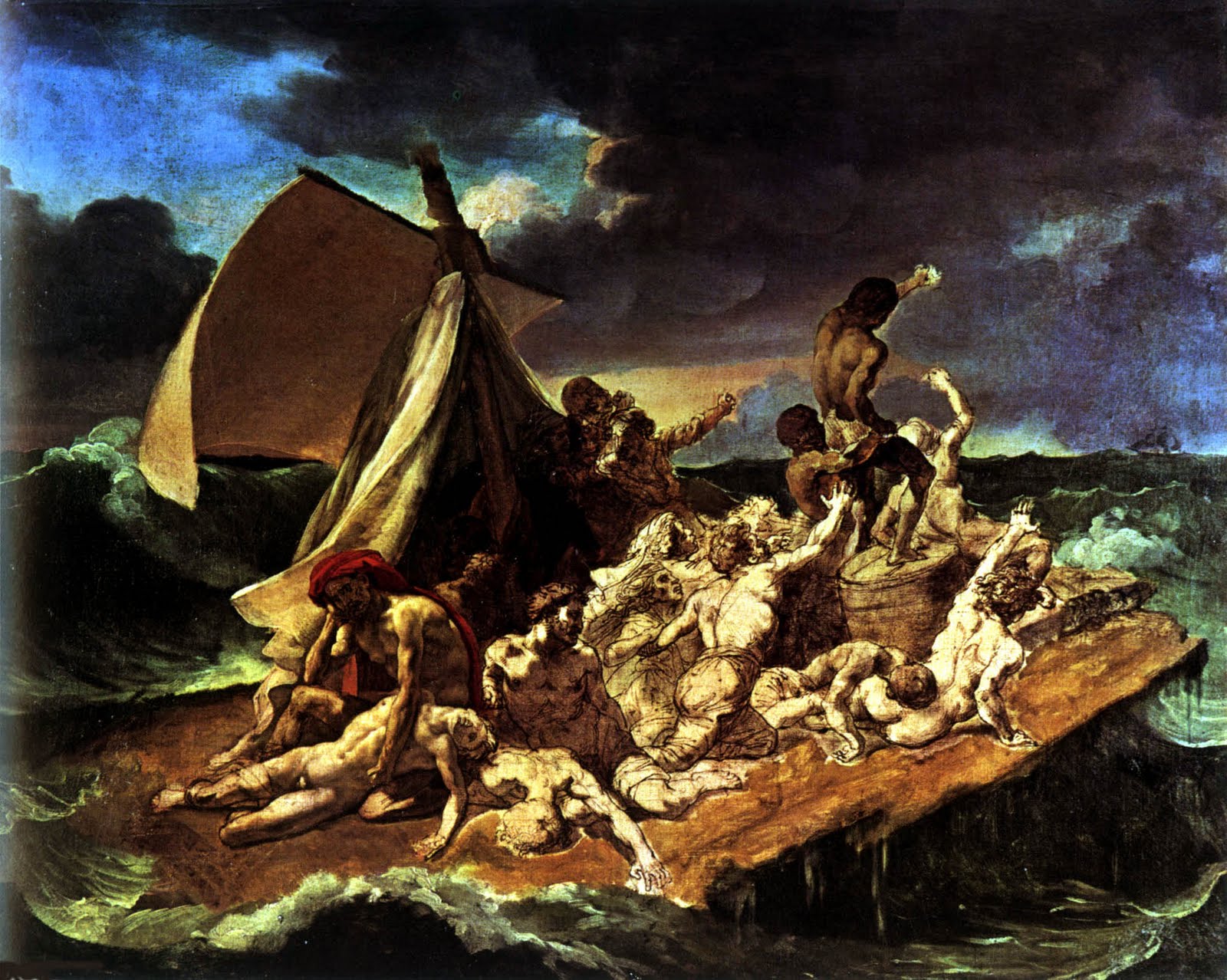
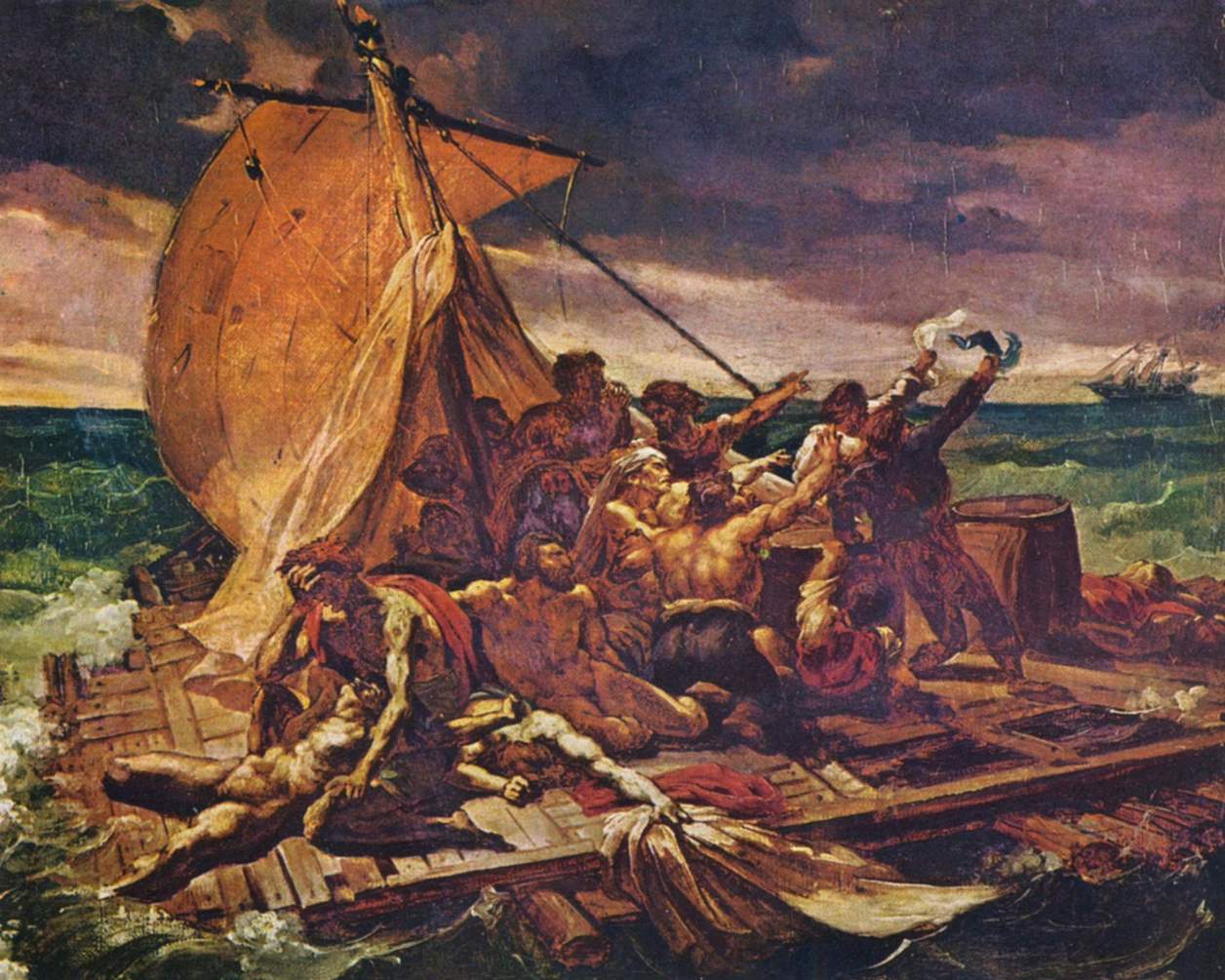
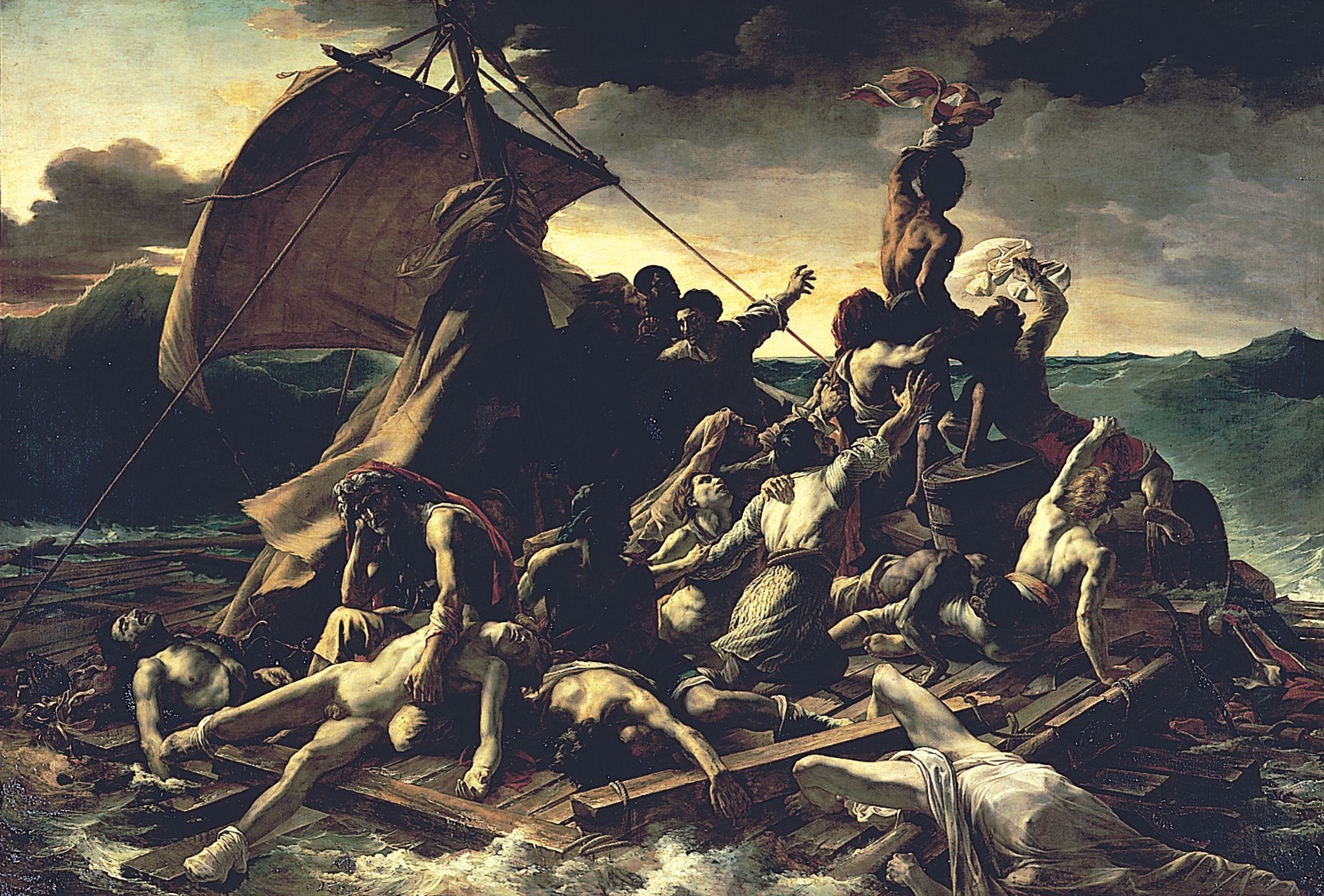
Raft of the Medusa, Gericault
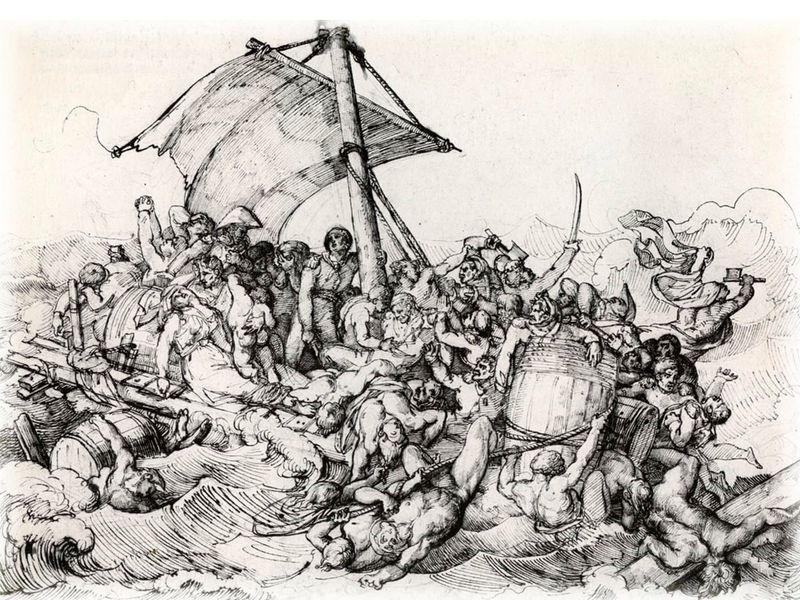
Eventually, everyone was forced to abandon ship. The wealthy and well connected were given space on the lifeboats while the rest, 149 people, were forced onto a makeshift raft which was tied by a rope to one of the lifeboats. At some point, the raft was either intentionally or accidentally cut loose. What followed was a two week nightmare of stormy seas, brutal murders, insanity and cannibalism. Just fifteen men survived the ordeal, and five of them died shortly after their rescue.
The tragedy became a major news event and scandal of its day. De Chaumereys was court-martialed, then acquitted because the French feared ridicule from the British for putting de Chaumereys in charge in the first place.
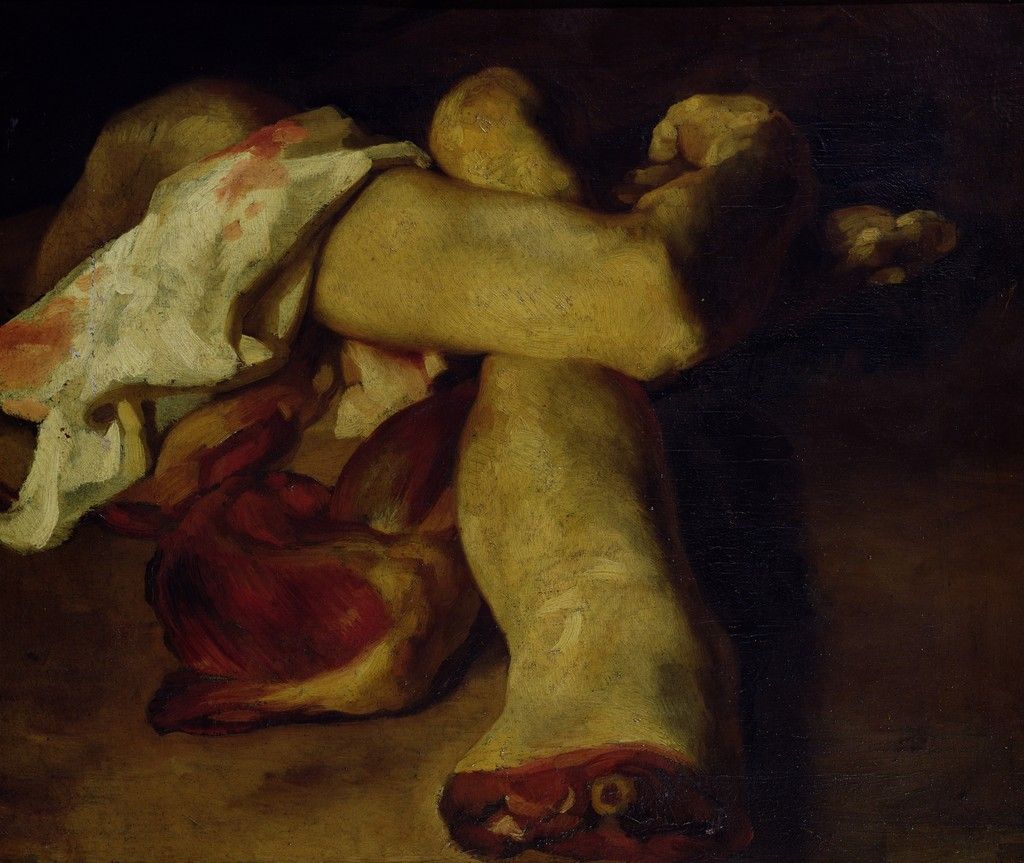
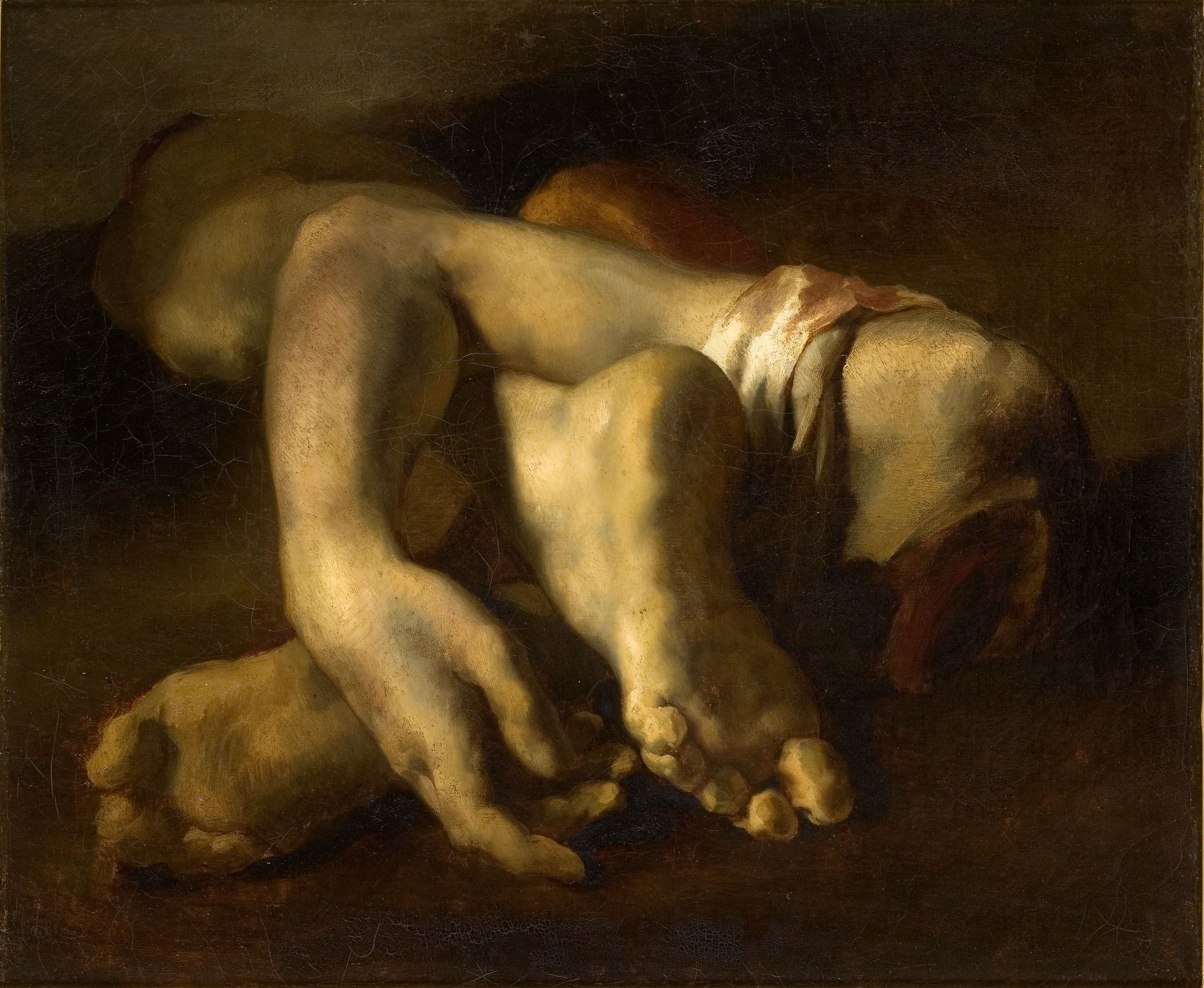
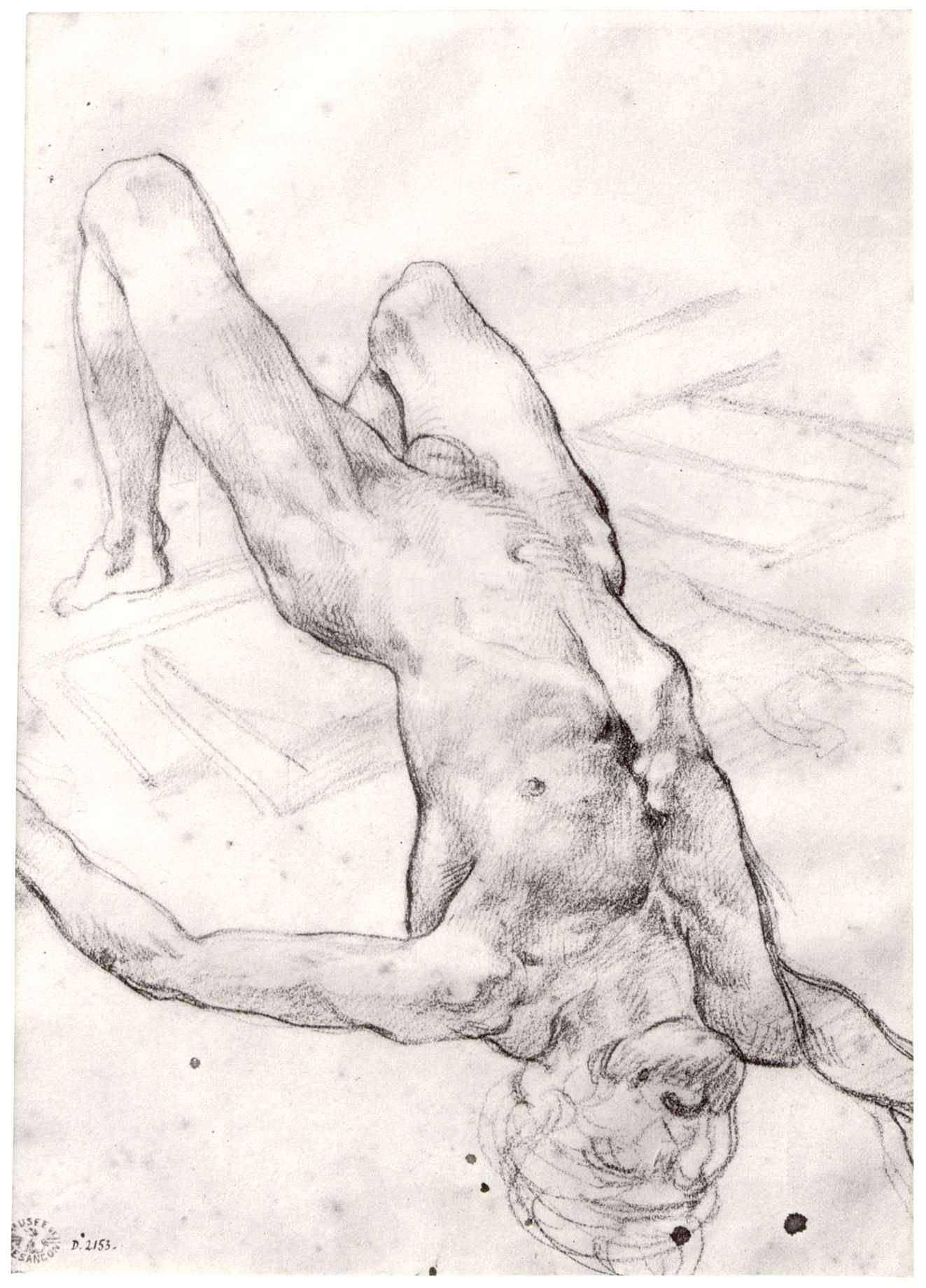
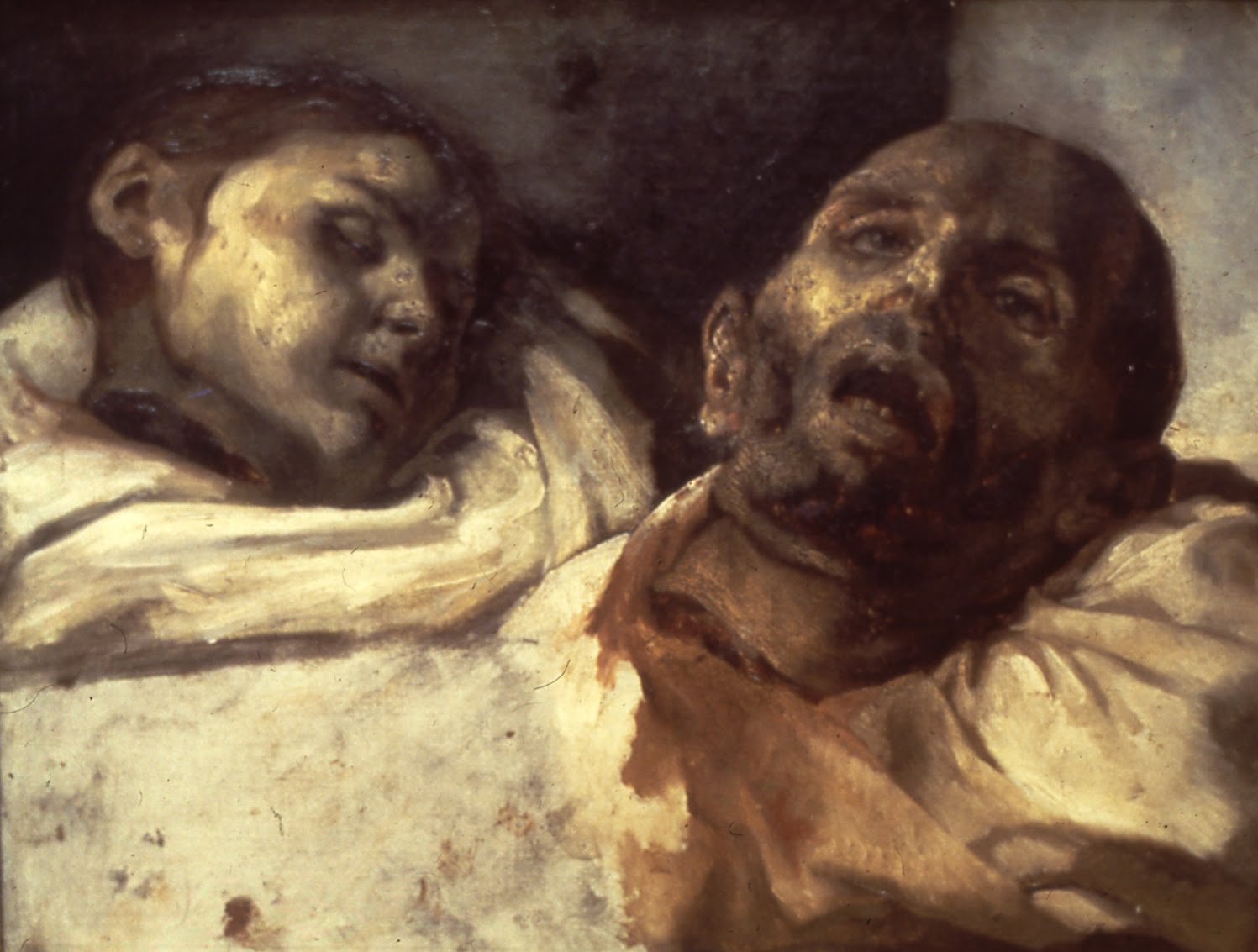
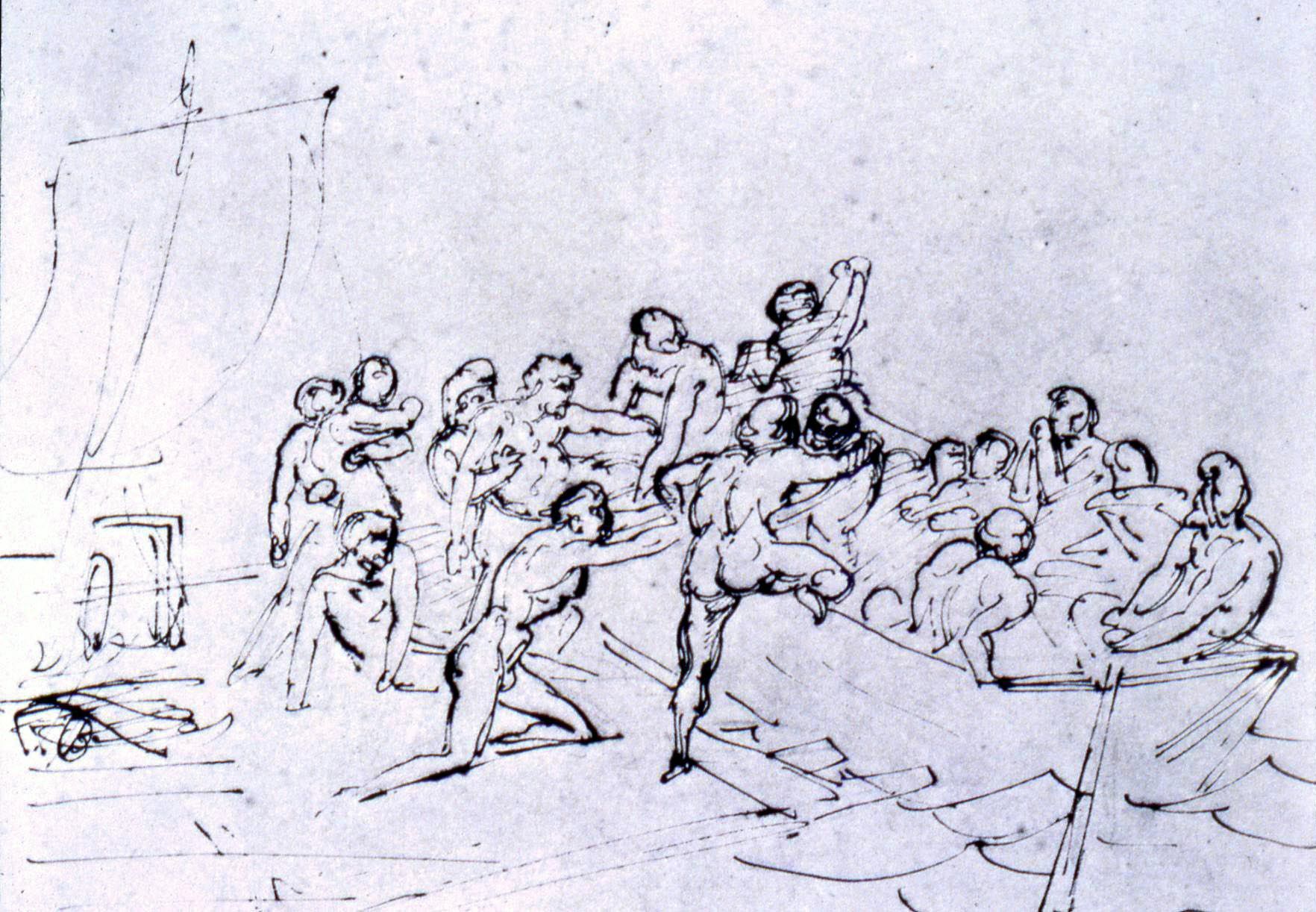
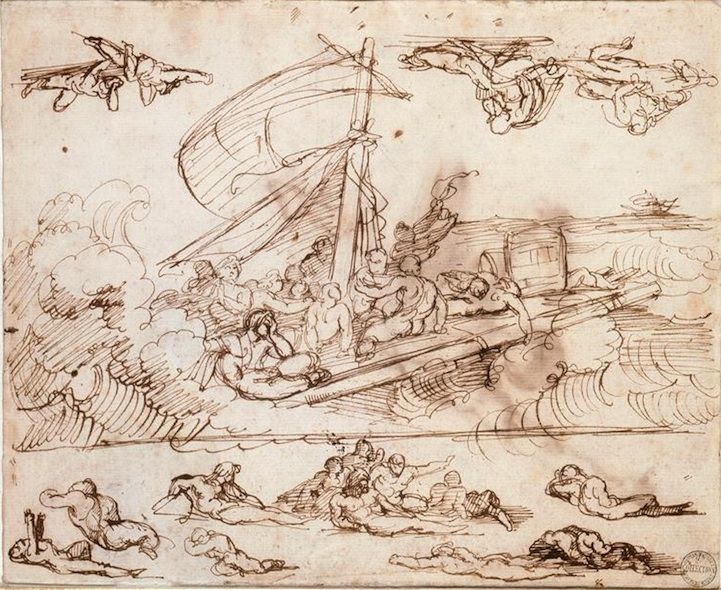
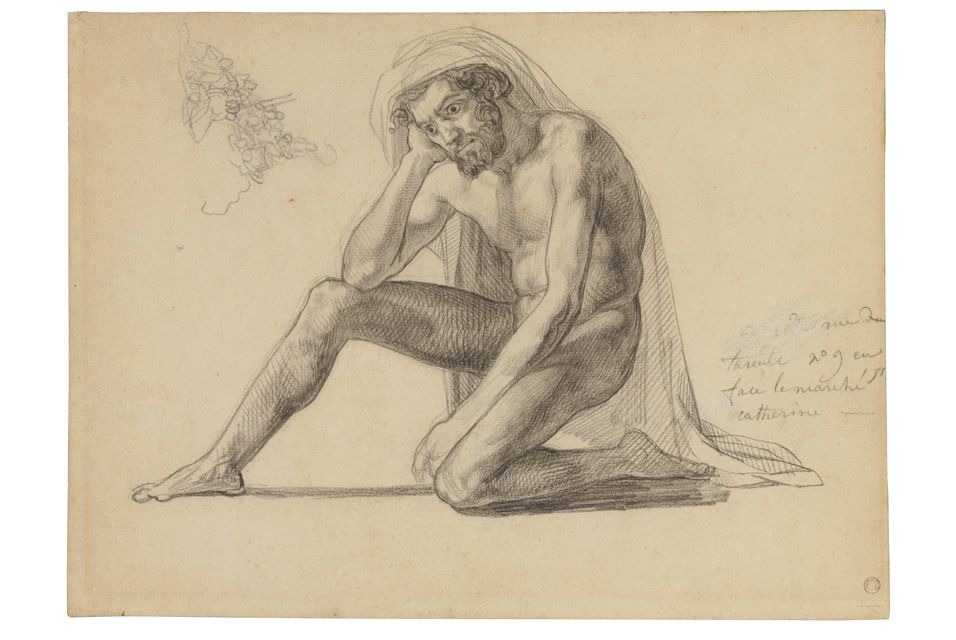
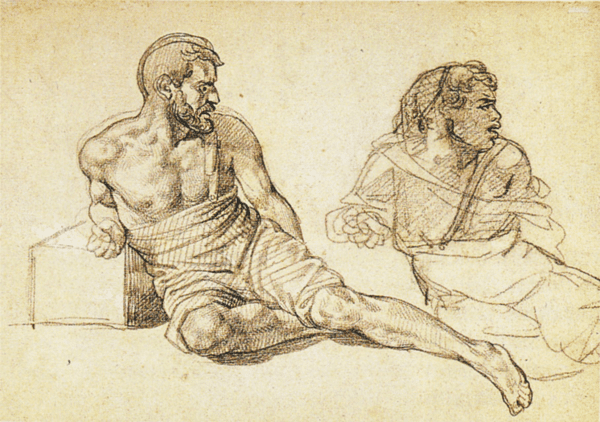
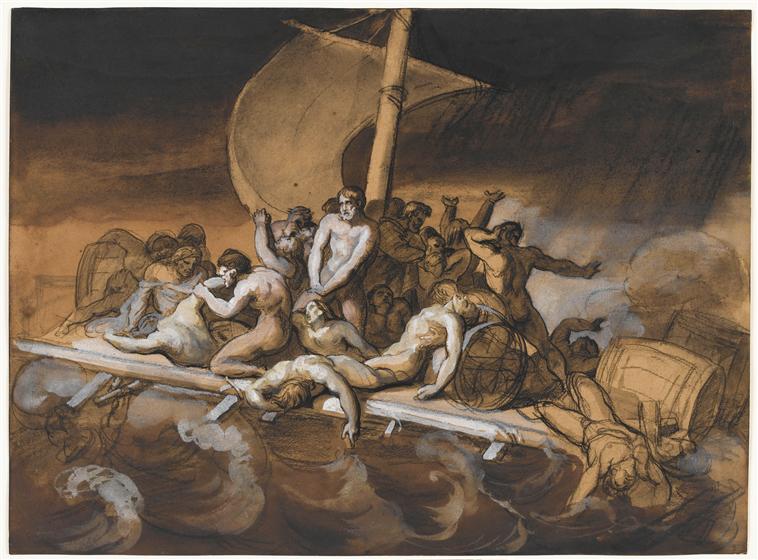
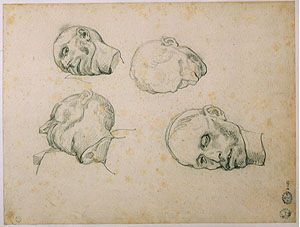
Two years later, the artist Théodore Géricault revealed his massive (16’x23’) painting, Raft of the “Medusa” (see Louvre site for details and a larger image). Géricault had thoroughly researched the subject by reading a pamphlet written by two of the survivors; he went to hospitals and morgues to study the dying and the dead (and even severed body parts which he let decay in his studio) and he set a raft out on the sea to see how it rode the waves. He also worked from live models and interestingly, the artist Eugène Delacroix was one of them. He is the corpse lying face down, arms outstretched, in the center of the composition.
The painting is a Romantic painting, a movement that closely followed the Neoclassical movement in nineteenth century France. The style relies on the drama and fluidity of the Baroque movement and utilizes loose brushstrokes, a strong palette, the sharp contrast of light and dark, and dramatic poses. The subject matter for Romantic paintings often came from literature but also included social criticism.
Géricault was strongly influenced by Michelangelo, as were nearly all Neoclassical and Romantic painters, and therefore painted idealized, muscular bodies, which in this case would’ve been a strong contradiction to how the men really looked. Note there are twenty figures in the composition rather than the accurate number of fifteen.
Compare this painting to Last Judgment in the Sistine Chapel to see similarities in figures.
The massive size of the painting is in keeping with traditional historical paintings, although the subject was a current event and unlike most historical paintings, there is no clear-cut hero(s). Instead we have victims. People who are literally cast off because they exist on the lower rungs of society; they are at the mercy of the more crass machinations of society and clearly, in the end, it’s every man for himself.
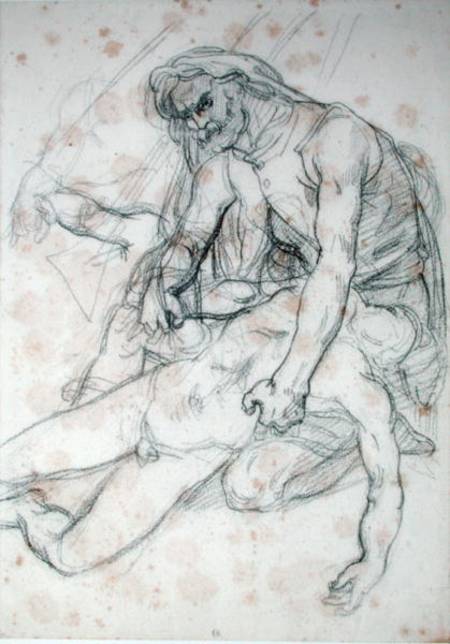
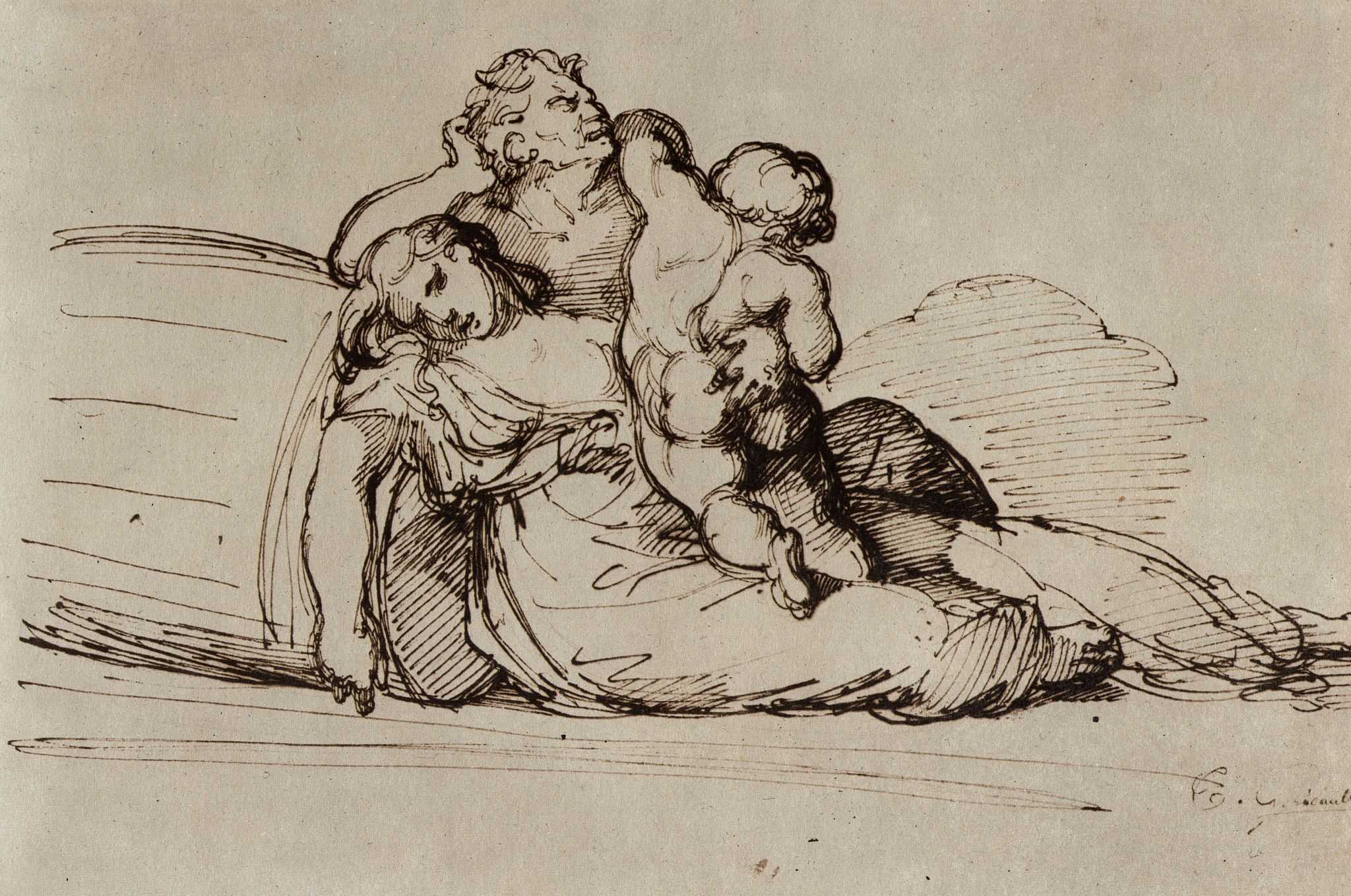
A striking feature of the painting are the interlocking triangles, a common feature in Renaissance and Baroque paintings, and one that expresses Géricault’s academic training. Much has been made of the fact that the figure at the apex of the pyramid, who is waving a flag to a distant ship, is an African man; a very uncommon choice at this time in history. The people on the raft are divided into four groups; the dead and dying are at the center, then there are those struggling to stand up, a third group is comprised of three figures huddled together by the mast with one gesturing, and the fourth group is capped by the African waving the flag. Studying the painting from left to right, the physicality of the figures intensifies but not necessarily the emotional drama. The figures in the foreground display deep anguish and despair while the faces of the more active figures are a bit blurred or hidden in shadow or not seen at all. Note the seated figure in the foreground of the despondent father who holds onto the body of his dead son.
And as to the ship in the distance, despite knowing the story, the viewer never knows for sure if the ship the Argus is coming or going. In fact, the Argus did indeed disappear for more than two hours, causing even more panic and despair, before reappearing and rescuing the survivors.
The sky and water are definitely Romantic in nature as they also depict drama, shadow and light, and convey the strong forces that humans are often at the mercy of. Géricault spent a year just working on the sky and ocean.
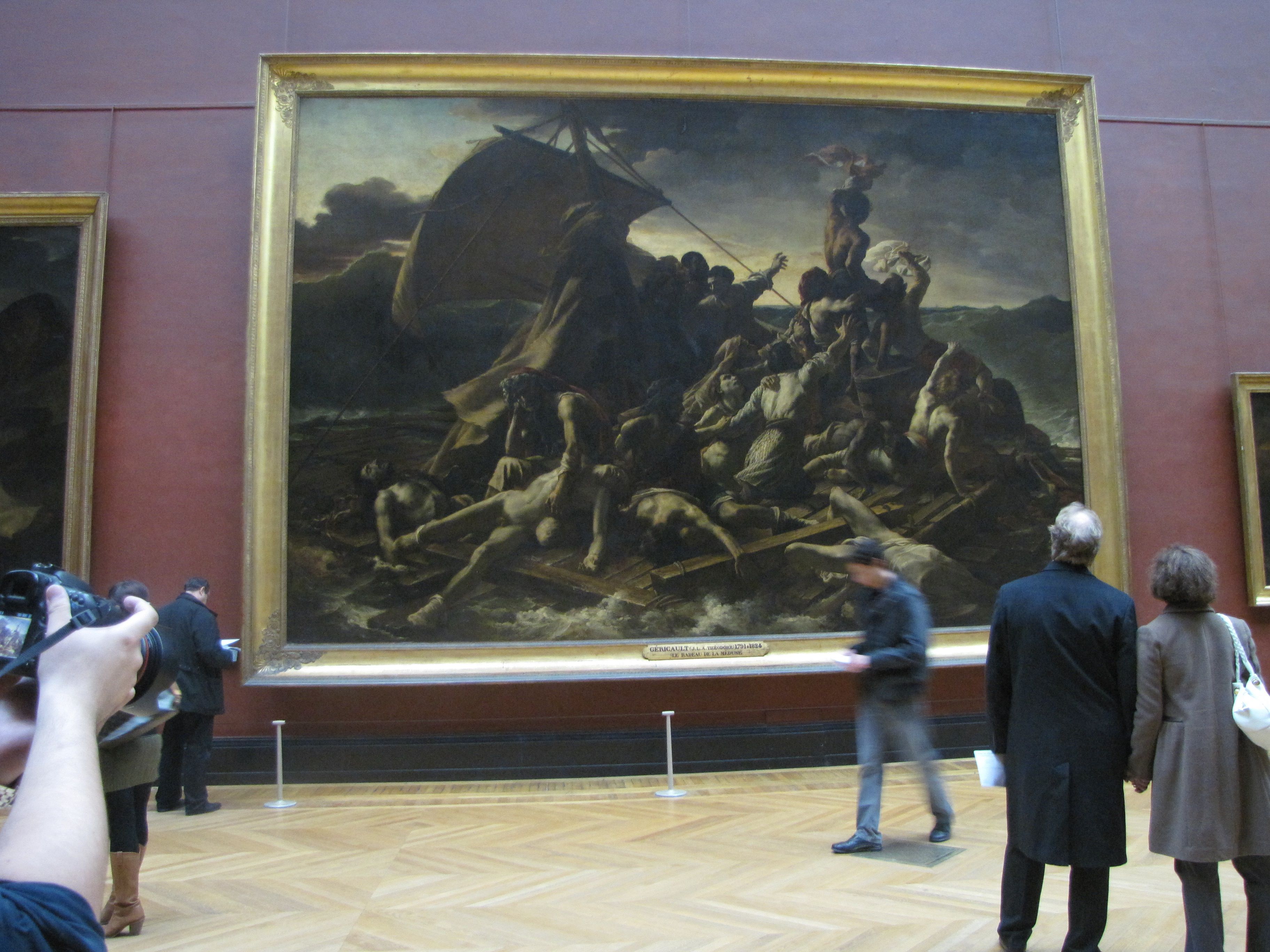
The scene is abruptly foreshortened to add to the drama. This combined with a receding horizon are effective tools to include the viewer in the scene. I can only imagine what the painting is like at eye level; Géricault wants our empathy.
At the 1819 Salon, the painting was titled Scene of a Shipwreck in order to avoid criticism from the French government; a disconcerting decision considering how obsessed Géricault was with the creation of the work. Unable to find a buyer, Géricault exhibited the painting to the public in continental Europe and England and charged an admission fee, a popular trend at the time. 40,000 people came to see the work in London and it was viewed with horrified fascination. Eventually, the work did sell. It was saved by the French government from a group of French nobility who intended to cut the work up and sell it piecemeal. It can now be seen at the Louvre. Géricault died about five years after its completion at the age of thirty-two.
The existential implications of this work are potent. In his brilliant novel, A History of the World in 10 1/2 Chapters, Julian Barnes writes of this painting, “We are all lost at sea, washed between hope and despair, hailing something that may never come to rescue us.”