|
#1
●
07-10-2017, 01:46 PM
| ||||||||
 My Rank: MASTER SERGEANT Poster Rank:567 mc² Join Date: Aug 2009 Posts: 1,722 Mentioned: 1 Post(s) Quoted: 299 Post(s)
| ||||||||
|
Freddy Horion
The monster Freddy Horion and Roland Feneulle Freddy Horion (September 21, 1946) alias Sunglasses and Roland Feneulle (September 9, 1953 - 22 October 2013) are criminals and killers, with Belgian and French nationality respectively. Together, they were convicted in 1980 for the murder of the family Steyaert on June 23, 1979. Raid On June 23, 1979 Horion and Feneuille entered the property of car dealership Roland Steyaert in Sint-Amandsberg, a former Horion employer. Horion cherished revenge against the man because of a lawsuit involving Horion having paid 500,000 Belgian francs to Steyaert. Horion claimed the money, Steyaert refused to pay and was killed in his garage followed by the rest of the family: his wife Leona, 13-year-old daughter Hilde, as well as 22-year-old daughter Anne-Marie and her 24-year-old fiancé Marc, who came without complacency during the robbery. Lawsuit The police never discovered a connection with an earlier assassination case: that on Hélène Lichachevski, a Polish shopkeeper in the port of Ghent who was detained with the same weapon on February 9, 1979. He confessed killing her only after his girlfriend cracked during interrogation. He wasn’t asked to do this. Later he confessed the 5 other murders. Two days after the assassination of the Steyaert family, Feneulle was arrested, one day later, Horion. Horion, defended by the young Jef Vermassen, and Feneulle were found guilty of six fold murder and sentenced to death by the East Flemish court in 1980, which was immediately converted into a life sentence imprisonment (which Horion still looks like). After being arrested in the prison of Leuven central and Bruges for decades in November 2009, he was transferred to the prison of Hasselt in November 2009, at the request of his lawyer when Horion was banned at the time of an escape pest in Belgian prisons to walk to the open-air courtyard. In October 1982, Horion managed to escape. After a month and a half being hid in the Netherlands, Horion was arrested again. For years, Freddy Horion has attempted to obtain early release without any result. Feneulle was locked up in the prison of Bruges, and died there at the age of 60. Horion would now deny the murder of shopkeeper Lichachevski, for which he was convicted, and shift into a friend's shoes. This he claims in a series of letters. The conscious friend still walks around, but the facts are bored. More about the raid Freddy Horion is seen as one of the coolest criminals in our history. More than thirty years ago, he and his companion Roland Feneulle killed a five-legged family. Later, a sixth murder will be linked to him. On Sunday, June 23, 1979, Horion and Feneuille joined Roland Steyaert car dealership, in East-Flemish Saint Amandsberg. They want to rob the man, but because of the strong hatred of Freddy Horion, that robbery fires into a bloody robbery. First, Horion takes father Steyaert to the garage. He forces him to sit in a 2pk Citroën and put him off, with a shot asleep. Feneuille is in the house, with mother Leona and 13-year-old daughter Hilde. At that time Anne-Marie, 22-year-old daughter of the Steyaerts, and her 23-year-old fiancé Marc De Croock drive the yard. They are just about to do groceries, and come in without awe. Together with her mother and sister, Anne-Marie is locked up in the basement. Marc is taken to the garage, where he waits for the same fate as Roland Steyaert. Anne-Marie is the next victim. After that, mother is Leona and Hilde in turn. The girl survives the two shots that Horion fires on her, but he does not finish her off. Feneulle turns off the massacre after hours of cries of suffering. The two eventually disappear with a slight spoil: 4000 Belgian francs (less than 100 $), a handful of jewels, some antique pieces and a car from the garage. Horion and Feneulle will only be picked up after a few days. Feneulle was so smart to park the Mini Cooper they got form the robbery, carefree in front of his house. They deny everything, but eventually follow complete confessions. Recent research shows that a shopkeeper from Ghent with the same weapon as the Steyaert family was killed. Freddy Horion’s criminal life story (written by a would be criminologist) The prosecutor's office brings a completely different picture of the killer. Horion is declared accountable and able to control actions and mind. Professor Gheysbrecht, then the most authoritative psychiatrist in judicial circles, examined Horion. He decides that Horion's grudge against the community is not ill, something that completely contradicts Horion's defense. Furthermore, Horion is described as an egoist and egocentric, aware of the murder. He has a tendency to self-complacency and a strong urge for money. Horion has undoubtedly waived the bullying. As a child because of his appearance, but according to the expert he has traumatized these traumas. His past had no effect on his mind and / or emotional life at the time of the murders. One proof of this would be that he did bodybuilding. Someone with an inferiority complex would not be able to do this. (!?) His resentment against society because of the injustice that has been committed to him throughout his life, is real but according to the psychiatrist this is not illness. Horion can control his thoughts and feelings. According to Professor Gheysbrecht, the schematic state in which Horion claimed to be in then, was not found to be true. Cool and calculated he would have committed the murders. The trial lasts one and a half weeks and they are both sentenced to the death penalty, which is later transformed into life-long. Feneulle goes to cassation against that decision because of procedural errors. Horion does not appeal. The punch of a fist at the lower school meant he was no longer a loser. Later the café fights followed. He felt respected, even though it was based on intimidation. He has never known another technique of rage control. With some wrong friends, Horion will break in or get into fighting. Horion is known to the police, and soon gets into the cell twice. The first time for successes and injuries, the second time for theft. Unjustly, unjustly, harassment of the court finds Horion. In 1973, Horion is 26 years old, he is sentenced to seven years for the Assistance Court of East Flanders, for a robbery that he only acted as the author. Women and children are taken away, Horion is hating a freak against society. This punishment cannot be, because this time he was only a figurant during the entire criminal event. This is not a deserved punishment. He, the victim, becomes rebellious. He will show them something when he comes outside. It becomes a kind of self-fulfilling prophesy; If they find him a heavy boy who should punish them severely, ok then. Freddy’s early live Some facts which are not known too well. Not even by the would be criminologist. As some folks know from the movie ‘Silence of the Lambs’: there might be a history dating back to the early youth to dig for reasons why. F. father was an abusive alcoholic. He beat his entire family up as if it was as normal as eating breath. He left this family a few years after Freddy's birth, leaving a battered household behind. His mother soon left this so Freddy had to live with her parents. So they should take for him to care for him. After a few months he got send to an orphanage. His brother returned to his mum. And Freddy had to endure this. He never had a home from this moment, not a mum around, nor his family around, … never again. His mum died when he was 3.5 years old. So very early in his life, he had no (grand)parents around. “Look! A monster!” He was about 10 when an accident with a motorbike of a stranger left him with a huge scar(s) on his face. From that moment he always wore huge sun glasses. At 12 years old he got another accident: a car mowed him from the road and his head ends up under the cars. Scarred for life. And from this moment he had no rest in his school. He swapped schools as frequent as we swap t-shirts. “Look! A monster!” Some years later a brick of coal hits him in the eye, which pierced it to almost blindness. A detainee said he always wears his glasses. He even sleeps with them. Horion continued from out of his cell to help, to work for his former co-workers and to defend their rights. He worked at a service for people with sight problems and sunlight sensitivity. 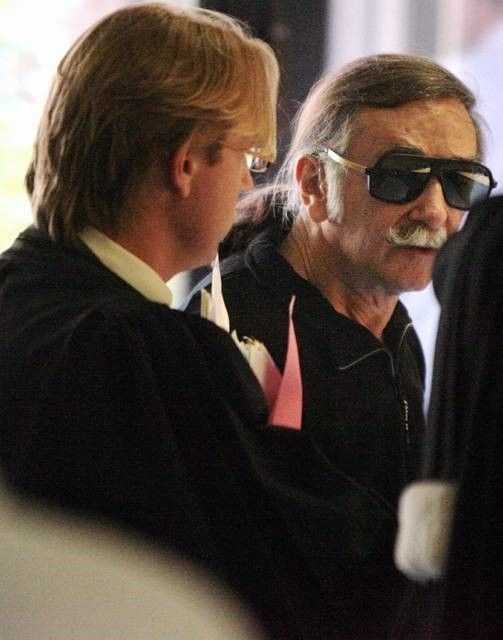 · 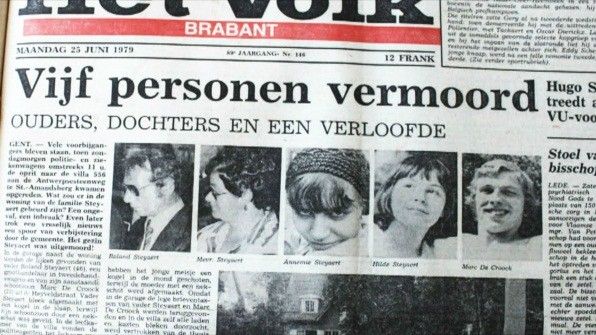 · 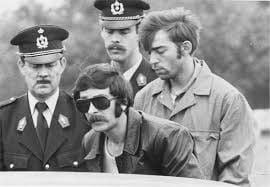 ·  · |