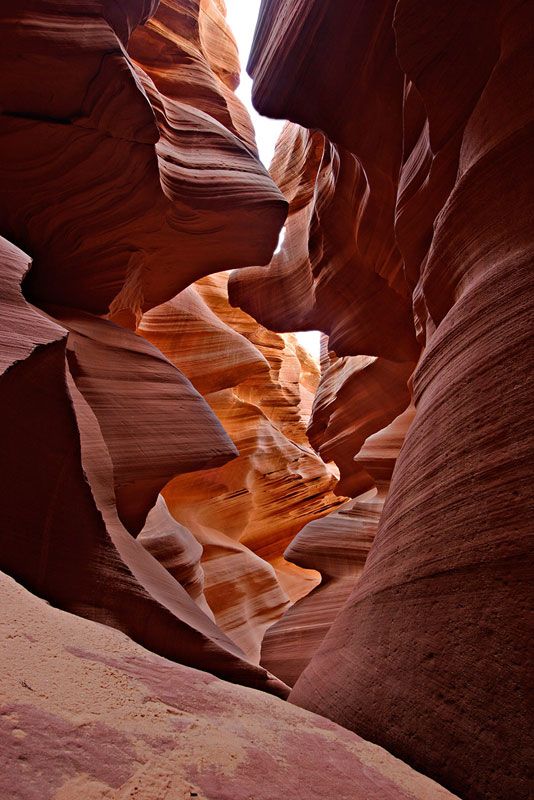
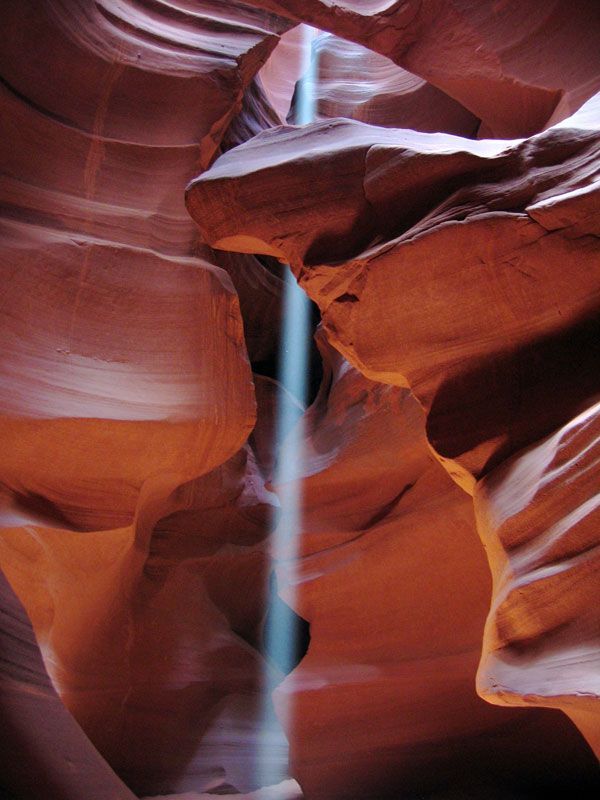
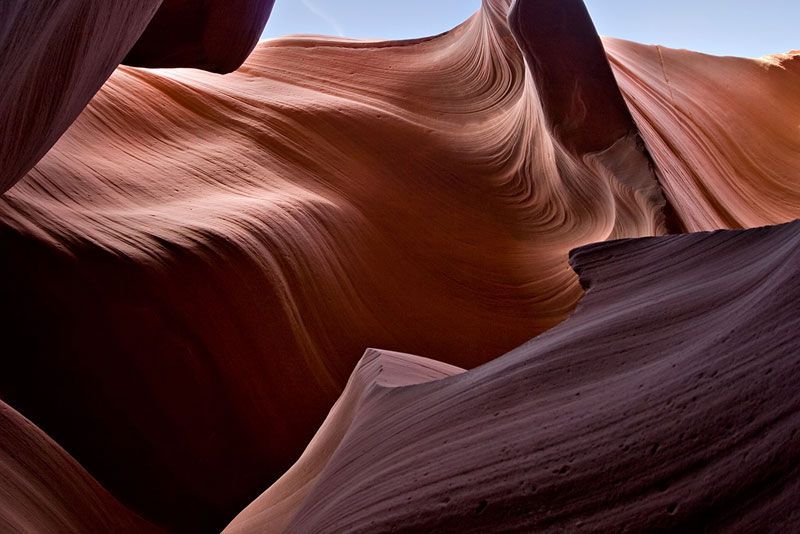
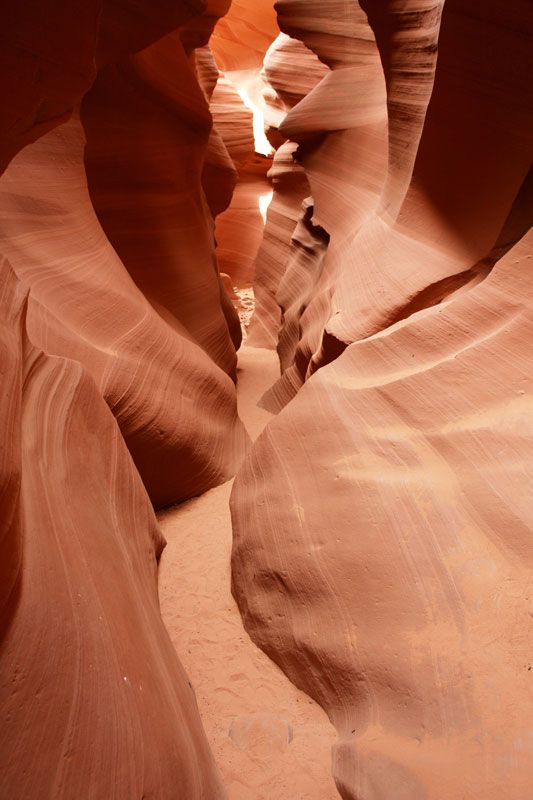
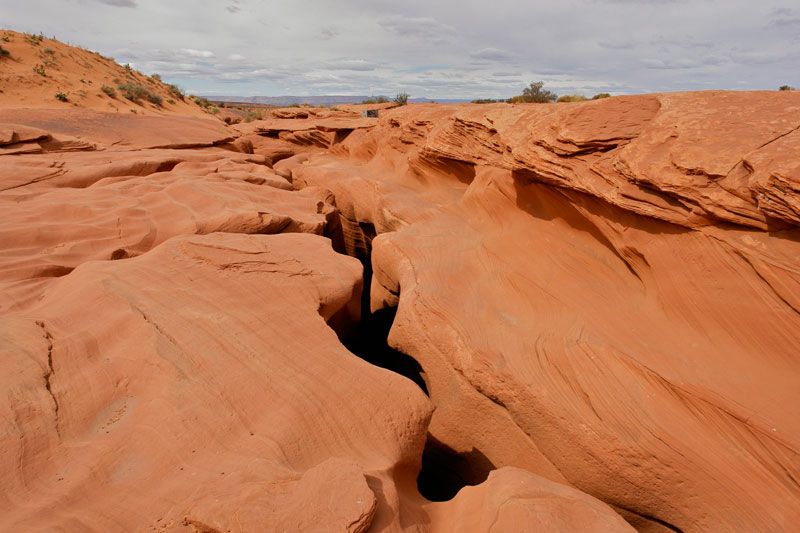
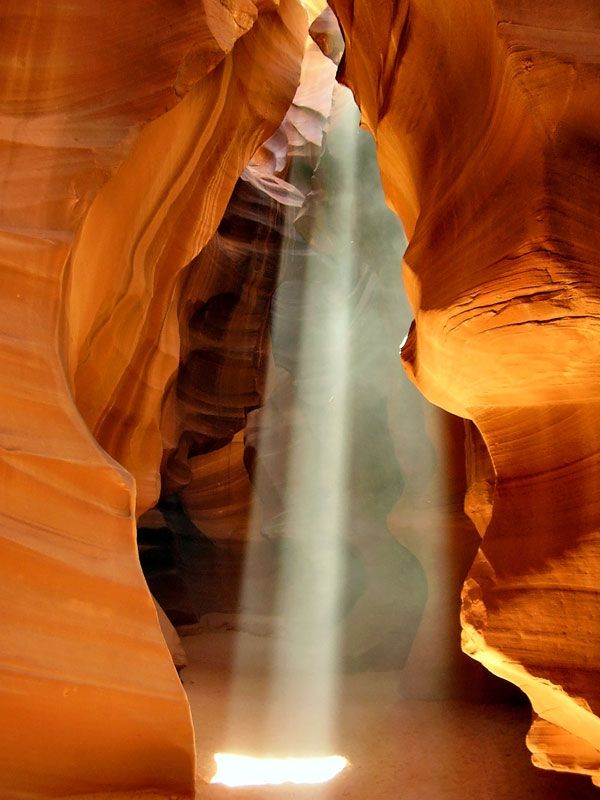
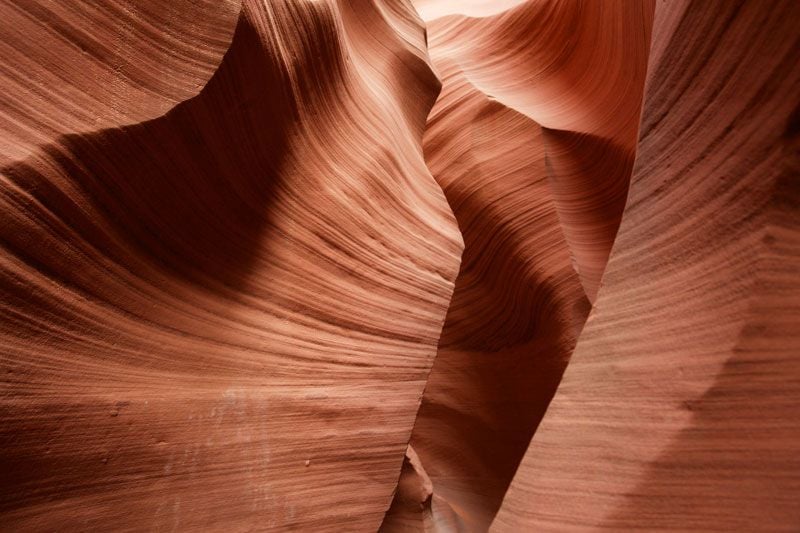
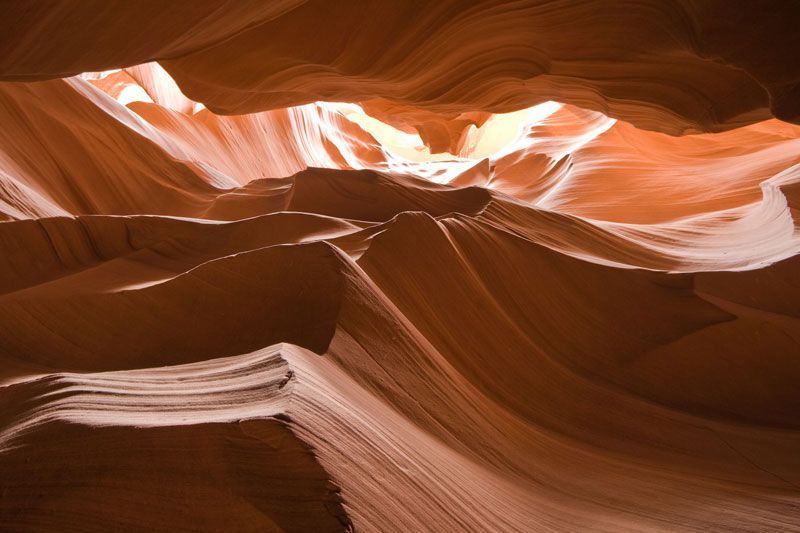
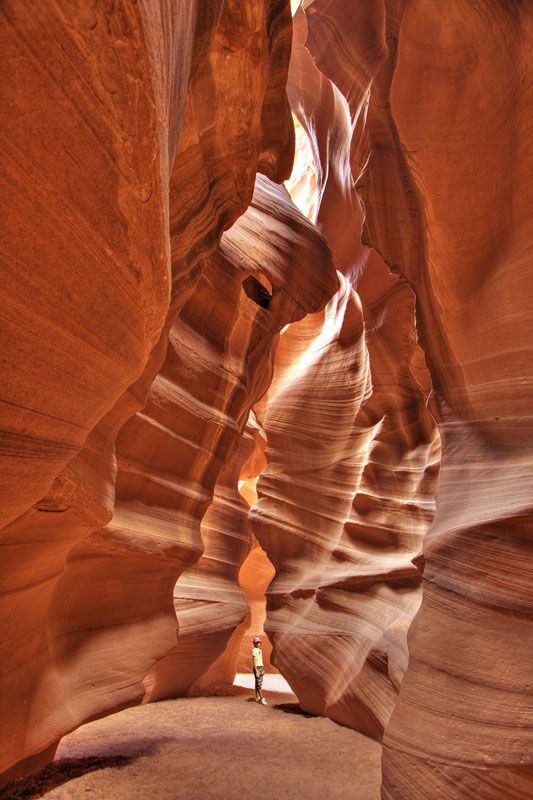
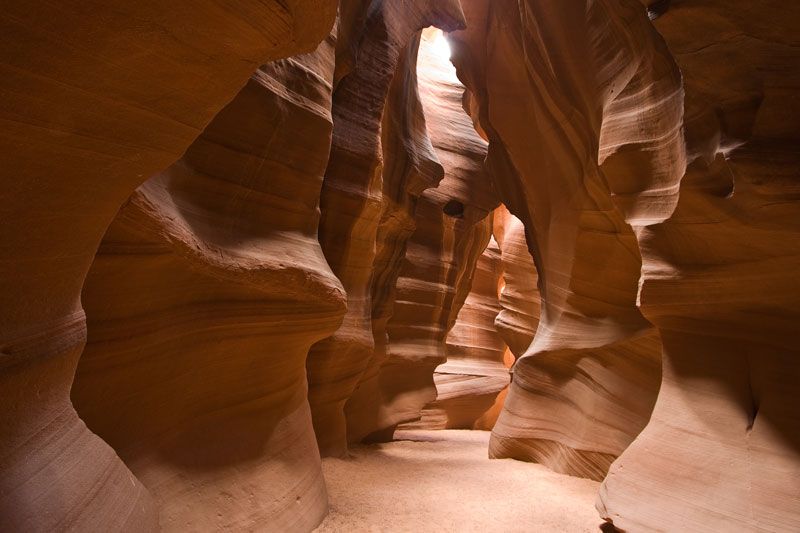
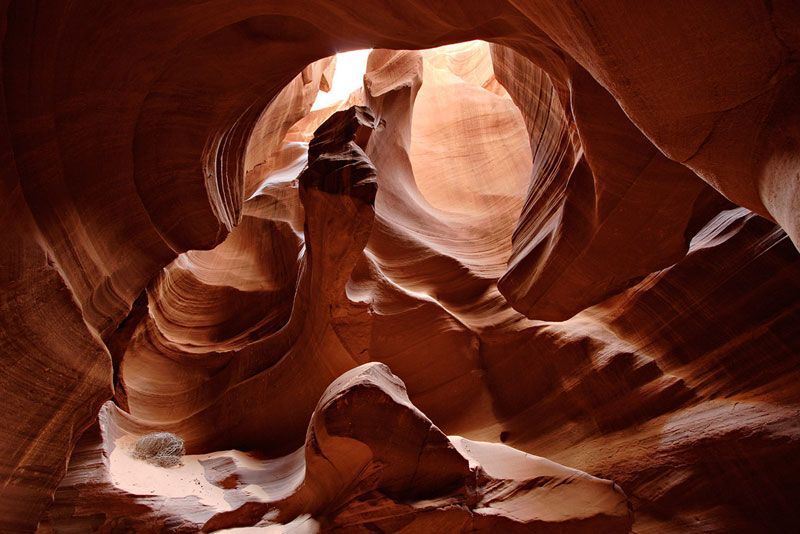
Located on Navajo land near Page, Arizona, Antelope Canyon is an incredible place where water and time have eroded the rock and turned it into a slot canyon. The result is an incredible formation of smooth, flowing rock. In 1997 the Navajo Tribe turned the area into a Navajo Tribal Park, opening up Antelope Canyon for tourism.
Antelope Canyon was formed by erosion of Navajo Sandstone, primarily due to flash flooding and secondarily due to other sub-aerial processes.
Navajo Sandstone is a geologic formation that is spread across the U.S. states of southern Nevada, northern Arizona, northwest Colorado, and Utah. The formation is particularly prominent in southern Utah, where it forms the main attractions of a number of national parks and monuments including Red Rock Canyon National Conservation Area, Zion National Park, Capitol Reef National Park, Glen Canyon National Recreation Area, Grand Staircase-Escalante National Monument, and Canyonlands National Park.
At Antelope Canyon, rainwater, especially during monsoon season, runs into the extensive basin above the slot canyon sections, picking up speed and sand as it rushes into the narrow passageways. Over time the passageways are eroded away, making the corridors deeper and smoothing hard edges in such a way as to form characteristic ‘flowing’ shapes in the rock. Flooding in the canyon still occurs.