JavaScript and Cookies are required to view this site. Please enable both in your browser settings.
http://www.pbs.org/wgbh/nova/sciencenow/0305/04-glow-05.html Jack-O-Lantern mushroom (Omphalotus olearius) Through metabolic and physiological functions, all living things must produce and ultimately dispose of waste. This fungus exudes its waste through its gills, and some of these wastes are luciferases. Luciferases are enzymes commonly used for bioluminescence (or emission of light by a living organism) such as in fireflies. The Jack o'Lantern mushroom is an orange- to yellow-gill mushroom that to an untrained eye appears similar to some chanterelles. Luminescent Panellus (Panellus stipticus) Panellus stipticus is a widely distributed, hardwood-rotting saprobe, but it is more common in eastern North America than in the West. It is quite tough, and revives in rainwater after drying out, like many Marasmius species. This little mushroom has reportedly been used as a styptic (blood thickening) agent, and it has luminescent gills. http://www.mushroomexpert.com/panellus_stipticus.html Ctenophore Bathocyroë We probably know more about the surface of the moon than we do the ocean. Every day we discover new species. This little beauty is Bathocyroe fosteri, a lobate ctenophore found at intermediate depths in all the seas. It's very common and abundant near the Mid-Atlantic Ridge, and measures about two inches tall. Because of its fragility, it was only described in 1978, when it was collected from a submersible. This genus can produce blue and green luminescence. http://www.lifesci.ucsb.edu/~biolum/organism/photo.html Dinoflagellates The dinoflagellates are a large group of flagellate protists. Most are marine plankton, but they are common in fresh water habitats as well. They are characterized by two flagella, one girdling the cell and the other trailing the cell. Some dinoflagellates exist in coral, in a symbiotic relationship. These dinoflagellates are termed the zooxanthellae. Other dinoflagellates occur in such high numbers that the water is colored red, a phenomenon known as a red tide. http://en.wikipedia.org/wiki/Dinoflagellate http://www2.estrellamountain.edu/faculty/farabee/biobk/BioBookglossD.html#dinoflagellates Crystal jelly (Aequorea Victoria) Aequorea victoria, also sometimes called the crystal jelly, is a bioluminescent hydrozoan jellyfish (which is also known as hydromedusae) that is found off the west coast of North America. You may not have heard of it, but the hydromedusa Aequorea victoria is probably the most influential bioluminescent marine organism. Calcium-activated photoprotein and green-fluorescent protein (GFP) were first discovered and cloned from this cnidarian. http://en.wikipedia.org/wiki/Aequorea_victoria Glow worm (Lampyris noctiluca) Lampyris noctiluca, the Common Glow-worm of Europe, is a firefly species of the genus Lampyris. These are beetles as evidenced by the hard cases that fold over the wings when not in use.. The females are often twice the size of the males (up to 25mm in length), but do not have wings, whereas the males do. The females emit the glow, whereas the males do not. http://en.wikipedia.org/wiki/Lampyris_noctiluca Fireflies (Photinus pyralis) Fireflies or lightning bugs make light within their bodies. They light up to attract a mate. To do this, the fireflies contain specialized cells in their abdomen that make light. http://animals.howstuffworks.com/insects/question554.htm" /> http://www.pbs.org/wgbh/nova/sciencenow/0305/04-glow-05.html Jack-O-Lantern mushroom (Omphalotus olearius) Through metabolic and physiological functions, all living things must produce and ultimately dispose of waste. This fungus exudes its waste through its gills, and some of these wastes are luciferases. Luciferases are enzymes commonly used for bioluminescence (or emission of light by a living organism) such as in fireflies. The Jack o'Lantern mushroom is an orange- to yellow-gill mushroom that to an untrained eye appears similar to some chanterelles. Luminescent Panellus (Panellus stipticus) Panellus stipticus is a widely distributed, hardwood-rotting saprobe, but it is more common in eastern North America than in the West. It is quite tough, and revives in rainwater after drying out, like many Marasmius species. This little mushroom has reportedly been used as a styptic (blood thickening) agent, and it has luminescent gills. http://www.mushroomexpert.com/panellus_stipticus.html Ctenophore Bathocyroë We probably know more about the surface of the moon than we do the ocean. Every day we discover new species. This little beauty is Bathocyroe fosteri, a lobate ctenophore found at intermediate depths in all the seas. It's very common and abundant near the Mid-Atlantic Ridge, and measures about two inches tall. Because of its fragility, it was only described in 1978, when it was collected from a submersible. This genus can produce blue and green luminescence. http://www.lifesci.ucsb.edu/~biolum/organism/photo.html Dinoflagellates The dinoflagellates are a large group of flagellate protists. Most are marine plankton, but they are common in fresh water habitats as well. They are characterized by two flagella, one girdling the cell and the other trailing the cell. Some dinoflagellates exist in coral, in a symbiotic relationship. These dinoflagellates are termed the zooxanthellae. Other dinoflagellates occur in such high numbers that the water is colored red, a phenomenon known as a red tide. http://en.wikipedia.org/wiki/Dinoflagellate http://www2.estrellamountain.edu/faculty/farabee/biobk/BioBookglossD.html#dinoflagellates Crystal jelly (Aequorea Victoria) Aequorea victoria, also sometimes called the crystal jelly, is a bioluminescent hydrozoan jellyfish (which is also known as hydromedusae) that is found off the west coast of North America. You may not have heard of it, but the hydromedusa Aequorea victoria is probably the most influential bioluminescent marine organism. Calcium-activated photoprotein and green-fluorescent protein (GFP) were first discovered and cloned from this cnidarian. http://en.wikipedia.org/wiki/Aequorea_victoria Glow worm (Lampyris noctiluca) Lampyris noctiluca, the Common Glow-worm of Europe, is a firefly species of the genus Lampyris. These are beetles as evidenced by the hard cases that fold over the wings when not in use.. The females are often twice the size of the males (up to 25mm in length), but do not have wings, whereas the males do. The females emit the glow, whereas the males do not. http://en.wikipedia.org/wiki/Lampyris_noctiluca Fireflies (Photinus pyralis) Fireflies or lightning bugs make light within their bodies. They light up to attract a mate. To do this, the fireflies contain specialized cells in their abdomen that make light. http://animals.howstuffworks.com/insects/question554.htm" /> Fascinating Bioluminescent Organisms

Fascinating Bioluminescent Organisms 

Current Rating:

Unlimited Views No Ads No Algorithms Lifetime Account

Documenting Reality

Community Forum · Est. 2006

Join Now
Thread Tools
  #1  
09-18-2011, 02:06 PM
Faline's Avatar
Faline
Offline:
My Rank: MAJOR
Poster Rank:12
Join Date: Jun 2009
Posts: 93,130
Contributions: 226
 
Mentioned: 91 Post(s)
Quoted: 2009 Post(s)
Activity Longevity
0/20 18/20
Today Posts
0/11 ssss93130
Fascinating Bioluminescent Organisms

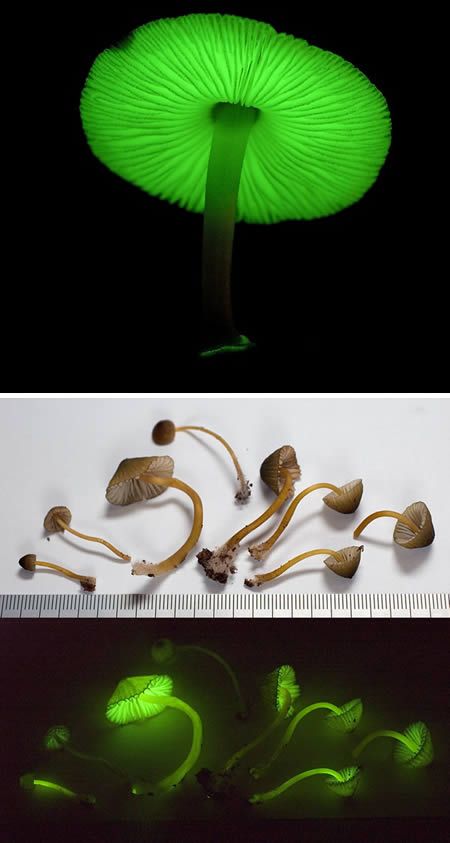
Glowing Mushrooms (Mycena lux-coeli mushrooms)
Click image for larger version

Name:	a96794_a492_Mycena-lux-coeli-mushrooms.jpg
Views:	278
Size:	40.4 KB
ID:	305011
During Japan's rainy season, a glow-in-the-dark mushroom begins to sprout in Wakayama prefecture. The Mycena lux-coeli mushrooms sprout from fallen chinquapin trees and as they grow, a chemical reaction involving a light-emitting pigment occurs, causing them to glow a ghostly green. The caps can grow to as large as 2 cm (about 1 inch) in diameter, but because the mushrooms are prone to dehydration, they only have a few days to live once the rain stops. Just goes to show you that the curiosities of the world never cease!
http://pinktentacle.com/2006/05/rain...ark-mushrooms/

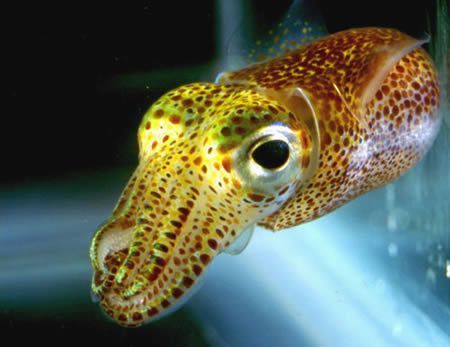
Hawaiian Bobtail Squid (Euprymna scolopes)
Click image for larger version

Name:	a96794_a492_hawaiian-squid2.jpg
Views:	313
Size:	29.5 KB
ID:	305012
In the darkness of the deep ocean, some animals create their own light. Among these is the Hawaiian bobtail squid Euprymna scolopes, which forms a partnership with the luminous bacterium Vibrio fischeri. The squid houses colonies of these bacteria in special light organs, and it can control the brightness and direction of their illuminations. But these organs do much more than produce light - they detect it too. The organs generate nervous signals when they sense light and they're loaded with proteins responsible for detecting it. The light organs are effectively an extra set of primitive eyes, each equipped with its own "iris" and "lens". The squid comes equipped with a pair of living, 'seeing' flashlights.
http://scienceblogs.com/notrocketsci...e_as_an_ex.php

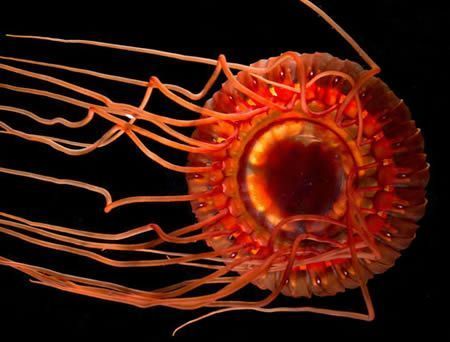
Alarm jellyfish (Atolla wyvillei)
Click image for larger version

Name:	a96794_a492_alarm-jellyfish.jpg
Views:	460
Size:	33.0 KB
ID:	305013
Some animals use their bioluminescence to "scream" for help. Once an animal is caught in the clutches of a predator, its only hope for escape may be to attract the attention of something bigger and nastier that may attack and eat whatever is about to eat it. This amazing light show is known as a "burglar alarm" display. The deep-sea jellyfish, Atolla wyvillei, is a master of this display.
<iframe width="480" height="360" src="http://www.youtube.com/embed/xjaNzZt2olk" frameborder="0" allowfullscreen></iframe>
http://www.pbs.org/wgbh/nova/science...4-glow-05.html

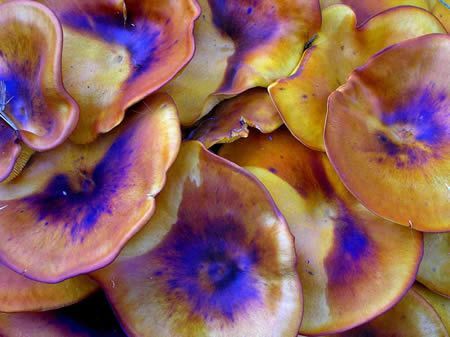
Jack-O-Lantern mushroom (Omphalotus olearius)
Click image for larger version

Name:	a96794_a492_Omphalotus.jpg
Views:	299
Size:	35.1 KB
ID:	305014
Through metabolic and physiological functions, all living things must produce and ultimately dispose of waste. This fungus exudes its waste through its gills, and some of these wastes are luciferases. Luciferases are enzymes commonly used for bioluminescence (or emission of light by a living organism) such as in fireflies. The Jack o'Lantern mushroom is an orange- to yellow-gill mushroom that to an untrained eye appears similar to some chanterelles.

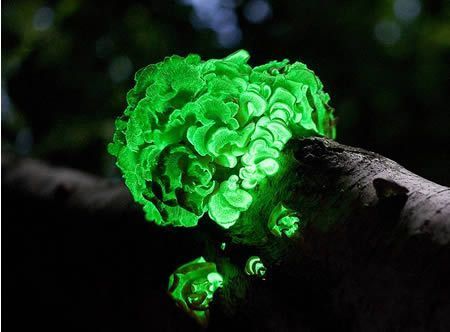
Luminescent Panellus (Panellus stipticus)
Click image for larger version

Name:	a96794_a492_Luminescent-Panellus.jpg
Views:	181
Size:	26.0 KB
ID:	305015
Panellus stipticus is a widely distributed, hardwood-rotting saprobe, but it is more common in eastern North America than in the West. It is quite tough, and revives in rainwater after drying out, like many Marasmius species. This little mushroom has reportedly been used as a styptic (blood thickening) agent, and it has luminescent gills.
http://www.mushroomexpert.com/panellus_stipticus.html

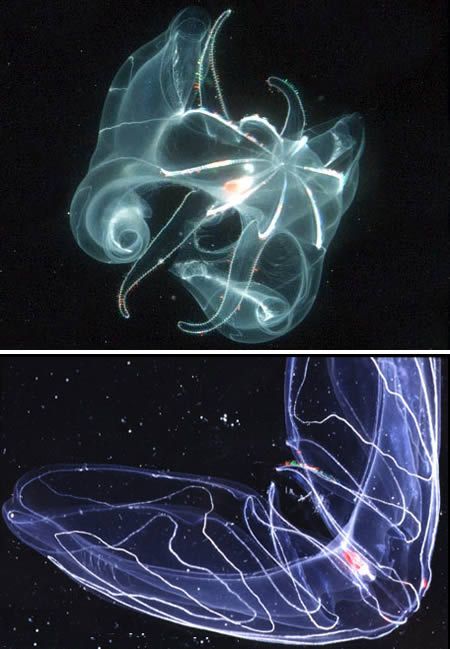
Ctenophore Bathocyroë
Click image for larger version

Name:	a96794_a492_ctenophore-Bathocyroe.jpg
Views:	306
Size:	50.6 KB
ID:	305016
We probably know more about the surface of the moon than we do the ocean. Every day we discover new species. This little beauty is Bathocyroe fosteri, a lobate ctenophore found at intermediate depths in all the seas. It's very common and abundant near the Mid-Atlantic Ridge, and measures about two inches tall. Because of its fragility, it was only described in 1978, when it was collected from a submersible. This genus can produce blue and green luminescence.
http://www.lifesci.ucsb.edu/~biolum/organism/photo.html

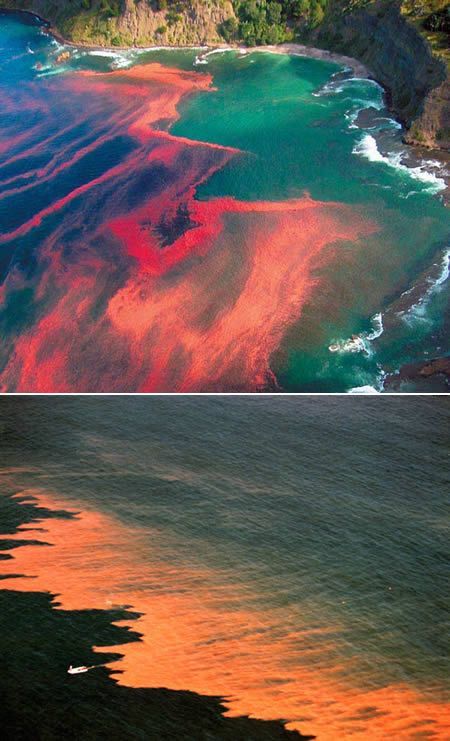
Dinoflagellates
Click image for larger version

Name:	a96794_a492_flageletes.jpg
Views:	193
Size:	72.1 KB
ID:	305017
The dinoflagellates are a large group of flagellate protists. Most are marine plankton, but they are common in fresh water habitats as well. They are characterized by two flagella, one girdling the cell and the other trailing the cell. Some dinoflagellates exist in coral, in a symbiotic relationship. These dinoflagellates are termed the zooxanthellae. Other dinoflagellates occur in such high numbers that the water is colored red, a phenomenon known as a red tide.
http://en.wikipedia.org/wiki/Dinoflagellate
http://www2.estrellamountain.edu/fac...inoflagellates

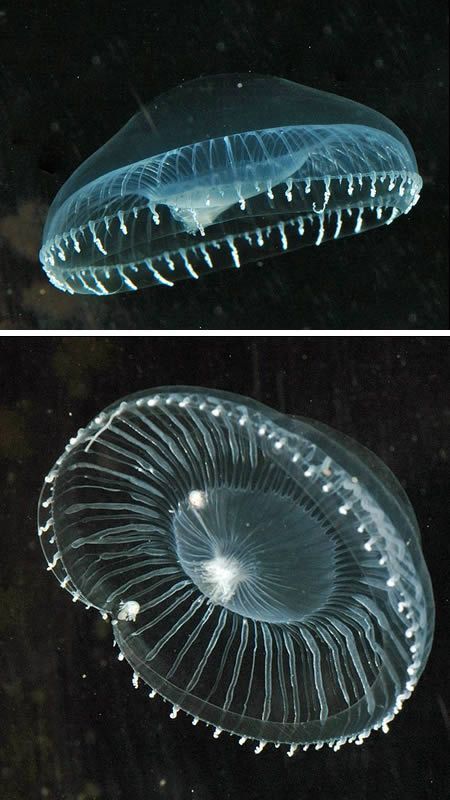
Crystal jelly (Aequorea Victoria)
Click image for larger version

Name:	a96794_a492_crystal-jellyfish.jpg
Views:	461
Size:	63.0 KB
ID:	305018
Aequorea victoria, also sometimes called the crystal jelly, is a bioluminescent hydrozoan jellyfish (which is also known as hydromedusae) that is found off the west coast of North America. You may not have heard of it, but the hydromedusa Aequorea victoria is probably the most influential bioluminescent marine organism. Calcium-activated photoprotein and green-fluorescent protein (GFP) were first discovered and cloned from this cnidarian.
http://en.wikipedia.org/wiki/Aequorea_victoria

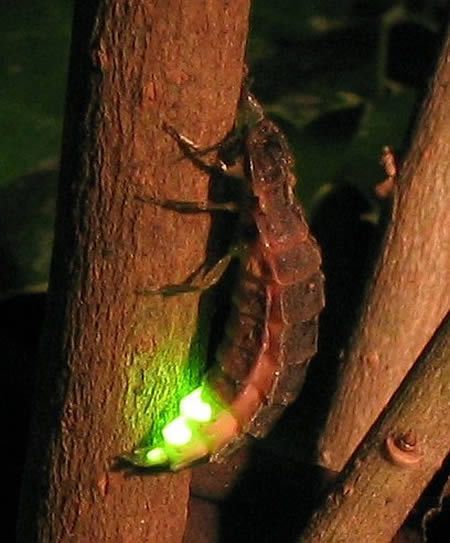
Glow worm (Lampyris noctiluca)
Click image for larger version

Name:	a96794_a492_Lampyris-noctiluca.jpg
Views:	229
Size:	41.6 KB
ID:	305019
Lampyris noctiluca, the Common Glow-worm of Europe, is a firefly species of the genus Lampyris. These are beetles as evidenced by the hard cases that fold over the wings when not in use.. The females are often twice the size of the males (up to 25mm in length), but do not have wings, whereas the males do. The females emit the glow, whereas the males do not.
http://en.wikipedia.org/wiki/Lampyris_noctiluca

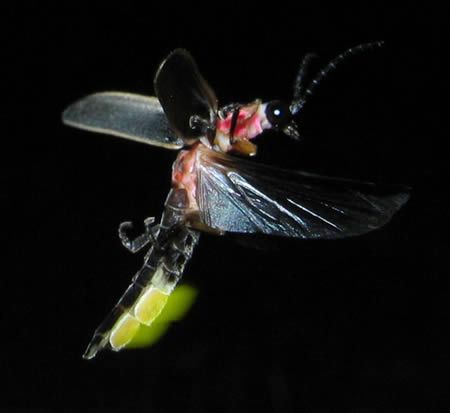
Fireflies (Photinus pyralis)
Click image for larger version

Name:	a96794_a492_fireflies.jpg
Views:	309
Size:	14.0 KB
ID:	305022
Fireflies or lightning bugs make light within their bodies. They light up to attract a mate. To do this, the fireflies contain specialized cells in their abdomen that make light.
http://animals.howstuffworks.com/ins...uestion554.htm
4 Users Say Thank You For This Post:
redelefant, Sharon, slapchoppa, Viking64
▼ PROMO FROM DOCUMENTING REALITY
Real Car Crashes & Car Accident Videos
View Now
Hidden for upgraded members.
  #2  
09-18-2011, 03:27 PM
NEVERBACKZ's Avatar
NEVERBACKZ
Offline:
★ Legacy Member ★
Poster Rank:384
male
Join Date: Jan 2010
Posts: 3,087
 
Mentioned: 0 Post(s)
Quoted: 147 Post(s)
Activity Longevity
1/20 17/20
Today Posts
0/11 sssss3087
Re: Fascinating Bioluminescent Organisms

Mother nature is amazing
  #3  
09-18-2011, 05:34 PM
Lee's Avatar
Lee
Offline:
All Seeing Eye
Poster Rank:228
Homosapien
Join Date: Nov 2009
Posts: 6,221
 
Mentioned: 1 Post(s)
Quoted: 19 Post(s)
Activity Longevity
0/20 17/20
Today Posts
0/11 sssss6221
Re: Fascinating Bioluminescent Organisms

I wouldn't be surprised if someone has actually sampled them mushrooms
  #4  
09-18-2011, 07:32 PM
sassieroses's Avatar
sassieroses
Offline:
Halo or Horns today?
Poster Rank:415
Ladybug
Join Date: Sep 2010
Posts: 2,788
 
Mentioned: 0 Post(s)
Quoted: 49 Post(s)
Activity Longevity
0/20 16/20
Today Posts
0/11 sssss2788
Re: Fascinating Bioluminescent Organisms

  #5  
09-18-2011, 08:08 PM
Sharon's Avatar
Sharon
Offline:
♚ Legacy Gold Member ♚
Poster Rank:34
Female
Join Date: Nov 2008
Posts: 43,403
Contributions: 204
 
Mentioned: 95 Post(s)
Quoted: 2281 Post(s)
Activity Longevity
0/20 18/20
Today Posts
0/11 ssss43403
Re: Fascinating Bioluminescent Organisms

I wouldn't be surprised if someone has actually sampled them mushrooms
Wonder what effect they would do?

Great thread once again
  #6  
09-18-2011, 10:22 PM
Viking64's Avatar
Viking64
Offline:
★Wizard Of Gore★
Poster Rank:2
Join Date: Aug 2009
Posts: 127,142
Contributions: 1
 
Mentioned: 450 Post(s)
Quoted: 30201 Post(s)
Activity Longevity
18/20 17/20
Today Posts
2/11 sss127142
Re: Fascinating Bioluminescent Organisms

That Ctenophore Bathocyroë looks like a fairy.


Powered by vBulletin Copyright 2000-2010 Jelsoft Enterprises Limited.

Search Engine Friendly URLs by vBSEO