|
#21
●
07-10-2009, 03:52 PM
| ||||||||
 ★ CUNT ★ Poster Rank:134 Join Date: Jan 2009 Posts: 12,119 Mentioned: 0 Post(s) Quoted: 28 Post(s)
| ||||||||
|
Re: Famous Images
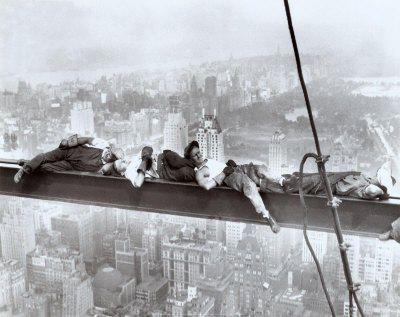
Lunch atop a Skyscraper (1932) Lunch atop a Skyscraper (New York Construction Workers Lunching on a Crossbeam) is a famous photograph taken by Charles C. Ebbets during construction of the GE Building at Rockefeller Center in 1932. The photograph depicts 11 men eating lunch, seated on a girder with their feet dangling hundreds of feet above the New York City streets. Ebbets took the photo on September 29, 1932, and it appeared in the New York Herald Tribune in its Sunday photo supplement on October 2. Taken on the 69th floor of the GE Building during the last several months of construction, the photo Resting on a Girder shows the same workers napping on the beam. 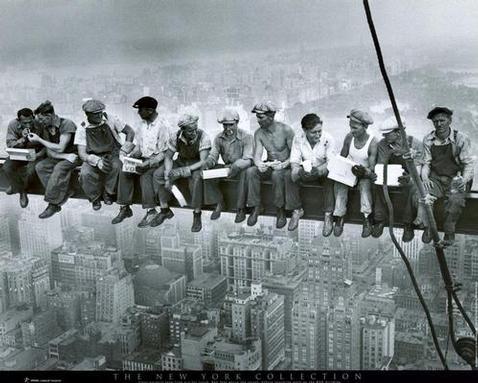 · |
|
#22
●
07-10-2009, 03:55 PM
| ||||||||
| ★ CUNT ★ Poster Rank:134 Join Date: Jan 2009 Posts: 12,119 Mentioned: 0 Post(s) Quoted: 28 Post(s)
| ||||||||
|
Re: Famous Images
Here's a rare image by the same photographer showing the workers sleeping on the crossbeam.
 · |
|
#23
●
07-10-2009, 04:19 PM
| ||||||||
| ★ CUNT ★ Poster Rank:134 Join Date: Jan 2009 Posts: 12,119 Mentioned: 0 Post(s) Quoted: 28 Post(s)
| ||||||||
|
Re: Famous Images
Migrant Mother (1936) For many, this picture of Florence Owens Thompson (age 32) represents the Great Depression. She was the mother of 7 and she struggled to survive with her kids catching birds and picking fruits. Dorothea Lange took the picture after Florence sold her tent to buy food for her children. She made the first page of major newspapers all over the country and changed people's conception about migrants. 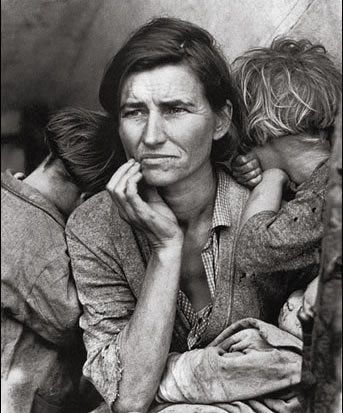 · |
|
#24
●
07-10-2009, 04:21 PM
| ||||||||
| ★ CUNT ★ Poster Rank:134 Join Date: Jan 2009 Posts: 12,119 Mentioned: 0 Post(s) Quoted: 28 Post(s)
| ||||||||
|
Re: Famous Images
Omayra Sanchez (1985) Red Cross rescue workers had apparently repeatedly appealed to the government for a pump to lower the water level and for other help to free the girl. Finally rescuers gave up and spent their remaining time with her, comforting her and praying with her. She died of exposure after about 60 hours.  · |
|
#25
●
07-10-2009, 05:00 PM
| ||||||||
| ★ CUNT ★ Poster Rank:134 Join Date: Jan 2009 Posts: 12,119 Mentioned: 0 Post(s) Quoted: 28 Post(s)
| ||||||||
|
Re: Famous Images
A vulture watches a starving child in southern Sudan, March 1, 1993. Carter's winning photo shows a heart-breaking scene of a starving child collapsed on the ground, struggling to get to a food center during a famine in the Sudan in 1993. In the background, a vulture stalks the emaciated child. Carter was part of a group of four fearless photojournalists known as the "Bang Bang Club" who traveled throughout South Africa capturing the atrocities committed during apartheid. Haunted by the horrific images from Sudan, Carter committed suicide in 1994 soon after receiving the award. 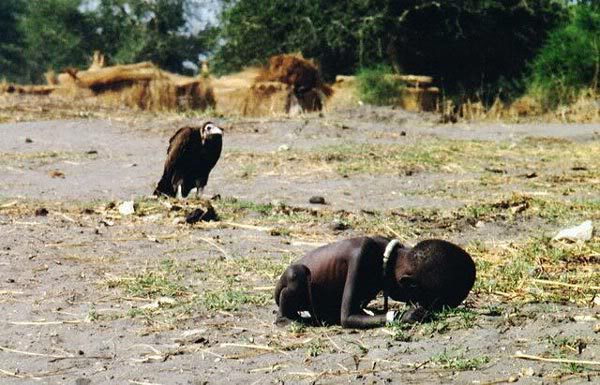 · |
|
#26
●
07-10-2009, 05:07 PM
| ||||||||
| ★ CUNT ★ Poster Rank:134 Join Date: Jan 2009 Posts: 12,119 Mentioned: 0 Post(s) Quoted: 28 Post(s)
| ||||||||
|
Re: Famous Images
Biafra (1969) When the Igbos of eastern Nigeria declared themselves independent in 1967, Nigeria blockaded their fledgling country-Biafra. In three years of war, more than one million people died, mainly of hunger. In famine, children who lack protein often get the disease kwashiorkor, which causes their muscles to waste away and their bellies to protrude. War photographer Don McCullin drew attention to the tragedy. "I was devastated by the sight of 900 children living in one camp in utter squalor at the point of death," he said. "I lost all interest in photographing soldiers in action." The world community intervened to help Biafra, and learned key lessons about dealing with massive hunger exacerbated by war-a problem that still defies simple solutions. 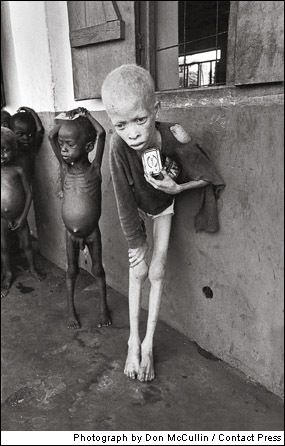 · |
|
#27
●
07-10-2009, 05:10 PM
| ||||||||
| ★ CUNT ★ Poster Rank:134 Join Date: Jan 2009 Posts: 12,119 Mentioned: 0 Post(s) Quoted: 28 Post(s)
| ||||||||
|
Re: Famous Images
Misery In Darfur (2004) It's an image which depicts a depressed, shoulders-down figure of a child in a cluster of what remains of her family. The very weather-beaten arm of her mother goes over her left shoulder and there are the very small weather-beaten hands of the child, who is about five or six, clinging on to this one piece of security that she has, which is the weather-beaten hand of her mother. The mother is not in the image, she's in the background. But then slightly further in the background you see the other hands of her brothers and sisters as they wait in this village. 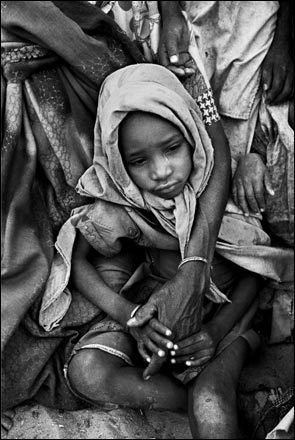 · |
|
#28
●
07-10-2009, 05:12 PM
| ||||||||
| ★ CUNT ★ Poster Rank:134 Join Date: Jan 2009 Posts: 12,119 Mentioned: 0 Post(s) Quoted: 28 Post(s)
| ||||||||
|
Re: Famous Images
Tragedy In Oklahoma (1995) The fireman has taken the time to remove his gloves before receiving this infant from the policeman. Anyone who knows anything about firefighters know that their gloves are very rough and abrasive and to remove these is like saying I want to make sure that I am as gentle and as compassionate as I can be with this infant that I don't know is dead or alive. The fireman is just cradling this infant with the utmost compassion and caring. He is looking down at her with this longing, almost to say with his eyes: "It's going to be OK, if there's anything I can do I want to try to help you." He doesn't know that she has already passed away. 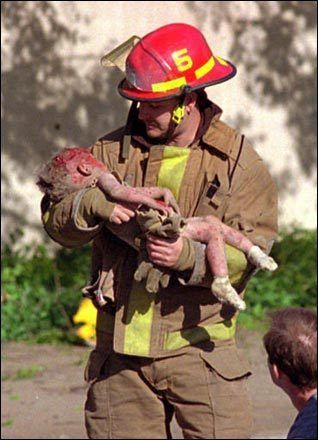 · |
|
#29
●
07-10-2009, 05:16 PM
| ||||||||
| ★ CUNT ★ Poster Rank:134 Join Date: Jan 2009 Posts: 12,119 Mentioned: 0 Post(s) Quoted: 28 Post(s)
| ||||||||
|
Re: Famous Images
How Life Begins (1965) In 1957 he began taking pictures with an endoscope, an instrument that can see inside a body cavity, but when Lennart Nilsson presented the rewards of his work to LIFE's editors several years later, they demanded that witnesses confirm that they were seeing what they thought they were seeing. Finally convinced, they published a cover story in 1965 that went on for 16 pages, and it created a sensation. Then, and over the intervening years, Nilsson's painstakingly made pictures informed how humanity feels about . . . well, humanity. They also were appropriated for purposes that Nilsson never intended. Nearly as soon as the 1965 portfolio appeared in LIFE, images from it were enlarged by right-to-life activists and pasted to placards.  · |
|
#30
●
07-10-2009, 05:21 PM
| ||||||||
| ★ CUNT ★ Poster Rank:134 Join Date: Jan 2009 Posts: 12,119 Mentioned: 0 Post(s) Quoted: 28 Post(s)
| ||||||||
|
Re: Famous Images
Earthrise (1968) The late adventure photographer Galen Rowell called it "the most influential environmental photograph ever taken." Captured on Christmas Eve, 1968, near the end of one of the most tumultuous years the U.S. had ever known, the Earthrise photograph inspired contemplation of our fragile existence and our place in the cosmos. For years, Frank Borman and Bill Anders of the Apollo 8 mission each thought that he was the one who took the picture. An investigation of two rolls of film seemed to prove Borman had taken an earlier, black-and-white frame, and the iconic color photograph, which later graced a U.S. postage stamp and several book covers, was by Anders. 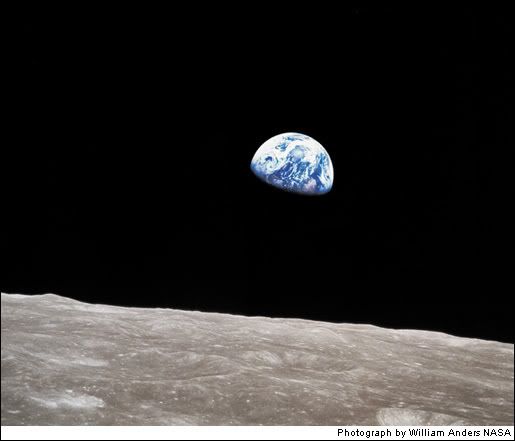 · |