JavaScript and Cookies are required to view this site. Please enable both in your browser settings.
F-111

F-111 

Current Rating:

Unlimited Views No Ads No Algorithms Lifetime Account

Documenting Reality

Community Forum · Est. 2006

Join Now
Thread Tools
  #1  
09-17-2009, 12:14 PM
Blewvane's Avatar
Blewvane
Offline:
Benevolent dictator
Poster Rank:57
Arse fucker
Join Date: May 2009
Posts: 25,643
 
Mentioned: 17 Post(s)
Quoted: 1450 Post(s)
Activity Longevity
0/20 18/20
Today Posts
0/11 ssss25643
F-111

Royal Australian Air Force F-111C

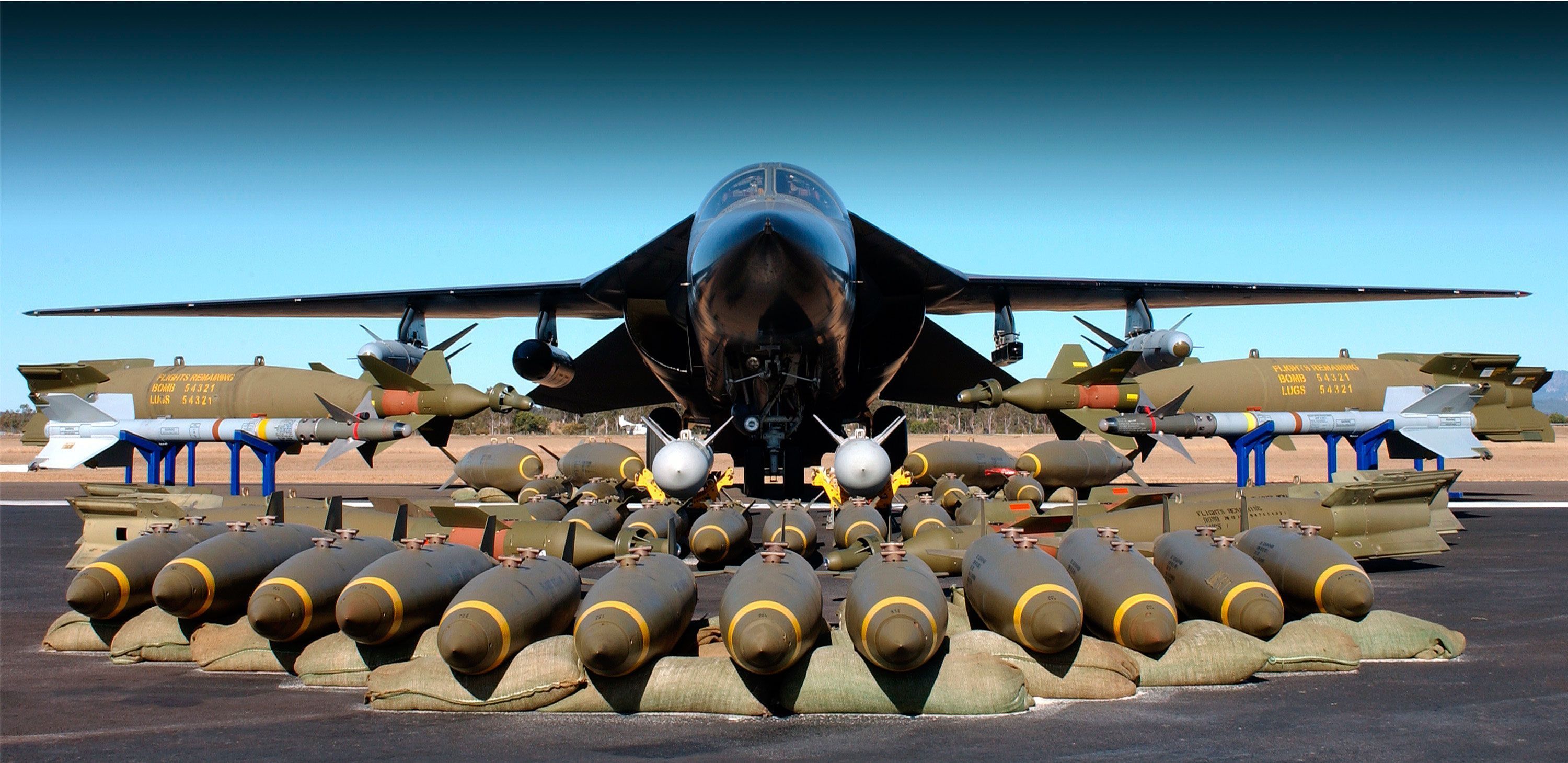
The General Dynamics F-111C (nicknamed "Pig") is a variant of the F-111 Aardvark medium-range interdictor and tactical strike aircraft, developed by General Dynamics to meet Australian requirements. The design was based on the F-111A model but included longer wings and strengthened undercarriage. The Australian government ordered 24 F-111Cs to equip the Royal Australian Air Force (RAAF) in 1963, but the aircraft were not delivered until 1973 because of long-running technical problems. During 1979 and 1980 four of these aircraft were converted to the RF-111C reconnaissance variant. Four ex-United States Air Force (USAF) F-111As were purchased by Australia and converted to F-111C standard in 1982 to replace F-111Cs destroyed during accidents. Australia also operated 15 F-111Gs between 1993 and 2007, mainly for conversion training. The RAAF retired its remaining F-111Cs in December 2010.

Although they were never used in combat, the F-111Cs gave the RAAF a powerful strike capability. The aircraft went through modernisation programs in the 1980s and 1990s and the RAAF acquired improved weapons to maintain their ability to penetrate hostile airspace. Despite this, by the 2000s the F-111Cs were becoming outdated and expensive to maintain, leading to a decision to retire them in 2010 rather than 2020 as originally planned. The F-111s were replaced by 24 Boeing F/A-18F Super Hornets pending delivery of F-35 Lightning IIs in development.

Air Marshal Valston Hancock, Chief of the Air Staff, stated in April 1960 that Australia needed a replacement for the English Electric Canberra. Although in mid-1962 the Menzies government again decided to not replace the Canberra, Indonesia's increasingly aggressive statements regarding Malaysia soon caused Australia to reevaluate the decision. The Sydney Morning Herald reported in October 1962 that the Indonesian Air Force's Soviet Tupolev Tu-16 bombers could reach Sydney or any other Australian city with a light bomb load, while the Canberras could not fly in all weather and had a range of 900 miles (1,400 km), insufficient to reach Jakarta. The opposition Labor Party, led by Arthur Calwell, used the report to criticize Menzies. The government denied that the Tu-16 could reach Sydney, but Minister for Air Frederick Osborne acknowledged that the Canberras were "the weakest link in our armoury at the present moment". He stated, however, that the available foreign bombers were unsuitable for the RAAF. The American Boeing B-52 Stratofortress and Convair B-58 Hustler, for example, were too large for existing Australian runways. The first F-111C was officially delivered in 1968, finally giving Australia an aircraft that could fly to Jakarta, drop bombs, and return without refueling.

After entering service the F-111 proved highly successful. Although it never saw combat, the F-111C was the fastest, longest range combat aircraft in Southeast Asia. Aviation historian Alan Stephens has written that they were "the preeminent weapons system in the Asia-Pacific region" throughout their service and provided Australia with "a genuine, independent strike capability". Stewart Wilson, in his book Lincoln, Canberra and F-111 in Australian Service, described the F-111C as "an unqualified success..., providing Australia with a potent strike capability in an aircraft which, a quarter of century after its first flight remains second to none." Former Indonesian defense minister Benny Murdani told his counterpart Kim Beazley that when others became upset with Australia during cabinet meetings, Murdani told them "Do you realise the Australians have a bomber that can put a bomb through that window on to the table here in front of us?"

In 2007, Australia decided to retire all of its RAAF F-111s. The drawdown of the RAAF's F-111 fleet began with the retirement of the F-111G models operated by No. 6 Squadron in late 2007. One of the reasons given for the F-111s' retirement was that they required an average of 180 hours maintenance for every flight hour. Between 21 and 24 November 2011, 23 of the RAAF's F-111C and F-111Gs which had not been selected for preservation were buried at the Swanbank landfill site outside of Ipswich, Queensland. The RAAF had considered scrapping these aircraft, but concluded that it would be cheaper to bury them.

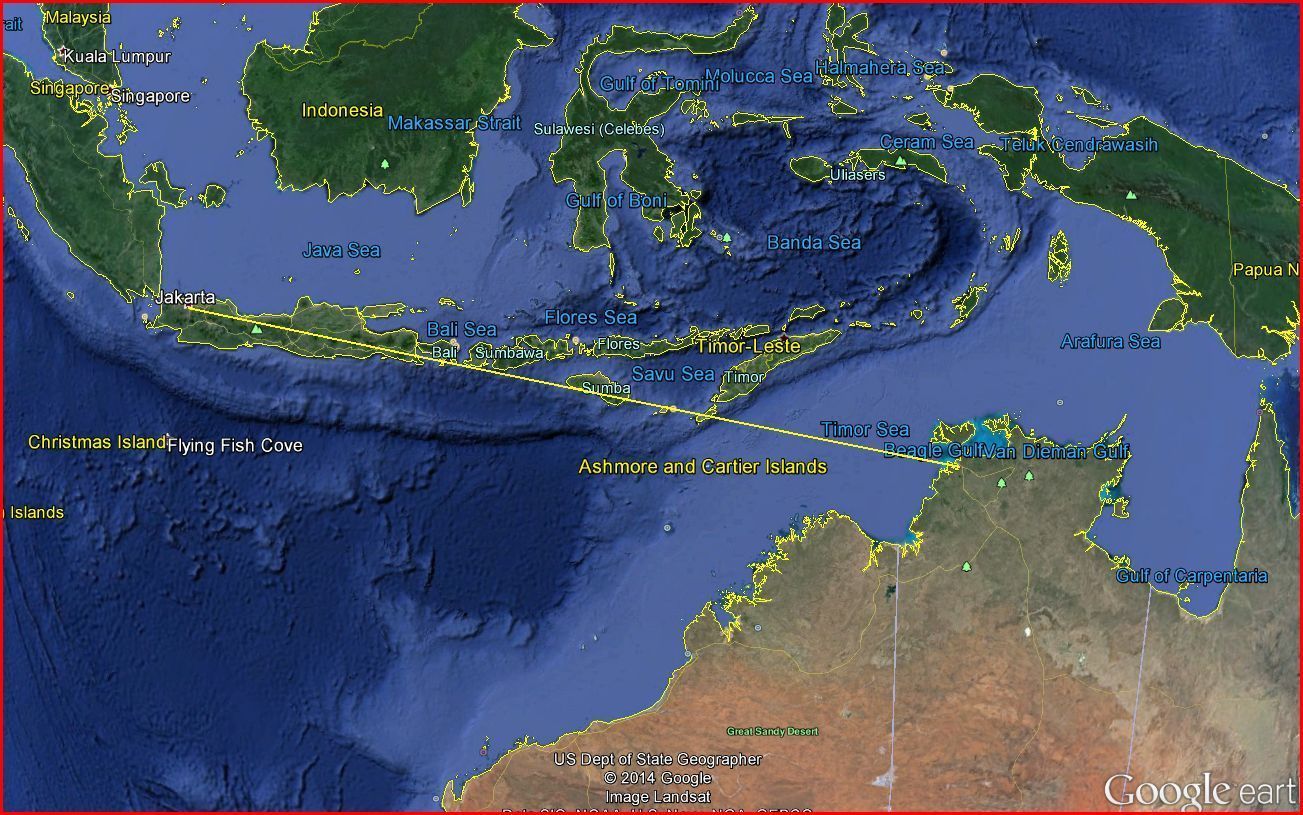
Taking off from the RAAF base at Darwin, the aircraft was required to fly 2800km to Jakarta at Mach 1+, drop its bomb load, get the fuck out of the area at Mach 2+, and return to Darwin making a round trip of almost 6000km. The F-111C fitted this role perfectly.
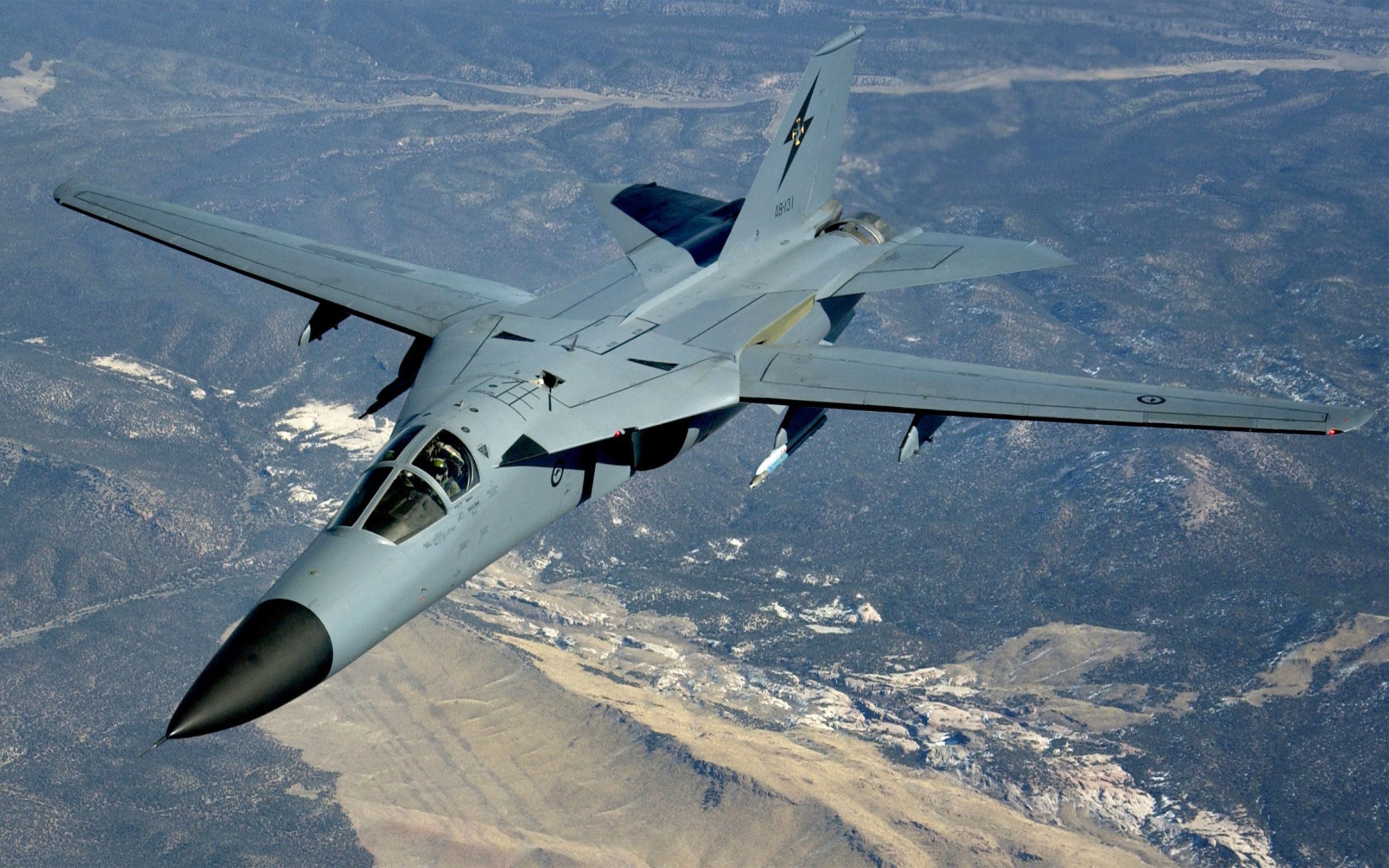

Beautiful war bird.
f111_takeoff_1152[2].jpg
244.9 KB ·1410 views
7 Users Say Thank You For This Post:
durt, hal0mega, Kanda444, nashmkm, prax22a, raygun56, Soar
▼ PROMO FROM DOCUMENTING REALITY
We don't judge
Join Now
Hidden for upgraded members.
  #2  
09-17-2009, 12:15 PM
Blewvane's Avatar
Blewvane
Offline:
Benevolent dictator
Poster Rank:57
Arse fucker
Join Date: May 2009
Posts: 25,643
 
Mentioned: 17 Post(s)
Quoted: 1450 Post(s)
Activity Longevity
0/20 18/20
Today Posts
0/11 ssss25643
Re: F-111

The old 'dump and burn'.
6sqn-f111-afterburn[1].jpg
171.6 KB ·844 views
6 Users Say Thank You For This Post:
durt, Kanda444, Keydog, prax22a, raygun56, Soar
  #3  
09-17-2009, 01:06 PM
firedog25's Avatar
firedog25
Offline:
★ Legacy Member ★
Poster Rank:345
Penis
Join Date: Nov 2008
Posts: 3,617
 
Mentioned: 0 Post(s)
Quoted: 73 Post(s)
Activity Longevity
0/20 18/20
Today Posts
0/11 sssss3617
Re: F-111

The ejection mechanism on that plane is really cool. The whole cockpit goes bye bye.
This User Says Thank You For This Post:
Blewvane
  #4  
09-17-2009, 03:21 PM
Azimuth's Avatar
Azimuth
Offline:
★ Legacy Member ★
Poster Rank:39
lady
Join Date: Jul 2009
Posts: 37,489
 
Mentioned: 40 Post(s)
Quoted: 3618 Post(s)
Activity Longevity
0/20 17/20
Today Posts
0/11 ssss37489
Re: F-111

The F-15 and B-1B replaced the Aardvark in th US. It is a pretty plane. And it did a great job in Desert Storm.
This User Says Thank You For This Post:
Blewvane
  #5  
09-17-2009, 07:02 PM
Soar's Avatar
Soar
Offline:
Poster Rank:82
Join Date: Oct 2006
Posts: 18,649
Contributions: 49
 
Mentioned: 96 Post(s)
Quoted: 2921 Post(s)
Activity Longevity
0/20 20/20
Today Posts
0/11 ssss18649
Re: F-111

Awesome stuff.
This User Says Thank You For This Post:
Blewvane
  #6  
09-18-2009, 01:19 PM
osiris's Avatar
osiris
Offline:
My Rank: MASTER SERGEANT
Poster Rank:517
Join Date: Feb 2009
Posts: 1,977
 
Mentioned: 0 Post(s)
Quoted: 15 Post(s)
Activity Longevity
0/20 18/20
Today Posts
0/11 sssss1977
Re: F-111

f-22 raptor looks way better, probably performs better too
  #7  
04-29-2012, 03:49 PM
Robert440's Avatar
Robert440
Offline:
My Rank: CORPORAL
Poster Rank:1361
male
Join Date: Apr 2010
Posts: 438
 
Mentioned: 0 Post(s)
Quoted: 8 Post(s)
Activity Longevity
0/20 17/20
Today Posts
0/11 ssssss438
Re: F-111

FYI the reason the F111 was used was the Government didn't want the stealth plane tech to fall in the 'enemy hands'
  #8  
04-29-2012, 08:57 PM
durt's Avatar
durt
Offline:
★ Legacy Member ★
Poster Rank:72
male
Join Date: Apr 2010
Posts: 21,125
Contributions: 1
 
Mentioned: 50 Post(s)
Quoted: 4947 Post(s)
Activity Longevity
3/20 17/20
Today Posts
0/11 ssss21125
Re: F-111

Aussie's liked them, right?
  #9  
09-05-2014, 09:08 PM
Blewvane's Avatar
Blewvane
Offline:
Benevolent dictator
Poster Rank:57
Arse fucker
Join Date: May 2009
Posts: 25,643
 
Mentioned: 17 Post(s)
Quoted: 1450 Post(s)
Activity Longevity
0/20 18/20
Today Posts
0/11 ssss25643
Re: F-111

Royal Australian Air Force F-111C

The General Dynamics F-111C (nicknamed "Pig") is a variant of the F-111 Aardvark medium-range interdictor and tactical strike aircraft, developed by General Dynamics to meet Australian requirements. The design was based on the F-111A model but included longer wings and strengthened undercarriage. The Australian government ordered 24 F-111Cs to equip the Royal Australian Air Force (RAAF) in 1963, but the aircraft were not delivered until 1973 because of long-running technical problems. During 1979 and 1980 four of these aircraft were converted to the RF-111C reconnaissance variant. Four ex-United States Air Force (USAF) F-111As were purchased by Australia and converted to F-111C standard in 1982 to replace F-111Cs destroyed during accidents. Australia also operated 15 F-111Gs between 1993 and 2007, mainly for conversion training. The RAAF retired its remaining F-111Cs in December 2010.

Although they were never used in combat, the F-111Cs gave the RAAF a powerful strike capability. The aircraft went through modernisation programs in the 1980s and 1990s and the RAAF acquired improved weapons to maintain their ability to penetrate hostile airspace. Despite this, by the 2000s the F-111Cs were becoming outdated and expensive to maintain, leading to a decision to retire them in 2010 rather than 2020 as originally planned. The F-111s were replaced by 24 Boeing F/A-18F Super Hornets pending delivery of F-35 Lightning IIs in development.

Air Marshal Valston Hancock, Chief of the Air Staff, stated in April 1960 that Australia needed a replacement for the English Electric Canberra. Although in mid-1962 the Menzies government again decided to not replace the Canberra, Indonesia's increasingly aggressive statements regarding Malaysia soon caused Australia to reevaluate the decision. The Sydney Morning Herald reported in October 1962 that the Indonesian Air Force's Soviet Tupolev Tu-16 bombers could reach Sydney or any other Australian city with a light bomb load, while the Canberras could not fly in all weather and had a range of 900 miles (1,400 km), insufficient to reach Jakarta. The opposition Labor Party, led by Arthur Calwell, used the report to criticize Menzies. The government denied that the Tu-16 could reach Sydney, but Minister for Air Frederick Osborne acknowledged that the Canberras were "the weakest link in our armoury at the present moment". He stated, however, that the available foreign bombers were unsuitable for the RAAF. The American Boeing B-52 Stratofortress and Convair B-58 Hustler, for example, were too large for existing Australian runways. The first F-111C was officially delivered in 1968, finally giving Australia an aircraft that could fly to Jakarta, drop bombs, and return without refueling.

After entering service the F-111 proved highly successful. Although it never saw combat, the F-111C was the fastest, longest range combat aircraft in Southeast Asia. Aviation historian Alan Stephens has written that they were "the preeminent weapons system in the Asia-Pacific region" throughout their service and provided Australia with "a genuine, independent strike capability". Stewart Wilson, in his book Lincoln, Canberra and F-111 in Australian Service, described the F-111C as "an unqualified success..., providing Australia with a potent strike capability in an aircraft which, a quarter of century after its first flight remains second to none." Former Indonesian defense minister Benny Murdani told his counterpart Kim Beazley that when others became upset with Australia during cabinet meetings, Murdani told them "Do you realise the Australians have a bomber that can put a bomb through that window on to the table here in front of us?"

In 2007, Australia decided to retire all of its RAAF F-111s. The drawdown of the RAAF's F-111 fleet began with the retirement of the F-111G models operated by No. 6 Squadron in late 2007. One of the reasons given for the F-111s' retirement was that they required an average of 180 hours maintenance for every flight hour. Between 21 and 24 November 2011, 23 of the RAAF's F-111C and F-111Gs which had not been selected for preservation were buried at the Swanbank landfill site outside of Ipswich, Queensland. The RAAF had considered scrapping these aircraft, but concluded that it would be cheaper to bury them.

Taking off from the RAAF base at Darwin, the aircraft was required to fly 2800km to Jakarta at Mach 1+, drop its bomb load, get the fuck out of the area at Mach 2+, and return to Darwin making a round trip of almost 6000km. The F-111C fitted this role perfectly.
Fighter Jet F-111 06.jpg
637.3 KB ·596 views
Fighter Jet F-111 08.jpg
752.7 KB ·2462 views
Bomb Indonesia.JPG
242.6 KB ·462 views
5 Users Say Thank You For This Post:
Audioguru, durt, hal0mega, nashmkm, raygun56
  #10  
09-05-2014, 09:17 PM
Blewvane's Avatar
Blewvane
Offline:
Benevolent dictator
Poster Rank:57
Arse fucker
Join Date: May 2009
Posts: 25,643
 
Mentioned: 17 Post(s)
Quoted: 1450 Post(s)
Activity Longevity
0/20 18/20
Today Posts
0/11 ssss25643
Re: F-111

Originally Posted by durt
Aussie's liked them, right?
Yeah, we needed a supersonic bomber with nuclear capability that could free the shit out of Indonesia from 1970 onwards and establish Australia as the dominant power in the south pacific.
2 Users Say Thank You For This Post:
Arkoquisa, durt


Powered by vBulletin Copyright 2000-2010 Jelsoft Enterprises Limited.

Search Engine Friendly URLs by vBSEO