|
#1
●
04-04-2011, 05:37 PM
|
 Crewism Master Poster Rank:1236 Join Date: May 2010 Posts: 512 512Posts 272Thanked 4Quoted 0Mentioned 0Contrib. |
|
The Eilean More Mystery
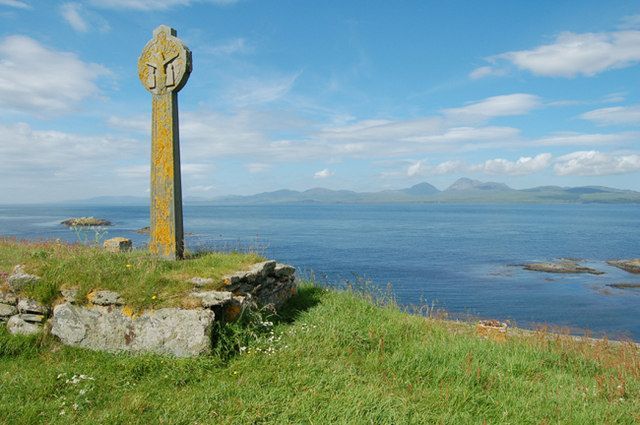
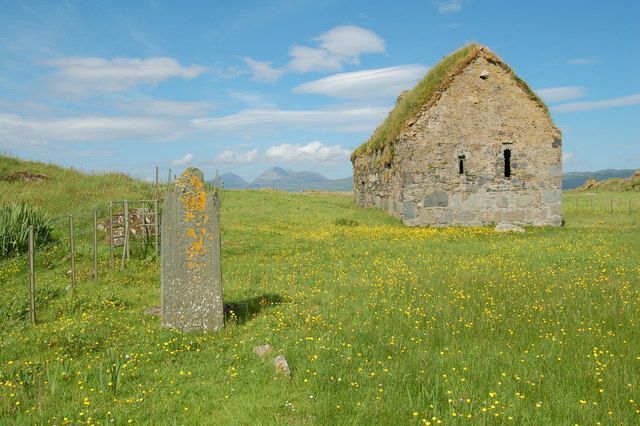
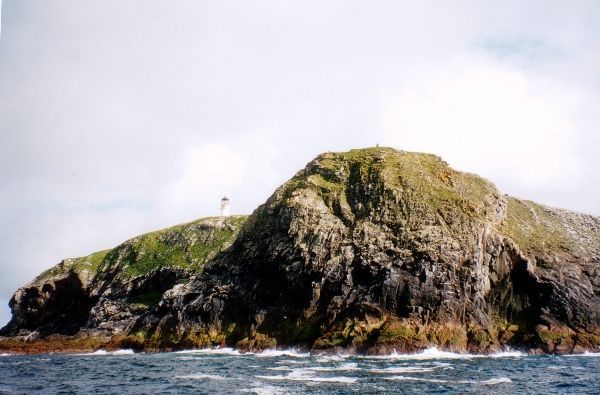
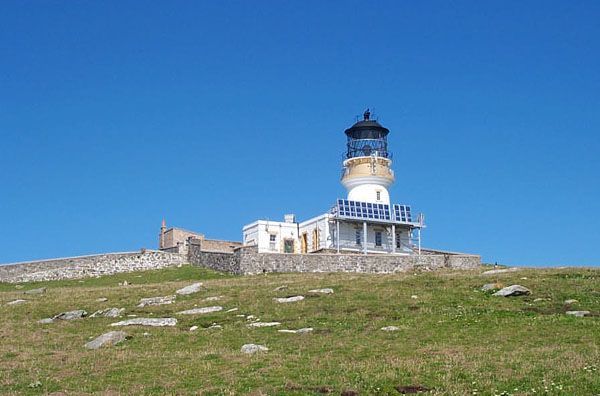
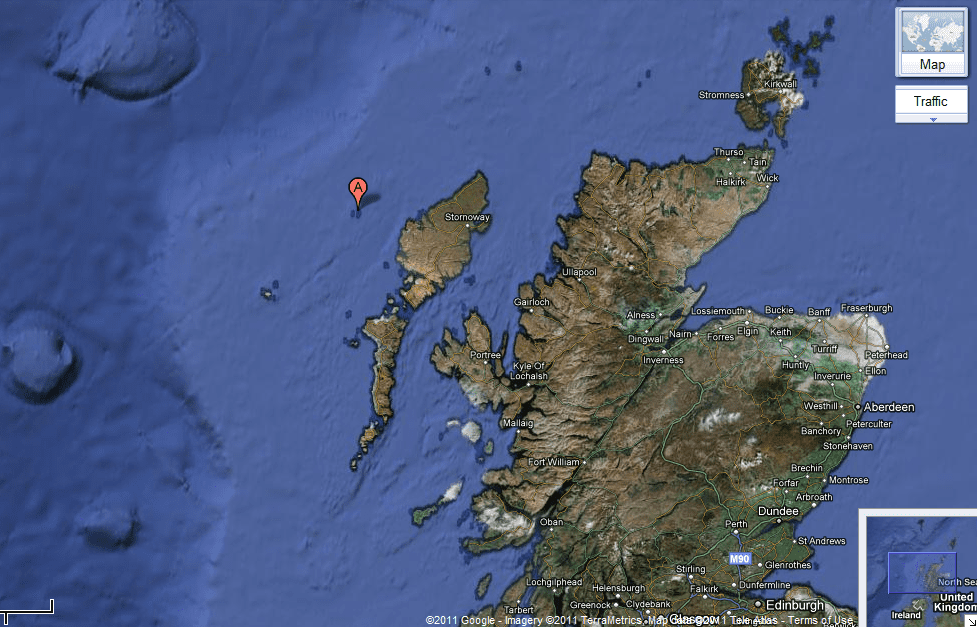
Probably won't be many interested in this (lighthouses are quite boring after all), but had it on my HDD so thought I'd share it. In the empty Atlantic, seventeen miles to the west of the Hebrides, lie the Flannan Islands, known to seafarers as the Seven Hunters. The largest and most northerly of these is called Eilean More – which means in fact “big island”. Like the Mary Celeste, its name has become synonymous with an apparently insoluble mystery of the sea. These bleak islands received their name from the seventh-century bishop, St Flannan, who built a small chapel on Eilean More. Hebridean shepherds often ferried their sheep over to the islands to graze on the rich turf; but they themselves would never spend a night there, for the islands are supposed to be haunted by spirits and by the “little folk”. In the last decades of the nineteenth century, as Britain's sea trade increased, many ships sailing north or south from Clydebank were wrecked on the Flannans, and in 1895 the Northern Lighthouse Board announced that a lighthouse would be built on Eilean More. They expected construction to take two years; but rough seas, and the problems of hoisting stones and girders up a 200-foot-cliff, made it impossible to stick to the schedule; Eilean More lighthouse was finally opened in December 1899. For the next year its beam could be seen reflected on the rough seas between Lewis and the Flannans. Then, eleven days before Christmas 1900, the light went out. The weather was too stormy for the Northern Lighthouse Board steamer to go and investigate, even though the lighthouse had been built with two landing-stages, one to the west and the other to the east, so one of them would always be sheltered from the prevailing wind. Joseph Moore, waiting on the seafront at Loch Roag, had a sense of helplessness as he stared westward towards the Flannans. It was inconceivable that all three men on Eilean More – James Ducat, Donald McArthur and Thomas Marshall – could have fallen ill simultaneously, and virtually impossible that the lighthouse itself could have been destroyed by the storms. On Boxing Day 1900, the dawn was clear and the seas less rough. The Hesperus left harbour soon after daylight; Moore was so anxious that he refused to eat breakfast, pacing the deck and staring out towards the islands; the mystery had tormented him, and now he was too excited to take food. The swell was still heavy, and the Hesperus had to make three approaches before she was able to moor by the eastern jetty. No flags had answered their signals, and there was no sign of life. Moore was the first to reach the entrance gate. It was closed. He cupped his hands and shouted, then hurried up the steep path. The main door was closed and no one answered his shouts. Like the Mary Celeste, the lighthouse was empty. In the main room the clock had stopped, and the ashes in the fireplace were cold. In the sleeping quarters upstairs – Moore waited until he was joined by two seamen before he ventured upstairs, afraid of what he might find there – the beds were neatly made, and the place was tidy. James Ducat, the chief keeper, had kept records on a slate. The last entry was for 15 December at 9 a.m., the day the light went out. But this had not been for lack of oil; the wicks were trimmed and the lights all ready to be lit. Everything was in order. So it was clear that the men had completed their basic duties for the day before tragedy struck them; when evening came there had been no one on the island to light the lamp. But the 15th of December had been a calm day... The Hesperus returned to Lewis with the men's Christmas presents still on board. Two days later investigators landed on Eilean More, and tried to reconstruct what had happened. At first it looked as if the solution was quite straightforward. On the westward jetty there was evidence of gale damage; a number of ropes were entangled round the crane which was sixty-five feet above the sea-level. A tool chest kept in a crevice forty-five feet above was missing. It looked as if a hundred-foot wave had crashed in from the Atlantic and swept it away, as well as the three men. The fact that the oilskins belonging to Ducat and Marshall were missing seemed to support this theory; they only wore them to visit the jetties. So the investigators had a plausible theory. The two men had feared that the crane was damaged in the storm; they had struggled to the jetty in their oilskins, then been caught by a sudden huge wave...But in that case, what had happened to the third man, Donald McArthur, whose oilskins were still in the lighthouse? Had he perhaps rushed out to try to save them and been swept away himself? All these theories came crashing when someone pointed out that the 15th had been a calm day; the storms had not started until the following day. Then perhaps Ducat had simply entered the wrong date by mistake? That theory also had to be abandoned when, back at Loch Roag, Captain Holman of the Archer told them he had passed close to the islands on the night of the 15th, and that the light was already out. Then what if the three men had been on the jetty on a calm morning - which would explain why McArthur was not wearing his oilskins - and one of them had slipped in to the water? Perhaps the other two had jumped in after him and had been drowned. But then there were ropes and lifebelts on the jetty – why should men leap into the water when they only had to throw in a lifebelt? Suppose the drowning man was unconscious and could not grab the lifebelt? In that case only one of his companions would have jumped in after him, leaving the other on the jetty with a rope... Another theory was that one of the three men had gone insane and pushed the others to their deaths, then thrown himself into the sea. It is possible; but there is not the slightest shred of evidence for it. The broadcaster Valentine Dyall – the “Man in Black” - suggested the most plausible explanation in his book unsolved Mysteries. In 1947 a Scottish journalist named Iain Campbell visited Eilean more on a calm day, and was standing near the west landing when the sea suddenly gave a heave, and rose seventy feet over the jetty. Then, after about a minute, it subsided back to normal. It could have been some freak of the tides, or possibly an underwater earthquake. Campbell was convinced that anyone on the jetty at that time would have been sucked into the sea. The lighthouse keeper told him that this curious “upheaval” occurs periodically, and that several men had almost been dragged into the sea. But it is still hard to understand how three men could be involved in such an accident. Since McArthur was not wearing his oilskins, we can presume he was in the tower when it happened – if it happened. Even if his companions were swept away, would he be stupid enough to rush down to the jetty and fling himself into the sea? Only one thing is clear: that on that clam December day at the turn of the century, some accident snatched three men off Eilean More and left not a shred of a clue as to the mystery.  Links: This pdf is already included, though here is the link. It's quite detailed. http://www.mikedash.com/assets/files...hthousemen.pdf http://en.wikipedia.org/wiki/Flannan_Isles |