DEWLine Training Site
Streator, Illinois
<iframe width="425" height="350" frameborder="0" scrolling="no" marginheight="0" marginwidth="0" src="http://maps.google.com/maps?f=q&source=s_q&hl=en&geocode=& ;q=41%C2%B004'12%22N+%2F+88%C2%B0+53'+53%22+W+& ;ie=UTF8&hq=&hnear=&t=h&z=14&l l=41.07,-88.898056&output=embed"></iframe>
Here is my attempt to answer a few questions regarding DEWLine training:
By
Tony Henriksen
1. During 1978-82, was there a dedicated training area at PHQ?
From the fall of 1978 to fall of 1982, the DEWLine Training Center was located NEAR the PHQ facility in Colorado Springs, CO. The exact location was in a building apart from the PHQ building (about 1 block away). The new training facility was co-located in the same building with the new DLM (Depot Level Maint.) The Colo Springs training facility consisted of two classrooms, three offices, two console rooms and a simulator/control room. It also included two outside Stevenson Screens and external weather equipment. The backup Master DEWLine Library was also moved from Streator and was now located in the Chief Instructor's Office.
The Operations and Weather courses were unchanged from the way they were conducted at Streator prior to the move. The Radician technical part of the training changed coincident with the move. The idea was to now teach equipment theory in Colorado Springs and we initiated "Hands On" training programs at PIN-M & DYE-1. The original instructor at PIN-M was Al Packham and later on was Al Stewart. John Ovits was the original Greenland Instructor.
2. Was the console moved from Streator to PHQ to support operations training?
Yes. Both consoles AN/FSA-14 and AN/FSA-26 (Greenland Console) were moved from Streator to Colorado Springs and later to Winnipeg. We also moved all the simulator equipment required to conduct Operations training. Other Ops training equipment moved were the Teletype machines and the Message Concentrator.
3. Was any of the other C&E equipment moved to PHQ, i.e., radios, etc?
Yes. Nearly all other C&E equipment was moved from Streator to the new DLM in Colo Spgs to be used as mock ups or for spare parts.
4. How did the cirriculum change after Streator was abandoned? How long did the rad course run? How long did the console op course run?
Console Operations, Weather & First Aid curricula were unchanged. As mentioned above, equipment theory only was provided for the Radicians at the Colo Spgs facility. Hands On training was now given at PIN-M and DYE-1
The Operations Training (Console Ops, Weather, First aid & CPR) totaled 6 weeks. This was true in Streator, Colorado Springs and Winnipeg. The Equipment Phase of training was 6 to 8 weeks long. The length of this phase changed slightly a few times as the Air Force wanted 'this or that' equipment added, emphasized or as equipment was upgraded.
5. How did the cirriculum change after the move from PHQ to WINT? How long did the rad course run? How long did the console op course run?
When the school moved from Colo Spgs to Winnipeg there was no IMMEDIATE change in curriculum. Approximately two years after the move to Winnipeg, there was a change. All of the Radician equipment training (theory and practical) was then provided at PIN-Main or DYE-1 and ONLY the Weather, Operations & First Aid given in Winnipeg.
The Operations Training (Console Ops, Weather, First Aid & CPR) totaled 6 weeks. This was true in Streator, Colorado Springs and Winnipeg. The Equipment Phase of training was 6 to 8 weeks long. The length of this phase changed slightly a few times as the Air Force wanted 'this or that' equipment added, emphasized or as equipment was upgraded.
6. Did WINT have a console and/or other C&E equipment?
Yes. Both consoles and associated simulators & TTY machines were again moved from Colo Spgs to Winnipeg. The DLM was moved from Colorado Springs to Winnipeg at that same time and all DLM C&E equipment was moved from the Colo Spgs DLM to the new Winnipeg DLM.
7. How did the status of weather training change in 1978 and in 1982. Did Canadian wx instructors still run the wx training program? Was a Stevenson screen and other wx instrumentation always available in the PHQ/WINT locations?
The weather training remained virtually unchanged throughout the moves from Streator to Colorado Springs to Winnipeg. All Weather equipment including Stevenson Screens & wind equipment were moved both times. The two Canadian Weather Instructors who were assigned to Streator at that time (Al Russell and Syd Heaney) moved along with the school from Streator to Colo Spgs & later to Winnipeg.
Tony Henriksen
November 2010
P.S. A little more trivia
One of the factors for locating the original prototype DEW Line site at Streator was it's distance away from MIT University which had the other end of the experimental Ionospheric Scatter link. Streator was the Domestic Main Station (DMS) with the Ionospheric Scatter to/from the MIT prototype. They had a Tropo shot from Streator to an Axillary Site prototype simulation near Rockford, Illinois and there was also an Intermediate site at Utica, Illinois.
Later on, they officially changed the name of the Streator facility to the Domestic Training Center (DTC). When the training facility was moved to Colorado Springs, we kept the DTC acronym but officially changed the meaning to DewLine Training Center (DTC). This changing acronym has caused some confusion throughout the years.
Additional Question
Had the Streator facility been upgraded with the Rivet Switch air/ground radios that the Dewline had received in the 1974-75 time frame? If so, then they were obviously moved to the PHQ facility in 1978 along with the other equipment.
If not, were the original air/ground radios existing at Streator then moved to PHQ, despite the fact that no Dewline sites were using them anymore?
Yes, Streator was upgraded as part of the Rivet Switch project. Instructors were also provided training by the Air Force. Streator got two systems - one for UHF and one for VHF. All were transfered to the CEDT in Colo Spgs during the move and then to Winnipeg when the CEDT & Training Facility were moved to Canada.
I believe Streator got all the upgrades that happened to DEW Line equipment that Streator also had. The message composer upgrade is the one that comes to mind but I'm sure there were others too.
Recent Photos of Streator DEW Line Training Center, IL
June 2010 photos by Gene McManus, Radomes staff
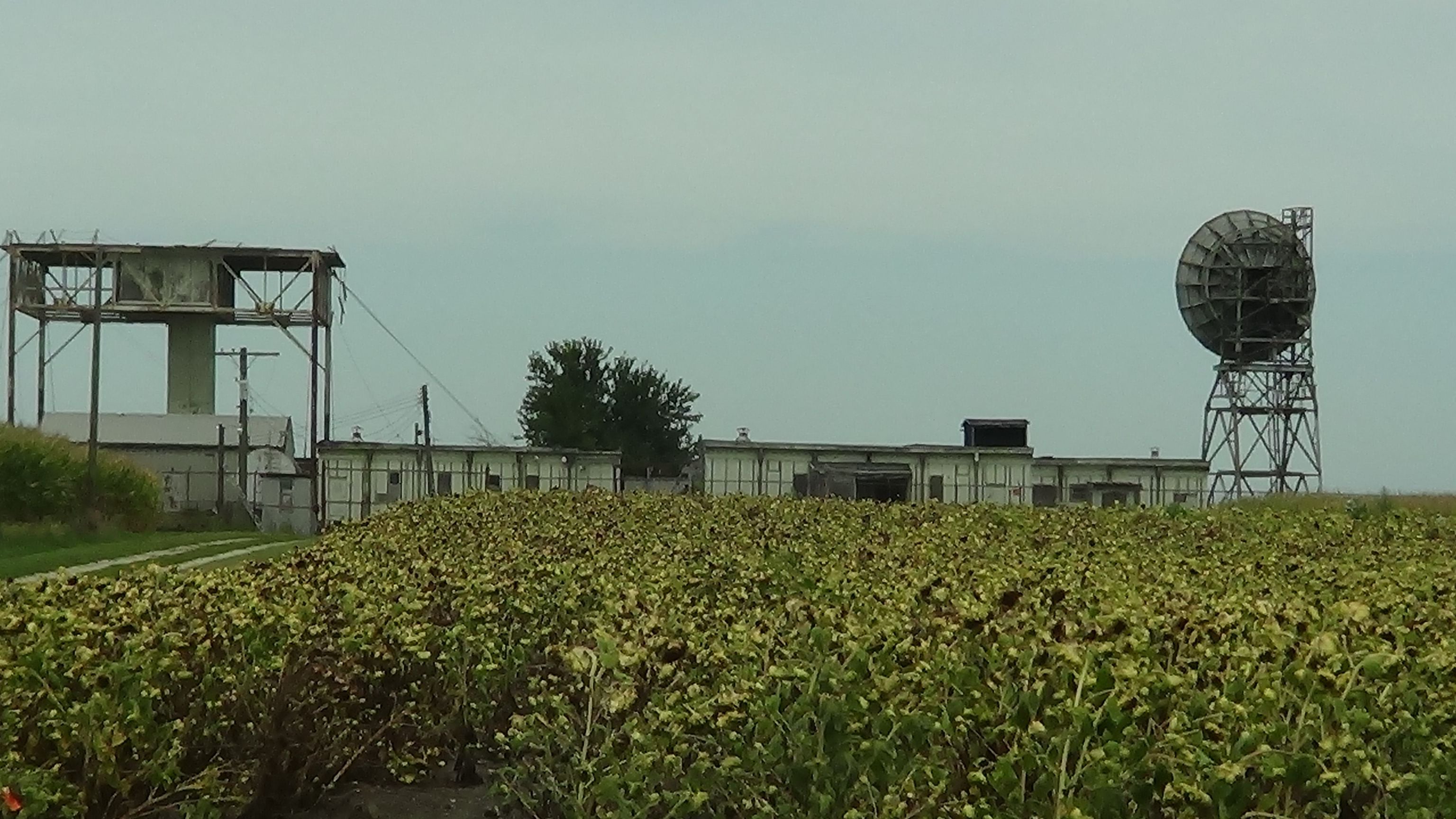
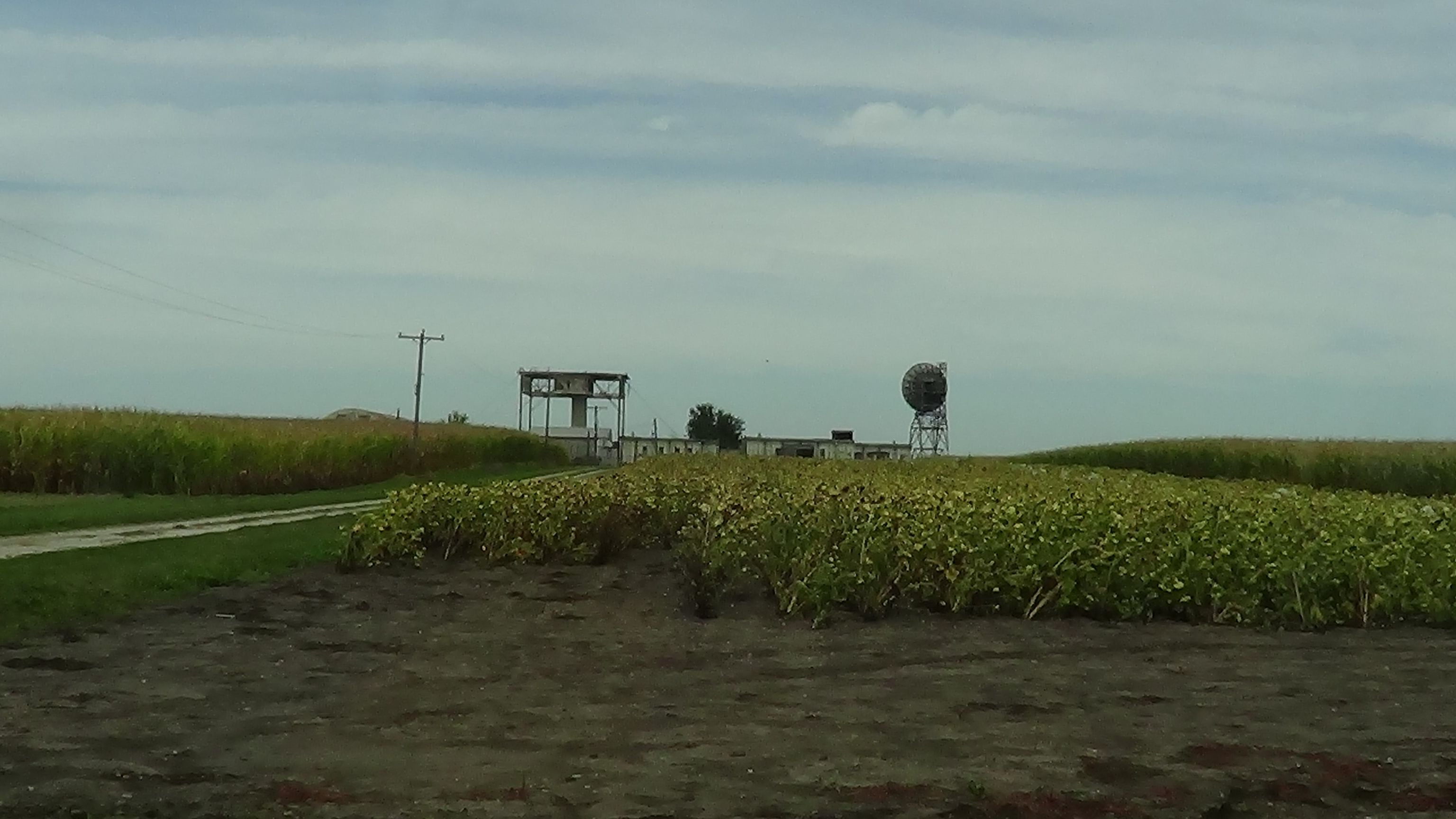
We were returning from a radar museum site evaluation at Osceola, WI and decided that the Streator site was not out of our way that much, and deserved a stop. Our purpose was to have a look at the tropo antenna and tower as a potential display that could be moved to what eventually becomes our museum site. The Streator site is essentially intact, and in my opinion, unique in the world. It is the only DEW Line site below the Arctic Circle, and the only one that you can drive to.
We've begun some discussions about the possibility of restoring it in situ. It is in the middle of nowhere (well, a nice cornfield - corn shoulder height), and visitors would be few. But I'm coming to believe that it's worth saving.
The training quonset hut. Now used for storage. The rooster visited with us as we walked around the perimeter fence. Looking about Northwest. This photo and the two following were taken before I got smart enough to stick the camera lens thru the fence.
Radar tower, looking North
One of the quarters buildings. The tropo antenna we came to see is in the background. Looking approx North.
This is what we came to see. The tower and antenna are in pristine condition, after weathering all these years. Looking North.
Another view of the tropo tower, with the fence in the way. Looking North.
Another view of the tropo tower, looking approx Southwest.
A good look up the tower from the ground.
A huge wrench lying beneath the tropo tower. Used for adjusting the beam of the antenna by turning large nuts.
Want to build a street rod? Here's some nice sheet metal - late 30s Chevy pickup body.
May, 2002 photos contributed by Tim Tyler
Have a nice day
http://www.radomes.org/museum/recent...gCenterIL.html