|
#1
●
08-05-2013, 06:37 PM
| ||||||||
 ✖ The Antique Christ ✖ Poster Rank:105 Gonzo Punk Join Date: Jan 2009 Posts: 15,488
Contributions: 58
Mentioned: 23 Post(s) Quoted: 2046 Post(s)
| ||||||||
|
Documenting the Brutal Treatment of Africans with Mental Illness
Click on pics to enlarge. 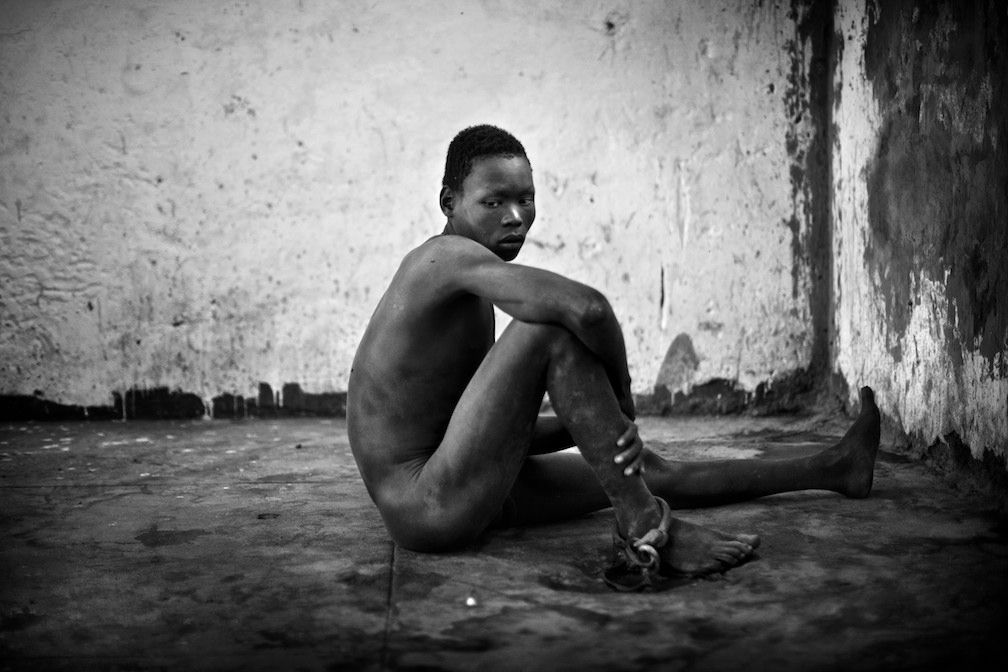 Abandoned by their governments, forgotten by the aid community, neglected and abused by entire societies: A voiceless minority resigned to the dark forgotten corners of churches, chained to rusted hospital beds, living out their lives behind the bars of filthy prisons - Lives condemned to quiet misery… These are the mentally disabled living in Africa’s regions in crisis. Severely mentally disabled men and women are shackled and locked away in Juba Central Prison for years on end. The new nation of South Sudan faces a tremendous challenge to build a modern country capable of caring for all of its citizens. Juba, Sudan. 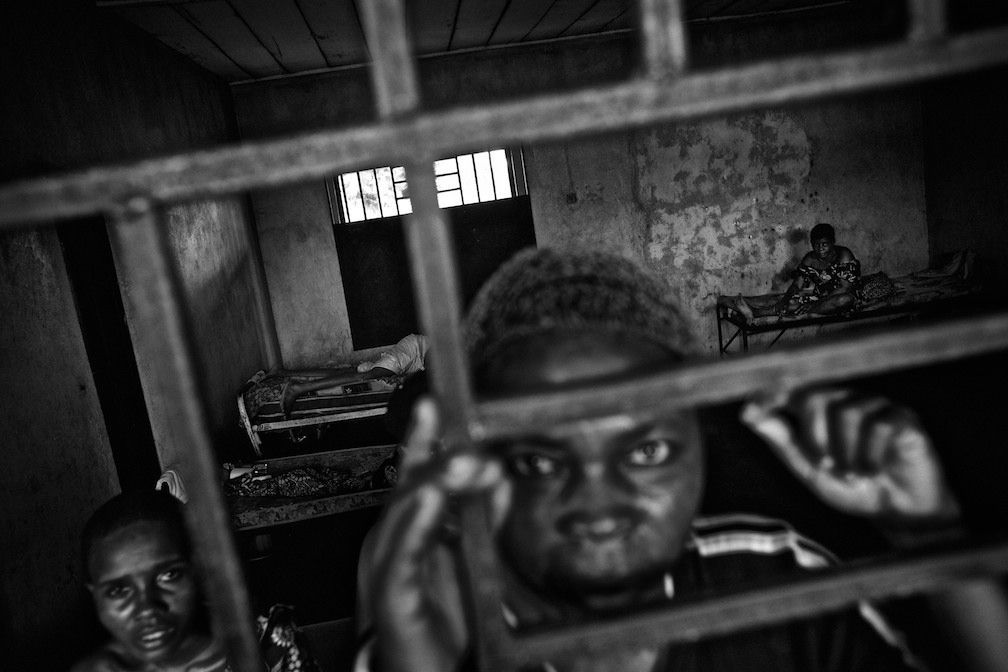 This Government run facility in the Niger Delta town of Eket is meant to be a Psychiatric hospital. In reality it is a prison. The oil industry that has brought billions of dollars into the Nigerian economy has arguably been a disaster for the Delta region from where it is extracted. Corruption, mass inequality and violence have plagued the region ever since the discovery of the resource. The Niger Delta, Nigeria. 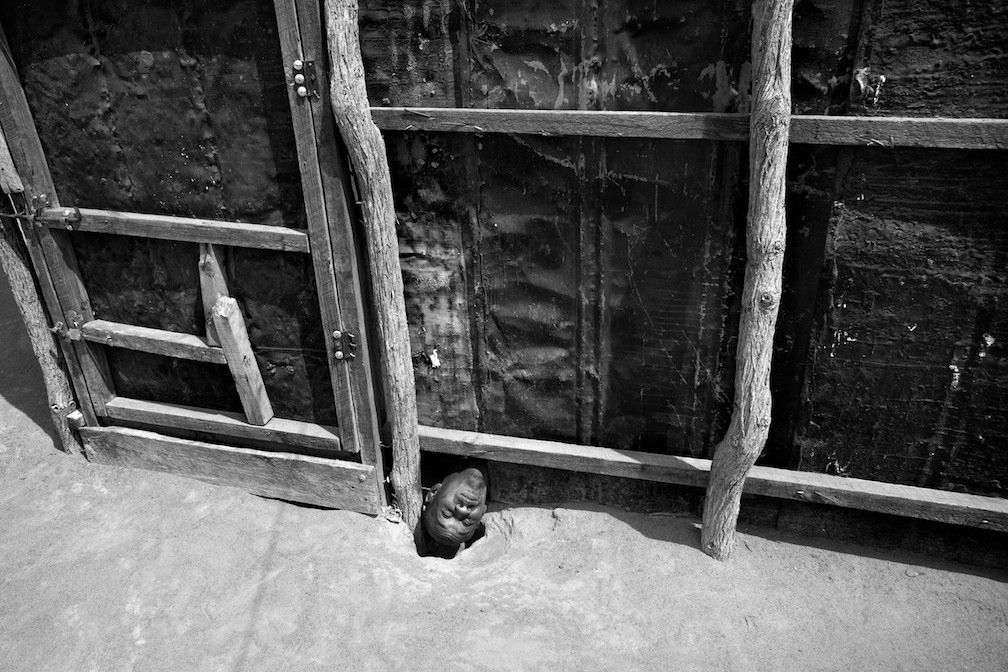 Abdi Rahman Shukri Ali, 26, has lived in a locked tin shack for two years. He stays with his family in Dadaab in Eastern Kenya, the world’s largest refugee camp, where Somalis fleeing conflict and famine have sought safety. Dadaab Refugee Camp, Kenya. 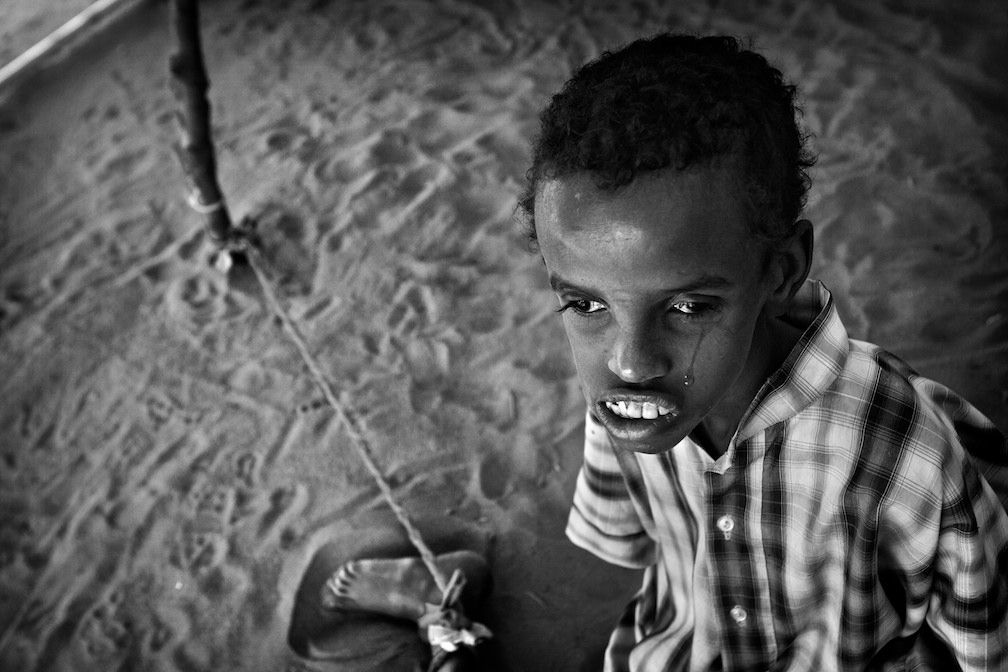 13 year old Ahmed Adan Ahmed spends his days walking in circles, or sitting running his hands through the sand at his feet. For 10 years he has been tied to a stick under the tarpaulin of a tent in a camp for Internally Displaced People in Galkayo. His mother Fawzia sees no other option – if she doesn’t tie him he will run away. Galkayo, Puntland, Somalia. 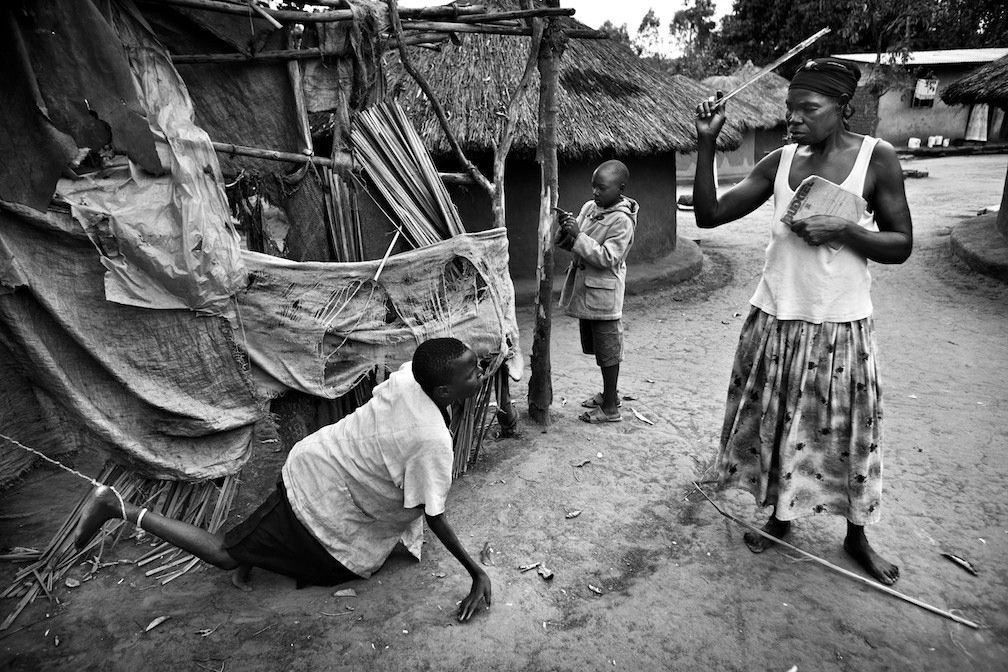 This 14 year old boy has been tied up for six years. His mother refuses to have him admitted to Gulu Hospital which is only two kilometers away. Gulu, Northern Uganda.  Some have suffered severe trauma which has led to their illness. Others were born with mental disability. Either way, in countries where infrastructure has collapsed, or where displacement has driven them away from services, treatment is often the same - a life immobilized by chains. The mentally ill men and women in Juba Central Prison are held in separate cells at night but during the day will mingle with the general prison population. Juba, Sudan. 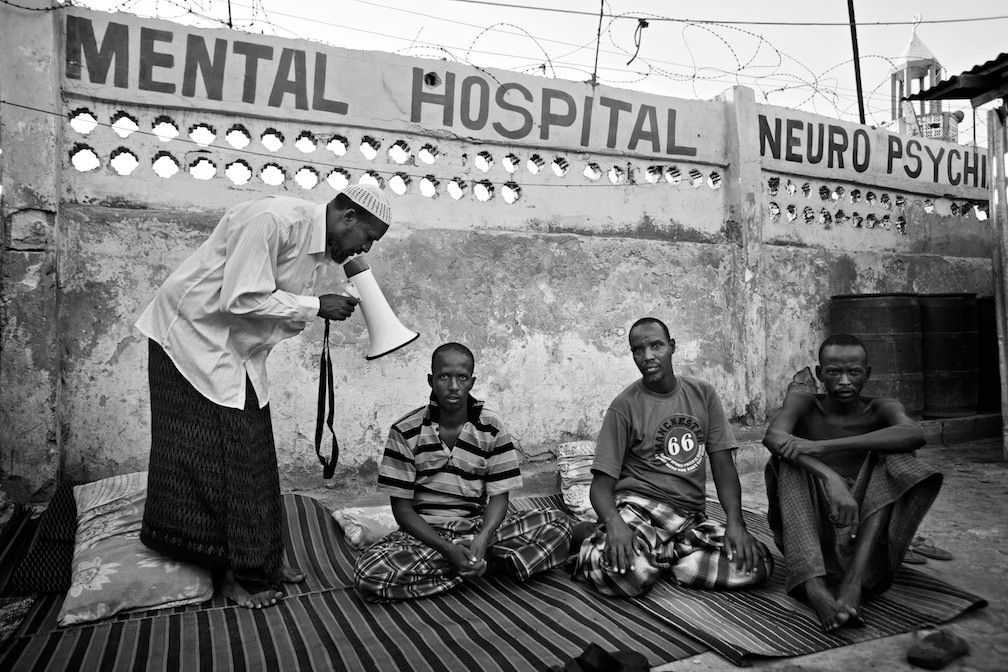 Many Somalis will take their mentally ill relative to traditional or Khoranic healers for treatment. Mogadishu, Somalia. 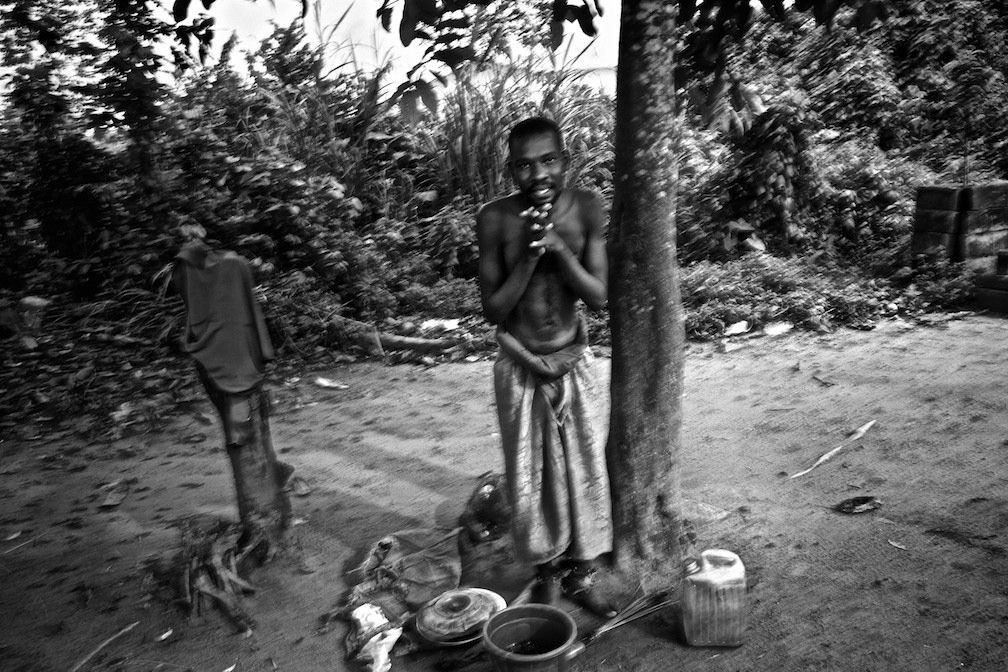 Native Doctor Lekwe Deezia claims to heal mental illness through the power of prayer and traditional herbal medicines. While receiving treatment, which can sometimes take months, his patients are chained to trees in his courtyard. They begged the photographer for food - they say they are only fed once a day, sometimes only once every 3 days. The Niger Delta, Nigeria. 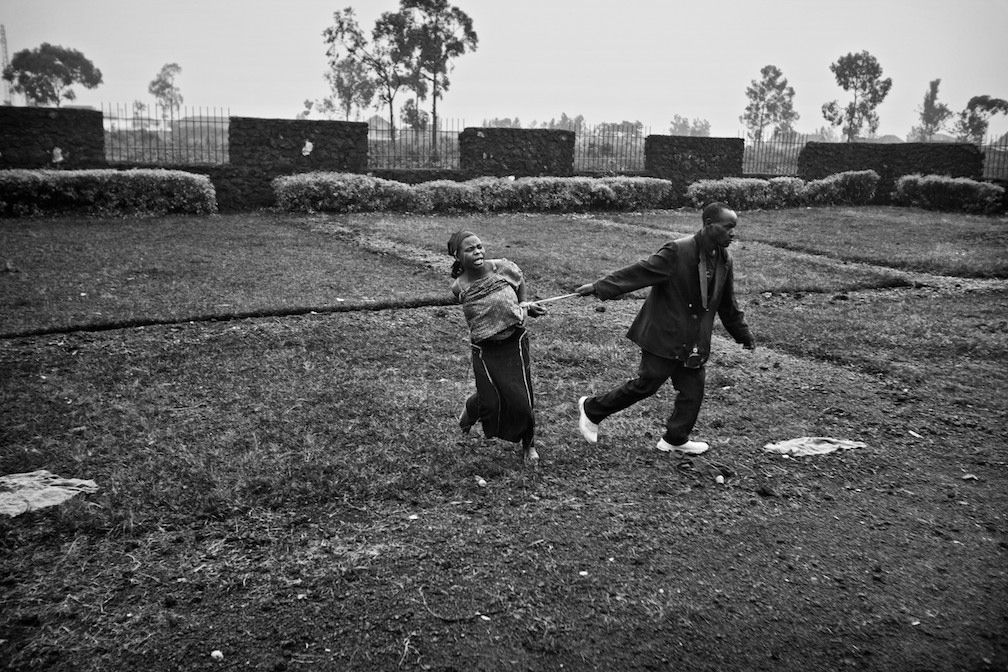 Due to insufficient staff numbers, family members are encouraged to stay with patients at Brothers of Charity Sante Mental. This relative would often beat, tie up and drag the patient when she did not obey his instructions. Goma, The Democratic Republic of Congo. 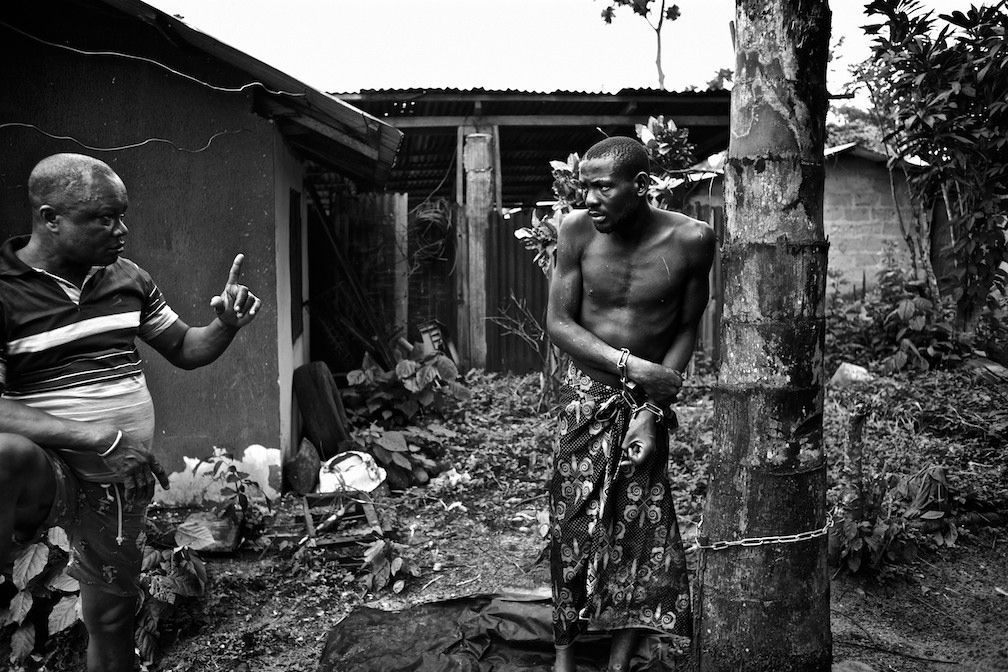 Native Doctor Lekwe Deezia claims to heal mental illness through the power of prayer and traditional herbal medicines. While receiving treatment, which can sometimes take months, his patients are chained to trees in his courtyard. One cries and says he is beaten regularly, and about how cold he gets and that he is attacked by mosquitoes every night. His body is covered in bites. The Niger Delta, Nigeria. 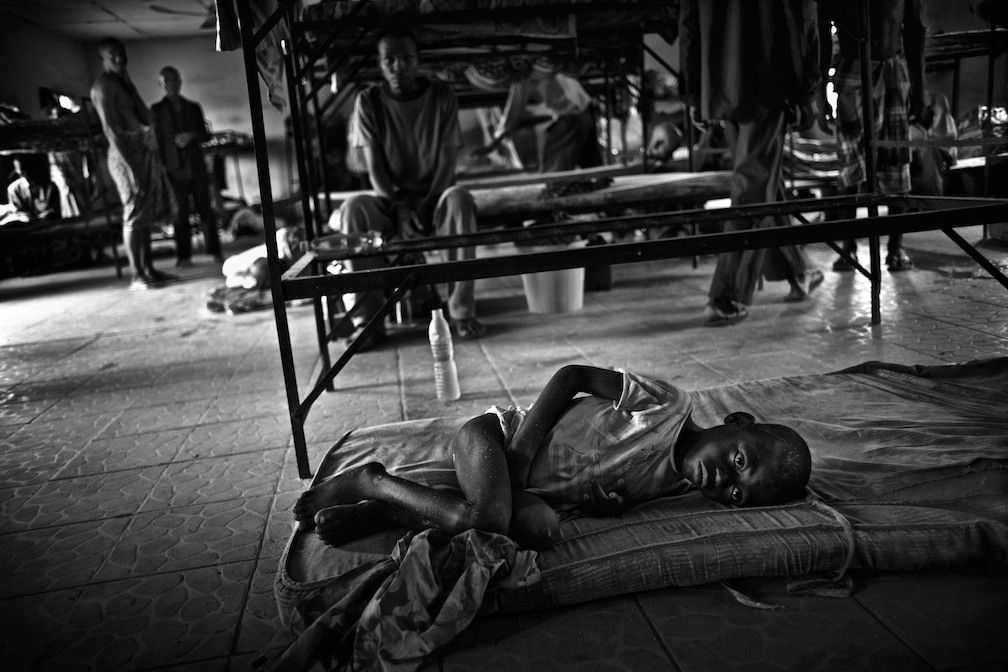 This so called Rehabilitation facility outside the Niger Delta city of Port Harcourt holds over 170 people with mental illness or mental disability. In 1999 it was turned into a place of incarceration for homeless people with mental illness that were cleared off the streets in a ‘clean up’ in anticipation of the FIFA World Youth Soccer Championship. They have been here ever since. While the staff denied that they house children, the photographer found, one mentally impaired child (around 8 years old) sleeping on the floor in the room for the “high risk” male inmates. The child had been there for 3 months. The Niger Delta, Nigeria. 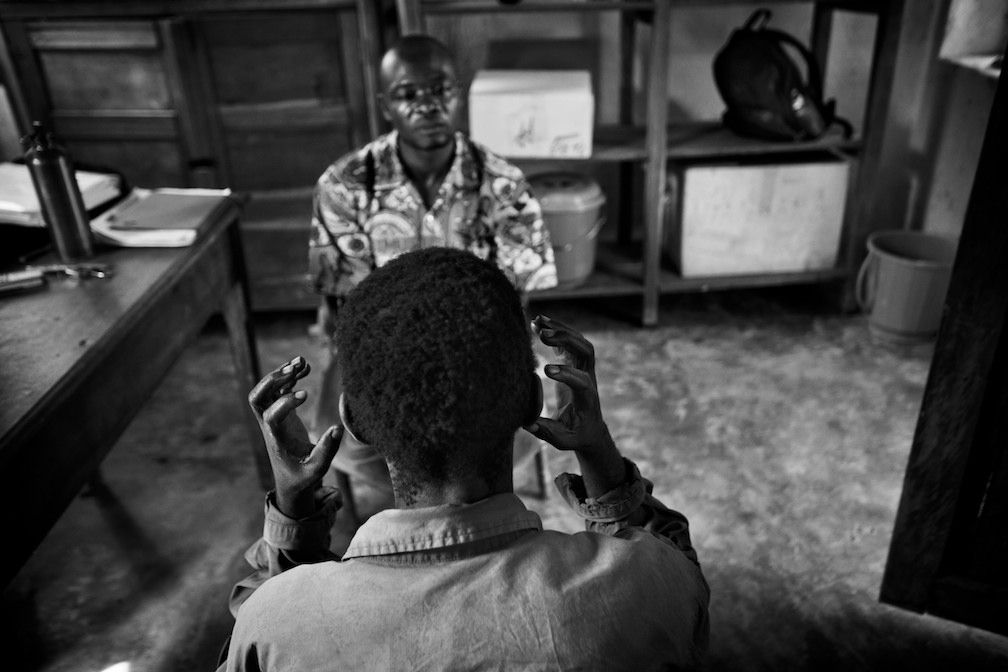 Mineyro Jean-Marie describes to Médécines Sans Frontières Psychologist Serge Nzuya Mbwibwi how he felt when The Lord’s Resistance Army attacked his family and attempted to kidnap his daughter. Niangara, Democratic Republic of Congo. 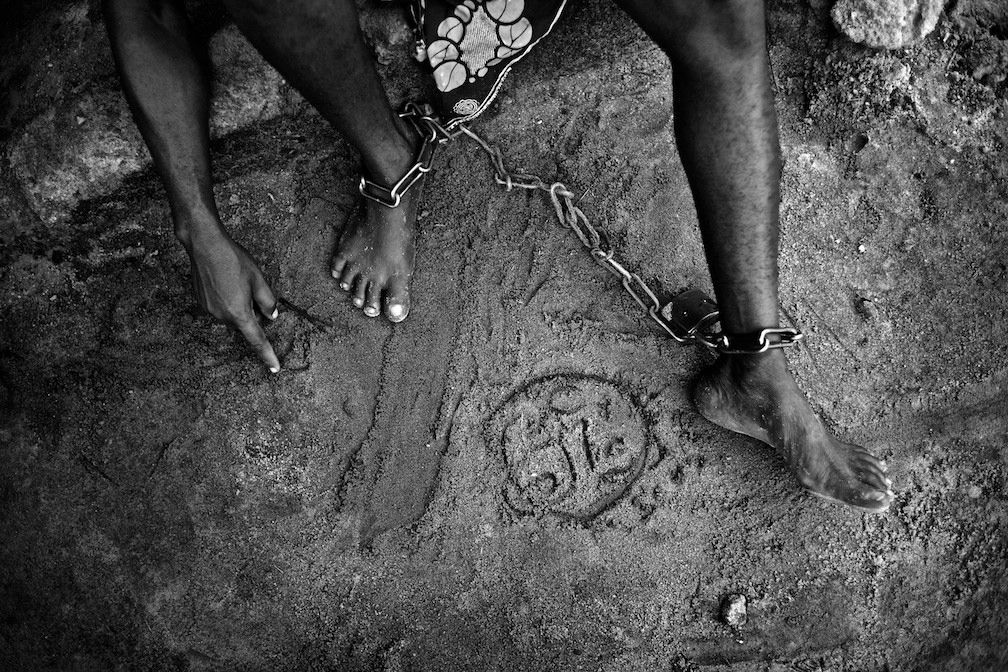 Reverend Apostle S.B.Esanwi, Doctor of Divinity, treats people with mental illness with prayer and traditional medicines which usually consist of roots and leaves crushed in water. He claims to have cured hundreds of patients. Many stay for months in his compound. Some are chained throughout their time there. The oil industry that has brought billions of dollars into the Nigerian economy has arguably been a disaster for the Delta region from where it is extracted. Corruption, mass inequality and violence have plagued the region ever since the discovery of the resource. In a society that cannot trust corrupt Government organizations, churches have become a sanctuary from the perceived wickedness and greed of the modern culture. In regions where both fortune and sickness are attributed to the spirit world, mental illness is considered a curse. Spiritual remedies are often sought, and chains regularly used as restraints. The Niger Delta, Nigeria. 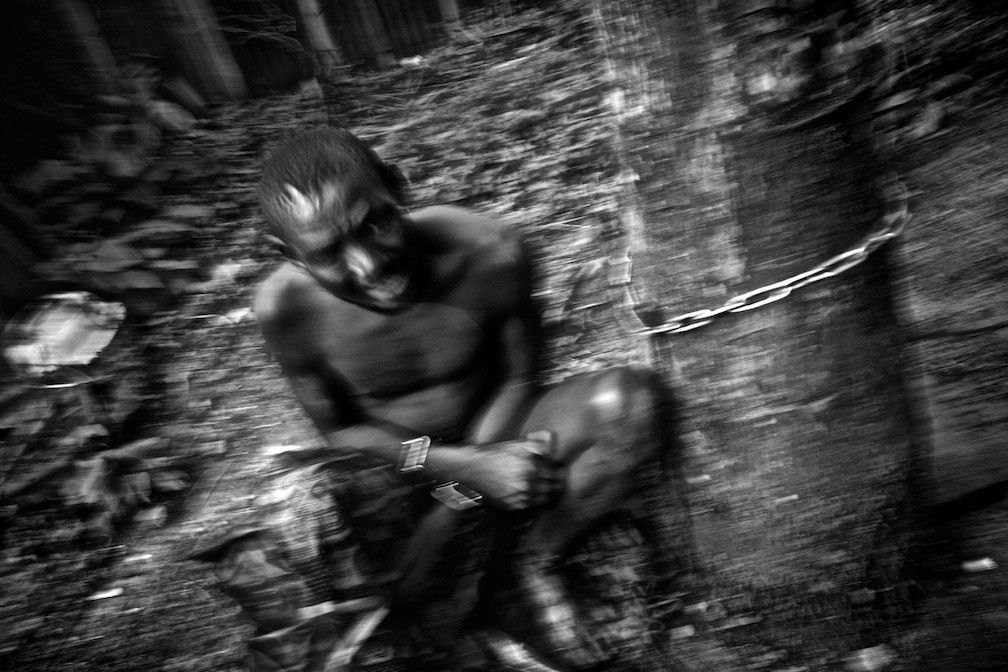 Native Doctor Lekwe Deezia claims to heal mental illness through the power of prayer and traditional herbal medicines. While receiving treatment, which can sometimes take months, his patients are chained to trees in his courtyard. They are not given shelter or protection from the elements. They are visibly terrified of the doctor. Away from the doctor the patients beg the photographer for food. They say they are only fed once a day, sometimes only once every 3 days. One cries and says how cold he gets and that he is attacked by mosquitos every night. His body is covered in bites. He says they are sometimes beaten for no reason and if a piece of fruit falls from the tree and they try to eat it they are beaten. The oil industry that has brought billions of dollars into the Nigerian economy has arguably been a disaster for the Delta region from where it is extracted. Corruption, mass inequality and violence have plagued the region ever since the discovery of the resource. In a society that cannot trust corrupt Government organizations, churches have become a sanctuary from the perceived wickedness and greed of the modern culture. In regions where both fortune and sickness are attributed to the spirit world, mental illness is considered a curse. Spiritual remedies are often sought, and chains regularly used as restraints. The Niger Delta, Nigeria.  31 year old Endurance has been in the care of Reverend Tambari for 6 months and now sleeps in the church. The Niger Delta, Nigeria. |
|
#2
●
08-06-2013, 04:59 PM
| ||||||||
 So Fucking Banned Poster Rank:3225 Join Date: Jun 2010 Posts: 116 Mentioned: 1 Post(s) Quoted: 42 Post(s)
| ||||||||
|
Re: Documenting the Brutal Treatment of Africans with Mental Illness
I'd like to share this with a wider audience. Do you have a link?
|
|
#4
●
08-09-2013, 07:48 AM
| ||||||||
 *DR's nice guy* Poster Rank:78 Male Join Date: Oct 2009 Posts: 19,437 Mentioned: 89 Post(s) Quoted: 7144 Post(s)
| ||||||||
|
Re: Documenting the Brutal Treatment of Africans with Mental Illness
Chaining a retarded person to a tree is probably more humane that tying a dog to a tree as they don't really understand things anyway. I actually don't have a problem with it as long as it has been properly diagnosed. I think in a shithole like this some people may be diagnosed as mentally challenged due to things like not following the same religion as the people in charge or being a ****** (which is arguably a different type of mental abnormality anyway). If you are struggling to look after yourself in a place like that it is hard to justify using up time, effort and limited resources on someone who cannot appreciate or understand what you do. |
|
#5
●
08-09-2013, 09:29 PM
| ||||||||
| ✖ The Antique Christ ✖ Poster Rank:105 Gonzo Punk Join Date: Jan 2009 Posts: 15,488
Contributions: 58
Mentioned: 23 Post(s) Quoted: 2046 Post(s)
| ||||||||
|
Re: Documenting the Brutal Treatment of Africans with Mental Illness
@ MrCorpse - Are you speaking from experience?
|
|
#6
●
08-09-2013, 09:51 PM
| ||||||||
 Benevolent dictator Poster Rank:57 Arse fucker Join Date: May 2009 Posts: 25,643 Mentioned: 17 Post(s) Quoted: 1450 Post(s)
| ||||||||
|
Re: Documenting the Brutal Treatment of Africans with Mental Illness
Alot of the time if they are thought to be retarded when born they are killed, at least these ones lived.
|
|
#7
●
10-13-2015, 03:36 AM
| ||||||||
 My Rank: CORPORAL Poster Rank:1460 Join Date: Jun 2015 Posts: 398 Mentioned: 0 Post(s) Quoted: 63 Post(s)
| ||||||||
|
Re: Documenting the Brutal Treatment of Africans with Mental Illness
Yeah, but what the Hell kind of Life is that? I think I would do My best to disrupt so they'd shoot Me and take Me out of My misery.
|
|
#8
●
11-18-2015, 11:32 AM
| ||||||||
 My Rank: LANCE CORPORAL Poster Rank:3280 Male Join Date: Apr 2010 Posts: 112 Mentioned: 0 Post(s) Quoted: 22 Post(s)
| ||||||||
|
Re: Documenting the Brutal Treatment of Africans with Mental Illness
There is absolutely no way on earth to justify such harsh treatment one a fellow human being.I'm not judging anyone but this inhumane to say the least.
|
|
#9
●
11-18-2015, 01:24 PM
| ||||||||
 ★ Legacy Member ★ Poster Rank:5926 Female Join Date: May 2013 Posts: 40 Mentioned: 0 Post(s) Quoted: 9 Post(s)
| ||||||||
|
Re: Documenting the Brutal Treatment of Africans with Mental Illness
I am also interested in a link to share with some folks at work. I work for a fundraiser. I am a fundraiser myself, and we do fundraising for many non-profits, some of them do a lot of work in South Sudan. I think it would be very interesting to share this with the script writers, as well as the client managers at the office. I would like to see if this information is even known by anyone at the office, or if it would be useful in our campaigning. thank u.
|
|
#10
●
11-19-2015, 03:31 AM
| ||||||||
 ★ Legacy Member ★ Poster Rank:431 male Join Date: Jun 2014 Posts: 2,667
Contributions: 19
Mentioned: 6 Post(s) Quoted: 732 Post(s)
| ||||||||
|
Re: Documenting the Brutal Treatment of Africans with Mental Illness
Is it just me, or is this one of the most offensive comments on DR for more than one reason? Granted, it's not breaking the rules; I just felt the need to vent my disgust.    |