|
#1
●
11-15-2012, 03:08 PM
| ||||||||
 My Rank: MASTER SERGEANT Poster Rank:424 Join Date: Jun 2011 Posts: 2,766
Contributions: 2
Mentioned: 13 Post(s) Quoted: 471 Post(s)
| ||||||||
|
Death: A Self-portrait
Artists have always been drawn to death. A new exhibition at the Wellcome Collection shows the most chilling examples, from Otto Dix and Goya exposing the horror of war to Dana Salvo's Mexican day of the dead shrines and Tibetan death masks.  Linda Connor, Skeleton, Shrine, Kathmandu, Nepal, 1980  Otto Dix, Shock Troops Advance Under Gas, from the series Der Krieg (The War), 1924  Francisco Goya, Tampoco, from Desastres de la Guerra (The Disasters of War), 1810-1814  Albert Besnard, Lequel?, from the series Elle, 1900  Dana Salvo, from the series The Day, the Night and the Dead, 1990-2004  Dana Salvo, from the series The Day, the Night and the Dead  Rembrandt, Death Appearing to a Couple, 1639  Tibetan carved wooden mask, 19th century 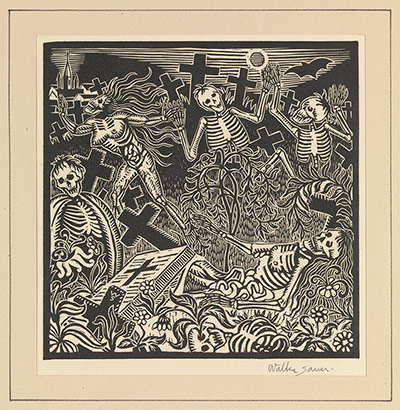 Walter Sauer, Dance of Death 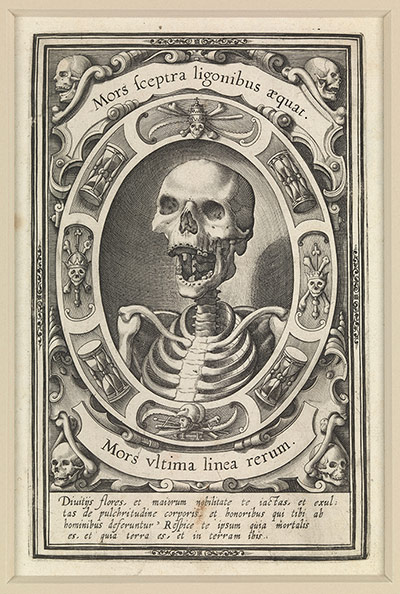 Mors Ultima Linea Rerum (Death the Final Boundary of Things), c1570  James Ensor, My Portrait in 1960, 1888 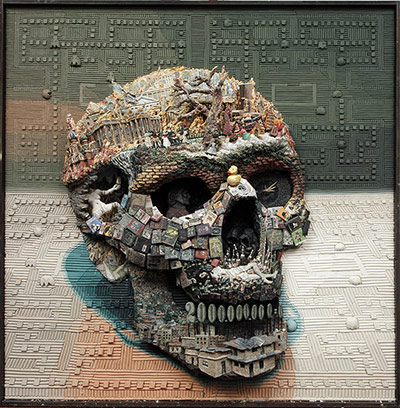 The Skull Series (number 8 of 12), Mondongo Collective  Ancient Incan skull, 16th century  Adriaen Van Utrecht, Vanitas Still Life with Bouquet and Skull, 1642  Barthel Bruyn the Elder, A Skull in a Niche, c1535-55 Unknown artist, memento mori, late 18th century 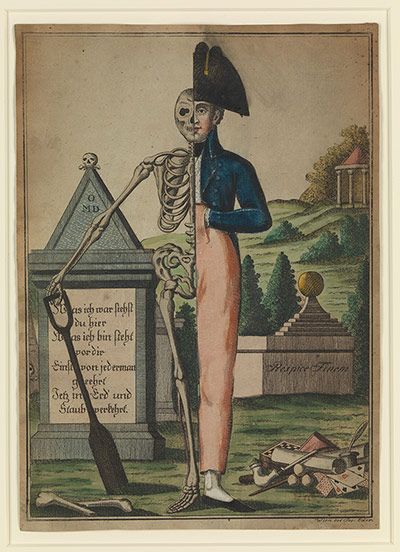 · |
|
#2
●
11-15-2012, 03:11 PM
| ||||||||
| My Rank: MASTER SERGEANT Poster Rank:424 Join Date: Jun 2011 Posts: 2,766
Contributions: 2
Mentioned: 13 Post(s) Quoted: 471 Post(s)
| ||||||||
|
Re: Death: A Self-portrait
Death collector brings life obsession to Wellcome Collection Richard Harris collection goes on display and includes a global gamut of artistic and textual odes to death as an entity Originally he only intended to collect skulls, Richard Harris explains mildly, as if a man could have no more modest ambition in life. Somehow, though – after he acquired the lifesize Japanese skull complete with startlingly realistic serpent slithering through the eye sockets, Kiki Smith's bronze skull cast from her own head and inscribed with lines from Horace, and Robert Mapplethorpe's skull-handled walking stick photographed when the artist was dying of Aids – he kept going. The collection, now on haunting display at the Wellcome Collection, grew to include a chandelier big enough for a cathedral, made entirely of plaster casts of bones (by the British artist Jodie Carey), photographs of medical students grinning over partially flayed corpses, anatomy textbooks, papier-mache skeletons from Mexico, medieval images of skeletons dragging lords, ladies, bishops and peasants into the Dance of Death. Although London commuters need no reminding of mortality, anyone coming up from the underground into Euston station, opposite the Wellcome Collection, now passes a row of images of Edwardian postcards of buxom beauties and courting couples morphing into skulls, from the collection. "It's a cracker, isn't it?" said Ken Arnold, head of public programmes, standing by John Isaac's lifesize sculpture perched on a packing case, a semi-dissected man with little remaining – both arms gone along with one leg and most of his skin – except his snarling anger. "When we had the Brains exhibition 12 people fainted. I wonder what it's going to be this time." The Isaac is called "Are You Still Mad At Me?" Privately, the Wellcome staff call it "the breakfast-loser". Arnold said the exhibition was a perfect fit for the Wellcome Collection, whose founder, Henry Wellcome, a more benign medications manufacturer, had a gigantic collection including mummies, shrunken heads, tattooed skin, Tibetan skull cups and a Chinese dentist's trade sign trailing strings of human teeth. One very rare set of calendar sheets shows jolly skeletons smoking, drinking, playing music, and compounding medicines in a pharmacy. Curator Kate Forde points out drily in her caption: "Memento mori are rare in commercial advertising, which perpetually defers the future in order to emphasise the idea that you are what you have now." The skeletons were unusually accurate because they were drawn by a trained anatomist, and they also proved prophetic. The calendar was distributed to doctors in 1900 by the Antikamnia chemical company, which recommended its patients take two tablets every three hours for headaches, fever, insomnia or nervousness. The tablets, it was eventually established, were not only addictive but also toxic. There are also works by major artists including Dürer and Rembrandt, and the Disasters of War engravings by Francisco Goya that inspired the Chapman Brothers to create modern horrors. Harris, a retired antique prints dealer, only began collecting death objects and works a few years ago, selling a beloved collection of prints by Rembrandt, Picasso and Matisse to fund it. When his new treasures went on display earlier this year in Chicago, he thought he had 1,500 pieces. He believes he now has 2,000, but that could already be out of date: he is still commissioning new pieces, and acquiring old ones. One of the most arresting pieces in the show is one of his most recent purchases, a small wooden figure slumped on a battered wooden chair, a tomb guardian from the South Sea. "Death has been a very important subject in art, and one that has meaning for all of us," Harris said. "All of these pieces stand in their own right as works of art, but if they persuade the public to engage with a subject too often kept at a distance, so much the better." His wife of 45 years has been "very understanding", and his children just say "there goes Daddy again", he insisted. Unlike the many death-bed figures in the collection gazing hopefully towards heaven – or hopelessly in the case of the gouty 18th century man sprawled in an armchair, smashed wine bottle and glass by his side – Harris has no belief in an afterlife, and no interest in what happens to his own body after his death. "I don't think the show is morbid," he said, slightly anxiously. "It's not a downer, I think it's quite uplifting." • Death: A self-portrait, Wellcome Collection, London, free, until 24 February |
|
#3
●
11-15-2012, 03:14 PM
| ||||||||
| My Rank: MASTER SERGEANT Poster Rank:424 Join Date: Jun 2011 Posts: 2,766
Contributions: 2
Mentioned: 13 Post(s) Quoted: 471 Post(s)
| ||||||||
|
Re: Death: A Self-portrait
Death, death everywhere: the grim reaper's on the loose in galleries Representations of death multiply at moments when art has something important to say. Is that what's happening now? Death is stalking the art galleries. An exhibition called From Death to Death is soon to open at the Scottish National Gallery of Modern Art, while the Wellcome Collection in London is showing Death: A Self-Portrait from this week. At the Museum of London, you can see horrific waxworks of dissected corpses in the winter show Doctors, Dissection and Resurrection Men, while in Cambridge, the Fitzwilliam Museum has succeeded in its campaign to save Poussin's painting of the moment of death, Extreme Unction. Is death having a moment? Well that's a daft question, obviously: death is always having a moment. On the other hand, representations of death are more popular in art at some times than others. In the early 1990s, death ruled. A pickled shark in a tank was the toothy tip of the iceberg. Rachel Whiteread's casts were death masks of places, as spooky as empty-eyed skulls. Jake and Dinos Chapman enacted Great Deeds Against the Dead. One reason art was so morbid circa 1990 was the impact of Aids. Lucian Freud monumentally portrayed performance artist Leigh Bowery, who was soon to die of an Aids-related illness. Meanwhile the artist Felix Gonzales-Torres began a memorable postmortem career, his witty conceptualism triumphing over his Aids-related demise. However, that does not explain why death became such an art star in works such as Sarah Lucas's unforgettable sculpture, Is Suicide Genetic? The real reason death was essential to art in the 1990s was that it enabled artists to cut through the crap – or, to put it another way, to escape the self-enclosed, haughty world of a dying modern art scene to make images that actually matter to real people in their real lives. If this is true, then whenever death lords it in the art galleries, it means art is beginning to really say something. Is that happening now? Are we entering a deathly golden age? The most powerful work in this year's Turner prize also happens to be one of the most macabre works of art I have ever seen. Elizabeth Price weaves together gothic carvings and the horrible true story of the Manchester Woolworths fire to compose a grisly soul-funk requiem in her film The Woolworths Choir of 1979. Like the art of the early 1990s, this terrifying fugue of images and sounds (has a soundtrack ever been so scary? Not since David Lynch's film Lost Highway) makes you acutely aware of mortality and therefore of life. If Price wins the Turner prize, as she deserves to, death really will be having a moment. |