|
#1
●
06-11-2014, 11:09 AM
|
 ★ ********* ★ Poster Rank:251 Male Join Date: Jul 2009 Posts: 5,547
Contributions: 415
5,547Posts 25,715Thanked 932Quoted 66Mentioned 415Contrib. |
|
DARPA Z-Man Project Uses Gecko-Inspired Technology for Climbing
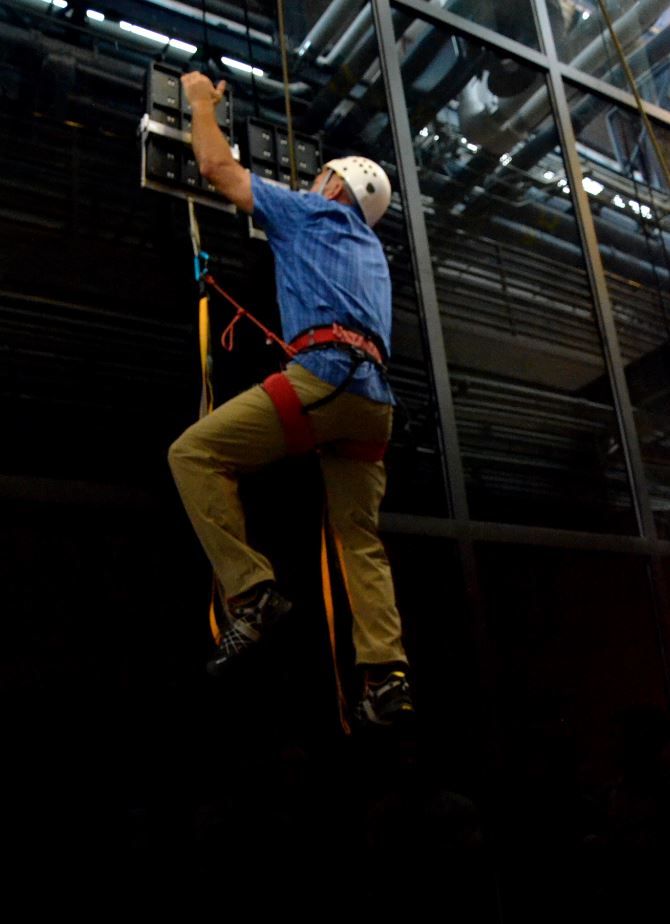 During testing, an operator climbed 25 feet vertically on a glass surface using no climbing equipment other than a pair of hand-held, gecko-inspired paddles. The climber wore, but did not require, the use of a safety belay. Image: DARPA  Image of the gecko foot, showing the setae and spatulae structures. |
|
#2
●
06-11-2014, 11:45 AM
|
 King of East Texas Poster Rank:361 3 legs Join Date: Dec 2010 Posts: 3,434
Contributions: 1
3,434Posts 4,788Thanked 915Quoted 13Mentioned 1Contrib. |
|
Re: DARPA Z-Man Project Uses Gecko-Inspired Technology for Climbing
The geckos where I live are transparent, but having a tropical sun, they will only come out at night. You can see all their organs working when they crawl on a window. One day, when gecko-like gloves and shoes become widely available, sky scraper scaling competitions will be AMAZING! |
|
#3
●
06-14-2014, 09:54 AM
|
 ♚ Legacy Gold Member ♚ Poster Rank:35 Female Join Date: Nov 2008 Posts: 43,321
Contributions: 233
43,321Posts 76,140Thanked 2,282Quoted 95Mentioned 233Contrib. |
|
Re: DARPA Z-Man Project Uses Gecko-Inspired Technology for Climbing
Wow  The extreme sports world is going to be fantastic  |
|
#4
●
06-17-2014, 02:06 PM
|
 ✝Mudderator from Hell✝ Poster Rank:10 e-mail Join Date: Oct 2006 Posts: 96,621
Contributions: 901
96,621Posts 542,854Thanked 10,362Quoted 478Mentioned 901Contrib. |
|
Re: DARPA Z-Man Project Uses Gecko-Inspired Technology for Climbing
great for burglars so better lock windows in high rise office buildings lol
|
|
#5
●
06-24-2014, 02:29 AM
|
 My Rank: LANCE CORPORAL Poster Rank:2682 Beast Join Date: Jan 2010 Posts: 156 156Posts 71Thanked 7Quoted 1Mentioned 0Contrib. |
|
Re: DARPA Z-Man Project Uses Gecko-Inspired Technology for Climbing
Back in 02 they said everyone could in own a pair of nanocarbon tubing gloves in a decade, about time.
|