|
#1
●
06-14-2023, 12:45 AM
| ||||||||
 ☾ Administrator ☽ Poster Rank:76 ஜᎻᎬᎩᎾᏦᎪஜ Join Date: Dec 2011 Posts: 19,843
Contributions: 32
Mentioned: 189 Post(s) Quoted: 7021 Post(s)
| ||||||||
|
California Horn Shark Egg
Interesting. From Wiki: The horn shark (Heterodontus francisci) is a species of bullhead shark, in the family Heterodontidae. It is endemic to the coastal waters off the western coast of North America, from California to the Gulf of California. Young sharks are segregated spatially from the adults, with the former preferring deeper sandy flats and the latter preferring shallower rocky reefs or algal beds. A small species typically measuring 1 m (3.3 ft) in length, the horn shark can be recognized by a short, blunt head with ridges over its eyes, two high dorsal fins with large spines, and a brown or gray coloration with many small dark spots. 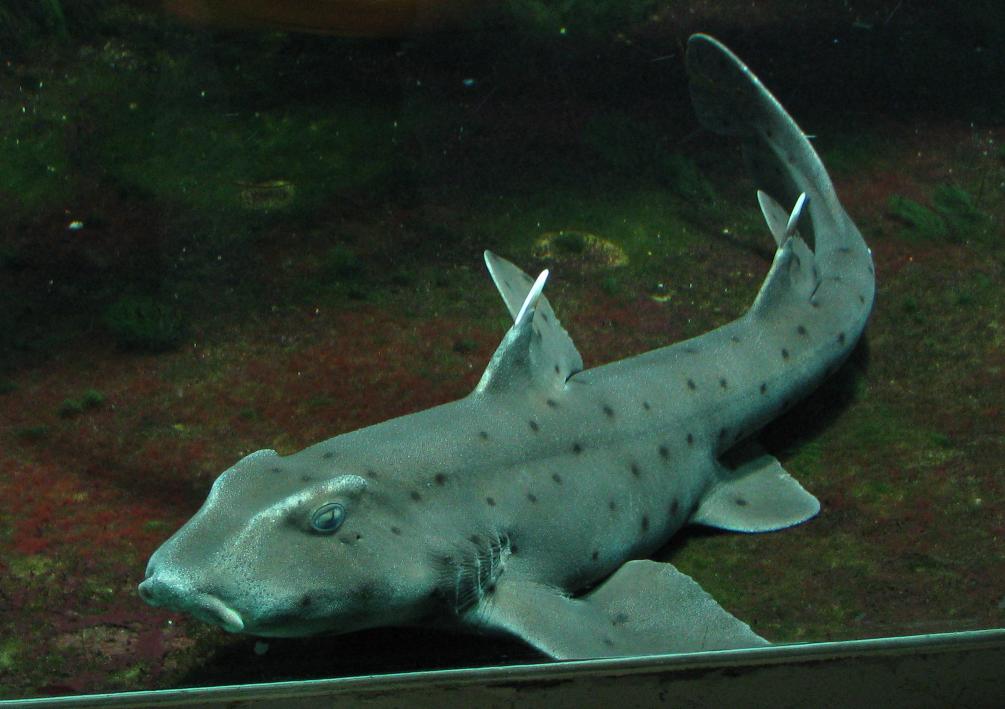 Slow-moving, generally solitary predators, horn sharks hunt at night inside small home ranges and retreat to a favored shelter during the day. Their daily activity cycles are controlled by environmental light levels. Adult sharks prey mainly on hard-shelled molluscs, echinoderms, and crustaceans, which they crush between powerful jaws and molar-like teeth, while also feeding opportunistically on a wide variety of other invertebrates and small bony fishes. Juveniles prefer softer-bodied prey such as polychaete worms and sea anemones. The shark extracts its prey from the substrate using suction and, if necessary, levering motions with its body. Reproduction is oviparous, with females laying up to 24 eggs from February to April. After laying, the female picks up the auger-shaped egg cases and wedges them into crevices to protect them from predators. From February to April, the females lay a maximum of 24 eggs two at a time once every 11–14 days, in water 2–13 m (6.6–42.7 ft) deep.[1] The egg case has two flanges spiraling around it, and thus may take the female several hours to deposit. At first the case is soft and light brown, and over a few days it hardens and darkens in color. Not including the flanges, the case measures 10–12 cm (3.9–4.7 in) long and 3–4 cm (1.2–1.6 in) wide; sharks from the Channel Islands produce longer egg cases than those from mainland California, suggesting that they are separate populations. One of the few sharks to exhibit parental care, female horn sharks in the wild pick up their eggs in their mouths and wedge them into crevices. However, in captivity the eggs are simply dropped on the bottom and may later be cannibalized. The eggs hatch in 6–10 months; at emergence the young measure 15–17 cm (5.9–6.7 in) long. Newly hatched sharks are provisioned with an internal yolk sac and do not have to feed until they are a month old, though they are capable of feeding and will accept food during this period. Horn sharks grow slowly and at a highly variable rate that does not correspond to their size; this has frustrated attempts to determine their aging process. Males mature at a length of 56–61 cm (22–24 in) and females at a length of at least 58 cm (23 in). Individual sharks have lived to over 12 years old in captivity, and there exists an unconfirmed report of a shark reaching 25 years of age. Read more here: https://en.wikipedia.org/wiki/Horn_shark
__________________ 💜🧿See Human | Be Human🧿💜 (War Section Hashtags) |
|
#2
●
06-14-2023, 01:41 AM
| ||||||||
 ✖ The Antique Christ ✖ Poster Rank:105 Gonzo Punk Join Date: Jan 2009 Posts: 15,488
Contributions: 58
Mentioned: 23 Post(s) Quoted: 2046 Post(s)
| ||||||||
|
Re: California Horn Shark Egg
That was very interesting and that egg is amazing. Nature is full of surprises.
|
|
#3
●
06-14-2023, 06:49 AM
| ||||||||
 ✝Mudderator from Hell✝ Poster Rank:11 e-mail Join Date: Oct 2006 Posts: 96,223
Contributions: 817
Mentioned: 476 Post(s) Quoted: 10290 Post(s)
| ||||||||
|
Re: California Horn Shark Egg
how cool is that  |
|
#4
●
06-17-2023, 03:18 PM
| ||||||||
 My Rank: MASTER GUNNERY SERGEANT Poster Rank:348 Manly Man Join Date: Sep 2017 Posts: 3,601 Mentioned: 0 Post(s) Quoted: 700 Post(s)
| ||||||||
|
Re: California Horn Shark Egg
Looks like a California butt plug.
|
|
#5
●
06-18-2023, 08:24 PM
| ||||||||
| ☾ Administrator ☽ Poster Rank:76 ஜᎻᎬᎩᎾᏦᎪஜ Join Date: Dec 2011 Posts: 19,843
Contributions: 32
Mentioned: 189 Post(s) Quoted: 7021 Post(s)
| ||||||||
|
Re: California Horn Shark Egg
 Odd you say this, the first thing that came to my mind when I saw it is "poop screw".
__________________ 💜🧿See Human | Be Human🧿💜 (War Section Hashtags) |