JavaScript and Cookies are required to view this site. Please enable both in your browser settings.
_________________________________________ Coconut Crab (Birgus latro) As the world’s largest land-dwelling arthropod, weighing up to 4.1 kg (9 lbs), Coconut Crabs live exclusively on the islands of the South Pacific. They feed on nuts, seeds and occasionally coconuts, which several crabs may gang up on in order to crack open! Coconut Crabs are extremely specialized creatures. They are a species of hermit crab, but when mature develop a strong enough exoskeleton to free them from relying on a shell. They have a unique respiratory system, neither gills nor lungs but something in between, and their olfactory organs are more insect-like than crab-like. Coconut Crabs are hunted by humans wherever the two can be found together. This has resulted in concern for the future of these creatures, and conservation efforts have been initiated in Micronesia, Guam, Vanuatu and Tuvalu. http://en.wikipedia.org/wiki/Coconut_crab http://www.environmentalgraffiti.com/featured/largest-crab-on-earth/19650%20details%20coconut%20crab _________________________________________ Spiny King Crab (Paralithodes rathbuni) This amazing creature is covered with spines to aid in camouflaging and protecting it from predators. Along with California King Crabs (of which they are a subspecies) Spiny Kings are known to occupy depths as great as 730 meters (2,400 ft). At these depths they feed on sea stars, other crabs and detritus that falls from above. http://www.handipoints.com/fun-facts/deep-sea/spiny-king-crab.html _________________________________________ Brown Box Crab (Lopholithodes foraminatus) Another type of king crab, this strange looking creature can also live at great depths, and ranges from Kodiak, Alaska to San Diego, California. The Brown Box Crab lives primarily on bivalves that it digs up from the sediment. That works out nicely, since these crabs spend most of their time hiding underneath the sediment. To do this, they have developed a specialized method of respiration. When they cross their front claws over their carapace, distinctive notches in the claws combine with their adjacent legs to form a small hole that channels water to the lungs below the sediment for circulation. Ingenious! http://en.wikipedia.org/wiki/Brown_box_crab http://www.wallawalla.edu/academics/departments/biology/rosario/inverts/Arthropoda/Crustacea/Malacostraca/Eumalacostraca/Eucarida/Decapoda/Anomura/Family_Lithodidae/Lopholithodes_foraminatus.html _________________________________________ Soft Coral Crab (Hoplophyrs oatesii) These tiny monsters are devoted to camouflage, living inside groves of soft coral and feeding on plankton. As if their spiny, coral-like appearance isn’t enough, it is thought that Soft Coral Crabs occasionally ingest coral polyps to absorb the same pigments, offering even more camouflage protection. Ranging from the Indian Ocean and throughout the Western Pacific, Soft Coral Crabs coexist peacefully with an array of other creatures that dwell amongst the coral. http://www.seadb.net/en_Soft-coral-crab-Hoplophrys-oatesii_611.htm _________________________________________ Zebra Crab (Zebrida adamsii) Ranging from the Indian Ocean through the Pacific and as far south as Australia, Zebra Crabs are found wherever there are sea urchins, and particularly Fire Urchins, whose spines are the Zebra Crabs’ favorite food. These oddly shaped crustaceans flit from urchin to urchin throughout their feeding day. Munching on spines doesn't do the urchins any harm – Zebra Crabs are a pretty peaceful bunch and are well suited to aquarium living. _________________________________________ Orangutan Crab (Achaeus japonicus) Belonging to the family of spider and decorator crabs, this unique and tiny creature (it's only 2 cm long) bears a weird resemblance to the Great Ape after which it is named. Not only do Orangutan Crabs have a thick coat of orange 'hair', they have two long legs resembling ape arms. To enhance the effect, while feeding on plankton and gathering particles from the current, the Orangutan Crab seems to sway these long arms, just like an Orangutan might do! http://www.lembehresort.com/orangutan_crab_achaeus_japonicus_c61.html _________________________________________ Porcelain Crab (Neopetrolisthes maculatus) This beautiful specimen is not actually a 'true crab' at all, but a type of lobster that gradually evolved to resemble a crab. Just like porcelain, these crabs are beautiful and very fragile, often losing limbs when fleeing predators and growing them back later. Beautiful they may be, but their diet certainly isn't: as well as scavenging for rotting shrimp and fish, they also live on the mucus from sea anemones! Theirs is a symbiotic relationship. They keep anemones clean and are immune from their poison, while the anemones keep the crabs safe from outside predators. http://en.wikipedia.org/wiki/Porcelain_crab _________________________________________ Sally Lightfoot Crab (Grapsus grapsus) These common sand crabs have inspired writers, fascinated scientists and entertained beach combers with their vibrant colors and nimble movement. From the coast of Southern California to Peru and various nearby islands, including the Galapagos, these crabs occupy coastal waters just above the sea spray. Their clownish appearance and dexterity prompted John Steinbeck to write, “They seem to be able to run in any of four directions, but because of their rapid reaction time, they appear to read the mind of their hunter.” http://en.wikipedia.org/wiki/Grapsus_grapsus _________________________________________ Red-Clawed Crab (Parisesarma bidens) A foraging species like the Sally Lightfoot, these crabs occupy regions from the Indian Ocean to the Pacific and coastal Japan, and live mostly among the brackish water of mangrove swamps. Their habit of living in and out of water in areas that sometimes combine fresh and salt water makes them tolerant of changes in water salinity. Eating leaf litter and detritus, these creatures are rarely seen scuttling across the sand but live in and among the mangrove roots where they often dig out boroughs for hiding. The incredible diversity of crab species indicates that crabs are innovative survivors, weathering an astounding array of environmental conditions. They have evolved a wide variety of methods to survive, from immunity to poison to catching floating food particles in the water. Make sure to check out your local aquarium to discover even more members of this diverse worldwide order of animals! " /> _________________________________________ Coconut Crab (Birgus latro) As the world’s largest land-dwelling arthropod, weighing up to 4.1 kg (9 lbs), Coconut Crabs live exclusively on the islands of the South Pacific. They feed on nuts, seeds and occasionally coconuts, which several crabs may gang up on in order to crack open! Coconut Crabs are extremely specialized creatures. They are a species of hermit crab, but when mature develop a strong enough exoskeleton to free them from relying on a shell. They have a unique respiratory system, neither gills nor lungs but something in between, and their olfactory organs are more insect-like than crab-like. Coconut Crabs are hunted by humans wherever the two can be found together. This has resulted in concern for the future of these creatures, and conservation efforts have been initiated in Micronesia, Guam, Vanuatu and Tuvalu. http://en.wikipedia.org/wiki/Coconut_crab http://www.environmentalgraffiti.com/featured/largest-crab-on-earth/19650%20details%20coconut%20crab _________________________________________ Spiny King Crab (Paralithodes rathbuni) This amazing creature is covered with spines to aid in camouflaging and protecting it from predators. Along with California King Crabs (of which they are a subspecies) Spiny Kings are known to occupy depths as great as 730 meters (2,400 ft). At these depths they feed on sea stars, other crabs and detritus that falls from above. http://www.handipoints.com/fun-facts/deep-sea/spiny-king-crab.html _________________________________________ Brown Box Crab (Lopholithodes foraminatus) Another type of king crab, this strange looking creature can also live at great depths, and ranges from Kodiak, Alaska to San Diego, California. The Brown Box Crab lives primarily on bivalves that it digs up from the sediment. That works out nicely, since these crabs spend most of their time hiding underneath the sediment. To do this, they have developed a specialized method of respiration. When they cross their front claws over their carapace, distinctive notches in the claws combine with their adjacent legs to form a small hole that channels water to the lungs below the sediment for circulation. Ingenious! http://en.wikipedia.org/wiki/Brown_box_crab http://www.wallawalla.edu/academics/departments/biology/rosario/inverts/Arthropoda/Crustacea/Malacostraca/Eumalacostraca/Eucarida/Decapoda/Anomura/Family_Lithodidae/Lopholithodes_foraminatus.html _________________________________________ Soft Coral Crab (Hoplophyrs oatesii) These tiny monsters are devoted to camouflage, living inside groves of soft coral and feeding on plankton. As if their spiny, coral-like appearance isn’t enough, it is thought that Soft Coral Crabs occasionally ingest coral polyps to absorb the same pigments, offering even more camouflage protection. Ranging from the Indian Ocean and throughout the Western Pacific, Soft Coral Crabs coexist peacefully with an array of other creatures that dwell amongst the coral. http://www.seadb.net/en_Soft-coral-crab-Hoplophrys-oatesii_611.htm _________________________________________ Zebra Crab (Zebrida adamsii) Ranging from the Indian Ocean through the Pacific and as far south as Australia, Zebra Crabs are found wherever there are sea urchins, and particularly Fire Urchins, whose spines are the Zebra Crabs’ favorite food. These oddly shaped crustaceans flit from urchin to urchin throughout their feeding day. Munching on spines doesn't do the urchins any harm – Zebra Crabs are a pretty peaceful bunch and are well suited to aquarium living. _________________________________________ Orangutan Crab (Achaeus japonicus) Belonging to the family of spider and decorator crabs, this unique and tiny creature (it's only 2 cm long) bears a weird resemblance to the Great Ape after which it is named. Not only do Orangutan Crabs have a thick coat of orange 'hair', they have two long legs resembling ape arms. To enhance the effect, while feeding on plankton and gathering particles from the current, the Orangutan Crab seems to sway these long arms, just like an Orangutan might do! http://www.lembehresort.com/orangutan_crab_achaeus_japonicus_c61.html _________________________________________ Porcelain Crab (Neopetrolisthes maculatus) This beautiful specimen is not actually a 'true crab' at all, but a type of lobster that gradually evolved to resemble a crab. Just like porcelain, these crabs are beautiful and very fragile, often losing limbs when fleeing predators and growing them back later. Beautiful they may be, but their diet certainly isn't: as well as scavenging for rotting shrimp and fish, they also live on the mucus from sea anemones! Theirs is a symbiotic relationship. They keep anemones clean and are immune from their poison, while the anemones keep the crabs safe from outside predators. http://en.wikipedia.org/wiki/Porcelain_crab _________________________________________ Sally Lightfoot Crab (Grapsus grapsus) These common sand crabs have inspired writers, fascinated scientists and entertained beach combers with their vibrant colors and nimble movement. From the coast of Southern California to Peru and various nearby islands, including the Galapagos, these crabs occupy coastal waters just above the sea spray. Their clownish appearance and dexterity prompted John Steinbeck to write, “They seem to be able to run in any of four directions, but because of their rapid reaction time, they appear to read the mind of their hunter.” http://en.wikipedia.org/wiki/Grapsus_grapsus _________________________________________ Red-Clawed Crab (Parisesarma bidens) A foraging species like the Sally Lightfoot, these crabs occupy regions from the Indian Ocean to the Pacific and coastal Japan, and live mostly among the brackish water of mangrove swamps. Their habit of living in and out of water in areas that sometimes combine fresh and salt water makes them tolerant of changes in water salinity. Eating leaf litter and detritus, these creatures are rarely seen scuttling across the sand but live in and among the mangrove roots where they often dig out boroughs for hiding. The incredible diversity of crab species indicates that crabs are innovative survivors, weathering an astounding array of environmental conditions. They have evolved a wide variety of methods to survive, from immunity to poison to catching floating food particles in the water. Make sure to check out your local aquarium to discover even more members of this diverse worldwide order of animals! " /> Bizarre and Beautiful Crabs

Bizarre and Beautiful Crabs 

Current Rating:

Unlimited Views No Ads No Algorithms Lifetime Account

Documenting Reality

Community Forum · Est. 2006

Join Now
Thread Tools
  #1  
04-26-2012, 09:15 AM
Faline's Avatar
Faline
Offline:
My Rank: MAJOR
Poster Rank:11
Join Date: Jun 2009
Posts: 93,130
Contributions: 226
 
Mentioned: 91 Post(s)
Quoted: 2009 Post(s)
Activity Longevity
0/20 18/20
Today Posts
0/11 ssss93130
Bizarre and Beautiful Crabs

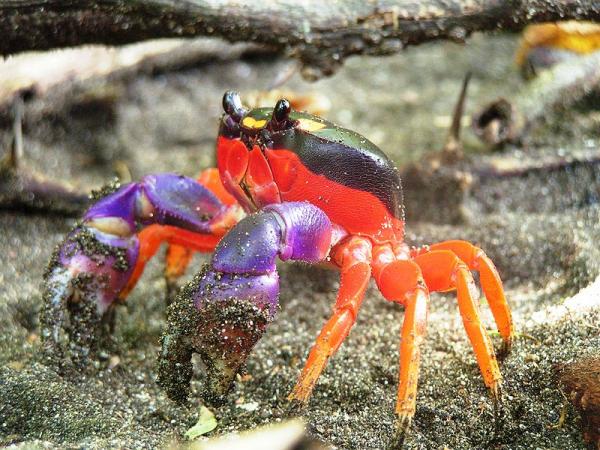
Halloween Crab (Gecarcinus quatradus)
Click image for larger version

Name:	Halloween-crab.img_assist_custom-600x450.jpg
Views:	903
Size:	70.0 KB
ID:	356683
Halloween or not, this crab always sports a brilliant mask that has inspired other nicknames, such as Harlequin Land Crab and Moon Crab. Halloween Crabs occupy coastal Mexico and Central America and can even be found as far south as Peru. They are forest dwellers, subsisting on leaves and seedlings, and usually feed at night. Despite occupying coastal rainforests and spending most of their time on land, Halloween Crabs must return to the water to lay their eggs.
http://en.wikipedia.org/wiki/Gecarcinus_quadratus
<iframe width="560" height="315" src="http://www.youtube.com/embed/WB8lRnK9Erk" frameborder="0" allowfullscreen></iframe>
<iframe width="420" height="315" src="http://www.youtube.com/embed/t6jsNW1gJQI" frameborder="0" allowfullscreen></iframe>

_________________________________________

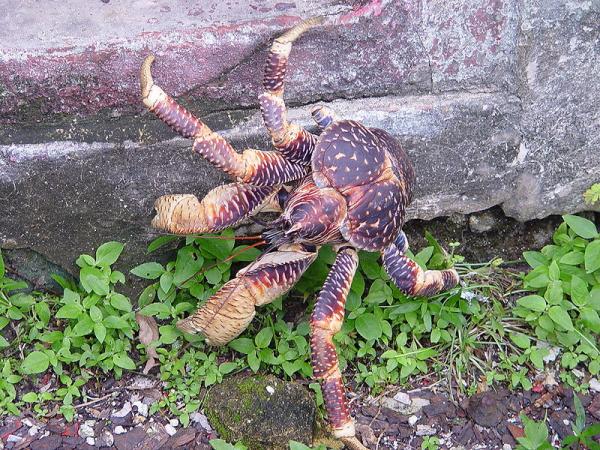
Coconut Crab (Birgus latro)
Click image for larger version

Name:	Coconut-Crab.img_assist_custom-600x450.jpg
Views:	914
Size:	97.8 KB
ID:	356684
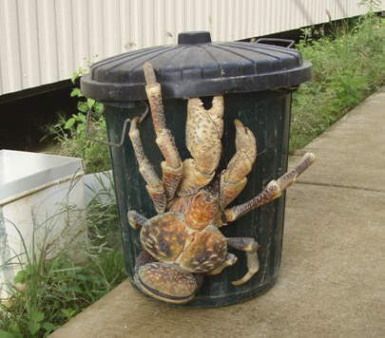
As the world’s largest land-dwelling arthropod, weighing up to 4.1 kg (9 lbs), Coconut Crabs live exclusively on the islands of the South Pacific. They feed on nuts, seeds and occasionally coconuts, which several crabs may gang up on in order to crack open! Coconut Crabs are extremely specialized creatures. They are a species of hermit crab, but when mature develop a strong enough exoskeleton to free them from relying on a shell. They have a unique respiratory system, neither gills nor lungs but something in between, and their olfactory organs are more insect-like than crab-like.

Coconut Crabs are hunted by humans wherever the two can be found together. This has resulted in concern for the future of these creatures, and conservation efforts have been initiated in Micronesia, Guam, Vanuatu and Tuvalu.
http://en.wikipedia.org/wiki/Coconut_crab
http://www.environmentalgraffiti.com...coconut%20crab
<iframe width="420" height="315" src="http://www.youtube.com/embed/CY5XKQ4Vb90" frameborder="0" allowfullscreen></iframe>
<iframe width="420" height="315" src="http://www.youtube.com/embed/LpsG7CI3RAA" frameborder="0" allowfullscreen></iframe>

_________________________________________

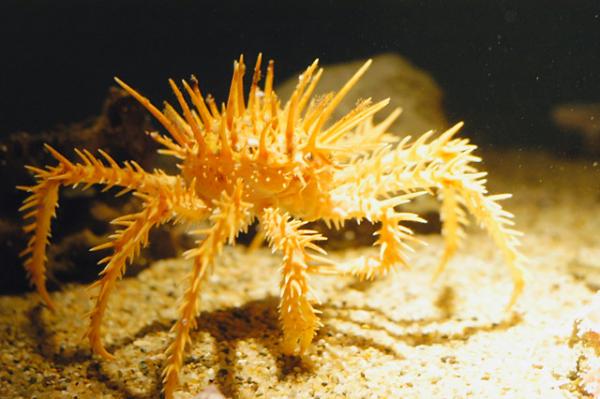
Spiny King Crab (Paralithodes rathbuni)
Click image for larger version

Name:	Spike-Crab.img_assist_custom-600x400.jpg
Views:	796
Size:	37.5 KB
ID:	356685
This amazing creature is covered with spines to aid in camouflaging and protecting it from predators. Along with California King Crabs (of which they are a subspecies) Spiny Kings are known to occupy depths as great as 730 meters (2,400 ft). At these depths they feed on sea stars, other crabs and detritus that falls from above.
http://www.handipoints.com/fun-facts...king-crab.html
<iframe width="560" height="315" src="http://www.youtube.com/embed/z9e5m-7SKxU" frameborder="0" allowfullscreen></iframe>

_________________________________________

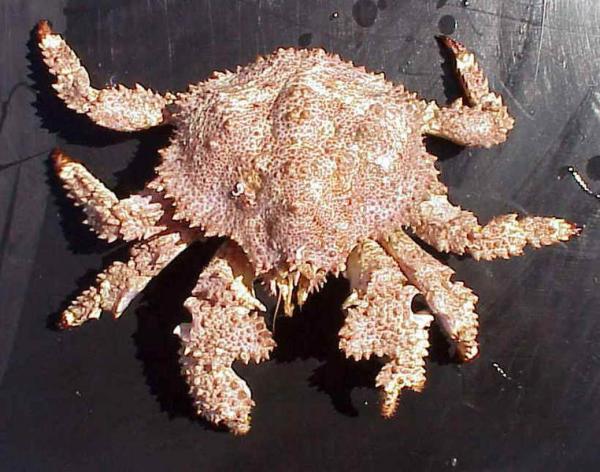
Brown Box Crab (Lopholithodes foraminatus)
Click image for larger version

Name:	Brown-Box-Crab.img_assist_custom-600x472.jpg
Views:	1560
Size:	55.2 KB
ID:	356686
Another type of king crab, this strange looking creature can also live at great depths, and ranges from Kodiak, Alaska to San Diego, California. The Brown Box Crab lives primarily on bivalves that it digs up from the sediment. That works out nicely, since these crabs spend most of their time hiding underneath the sediment. To do this, they have developed a specialized method of respiration. When they cross their front claws over their carapace, distinctive notches in the claws combine with their adjacent legs to form a small hole that channels water to the lungs below the sediment for circulation. Ingenious!
http://en.wikipedia.org/wiki/Brown_box_crab
http://www.wallawalla.edu/academics/...raminatus.html
<iframe width="420" height="315" src="http://www.youtube.com/embed/iyHxhDWJkN0" frameborder="0" allowfullscreen></iframe>

_________________________________________

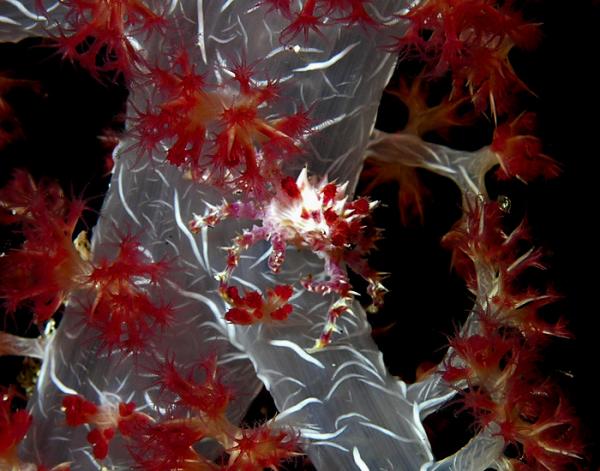
Soft Coral Crab (Hoplophyrs oatesii)
Click image for larger version

Name:	Soft-coral-crab.img_assist_custom-600x472.jpg
Views:	742
Size:	48.1 KB
ID:	356687
These tiny monsters are devoted to camouflage, living inside groves of soft coral and feeding on plankton. As if their spiny, coral-like appearance isn’t enough, it is thought that Soft Coral Crabs occasionally ingest coral polyps to absorb the same pigments, offering even more camouflage protection. Ranging from the Indian Ocean and throughout the Western Pacific, Soft Coral Crabs coexist peacefully with an array of other creatures that dwell amongst the coral.
http://www.seadb.net/en_Soft-coral-c...atesii_611.htm
<iframe width="560" height="315" src="http://www.youtube.com/embed/SJ1aqZh9dug" frameborder="0" allowfullscreen></iframe>

_________________________________________

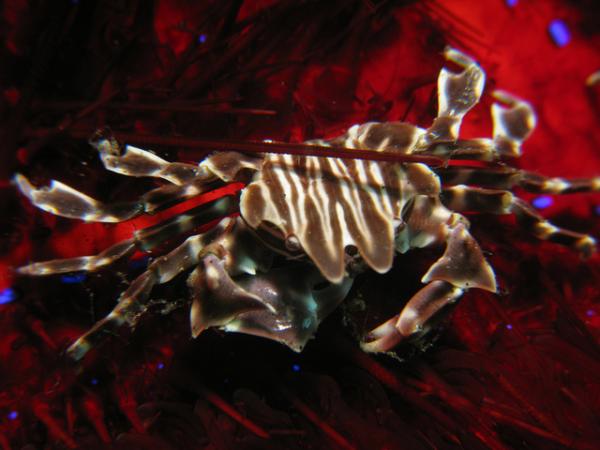
Zebra Crab (Zebrida adamsii)
Click image for larger version

Name:	Zebra-crab.img_assist_custom-600x450.jpg
Views:	546
Size:	33.9 KB
ID:	356688
Ranging from the Indian Ocean through the Pacific and as far south as Australia, Zebra Crabs are found wherever there are sea urchins, and particularly Fire Urchins, whose spines are the Zebra Crabs’ favorite food. These oddly shaped crustaceans flit from urchin to urchin throughout their feeding day. Munching on spines doesn't do the urchins any harm – Zebra Crabs are a pretty peaceful bunch and are well suited to aquarium living.
<iframe width="560" height="315" src="http://www.youtube.com/embed/db9N4r7Ya08" frameborder="0" allowfullscreen></iframe>

_________________________________________

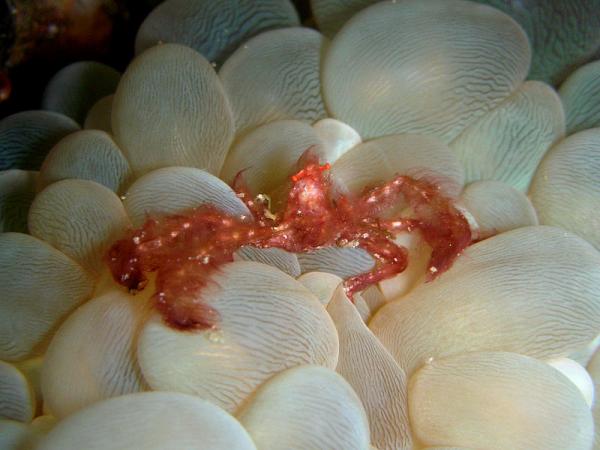
Orangutan Crab (Achaeus japonicus)
Click image for larger version

Name:	Orangutan-Crab.img_assist_custom-600x450.jpg
Views:	570
Size:	34.7 KB
ID:	356689
Belonging to the family of spider and decorator crabs, this unique and tiny creature (it's only 2 cm long) bears a weird resemblance to the Great Ape after which it is named. Not only do Orangutan Crabs have a thick coat of orange 'hair', they have two long legs resembling ape arms.

To enhance the effect, while feeding on plankton and gathering particles from the current, the Orangutan Crab seems to sway these long arms, just like an Orangutan might do!
http://www.lembehresort.com/oranguta...nicus_c61.html
<iframe width="560" height="315" src="http://www.youtube.com/embed/XJJM6YE5RsI" frameborder="0" allowfullscreen></iframe>

_________________________________________

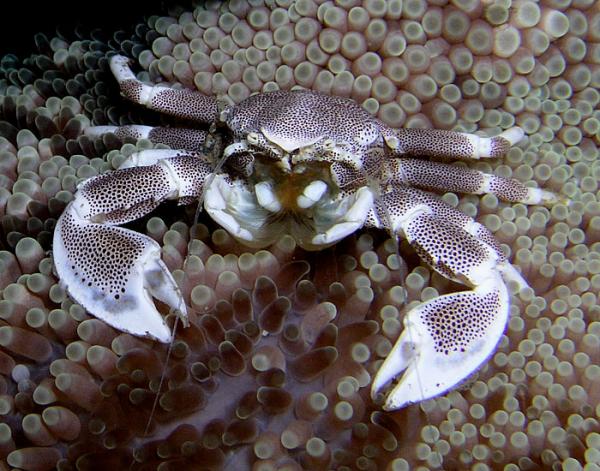
Porcelain Crab (Neopetrolisthes maculatus)
Click image for larger version

Name:	Porcelain-crab.img_assist_custom-600x472.jpg
Views:	479
Size:	66.9 KB
ID:	356690
This beautiful specimen is not actually a 'true crab' at all, but a type of lobster that gradually evolved to resemble a crab. Just like porcelain, these crabs are beautiful and very fragile, often losing limbs when fleeing predators and growing them back later. Beautiful they may be, but their diet certainly isn't: as well as scavenging for rotting shrimp and fish, they also live on the mucus from sea anemones! Theirs is a symbiotic relationship. They keep anemones clean and are immune from their poison, while the anemones keep the crabs safe from outside predators.
http://en.wikipedia.org/wiki/Porcelain_crab
<iframe width="560" height="315" src="http://www.youtube.com/embed/rAC12qnsjc4" frameborder="0" allowfullscreen></iframe>

_________________________________________

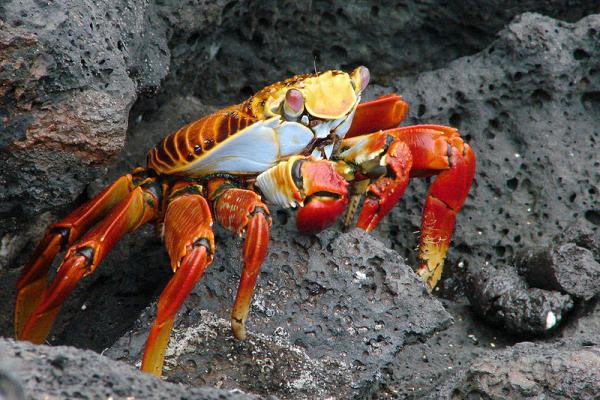
Sally Lightfoot Crab (Grapsus grapsus)
Click image for larger version

Name:	Sally-Lightfoot-crab.img_assist_custom-600x400.jpg
Views:	997
Size:	61.3 KB
ID:	356691
These common sand crabs have inspired writers, fascinated scientists and entertained beach combers with their vibrant colors and nimble movement. From the coast of Southern California to Peru and various nearby islands, including the Galapagos, these crabs occupy coastal waters just above the sea spray. Their clownish appearance and dexterity prompted John Steinbeck to write, “They seem to be able to run in any of four directions, but because of their rapid reaction time, they appear to read the mind of their hunter.”
http://en.wikipedia.org/wiki/Grapsus_grapsus
<iframe width="560" height="315" src="http://www.youtube.com/embed/rR7yGp2fVdc" frameborder="0" allowfullscreen></iframe>
<iframe width="560" height="315" src="http://www.youtube.com/embed/D7WGqmUj2U4" frameborder="0" allowfullscreen></iframe>

_________________________________________

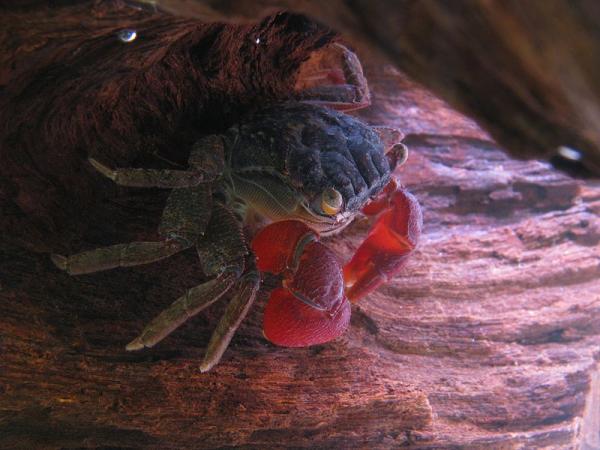
Red-Clawed Crab (Parisesarma bidens)
Click image for larger version

Name:	Red-clawed-crab.img_assist_custom-600x450.jpg
Views:	543
Size:	42.6 KB
ID:	356692
A foraging species like the Sally Lightfoot, these crabs occupy regions from the Indian Ocean to the Pacific and coastal Japan, and live mostly among the brackish water of mangrove swamps. Their habit of living in and out of water in areas that sometimes combine fresh and salt water makes them tolerant of changes in water salinity. Eating leaf litter and detritus, these creatures are rarely seen scuttling across the sand but live in and among the mangrove roots where they often dig out boroughs for hiding.

The incredible diversity of crab species indicates that crabs are innovative survivors, weathering an astounding array of environmental conditions. They have evolved a wide variety of methods to survive, from immunity to poison to catching floating food particles in the water. Make sure to check out your local aquarium to discover even more members of this diverse worldwide order of animals!
<iframe width="420" height="315" src="http://www.youtube.com/embed/J2o8r7Os8sw" frameborder="0" allowfullscreen></iframe>
<iframe width="420" height="315" src="http://www.youtube.com/embed/LzRk1dcCFyI" frameborder="0" allowfullscreen></iframe>
11 Users Say Thank You For This Post:
☠ Sting ☠, Bastet, Ess-Eye, GFX-707, kandystar, Maoh1349, powderblue, Pyramid_Head, Sharon, smackem, Wolf
▼ PROMO FROM DOCUMENTING REALITY
Want to escape?
Join Now
Hidden for upgraded members.
  #2  
04-26-2012, 01:43 PM
smackem's Avatar
smackem
Offline:
★ Legacy Member ★
Poster Rank:5
Join Date: Mar 2009
Posts: 108,378
 
Mentioned: 465 Post(s)
Quoted: 34614 Post(s)
Activity Longevity
0/20 18/20
Today Posts
0/11 sss108378
Re: Bizarre and Beautiful Crabs

People drive over masses of Coconut Crabs in Central America.

Beautiful thread here Kelly!
This User Says Thank You For This Post:
Faline
  #3  
04-26-2012, 02:05 PM
Faline's Avatar
Faline
Offline:
My Rank: MAJOR
Poster Rank:11
Join Date: Jun 2009
Posts: 93,130
Contributions: 226
 
Mentioned: 91 Post(s)
Quoted: 2009 Post(s)
Activity Longevity
0/20 18/20
Today Posts
0/11 ssss93130
Re: Bizarre and Beautiful Crabs

People drive over masses of Coconut Crabs in Central America.

Beautiful thread here Kelly!
Thanks

When i think of coconut crabs i always think of the image below! Huge lol
Coconut_Crab_385.jpg
52.5 KB ·1752 views
3 Users Say Thank You For This Post:
ArtOfLife, Sharon, smackem
  #4  
04-26-2012, 02:38 PM
güttsfükk's Avatar
güttsfükk
Offline:
Super *********
Poster Rank:88
Join Date: Nov 2008
Posts: 17,426
 
Mentioned: 5 Post(s)
Quoted: 99 Post(s)
Activity Longevity
0/20 18/20
Today Posts
0/11 ssss17426
Re: Bizarre and Beautiful Crabs

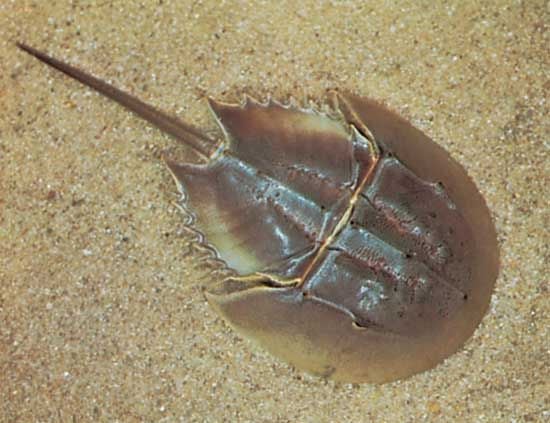
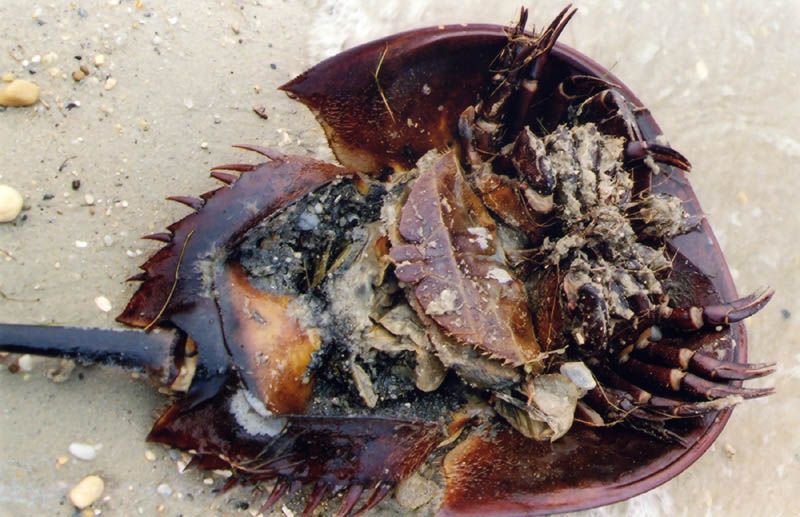
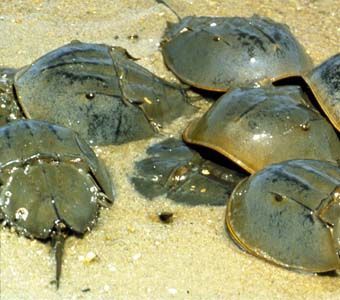
surprised horseshoe crabs werent there
horseshoe-crab.jpg
46.0 KB ·3079 views
Horseshoe_crab_female.jpg
93.2 KB ·2183 views
Hcrabs4.jpg
53.2 KB ·1028 views
2 Users Say Thank You For This Post:
Sharon, smackem
  #5  
04-26-2012, 02:47 PM
smackem's Avatar
smackem
Offline:
★ Legacy Member ★
Poster Rank:5
Join Date: Mar 2009
Posts: 108,378
 
Mentioned: 465 Post(s)
Quoted: 34614 Post(s)
Activity Longevity
0/20 18/20
Today Posts
0/11 sss108378
Re: Bizarre and Beautiful Crabs

Horseshoe crabs were so plentiful on the coasts of New England at one time, I don't see them like I used to. I think it may have something to do with their medicinal blood that is rich in copper.
  #6  
04-28-2012, 02:29 AM
FuckYourAccount's Avatar
FuckYourAccount
Offline:
My Rank: CORPORAL
Poster Rank:1357
Join Date: Jun 2009
Posts: 439
 
Mentioned: 0 Post(s)
Quoted: 16 Post(s)
Activity Longevity
0/20 18/20
Today Posts
0/11 ssssss439
Re: Bizarre and Beautiful Crabs

Shiaaaat!! i didn't realize coconut crabs were that big.\


This thread gave me the biggest craving for crab legs - I'm totally having that for supper tomorrow.
  #7  
04-28-2012, 04:17 AM
güttsfükk's Avatar
güttsfükk
Offline:
Super *********
Poster Rank:88
Join Date: Nov 2008
Posts: 17,426
 
Mentioned: 5 Post(s)
Quoted: 99 Post(s)
Activity Longevity
0/20 18/20
Today Posts
0/11 ssss17426
Re: Bizarre and Beautiful Crabs

Horseshoe crabs were so plentiful on the coasts of New England at one time, I don't see them like I used to. I think it may have something to do with their medicinal blood that is rich in copper.
i read somewhere that their population has been decreasing globally, i forget what was cited as the main cause though
  #8  
04-28-2012, 11:05 AM
smackem's Avatar
smackem
Offline:
★ Legacy Member ★
Poster Rank:5
Join Date: Mar 2009
Posts: 108,378
 
Mentioned: 465 Post(s)
Quoted: 34614 Post(s)
Activity Longevity
0/20 18/20
Today Posts
0/11 sss108378
Re: Bizarre and Beautiful Crabs

I found this. I'm sure birds ate the eggs since time, but as usual, man is fucking things up apparently.

By Doug Fraser
dfraser@capecodonline.com
July 15, 2010

WELLFLEET — University of Massachusetts graduate student Sarah Martinez is careful about drawing non-scientific conclusions about her horseshoe crab research. But, after four years doing population surveys on these dinosaur-age survivors, Martinez, who hails from Yarmouth, can't help herself.

"We both grew up on Cape Cod," Martinez said of herself and fellow graduate student Katherine Terkanian, who is from Wellfleet. "I remember there being more as a kid."

Dan McKiernan, deputy director of the state Division of Marine Fisheries, said state officials believe the combined evidence of spawning surveys such as those conducted by Martinez and Terkanian, as well as trawling surveys, are showing a decline in the state's horseshoe crab population. When spawning surveys turned up few or no crabs at some known spawning sites, McKiernan said state officials worried that they may be managing crabs the wrong way — that it may be just as important where fishermen harvest horseshoe crabs as how many they catch.

"On known spawning beaches, some of these findings appeared to be alarming," McKiernan said.

Largely ignored by both fishery managers and the public for decades, horseshoe crabs hit the news in 1998, when birders worried that a vital link in the ocean food chain was being severed by fishermen harvesting horseshoe crabs for use as bait. Migrating shorebirds, particularly in the Delaware Bay area, depended on crab eggs for nourishment in their long South American migration.
This User Says Thank You For This Post:
Faline
  #9  
04-28-2012, 06:15 PM
NEVERBACKZ's Avatar
NEVERBACKZ
Offline:
★ Legacy Member ★
Poster Rank:383
male
Join Date: Jan 2010
Posts: 3,087
 
Mentioned: 0 Post(s)
Quoted: 147 Post(s)
Activity Longevity
0/20 17/20
Today Posts
0/11 sssss3087
Re: Bizarre and Beautiful Crabs

brilliant
  #10  
04-30-2012, 05:26 PM
smackem's Avatar
smackem
Offline:
★ Legacy Member ★
Poster Rank:5
Join Date: Mar 2009
Posts: 108,378
 
Mentioned: 465 Post(s)
Quoted: 34614 Post(s)
Activity Longevity
0/20 18/20
Today Posts
0/11 sss108378
Re: Bizarre and Beautiful Crabs

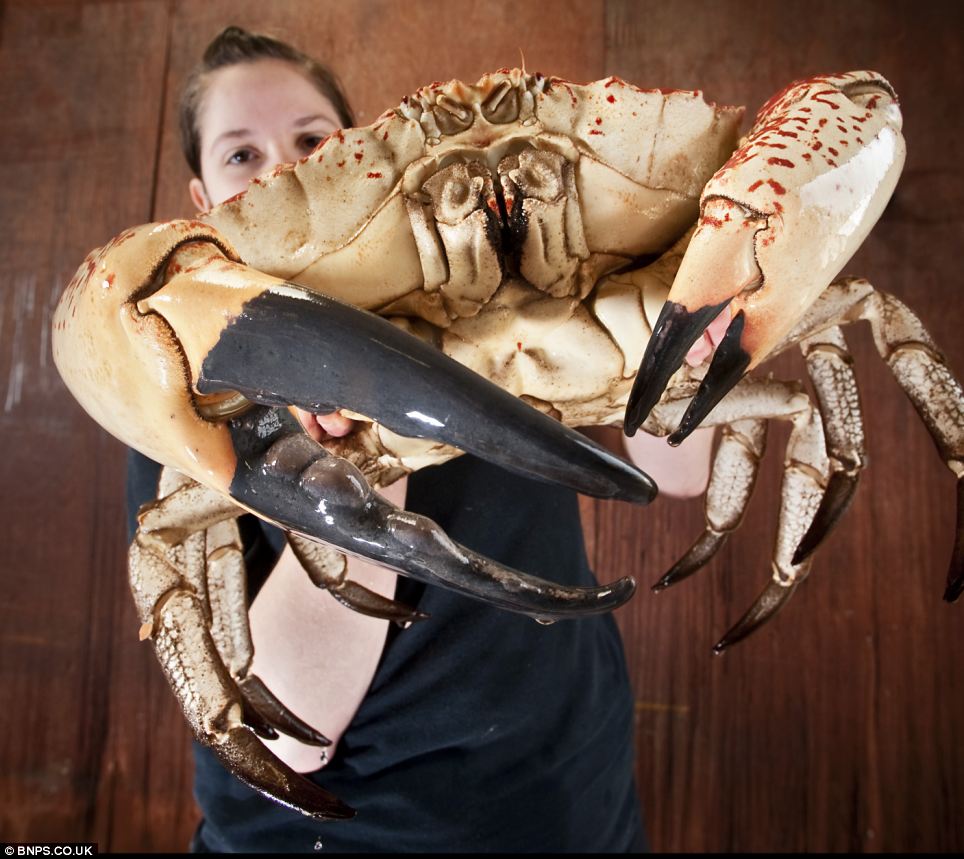
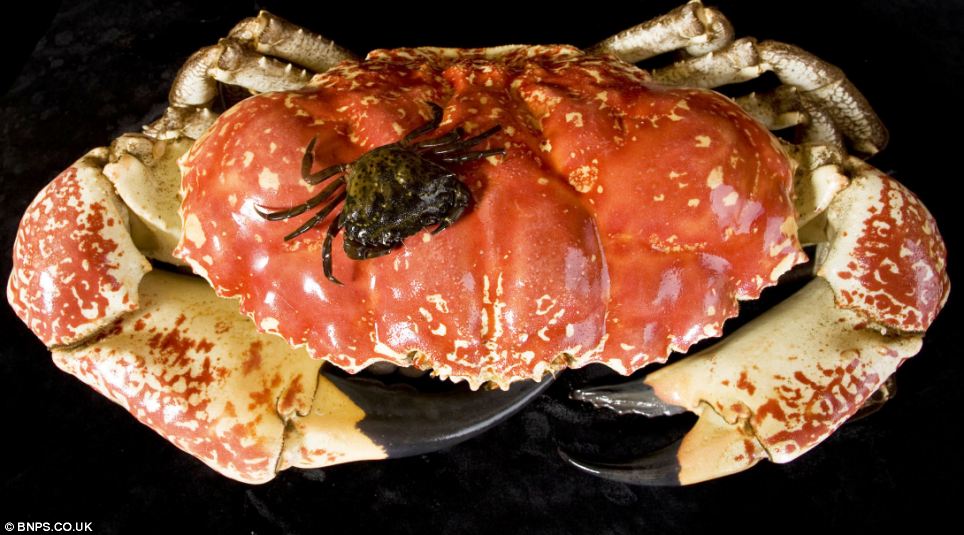
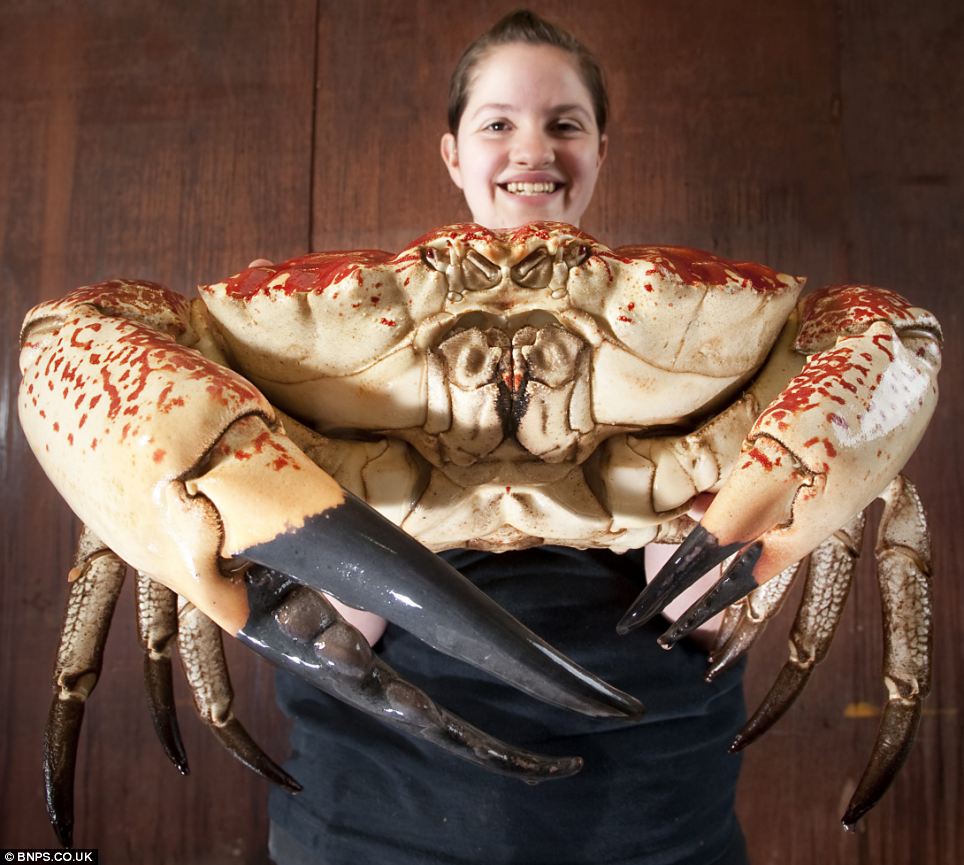
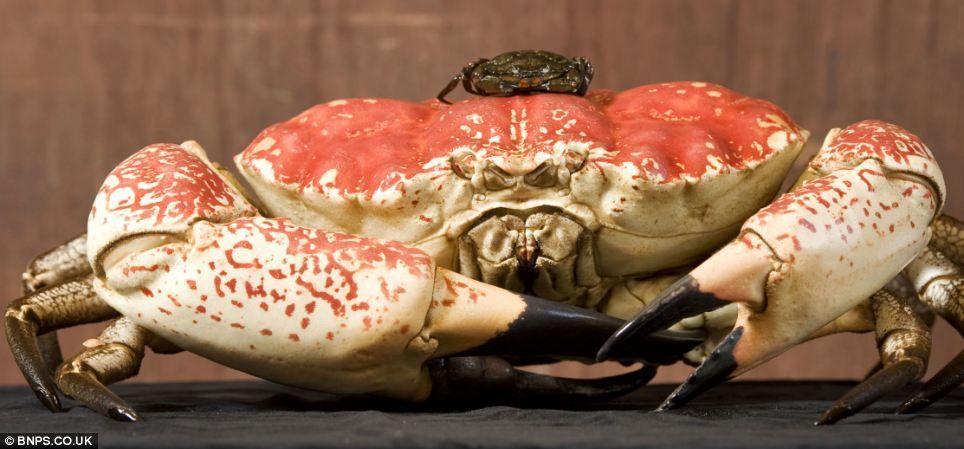
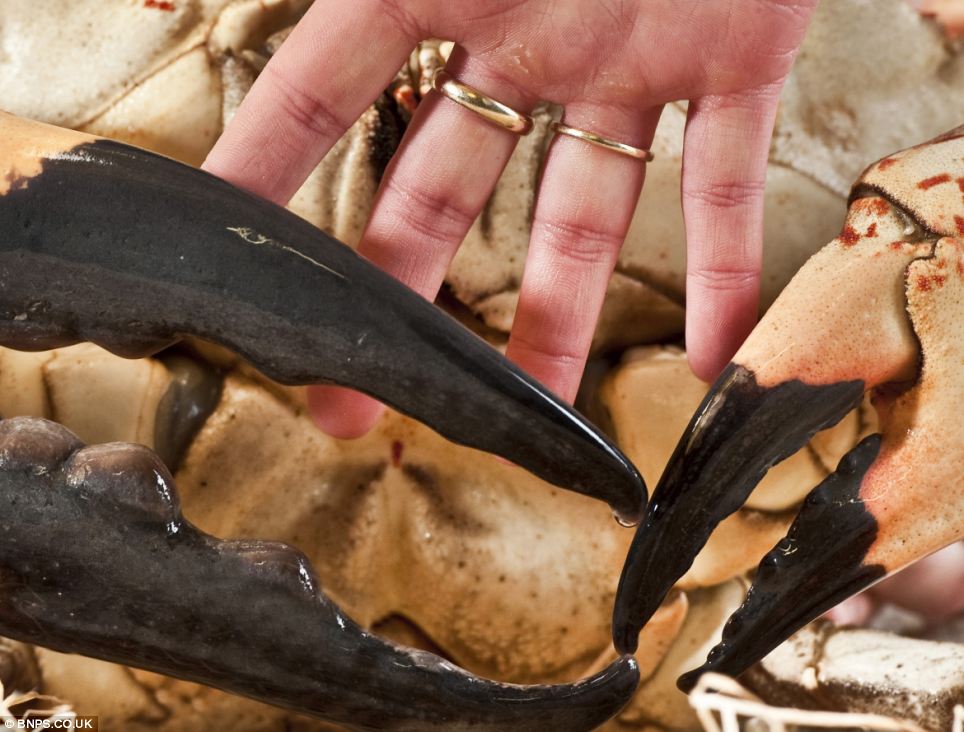
Monster Tasmanian King Crabs are saved from the pot and shipped to Britain for aquarium display

Claude weighs a mighty 15lbs and measures 15 inches wide and would have produced 20lbs worth of meat


http://www.dailymail.co.uk/news/arti...m-display.html
article-2137356-12D6FC62000005DC-13_964x732.jpg
105.2 KB ·359 views
article-2137356-12D6F859000005DC-430_964x859.jpg
117.5 KB ·333 views
article-2137356-12D7CE7C000005DC-224_964x535.jpg
97.9 KB ·321 views
article-2137356-12D6FC66000005DC-125_964x865.jpg
120.5 KB ·685 views
article-2137356-12D7CE8A000005DC-466_964x449.jpg
70.9 KB ·321 views
This User Says Thank You For This Post:
Sharon


Powered by vBulletin Copyright 2000-2010 Jelsoft Enterprises Limited.

Search Engine Friendly URLs by vBSEO