|
#1
●
03-24-2014, 10:42 PM
| ||||||||
 ★The Queen★ Poster Rank:68 Female Join Date: Jun 2011 Posts: 23,498
Contributions: 120
Mentioned: 95 Post(s) Quoted: 3083 Post(s)
| ||||||||
|
The Beauty of Xiaohe
She is 3,800 years old, but she still turns heads. The mummified remains of a Caucasian woman, found along the Silk Road in western China, was part of an exhibit, "Secrets of the Silk Road: Mystery Mummies of China," on 27 March 2010, at Santa Ana, California's Bowers Museum. I have been endlessly fascinated by this story, which really originates a few years back with Jeannine Davis-Kimball. (Actually, it goes back to around 1895, to Sven Hedin, and Aurel Stein, but, it is Davis-Kimball's popularization efforts we are discussing). It is one of the most significant stories of the twentieth century, but because it raises such a sensitive issue in Han China, we don't hear about it as much as we should. The sensitivity arises because the Tarim Basin mummies are indisputable evidence of Caucasian presence in northwestern China before that of the Chinese themselves. What attracts me is the evidence that seems to indicate these people were shamans -- possibly a tribe or clan of magicians. According to one commentator, "Some of the mummies were buried in woven plaids which I understand are remarkably similar to the clan plaids worn by the people who eventually settled in northern Scotland. Some of the mummies, (female and male), possibly shamans, tentatively identified as such because of the grave goods with which they were buried, were uncovered wearing tall pointed hats made of felt - similar to how we depict, "witches," in the west today, (think of the hat worn by the Wicked Witch of the West in the 1939 movie classic, "The Wizard of Oz") - in addition to small woven cloth or felt bags filled with medicinal herbs, (including cannabis), and herbs prized for their magical qualities, as well as other talismans. If my memory serves, a few of the 'shamans' were buried with colored throwing sticks -- perhaps for use in divination?" Indeed, it is the hats that first attracted me to these mummies. I vividly recall seeing one of the Tarim Basin mummies wearing a black, "witch," hat, almost exactly like the one from, "Wizard of Oz" -- the so-called, "Witch of Subeshi." When I saw her, my heart skipped a beat. It seemed so familiar. I like witches very much, you know? Jeannine Davis-Kimball is not without controversy, but I enjoy her work immensely. If you spend a little time with Google, on her name, you will not be disappointed. Also, I want to recommend a book by Elizabeth Wayland Barber, Mummies of Urumchi, which goes into all of this with more science than speculation. I also found the following to be of considerable interest, particularly when one contrasts the genetic archaeology with the conventional, physical archaeology. This is from Taiwan Today: "Present-day India is the major geographical source of Asian populations, according to a paper published December 11, in the international scientific journal, “Science.” The paper, the result of a five-year study involving 90 scientists from 10 nations, directly challenges the prevailing scientific view that human migration into Asia proceeded along two main routes, one located up north and the other down south. According to the paper, after moving out of India, human populations moved first in an eastward and then in a northward direction. The conclusions were based on blood samples drawn from 1,928 participants belonging to 73 ethnic groups in Asia. From Taiwan, blood samples were taken from 48 people of Southern Min ancestry and 32 of Hakka ancestry. The results show that the haplotype of the Southern Min population in Taiwan and that of the Southern Min population in Singapore are almost identical, according to Chen Chien-hsiun, an assistant research scientist at the Institute of Biomedical Sciences at the Academia Sinica. "Based on these findings, it is certain that the Southern Min Taiwanese and the Southern Min Singaporeans both emigrated out of the southern parts of China", Chen added. "The haplotype of the Hakka population in Taiwan is also extremely similar to the haplotype of certain tribes in southern China, said Chen. This shows that the Taiwanese Hakka population emigrated from southern China", he said. "Genetic variations among different groups show that after human beings reached Asia, they used India as a new starting point and from there moved eastward along the sea coasts and northward up the Asian continent", the scientist said. "Some things are not recorded in history, but they are recorded in genetics. When one studies history through genetics one is engaged in, 'genetic archaeology,'” he said. Obviously, the genetic evidence can reach back farther than our 3,800 year old beauty. I do know they have done genetic studies using these mummies, but, I haven't seen the precise results. NOT my words. They are that of the author. 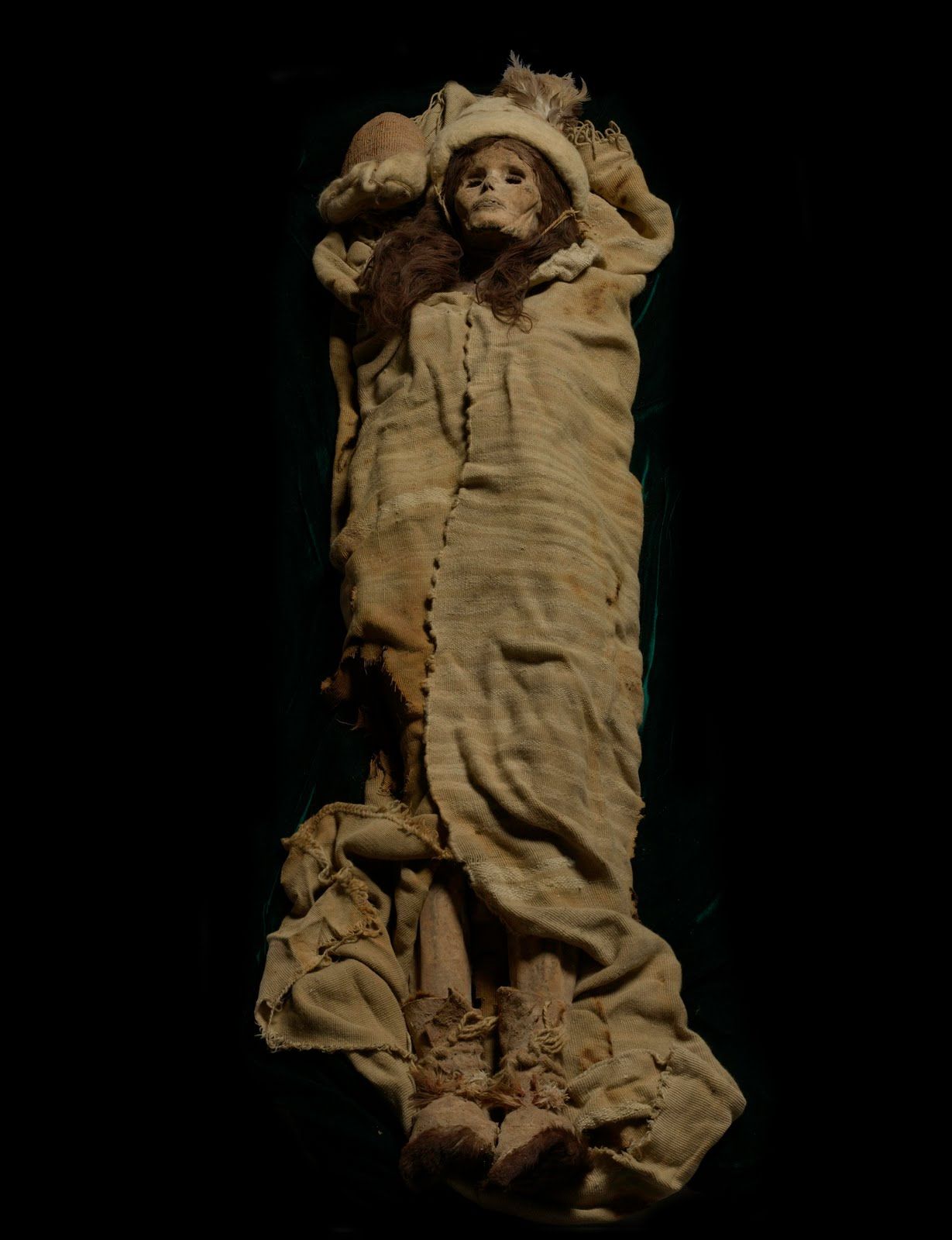 · 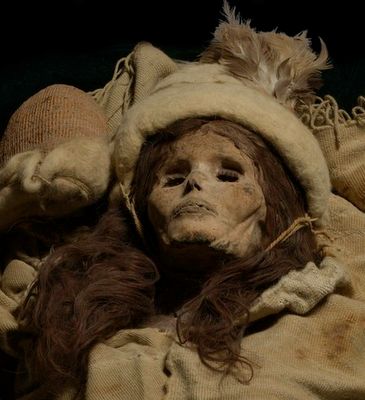 · |
|
#8
●
11-12-2016, 08:52 PM
| ||||||||
| ♚ Legacy Gold Member ♚ Poster Rank:96 Male Join Date: Nov 2009 Posts: 16,818 Mentioned: 7 Post(s) Quoted: 4615 Post(s)
| ||||||||
|
Re: The Beauty of Xiaohe
NOVA had a program on a year or so ago, about a princess mummy found in Eastern Russia. They did DNA testing, and also tested the local population, and came up with a girl who was the DIRECT descendant of the woman in the grave. Blond hair, blue eyes and all.
|