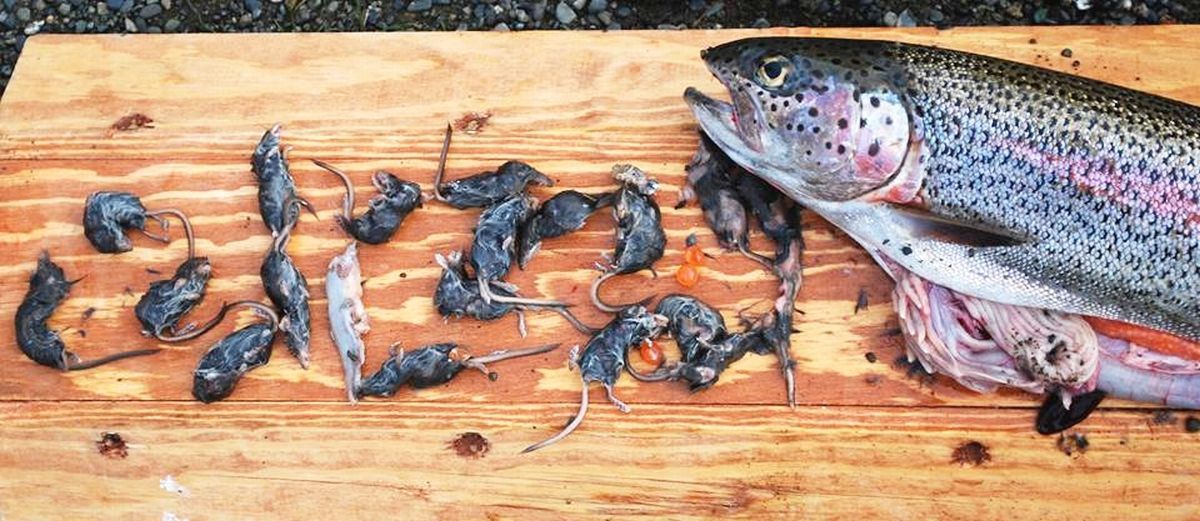
Researchers recently opened up a rainbow trout in Alaska's Togiak National Wildlife Refuge, and were surprised to find the fish had eaten nearly 20 shrews, a mouse-size mammal.
To make matters stranger, the fish was relatively small, measuring only 19 inches (48 centimeters) long.
Rainbows and related fish species have been known to eat shrews and other small mammals, including rodents, and many species of freshwater fish are opportunistic feeders that will chow down on a wide variety of prey.
This rainbow trout report trumps the previous record of seven shrews eaten, which was held by a grayling, another species of fish that "keys in on shrews even more" than rainbows.
But how did the rainbow end up with such a large shrew meal?
Shrews aren't very good swimmers and sometimes drown if they end up in water. Guess is that the shrews were on an island [or river bank] that flooded, and the rainbow happened to be in the right spot at the right time.
The fish feed heavily in the summer to prepare themselves for the winter, when they remain sedentary and don't eat much at all.
Related species have been shown to enlarge their digestive tracts during the summer, and to digest the excess intestines in the winter. Rainbows may be able to do the same.
More typical foods for rainbows include salmon eggs, insects and smaller fish, though they have been known to eat voles and other rodents, besides shrews (which aren't rodents).
But the fact that a rainbow would eat shrews isn't that surprising. Fly fishermen in the area are well aware of the tendency, and use special flies that mimic swimming rodents or drowning shrews.
If you use a mouse fly and drag it along the surface, it seems pretty irresistible to a variety of fish. Doing so can lead fish to hit the fly, but not necessarily to sink their teeth in. They hit it and you may not catch them, but they seem to want to drown it.
Species known to eat shrews and rodents also include lake trout and pike.